PART 4: The Name He Couldn’t Sign15 026
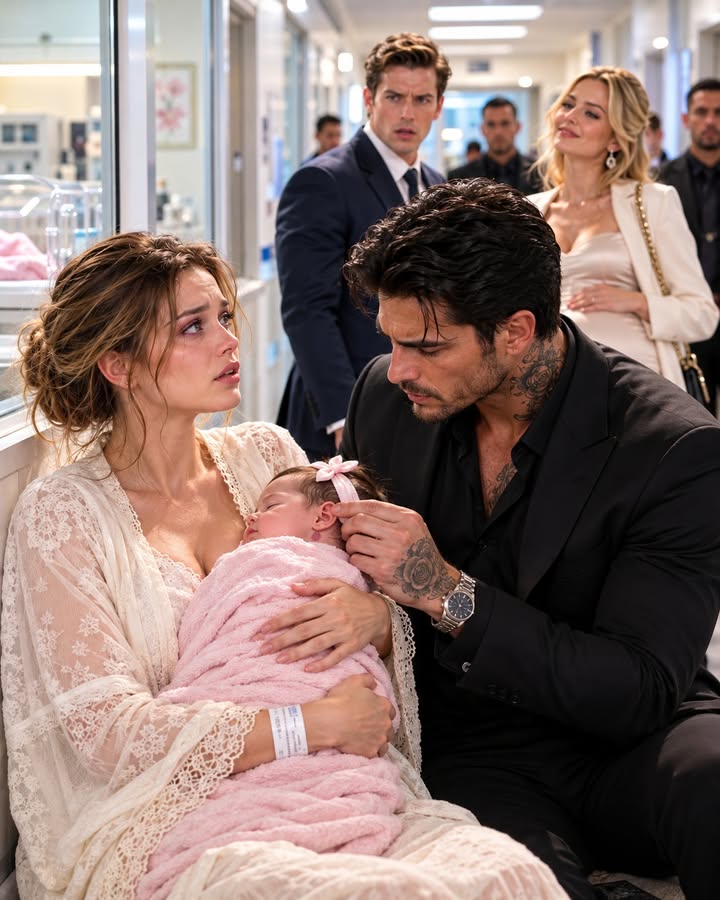
Part 4 – The Name in the Ledger
“The nurse who signed the transfer was Sofia Moretti,” the archivist repeated.
I stared at the wall across from me, trying to make the words fit together.
Sofia had been a patient.
Sofia had given birth.
And the ledger said she had signed her own baby’s transfer.
“Could the nurse have been someone else with the same name?” I asked.
“It’s possible,” Marisol said. “The handwriting is damaged, and this is an old copy of an old record. We shouldn’t assume the entry is accurate.”
“Can you send me the scan?”
“I can send it to your attorney through the records portal. The original ledger is in our archive, but it will take time to arrange supervised access.”
“Please do.”
I thanked her and ended the call.
My daughter slept in the crook of my arm, her cheek warm against my wrist.
I looked down at her, searching her tiny face for a clue that could explain what had happened to my mother decades ago.
There was none.
Only a baby who needed feeding and sleep, and a birthmark that had turned a question into a family history.
I called my attorney.
She was quiet as I described the new entry.
“We need to verify the page before we make anything of it,” she said. “A name in a margin can be a clerical error, a notation by someone else, or something completely different.”
“I know.”
“And the fact that a baby was marked deceased before the transfer was recorded suggests the paperwork was confused, but it doesn’t tell us where the child went.”
“I know that too.”
“I’ll ask the archivist for the original ledger and any linked records. We’ll also consult the lab about what samples and relatives would give us the clearest answer.”
“Can you speak to Luca?”
“Only if you want me to.”
I glanced at his card on the table.
“Tell him what we found, but make it clear that nothing is confirmed.”
“I will.”
After we hung up, I sat very still.
The ledger had not given me an answer.
It had only made the past feel less like a story Luca had brought into the hospital and more like something that had been waiting in my own family for years.
That evening, I called him myself.
He answered with my name, not a question.
“The archivist found a transfer ledger,” I said. “It shows the baby marked deceased before the transfer was recorded.”
He took a slow breath.
“What else?”
“The nurse who signed it was listed as Sofia Moretti.”
There was silence on the line.
“Do you know if Sofia ever worked as a nurse?” I asked.
“No,” he said at last. “She was a patient. She had just given birth.”
“Could there have been another Sofia Moretti?”
“Not in our family, as far as I know.”
“Then how could she have signed a transfer?”
“I don’t know.”
His voice held no certainty, only the same unsettled grief I had heard when he told me about the mark.
“Maybe the entry was copied incorrectly,” he said. “Maybe someone wrote her name in the wrong place.”
“Or maybe she was trying to find out where her baby had gone.”
“Maybe.”
I rested my free hand on the edge of the table.
“I don’t want us to turn a damaged page into a story that feels right because we want it to be right.”
“We won’t.”
“I need the original records, and I need the second test.”
“You’ll have both, if you decide to proceed.”
“I do.”
His answer came gently.
“Then we’ll follow your attorney’s advice.”
Two days later, the attorney arranged for us to view the original ledger at the county archive.
I asked that Luca meet us there, not at the hospital, and that no one else be present unless required by the archivist.
He agreed.
The archive occupied the basement of a public building beside the courthouse.
The records room smelled of paper, dust, and the clean bitterness of old glue.
A staff archivist placed a narrow volume on a padded table and asked us to wash our hands before turning the pages.
The ledger had a cracked cloth cover and a small label marked with the year of the evacuation.
Luca stood on one side of me.
My attorney stood on the other.
I felt no safer because of either of them, but I was grateful not to be alone with the past.
The archivist opened the book to a page marked with a paper tab.
“Please turn the pages only by the corners,” she said. “And let me handle the binding.”
The entries were handwritten in narrow rows, many smudged or faded.
The words seemed to dissolve whenever I stared at them for too long.
My attorney followed the lines with a pencil, careful not to touch the paper.
Here was the date of my mother’s birth.
Here was the temporary ward.
Here was a record of a newborn moved from the maternity wing during the evacuation.
The infant’s name had been crossed out.
Beside it, in different ink, was the word *deceased*.
The transfer time had been written below that.
I leaned closer.
The two entries were separated by less than an hour.
The mark beside the first one looked like a small dash, but the ink had faded.
“Is this the nurse’s signature?” I asked.
The archivist pointed to the margin.
“Possibly. The name is readable as Sofia Moretti, but I can’t tell whether it was signed by that person or added by someone else.”
Luca looked at the writing without moving.
“Do you recognize the hand?” my attorney asked.
“No,” he said. “Sofia’s handwriting was different.”
He drew back a little.
“I don’t want to say more than I know.”
I watched him turn away from the page, and something in me eased.
He could have seized on the name as proof.
Instead, he treated it as a question.
The archivist turned another leaf.
The next page held a list of transfers to the temporary ward.
Several entries had been corrected.
One had been written over so heavily that the paper was thin.
The archivist stopped at the bottom of the page.
“Here is the note I couldn’t read from the scan,” she said.
She tilted the volume so the light fell across the margin.
The writing was small and slanted.
My attorney leaned in first.
“‘Identity uncertain,’” she read.
Below it was a second line.
“‘Infant to be held pending family confirmation.’”
My fingers went cold.
“Does it say whose family?” I asked.
The archivist shook her head.
“No.”
“And what does the word after that say?”
She bent over the page.
“It looks like ‘M.’ It could be an initial, or it could be part of a damaged word.”
Luca’s face had gone pale.
I turned toward him.
“Do you recognize it?”
“No.”
The answer was quiet, almost swallowed.
I understood then that his grief had never been a single moment.
It had been a life arranged around a blank space, and every new mark on a page threatened to make the blank space real.
My attorney asked the archivist to make a certified copy of the relevant pages.
We also requested any records connected to the temporary ward and the infant placed under observation.
The archivist explained that there were other volumes in storage, but she could not promise that every record had survived.
We left with no conclusion, only a clearer picture of how little the old hospital had understood about what happened.
Outside, the afternoon had turned gray.
Luca walked beside me toward the curb, stopping whenever I slowed to adjust the carrier.
He never reached for it.
“Do you think Sofia knew?” I asked.
“I don’t know.”
“She spent years believing her daughter was alive.”
“Yes.”
“Could she have seen a record like this?”
“I don’t know.”
He looked down at his hands.
“She might have tried to ask the hospital what it meant.”
“Would anyone have answered?”
“Not if the answer was hidden in a damaged ledger.”
We waited in silence for my car.
I thought about the woman in the photograph, the baby in the blanket, and the sentence in my mother’s letter about a name she had never been sure of.
Then I remembered the way my mother used to pause whenever I asked about her childhood.
Not with shame, exactly.
With caution, as though she were standing at a door and had never decided whether to open it.
“I want the second test arranged as soon as the lab can do it,” I said.
Luca nodded.
“Whatever you need.”
“I’m not doing it to give you an answer.”
“I understand.”
“I’m doing it because my mother deserves one.”
His eyes lowered.
“Yes,” he said. “She does.”
The second test was scheduled for the following week.
My attorney selected a laboratory that could compare my sample, my daughter’s sample, Luca’s, and a sample from Luca’s mother if she agreed.
Luca did not ask his mother without first checking with me.
When he called, he said, “I explained that you were trying to understand a possible family connection. She wants to help, but she would like to speak with you first.”
“I can speak with her.”
“Would you prefer that I leave you alone with the call?”
“Yes.”
“Of course.”
The call came the next evening.
Luca’s mother introduced herself as Teresa.
Her voice was warm, but careful, as if she understood that I had been pulled into a story she had not expected me to share.
“I’m grateful you’re willing to speak with me,” she said. “And I want you to know you owe us nothing.”
That caught me off guard.
“Luca told you about the photograph?”
“He told me there may be a connection. He didn’t send it or the letter without your permission.”
I appreciated that he had kept his promise.
“What do you remember about Sofia?” I asked.
Teresa was quiet for a moment.
“She was very young when I met her. She had already lost her parents, and Luca was only a boy. They were fiercely devoted to one another.”
“Did she ever tell you about the baby?”
“She spoke of her daughter every day.”
“Did she believe the baby had died?”
“She knew what the official record said. She never believed it was true.”
Teresa’s voice softened.
“She said the hospital had sent her one explanation, then another. One nurse told her that her baby had been moved. Another said the infant had died. The details changed, but no one could show her a body or a clear record.”
I closed my eyes.
“Did she ever say she had been given a name?”
“She called the baby Lina. That was the name she had chosen.”
“Did she ever look for someone named Lina?”
“She looked for any information she could find.”
Teresa paused.
“When she was ill, she asked Luca not to let the search disappear after she was gone.”
“I know he kept searching.”
“He did.”
I heard the affection in her voice, along with the sadness.
“He was a child when it began, and then he grew up with a promise that had no ending.”
I knew what she meant.
Some promises became part of a person before they could decide whether they wanted them.
“Would you be willing to take the test?” I asked.
“Yes.”
“If it shows there’s no connection, I don’t want you to feel that you failed anyone.”
“I won’t.”
“And if there is a connection, I still need to understand what it means before anyone makes assumptions.”
“Of course.”
She sounded as cautious as I was.
“I’m not looking to replace your mother,” Teresa said. “I want you to know that.”
My throat tightened.
“She was the person who raised me.”
“Then she is your mother.”
The words were simple, but I felt the pressure of them loosen something inside me.
The test took place at the laboratory three days later.
The technician checked each of our identities, explained the procedure, and asked me to confirm that I understood how the results would be shared.
My attorney remained beside me.
Luca sat at the other end of the room, his face composed, his hands clasped loosely together.
Teresa smiled at me before the samples were collected.
“If this brings you an answer,” she said, “I hope it brings you peace.”
I thanked her.
My daughter fussed when the technician swabbed her cheek.
I gathered her against my shoulder and hummed softly until she settled.
Luca looked toward the window while I soothed her.
The care he took not to intrude had begun to feel less like a performance and more like a language he was learning to speak with me.
The results were due in several days.
During the wait, the attorney received the first certified copies from the archive.
The hospital records remained incomplete, but the ledger confirmed that the infant had been transferred to a temporary ward.
A separate page recorded that the child was later released to a couple with the surname Carter.
My mother had been adopted by a loving couple, just as she had written.
The line beside the discharge entry was difficult to read.
The attorney called to ask whether I wanted to see the original.
I said yes.
When I reached her office, she had placed a copy of the page on the table.
There was the date.
There was the Carter name.
And beside it, in a different hand, was a short note.
*Family verified by nurse.*
I stared at the words.
“Which nurse?” I asked.
“We don’t know yet,” the attorney said. “The initials are partly obscured.”
“Could it have been Sofia?”
“It’s possible. It could also have been another nurse.”
My attorney kept her voice steady.
“We need the full transfer record, and we need the DNA results before we draw any conclusion.”
I nodded, though I could barely look away from the page.
My mother had been given to the people who raised her because someone had verified the family.
Someone had decided she belonged with them.
The thought brought both comfort and unease.
My mother had been loved.
That was true regardless of how she came into the family.
The question was whether she had also been separated from someone who had loved her before she ever learned to call the Carters home.
That night, I opened my mother’s letter again.
I read the final sentence aloud.
“Remember that it does not change where I belonged.”
Then I set the letter beside the photograph.
I could finally hear what she had been trying to tell me.
She had not wanted an answer to undo her life.
She had wanted an answer that could sit beside it.
The laboratory called the following afternoon.
The technician asked me to come in person, along with my attorney, before the results were released.
I knew that meant the comparison had found something significant.
I called Luca and told him the results were ready.
He did not ask what they said.
He only asked when we would meet.
The laboratory’s meeting room was small and bright, with a square table and a framed certificate on the wall.
Luca arrived with Teresa.
My attorney sat beside me, and my daughter slept in her carrier near my chair.
The technician reviewed the identity checks and explained the results in careful, plain language.
The genetic comparison established that I was the biological daughter of Sofia Moretti.
My breath left me.
The technician continued.
The comparison between Luca and me showed that he was my maternal uncle.
And the comparison between Luca and my daughter established that she was his grandniece.
The room was silent.
I turned toward Luca.
He had both hands pressed flat against the table.
His eyes were fixed on the report, but they seemed to see something far beyond it.
“Your sister’s baby was my mother,” I said.
“Yes,” he whispered.
The words were not a question now.
They were a fact that had taken a lifetime to arrive.
Luca closed his eyes.
For a moment, I thought he might cry.
Instead, he drew in a careful breath and placed one hand over his mouth.
Teresa reached across the table and touched his wrist.
He held her fingers, but did not look away from the report.
“I’m sorry,” I said, though I did not know what for.
He shook his head.
“No.”
His voice was unsteady.
“Don’t apologize.”
“I don’t know what to say.”
“Neither do I.”
I looked at the document again.
My mother had been Sofia’s daughter.
The woman who had raised me had carried a name and a history I had never known, but she had never been less my mother.
I felt grief, wonder, and a strange tenderness for the girl she had been, sent away from one family and welcomed by another.
“Did she know?” Luca asked.
“No,” I said. “She had a suspicion. She never had proof.”
“I wish she had known.”
“So do I.”
He looked at me then, and there was no claim in his expression.
Only a deep, careful sorrow.
“And your daughter,” Teresa said softly. “She is family.”
“She’s my daughter first,” I replied.
“Of course,” Teresa said. “Always.”
Luca nodded.
“Always.”
The answer mattered more than I expected.
I had feared that the result would change the way they looked at me, as though I were now a door into a family they had lost.
Instead, Teresa watched my daughter with the same gentleness she had shown me, and Luca did not reach for her.
He waited until I offered.
I didn’t, not that day.
I needed time to understand who I was now that I had learned another name.
The hospital archivist continued searching for the remaining records.
The laboratory sent the final report directly to my attorney.
The test had answered the question of blood.
It had not explained the damaged ledger, the premature death entry, or why my mother had been placed with the Carters.
The attorney requested a full search of the adoption file.
She also asked the county to identify the nurse who had verified the adoptive family.
The old records would take time to assemble.
For the next few days, Luca did not call.
Teresa sent a short message through my attorney asking whether I was comfortable receiving a photograph of Sofia.
I said yes.
The picture arrived the next morning.
Sofia stood in a garden with one hand resting on her stomach, her dark hair tied back from her face.
She looked younger than I had imagined.
Her eyes were bright and direct, and her mouth held the beginning of a smile.
On the back, Luca had written nothing.
He had only sent the photograph.
I set it beside my mother’s letter.
The two women seemed to belong to separate lives, though one had given birth to the other.
I wondered what Sofia would have thought of the woman my mother became.
I wondered whether she would have recognized my mother’s stubbornness, or the way she tilted her head when she listened.
I wondered what it meant to be related to a family I had never met.
When Luca called that evening, I answered.
“I saw the photograph,” I said.
“She kept it close.”
“She looks kind.”
“She was.”
He paused.
“Would you like me to tell you about her?”
“Not yet.”
“All right.”
“I need time before I can hear about her as my grandmother.”
“I understand.”
I leaned back against the sofa and looked at my daughter, asleep in the bassinet.
“Luca?”
“Yes?”
“Did my mother belong to you before she belonged to the Carters?”
“No,” he said, firm but gentle. “She belonged to herself.”
The answer settled over me like a quiet blanket.
“I’m glad you said that.”
“So am I.”
I ended the call and returned to the records spread across the table.
The archive had sent a new scan of the discharge page, clearer than the first.
The name of the adoptive couple was easy to read.
Carter.
Below it, the nurse’s initials were not.
But on the next line, someone had written a note that had been hidden beneath the folded edge of the page.
My attorney had circled it in blue.
*Mother informed infant had died before transfer. Do not disclose alternate placement.*
I read it once.
Then again.
The note did not say who had written it.
It did not explain why someone had instructed the hospital to conceal the adoption.
But it was there, in the same official record that showed my mother had been placed with a loving family.
I called my attorney.
“Does this mean someone knew the baby was alive?” I asked.
“I don’t know,” she said. “It could be a notation about what the mother had been told, or a procedural instruction, or something else entirely.”
“But Sofia was the mother.”
“Yes.”
“And someone wrote that she shouldn’t be told about the placement.”
“Possibly.”
I looked at the photograph of Sofia.
The woman in it had believed her baby survived, and yet the hospital record suggested she had been told the child was dead.
For years, she had searched without knowing the baby had been adopted.
“Could the instruction have come from the nurse who transferred her?”
“We don’t know.”
“Can we find out?”
“I’ll request the remaining correspondence and the complete adoption file.”
The call ended.
My daughter stirred, and I lifted her from the bassinet.
She opened her eyes and blinked up at me.
The birthmark beneath her ear was plain in the afternoon light.
It was no longer only a clue, nor only an echo of the woman who had been lost.
It was part of the life my daughter had inherited, a small sign that her story had begun before she was born.
I kissed her forehead.
“You have a whole history waiting for you,” I whispered.
Then the attorney sent one more message.
The county had located the nurse who signed the transfer.
Her full name was on the original page.
It was not Sofia Moretti.
It was my mother’s adoptive mother, Eleanor Carter.
**–END OF PART 4–CLICK “NEXT” AT THE BOTTOM OF THE PAGE TO CONTINUE READING**
* * *
[PREVIOUS: PART 3](https://puretales.idolsgift.com/blog/part-3-the-name-he-couldn-t-sign15-026) | [NEXT: PART 5](https://puretales.idolsgift.com/blog/part-5-the-name-he-couldn-t-sign15-026)
✓ Lynn R. Adams
Part 4 – The Name in the Ledger “The nurse who signed the transfer was Sofia Moretti,” the archivist repeated. I stared at the wall across from me, trying to make the words fit together. Sofia had …