PART 4: The Name Beneath the Lie 041
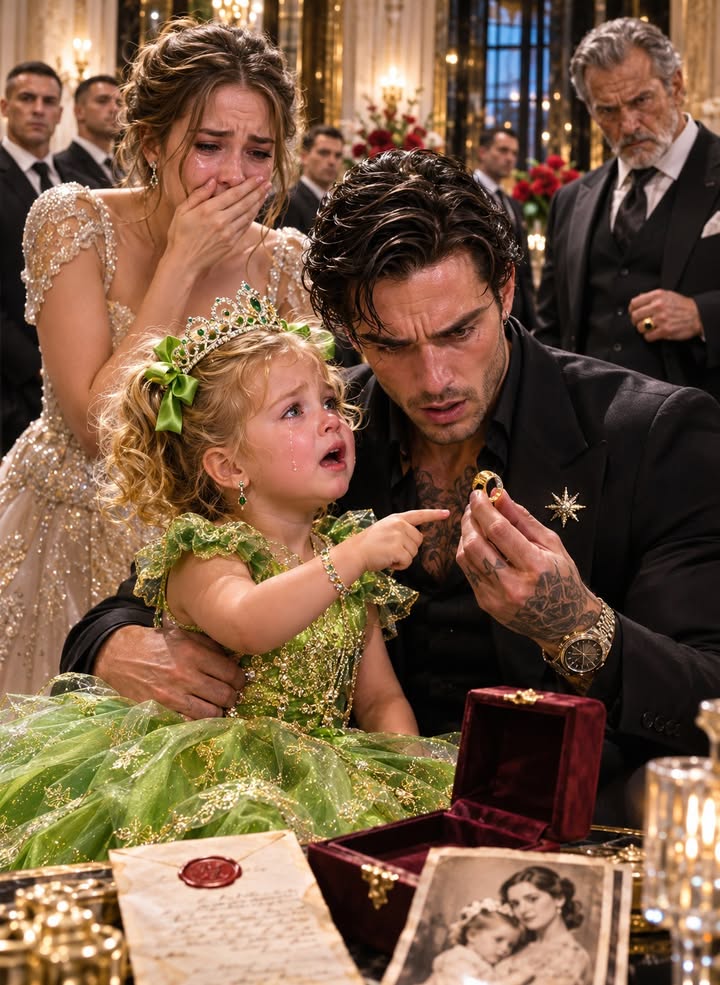
Part 4 – The Name His Father Chose
“If the council learns whose name he placed first in the succession, the child will become the center of a dispute before she has even taken her first breath.”
Marian’s voice seemed to linger in the archive after she finished reading.
Grace’s hand tightened on the back of her chair.
“Whose name?” she asked.
Marian studied the page, careful not to flatten its worn edge.
“The rest of the sentence is missing.”
“Then we find it,” I said.
The words came out too quickly, carrying the impatience of a man who had spent years mistaking control for certainty.
Grace looked at me.
“Find it without turning Lily into a question the family council gets to answer.”
“I won’t.”
“You said that last night.”
“And I meant it.”
“You meant to protect her. That isn’t always the same as listening to what she needs.”
I took in the tiredness beneath her eyes, and the steadiness she had built around it.
“You’re right,” I said. “Tell me what you need from me now.”
For a moment, she seemed surprised that I had asked.
“Don’t decide what this means before we know the whole story,” she said. “And don’t let your family use the word ‘heir’ as if it tells them who Lily is.”
“I won’t.”
Marian folded the incomplete page along its existing crease.
“There may be more in the archive,” she said. “Your father kept a second cabinet for private correspondence, and I haven’t opened it since the estate was settled.”
“Why not?”
“Your mother asked that it remain sealed.”
The answer caught between us.
“Did my father ask that?”
“No.”
Marian’s gaze moved to the letter in my hand.
“Your mother told me the contents were personal and that opening it would dishonor his wishes.”
“Did you believe her?”
“I believed she was grieving,” Marian said. “And I believed she had the authority to decide what happened to the household papers.”
Grace’s expression was thoughtful, not forgiving.
“Did she ever say what was inside?”
“No,” Marian replied. “Only that it should remain private.”
I looked again at the line about a child becoming the center of a dispute.
For years, my mother had presented herself as the person preserving the family from chaos.
She had also kept a letter from Grace, a letter addressed to my father, and whatever else might explain why my daughter’s name had been chosen before she existed.
“Open the cabinet,” I said.
Marian did not move.
“Not unless Grace agrees,” I added.
Grace glanced at me, then at the folded page.
“If it’s connected to Lily, I want to know what it says.”
Marian nodded.
“Then I’ll bring the cabinet key.”
She left us alone in the archive.
The quiet here was different from the quiet upstairs beside Lily’s bed.
This one held the pressure of old decisions, preserved in paper and ink because the people who made them had believed time would keep them safe.
Grace looked at the letter in my hand.
“Your mother was planning to send that to me.”
“That’s what it looks like.”
“But she didn’t.”
“No.”
“Was she going to include the money?”
“I don’t know.”
“I do.”
Her voice was calm, but her gaze had sharpened.
“She gave me money at the hospital. I returned it. She told me what she wanted me to do, and I refused.”
I lowered the letter.
“Did she ever tell you why?”
“She said she wanted to protect you.”
“From me?”
“From the life you were already living.”
The answer settled between us.
I had spent years believing that choosing my family meant leaving Grace behind.
My mother had known how to make that choice sound noble.
“She told me you’d taken the money,” I said.
“I know.”
“I believed her.”
“Yes.”
“I’m not asking you to excuse it.”
“Good.”
Her directness felt like a hand placed against my chest, holding me at a distance I had earned.
“I should have come looking for you,” I said.
“Yes.”
“I should have questioned the story.”
“Yes.”
The simple answers left no comfortable escape.
“I don’t know how to make this right,” I said.
“Start by not making it about what would make you feel better.”
I nodded.
Grace looked toward the doorway through which Marian had left.
“Your father knew about me?”
“I don’t know.”
“He wrote that name for a child the family hoped to welcome. He may have known I was pregnant.”
“I don’t know that either.”
“Then we wait for the records.”
The steadiness in her voice reminded me how often she had been forced to make a life out of what she did not know.
I sat down across from her.
“Did you ever meet my father?”
“Once.”
I looked at her, surprised.
“When?”
“Before you and I were together. We were leaving a restaurant after your company’s winter fundraiser. He was coming in with two of your uncles.”
“I don’t remember that.”
“You were talking to the driver. Your father stopped to ask me about a book I was carrying.”
“What book?”
“An old collection of poems. I’d bought it at a secondhand shop.”
Grace’s expression softened with the memory, then closed again.
“He remembered the title the next time we met. That was all.”
“That doesn’t sound like someone who thought you were a threat.”
“He was polite. I didn’t know him well enough to know what he thought.”
I pictured my father as I remembered him: composed, thoughtful, difficult to read.
He had rarely spoken directly about the family’s succession customs, though everyone around him seemed to understand that they shaped the boundaries of his life.
I had assumed he was simply waiting for me to inherit his place.
Now there was a chance he had been trying to change what that inheritance meant.
Marian returned carrying a small brass key.
She placed it on the archive table beside the incomplete page.
“I should explain that the cabinet was sealed after your father’s death,” she said. “There is no record of your mother requesting it formally, but I remember her asking me to leave it alone.”
“And you did,” Grace said.
“Yes.”
“Why are you opening it now?”
Marian met her gaze.
“Because I was wrong to treat a request as if it were the same as a final instruction from the person who owned the papers.”
She turned the key.
The lock gave a soft click.
Inside lay a flat document case, several tied bundles of letters, and a narrow wooden box.
Marian removed the case first.
“The letters may be personal,” she said. “I’ll read only what bears on the matter we’re investigating.”
Grace nodded.
“Thank you.”
The top bundle was tied with a faded green ribbon.
Marian untied it and laid the letters in order by date.
Most were brief exchanges between my father and the family’s legal counsel.
Some referred to financial arrangements or upcoming meetings.
One letter was addressed to my mother.
Another was written in her hand and addressed to my father.
Marian opened it carefully.
My mother’s words were firm, the strokes of her pen dark and even.
“‘You cannot place an unborn child ahead of Alexander,’” she read.
Grace’s expression tightened.
“What did he reply?”
Marian lifted the next sheet.
The ink had faded more, but the handwriting was unmistakably my father’s.
“‘I am not placing anyone ahead of him. I am refusing to let the old rules decide the worth of a child before we know her.’”
No one spoke.
Marian looked to the next letter.
“‘The succession is not a reward,’” she continued. “‘It is a responsibility. If the family insists that the firstborn son must carry it, then the rule is what must change, not the child.’”
The words were so unlike the man I had been taught to imagine that I had trouble taking them in.
My father had known the family rule was being used to control me.
He had known it was part of a larger dispute.
And before Grace’s pregnancy was known, he had begun searching for another way.
“Keep going,” I said.
Marian found a later letter, dated several months after the entry in the ledger.
“‘I have spoken with counsel. The council’s rules cannot be altered while the old trust remains in place. If the next child is a girl, I want her name recorded as Lily, and I want her protected from any claim made in my name until she is old enough to choose what she wants.’”
Grace took a shallow breath.
“Lily,” she said.
The name was no longer only an inscription on a ring.
It was a promise my father had made to a child he hoped might someday exist.
“He chose the name before I was pregnant,” Grace continued.
Marian searched through the rest of the letters.
“Apparently.”
I felt a strange ache move through me, part wonder and part grief.
My father had imagined a daughter.
He had made room for her in his records, though he could not have known her mother or her face.
Then Grace had become pregnant, and my family had turned the truth into a weapon of silence.
“Was my mother trying to prevent him from naming a girl as heir?” I asked.
Marian scanned the letters.
“It appears she feared the family would use the decision to challenge you.”
“Or use the child to control him,” Grace said.
“Both could be true,” Marian replied.
The admission did not lessen my mother’s responsibility.
It made the shape of it more complicated.
She had not simply tried to keep Grace away because she disliked her.
She had believed the family could use Lily’s existence to reopen a struggle over succession.
So she had hidden the pregnancy, then told me Grace had taken money and left.
Perhaps she had called it protection until the word became easier to say than the truth.
“What did my father do about the council?” I asked.
Marian moved to the final letter in the bundle.
“This appears to be a private note to Richard.”
She read silently for a moment.
Then she set it down.
“The line is incomplete here too.”
“Read what you can.”
“‘If anything happens to me before the matter is settled, the child must not be presented to the council as a claimant. Richard will understand that my intention is to leave her a choice, not to place the family on her shoulders.’”
Grace’s fingers rested on the edge of the table.
“Richard knew.”
“According to this, he did,” I said.
“He told us the ring belonged to a baby who died.”
“That was not true.”
Marian returned to the other bundle.
“This letter may explain why he said that.”
The handwriting belonged to Richard, though it was younger, firmer, and less burdened than the man who had sat in Grace’s townhouse.
He had written it to my father.
“‘I understand why you want the record kept private,’” Marian read. “‘But the council will not accept a future intention as a binding claim. If they learn that you have designated a child who has not yet been born, they will consider it an attempt to change the rules without their consent.’”
She turned the page.
“‘I will keep the name and the record safe until the matter can be settled lawfully.’”
Grace’s expression hardened.
“Then he kept it safe for eleven years?”
Marian continued.
“‘If the family becomes divided after your death, I will make sure no one uses the child as a reason to challenge Alexander’s authority.’”
The room seemed to tilt around the words.
Richard had not merely known the plan.
He had hidden the evidence after my father died.
He had concealed it from me and from Grace, telling himself he was preventing a dangerous family dispute.
The family dispute had continued without us.
It had simply been built around lies instead of facts.
“He said he was protecting us,” Grace murmured.
“Maybe he thought he was,” I said.
“That doesn’t make it harmless.”
“No.”
The word came easily because there was no honest way to defend him.
Marian opened the wooden box.
Inside lay a second envelope, thicker than the others and sealed with a small dot of dark wax.
The name on it was my mother’s.
My mother’s handwriting appeared on the front, but the seal carried my father’s initials.
Marian looked at me.
“Would you like me to open it?”
I looked at Grace.
“It concerns all of us.”
“That doesn’t mean I want you to decide for me.”
“I know.”
She considered the envelope for a long moment.
Then she nodded.
“Open it.”
Marian broke the seal and unfolded the paper.
The first page appeared to be a letter from my mother to my father, written after Grace became pregnant.
Her voice was less formal this time, and the ink had blotted in several places.
Marian read aloud.
“‘Grace is carrying your grandchild. Alexander does not know what the council will demand if they learn the child may be named in your papers. I have told him nothing because I believe he will refuse the duty you have placed before him.’”
My breath caught.
My mother had known about Lily’s existence before I did.
“She knew,” Grace whispered.
Marian continued.
“‘You named the child before there was a child to name. If the council sees this as a claim, they will take her from Grace’s life and make her a symbol. I cannot allow that.’”
The words seemed almost tender.
Then the next line changed the meaning.
“‘I will speak with Grace. I will make her understand that leaving is the only way to keep the child outside this family’s reach.’”
Grace turned her face away.
“She never told me about the papers,” she said. “She told me I was a distraction. She said Alexander would never choose me over his father’s expectations.”
“I know.”
“She handed me money and made it sound like there was nothing else I could do.”
My throat tightened.
“She had a reason to be afraid,” I said. “But she still chose what you were allowed to know.”
Grace looked back at me.
“And what you were allowed to know.”
“Yes.”
“Did she think that was protection too?”
“I think she thought she could decide which truths would hurt us.”
“And now?”
“Now I know the silence hurt us anyway.”
The letter continued in Marian’s hands.
“‘I will tell Grace that Alexander does not want the child and that she should leave New York. If she refuses, I will offer enough money to let her begin elsewhere. She must not know about the succession papers, because then she may be drawn into a dispute she cannot understand.’”
Grace’s eyes closed.
The words were not a defense.
They were the account of a plan that had taken Grace’s choices away while claiming to protect her.
“I refused the money,” she said quietly. “I stayed.”
“I know.”
“She could have told me the truth.”
“Yes.”
“She could have let me decide whether I wanted to raise Lily here.”
“Yes.”
Instead, my mother had told a story that made Grace appear willing to disappear.
And I had accepted it because it made my own failure easier to live with.
Marian turned to the final page.
The handwriting changed.
The note was signed by my father.
“‘If Grace refuses, do not force her. The child is not a piece of property to be moved out of danger. She is a person who deserves the truth and the right to choose her own life.’”
Grace stared at the page.
For a moment, the anger in her face gave way to sadness.
“He understood,” she said.
“He tried to,” Marian replied.
“He still decided what to write in the family records before he knew me.”
“That’s true,” I said.
Grace looked at me.
“I don’t want this to become a story where your father was good and your mother was bad.”
“It won’t.”
“I don’t want Lily told she was born with a duty.”
“She won’t be.”
“Your father may have wanted her to be an heir.”
“He wanted her to have the option, according to these letters.”
“That’s still a lot to place on a child.”
“I agree.”
The answer surprised her, and perhaps it surprised me too.
I had spent my life treating inheritance as though it were a natural force, something passed down along with a name.
But my father’s words made it sound like a responsibility people could question.
Perhaps a family could choose to change.
Perhaps it had to.
Marian collected the letters into a careful stack.
“There is one more item in the envelope,” she said.
She drew out a folded note with Richard’s name written across it.
The paper was old, but it had been tucked inside the sealed letter, where it had remained out of sight.
Marian unfolded it.
The note was brief.
“‘Richard, if I am gone before the council meets, do not decide for Alexander. Do not decide for Grace. Tell them what I intended, and let them choose what happens next.’”
Grace looked at me.
Richard had done the opposite.
He had decided that secrecy was safer.
My mother had decided Grace should leave.
I had decided to believe the easiest explanation.
Each choice had been made in the name of protection, and each had taken something from the people it claimed to protect.
“Where is Richard now?” Grace asked.
“He’s at your townhouse,” I said.
“Then he should hear this from us.”
Marian gathered the records and placed them in a folder.
“We should preserve the originals.”
“We will,” I said. “But I want copies made for Grace.”
“I’ll arrange it.”
“No files leave this archive without her consent.”
Marian inclined her head.
“Understood.”
As we left the archive, my phone buzzed.
A message from my mother appeared on the screen.
**I know you found the letters. Please come alone. There is something about Lily I should have told you before anyone else did.**
Grace read it over my shoulder.
“She wants you alone.”
“I won’t go.”
“I didn’t ask you to.”
“I know.”
I started to type a reply, then stopped.
There were too many ways to turn the next conversation into another decision made on Grace’s behalf.
“What do you want to do?” I asked.
Grace looked toward the car waiting at the curb.
“I want the truth.”
“So do I.”
“No,” she said, gentle but certain. “You want the truth that fixes what happened. I want the truth, even if it doesn’t.”
I put the phone away.
“Then we’ll hear it on your terms.”
She searched my face, measuring the promise.
“Together,” she said at last. “But not because you think I owe you a united front.”
“Together because you choose to be there.”
“That’s better.”
When we returned to the townhouse, Lily was sitting on the rug with a stack of wooden blocks.
She had built a crooked little tower and was arranging two stuffed animals at its base.
Richard sat in the chair near the window, his hands folded.
He rose when he saw the folder in Marian’s arms.
“You found the letters,” he said.
“Yes,” Grace replied.
His gaze moved to me.
“Then you know.”
“We know what my father intended,” I said. “We know what you hid. And we know my mother tried to send Grace away.”
Richard’s expression held no surprise.
Only weariness, and something like grief.
“I was trying to keep the family from turning Lily into a claim,” he said.
“You hid the records,” Grace replied. “You told us the ring belonged to a dead baby.”
“I thought if you believed the story ended there, no one would look for a living child.”
“But the name was never a dead baby’s,” I said. “It was a name my father chose for the child he hoped might come.”
“Yes.”
“Why tell us otherwise?”
“Because the truth was dangerous.”
“The truth was inconvenient,” Grace said. “Those aren’t the same thing.”
Richard lowered his eyes.
“No,” he said. “They aren’t.”
Lily noticed us and came running across the rug.
“Mama! Dada!”
Grace crouched to catch her.
The child’s joy was uncomplicated, unaware of the papers and old decisions spread between the adults.
She pointed to the folder.
“Book?”
“Not a storybook, sweetheart,” Grace said.
“Ring book?”
The question made Richard flinch.
Lily had been listening, even if she understood little of what we had said.
I crouched beside her.
“The ring belonged to a name your grandfather chose for you before you were born.”
“Grandpa?”
“My father,” I said. “Your grandfather.”
“Grandpa know Lily?”
“He hoped he might meet you one day.”
Lily considered that, then smiled.
“Grandpa say hi?”
My chest tightened.
“I think he would have.”
She turned back to her blocks and placed the two stuffed animals side by side.
Grace watched her.
“She’s not going to carry this family’s old arguments,” she said.
“She won’t,” I replied.
Richard drew a breath.
“There’s something else you need to know.”
Grace stood, lifting Lily into her arms.
“What?”
“The council has scheduled a meeting for tomorrow.”
I looked at him.
“Why?”
“They’ve heard there are new documents in the archive.”
“From whom?”
“I don’t know.”
“They want to discuss Lily.”
“They want to discuss the succession.”
“Which is another way of saying they want to discuss Lily.”
Richard nodded.
“I’m afraid so.”
Grace held our daughter close, her cheek resting against Lily’s curls.
“They don’t get to decide who she is.”
“No,” I said. “They don’t.”
My phone buzzed again.
This time the message was from my mother.
**The council knows the name your father chose. They will demand that Lily be presented as heir. If you refuse, they will say you are hiding the truth again.**
I read it once, then handed the phone to Grace.
She looked at the words and lifted her eyes to mine.
“What will you do?”
I looked at Lily, who had settled her head against Grace’s shoulder.
My father had left her a choice.
My mother had hidden that choice.
Richard had buried it.
And the council was already reaching for it.
“I’m not letting them decide for her,” I said.
“That may mean they challenge you.”
“Then they can challenge me.”
Grace’s expression remained guarded.
“And if keeping her safe means giving up the inheritance?”
I held her gaze.
“Then I’ll give it up.”
The room fell quiet.
Richard looked as though he had expected a different answer.
But the message on my phone held one more line, hidden below the words about the council.
My mother had added it only moments later.
**There is another document. Your father named a guardian in the event that you refused the claim. The council already has it.**
**–END OF PART 4–CLICK “NEXT” AT THE BOTTOM OF THE PAGE TO CONTINUE READING**
* * *
[PREVIOUS: PART 3](https://echoesofstories.idolsgift.com/blog/part-3-the-name-beneath-the-lie-041) | [NEXT: PART 5](https://echoesofstories.idolsgift.com/blog/part-5-the-name-beneath-the-lie-041)
✓ Lynn R. Adams
Part 4 – The Name His Father Chose “If the council learns whose name he placed first in the succession, the child will become the center of a dispute before she has even taken her first breath.” Mar…