PART 4: The Message Jenna Couldn’t Send 008
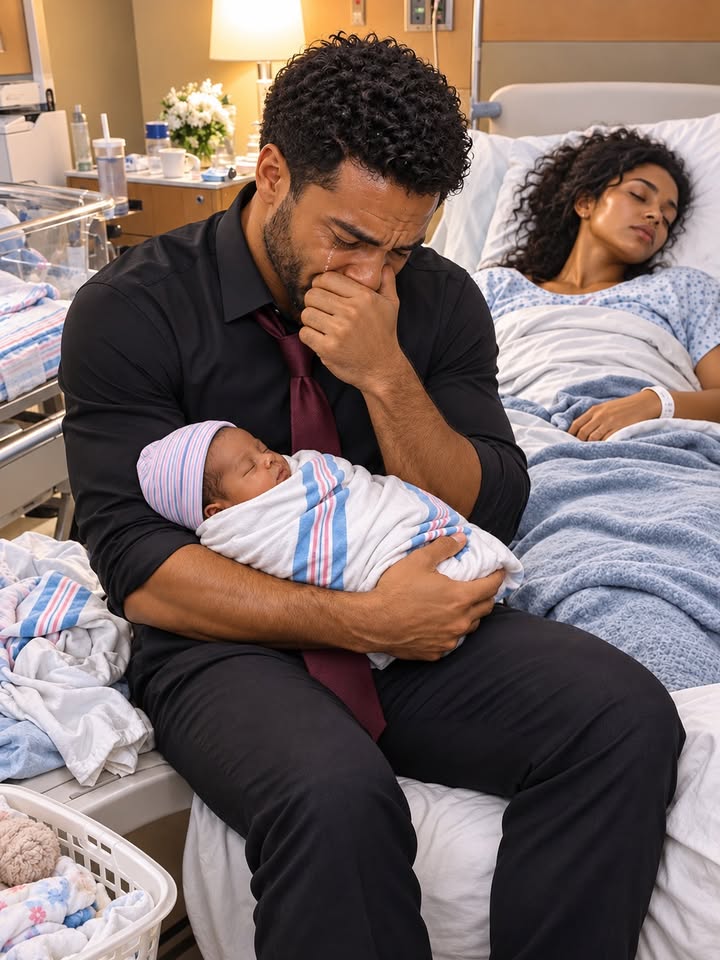
Part 4 – The Rulebook
“Colin,” Jenna whispered. “She told me it was tradition.”
I drew the chair closer to her bed, careful not to brush the IV line.
“What did she tell you?”
Jenna looked toward the doorway, where the nurse had stepped out to give us a moment.
“She said new mothers in her family stayed inside and rested for a while after giving birth.”
“That part can be sensible,” I said. “You needed rest.”
“I know,” Jenna replied. “But she said there were rules.”
She paused, collecting her strength.
“She said I shouldn’t drink too much water because it would make me feel swollen, and that the baby would do better if the room stayed cool.”
My fingers tightened around the phone.
“Did she explain why?”
“She said it was what her mother had done. That she’d raised you and Brooke that way.”
I looked at the line in Jenna’s hand, then at her face.
“Did she make you follow it?”
“She didn’t say it like an order at first.”
Jenna’s gaze settled on the blanket.
“She brought me tea and told me to lie down. When I asked for water, she said I should wait until I’d eaten. Later, when I asked again, she said I was fussing and needed to trust her.”
The air in the room seemed to thin.
“Why didn’t you tell me?”
“I tried to tell you I felt wrong. I tried to call.”
Her eyes lifted to mine, tired but clear.
“I didn’t know how to explain that I was being told my own body was lying to me.”
I wanted to reach for her, but I waited until she offered her hand.
When her fingers found mine, I held them gently.
“You weren’t supposed to carry that alone.”
“I know.”
Her answer held no accusation, which somehow made my shame sharper.
I had heard her say my name on the phone and let my mother explain it away.
I had watched Jenna’s pale face on video calls and accepted the word resting as if it were proof.
The officer’s call was still on my phone.
“Mr. Parker?” he asked. “Are you still there?”
“Yes. Jenna says Diane told her it was tradition.”
“Can you ask her if she remembers any other instructions from the note?”
I glanced at Jenna.
“She mentioned limiting water and keeping the room cool,” I said. “That’s what the note says.”
“Thank you. We’ll need to speak with her when her medical team says she’s ready, but there’s no urgency to do that now.”
I appreciated that he had asked rather than demanded.
Jenna closed her eyes for a moment.
“I don’t want to talk to the police yet.”
“You don’t have to,” I said. “They can wait.”
The officer heard me.
“That’s right,” he said. “We’ll work around her care.”
When I ended the call, Jenna’s hand remained in mine.
“I’m sorry,” she whispered.
“For what?”
“For making this harder for you.”
I looked at her, unable to understand how she could still feel responsible for the strain her own suffering had caused.
“You don’t have to apologize for telling the truth.”
She nodded, but the uncertainty stayed in her expression.
A nurse returned and checked the IV and monitor.
She asked Jenna how she was feeling, then reminded her that she needed rest and fluids as her doctors had directed.
Jenna gave a small, tired smile.
“I’m trying.”
The nurse adjusted the blanket and made sure the water was within reach.
When she left, I said, “You can drink whenever you want now.”
“I know,” Jenna replied. “It’s strange how hard it is to ask for something ordinary.”
“I’ll bring you anything you need.”
“I know that too.”
Her voice softened.
“But I need to learn to believe it again.”
I sat quietly beside her, letting that truth settle without trying to fill it with promises.
A knock sounded at the open door.
Ms. Patel stood in the hall, holding a folder against her chest.
“Jenna, would you be comfortable speaking with us later, once you’ve had more rest?” she asked. “You don’t have to decide now.”
Jenna considered the question.
“Later,” she said. “I can’t do it right now.”
“Of course,” Ms. Patel replied. “I’ll let the officer know.”
When she had gone, Jenna looked at me.
“Is Brooke still there?”
“The police have spoken with her. I don’t know where she is now.”
“Do you think she knew about the rules?”
“I don’t know.”
“Did she help Mom?”
I remembered the message on Jenna’s phone and the account of Brooke going to Mr. Dawson’s door.
“She was worried enough to ask the neighbor for help,” I said. “But she went back inside when Mom said everything was under control.”
Jenna absorbed this without speaking.
“I don’t know what that means,” she said at last.
“Neither do I.”
The honesty seemed to comfort her more than any guess I could have offered.
A nurse came in to tell us that Wesley’s fever was continuing to improve.
He was still being monitored, but the pediatric team was encouraged by his response to fluids.
Jenna covered her mouth with her free hand, and a tear slid toward her temple.
I brushed it away with my thumb.
“He’s strong,” she said.
“He gets that from you.”
She gave a faint smile, then turned her face toward the pillow.
The nurse asked if Jenna wanted me to visit Wesley while she rested.
Jenna nodded.
“Tell him I’ll see him soon.”
“I will.”
I walked down the corridor to the pediatric room, carrying the words of the note with me.
The room was warm, and the soft lights made Wesley’s face look less flushed than before.
Dr. Stein stood beside the bassinet, reviewing information on a tablet.
“He’s more settled,” he said. “We’re keeping a close eye on him, but the change is encouraging.”
“Could the cold house have affected him?”
“An unusually cool room can be uncomfortable for a newborn, but the concern here is the whole picture,” Dr. Stein replied. “We’re looking at his hydration, feeding, temperature, and the length of time before he received care.”
I nodded.
He spoke carefully, without guessing at anything he could not know.
I was grateful for that.
“Jenna says my mother limited her water,” I said. “She also told her to keep the room cool.”
Dr. Stein’s expression tightened with concern.
“After childbirth, a mother needs access to fluids and medical care when she feels unwell. A newborn also needs regular feeding and a comfortable environment.”
“I understand.”
“Those are general points,” he added. “The medical team will continue to assess both of them. We can’t determine from here what caused every symptom.”
“I know.”
I did know, though part of me still wanted a single answer that would make the fear simpler.
Wesley’s hand emerged from beneath the blanket, fingers opening and closing.
I stood near the bassinet and spoke to him in the quiet voice I had used the day before.
“Your mom is going to be all right,” I said. “We’re going to make sure of it.”
Dr. Stein glanced toward me.
“That’s what we’re working toward.”
I thanked him and stayed with Wesley until the nurse reminded me that he needed quiet.
When I returned to Jenna’s room, she was awake, watching the window.
The afternoon light had thinned to a gray strip across the wall.
“Was he awake?” she asked.
“Just a little.”
“Did he hear you?”
“I think so.”
She gave a faint, hopeful smile.
“Did you talk to the doctor about the note?” she asked.
“I did. He said they’ll keep monitoring both of you. He didn’t want to make assumptions.”
“That sounds right.”
I sat beside her again.
“Did Diane tell you where the tradition came from?”
Jenna’s expression changed.
“She said it came from her mother, and that it had kept you and Brooke healthy.”
“Did she say her mother had done anything like this after your births?”
“Not in detail. She said the family always kept new mothers in a quiet room for a while.”
Jenna hesitated.
“She also said my family had made me too independent.”
I looked at her.
“What does that mean?”
“She said I was used to doing everything my way. That after the baby came, I needed to stop questioning people who had already done this before.”
I felt the old instinct rise in me to defend my mother.
Diane had helped us prepare the nursery.
She had brought groceries, washed tiny clothes, and stayed up late helping Jenna after the delivery.
She had held Wesley carefully, with an expression of such tenderness that I had taken it for evidence of good judgment.
Then I remembered the cold room, the missing phone, and the neat lines on the care log.
“Did you believe her?” I asked.
“I wanted to.”
Jenna looked down at her hands.
“Everything was changing so quickly. I was tired, sore, and trying to do right by Wesley. When she told me the rules were normal, I thought maybe I was just too new to know.”
“You weren’t.”
“I know that now.”
She was quiet for a moment.
“Colin, I need you to understand something. I didn’t hide how sick I was because I didn’t trust you.”
“I understand.”
“I hid it because she kept telling me I was failing.”
The words entered me slowly.
“She said that?”
“Not exactly in those words. She said a good mother doesn’t panic. She said Wesley needed calm, not someone who cried every time she felt a little discomfort.”
Jenna’s eyes brightened, but she kept her voice steady.
“After a while, I started thinking that asking for help proved she was right.”
I lowered my head, then made myself look at her again.
“You were trying to get through the day.”
“I was trying to be a mother.”
“You already were one.”
Her mouth trembled.
I took her hand, and she held on.
For years, I had thought family advice was a simple kindness.
If someone had more experience, we listened.
If someone spoke confidently, we assumed they knew what they were doing.
I had never asked what happened when confidence silenced the person who was actually living through it.
A message came through on my phone.
It was from Officer Ramirez, asking whether I could come to a family room in the hospital to review the note and answer a few additional questions.
I told him I would come after Jenna had rested.
She closed her eyes, though she remained awake.
“Go,” she said. “I’ll be here.”
“Are you sure?”
“Colin, I want to know what it says.”
I kissed her forehead carefully.
“I’ll be back soon.”
Ms. Patel met me near the nurses’ station and walked with me to the family room.
Officer Ramirez was already there, along with another officer who had taken the earlier photographs.
On the table sat a copy of the handwritten page.
It was folded down the middle, with a faint crease through the ink.
The handwriting matched the feeding log.
At the top, my mother had written: Quiet days after birth.
Below it were several short instructions.
The paper said Jenna should remain in the bedroom as much as possible and avoid “unnecessary activity.”
It advised giving her warm tea rather than water between meals.
It recommended keeping the room cool and dim so the baby would sleep.
Near the bottom, in larger writing, was a sentence that made my stomach tighten.
If she becomes upset, keep the phone away until she calms down.
I read it again.
“Did Diane write this?” I asked.
“The writing appears consistent with the care log,” Officer Ramirez said. “We’re still confirming when it was written and whether anything was added later.”
“Is this something she got from her mother?”
“She told us it was a family practice,” he replied. “She said she believed the routine had helped her after childbirth.”
I looked down at the page.
“Did she think limiting water was safe?”
“She said she thought tea counted as enough fluid.”
The answer seemed plausible in the way a bad decision could be plausible.
Not harmless.
Not informed.
But possible.
I pulled out a chair and sat.
“Was the thermostat set to sixty-two because of this?”
“She said she wanted the room cool for the baby.”
“Did she know Jenna was sick?”
“She said Jenna appeared tired but did not tell her she felt seriously unwell.”
I pictured Jenna asking for water, then asking again.
I pictured my mother holding her phone and telling me everything was fine.
“Did Mom say why she didn’t let Jenna call me?”
Officer Ramirez kept his voice even.
“She said Jenna had been crying and calling you repeatedly, and that she wanted to give you room to focus on work. She said she planned to return the phone once Jenna had settled.”
The explanation was offered as a statement, not an excuse.
I looked at the final line on the page.
If she becomes upset, keep the phone away until she calms down.
“She wrote the rule down,” I said.
“Yes.”
“Was she trying to keep Jenna from asking for help?”
“We don’t know that,” the officer said. “We are establishing the facts and intent. She may have believed she was preventing anxiety. We also need to understand why she didn’t seek medical care when Jenna’s symptoms worsened.”
I rested my elbows on the table.
The note did not make my mother a stranger.
It made her more difficult to recognize.
She had brought groceries, held Wesley, and reminded me to eat before the long drive.
She had also chosen which voices Jenna was allowed to hear and which instructions she believed could replace medical advice.
For the first time, I understood that those things could be true at once.
“Did she say she was angry about Jenna and me moving?” I asked.
Officer Ramirez glanced at his notes.
“She told us you planned to move after the baby arrived.”
“That’s true. We were looking at places nearer Jenna’s work.”
“She said she had been disappointed that you would move farther away from her.”
My chest tightened.
“Why didn’t she tell me?”
“She said she didn’t want to create tension before the birth.”
The words sounded familiar.
A way of smoothing the surface while letting the pressure collect underneath.
“She was upset with Jenna?”
“She said the move was a decision you and Jenna had made together.”
I looked at the note again.
The instructions had not been written during some distant past.
The date on the police report placed the page in the same week as Wesley’s birth.
“Did she connect the routine to the move?” I asked.
“Not directly,” Officer Ramirez said. “She told us she wanted to help and thought Jenna needed a quieter recovery.”
I wanted to find one clear motive, one sentence that would explain why she had done all this.
Instead, there were several small reasons: tradition, worry, disappointment, confidence, and the belief that she had the right to decide.
None of them made the choices safe.
None of them made them simple.
“Has Brooke seen this note?” I asked.
“She saw the photograph during her interview,” the officer said. “She said Diane had described the routine to her as something their family did.”
“Did Brooke know Jenna was being told not to drink water?”
“She said she heard Diane offer tea, but she didn’t understand that Jenna was asking for water.”
“Did she know about the phone?”
“She said she knew Diane had taken it but believed Jenna had agreed to let her hold it.”
I looked at the officer.
“Did she believe that?”
“That’s part of what she’s still trying to explain.”
I stood and walked to the small window.
The parking lot glistened from the morning rain.
I could see the distant entrance where I had carried Wesley inside, wrapped in my hoodie, begging the staff to save my son.
I had thought the discovery would bring one clear answer.
Instead, each fact opened another question.
Why had Brooke asked the neighbor for help if she believed everything was under control?
Why had Diane turned him away?
Why had I treated my mother’s certainty as stronger evidence than Jenna’s own voice?
“Mr. Parker,” Ms. Patel said gently, “would you like some time before you speak with your mother?”
I turned back.
“Has she asked to speak with me?”
“She has,” Officer Ramirez said. “We told her she would have to wait until we had completed the initial interviews.”
I felt two impulses move through me.
One was to go to her and demand an explanation.
The other was to protect Jenna from hearing another version of events shaped by my mother’s confidence.
“I’m not ready,” I said.
“That’s understandable,” Ms. Patel replied.
I returned the copy of the note to the table.
“Can I take a photograph of it?”
“We can provide a copy through the appropriate process,” Officer Ramirez said. “For now, this one stays with the evidence file.”
“Of course.”
I was grateful that the police were treating every detail carefully.
The care with which they handled the paper made my own thoughts feel less orderly.
When I went back to Jenna’s room, she was awake and looking toward the door.
“Did you find out what the note said?”
“Yes.”
I sat down beside her.
“It says to keep the room cool, limit water between meals, and keep your phone away if you got upset.”
She stared at me without speaking.
“I’m sorry,” I said.
“Did she say why?”
“She said she thought she was following a family routine.”
Jenna’s expression softened in a way I had not expected.
“Was she trying to help?”
“I think she believed she was.”
“That doesn’t mean it helped.”
“No.”
She breathed in slowly.
“Did she say anything about the move?”
I hadn’t expected her to ask that.
“She told the police she was disappointed we planned to move farther away.”
Jenna looked back at the window.
“She never said that to me.”
“She didn’t say it to me either.”
For a while, neither of us spoke.
Then Jenna asked, “Did she think I was taking you away from her?”
“I don’t know.”
“She told me once that after the baby came, you’d be too busy to remember everyone else.”
I turned toward her.
“When did she say that?”
“Before you left for the trip. I thought she was joking.”
I tried to remember that day.
My mother had been helping pack the hospital bag, and Jenna had been folding the baby’s clothes.
Diane had laughed and said we would disappear into our little family after the birth.
At the time, I had taken it as affectionate teasing.
Jenna continued.
“She said she was glad I wanted to move, because you needed a bigger life than the one you had here.”
“That sounds kind.”
“It did, at the time.”
Her eyes met mine.
“Then she said she hoped you’d still make room for her.”
I did not know what to say.
I could hear my mother’s voice, quiet and reasonable, saying she had never tried to control us.
I could also hear Jenna saying she had tried to call me, and that her phone was gone.
“Do you think she was angry with you?” I asked.
“I think she was afraid of losing you,” Jenna said. “That isn’t the same thing as being angry.”
I took her hand.
“No. It isn’t.”
“But fear can still make someone do harm.”
The words were gentle, not excusing her and not condemning her beyond what we knew.
I thought of the years after my father left, when Diane had managed everything for us.
She had worked long shifts, kept the bills paid, and made sure Brooke and I were never left to wonder who would show up.
I owed her for the person I had become.
I did not owe her permission to ignore what she had done.
“I don’t know how to feel about her,” I said.
Jenna squeezed my fingers.
“You don’t have to decide today.”
“I keep thinking if I admit what she did, it means everything she did for us was false.”
“It doesn’t.”
She said it without hesitation.
“People can love you and still hurt you. Loving someone doesn’t make every choice they make safe.”
I sat with that.
My mother had loved me.
I believed that.
She had also taken Jenna’s phone, dismissed her pleas, and followed instructions that the medical team would never have recommended.
The two truths remained side by side.
A nurse came in to check Jenna’s temperature and ask how she was feeling.
She reported that Jenna’s fever was responding to treatment and that the doctors were pleased with the progress, though she would need continued care and rest.
Jenna thanked her, then asked if she could have water.
The nurse placed a fresh cup within reach.
“Whenever you’d like,” she said.
Jenna looked at the cup before taking it.
The hesitation was brief, but I saw it.
She brought the straw to her lips and drank slowly.
I let her finish before I touched the cup.
“More?” I asked.
“Not yet.”
She set it down herself.
It was a small gesture, but it belonged to her.
I stayed until her eyes began to close.
Before she drifted off, she said, “I want to talk to Brooke when I’m stronger.”
“We can arrange that.”
“I want to hear it from her, not from a report.”
“I understand.”
“And I don’t want anyone deciding what I’m ready to know.”
“I’ll make sure of that.”
She seemed satisfied, or at least too tired to keep asking.
I returned to the hallway just as Officer Ramirez came out of the consultation room.
“Mr. Parker, your mother has asked whether you’ll visit her,” he said.
“Is she still at the house?”
“She’s staying with a relative while we continue our work.”
“Can I talk to her later?”
“If you choose to. There’s no requirement that you do so now.”
I glanced through the window in Jenna’s door.
She was asleep.
“What does she want to tell me?”
The officer hesitated, choosing his words carefully.
“She said she wants you to understand why she believed the routine was safe. She also said there is something about your own childhood that she thinks you should know before you decide what this means about her.”
My first reaction was to ask what she could possibly mean.
Then I remembered the calm certainty with which she had called the routine tradition.
“She thinks her mother did the same thing?”
“She says the practice goes back further than her own experience.”
“That doesn’t explain why she hid Jenna’s phone.”
“No,” Officer Ramirez replied. “It doesn’t.”
The answer was honest, and I was grateful for that too.
I looked again at Jenna’s sleeping face.
“Tell her I need time.”
“I will.”
The officer nodded and walked down the corridor.
I stayed outside Jenna’s room, listening to the quiet rhythm of the hospital.
My mother wanted me to understand the past before I judged her.
I was beginning to understand that the past might explain her choices without making them harmless.
But what had happened in our family before I was old enough to remember—and why had she waited until now to tell me?
**–END OF PART 4–CLICK “NEXT” AT THE BOTTOM OF THE PAGE TO CONTINUE READING**
* * *
[PREVIOUS: PART 3](https://puretales.idolsgift.com/blog/part-3-the-message-jenna-couldn-t-send-008) | [NEXT: PART 5](https://puretales.idolsgift.com/blog/part-5-the-message-jenna-couldn-t-send-008)
✓ Lynn R. Adams
Part 4 – The Rulebook “Colin,” Jenna whispered. “She told me it was tradition.” I drew the chair closer to her bed, careful not to brush the IV line. “What did she tell you?” Jenna looked toward t…