PART 4: The Message He Wasn’t Meant to See 035
Part 4 – The Words She Remembered
“Please don’t send it to me,” Mara repeated, her voice careful. “I remember what I wrote.”
I stood beside the nursery door, the phone pressed to my ear, while late-afternoon light settled across the hallway floor.
For a moment, I could not make myself ask anything.
The letter had been written three days after our son died.
Isabella had remembered its words all this time.
“Do you know whether she wants it destroyed?” I asked.
“She didn’t say.”
“Then it stays where it is.”
“That’s what I told her attorney.”
I looked at the closed door.
“Thank you for letting me know.”
When the call ended, I remained in the hallway, listening to the silence of a house that had once seemed too large and now felt crowded with things I could not ask.
I had spent years believing that the hardest part of our story was the night I failed to answer.
Then I learned that Isabella had still hoped I would come.
I had thought the trust papers were the last thread tying her to me.
Now there was a letter, written in the days when she was grieving, that she remembered but did not want to read again.
Whatever she had put on that page, she had chosen not to send it to me.
I had no right to know what it said.
That knowledge did not stop my mind from inventing possibilities.
Perhaps she had written that she hated me.
Perhaps she had written that she missed our son too much to keep living in the house we had chosen for him.
Perhaps she had written something kind, and that was why she could not bear to see it again.
I went into the nursery and sat beside the crib.
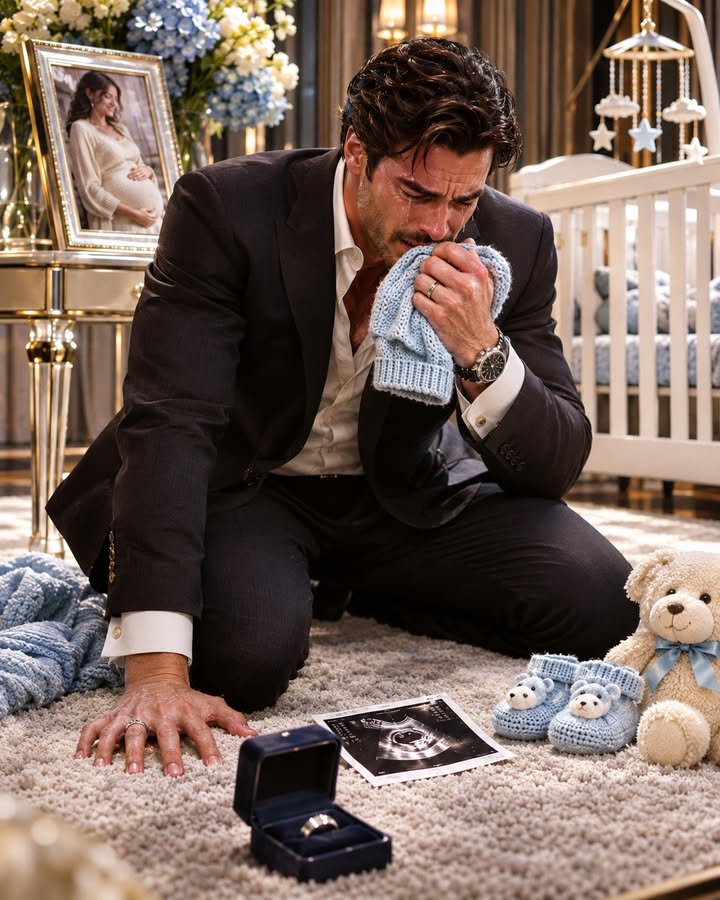
The little blue hat remained in its drawer, where I had placed it after Adrian showed me the hospital record.
I had once thought that holding onto the room proved I had not forgotten our son.
I understood now that remembering him was not the same as preserving every object exactly as if time had stopped.
Still, I could not bring myself to change anything.
The room belonged to a child who had never grown old enough to use it.
It belonged to the mother who had imagined him here.
And, in some small way, it belonged to the father who had been absent when he was needed most.
I stayed there until the light faded.
The next morning, Mara sent a short update about the trust.
The independent administrator had accepted the appointment, and the remaining paperwork would proceed without Isabella’s signature or mine.
There was nothing for me to do.
For once, I did not look for a way to make myself necessary.
I replied, Understood, and returned to work.
The week passed in meetings, calls, and documents that required my attention but not my heart.
I gave instructions, approved budgets, and listened to executives describe problems in careful, polished language.
Yet every time someone mentioned a delayed decision, I remembered Isabella asking me to stay until tomorrow.
I had learned to move entire companies with a phone call.
I had not learned how to sit beside my wife when she was afraid.
On Friday, Adrian called Mara’s office.
He did not ask to speak with me directly.
Mara called me afterward and said he had a request from Isabella.
“What kind of request?”
“She wants you to understand that the letter from the trust is not an invitation to contact her.”
“I know.”
“She also wants the original hospital note kept with her records, not included in any trust filing.”
“That’s already done.”
“Adrian asked me to confirm that.”
“Tell him it will remain private.”
“I will.”
There was a pause.
Then Mara added, “He said Isabella has been having a difficult week.”
My body reacted before my judgment could catch up.
“What happened?”
“I don’t know.”
“Did he say she was in danger?”
“No. He didn’t say that.”
“Then why mention it?”
“He said she asked him to make sure you didn’t mistake her refusal to read the letter for indifference.”
I closed my eyes.
It was a small sentence, but it opened a place in me that had been carefully shut.
“She isn’t indifferent,” I said.
“I don’t know what she is,” Mara replied. “Neither do you.”
She was right.
I had spent too long translating Isabella’s silence into whatever I needed it to mean.
“Tell Adrian I understand,” I said.
“Do you?”
“I understand that I don’t get to decide what her silence means.”
Mara said nothing for a moment.
Then she told me she would pass that along.
That night, I took the old hospital bracelet from the small box in the nursery drawer.
It was thin and pale, with our son’s name printed in faded black letters.
The nurse had given it to me with the tiny blue hat, and I had kept both without knowing whether Isabella wanted me to have them.
I had never asked.
I carried the bracelet downstairs and placed it beside the photocopy of the nurse’s note.
The note showed that Isabella had still wanted me there.
The bracelet showed that our son had been there, if only for a short time.
Between the two, I could see the outline of a family I had failed to protect.
Not because I could have changed what happened in the operating room.
Adrian had been clear about that.
Not because one more phone call would have stopped the medical emergency.
But because Isabella had faced the worst night of her life believing she had to face it alone.
I did not know what she had written in that letter.
I knew only that she remembered.
The following Tuesday, I received an unexpected call from Adrian.
Mara had arranged it after he asked whether I would be willing to speak, and she had made the limits clear before connecting us.
“He’ll discuss the old record only,” she had said. “Nothing about Isabella’s present medical care.”
“I understand.”
Adrian’s voice came through the phone with the same measured calm I remembered from his office.
“Mr. Romano.”
“Doctor.”
“I’m calling because the first note was not the only record Isabella asked me to preserve.”
My fingers tightened around the phone.
“What other record?”
“A brief entry from one of the nurses that night.”
“Why didn’t you tell me about it before?”
“Because she had not authorized me to.”
I sat down at my desk.
“And she has now?”
“She asked me to share it with you if you could hear it without treating it as a reason to contact her.”
“I can.”
Adrian did not answer immediately.
“Can you?” he asked.
The question was fair.
I looked toward the windows, where the city stretched beneath a pale winter sky.
“I will try.”
“That isn’t the same as saying yes.”
“No,” I said. “It isn’t.”
Adrian exhaled softly.
“I can read you the entry, and then we’ll stop.”
“Please.”
I heard paper shift at his end.
“The nurse wrote that Isabella asked whether you had been reached.”
My throat tightened.
“She was told staff had tried.”
“Then?”
“She asked them to keep trying.”
The line went quiet for a beat.
Then Adrian continued.
“She said she wanted you there when the baby was born.”
I lowered my head.
“I know that part.”
“Yes. This is the other detail.”
He paused, and when he spoke again, his voice was quieter.
“She said she wanted your son to have his father, even if she could no longer trust you.”
I shut my eyes.
“I’ve read that in the note.”
“This entry was made separately by another nurse.”
“Why preserve both?”
“Isabella asked that the records be kept together because she wanted the details documented accurately.”
I rubbed my thumb against the edge of the desk.
“Was she still hoping I would arrive?”
“She was hoping. That is what the record says.”
The word cut through me.
Hope was not forgiveness.
Hope was not a promise that she would stay.
Hope was simply the last thing Isabella had been able to offer me while everything else was falling apart.
“I thought she left because she stopped loving me,” I said.
Adrian did not hurry to answer.
“She may have loved you,” he said at last. “That doesn’t mean she could keep living as if love would make you dependable.”
I looked down at the papers scattered across my desk.
The truth had been there from the beginning.
I had simply preferred a version that made my failure easier to understand.
If Isabella had stopped loving me, then her leaving was an ending I could accept.
If she had still loved me and left anyway, then I had to face what love could not repair.
“She asked for her son to have me,” I said. “But she couldn’t trust me to come.”
“Yes.”
“Those things were both true.”
“Yes.”
I drew a slow breath.
“Could I have changed the outcome if I had been there?”
“No.”
“Are you sure?”
“I have been sure since the night he was born. Your presence might have meant something to Isabella. It would not have changed what was happening to your son.”
“I need to know that.”
“I know.”
His answer was gentle, but it held no false comfort.
“Then why does the record hurt this much?” I asked.
“Because it tells you what she needed from you, not what you could have done medically.”
I had no response.
For years, I had wanted grief to be a problem with a solution.
If I could find the right explanation, the right sacrifice, or the right apology, perhaps I could make the night less unbearable.
But the record had offered no escape.
It did not accuse me of causing our son’s death.
It did not say I could have saved him.
It only revealed that Isabella had still wanted me there.
“Did she leave the hospital believing I never came because I didn’t care?” I asked.
“That is not something I can answer for her.”
“I’m not asking you to speak for her.”
“You are asking me to interpret her feelings.”
I fell silent.
Adrian was right again.
Even when I framed the question as concern, I was asking someone else to tell me what Isabella thought.
“I’m sorry,” I said.
“You don’t have to apologize to me.”
“I’m sorry I keep trying to make you explain her.”
“You’re not the first person to do that.”
“I’m sure I won’t be the last.”
“No,” Adrian said. “But you can choose not to continue.”
The line stayed quiet between us.
I thought of the photograph outside the clinic, of Isabella’s hand over her stomach and the faint smile that had made me imagine a life from which I was excluded.
I thought of the message that had followed.
This time, she won’t have to call a man who refuses to answer.
At the time, I had read it as a challenge.
Now it seemed more like a promise someone had made to protect her from repeating an old fear.
“Thank you for telling me,” I said.
“I’m not telling you to bring you closer to her.”
“I know.”
“I’m telling you because she wanted the record understood accurately.”
“I understand.”
“Then let it stay with you. Don’t use it to demand anything from her.”
“I won’t.”
Adrian ended the call soon after.
I remained seated at my desk, holding the silent phone.
The room around me seemed suddenly too bright.
I had known the facts of that night.
I had known the number of calls.
I had known the time Isabella reached the hospital and the time our son was born.
I had known when his heart stopped.
But I had not known what she said while she was waiting for me.
She had asked the nurses to keep calling.
She had wanted the baby to have his father.
Even when she could no longer trust me, she had wanted our son to have me.
That was not a reason for me to seek her out.
It was a reason to understand the difference between being wanted once and being entitled forever.
I told Mara nothing beyond the fact that Adrian had shared the record Isabella authorized.
She did not ask for details.
For several days, the new knowledge settled into me without changing the shape of the house or the silence in my phone.
Then, one evening, I went back into the nursery and opened the drawer where the blue hat and bracelet rested.
I had kept them there because I could not bear to decide what should happen to them.
The hat was small enough to fit inside both my hands.
The bracelet was so light it barely made a sound when I lifted it.
I took them to the living room and placed them on the table.
For a long time, I sat beside them without touching either one.
At some point, I understood that I could not keep treating the nursery as a shrine to my worst mistake.
Our son had not been a symbol.
He had been a child we loved, even before we knew his face.
Isabella had carried him through fear and pain, and still thought of what kind of father he deserved.
I could not give him the life she wanted.
I could at least stop pretending that grief made me the keeper of every memory.
The next morning, I called Mara.
“Can you ask Isabella’s attorney whether she would prefer the hat and bracelet to be returned?”
Mara was silent for a moment.
“You’re not asking to deliver them yourself?”
“No.”
“You’re not including a note?”
“No.”
“You understand she might not want them.”
“Yes.”
“I’ll ask,” she said. “But I’ll make clear there’s no expectation.”
“That’s all I want.”
The request went out through counsel.
Two days later, Mara called me back.
“She appreciates the offer,” she said. “She does not want the hat or bracelet returned.”
I held the phone more tightly.
“Did she say why?”
“She said she knows where they are.”
“Is that all?”
“There was one more sentence.”
I waited.
“She said, ‘Please tell him I don’t need the objects back to remember our son.’”
I looked at the blue hat on the table.
The sentence was not an invitation.
It was not a rebuke either.
It was the first time Isabella had allowed a message about herself to travel to me without making it a boundary or a warning.
I did not ask Mara to send a reply.
For the next few days, I left the hat and bracelet where they were.
I did not know whether Isabella had kept other things.
I did not know whether she visited the cemetery, or whether she had chosen a place in her home to remember the child we had lost.
I did not know what she had written in the letter.
And for the first time, I understood that not knowing was not an injury she was required to heal.
A week later, the trust administrator sent a final notice confirming that my waiver had been accepted.
The trust would remain under independent management while the court reviewed its next steps.
Mara called to say the matter was out of my hands.
“Good,” I said.
“You sound relieved.”
“I am.”
“Do you want a copy of the final file?”
“No.”
She paused.
“You’re sure?”
“Yes.”
The original documents, including Isabella’s sealed letter, would remain with the trustee.
I had no reason to ask what happened to it.
I had no reason to know whether the court would ever decide it should be returned to her.
But that afternoon, Adrian called Mara again.
This time, he asked to speak with me.
Mara checked that I understood the limit before putting him through.
“Isabella’s records,” she said. “Nothing about the current pregnancy.”
“I understand.”
Adrian’s voice sounded tired when the call connected.
“Mr. Romano, I’m calling because Isabella asked me to clarify one thing about the night your son died.”
My hand went cold.
“What is it?”
“She does not want the record you saw to become a reason for you to believe she would have stayed if you had arrived.”
I stood.
“Did she say that?”
“Yes.”
“What does she want me to believe?”
“She wants you to understand that she left because she could no longer rely on you. The fact that she hoped you would come that night does not change why she left afterward.”
I walked to the window.
Outside, the city carried on as if no one had ever waited for a husband who did not answer.
“I understand,” I said.
Adrian paused.
“There is another detail.”
I turned from the window.
“What detail?”
“She asked the nurse to keep calling you because she wanted you there when the baby was born.”
“I know that.”
“She also told the nurse that if she couldn’t be there for her son, she wanted him to grow up knowing his father.”
My grip tightened on the windowsill.
“She said that before surgery?”
“Yes.”
“Did she think she might die?”
“She knew the situation was serious. She was afraid.”
I swallowed.
“And still she wanted him to know me.”
“Yes.”
“Why are you telling me this now?”
“Because the nurse’s note was preserved with the other record, and Isabella authorized me to share the full entry once you understood the first part.”
I closed my eyes.
“What else did she say?”
Adrian’s voice softened, but he did not turn the moment into comfort.
“She said she wanted him to know that his father had loved him, even if his father had not been there when he needed him.”
The room went utterly still.
I had not been there.
I had not answered.
I had made the people around me believe that everything important could wait.
And yet, in the middle of her fear, Isabella had wanted our son to know that I loved him.
I could barely breathe.
“She told him that?” I whispered.
“She told the nurse.”
“Did the nurse write it down?”
“Yes.”
I pressed one hand to my forehead.
I could imagine Isabella in the hospital bed, frightened and exhausted, still trying to protect the child she might never bring home.
She had not made me innocent.
She had not made me worthy.
She had wanted our son to have a father who loved him.
And she had hoped that love might survive even after she could not trust the man who carried it.
“I don’t know what to do with that,” I said.
“You don’t have to do anything with it.”
“I wish I could tell her I’m sorry.”
“She knows you are sorry.”
“How can you know that?”
“Because you have told her before.”
I stared at the distant rooftops.
“What she doesn’t know is whether you can respect the life she has now.”
I thought of the photograph.
The clinic’s green awning.
Her hand over her stomach.
The message that had warned me not to look for her.
“I won’t contact her,” I said.
“That is your choice.”
“No. It’s hers.”
Adrian was silent for a moment.
Then he said, “I hope you can keep remembering the difference.”
The call ended.
I stood by the window until the sky dimmed.
Isabella had wanted our son to know I loved him.
She had wanted him to have his father.
She had still asked the nurses to keep calling.
And when love could no longer make her trust me, she had left.
The truth did not make our marriage feel recoverable.
It made her choice more understandable.
She had not left because she felt nothing.
She had left because feeling something had never been enough to make me dependable.
The next morning, I went to Mara’s office and signed the last acknowledgment required for the trust.
She watched me put down the pen.
“Are you all right?” she asked.
“No.”
She nodded, as though she trusted that answer more than a reassuring one.
“But I know what I’m supposed to do,” I added.
“What is that?”
“Nothing.”
Her brow creased.
“Nothing?”
“Not nothing forever. Just nothing she hasn’t asked for.”
Mara held my gaze, then closed the folder.
“That’s a beginning.”
I left without asking whether she thought Isabella might forgive me someday.
I no longer wanted to make her future into a question I could solve.
Two days later, Adrian’s office sent Mara a sealed envelope.
The label bore only my name, and beneath it was a note stating that the contents had been approved for sharing by Isabella.
Mara called me before opening it.
“Do you want me to bring it to you?”
“What is it?”
“I don’t know.”
“Then don’t open it.”
“I won’t.”
“I’ll come to your office.”
When I arrived, the envelope rested on her desk, still sealed.
Mara did not touch it.
“Isabella’s attorney says this is the last record she authorizes Adrian to share,” she said. “It relates to the birth, not to her current pregnancy.”
I looked at the envelope.
For an instant, I thought of the letter she had written three days after our son died.
I had no right to ask for that.
This was different only because she had chosen to send it.
“Can you read it?” I asked.
“I can, if you want me to.”
I considered opening it myself, then wondered whether I could bear to read Isabella’s words alone.
“Please.”
Mara opened the envelope carefully and unfolded the single page inside.
Her eyes moved across the lines.
Then she stopped.
“What does it say?”
She looked up at me.
“She asked the nurse to write down something for your son.”
My chest tightened.
“What?”
Mara lowered her eyes to the page and read aloud.
“Tell him his father loved him, and tell him I wanted him to have his father.”
I sat down.
The words were simple.
They did not accuse me.
They did not excuse me.
They did not soften what I had done.
They belonged to Isabella, offered to a child she feared she might never hold, and recorded because she had wanted him to know how much he was loved.
Mara folded the page again and placed it on the desk.
“I can send this back through her attorney,” she said.
“No.”
“Do you want to keep it?”
I looked at the paper.
“I want her to decide.”
“She has already authorized you to read it.”
“Not to keep it.”
Mara nodded.
“I’ll return it as she requested.”
That evening, I placed the blue hat and bracelet back in their drawer.
I did not take them to the nursery.
I did not leave them on display.
They were not mine to use as proof that I had suffered enough.
Before I closed the drawer, I touched the hat once with two fingers.
Then I let it go.
The next week, I received a message from Adrian through Mara.
It contained only one sentence.
Isabella has chosen to let you know that the letter she wrote after your son died was not a goodbye to him.
I read the sentence once.
Then again.
The letter she had refused to read again was still sealed with the trust records.
But now I knew it had been about our son.
I wanted to ask what she had written.
I wanted to ask whether she had written about me.
I wanted to ask why she had remembered it so clearly and chosen not to see it again.
I did not ask.
I wrote back through Mara: Thank you for passing that on.
There was no response.
The silence that followed did not feel empty.
It felt like a line I had finally stopped trying to cross.
A few days later, Mara called with a new concern.
“Isabella’s attorney has contacted me,” she said. “The complication in her pregnancy has worsened.”
I stood so quickly that my chair rolled backward.
“What does that mean?”
“They didn’t share a diagnosis. They said she is being closely monitored.”
“Is she in the hospital?”
“I don’t know.”
“Is the baby in danger?”
“I don’t know, Dante.”
“Can Adrian help her?”
“He is already her doctor.”
“Is there anything she needs?”
“I don’t know.”
I stared at the trust file on my desk.
The old instinct rose in me, swift and certain.
Find the best hospital.
Call the chief of staff.
Arrange every resource before anyone could ask.
Then I remembered Adrian’s warning.
Fear did not turn Isabella’s life into mine to manage.
“Is there something her attorney wants from me?” I asked.
“Not yet.”
“Then I won’t do anything.”
Mara’s voice softened.
“Are you sure?”
“No,” I said. “But I’ll wait until she asks.”
For a few seconds, neither of us spoke.
Then Mara said, “That may be the hardest part.”
“I know.”
That night, I passed the nursery and kept walking.
I did not call the clinic.
I did not ask Adrian for an update.
I did not ask Mara to find out where Isabella was.
I sat alone in the study and let the fear stay where it belonged: with me.
At 11:26, an email arrived from Mara’s office.
The subject line was simple.
A request from Isabella’s attorney.
I opened it and read the brief message.
Isabella may need access to a specialist available at one of Mr. Romano’s hospitals.
She will consider a referral only if the hospital is not informed of Mr. Romano’s involvement and he has no role in her care.
I read the conditions twice.
There was no request for a visit.
No note asking for reassurance.
No promise that accepting help would bring us closer.
Only a narrow possibility, offered on terms that kept me outside the room.
I looked again at the final sentence.
Her attorney wanted to know whether I was willing to arrange the referral without attaching my name.
For the first time since the photograph appeared, Isabella was allowing me to do something for her.
And the only way to do it was to make sure she never had to thank me.
**–END OF PART 4–CLICK “NEXT” AT THE BOTTOM OF THE PAGE TO CONTINUE READING**
* * *
[PREVIOUS: PART 3](https://puretales.idolsgift.com/blog/part-3-the-message-he-wasn-t-meant-to-see-035) | [NEXT: PART 5](https://puretales.idolsgift.com/blog/part-5-the-message-he-wasn-t-meant-to-see-035)
✓ Lynn R. Adams
Part 4 – The Words She Remembered “Please don’t send it to me,” Mara repeated, her voice careful. “I remember what I wrote.” I stood beside the nursery door, the phone pressed to my ear, while late-…