PART 4: The Message Behind the Mirror 047
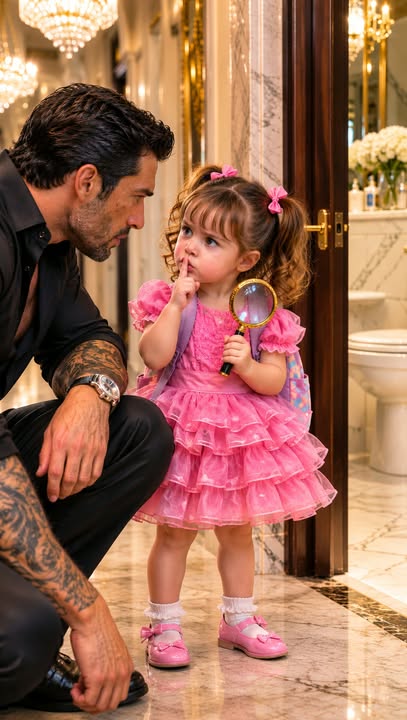
Part 4 – The Guardian’s Shadow
Marcus Carrera.
The name waited beneath the typed summary in the same precise hand as the movement lists, as though it had been written there not as a signature but as the answer to a question my father had never managed to ask.
I stared at it until the letters blurred.
“Is that his name?” Isabella asked, though there was no need to answer.
“Yes.”
Raphael lowered the camera, careful not to let its strap brush the papers.
“Could this be a note made by Marcus himself?”
“I don’t know,” I said.
The words felt inadequate, but they were honest.
Isabella leaned closer to the document without touching it.
“The handwriting on the movement lists looks like this.”
“It does,” Raphael said.
“Could the note have been added years later?”
“Certainly,” he replied. “The paper is old, but ink can be added at any time.”
I looked again at the typed summary.
My father had written that Marcus was to protect me and keep me informed of any material risk.
The summary had turned that simple instruction into something broader, giving Marcus authority over security expenses and leaving the limits of that authority unclear.
Then someone had added the phrase my father used for private matters.
Quiet harbor confirmed.
“What does that mean?” Isabella asked.
“It was something my father wrote when he wanted me to know a conversation was meant for just the two of us,” I said. “He used it on notes, too. It wasn’t a code for anyone else.”
“Maybe he used it with Marcus.”
“Maybe.”
Raphael glanced at me.
“Dante, this document may have been prepared after your father’s death.”
“Then why put the phrase there?”
“To make it look like an instruction from him,” Isabella said.
She spoke carefully, as if setting down a fragile object.
I studied the note again.
The phrase was written with the confidence of someone who knew what it meant, but there was no warmth in the words, no trace of my father’s slanted hand.
Only a record of something confirmed.
“Who is Calder?” I asked.
Raphael looked at the typed summary.
“The name on the signature line?”
“Yes.”
“I don’t recognize it. It may be a former employee, an outside accountant, or a legal contact.”
“Can we find out?”
“I can check the old staff records.”
“Do it.”
Raphael wrote the name in his notebook, then photographed the page again from several angles.
I returned my attention to the folder.
The inventory sheet listed only a few items, most of them in my father’s hand, and ended with that unfinished promise: For Dante, when he is old enough to ask.
I was old enough now.
It was my father who was gone.
“What did you think you’d find in the archive?” I asked Isabella.
“A record showing whether my introduction to you had been treated as a paid arrangement.”
“And instead you found messages tracking me.”
“I found evidence that someone had used the same accounts for security expenses and something that looked like surveillance.”
“Did you know there was an old folder with my father’s name?”
“No.”
“Did Marcus tell you that he’d been appointed my guardian?”
“No.”
The answer came without delay, but something in her expression had changed.
“What is it?” I asked.
She looked from the document to me.
“I’m trying to understand why he told me you needed someone to help you build a life beyond fear.”
The words, once offered as kindness, had become a thread that might lead somewhere darker.
“What did he tell you about my father?” I asked.
“Not much. He said your father had been protective, and that the years after his death had made you cautious.”
“That’s true.”
“He made it sound as though you’d chosen your life alone.”
I let out a breath that had no humor in it.
“I thought I had.”
Raphael slipped a sheet of protective paper between the documents.
“We need to be precise about what we know,” he said. “The old inventory establishes that your father wanted Marcus to look after you. The typed summary expands that arrangement, but we don’t know when it was made or who approved it. The handwriting in the margin resembles the movement lists, but that still needs to be verified.”
“I know.”
“And the payment records could have an ordinary explanation.”
“I know that too.”
Raphael held my gaze for a moment.
He had served my father long enough to remember the difference between caution and denial.
I wondered whether he saw me trying to protect Marcus, or trying to protect the boy I had once been.
“Did you ever see this handwriting before?” I asked him.
“Not that I remember.”
“Could it belong to someone in my father’s office?”
“It could.”
“Could it belong to someone in Marcus’s?”
“Also possible.”
He placed the inventory sheet back into the folder, then paused before closing it.
“There’s another issue,” he said. “This folder wasn’t on the shelf when Isabella found the records.”
“So someone put it here afterward.”
“Possibly.”
“Or she missed it.”
Isabella accepted the possibility with a small nod.
“I might have,” she said. “I was looking for a specific file, and I didn’t open every box.”
“Did you come back here after you copied the papers?”
“No.”
“Did anyone know you had been here?”
“Marcus knew I’d been asking questions about the expense records. He didn’t know I had come into this room.”
“How sure are you?”
“I’m not sure of anything anymore.”
The quiet in her voice reached me more deeply than a protest would have.
I wanted to tell her she could trust me.
But I had watched her from a hidden camera, entered the bathroom expecting a betrayal, and questioned her as though affection were a weakness she had exploited.
I had not raised my voice, but restraint did not erase suspicion.
“Isabella,” I said, “I don’t know what to believe yet.”
“I understand.”
“I believe you found these records.”
She watched me, waiting.
“I believe you thought you were protecting the evidence.”
“That doesn’t mean you trust why I did it.”
“No.”
She nodded, taking the answer without asking me to soften it.
“But I don’t think you hid the papers to hurt me,” I added. “That matters.”
Her eyes shone briefly in the archive’s harsh light.
“It matters to me too.”
Raphael’s phone vibrated.
He checked the screen and stepped toward the doorway to answer, lowering his voice.
I turned back to the shelf.
Beneath the space where Isabella had found the loose folder, the metal shelf showed a thin, pale rectangle in the dust, as if a document box had stood there for years and been removed recently.
I pointed it out.
“Was there a box here?”
Isabella came beside me.
“I don’t remember one.”
Raphael finished his call and returned.
“What is it?”
“Look at the dust.”
He crouched, examining the pale outline.
“Something was here.”
“Can you tell how long ago it was removed?”
“Not reliably.”
“Was the folder in the box?”
“Maybe,” Isabella said. “I found loose papers, not a box.”
Raphael looked along the shelf.
“There’s a shelf inventory label at the back.”
The label was small and yellowed, tucked near the wall.
He angled his light toward it.
The printed number had been partly covered by a newer strip of tape, but the original label remained visible beneath.
He photographed it, then used a gloved finger to lift the edge of the newer tape.
A handwritten code appeared.
V.M.—Personal, continued.
My father’s initials.
I felt my stomach tighten.
“Can you look up the code?” I asked.
“Not without the archive register.”
“Is the register here?”
Raphael scanned the room.
“It should be in the main office.”
“Then we get it.”
He considered the open door and the unguarded hallway beyond it.
“Not until I’ve secured these materials.”
“I can ask the office manager to bring the register.”
“If the register has been altered, asking for it may give someone time to change it further.”
“Then we go together.”
Raphael closed the folder and placed it in a document case.
The rest of the papers went into separate sleeves, each labeled with the time and location where it had been found.
It was painstaking work, slower than I wanted and more reassuring than I expected.
As he worked, Isabella stood near the shelves with her hands clasped, watching without offering to assist.
I knew she was trying not to touch anything.
I also knew she was trying not to feel like an intruder in the place where she had uncovered the first pieces of a story that could destroy what little trust remained between us.
When Raphael finished, he locked the case.
“Before we leave, I want to check the door log and the access panel.”
“The panel is disabled,” Isabella said.
“I’ll confirm that.”
He examined the lock, then the small keypad mounted beside it.
“There’s a manual override.”
“Who has the key?” I asked.
“Facilities, Marcus, and two people in administration.”
“Can the override be used without recording an entry?”
“Not if the system is working.”
“And if it isn’t?”
“Then the mechanical lock still leaves a record of who has a key, but not necessarily when they used it.”
The simplest explanations in my life had always carried the greatest risks.
Raphael photographed the keypad and checked the panel’s status using a diagnostic tool.
After several minutes, he looked up.
“The access system was taken offline four weeks ago.”
“Why?”
“The recorded reason says renovation.”
“Was there a renovation?”
“Not in this hallway.”
Isabella’s gaze met mine.
“How long before I found the papers?” she asked.
“About a week,” Raphael said.
“Did someone disable the panel so they could remove the folder?”
“Or it was disabled for another reason and someone took advantage of it.”
“Could that someone have been Marcus?” I asked.
Raphael took his time answering.
“Could have been.”
It was a careful answer, not an accusation.
I appreciated that he would not lend me certainty simply because I wanted it.
We left the archive with the document case in Raphael’s possession.
At the top of the stairs, I stopped.
“Is there a copy of my father’s old office records at the house?”
“Some,” Raphael said. “A few boxes were moved after he died. I don’t know where they ended up.”
“Marcus would know.”
“Probably.”
I looked through the narrow window in the stairwell.
Outside, the late afternoon had begun to fade, and the city’s lights were coming on one by one.
For years, I had remembered my father as the man who had left me too soon, followed by the men who stayed.
Marcus had been among them.
He had taught me how to recognize a careless tail, how to notice a familiar car appearing on a second street, how to sit with my back to a wall without letting anyone see me do it.
He had also sat at my father’s kitchen table and waited with me through the long hours after the funeral.
If my father had entrusted me to him, then perhaps none of the kindness had been false.
Perhaps Marcus had done what he was asked and crossed a line later.
Or perhaps every kindness had been part of an arrangement whose terms I had never known.
“Dante?” Raphael asked.
I stepped away from the window.
“Let’s go.”
On the drive back to the estate, Isabella sat facing the window.
The streetlights passed over her reflection in pale bands, and for several blocks she said nothing.
Then she asked, “Do you remember the first time Marcus brought us together?”
“I remember.”
“What do you remember?”
“That he said we’d get along.”
She gave a faint, tired smile.
“He told me you’d pretend not to enjoy the dinner.”
“That sounds like him.”
“He said you would test whether I was afraid of you.”
“Did I?”
“You asked whether I liked the city.”
“That wasn’t much of a test.”
“No. It was a good question.”
A small warmth touched her voice, then disappeared.
“What did you think of me?” I asked.
“I thought you were lonelier than you wanted anyone to notice.”
The answer landed with uncomfortable precision.
“And you stayed anyway?”
“I stayed because I wanted to know whether you were only lonely, or whether there was someone under all that caution.”
“Did Marcus tell you that?”
“No.”
“Did he ask you to help me?”
“Not in those words. He said you needed a friend who wasn’t impressed by your name.”
The city moved behind the glass.
I considered how easily a stranger’s kindness could become a tool if someone else placed it carefully in the right room.
“Did you believe him?”
“I did.”
“And now?”
“Now I’m trying to separate what I felt from what he may have planned.”
There was no resentment in her voice, only fatigue.
I understood the effort she was describing.
I was trying to do the same with Marcus.
When we reached the mansion, Elena met us in the front hall.
Sophie was asleep on the sitting-room sofa, her backpack tucked beside her and her pink ribbons loosened.
Elena had spread a blanket over her.
“She waited for you,” she said. “I told her you’d be back before bedtime, and she insisted on staying up to make sure.”
“Did she say anything?”
“She asked whether the bathroom was safe.”
I looked toward the stairs.
“Tell her I’m checking.”
Elena studied my face.
“Did you find something?”
“We found more questions.”
“That sounds like something.”
“It is.”
I glanced at the sleeping child.
“She shouldn’t have had to worry about any of this.”
“No,” Elena said. “But children notice when the people they love are worried.”
I could not disagree.
Raphael carried the document case into the library, where he set up a small scanner on the long table.
I followed him.
Isabella remained near the doorway, as if she had not yet decided whether she was welcome in the room.
“Come in,” I said.
She paused.
“You’re sure?”
“I’m sure I want you to hear what Raphael finds.”
She entered, but chose the chair farthest from mine.
The distance hurt.
It also felt earned.
Raphael made copies of the old documents, then opened his laptop to check the archive register.
A file appeared after several searches.
He read through the index, scrolling slowly.
“Vincenzo Moretti, personal materials,” he said. “Two boxes transferred to the estate after his death.”
“Where are they now?”
“The first was catalogued into the family records. The second is marked as transferred to security administration.”
“When?”
“Six months after your father died.”
“Who authorized the transfer?”
He read the entry again.
“Marcus Carrera.”
Isabella lowered her eyes.
I felt a sharp pull of grief, but it was not the grief I had expected.
It was grief for the years I had spent believing the story of my father’s final instructions was complete.
“Can you locate the second box?” I asked.
“The register says it was moved to the old residence on Ashland.”
“That house has been empty for years.”
“It was used for storage after the estate renovation.”
“Is it still under our control?”
“Yes.”
“Then we go tonight.”
Raphael closed the laptop.
“We should wait until morning and bring the proper staff.”
“Who would that be?”
“Someone independent of the security office.”
“Can you get them?”
“I can arrange it.”
“Then arrange it.”
I knew the urgency in my voice had begun to sound like fear.
I did not want the box to vanish before we could find it.
I did not want Marcus to learn what we had seen.
I did not want to admit that I was afraid the records would confirm a version of my life I had never agreed to live.
Raphael saw all of that, though he said nothing.
“Do you want to call Marcus?” he asked.
“No.”
“Do you want to tell him about the folder?”
“Not yet.”
Isabella shifted in her chair.
“If he’s involved, telling him will give him time to change the records,” she said. “If he isn’t, keeping him in the dark will make the breach between you worse.”
“I know.”
“What do you want to do?”
“I want the facts first.”
She accepted that, though I could see the cost.
Raphael’s laptop chimed.
He turned toward the screen.
A new message had arrived from an address used by the old office archive.
The subject line read: BOX TWO—TRANSFER CONFIRMATION.
Raphael opened it.
The message contained a single scanned receipt from a storage company, dated six months after my father’s death.
The box had not gone to Ashland.
It had been transferred to a private storage unit under Marcus’s name.
I leaned closer.
“Can you see the address?”
“Not on the receipt,” Raphael said. “There’s a unit number and a facility code.”
“Find it.”
“I will.”
Isabella stood.
“Why would Marcus keep your father’s papers in his own name?”
“I don’t know.”
“Maybe your father asked him to.”
“Maybe.”
That possibility offered no comfort.
Raphael enlarged the document and looked at the small print along the bottom.
“Dante, there’s another line.”
He turned the screen so I could see it.
The unit’s access authorization listed two people.
Marcus Carrera.
And Elena Ruiz.
For a moment, I did not understand what I was seeing.
Then I looked toward the sitting room, where Elena sat beside Sophie, one hand resting lightly on the blanket.
“Why would Elena have access to my father’s box?” I asked.
Raphael enlarged the signature.
The name was unmistakable.
Elena had been connected to the storage unit for years.
Isabella stood beside me, her face pale.
Before either of us could speak, my phone rang.
Elena’s name appeared on the screen.
I answered.
“Dante,” she said, her voice barely above a whisper. “I’m sorry. I should have told you before.”
I looked through the open library door at the woman who had watched over my house and my family with quiet devotion.
“Why were you listed on the storage unit?” I asked.
Elena fell silent.
Then, from somewhere behind her, Sophie murmured in her sleep.
Elena drew a shaky breath.
“Because your father asked me to keep something safe until you were ready to see it.”
“Until I was ready to see what?”
“His letter.”
I looked at the old inventory on the table.
For Dante, when he is old enough to ask.
“Where is it?” I said.
“I have it,” Elena replied. “But, Dante, there’s a reason I never gave it to you.”
“Tell me.”
“I can’t—not over the phone.”
A pause followed.
“Is Marcus with you?” she asked.
“No.”
“Then I need to tell you what your father wrote before anyone else finds out he left it.”
**–END OF PART 4–CLICK “NEXT” AT THE BOTTOM OF THE PAGE TO CONTINUE READING**
* * *
[PREVIOUS: PART 3](https://echoesofstories.idolsgift.com/blog/part-3-the-message-behind-the-mirror-047) | [NEXT: PART 5](https://echoesofstories.idolsgift.com/blog/part-5-the-message-behind-the-mirror-047)
✓ Lynn R. Adams
Part 4 – The Guardian’s Shadow Marcus Carrera. The name waited beneath the typed summary in the same precise hand as the movement lists, as though it had been written there not as a signature but as…