PART 4: The Mark in the Oak 046
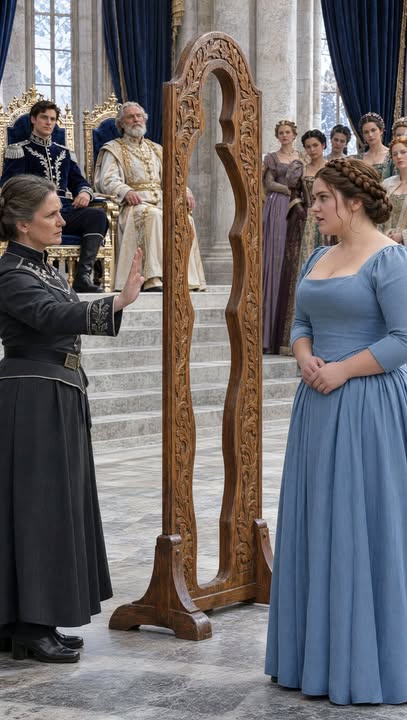
Part 4 – The Letter Behind the Oak
“She said the accusation was why your mother left.”
Beatrice’s words followed me down the corridor, settling over the ledger, the crossed-out name, and Alexander’s unfinished apology.
I turned back toward her.
“Did your aunt tell you where in Lord Harrow’s archive the record is?”
“No,” Beatrice said. “Only that she once saw the file there, years ago, when she was helping sort household papers.”
“Why would it be in his private archive?”
“I don’t know.”
Her hands tightened around the edge of her sleeve.
“She may not remember it correctly. I didn’t want to repeat a rumor as fact.”
“But you thought I should know.”
“Yes.”
I looked at the office door behind me.
Through its narrow glass panel I could see Mr. Vale returning the transfer order to a folder, while Alexander stood beside the desk, his head bent over the papers.
I had wanted someone to tell me my mother’s silence had not meant shame.
Instead, I had found a story that made the silence seem heavier.
“Could you ask your aunt to tell you more?” I said.
“I can try, though she is visiting family in the north for another week.”
“Then I’ll have to ask Lord Harrow.”
Beatrice’s expression turned doubtful.
“Perhaps you should speak with the king first.”
“I asked the steward to find the file.”
“And he will.”
“But if it is in Lord Harrow’s archive, I don’t know whether it will ever reach us.”
She studied my face, then gave a small nod.
“I’ll go with you if you want.”
The offer touched me more than I expected.
I had spent the previous day among women who looked at my invitation as though it were a clerical mistake.
Beatrice had no reason to place herself in the middle of a family’s old trouble.
“Thank you,” I said. “But I don’t want you drawn into something you don’t understand.”
“I already am,” she replied. “I care what happens to you.”
For a moment I could not answer.
Then the office door opened, and Alexander stepped into the corridor.
He stopped when he saw us.
Beatrice glanced between us, then gave my arm a gentle squeeze before making her way toward the staircase.
“I’ll find out what my aunt remembers,” she said. “And I’ll let you know as soon as I can.”
I thanked her again.
When she had gone, Alexander stood with his hands at his sides, not quite approaching.
“I heard the last part,” he said.
“I assumed you might.”
“I’m sorry.”
I could tell he meant it, but the words had begun to feel like a bridge he kept asking me to cross before he had built anything solid beneath it.
“Do you believe the ledger?” I asked.
His gaze dropped briefly to the floor.
“I believe it records that your mother was dismissed after a royal possession went missing.”
“And the accusation?”
“I don’t know.”
“Do you believe she took it?”
“No.”
The answer came quickly enough to surprise me.
“Then why did you hesitate yesterday?”
He took a breath.
“Because I didn’t want to tell you what I hoped was true as if I knew it.”
I watched him for a moment.
“That sounds careful.”
“It is.”
“Careful can feel a lot like doubt when you’re the one waiting for someone to believe you.”
He absorbed the words without defending himself.
“You’re right,” he said. “I should have asked what you knew about her before I asked what the ledger said.”
I had not expected him to understand so quickly.
It did not erase the hurt, but it gave me somewhere to set it down.
“I don’t know much,” I said. “She rarely spoke about the palace. I always thought it was because the work had been tiring, or because she didn’t want me to imagine a life she couldn’t give me.”
“Perhaps she was protecting you from something she had never been able to put right.”
“Perhaps.”
The old west wing held the quiet of a place that had outlived the people who once filled it.
Beyond the tall windows, snow had softened the garden paths and the bare branches.
I thought of my mother walking through this corridor, her hands full of linen or sewing, carrying a story she had never told me.
“I want to see Lord Harrow’s archive,” I said.
“I can ask him for the file.”
“Will he give it to you?”
“I don’t know.”
“Will you ask?”
“Yes.”
His response held no flourish, only the weight of a decision.
“I’ll go with you,” he added.
“I don’t need you to make him answer.”
“I know.”
“Then why come?”
“Because this is my family’s house, and the records belong to the people who worked here as much as they belong to the people who ruled it.”
He looked toward the closed office door.
“And because my mother may have been part of the story.”
The admission softened something in me.
Not enough to restore trust, but enough to let me imagine it might be possible.
“Then we’ll ask together,” I said.
Lord Harrow’s office was in the east wing, far from the rooms where household records were stored.
It was a bright, orderly space with a wide writing desk and framed maps on the walls.
The official himself rose when we entered, his silver hair neatly combed and his expression welcoming.
“Your Highness,” he said. “Miss Carter.”
He offered me a courteous bow.
“Please sit.”
“I’d rather stand,” I replied.
A flicker of surprise crossed his face, though he recovered quickly.
“Of course.”
Alexander remained beside me.
“We’re looking for a record concerning a royal keepsake that went missing while Margaret Carter worked in the household,” he said.
Lord Harrow’s smile faded, not into alarm but into something more guarded.
“That was a long time ago.”
“Mr. Vale found a ledger entry saying my mother was dismissed after a loss of royal property,” I said.
“I’m sorry to hear that.”
His tone was compassionate, but his eyes had already moved to Alexander.
“Such matters were handled through the household office. I’m not sure a complete record still exists.”
“Beatrice heard that the accusation was kept in your private archive,” I said.
Harrow’s brows rose.
“Beatrice?”
“I can’t say what her aunt saw,” I continued. “But I would like to see any file that names my mother.”
“I have no private archive in the sense you mean.”
He made a small gesture toward the shelves.
“There are papers entrusted to me for safekeeping, some of them relating to the household’s past.”
“Then perhaps you can help us look.”
His gaze moved to the prince.
“Of course, Your Highness. But I would advise caution. Old records are often incomplete, and a note written under pressure may not reflect what happened.”
“Then we should see it before deciding what it reflects,” Alexander said.
“Certainly.”
Harrow rose and crossed to a tall cabinet behind his desk.
He unlocked it, removed a narrow box, and brought it to the table.
The box was made of dark wood, its brass corners dulled with age.
He opened the lid and began sorting through bundles of paper tied with ribbon.
“I don’t recall the exact file,” he said. “There were several losses in the household that winter.”
“Several?” I asked.
“Small objects went missing during the renovations. Nothing of lasting importance.”
He spoke easily, as if the subject were no more than a list of misplaced buttons.
I watched his hands move over the papers.
They were steady, but when he reached a bundle secured with a faded blue ribbon, his fingers paused.
“That one may be what you’re looking for,” I said.
Harrow glanced at me.
“Possibly.”
He untied the ribbon and lifted the top sheet.
“Here is the inventory,” he said. “A silver reliquary, belonging to the late queen, was reported missing during the winter of—”
He stopped.
Alexander came nearer.
“Was anyone blamed?”
Harrow looked down at the paper.
“According to this, a laundry maid was questioned.”
“Who?”
“The name is not recorded.”
I felt the familiar pressure gather beneath my ribs.
“Was my mother the laundry maid?”
“I can’t tell from this page.”
“Then there must be another page.”
Harrow lifted a second sheet.
“The inquiry was closed within a week.”
“Why?” Alexander asked.
“Because the object was not found.”
“That isn’t the same as closing an inquiry.”
“Your Highness, these were household matters. The people involved were dismissed, and the matter was settled.”
The phrase made my hands go cold.
“Settled for whom?” I asked.
Harrow held my gaze.
“I meant that the palace moved on.”
“My mother did not.”
A silence opened between us.
Alexander stood slightly closer to me, though he did not touch my arm or try to answer for me.
Harrow lowered the page.
“I’m sorry for what your mother endured, Miss Carter. But you should not assume the record tells a complete story.”
“I’m not assuming anything. I’m asking to see the rest.”
“There may be nothing more.”
“Then it should be easy to show me.”
For the first time, something like irritation disturbed his polished manner.
“Miss Carter, I understand that you are upset. But it would be unfair to attach blame to people who are no longer here to explain themselves.”
“I’m asking for the chance to hear what happened to my mother.”
“And I’m trying to prevent an old uncertainty from becoming a new accusation.”
Alexander’s voice remained calm.
“We are not accusing you, Lord Harrow.”
“Good.”
“Not yet,” I said.
The words left my mouth before I could soften them.
Alexander looked toward me but did not reprimand me.
Harrow closed the bundle and returned it to the box.
“I’ll have the steward review the papers. If something relevant is missing, he can search the main archive.”
“You’ll send the papers to him?”
“I will arrange it.”
The conversation had reached a wall.
I looked at the box, then at the cabinet where it had been stored.
There was no reason to believe the missing page would appear because I had asked twice.
“Thank you for your time,” I said.
Harrow bowed, his expression once again gracious.
“I hope you find the answers you’re seeking.”
He sounded as though he wished the search would end before it began.
Alexander and I left his office without further argument.
In the corridor, I stopped beside a window overlooking the garden.
“He knew more than he told us,” I said.
“I think he recognized the file.”
“Do you think he was involved?”
“I don’t know.”
I turned toward him.
“Are you going to tell me that you believe him?”
“No,” he said. “I’m going to tell you I can’t prove he’s involved.”
The answer was measured, but it held something different from the day before.
He was not asking me to accept a record in place of a person.
“I’m glad you came,” I said.
“So am I.”
“Even if we learned nothing?”
“We learned he wanted the matter to stay settled.”
I looked out at the snow-striped path.
“That’s something.”
We returned to Mr. Vale’s office and asked him to look for the missing page.
He searched the main cabinets for most of the afternoon, while Alexander and I waited at the long table with a pot of tea that neither of us touched.
From time to time, the steward brought out a ledger or a folded bundle and checked the dates.
Each time, he shook his head.
When the winter records were finally exhausted, the light beyond the windows had begun to fade.
“I’m sorry,” Mr. Vale said. “The file is incomplete.”
“There was a list of people questioned,” Alexander said. “It must have been recorded somewhere.”
“It should have been.”
“Can you search the old west wing?”
“I can.”
“Then do that.”
Mr. Vale nodded.
He did not sound hopeful, but he did not refuse.
I rose from the chair and looked toward the corridor.
The carved frame was only a short distance away, standing in a small receiving room where the household had placed it after the proceedings.
I had been avoiding it all day.
“May I see the frame again?” I asked.
“Of course,” Alexander said.
We walked back to the room together.
The oak looked less like a test now and more like an artifact that had been carried from one life into another.
The carved opening cast a long shadow on the floor.
I stood beside the flower and ran my gaze over the grain.
“You said the west wing was renovated years ago,” I said.
“Yes,” Alexander replied. “My mother spent a great deal of time there before the work began.”
“Do you remember her using this frame?”
“I remember the doorway.”
His eyes rested on the notch.
“I remember her measuring me here, and sometimes the children of the staff.”
He fell silent.
“I had forgotten the flower.”
“Perhaps she wanted the children to recognize the marks as theirs too.”
“Perhaps.”
I lowered myself beside the base of the frame.
A narrow panel at the bottom looked slightly darker than the rest of the oak.
I touched its edge.
“Is this part of the frame?”
Alexander crouched beside me.
“I don’t know.”
The panel shifted under my thumb.
A fine line opened along one side, nearly invisible beneath the polish.
“Wait,” he said.
He leaned closer and examined the wood.
“Don’t force it.”
“I’m not.”
He fetched a small brass tool from a cabinet of household implements in the next room.
With his help, I eased the loose panel free.
It came away without breaking, revealing a narrow hollow inside the frame.
Something pale lay within.
Alexander held the panel while I reached into the opening.
The object was wrapped in a scrap of linen, brittle with age.
I lifted it carefully and set it on the table.
Neither of us spoke while I unfolded the cloth.
Inside was a letter.
The paper had yellowed and softened at the edges, and the ink had faded to brown.
A small blue flower was stitched into the linen wrapping.
My heart gave a hard, unsteady beat.
“That is the same thread,” I whispered.
Alexander looked from the cloth to the handkerchief in my bag.
“Your mother’s?”
“I don’t know.”
I unfolded the letter with both hands.
The writing was graceful but hurried, slanting unevenly across the page.
At the top, a name had been written in a hand I recognized from the few labels my mother had left in her sewing basket.
Margaret.
I sat down.
Alexander pulled a chair close but did not crowd me.
“Would you like me to read it?” he asked.
“No.”
My voice shook, but I continued.
“I need to hear her words myself.”
The first lines were addressed to Queen Eleanor.
I read them slowly, stopping once to steady the page.
“Your Majesty, I am writing because the truth has not been heard, and because I cannot leave the young kitchen maid to carry what is not hers.”
I looked up.
Alexander’s face had gone pale.
I returned to the letter.
“The silver reliquary was taken from the west cabinet by Lord Harrow’s assistant, who said he would keep it safe during the repairs. I saw him place it in a locked work chest. When it could not be found, the maid was blamed because she had carried clean linen to the room.”
My fingers tightened on the paper.
The letter continued.
“I spoke to Mr. Harrow. He told me the accusation would be withdrawn once the chest was searched. When I asked why it had not been searched already, he said the matter had been settled and that the girl would be sent home before the household became troubled by it.”
I lowered the letter for a moment.
The room seemed to have gone very still around us.
“She was protecting someone,” I said.
“Your mother believed the maid was innocent,” Alexander replied.
“She believed it enough to risk losing her work.”
I read on.
“If I am dismissed, let it be known that I did not take the queen’s keepsake, and neither did the girl. I would rather leave without a place here than watch a child learn that a uniform makes her an easy person to blame.”
My eyes blurred.
I blinked and kept reading.
At the bottom, the letter ended with a few lines in a different hand, softer and more deliberate.
I recognized the shape of my mother’s name, but the words above it were not hers.
It was signed Eleanor.
Alexander leaned closer.
“My mother wrote a response.”
The final lines were faint, but still legible.
“I will see that the girl is sent home safely and that your name is not made a weapon against you.”
The words seemed to lift the room and then set it down again, altered.
For years, my mother had carried the consequence of an accusation she had tried to stop.
She had left without telling me, perhaps because she thought the truth had died with the people who knew it.
Or perhaps because no one had ever made room for her to speak.
“She wasn’t dismissed for stealing,” I said.
“No,” Alexander answered. “She was dismissed for refusing to let an innocent girl be blamed.”
The last of my uncertainty gave way to grief.
I bowed my head over the letter.
My mother’s silence had not been shame.
It had been the silence of someone who had chosen another person’s safety over her own explanation, and then gone home believing the palace would remember the difference.
Alexander’s hand rested on the edge of the table.
He did not touch me until I reached for him.
When I did, he closed his fingers around mine.
“I’m sorry,” he said.
This time the words did not ask me to make anything easier for him.
“They should have believed her.”
“Yes.”
“You should have asked me what she was like before you believed a line in a ledger.”
“Yes,” he said again. “I should have.”
He did not turn away from what he had done.
That mattered more than I could tell him.
I looked at the letter’s signature.
“Your mother knew.”
“She did.”
“Did she answer my mother?”
“Perhaps this letter was never sent.”
“Or it was hidden here.”
We both looked at the hollow in the frame.
The letter had been placed where the marks of childhood were kept, behind the same oak that held the memory of Queen Eleanor measuring the children who came to the palace.
There was a reason for that.
I examined the paper more closely.
“Did your mother write this after the accusation?”
“I don’t know. I was very young.”
A sound came from the doorway.
Mr. Vale stood there, his gaze fixed on the letter.
For a moment, he seemed to forget his usual reserve.
“Where did you find that?” he asked.
“Inside the frame,” I said.
He came closer, careful not to touch the papers.
When he saw the queen’s name, his face changed.
“I wondered whether there had been another copy.”
“You knew about the letter?” Alexander asked.
“No, Your Highness. I knew there had been an inquiry into the reliquary, and I knew Mrs. Carter tried to protect a kitchen maid. I never knew she had written to the queen.”
“Why didn’t you say so?” I asked.
“I was not certain the stories belonged to the same event. The records were incomplete, and I did not want to lead you toward a conclusion I could not support.”
He looked at me with genuine regret.
“I should have told you what I remembered.”
“What did you remember?”
“That your mother was kind to the younger staff. She would mend their aprons without charging them, and she often stayed late to help the kitchen girls finish their work.”
His gaze returned to the letter.
“I remember one winter in particular. The queen had opened the west wing to families whose homes had been damaged by the cold. There were children everywhere. Your mother was often with them.”
Alexander looked at the flower carved in the oak.
“Was she the one who made these marks?”
“I believe she was.”
I ran my thumb along the tiny petals.
“My mother carved this?”
“Perhaps with the queen,” Mr. Vale said. “The flower was a sign that the children had been seen, that their height and their names mattered. Mrs. Carter used to stitch the same flower onto handkerchiefs for them.”
I looked down at the blue blossom on the linen.
The resemblance was not a coincidence.
It was not simply a mark my mother had left in the palace.
It was a small promise that she had made to children who might otherwise have been overlooked.
Alexander’s face had grown distant.
“What children?” I asked.
“Families came through during a difficult winter,” Mr. Vale said. “Some of the staff lived in the west wing temporarily. The queen wanted the children to feel at home.”
The prince looked at the notch.
“Was I there?”
“You were very young, Your Highness.”
He stared at the wood.
“Do you remember a woman who gave you something to hold when you were frightened?”
Mr. Vale’s expression softened with recognition.
“There was a night when the nursery was cold and the queen was away. A seamstress sat with you until the fires were lit.”
Alexander looked at me.
“Was it your mother?”
“I don’t know,” I said.
But a memory had already formed in his face, not quite a picture, more like the trace of a feeling returning.
“I remember a flower,” he said. “Someone drew one on a piece of cloth and told me it could keep the dark from feeling so large.”
I held the linen in my hands.
“Maybe she gave it to you.”
“Maybe.”
The prince’s eyes shone, though he did not let the feeling become a tear.
“I never knew her name.”
I could not find an answer that would make the years simpler.
So I let the truth stand between us, quiet and bright.
Mr. Vale studied the letter again.
“If this was hidden in the frame, someone wanted it kept safe.”
“Or someone wanted it forgotten,” I said.
He glanced toward the corridor.
“I’m afraid that may be possible.”
Footsteps sounded beyond the open door.
A servant appeared, followed by Lord Harrow.
The official’s face was composed, but his gaze went straight to the opened frame and the letter on the table.
“I was told you had found something,” he said.
Alexander rose.
“We found a letter from Margaret Carter to Queen Eleanor.”
Harrow stopped a few paces from the table.
“May I see it?”
I kept one hand on the paper.
“You may look from there.”
His eyes moved to the letter, then to the linen wrapping.
“I see.”
“You knew the reliquary had been taken by your assistant,” Alexander said.
“I did not know that.”
“The letter says my mother told you.”
Harrow’s expression did not change.
“Your mother wrote this?”
“My mother wrote it,” I said. “The queen answered.”
He looked at the final lines.
For the first time, his composure seemed to falter.
The change was small, but I saw it.
“So it was hidden all these years,” he murmured.
“Why?” Alexander asked.
“I can’t answer that.”
“You were responsible for the household records.”
“I was responsible for many things.”
“Were you the one who arranged for this frame to be used?”
Harrow’s gaze shifted to the oak.
“I submitted a suggestion that the frame might be suitable for the final assessment.”
“Why?”
“It was a familiar palace object. Nothing more.”
“Someone crossed your name out on the transfer order,” Mr. Vale said.
“That was an administrative mark.”
“You insisted on the frame,” I said. “You knew my mother’s name was tied to the old accusation.”
Harrow looked at me without anger.
“I did not know you would be a candidate.”
“But you knew my name when I arrived.”
“I recognized it after the list was circulated.”
“Then why not speak to me?”
He lowered his eyes.
“Because I did not know what I could tell you.”
“Or because you wanted the past to remain settled.”
The words did not sound like an accusation now.
They sounded like a question whose answer mattered more than the tone in which it was asked.
Harrow was silent for a long moment.
“I thought the matter had been resolved,” he said.
“By dismissing my mother?”
“By closing the inquiry.”
“The queen’s letter says she promised my mother would not be punished.”
“I never saw that letter.”
“But you knew my mother had been dismissed.”
“Yes.”
“And you allowed the record to say she left because royal property went missing.”
“I did not write that entry.”
“You kept the file.”
“I kept many files.”
The reply was controlled, yet his face looked older than it had when we entered his office.
Alexander’s voice remained low.
“Then help us correct what the records say.”
Harrow’s attention rested on the queen’s handwriting.
“I can help recover the reliquary,” he said. “It may still be somewhere in the palace stores.”
“Why wasn’t it recovered before?” I asked.
“I don’t know.”
“But your assistant took it.”
“That is what the letter says.”
“And the kitchen maid was sent away.”
“I believed the matter had been settled.”
“How could you believe that when my mother’s name remained in the ledger?”
He had no answer.
The servant in the doorway shifted uneasily.
Harrow looked toward him, then back to me.
“There is another record,” he said. “A note from the queen, separate from the letter you found. It was placed in the royal correspondence box.”
“Where is it?” Alexander asked.
“In the king’s private papers.”
“Does it say what happened to the reliquary?”
“I don’t know.”
“Then we will ask my father to open the box.”
Harrow inclined his head.
“Yes, Your Highness.”
He did not leave at once.
His gaze lingered on the blue flower in the linen.
“I remember your mother now,” he said to me. “She was a quiet woman.”
“She was not silent when someone else was being blamed.”
A brief, rueful expression crossed his face.
“No,” he said. “She was not.”
He turned toward the door.
“Lord Harrow,” I said.
He stopped.
“Why did you insist the frame be used?”
The room held its breath.
He looked back at me, and for a moment I thought he might give us another careful answer.
Instead, he said, “I wanted to know whether the mark was still there
**–END OF PART 4–CLICK “NEXT” AT THE BOTTOM OF THE PAGE TO CONTINUE READING**
* * *
[PREVIOUS: PART 3](https://echoesofstories.idolsgift.com/blog/part-3-the-mark-in-the-oak-046) | [NEXT: PART 5](https://echoesofstories.idolsgift.com/blog/part-5-the-mark-in-the-oak-046)
✓ Lynn R. Adams
Part 4 – The Letter Behind the Oak “She said the accusation was why your mother left.” Beatrice’s words followed me down the corridor, settling over the ledger, the crossed-out name, and Alexander’s…