PART 4: The Mark Beneath the Gold 046
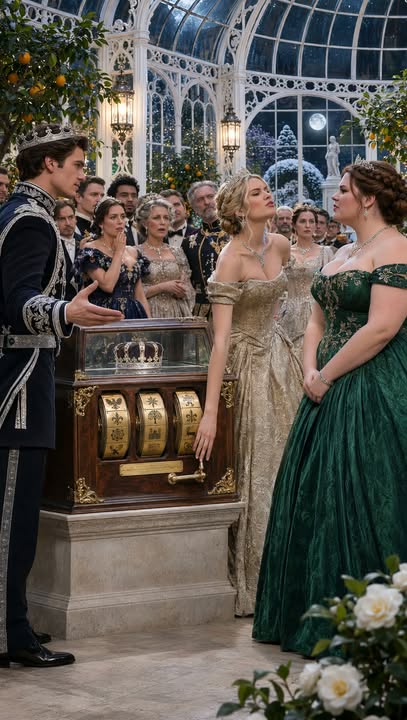
Part 4 – The Queen’s Choice
At the bottom of the note, beneath a smudged date, someone had written a name.
Emma leaned closer.
It was her father’s.
For several seconds, she could hear nothing but the quiet rasp of paper shifting beneath the curator’s careful hands.
Alexander looked from the name to the drawing, then to Emma.
“Your father worked on the chest?”
“I don’t know,” she said.
The answer felt inadequate, but it was the only honest one.
She read the note again, following the faded strokes with her eyes.
“The lower catch must remain untouched until the queen has made her choice,” she murmured.
“What choice?” Victoria asked.
“Not a choice about the chest,” Alexander said. “A choice made by the queen.”
His voice had changed, the steadiness of it giving way to something more personal.
The curator lowered his gaze to the drawing.
“The date is difficult to read, but it appears to be from the year before Her Majesty married your father.”
“My father?” Alexander asked.
The curator glanced up, surprised by his reaction.
“Your mother’s father, I meant. The late king.”
Alexander nodded, but his attention remained on the paper.
Emma turned the sheet over once more, checking the corners for a signature or another clue.
The name at the bottom had been written in a different hand from the note.
Her father’s handwriting was unmistakable.
It was smaller than the one she had seen in the restoration ledger, but the same careful slant ran through every letter.
“He was here,” she said.
“Perhaps he was asked to repair the lock,” Victoria suggested.
“He was living in America then,” Emma replied. “At least, I think he was.”
She tried to summon the stories he had told her about his early years, but most had come in pieces over kitchen-table dinners, between the ordinary details of work and bills.
He had mentioned a winter spent traveling.
A workshop in Europe.
A commission he could not discuss because the client valued privacy.
None of it had sounded like palace history.
“I never knew he had been connected to the royal family,” she said.
Alexander’s expression softened.
“Nor did I know your father’s name was connected to my mother’s chest.”
The word my seemed to bring him back to himself.
He looked again at the annotation.
“Could the queen’s choice have been about who would inherit the chest?”
“Or what would be placed inside it,” Emma said.
The curator lifted the drawing toward the lamp.
“There are two layers of writing here. The note about the lower catch appears to be in the same hand as the annotations on the front.”
“And the name?” Alexander asked.
“Added later, I think.”
Victoria moved closer to the table.
“Could the note have been written by the queen?”
The curator studied the loops and narrow letterforms.
“I would need to compare it with known samples.”
Alexander looked toward the archive door.
“Can we see my mother’s papers?”
The curator hesitated.
“Those records are held in the royal collection, as I mentioned. The keeper will need to approve access.”
“Then we’ll ask him.”
“I can send a request.”
Alexander glanced at the drawing.
“I’d rather ask in person.”
Emma understood the urgency in his voice.
Until that morning, his mother’s private mark had been an intriguing clue.
Now the archive had placed her choice at the heart of the chest’s design, and his own mother’s memory seemed suddenly close enough to reach.
The curator arranged for an attendant to take them to the keeper of the royal collection.
On the way, Alexander walked beside Emma through a corridor lined with portraits of former queens.
He did not speak until the others had fallen several paces behind.
“I’m sorry,” he said.
Emma looked at him.
“For what?”
“For the way this is happening.”
“You mean finding out our fathers knew each other?”
“That, and the fact that everyone else seems to know something about my mother that I don’t.”
The confession was quietly made, without bitterness.
Emma thought of her own father’s name appearing beneath a note she had never seen, and the same strange sense of absence opened within her.
“I don’t know what my father knew,” she said. “I don’t know why he kept this from me.”
“Maybe he thought it was no longer important.”
“Or perhaps it was important enough that he didn’t know how to explain it.”
Alexander looked at the portraits.
“My mother used to tell me that a secret could be a kindness if it protected someone from a burden they weren’t ready to carry.”
“Did you believe her?”
“When I was young, I thought she meant that adults could keep secrets from children.”
“And now?”
“Now I wonder whether she was asking me not to mistake privacy for distrust.”
Emma considered that.
“Those aren’t always easy to tell apart.”
“No.”
He stopped before a portrait of Queen Elara.
She had been painted in a deep blue gown, one hand resting on a writing desk and the other holding a small brass tool.
She looked less like a distant monarch than a person interrupted while working.
Emma studied the tool in her painted hand.
“Do you know what that is?”
“A key gauge,” Alexander said. “My mother kept one in her desk.”
“She worked with locks?”
“Not professionally. But she understood mechanisms. She said they were honest about what they could hold.”
The curator, who had caught up with them, paused beside the painting.
“Her Majesty was especially interested in the old workshop records.”
“Was she interested in this chest?” Emma asked.
“She commissioned its restoration,” he replied. “That much is in the public household accounts.”
“When?”
“Not long before she became queen.”
Alexander’s gaze remained on the portrait.
“Why have I never heard that?”
“Perhaps because the restoration was considered a private matter.”
“Or because no one thought it worth mentioning.”
The curator offered no answer.
The keeper received them in a modest room filled with archival boxes and narrow cabinets.
He listened as Alexander explained the discovery, then examined the drawing without touching its surface.
When the prince showed him the date and the name beneath the note, the keeper’s expression grew thoughtful.
“Her Majesty’s private papers contain several correspondence bundles from that period,” he said.
“Could we look at them?” Alexander asked.
“Some are still sealed under the instructions she left.”
“Are those instructions available?”
The keeper nodded.
“I can consult the register.”
He disappeared into the adjoining room.
Emma watched Alexander remain perfectly still.
In the conservatory, he had stood under the attention of the court as if it were weather he had learned to endure.
Here, waiting for a sentence from a keeper, he looked like a son hoping the past might answer him.
Victoria sat on the edge of a chair.
“I was told the chest would reveal what kind of woman the prince ought to marry,” she said.
Emma turned toward her.
“Who told you that?”
“One of the advisers, during a private meeting before the event.”
“Did he say it came from the queen?”
“He said the queen had intended the chest to guide the prince’s choice.”
Victoria’s hands folded in her lap.
“I believed it because it made the competition seem thoughtful instead of political.”
Alexander faced her.
“Which adviser?”
“Lord Harrow.”
His expression tightened, but he did not speak.
Victoria continued.
“I thought the riddle had been created to measure us. I didn’t question why the palace was using a contest to decide something so personal.”
“You were given a story that made the arrangement seem reasonable,” Emma said.
Victoria looked down.
“So were you.”
Emma felt the truth of it settle between them.
The announcement in the conservatory had been presented as an unbreakable promise, but the records had shown no formal marriage contract.
The advisers had used a familiar royal object to give their plan the appearance of inheritance.
The keeper returned with a narrow book.
He laid it open on the desk and ran a finger down the listed instructions.
“Queen Elara’s papers were to remain sealed until the chest was opened,” he said.
Alexander’s face went pale.
“Until the chest was opened?”
“That is what the register says.”
“Who wrote the instruction?”
“It was entered by the royal secretary, but the wording appears to have been dictated by the queen.”
Emma felt a chill despite the warmth of the room.
The chest had not been intended to select a bride.
It had been designed to keep something hidden until someone had opened it.
“Could the papers be unsealed now?” she asked.
The keeper studied the register.
“The condition has been met.”
“Then may we see them?” Alexander asked.
The keeper drew in a breath.
“There is an additional instruction. The correspondence may be opened by the heir, accompanied by one witness of his choosing.”
The prince looked at Emma.
The request he did not make was clear in his face.
Emma glanced at the keeper.
“If I’m the witness, I want to know what that means.”
“It means you may observe the papers and confirm their condition,” the keeper said. “It does not give you authority over them.”
“That’s all right.”
Alexander’s eyes held hers.
“You don’t have to.”
“I know.”
The keeper placed the register back on the desk.
“Then I will prepare the bundle.”
He led them to a small room at the rear of the collection, where a single table stood beneath a shaded lamp.
The air smelled of dry paper and cedar.
The keeper brought in a flat archival box, set it down, and checked its seal against the record.
Alexander watched each movement.
Emma stood beside him, close enough to see the faint tremor in his fingers when the keeper cut the old ribbon.
Inside the box lay a packet of letters tied with faded blue cord.
A small envelope sat on top.
The queen’s private mark had been pressed into its wax.
Alexander stared at it.
“My mother’s mark,” he whispered.
The keeper turned the envelope over.
“Her Majesty left instructions that this letter be read first.”
“Is it addressed to me?” Alexander asked.
“No.”
The keeper pointed to the front.
The ink had faded, but the name could still be read.
Elowen.
The name of the old workshop’s founder.
Emma thought of the open circle and short stroke that had appeared beside the chest’s middle wheel.
“Could it be addressed to the maker’s family?” she asked.
“Possibly,” the keeper said. “The family correspondence was kept separate from the formal papers.”
Alexander looked at the packet.
“Will you read it?”
The keeper gave him the envelope.
“It belongs to you, Your Highness.”
Alexander broke the seal with care.
Inside lay a single page, folded twice.
He opened it and began to read.
His face changed as he moved through the first lines.
The tightness in his shoulders eased, then returned in a different form.
He read silently to the end.
“Would you read it aloud?” Emma asked.
He looked at her.
For a moment, he seemed unsure whether the words were his to share.
Then he nodded.
“My dear Elowen,” he read, “you made the chest with a better question than I could have written myself.”
The keeper lowered his eyes.
The letter continued.
“I asked for a test of judgment, but you reminded me that a test can only show what a person chooses when no one is watching.”
Alexander paused.
Emma could hear the soft scrape of the page beneath his thumb.
“My son will one day be asked to choose between what is expected of him and what he believes to be right. I cannot make that choice for him, and I do not wish to.”
The prince’s voice grew quieter.
“So I have asked you to make the chest open only to someone who understands that wisdom is not certainty, justice is not rank, and compassion is not weakness.”
Victoria’s eyes moved to Emma.
Alexander continued.
“The symbols should reward no family, name, or station. Let the person who opens it remind him that he must choose freely, even when the court would prefer a convenient answer.”
The room was silent.
Emma felt the meaning of the riddle shift in her mind, not because it had changed, but because the reason behind it had finally become visible.
The chest had not been a test of worthiness for the prince.
It had been his mother’s quiet attempt to preserve the possibility of his choice.
Alexander lowered the page.
“She intended the chest to protect his freedom,” Victoria said.
“Not to select a bride,” Emma replied.
The keeper nodded slowly.
“The letter says nothing about marriage.”
Alexander looked again at the lines.
“Why did the advisers say it did?”
“Perhaps they misunderstood the letter,” the keeper offered.
“Or used its language to justify what they wanted,” Victoria said.
Her voice held no triumph.
The discovery seemed to have embarrassed her more than it relieved her.
Emma looked at the letter.
“Does it mention my father?”
Alexander scanned the page once more.
“No.”
“Then we need to see the rest of the correspondence.”
The keeper reached for the blue cord.
“There are several letters from the same period.”
He untied the packet.
The pages within were arranged by date, though a few had slipped out of order.
One bore the old workshop mark in the corner.
Another contained a small pencil sketch of a lower catch.
The curator, who had joined them in the room, recognized the writing on the sketch.
“This is the same hand as the note on the drawing.”
He placed the sketch beside the archival sheet.
The lettering matched.
Emma leaned toward the paper.
At the bottom of the sketch, someone had added a line in her father’s handwriting.
He had written only four words.
Keep the choice with her.
“Her?” Victoria asked.
“Queen Elara,” Emma said.
The keeper moved another letter closer to the lamp.
The page was addressed to the queen and signed with the name of the traveling craftswoman mentioned in Emma’s father’s restoration ledger.
Elowen was not only the name of the workshop founder.
It was also the craftswoman’s name.
Emma’s breath caught.
“The same woman worked on the chest?”
“It appears so,” the curator said. “She may have been a descendant of the workshop family.”
“Or the last person carrying its tradition,” Alexander added.
The letter described the restoration of the chest’s lower mechanism.
Elowen had warned the queen that the secondary catch would reveal itself only once the lid was raised.
She had also noted that the catch could be reset without damaging the lock, but only by someone who understood the maker’s mark.
At the bottom, Queen Elara had written a response in the margin.
Then she had asked Thomas Carter to examine the mechanism before the chest was returned to the palace.
Emma stared at her father’s name.
“He was the second locksmith,” she said.
“Not the original maker,” the curator agreed. “He was brought in to restore a later version of the mechanism.”
“Why did the ledger say he repaired a similar lock?”
“Perhaps the restoration was never completed,” Alexander said. “Or perhaps your father did not want to record the royal commission openly.”
Emma looked at the dates.
Her father’s note in the ledger had been written decades after the queen’s letter.
He had been working from memory, or from a separate record, and had chosen to describe the chest only as similar.
“Could he have repaired it for the queen after Elowen left?” she asked.
The curator checked the correspondence.
“The queen’s letters suggest that.”
“Then he may have met her.”
“He did,” Alexander said.
He pointed to a short note in the queen’s hand.
It thanked Thomas for preserving the lower catch and keeping the mechanism’s purpose private.
Emma read the line twice.
Her father had not merely worked on the chest.
He had helped preserve the part that protected the queen’s choice.
A familiar ache rose in her throat, mingling pride with the bewilderment of discovering a hidden room in someone she had loved.
“He never told me,” she said.
Alexander rested the letter gently on the table.
“Maybe he thought the story belonged to your mother.”
“Maybe.”
She wished she knew which explanation would hurt less.
The keeper moved to the bottom of the box.
“There is one item left.”
He removed a thin folded sheet, sealed with the queen’s private mark.
This seal was older and more fragile than the first.
The keeper checked it against the register.
“This was not listed as correspondence,” he said. “It may have been placed here later.”
The paper had been folded into a narrow rectangle.
At its center, the wax bore two marks: Queen Elara’s private sign and the old workshop symbol.
Alexander looked toward the keeper.
“Is it addressed to me?”
“No.”
The keeper turned it carefully.
A name had been written across the back.
Emma recognized her father’s handwriting.
Thomas Carter.
Beneath it, in Queen Elara’s hand, was a sentence.
Not for my son until he has chosen.
Alexander went very still.
Emma felt the words before she understood them.
“Chosen what?” Victoria asked.
The keeper examined the seal.
“The instruction is clear that the letter should not be opened until the chest has been solved.”
“It has been,” Alexander said.
“Yes, Your Highness.”
“Then it belongs to him,” Emma said.
The keeper gave a small nod.
Alexander did not reach for the envelope.
He looked at the name on its back as though he were seeing Emma’s father in the room with them.
“My mother wrote this to him,” he said.
“Or asked him to keep it for her,” Emma replied.
“Why would she leave a letter for my father?”
Emma could not answer.
The keeper placed the envelope on the table between them.
The queen’s private mark held the wax in a small, dark circle.
“Should I open it?” Alexander asked.
His question was directed at Emma, though the letter belonged to him.
She understood what he was asking beneath the words.
He wanted to know whether the past had left him a message he was allowed to claim.
“I think you should,” she said. “But not because anyone else expects you to.”
His gaze rested on hers.
Then he took a small letter knife from the keeper and slid it beneath the seal.
The wax broke with a soft crack.
Alexander unfolded the page.
The first line was written in his mother’s hand.
My dear Thomas, if the court has made my chest into a promise, then they have misunderstood what I asked it to protect.
Alexander’s eyes lifted to Emma’s.
For a moment, neither of them spoke.
Then he turned the page toward the light and read the next line.
It began with his name.
Part 5 – The Choice Between Them
**–END OF PART 4–CLICK “NEXT” AT THE BOTTOM OF THE PAGE TO CONTINUE READING**
* * *
[PREVIOUS: PART 3](https://echoesofstories.idolsgift.com/blog/part-3-the-mark-beneath-the-gold-046) | [NEXT: PART 5](https://echoesofstories.idolsgift.com/blog/part-5-the-mark-beneath-the-gold-046)
✓ Lynn R. Adams
Part 4 – The Queen’s Choice At the bottom of the note, beneath a smudged date, someone had written a name. Emma leaned closer. It was her father’s. For several seconds, she could hear nothing but …