PART 4: The Lullaby That Remembered 069
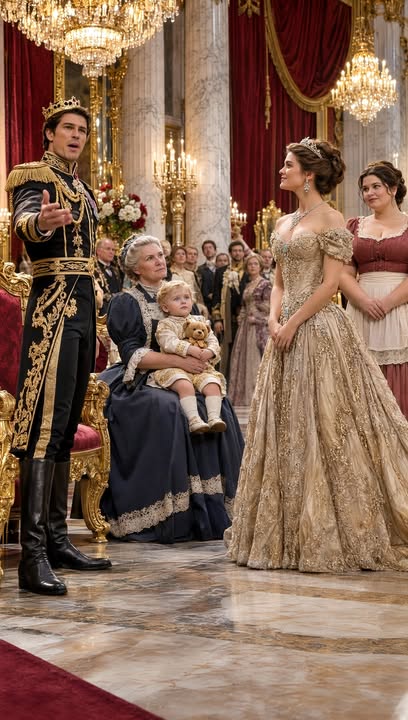
Part 4 – The Letter Elena Kept
“Perhaps not,” Celeste said, her hand still resting on the strap of her purse.
Leonardo watched her carefully, waiting for the rest.
She looked again at the music box, its brass lid catching the lamplight.
“Rosa may have done something extraordinary for Elena,” she continued, “and Emma may be entirely unaware of it.”
“Then we should let the truth speak for itself.”
“And if the truth is incomplete?”
“Then we should not fill in the gaps with suspicion.”
Celeste’s eyes lifted to his.
For a moment, her composure seemed to falter, and beneath it Leonardo glimpsed the lonely disappointment she had been trying to conceal.
“I’m not your enemy,” she said.
“I know.”
“Do you?” She gave a small, rueful smile. “You have spent so long guarding Elena’s memory that you may not have noticed how many people have been waiting outside it.”
Leonardo felt the words settle with uncomfortable accuracy.
He had not meant to shut anyone out.
But grief, when left untouched, could become a room whose door he no longer remembered how to open.
“I’m sorry,” he said.
Celeste’s expression softened, though it did not brighten.
“You needn’t apologize for loving her.”
“I’m apologizing for making you wait for a life I’m not sure I can offer.”
She looked down at the purse in her hands.
“Thank you for finally saying it plainly.”
Neither of them spoke for a while.
Then Celeste asked, “What will you do about the challenge?”
“I haven’t decided.”
“You have to decide before the court decides for you.”
“I know.”
“Then be careful not to let a child’s affection answer a question only you can answer.”
Leonardo glanced toward the music box.
“I’m trying to learn that.”
Celeste nodded and left him alone with the small instrument and the memories it had stirred.
By morning, the news that Rosa’s name had appeared in the palace had already found its way into the servants’ corridor.
No one knew precisely what the note said, but several people had heard that Emma’s mother had once been close to Princess Elena.
Some repeated the story as a tender surprise.
Others wondered whether the connection explained Emma’s arrival in the nursery.
Emma heard the whispers while carrying clean towels to the family rooms.
She did not stop to correct anyone.
When a kitchen attendant asked whether her mother had really been a friend of the late princess, Emma answered truthfully that she did not know.
The answer disappointed the attendant, who seemed to have hoped for a more dramatic story.
Emma continued on her way.
She was not ashamed of Rosa, nor was she ashamed of her own work.
But the palace had a way of turning ordinary people into symbols.
She did not want to become a secret, a sign, or an answer to a question she had not been asked.
In the nursery, Leo sat on the carpet beside Mrs. Alvarez, stacking wooden rings.
He looked up when Emma came in.
His eyes followed her across the room, but he did not reach for her until she knelt near the basket of toys.
Then he pushed a yellow ring in her direction.
Emma accepted it with a quiet smile.
“Thank you for sharing.”
Leo returned to his tower.
Mrs. Alvarez watched the two of them, her face thoughtful.
“I’m sorry the household is talking,” she said.
“People are curious.”
“Curiosity can be kind.”
“It can,” Emma agreed. “And sometimes it can make a person feel as if she belongs to everyone except herself.”
Mrs. Alvarez nodded, understanding more than Emma had said.
“You have a right to your own story.”
“I wish I knew what it was.”
The old nanny glanced toward the music box, which rested on a shelf near the window.
Leonardo had returned it that morning, saying it belonged with Elena’s things until they understood what to do with it.
Mrs. Alvarez had placed it where the light could reach the faint letters on its lid.
“I remember Elena saying Rosa had gone home,” she said. “I remember being hurt that she left without saying goodbye.”
“Did you know they were friends?”
“I knew they cared for each other. I did not understand how much.”
Emma watched Leo fit one wooden ring onto another.
“Did my mother seem unhappy here?”
“Sometimes.”
“Was it because of the court?”
“Perhaps. Or perhaps she was simply young and tired, and worried about the people she loved.”
Mrs. Alvarez’s hands folded together in her lap.
“Rosa was the sort of person who carried worry quietly. She would smile at Elena, then step into the corridor and press her fingers to her forehead when she thought no one could see.”
Emma looked at her.
“She did that at home, too.”
The old nanny smiled sadly.
“Then some things do not change.”
A soft knock sounded at the nursery door.
Leonardo entered carrying a slim wooden case.
“I found this among the things moved from Elena’s sitting room,” he said. “The steward thought it might belong with the music box.”
Mrs. Alvarez stood.
“What is it?”
“I don’t know. It was tucked behind a stack of old account books.”
The case was long enough to hold a folded document or a piece of jewelry.
Its brass latch had darkened with age.
Leonardo set it on the table and waited while Mrs. Alvarez examined it.
“There is no lock,” she said. “Only a catch.”
She pressed the small brass tab.
The lid opened.
Inside lay a folded letter sealed with pale green wax.
The writing on the outside was unmistakably Elena’s.
To Rosa, my dearest friend.
Emma drew a careful breath.
Leonardo did not touch the letter.
Mrs. Alvarez looked from him to Emma.
“Should we read it?”
“It was written to my mother,” Emma said. “I think I should.”
The words came out more quietly than she intended.
Leonardo nodded.
“Of course.”
Mrs. Alvarez lifted the letter from the case and examined the broken edge of the seal.
“Someone opened it before,” she murmured.
“Could Elena have read it afterward?” Leonardo asked.
“Perhaps. Or the wax may have cracked when it was stored.”
The old nanny handed it to Emma.
Emma unfolded the paper with both hands.
The ink had faded, but Elena’s handwriting remained clear.
My dearest Rosa,
If this letter has found its way to you, then I have failed to persuade you to stay, and you have found a way to leave before I could say all that I should have said.
Emma paused.
The room had grown so quiet that the soft turning of the clock seemed loud.
She continued.
You were never merely the young woman assigned to my room, nor the nurse who brought medicine when the physicians frightened me with their careful words.
You became my friend in the hours when I felt most afraid.
When fever took my strength and I could not trust my own thoughts, you sat beside me and spoke of ordinary things until the room felt like a room again.
The doctors helped me recover, and I will always be grateful to them.
But you gave me the courage to endure the days when recovery was uncertain.
Emma lowered the page for a moment.
Mrs. Alvarez’s eyes shone.
Leonardo had gone pale, his attention fixed on the lines as if Elena were speaking from the other side of the years.
Emma read on.
You told me that your mother had sung a little lullaby to you when you were frightened.
You sang it to me once in the dark, when I was afraid for the child I was carrying.
I asked you to teach it to me, and you laughed because you thought a princess ought to know how to comfort herself.
I did not tell you then, but the melody was familiar even before you finished.
My mother once told me that her own grandmother had known it from a friend who served in the old palace household.
She said it had first been sung to a frightened royal baby, long before either of us was born.
Perhaps the song belongs to no one family.
Perhaps it has simply been carried by people who needed it.
Emma felt her fingers tremble.
“My mother told me it had comforted a frightened baby in the palace,” she whispered.
Mrs. Alvarez pressed one hand to her mouth.
Leonardo looked at the letter.
“She knew,” he said. “Rosa knew the story connected to our family.”
“Maybe she knew only a piece of it,” Emma replied.
She kept reading.
When Leo arrives, I hope you will be near me if you are willing.
I do not ask this as your princess.
I ask it as the friend who trusts you.
And if my strength does not return, I ask you to remember my son—not as a duty, and not as a promise made to me, but as a child who will one day need kindness without expectation.
If you cannot stay, I will understand.
You have given me more than I can repay.
You have given me your friendship, and I will carry it with me wherever I go.
With all my love,
Elena
Emma lowered the letter.
For a while, no one moved.
The words had changed the room without changing a single object inside it.
The music box sat on the shelf.
The photograph of Elena remained propped against the wall.
Leo continued placing rings on his tower, unaware that the past had opened around him.
Leonardo turned toward the window.
“I thought she was alone in those months,” he said.
“You were with her,” Mrs. Alvarez answered gently.
“I was frightened, too. I thought I could help by keeping her from worrying.”
“You loved her.”
“I loved her enough to believe she needed my promises more than my honesty.”
He rubbed one hand over his face.
“She was afraid, and she had a friend who could sit with her in a way I couldn’t.”
Mrs. Alvarez rested a hand on his shoulder.
“Love does not make one person every answer.”
Emma reread the final lines.
If you cannot stay, I will understand.
The sentence carried more than affection.
It carried a farewell.
“My mother left after Elena died,” Emma said.
Mrs. Alvarez lowered her eyes.
“Yes.”
“She must have believed the promise was still there.”
“Perhaps.”
“Or perhaps she believed she had no place here once Elena was gone.”
The old nanny’s face tightened with regret.
“I wish I had known.”
Leonardo turned from the window.
“Why would Rosa leave without telling us where she was going?”
“Because she was afraid,” Emma said.
He looked at her, uncertain.
“Of what?”
“Of being asked to stay when she knew she couldn’t. Of being treated as if her promise belonged to the palace instead of to her. Or of being reminded of Elena every time she looked at Leo.”
No one answered.
Emma looked down at the letter.
The words were kind, but they also carried the weight of a friendship that had been interrupted before either woman could understand what the interruption would mean.
“She may have thought leaving was the only way to keep her own life,” Emma said. “And to let Elena’s family keep theirs.”
Leonardo lowered his gaze.
“Could she have written back?”
Mrs. Alvarez examined the wooden case.
“There may have been more papers inside.”
The case was empty except for the letter.
Leonardo looked toward the shelf.
“Do you remember Elena speaking about any reply?”
“No.”
“Did Rosa return after Elena’s death?”
“I never saw her here again.”
Emma folded the letter along its old creases.
“My mother rarely spoke about the years before I was born. If I asked about the palace, she would say the past had already given her everything she needed to carry forward.”
“Perhaps she was trying to make peace with leaving,” Mrs. Alvarez said.
“Perhaps.”
The answer no longer felt complete.
It felt like the beginning of another question.
Leo’s wooden tower toppled.
He looked at the scattered rings, then at Emma.
She returned the letter to the table and sat beside him.
“Shall we build it again?”
He pushed two rings toward her.
Leonardo watched as she helped him stack them, one at a time, never taking over the task.
The child’s attention remained on the rings, but every so often he looked up to make sure Emma was still there.
The prince felt the familiar unease stir again.
It was not jealousy exactly.
It was the ache of seeing his son trust someone and wondering whether he himself had waited too long to make trust easy.
He came closer and sat on the carpet opposite them.
Leo studied him.
Then he handed his father a blue ring.
Leonardo accepted it with both hands.
“Thank you,” he said.
Leo watched him place it on the tower.
When the structure held, the child’s eyes brightened.
The three of them built another.
The afternoon slipped by in a quiet, gentle rhythm, though the letter remained in everyone’s thoughts.
When Leo finally tired, Mrs. Alvarez carried him to his crib.
Emma tucked Button beside him and sang the lullaby in a whisper.
At the familiar final phrase, Leo’s fingers loosened around the bear.
His eyelids closed.
Leonardo stood at the nursery window while Emma drew the curtain partway.
“Your mother entrusted Rosa with something very precious,” he said when Mrs. Alvarez had finished settling Leo.
“Yes,” Emma replied.
“And your mother carried that trust away.”
“She did.”
“Do you think she meant to keep us from him?”
Emma looked at the sleeping child.
“I don’t think my mother would have wanted to take anything from Leo.”
“But she left.”
“She was a person with her own fears. Elena’s letter says she was allowed to go.”
Leonardo considered that.
“I wish I had known.”
“I wish I had known my mother’s story before today.”
Neither of them said what they were both thinking: that knowing might not have changed anything, but it would have given them a chance to ask.
Mrs. Alvarez joined them at the foot of the crib.
“Elena left this with me after the letter was written,” she said.
Leonardo looked at her.
“You had it all this time?”
“No. I found it tucked inside the lining of the wooden case after you left the sitting room.”
She held out a narrow, aged envelope.
The paper was yellow at the edges and softened by years of handling.
There was no name on the front.
“I did not open it,” she said. “It was sealed beneath the lining, separate from Elena’s letter.”
Emma’s eyes moved to the envelope.
“Why didn’t you mention it earlier?”
“I only found it now.”
Mrs. Alvarez offered it to Leonardo, but he did not take it.
“Should we open it?”
The old nanny studied the seal.
“It may be another letter from Elena. It may be a note from someone else.”
Emma felt a strange hesitation, as if the envelope had already asked something of them.
“Was it hidden there deliberately?” she asked.
“I believe so.”
Leonardo glanced toward Leo’s crib.
“We should not turn this into a spectacle.”
“No,” Emma agreed. “But if it concerns my mother, I want to know.”
Mrs. Alvarez nodded.
With great care, she eased open the envelope.
Inside was a smaller folded sheet, along with a thin, faded ribbon.
The paper bore no signature.
Only one sentence had been written across it in Elena’s hand.
If Rosa cannot come back, then someone must tell her that Leo was never the reason I asked her to stay.
Leonardo’s face lost what little color remained.
Emma read the line again.
“Why would Elena write that?” she asked.
Mrs. Alvarez held the ribbon between her fingers.
“I don’t know.”
Leonardo looked from the note to the child asleep in the crib.
A second sheet might have been inside the envelope, but the worn paper was empty.
The sentence stood alone, like a message meant for someone who had never received it.
“Perhaps Rosa believed Elena wanted her to stay for Leo,” Emma said.
“Perhaps,” Mrs. Alvarez replied.
“But Elena wanted her to stay as a friend.”
Leonardo’s gaze remained on the note.
“Then why did the message never reach her?”
Mrs. Alvarez’s hands trembled around the ribbon.
“I cannot tell you.”
From the corridor came the sound of a quick, careful footstep.
A palace attendant appeared at the open doorway, holding a long, flat parcel wrapped in brown paper.
“Your Highness,” she said. “This was delivered from the archives. The steward found it in a cabinet that had not been opened since the east wing was cleared.”
Leonardo turned.
“Did he say what was inside?”
“He said it was addressed to the nursery.”
The attendant brought the parcel forward.
There was no sender’s name.
Only a line of handwriting across the paper, faint but unmistakable.
For the child Rosa loved from afar.
**–END OF PART 4–CLICK “NEXT” AT THE BOTTOM OF THE PAGE TO CONTINUE READING**
* * *
[PREVIOUS: PART 3](https://storyly.idolsgift.com/blog/part-3-the-lullaby-that-remembered-069) | [NEXT: PART 5](https://storyly.idolsgift.com/blog/part-5-the-lullaby-that-remembered-069)
✓ Lynn R. Adams
Part 4 – The Letter Elena Kept “Perhaps not,” Celeste said, her hand still resting on the strap of her purse. Leonardo watched her carefully, waiting for the rest. She looked again at the music box…