PART 4: The Life She Had Already Chosen 028
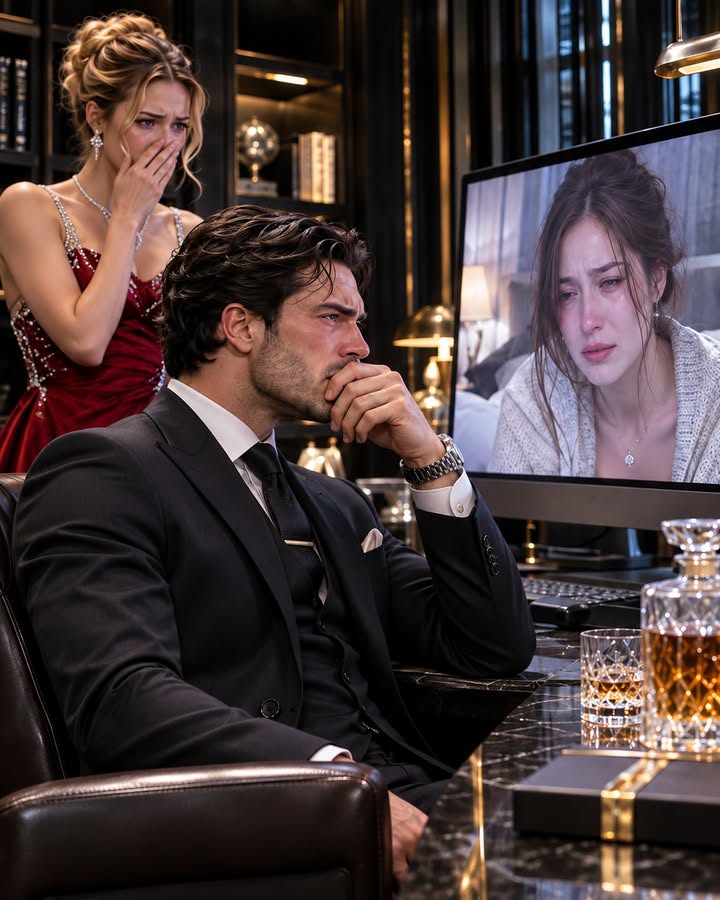
Part 4 – The Promise Her Mother Left
“Claire, there is something about the orchid I never managed to tell Alexander.”
Claire read the sentence again.
The paper trembled slightly in her hand, though the studio was warm and the window stood closed against the evening chill.
Outside, the bare branches shifted in the wind.
Inside, the orchid’s leaves rested beneath the soft light, still and green.
She set the letter down, then picked it up again.
Alexander’s mother, Lucia, had written to her in a rounded, careful script that Claire remembered from birthday cards and notes tucked into cookbooks.
Lucia had been gone for years.
Claire had loved her, but she had never known what to do with the private confidence Lucia had placed in her.
She unfolded the remaining pages.
The first described the orchid’s history.
Lucia had received it from her own mother, who had brought it to Chicago in a small clay pot after leaving Italy.
It had survived two moves, one greenhouse fire, and several winters when the heating system failed.
Lucia wrote that she had not kept it because it was rare or valuable.
She had kept it because it had bloomed during the hardest year of her life.
Claire paused at the sentence and looked toward the plant.
The orchid had not only been hers to tend.
It had passed through generations of women who had each found something in its stubborn return to bloom.
The next page began with a confession.
“When I was ill, I asked you to keep it because I was afraid Alexander would see it as one more thing of mine to manage.”
Claire lowered the letter.
She remembered that spring, shortly before the wedding.
Lucia had been recovering from a long illness and had asked Claire to sit with her in the greenhouse.
The day had been bright, but Lucia had looked tired.
She had pointed to the orchid and said, “Would you mind keeping an eye on this for me?”
Claire had assumed it was a small request from someone who loved her plants.
She had promised she would.
Lucia had never explained why it mattered.
Claire continued reading.
“I wanted him to learn to care for something because he understood that it mattered to another person, not because I had told him to do it.”
A crease crossed the paper beneath Claire’s thumb.
Lucia wrote that Alexander had always been capable of tenderness, but he had learned to hide it behind competence.
He was quick to solve problems and slow to notice that some people needed company rather than solutions.
His father had been much the same, Lucia said, and she feared Alexander would inherit the habit without ever recognizing it.
“I hoped marriage would give him a chance to learn differently,” the letter continued.
“But I did not want you to feel responsible for teaching him how to love.”
Claire’s eyes filled.
That was the sentence she had needed years ago, though she had not known it.
She had once thought there was something wrong with her for wanting more than provision, more than comfort, more than a life arranged with expensive care and polite distance.
Lucia had seen the difference.
She had known that generosity could not replace attention.
The last lines of the letter were written more faintly, as if Lucia had been tired.
“If Alexander ever asks about the orchid, tell him what it meant to me.
If he never asks, then please do not make a duty of carrying this for him.
You should be loved for who you are, Claire, not for the work you do on behalf of this family.”
Claire closed her eyes.
For a moment, the room seemed to hold two versions of the past at once.
There was the Claire who had entered the Moretti family believing that love could be built through patience.
And there was the Claire who had sat alone in that same house, watering the orchid when she could not imagine asking anyone to stay.
She had never told Alexander about Lucia’s request.
At first, she had wanted the plant to be theirs, not a debt inherited from his mother.
Later, when he failed to notice her care for it, she had been too hurt to explain.
Then the silence had hardened into something she no longer knew how to cross.
She set the letter on the table beside the unfinished painting.
Her first impulse was to send a copy to Alexander immediately.
Her second was to ask herself whether she was doing it because the truth might help him, or because some part of her still wanted him to understand what she had carried.
She had promised herself she would not turn her healing into a lesson for him.
But the letter was not a lesson.
It was his mother’s voice, written before either of them knew how their marriage would unfold.
Claire called her attorney.
“I’ve read the letter,” she said.
“Would you like me to share it with Mr. Moretti?”
“I’m not sure.”
“You don’t have to decide tonight.”
Claire looked at the orchid.
“Can you send him a message saying the letter concerns the plant, and that I’m willing to let him read it if he agrees not to contact me about it directly?”
“Of course.”
“I don’t want him to think it changes anything about the divorce.”
“I’ll make that clear.”
After the call, Claire returned to the canvas.
She dipped a brush into a muted green and painted the curve of a leaf.
Her hand felt steadier now.
The truth did not demand that she return to the past.
It only asked her to see it clearly.
The following morning, Alexander’s attorney called.
“Claire is willing to share a letter from your mother,” she said.
“She has asked that it remain a private matter and not be treated as a reason to change the divorce proceedings.”
Alexander stood beside the sunroom window, the pale morning light falling across the empty table where the orchid had once stood.
“I understand.”
“She does not want direct contact about it.”
“I won’t contact her.”
“Would you like the letter sent to your office?”
“No. Send it to my home.”
His attorney paused.
“Are you sure?”
“Yes.”
He wanted to read his mother’s words alone.
When the envelope arrived that evening, he carried it to the study and left it unopened on the desk.
For nearly an hour, he worked through emails, though he absorbed none of them.
He went back to the envelope twice, then returned to his chair.
At last, he drew it toward him.
The paper was old, its edges softened.
He recognized his mother’s handwriting immediately.
He had seen it on holiday cards and notes she used to leave in his briefcase when he was young.
He had not seen a letter addressed to Claire before.
That small fact unsettled him.
He opened it with care.
The first page described the orchid’s history.
He read about his grandmother carrying it to Chicago and his mother keeping it through years of moves and difficult seasons.
He remembered the greenhouse, although he had not visited it often.
He remembered his mother there, sleeves rolled to her elbows, one hand lifted to support a stem while she trimmed away a dead leaf.
He had always assumed she loved the greenhouse because it was beautiful.
He had never asked what the plants meant to her.
Then he reached the paragraph about the spring before his wedding.
“When I was ill, I asked you to keep it because I was afraid Alexander would see it as one more thing of mine to manage.”
Alexander stopped reading.
His eyes moved back to the line.
He read the next sentence.
“I wanted him to learn to care for something because he understood that it mattered to another person, not because I had told him to do it.”
The room seemed to lose its warmth.
He continued, slowly.
His mother had written about the way he solved problems, the way he hid tenderness behind competence, and her hope that he might learn to be present with the people he loved.
He did not feel accused.
That would have been easier.
Instead, he felt recognized.
His mother had seen the habit in him long before Claire had, and she had chosen to trust Claire with the orchid without assigning her the task of fixing her son.
The final paragraph made his breath catch.
“You should be loved for who you are, Claire, not for the work you do on behalf of this family.”
Alexander lowered the letter.
He looked at the empty space in the sunroom, where Claire had kept the orchid near the window.
He understood now why she had never told him.
She had not wanted to make the plant a symbol he was obliged to honor.
She had wanted him to notice it because he cared about what mattered to her.
The letter did not make the orchid more valuable.
It made his carelessness more painful.
He had given Sophia the plant as though it were a decorative object, and in doing so, he had turned Claire’s quiet faith into something she had to watch him dismiss.
He sat with the letter for a long time.
When his attorney called the next morning, he told her he had read it.
“Do you want me to pass along a response?”
“No.”
“Are you certain?”
“Claire asked for space.”
“Would you like me to tell her you understand?”
He thought about it.
“No. Understanding is not a favor I should ask her to acknowledge.”
His attorney was silent for a moment.
“Then I’ll say nothing unless she asks.”
“Thank you.”
He placed the letter in a folder and locked it in the desk.
He did not want to keep it as a possession he could claim.
It belonged to Claire, who had held it all these years, and to his mother, who had written it.
He would return it when the legal process allowed, without asking Claire to explain what it meant.
For the first time, he saw the orchid not as an emblem of his mother’s wishes, but as evidence of Claire’s care.
She had tended it without telling him why.
She had done so because she loved his mother, because she loved the plant, and because she had hoped he might one day learn to notice the quiet things she cherished.
He had mistaken her silence for contentment.
Now he understood that silence could be the sound of someone growing tired of asking.
At the residency, Claire found herself thinking about the letter throughout the day.
She painted until noon, then walked the garden paths with her coat buttoned high against the cold.
She did not think of Alexander as a villain.
That did not make the years of loneliness disappear.
She remembered his kindnesses, too: the careful way he had once driven her home after a late gallery installation, the mornings he had brought her coffee before a meeting, the way he had looked at her when they first married.
Those memories were real.
So was the harm of what he had failed to do.
For a long time, she had believed she had to choose one truth and deny the other.
Now she was beginning to understand that love could have existed alongside neglect, and that recognizing one did not require excusing the other.
The residency director found her in the studio, brushing pale gold across the orchid’s petals.
“You’ve changed the composition,” he said.
Claire looked at the canvas.
“I think I was painting the plant as if it had to prove it could survive.”
“And now?”
“Now I’m trying to let it simply be a plant.”
He smiled.
“That may be harder.”
“It is.”
He nodded toward the worktable.
“Your portfolio is being considered for the extended residency.”
Claire turned to him.
“I thought the decision wasn’t until next month.”
“It isn’t final, but the committee asked whether you would be interested in staying longer if they offered you a place abroad.”
The brush stopped in her hand.
“Abroad?”
“The residency has a partner studio in Florence. Six months, possibly longer, depending on the program.”
For a moment, Claire could not answer.
The possibility opened before her, immense and unfamiliar.
She had been trying to build a life that did not revolve around the house she had left or the marriage she was ending.
Now the future had a shape beyond recovery.
“I would be interested,” she said.
“Good. I’ll tell them.”
After he left, Claire stood before the canvas.
The orchid looked different in the morning light.
Its leaves were not perfect.
One had a small scar near the edge, and another bent slightly toward the window.
Yet the plant was alive, not because it had never been damaged, but because it had been cared for.
She set down the brush and glanced at the letter on her desk.
Lucia’s words had given her something she had not realized she needed: permission to stop treating love as a task she could complete if only she tried hard enough.
That evening, her attorney called.
“Alexander has read your mother-in-law’s letter,” she said.
“Did he send a response?”
“No. He asked that we not pass anything along unless you requested it.”
Claire released a breath she had not noticed she was holding.
“That was the right thing.”
“I thought you might feel that way.”
“Has he signed the divorce papers?”
“His attorney says he has signed the preliminary agreement. He has accepted the terms regarding your work, the residency, and your personal property.”
Claire looked at the orchid.
“Thank you.”
When the call ended, she sat quietly in the fading light.
She had expected the letter to change how she understood the orchid.
She had not expected it to change how she understood herself.
For years, she had believed that keeping it alive meant she was still waiting for something to bloom in her marriage.
Perhaps it had meant only that she knew how to care for a living thing, even when no one noticed.
The next morning, a package arrived at the residency office.
It was not addressed to Claire, but to the director.
Inside was a small wooden box and a note from Alexander’s attorney.
The note explained that the box had been found among the family papers and that its contents appeared to belong with the letter Claire had read.
The director brought it to her studio and set it on the table.
“Would you like me to leave you alone?”
“Yes, please.”
The box was no larger than a book.
Claire recognized the brass clasp from the old greenhouse cabinet.
She opened it carefully.
Inside lay a photograph, faded at the edges, showing Lucia beside the orchid.
On the back, in her handwriting, was a date from the spring before Claire and Alexander married.
Beneath the date were a few words.
“Claire asked me not to tell him yet.”
Claire stared at the photograph.
Then she noticed a folded note beneath it, one she had never seen before.
It was addressed to Alexander.
Her fingers hovered above it.
She had thought the letter explained the secret.
But the note carried his name, and it had been sealed for years.
She unfolded it.
The first line was in Lucia’s hand.
“Alexander, if you are reading this, Claire has decided you are ready to know what I asked her to keep.”
**–END OF PART 4–CLICK “NEXT” AT THE BOTTOM OF THE PAGE TO CONTINUE READING**
* * *
[PREVIOUS: PART 3](https://puretales.idolsgift.com/blog/part-3-the-life-she-had-already-chosen-028) | [NEXT: PART 5](https://puretales.idolsgift.com/blog/part-5-the-life-she-had-already-chosen-028)
✓ Lynn R. Adams
Part 4 – The Promise Her Mother Left “Claire, there is something about the orchid I never managed to tell Alexander.” Claire read the sentence again. The paper trembled slightly in her hand, though…