PART 4: The Letter Beneath the Silence 046
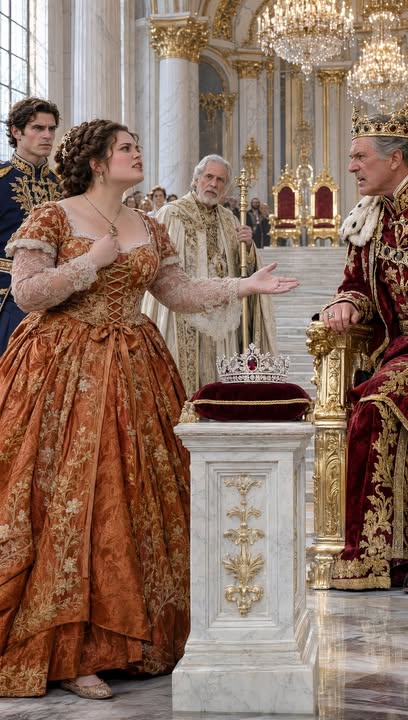
Part 4 – The Names the Fire Could Not Erase
The question hung over the torn ledger page, unanswered by the faded ink.
“Could N. Vale have taken the infant to the queen?” Eleanor asked.
The chapel custodian studied the entry.
“The register does not say where she went after leaving the palace.”
“Could the missing pages tell us?”
“They might. The ledger was damaged before it came into our care.”
William leaned over the table, his gaze fixed on the words entrusted to private care.
“Was the infant a member of the queen’s household?”
“Not according to the entry,” the custodian said. “But the person who made it may have been trying to conceal the child’s identity.”
Eleanor looked at the date again.
The order to remove the queen’s household had been issued that night.
The nurse had been released before midnight with an infant.
And the carriage described in the deposition had supposedly carried the family away.
“Could the carriage have been empty?” she asked.
“It could have been,” Ashcombe said. “Or it could have carried other people.”
William straightened.
“My father said he believed the family had already escaped.”
“He may have believed it,” Eleanor replied. “But that doesn’t mean the carriage held them.”
“No.”
The custodian closed the ledger gently.
“I will leave you to examine the entry,” she said. “If you need anything else, ask the registrar to send for me.”
After she had gone, Eleanor turned to Ashcombe.
“You knew there was a nurse’s register.”
“I knew such a ledger existed. I did not know it contained this entry.”
“Did you know a child had been taken from the palace?”
“No.”
William stepped away from the table and crossed to the narrow window.
The morning light lay across his face, but he seemed to be looking at something far beyond the archive walls.
“My mother was there,” he said. “She witnessed the order. A nurse left with a child. And my father believed someone was beyond his reach.”
Eleanor came to stand beside him.
“You don’t have to make those things fit before we know what they mean.”
“I know.”
“Do you?”
He turned toward her.
“I’m trying to.”
She saw the strain in his expression, the effort of holding open every possibility when each one threatened to close around his family.
“I don’t want you to defend your father simply because he is your father,” she said.
“I don’t want to.”
“And I don’t want to decide he is guilty of the worst thing before we understand what happened.”
“I appreciate that.”
The words were quiet, but the space between them still held the previous day’s fear.
Eleanor touched his sleeve.
“We’re both trying to stand somewhere honest.”
William covered her hand with his.
“Then let’s keep doing that.”
Ashcombe gathered the ledger and placed it beside the old order book.
“If the final page of the deposition is still missing, the archive may hold a second copy,” he said. “The original statements were often copied before being filed.”
“Where would we look?” William asked.
“The judicial records. They were moved after the old palace fire.”
Eleanor glanced at him.
“Another fire?”
“A small one, long after these events,” Ashcombe said. “It damaged several rooms in the western archive, but most of the documents were transferred to the records annex.”
He paused before adding, “If the deposition was copied, that is where we are most likely to find it.”
“Then we should go there,” Eleanor said.
“First, we should request access through the archivist,” William replied.
The old caution in his voice might once have sounded like delay.
Now she heard something else in it: a wish not to turn suspicion into certainty by taking shortcuts.
“Very well,” she said. “We ask properly.”
Mr. Bell was waiting near the archive entrance.
When Ashcombe explained what they hoped to find, the registrar nodded and sent a clerk to prepare a written request.
“The records annex is open to senior members of the royal household and appointed examiners,” he said. “The deposition will need to be logged before it is removed from storage.”
“Then log it,” William said.
Mr. Bell glanced toward him.
“I will do so, Your Highness.”
The process took the better part of an hour.
Eleanor watched the clerk copy their request into a register, add the date, and carry it to the archive superintendent for approval.
The delay was small, but it reminded her how many careful hands had once moved these records from one room to another.
A truth might survive for generations not because anyone had guarded it well, but because no one had managed to find every place it had been put.
When they finally entered the records annex, they were accompanied by the superintendent, a dignified woman named Mrs. Rook, who wore a silver key on a chain at her waist.
“This room contains unprocessed judicial records from the old court,” she said. “Some have been catalogued, others only grouped by year.”
“Could the deposition be here?” William asked.
“It could. We have a reference number from the order book?”
Ashcombe gave it to her.
Mrs. Rook consulted a small notebook.
“Several statements were filed under that number,” she said. “We will need to check the box for the private inquiry.”
The annex smelled of dust, linen, and the faint sweetness of old glue.
Shelves ran to the ceiling, with bundles wrapped in paper and tied in string.
Mrs. Rook selected a box from a cabinet and carried it to the central table.
“Please keep the documents flat,” she said. “Some of the paper is brittle.”
They worked through the bundle in silence.
There were household inventories, witness lists, and two copies of the royal order.
One was a formal instruction signed by Frederick.
The other was a clerk’s summary, bearing the same date but no royal seal.
Eleanor read the signed order slowly.
It directed that the queen’s household be moved beyond the northern road, that all identifying marks be removed from the carriage, and that the records of the household be destroyed.
It said nothing about killing anyone.
It also said nothing about an infant.
“Could this be the original order?” William asked.
Mrs. Rook examined its edge and the seal.
“It appears to be an official copy made at the time. The original may be elsewhere.”
“But the signature is his?” Eleanor asked.
“The signature is consistent with other documents from that year,” Ashcombe said.
William drew a breath.
“Then my father did sign it.”
“He told you he had,” Eleanor said.
“I know.”
He did not seem relieved by being proved right.
Mrs. Rook continued through the bundle.
At the bottom, beneath a stack of household accounts, lay a thin file marked Preliminary Statements.
Ashcombe opened it.
The first page listed the names of people interviewed after the carriage disappeared.
The second was a witness account from a groom.
The third was a note from a palace guard.
Then Ashcombe stopped.
“What is it?” Eleanor asked.
He turned the paper toward the light.
“This is an inventory of the original statements. One item is marked as missing.”
“Which one?”
He pointed to a line in the margin.
Final deposition of the royal nurse, copied and sealed for the council.
“The nurse,” William said.
“Can we find the copy?” Eleanor asked.
Ashcombe scanned the next lines.
“It was placed in a separate packet and delivered to the council chamber.”
“Is that where you found the letter?” William asked.
“No. The letter was in the old correspondence room.”
“Could the deposition still be there?”
“It might.”
Mrs. Rook closed the file.
“If the deposition was delivered to the council chamber, the council records would be the next place to search.”
“Can we go now?” Eleanor asked.
Mrs. Rook checked her watch.
“The chamber records are kept in the palace archive. The staff there can bring the relevant volumes.”
“We should return,” William said.
He looked at the original order again.
“If that deposition tells us what the nurse did, we should read it before we decide what the order was meant to accomplish.”
Eleanor nodded.
The records annex had offered them a signature and another uncertainty.
They returned to the palace before noon.
Frederick had summoned them to his office.
He stood behind his desk, looking down at a stack of papers.
Beside him, the royal secretary had arranged a second set of copies for the examiners.
The king’s face changed when he saw the signed order in William’s hands.
“You found it,” Frederick said.
“We found an official copy,” William replied. “We’re still looking for the nurse’s deposition.”
Frederick’s gaze settled on the document.
“Then you have seen what I told you.”
“We have seen what you signed,” Eleanor said.
The king did not look away.
“Yes.”
“You ordered the queen’s household removed.”
“I did.”
“You ordered its identifying records destroyed.”
“I did.”
“Why?”
Frederick lowered his eyes to the paper.
“Because I believed the queen was preparing to rally the court against me.”
“Was she?”
“She had a claim to the throne. There were people who wanted her to press it.”
“That doesn’t answer the question.”
“No,” he said. “It doesn’t.”
William moved closer to the desk.
“Did you know the carriage would be burned?”
“I did not.”
“Did you order it?”
“No.”
“Did you believe the queen and her family were inside it?”
“I believed they had left before it was set alight.”
Eleanor looked at him.
“Who told you they had escaped?”
“My steward reported that the northern road had been cleared and the queen’s household was gone.”
“That could mean the carriage had left.”
“It could.”
“Or that the nurse had taken someone out before it was prepared.”
Frederick’s face tightened.
For the first time, he seemed not to have an answer ready.
“Was a child taken from the palace that night?” Eleanor asked.
The king looked at the pendant at her throat.
“I was told a child had been carried away.”
“Who told you?”
“I do not remember.”
“Was it the nurse?”
“I cannot say.”
“Did you know whose child it was?”
“I thought it belonged to the queen’s household.”
“Did you know it was my mother?”
“No.”
“Did you know the queen had survived?”
Frederick looked down at the signed order.
“I thought she had.”
The answer brought no comfort.
Eleanor found herself wanting him to say that he had searched, or that he had tried to reach her mother, or that he had believed the danger was over.
He said none of those things.
William’s voice was low.
“Why did you let the court believe the royal family had been executed?”
“I did not make that claim.”
“You allowed it to stand.”
“I did.”
“Why?”
“Because it ended the dispute over the succession.”
The simplicity of the answer made it difficult to bear.
A decision made for political stability had become a history everyone else was expected to accept.
“Did you know the account of the carriage was false?” Eleanor asked.
“I knew the report was uncertain. I did not know who had been inside.”
“And when you learned there might have been a surviving child?”
Frederick’s attention moved to the pendant again.
“I believed the child had been taken somewhere I could not find.”
“Why didn’t you say so?”
“Because the court would have searched for her.”
“You could have protected her.”
“I might have put her in greater danger.”
“Or you might have been trying to protect the throne.”
His expression did not harden.
“Yes,” he said. “I was.”
William turned away, his hands curling briefly before he made them relax.
“You knew the story was incomplete and let everyone live with the worst version.”
“I believed the alternative would have been a struggle for the crown.”
“That was your choice to make?”
“No,” Frederick said. “It was not.”
His admission seemed to cost him more than the denial would have.
Eleanor looked at the man who had once stood above her in every room, measuring whether she was suitable to join his family.
She had expected anger to make him smaller.
Instead, the truth made him look more human and more culpable at once.
“Did you ever receive my mother’s letter?” she asked.
“Yes.”
“Did you answer it?”
“I believe I did.”
“The correspondence ledger records no reply.”
“I know.”
“Then what happened?”
“I cannot remember whether I sent a letter or gave instructions through the chamberlain.”
“What did the letter say?”
“That she was afraid. She asked me to protect her daughter and keep the child’s name from the court.”
Eleanor held herself still.
“Did you know where she was?”
“No.”
“Did you try to find her?”
“I made inquiries through the household.”
“And stopped?”
“Yes.”
“Why?”
Frederick’s eyes met hers.
“Because I was told the child was beyond my reach.”
The words settled over the room.
William turned back to his father.
“Who told you?”
“I cannot remember the name.”
“You cannot remember who told you that the child was safe?”
“I remember the words. I do not remember the person.”
“Was it the nurse?”
“I don’t know.”
Eleanor pressed her fingers to the pendant.
The story had changed again.
The carriage fire had not been the simple massacre described by the missing page.
Frederick had signed an order to remove the queen’s household and erase its identifying records.
He had believed the family had escaped.
He had allowed the kingdom to accept a more convenient ending.
But the child in the nurse’s ledger might have been Eleanor’s mother.
And her mother’s letter had reached him after all.
“What did you think would happen when you signed the order?” William asked.
“I thought the queen would understand she could not challenge my succession without putting her household at risk. I meant to frighten her into surrendering her claim.”
“You used the people around her to make a political point.”
“Yes.”
“And then someone set a carriage on fire.”
“I never ordered that.”
“But you knew it happened.”
“I learned of it later.”
“Why didn’t you investigate?”
“I did.”
“Did you find anything?”
“No.”
“Why didn’t you tell the court the queen might be alive?”
“Because I had no proof, and because speaking of her would have brought every faction searching for her.”
“Or because you feared what she could claim.”
Frederick did not deny it.
“Yes.”
Eleanor lowered her gaze.
The truth was not clean enough to offer anyone relief.
The order was real.
The fire was real.
But the royal family had not necessarily been inside the carriage.
Frederick had not ordered their deaths, yet he had used fear as a tool and then allowed uncertainty to harden into a false history.
“Did you know my mother became an adult?” she asked.
“No.”
“Did you know she had a daughter?”
“No.”
“Did you ever look for her after the succession was settled?”
Frederick’s pause was answer enough.
“I did not continue searching,” he said.
Eleanor felt that answer more sharply than the others.
“You decided the danger was over.”
“I decided reopening the matter would bring more danger.”
“You decided for everyone.”
“Yes.”
William looked at his father with a grief that had no simple target.
“You should have told me.”
“I should have.”
“You let me believe the old queen’s line had ended.”
“I believed it had.”
“Even after the nurse took a child?”
“I did not know the child’s identity.”
“But you knew a child was missing.”
“I knew there had been a report.”
“And you did nothing.”
“I believed she had been taken to safety.”
“Because someone told you she was beyond your reach.”
“Yes.”
William’s face turned toward Eleanor.
She could see the question in his eyes.
Not whether he loved her.
Whether he could forgive what he was only beginning to understand.
Before either of them could speak, the royal secretary entered with a folded note.
“Your Majesty, the archive has located a sealed packet bearing the council reference.”
Frederick’s expression changed.
“Where?”
“In the council records room. It was filed among the private petitions.”
Ashcombe stood.
“Is the seal intact?”
“The outer seal is unbroken, my lord.”
“Then bring it here,” William said.
The secretary hesitated.
Frederick nodded.
“Bring it.”
They waited in a silence filled by the clock’s measured ticking.
Eleanor sat beside William, their hands touching lightly on the arm of her chair.
She could feel the question he had not asked.
She wondered if he could feel hers.
The secretary returned carrying a narrow packet wrapped in faded blue cloth.
Two examiners followed him, one from the royal archive and one appointed by Ashcombe.
They examined the seal, compared it to the council mark, and recorded their observations before opening the packet.
Inside lay several folded papers.
The first was a copy of the nurse’s deposition.
The second was a list of household items removed from the palace.
The third was a small note in a different hand.
Ashcombe began with the deposition.
His voice was quiet as he read.
“I, Maren Vale, nurse in the queen’s service, testify that I carried the infant from the palace before the carriage was prepared.”
Eleanor’s breath caught.
William’s hand closed around hers.
Ashcombe continued.
“The child was not placed aboard the carriage. The carriage held two empty travel chests and garments belonging to the royal household.”
Frederick shut his eyes.
The fire had not consumed the queen’s family.
It had consumed the evidence of a departure that never happened.
Ashcombe turned the page.
The deposition named the child as a daughter born to the queen’s younger household.
It said Maren Vale had been instructed to carry her to a refuge beyond the city, where the queen would meet them after the road had been cleared.
The final lines were written in a cramped hand.
The queen did not come to the appointed place.
No message arrived.
The child remained with me, and I raised her under another name.
Eleanor felt the room sway around the words.
“Did the nurse say where she took the baby?” William asked.
“The next line is missing,” Ashcombe said.
He turned the page.
The paper ended in a ragged tear.
One of the examiners examined the edge.
“This was torn before the packet was sealed,” she said. “The break is old.”
“Can the missing portion be found?” Eleanor asked.
“We cannot tell yet.”
Frederick stood very still.
“Did the nurse identify the queen as alive?” William asked.
“She said she expected to meet her,” Ashcombe replied. “She did not say what happened afterward.”
“So the queen may have survived,” Eleanor said.
“Yes.”
“And my mother was the infant?”
Ashcombe lowered his eyes to the deposition.
“The record says the child was the daughter of the queen’s younger household. It does not give a name.”
“The birth record identifies my mother as the queen’s daughter,” Eleanor said.
“Together, the records make that conclusion likely,” he replied. “But we should not claim more than they prove.”
Eleanor looked from the deposition to the birth record.
Her mother had been carried out of the palace before the carriage was prepared.
She had grown up under another name, with a pendant and a portrait that held the shape of a history no one had allowed her to know.
The fire had been intended to frighten the queen and erase the traces of her household.
It had not killed the royal line.
It had hidden it.
William looked at his father.
“Did you know the carriage was empty?”
“No.”
“Did you know the child survived?”
“No.”
“Did you know the queen never came to meet the nurse?”
“No.”
“Then why did you let the story stand for so long?”
Frederick looked at Eleanor.
“Because I thought the child’s survival would make the court search for her, and I believed her absence was safer than her name.”
“You didn’t know where she was.”
“No.”
“You didn’t know whether she was safe.”
“No.”
“But you decided silence was safer than the truth.”
“Yes.”
Eleanor felt the pendant resting against her chest, its small sunburst warm from her skin.
“What was the queen’s name?” she asked.
Frederick looked toward Ashcombe.
“Her name was Isolde.”
Eleanor had never heard it before.
The name opened no memory, offered no face, and yet it belonged to the woman in the miniature portrait.
“Did she survive?” she asked.
Frederick’s gaze dropped.
“I don’t know.”
The answer fell into the room like a final page that had been torn away.
Ashcombe turned the last note from the packet.
It contained only a single sentence, written in the same cramped hand as the deposition.
“If the child is found, do not tell the king where the queen went.”
The message had been sealed with the nurse’s mark.
Eleanor stared at the words.
The nurse had not trusted Frederick with the queen’s destination, even after he had believed the child was beyond his reach.
For the first time, the record seemed to speak not only of what Frederick had done, but of what someone had feared he might still do.
William read the sentence again.
“Why would she write that if she believed my father had no part in the fire?”
“I did not set it,” Frederick said.
“But you signed the order that made the deception possible.”
“I know.”
Eleanor looked at the note’s uneven line of ink.
The nurse had saved her mother from the carriage.
She had hidden the child from the king.
And someone had hidden the deposition from the record.
“Who kept this packet sealed?” William asked.
“The council clerk who filed it,” Mrs. Rook said. “His name is on the outer register.”
Ashcombe checked the notation.
“Master Orrin Vale.”
“Vale?” Eleanor asked.
“The nurse’s family name,” William said.
Ashcombe nodded.
“It may be a relative.”
“Or the nurse herself,” Eleanor said.
“Possibly.”
Frederick moved closer to the table but did not touch the packet.
“I should have told the court the order existed.”
“Yes,” Eleanor said.
“I should have said the family might have escaped.”
“Yes.”
“I did not know the truth.”
“But you knew the story was uncertain.”
He lowered his head.
“Yes.”
“I can understand why you feared a succession crisis,” she said. “I can understand why you thought silence would protect someone. But I cannot call it protection when you made the truth disappear.”
“No,” Frederick said. “You cannot.”
William’s fingers remained around hers.
He had not stepped away from his father, but neither had he moved to shield him.
His face held the difficult sorrow of a son who could see the harm clearly without ceasing to love the person who caused it.
The two examiners began recording the deposition and its condition.
The court would have to know what they had found.
The records would have to be verified.
The story told for thirty years would have to be questioned in public.
Eleanor looked at the single sentence left by the nurse.
Do not tell the king where the queen went.
“Can we trace Maren Vale?” she asked.
“We can search the household rolls, parish records, and any surviving correspondence,” Ashcombe said. “If she lived under her own name, we may find her family.”
“And the queen?”
“The note suggests she may have survived,” he said. “It does not tell us where she went.”
“Could there be another copy of the deposition?”
“The archive will search.”
Frederick’s eyes remained fixed on the packet.
“If the queen survived, she may have believed I betrayed her.”
“Did you?” Eleanor asked.
“I betrayed her trust,” he said. “I did not order her death.”
The distinction mattered, but it could not restore the years he had let the kingdom live without her name.
William turned to his father.
“You need to tell the court what you just told us.”
“Yes.”
“Not only the part that makes your choices understandable.”
Frederick met his son’s eyes.
“All of it.”
“And the part you still don’t know.”
“Yes.”
Eleanor heard the weight of what was coming.
The court would demand a reckoning.
The truth might cost Frederick the crown, and it might alter William’s place in the kingdom as much as her own.
She could not yet say what she would ask of them.
She could only say what she would not allow again.
“The nurse saved my mother,” she said. “Her name belongs in the record.”
Ashcombe nodded.
“It will be entered.”
“And my mother’s name.”
“Yes.”
“Not only as a missing heir. As a person who wrote for help and waited for an answer.”
The old advisor’s face softened.
“I will make certain the record says so.”
Eleanor touched the pendant.
For the first time, she imagined her mother not as a shadow guarding a secret, but as a young woman carried away from a palace by a nurse who had promised to meet her own mother later.
The child had survived.
The queen’s fate remained unknown.
The truth had not brought the past to an end.
It had given the past a voice.
Then Mr. Bell, who had been examining the outer register, looked up from his notes.
“Lord Ashcombe,” he said, “the filing record gives the original deposition a date several months after the carriage fire.”
Ashcombe turned toward him.
“That is impossible. The witness statement is dated the night of the order.”
“The deposition is dated then,” Mr. Bell replied. “But the packet was not sealed until months later.”
“Why?”
“The clerk added a note before the seal was applied.”
He read the faint line aloud.
“Held at the queen’s request until the child’s mother could be confirmed.”
Eleanor’s hand tightened around William’s.
“Her mother,” she whispered. “The queen was trying to find her.”
Mr. Bell looked again at the register.
“There is another entry.”
“What does it say?” William asked.
The registrar’s voice faltered.
“The packet was delivered by a messenger using the queen’s household mark.”
The room went still.
Frederick stepped toward the register.
“Who received it?”
Mr. Bell traced the next line with his finger.
“The recipient’s name was written here, then crossed out.”
“Can you read it?” Eleanor asked.
He bent closer.
“I can make out the first letters.”
“Which are?”
Mr. Bell looked up at her.
“Helena.”
William went pale.
His mother had not merely witnessed Frederick’s order.
Someone had sent the queen’s sealed deposition to her months later, and the palace record
**–END OF PART 4–CLICK “NEXT” AT THE BOTTOM OF THE PAGE TO CONTINUE READING**
* * *
[PREVIOUS: PART 3](https://echoesofstories.idolsgift.com/blog/part-3-the-letter-beneath-the-silence-046) | [NEXT: PART 5](https://echoesofstories.idolsgift.com/blog/part-5-the-letter-beneath-the-silence-046)
✓ Lynn R. Adams
Part 4 – The Names the Fire Could Not Erase The question hung over the torn ledger page, unanswered by the faded ink. “Could N. Vale have taken the infant to the queen?” Eleanor asked. The chapel c…