Part 4: The Letter Beneath the Memory-053
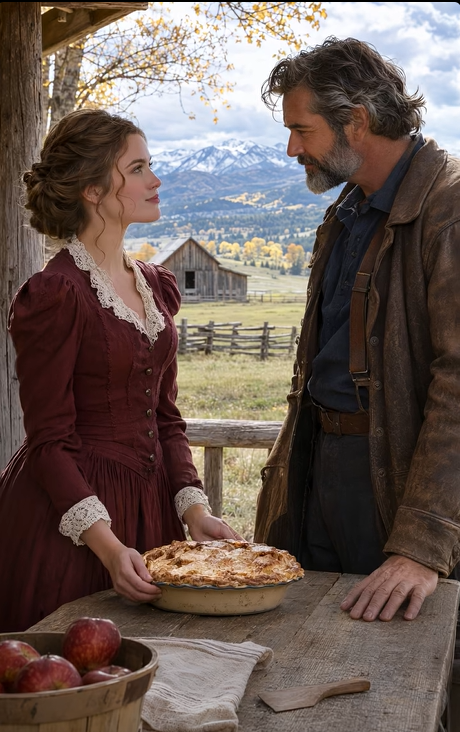
Thomas did not sleep particularly well that night.
He sat beside the kitchen window long after supper, turning William’s words over in his mind.
Eleanor had asked his brother to look after something.
Something Thomas would need when he was finally ready to begin again.
He could not understand what she might have meant.
For three years, he had believed that his wife’s final days had been spent quietly accepting the inevitable, surrounded by familiar faces and the comfort of their farmhouse.
Apparently, she had been making plans he knew nothing about.
The following morning, Margaret arrived carrying a basket of biscuits.
She found Thomas standing beside the kitchen table, staring at the two letters Eleanor had left behind.
“You haven’t eaten breakfast, have you?”
Thomas looked up.
“I had coffee.”
“That isn’t breakfast.”
“I suspected you might say that.”
Margaret placed the basket on the table.
“Then I suppose we have reached an understanding.”
He smiled.
She poured him a cup of coffee and sat across from him.
“Have you thought about what William said?”
“Most of the night.”
“Do you think he knows something about the schoolhouse?”
“I believe he knows considerably more than he has told us.”
Margaret considered this.
“Perhaps we should let him explain.”
Thomas nodded.
“I suppose we should.”
There was a brief silence before Margaret spoke again.
“Thomas, may I ask you something?”
“Anything.”
“Were you happy before Eleanor became ill?”
He looked surprised by the question.
“Very.”
“What did you dream about when you were younger?”
Thomas leaned back in his chair.
For the first time in many years, he allowed himself to remember the boy he had once been.
“I wanted to become a teacher.”
Margaret’s eyes widened.
“You did?”
He nodded.
“My father thought farming was a more sensible occupation, and perhaps he was right in those days.”
“What happened?”
“My younger brother became ill when we were young, and my father needed help with the farm.”
Thomas smiled faintly.
“I stayed.”
“Did you regret it?”
“Not for a moment.”
He looked down at his hands.
“But sometimes, especially during the winter months, I wondered what it might have been like to stand in front of a classroom.”
Margaret smiled.
“Eleanor knew?”
“She knew everything about me.”
He paused.
“She was the one who suggested that I might teach children during the winter after the harvest.”
“Did you?”
“For a little while.”
His smile became warmer.
“We used to gather a handful of children in the old schoolhouse whenever the weather became too cold for fieldwork.”
Margaret listened with growing interest.
“Why did you stop?”
“Eleanor became ill, and the schoolhouse needed repairs.”
He glanced toward the window.
“Then, after she passed, I could barely bring myself to walk past the building.”
Margaret reached across the table.
“Perhaps it is time to return.”
Thomas looked at her hand resting beside his.
“Perhaps it is.”
William arrived shortly before noon.
This time, he brought his wife, Sarah, and a large leather portfolio.
Sarah was a pleasant woman in her early forties, with warm brown eyes and a gentle manner.
She greeted Margaret affectionately, then placed a covered dish on the kitchen table.
“I hope you don’t mind,” she said.
“I thought you might appreciate something that wasn’t apple pie.”
Margaret laughed.
“Thomas would probably eat apple pie for breakfast, lunch, and supper if I allowed it.”
Thomas raised his hands.
“I am being unfairly represented in my own kitchen.”
William laughed.
“Some things never change.”
Once everyone had settled, William opened the leather portfolio.
Inside were several architectural sketches, handwritten calculations, and a collection of old letters.
Thomas recognized the handwriting immediately.
“Eleanor.”
William nodded.
“She gave me these shortly before she died.”
“Why didn’t you tell me?”
William lowered his eyes.
“Because she asked me to wait.”
Thomas looked at him.
“Wait for what?”
“For the day you stopped treating every new beginning as though it were a betrayal of the past.”
The words landed gently, but they carried considerable weight.
William continued.
“Eleanor knew how much you loved that schoolhouse.”
He placed one of the drawings on the table.
“This was the restoration plan you and she made nearly twenty years ago.”
Thomas stared at the drawing.
There it was.
The old schoolhouse, carefully illustrated with new windows, a repaired roof, a larger classroom, and a small reading corner beside the fireplace.
He remembered spending evenings with Eleanor planning every detail.
She had wanted a garden where children could grow vegetables, while he had imagined a small library filled with books.
They had talked about it for months.
Then life had become complicated, and the plans had been placed aside.
Thomas touched the faded drawing.
“I thought we had lost these.”
“Eleanor kept everything,” William replied.
Sarah smiled.
“She told us that some dreams simply needed more time.”
Margaret examined the drawings.
“This is beautiful.”
William nodded.
“Eleanor also left instructions concerning the property.”
He removed another document from the portfolio.
“She had arranged for the schoolhouse to be transferred into a small educational trust, provided someone agreed to restore it and maintain it for the community.”
Margaret looked at him.
“An educational trust?”
“Yes.”
“Then why did you make an offer to purchase it?”
William smiled apologetically.
“Because a property agent approached me two weeks ago.”
He explained that a local land investor had been asking about several unused buildings along Miller Road.
The schoolhouse was among them.
William had been concerned that the property might be sold before Eleanor’s wishes could be properly understood.
“So I made an offer,” he continued, “hoping to keep the property out of anyone else’s hands until I could settle the matter.”
Thomas studied him.
“You were trying to protect it?”
“I was.”
William smiled.
“I should have explained that sooner.”
Thomas looked down at the drawings.
For a moment, neither brother spoke.
Then Thomas stood.
“I owe you an apology.”
William looked surprised.
“For what?”
“For thinking you were trying to take something Eleanor had left behind.”
William shook his head.
“You were protecting her wishes, Thomas.”
“So were you.”
The brothers exchanged a quiet smile.
It was not an extravagant reconciliation, but it was enough to soften years of distance between them.
Sarah gently touched William’s arm.
“Perhaps we should stop discussing what the schoolhouse used to be and decide what it might become.”
Margaret smiled.
“I would like that very much.”
The following weeks brought a welcome change to Thomas’s routine.
Instead of spending every morning alone in his fields, he began walking to the schoolhouse with Margaret.
They repaired the shutters, replaced damaged floorboards, and cleaned years of dust from the windows.
William supplied timber from his workshop.
Sarah helped Margaret sort the old books and prepare the shelves.
Some afternoons, the four of them worked until sunset.
Other evenings, Thomas and Margaret walked home together along the meadow.
Their courtship developed slowly.
Thomas brought Margaret wildflowers from the edges of his fields.
Margaret began leaving small handwritten notes in his kitchen, reminding him to eat and occasionally suggesting that he take an afternoon away from his work.
He started visiting her cottage without an excuse.
Sometimes they talked for hours.
Sometimes they simply sat together while the evening light faded.
One evening, Thomas brought a small wooden box.
Margaret opened it and found a silver hairpin shaped like a delicate flower.
“It belonged to my mother,” he explained.
“I thought you might like it.”
Margaret examined the craftsmanship.
“It is beautiful.”
“I remember my mother wearing it when she went to church.”
He smiled.
“She always said that ordinary days deserved a little beauty.”
Margaret looked at him.
“Your family seems to have collected some remarkable women.”
Thomas laughed softly.
“I have been fortunate.”
She placed the hairpin carefully beside her teacup.
Then she asked something that had been on her mind for several days.
“Thomas, do you ever feel guilty when you are happy?”
His smile faded slightly.
“Sometimes.”
“Because of Eleanor?”
He nodded.
“I know what she wrote, but knowing something and feeling it are not always the same.”
Margaret considered her words.
“Perhaps you don’t have to stop feeling sad to allow yourself to feel happy.”
Thomas looked at her.
“What do you mean?”
“I mean that remembering Eleanor doesn’t have to prevent you from enjoying tomorrow.”
She paused.
“And loving me wouldn’t make the years you spent with her any less meaningful.”
Thomas reached across the table and gently took her hand.
“I am beginning to understand that.”
For the first time, he did not look toward the empty chair beside the fireplace.
He looked at Margaret.
Of course, the people of the community began noticing.
A fifty-five-year-old widower and a twenty-five-year-old unmarried woman walking together through the village were bound to attract attention in a farming community where even a new fence could become the subject of conversation.
At first, Margaret heard a few whispers at the general store.
One afternoon, while purchasing flour, she overheard two women discussing her relationship with Thomas.
“She is young enough to be his daughter,” one remarked.
The other lowered her voice.
“I suppose a comfortable farmhouse is appealing.”
Margaret stood quietly beside the counter.
She could have answered them.
She could have defended herself.
Instead, she paid for her flour and left.
But when Thomas learned what had happened, he became unusually quiet.
“I should have considered what this might mean for you,” he said that evening.
Margaret looked at him.
“What might it mean?”
“People will talk.”
“They already have.”
“You could meet someone closer to your own age.”
Margaret placed her basket on the table.
“Thomas, I have met men closer to my own age.”
He looked down.
“And?”
“And none of them made me feel the way you do.”
He shook his head.
“I don’t want you to sacrifice your future because of an affection that began during a difficult time in your life.”
Margaret stepped closer.
“Then don’t ask me to sacrifice it.”
He looked at her.
“Let me make my own decisions, Thomas.”
She took his hand.
“I am not a frightened girl who needs someone to decide what is best for her.”
Her voice softened.
“I am a woman who knows what she wants.”
Thomas studied her face.
Then he nodded.
“You are right.”
He brought her hand to his lips and kissed it gently.
“I will try to remember that.”
Margaret smiled.
“Good.”
For the first time, they both understood that their relationship would not be measured by the opinions of people standing outside it.
It would be measured by the kindness they showed one another when nobody was watching.
By the beginning of October, the old schoolhouse was almost ready.
The windows had been repaired.
The fireplace worked again.
The wooden desks had been polished, and the shelves were beginning to fill with books donated by families from the surrounding farms.
Margaret had written to the county superintendent requesting permission to open a small community school.
The reply arrived on a Thursday morning.
She opened the envelope at Thomas’s kitchen table.
Her expression changed as she read.
“What is it?” Thomas asked.
Margaret read the letter again.
Then she looked at him.
“They have approved the school.”
Thomas smiled.
“That is wonderful!”
“But there is one condition.”
His smile softened.
“What condition?”
Margaret handed him the letter.
The county required the schoolhouse to have a qualified head teacher before it could officially open.
Margaret was eligible, provided she completed an examination and presented references from two respected members of the community.
Thomas looked up.
“You can do this.”
“What if I fail?”
“Then you try again.”
She laughed nervously.
“You make everything sound so simple.”
“No.”
He folded the letter and returned it to her.
“I simply believe you are capable of more than you sometimes believe yourself to be.”
Margaret held the letter against her chest.
For years, she had believed her dream had passed her by.
Now it was standing in front of her, waiting for her to take the next step.
But as she reached for her basket, another envelope slipped from between the pages of the county letter.
It was addressed to Thomas.
The handwriting belonged to someone neither of them expected to hear from.
**Eleanor’s family solicitor.**
Thomas opened it carefully.
He read the first paragraph, then the second.
By the time he reached the bottom, all the warmth had disappeared from his expression.
Margaret approached him.
“What does it say?”
Thomas slowly lowered the letter.
“It concerns the schoolhouse.”
“Is something wrong?”
He looked at her.
“The property trust is valid, but there is another document Eleanor signed shortly before her death.”
He swallowed.
“Apparently, she left one final instruction.”
Margaret waited.
Thomas looked down at the letter again.
And when he read the final sentence aloud, Margaret realized that Eleanor’s plans had been far more personal than either of them had imagined.
**–END OF PART 4–CLICK “NEXT” AT THE BOTTOM OF THE PAGE TO CONTINUE READING**
✓ Lynn R. Adams
Thomas did not sleep particularly well that night. He sat beside the kitchen window long after supper, turning William’s words over in his mind. Eleanor had asked his brother to look after something…