PART 4: The Key from the Night My Mother Died 041
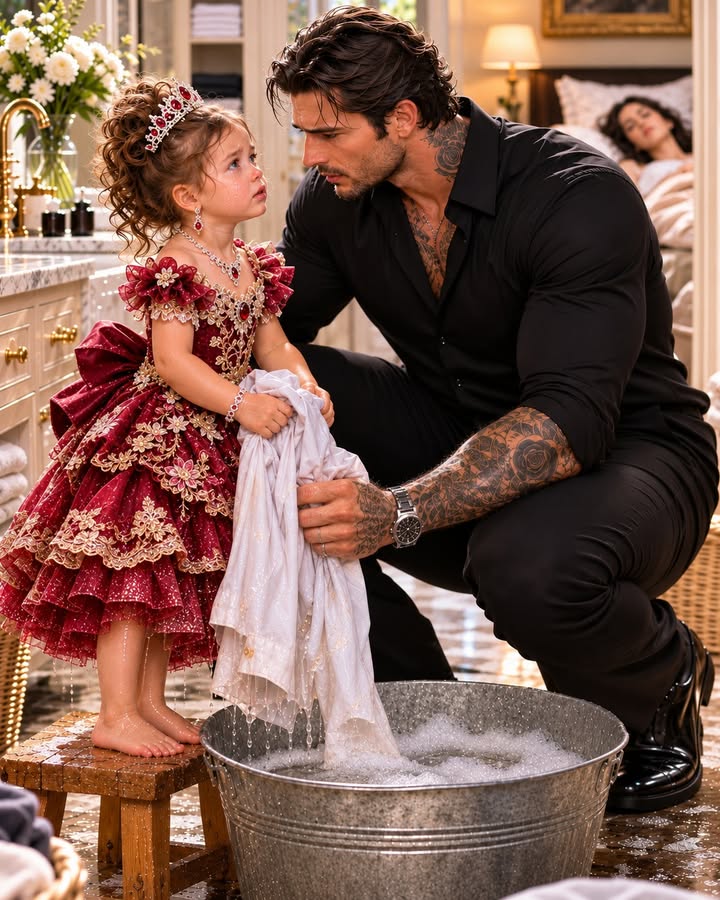
Part 4 – The Child in the Music Room
“I was the child your mother tried to protect.”
Elena’s words seemed to settle over the library, joining the dust and old paper in the stillness.
I looked down at the ledger, at the initials that were hers, and understood that the entries had never been a simple record of labor.
“You were in our house,” I said.
“Yes.”
“How old were you?”
“Ten.”
The answer shifted something in me.
Until then, I had imagined Elena as a young woman, old enough to understand what she had seen and choose what to do with it.
Instead, she had been a child.
A child in the house where my mother died, carrying a memory too heavy to put down.
“Why did my mother try to protect you?”
Elena’s gaze moved toward the hallway.
Sofia had gone quiet in the guest room.
“Can we speak somewhere she won’t hear?” Elena asked.
I nodded and led her to the small conservatory at the back of the house.
Rain whispered against the glass roof, and the garden beyond it had darkened beneath the evening sky.
Elena sat on the bench beside the potted lemon tree, one hand resting over the old scar at her throat.
I remained standing until she looked up at me.
“You can sit,” she said.
I took the chair across from her, leaving the low table between us.
For a while, she seemed to be searching for a beginning that would not hurt too much.
“My father, Mateo, worked for your family for years,” she said at last.
“He repaired things, carried messages, and sometimes drove your mother when your father couldn’t.”
“You said he did more than repairs.”
“He did what he was asked to do.”
“By my father?”
“By your mother, too.”
I waited.
“He was a quiet man,” she continued. “He believed that if he kept his head down and did his work, he could give me a safer life than the one he had known.”
“Was he right?”
“No.”
She spoke without bitterness, which made the answer feel more painful.
“My father had a place to live on the estate,” she said. “It wasn’t the cottage you saw. It was a room above the old carriage house, and it was home to me.”
“You lived on the grounds?”
“Most of the time.”
“Why wasn’t I told?”
“You were a child, too.”
I frowned.
“I would have remembered another child in the house.”
“You weren’t supposed to see me.”
The words sounded strange in the conservatory, though not impossible.
“My mother wanted to keep me out of sight,” Elena explained. “Not because she was ashamed of me. Because she worried your father’s business would bring danger too close.”
“My father’s business was never discussed in front of me.”
“Not in a way you could understand.”
“I understood more than people thought.”
“I believe you.”
Her hand moved over the scar at her throat.
“But your mother tried to keep us both from understanding too much, for as long as she could.”
I thought of my mother’s warm hands, the lullaby she sang while washing clothes, the way she used to sit at the edge of my bed when thunder kept me awake.
I had remembered her as wholly mine.
Now I was beginning to see the parts of her life that had existed beyond the room where she comforted me.
“Why did she sing to you?” I asked.
“Because I was frightened of the house at night.”
“What frightened you?”
“Raised voices.”
The answer was simple.
It opened a door to a memory I had buried beneath more useful ones: a man speaking sharply behind my parents’ bedroom door, my mother’s voice low and steady, the muffled slam of something against a wall.
I had told myself those sounds belonged to the adults’ arguments about money.
“How often did you see my mother?” I asked.
“Almost every day.”
“Did she know your father was keeping you there?”
“She knew. She helped arrange it.”
“Why?”
“Because my mother had died, and my father couldn’t leave me with relatives. Your mother found out I was sleeping in the carriage house and insisted I come into the main house whenever it was cold.”
“She brought you inside?”
“She gave me a room in the old nursery for a while. She told your father I was there to help with laundry and errands.”
I looked down at my hands.
The same house had held both of us, but the memory of it had been divided between us without either of us knowing.
“What happened the night she died?” I asked.
Elena lowered her eyes.
“I’ll tell you what I remember.”
“Only what you’re ready to tell.”
She looked at me sharply, as if she had expected me to press.
Then she nodded.
“That evening, my father came to the house after dinner,” she said. “He was carrying a small parcel for your mother.”
“What was in it?”
“I don’t know. He told me not to ask.”
“Did my mother know what it was?”
“Yes.”
“Was it the music box?”
“No.”
She paused.
“Not at first.”
I leaned forward.
“Go on.”
“My father left the parcel in the music room. Your mother was there with you earlier that evening, and she sang the lullaby while she fixed your collar.”
I remembered the melody, faint and sweet, and the impatient way I had squirmed while she buttoned my shirt.
Elena’s voice softened.
“You were tired. She took you upstairs, tucked you in, and asked me to sit with you until she returned.”
“You sat beside my bed?”
“For a little while.”
I tried to find the memory of her face among the shadows of that night.
There was nothing.
Only a child’s small hand resting on the coverlet, a song fading along the hall, and the certainty that my mother would come back.
“Did she come back?”
“She came to the doorway.”
The memory stirred, but did not become clear.
Elena continued.
“She thought you were asleep, but you were listening. She stood there and hummed the last line.”
I could almost hear it.
My mother’s voice at the threshold.
The gentle turn at the end that Sofia had brought back to me.
“She asked me to keep you company,” Elena said. “Then she went downstairs.”
“And that was the last time you saw her alive?”
“No.”
Her fingers tightened over her knee.
“I saw her later.”
The rain tapped harder on the glass.
“Where?” I asked.
“In the music room.”
“What happened?”
Elena looked at the conservatory’s fogged windows.
“My father had come back. He had gone to find your mother because he was worried about the parcel.”
“Why?”
“He had heard something that frightened him.”
“From whom?”
“I don’t know.”
“Was it Vittorio?”
“I didn’t see who he spoke to.”
“Did your father tell you?”
“No.”
She inhaled carefully, as if the memory still had a sharp edge.
“I heard voices from the passage near the music room. My father told me to stay hidden in the pantry. He said I wasn’t to come out until he returned.”
“But you did.”
“Yes.”
“Why?”
“Because I heard your mother say my name.”
The answer tightened my chest.
“What did she say?”
“She said, ‘Elena is a child.’”
Elena swallowed.
“Someone answered, but I couldn’t make out the words. Then your mother said, ‘She doesn’t know anything about your arrangements.’”
“What arrangements?”
“I don’t know.”
“You heard that conversation?”
“Only pieces.”
“Who was she talking to?”
Elena looked at me.
“I saw Vittorio.”
The name seemed to take up all the air between us.
“Did you see him clearly?”
“Yes.”
“What was he doing?”
“Standing near the music-room door. Your mother was between him and the desk.”
I tried to keep my voice level.
“Were they arguing?”
“They were speaking quietly at first.”
“What changed?”
“My mother told him she wouldn’t let you be used.”
I felt the words before I understood them.
“Used how?”
“I don’t know.”
“Used by whom?”
“I don’t know.”
“Did Vittorio say anything?”
“He told her she had no idea what she was asking.”
“And she said?”
“She said she knew exactly what she was asking.”
The rain seemed distant now.
I could hear the old house in Elena’s words, a house I had once believed I knew.
“Then what happened?”
“My mother opened the music box,” I said, trying to fit the pieces together.
Elena shook her head.
“Your mother didn’t open it.”
“But someone did.”
“Yes.”
“Vittorio?”
“I saw him holding the key.”
My mouth went dry.
“The silver key?”
“I recognized it later, after my father had given it to me.”
“What did Vittorio do with it?”
“He unlocked the box.”
“What was inside?”
“I couldn’t see.”
“What happened next?”
“My mother told him to leave.”
“Did he?”
“No.”
Her voice had gone thin.
“He told her the family couldn’t survive the truth coming out.”
“What truth?”
“I don’t know.”
“Did my mother threaten to expose him?”
“She said she would tell your father everything.”
I rose from the chair, then stopped myself before pacing.
Vittorio’s voice returned to me from that morning: Be careful about building a case from an old initial.
My mother had said she would tell my father everything.
Everything about what?
“What happened after that?” I asked.
Elena clasped her hands together.
“My father came into the room. He told Vittorio to step away from your mother.”
“Did he threaten him?”
“No. My father never threatened anyone.”
“Then what did he do?”
“He stood between them.”
It was a quiet answer, but I could picture the small, steady man Elena had described placing himself between a powerful relative and my mother.
“What did Vittorio do?”
“He looked at my father and said he was making a mistake.”
“Did he leave?”
“After a while. He put the key on the desk.”
“Why?”
“I don’t know.”
“Did he touch my mother?”
“No.”
Her answer came quickly and firmly.
“I never saw him touch her.”
I let out a breath I had not realized I was holding.
The murder had always lived in my mind as a single violent instant, faceless and unknowable.
Elena was giving it edges, voices, pauses.
But she was not giving me the answer I had spent my life wanting.
“What happened to my mother?”
“I don’t know what happened after I left the room.”
“Did she die that night?”
“Yes.”
“How?”
“I was sent away before I found out.”
“By your father?”
“By your father.”
I stared at her.
“My father came home?”
“He had been out. He arrived after the argument.”
“Did you see him?”
“Yes.”
“What did he do?”
“He took me by the shoulders and told me I had to go with Mateo.”
“Did he say why?”
“He said the house wasn’t safe.”
I thought of my father’s hand on my shoulder in the fragments of my own memory.
A door closing below.
Adults speaking in low voices.
I had believed he was trying to protect me from the news of my mother’s death.
Perhaps he had been protecting someone else, too.
“Did my father know you had witnessed the argument?”
“I think he knew I had heard enough to be frightened.”
“Did he know what you saw?”
“I don’t know.”
“Why did he send you away?”
“He said my father would take me somewhere safe.”
“Did he say my mother was dead?”
“No.”
“Did he know?”
“I don’t know.”
Elena’s eyes shone, but her voice remained composed.
“My father carried me through the east service door. He told me not to look back. I asked if your mother was coming, and he said she would find a way.”
She looked down at her hands.
“She didn’t.”
The words were barely audible.
For the first time, the distance between us no longer felt like suspicion.
It felt like two children had been left on opposite sides of the same terrible night, each carrying a fragment the other had never been given.
I sat again.
“I’m sorry,” I said.
Elena’s mouth trembled.
“She was good to me.”
“I know.”
“No,” she said. “You know what I’ve told you. You don’t know how she made me feel.”
“You’re right.”
“She never treated me like a servant’s child. She would ask me what I thought, even when the grown-ups were talking over me.”
I imagined my mother looking at a frightened girl and giving her the one thing a child could understand: a place at the table, a warm room, a song.
“She sang the lullaby to both of us,” I said.
“Yes.”
“Why didn’t you tell me that sooner?”
“I wasn’t sure you would believe me.”
“I believe you.”
“You didn’t, when I first said I had been there.”
“I wanted to.”
“That isn’t the same.”
“No,” I said. “It isn’t.”
She gave a small, tired nod.
I knew I could not ask her to trust me simply because I had begun to trust her.
“What did your father tell you afterward?” I asked.
“Very little. He said we had to leave the city.”
“Did you?”
“We left before sunrise.”
“Where did you go?”
“Upstate, first. Then farther away.”
“Did anyone look for you?”
“My father changed our names. He told me it was to keep us safe.”
“From Vittorio?”
“He never said.”
“Did he tell you to keep the key?”
“Yes.”
“What did he say?”
“That someday I might understand why it mattered.”
“Did he know what was inside the music box?”
“He said he knew something had been left there.”
“By my mother?”
“I think so.”
“Then why didn’t he take it?”
“He tried.”
That stopped me.
“He went back to the house?”
“Not that night. A few days later.”
“What happened?”
“He told me he couldn’t find what he was looking for.”
“The music box?”
“He said the box was gone.”
It had vanished from the house after my mother died.
I remembered searching for it as a boy, although no one had told me exactly what it was.
I had thought I was looking for a toy.
“Did he ever say what your mother had hidden?”
“No.”
“Did he tell you the key was important because it belonged to the box?”
“He said the key could show who had opened it.”
“But it only shows whose initials were engraved on it.”
“Unless the box itself has something inside.”
I stood and went to the window.
Beyond the conservatory, the mansion’s lights reflected in the rain-dark garden.
“My uncle has been part of my life for twenty-seven years,” I said.
“I know.”
“He helped raise me.”
“I know.”
“He was the person I turned to after my father died.”
“I know.”
“If what you saw is true, then he was in a room with my mother before she died.”
“Yes.”
“And my father let him remain in our family.”
Elena did not answer.
I turned from the window.
“Why would my father keep trusting him?”
“Maybe he didn’t.”
“What does that mean?”
“Your father sent you away. He changed my name. He told mine to hide. Maybe he understood more than either of us knew.”
“Then why did he leave Vittorio beside me?”
“I don’t know.”
The question returned again, but this time it was mine as much as hers.
I lowered my voice.
“Did Vittorio kill my mother?”
“I didn’t see him harm her.”
“That doesn’t answer me.”
“I know.”
“Do you believe he did?”
“I don’t know.”
Her honesty did not ease my fear.
It made it harder to dismiss.
A soft knock sounded at the conservatory door.
We both looked up.
Sofia stood there in her pink pajamas, holding the stuffed rabbit by one ear.
“I woke up,” she said.
Elena crossed the room and knelt.
“Are you feeling all right?”
“I heard you talking.”
“I’m sorry, sweetheart.”
“Was it about the bad night?”
Elena glanced at me before answering.
“It was about a night a long time ago.”
“Did you see Grandma?”
The question came from Sofia’s own small understanding, but it struck me with unexpected force.
Elena brushed a curl away from her forehead.
“I knew her.”
“Was she nice?”
“She was very kind.”
“Did she sing to you?”
“Yes.”
“Like the song Mama sings?”
“Exactly like that.”
Sofia looked toward me.
“Did she sing to you too?”
“She did.”
“Then she was our Grandma.”
My throat tightened.
I had never called my mother Grandma in my mind.
I had always thought of her as the person I lost.
Sofia had found another place for her in a single sentence.
“Yes,” I said. “She was.”
Sofia climbed into Elena’s lap and rested her head against her shoulder.
“Can you sing the song?”
Elena glanced at me.
I nodded.
She began the lullaby softly, her voice still rough from illness.
The melody moved through the conservatory and reached the hallway, where the house seemed to lean toward it.
Sofia’s eyes drifted closed.
I remembered my mother singing in the kitchen, one hand lifting a wet sleeve from the basin, the other smoothing my hair as I sat on a stool.
This time the memory did not end with a door shutting.
When Elena finished, Sofia was nearly asleep.
I carried her back to the guest room while Elena followed more slowly.
After I laid Sofia beneath the blanket, the girl caught my hand.
“Mr. Riccardo?”
“Yes?”
“Don’t let the song get lost.”
I swallowed.
“I won’t.”
She closed her eyes.
In the corridor, Elena stood beside the door.
“She thinks songs can be kept safe,” she said.
“Maybe they can.”
“Not from everything.”
“No,” I said. “But perhaps from being forgotten.”
She looked at me for a long moment.
Then her gaze shifted toward the locked room at the far end of the hall.
“I should show you something,” she said.
“What?”
“The key.”
She returned to her room and took the faded cloth from the pocket of her robe.
This time, she did not unwrap it at the window.
She set it on the small table and opened the fabric carefully.
The silver key caught the lamplight.
I kept my hands at my sides.
“May I look at the engraving again?” I asked.
She nodded.
The initials were worn but clear.
V.F.
On the underside of the flower-shaped handle, I noticed a tiny line I had missed before.
“Is that a mark?” I asked.
Elena leaned closer.
“I don’t know.”
I bent over the key without touching it.
A second engraving lay along the narrow base, so small it seemed more like a scratch than writing.
It was a date.
The date of my mother’s death.
Elena went still.
“Did your father tell you that was there?”
“No.”
“Could the key have been engraved afterward?”
“It could have.”
“But it wasn’t.”
I looked up.
Elena’s face had gone pale.
“I remember the day,” she whispered. “Your mother wore a blue dress. She took the music box into the music room because it wouldn’t play.”
“She opened it?”
“I don’t know. I remember the sound.”
“What sound?”
“A click. Then a tune.”
The same lullaby.
Elena closed her eyes.
“My father said he heard it too.”
“From the music box?”
“Yes.”
I looked down at the key.
“If the date was engraved that night, someone wanted it remembered.”
“Or someone wanted us to think it mattered.”
“Who would do that?”
“I don’t know.”
The answer had begun to sound like a warning repeated in another voice.
I carefully returned the key to the cloth.
Then I noticed something inside the fold.
A narrow strip of paper had been tucked against the seam, yellowed and almost transparent with age.
“Elena,” I said.
She leaned nearer.
The paper bore a few faded words in handwriting I recognized from the letters my mother had sent me as a boy.
I unfolded it as gently as I could.
There were only two lines.
If anything happens, tell Riccardo the song was not for him alone.
Beneath it, in smaller writing, were the initials E.F.
Elena’s breath caught.
I read the words again.
The lullaby had not only been a comfort.
It had been a message.
The little girl in the laundry room, the woman who had kept silent for decades, and the mother I had spent twenty-seven years mourning were joined by a secret neither of us had understood.
“What does it mean?” I asked.
Elena covered her mouth with one hand.
“I don’t know.”
“You were with her that night. You knew the song.”
“I was a child.”
“But this note was meant for you.”
She shook her head.
“Or for whoever found it.”
A sound came from the hallway.
Not a footstep.
A soft click, followed by the faint scrape of a key turning in a lock.
We both looked toward the corridor.
At the end of it, the door to my mother’s room stood open.
I was certain I had locked it.
Elena gripped the edge of the table.
“Did you hear that?” she whispered.
“Yes.”
I took one step toward the hallway, then stopped when I noticed a thin line of light beneath my mother’s door.
Someone was inside.
The house had been silent for nearly thirty years.
Now, from behind the open door, came the slow, delicate notes of the music box.
**–END OF PART 4–CLICK “NEXT” AT THE BOTTOM OF THE PAGE TO CONTINUE READING**
* * *
[PREVIOUS: PART 3](https://echoesofstories.idolsgift.com/blog/part-3-the-key-from-the-night-my-mother-died-041) | [NEXT: PART 5](https://echoesofstories.idolsgift.com/blog/part-5-the-key-from-the-night-my-mother-died-041)
✓ Lynn R. Adams
Part 4 – The Child in the Music Room “I was the child your mother tried to protect.” Elena’s words seemed to settle over the library, joining the dust and old paper in the stillness. I looked down …