PART 4: The Key Beneath the Dust 041
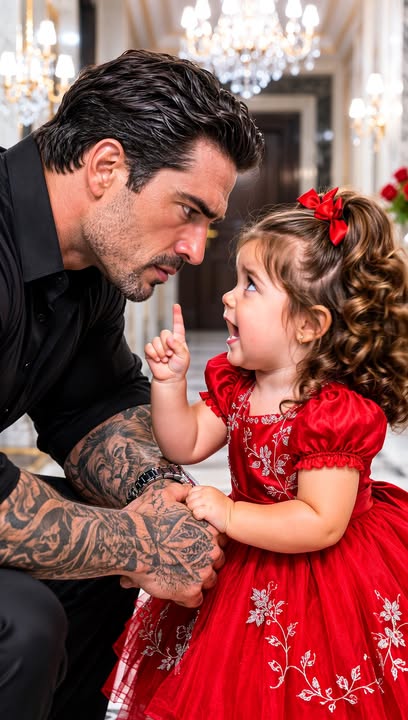
Part 4 – The Woman in Room Fourteen
“I’m afraid they belong to someone we both know,” Margaret said.
Vincent looked from her to the faded letters on the receipt.
“Who?”
“I can’t tell you until I’m certain.”
“You’ve asked me to be patient with a secret you’ve carried for years.”
“I know.”
“And now you’re asking me to wait again.”
Margaret’s gaze did not waver, but her hands had tightened around the paper.
“I’m asking you not to decide what those letters mean before we know the whole story.”
“Then help me find it.”
She glanced at Sophie, who had begun to hum softly while coloring the rabbit’s ear.
“Not with her here,” Margaret said.
Vincent looked down at his daughter.
Sophie’s crayon slowed, then stopped.
“Daddy?”
He crouched beside her.
“Margaret and I need to talk about grown-up things for a little while.”
“Secret things?”
“Some things we don’t understand yet.”
Sophie considered that, then held up her drawing.
“Sad lady needs picture.”
“We’ll keep it safe,” Vincent promised.
He tucked the page into the folder, careful not to crease it, and asked the nanny to take Sophie upstairs for a snack.
Sophie went willingly, though she turned back once at the study door.
“Find her, Daddy.”
“I will.”
When the door closed, Vincent faced Margaret again.
“Now tell me who those initials belong to.”
“I don’t know,” she said. “Not yet.”
He looked at her in silence.
“I’m not trying to protect myself,” she continued. “I’m trying not to mistake one mark for proof. If I’m wrong, I could send you in the wrong direction.”
“You’ve already sent me in circles.”
“Yes,” Margaret said. “And I’m sorry.”
The sincerity in her voice did not soothe him, but it kept him from answering with the anger waiting behind his teeth.
He gathered the receipt, the music, and the photograph into the portfolio.
“The records office opens at nine.”
“I’ll come with you.”
“You need rest.”
“I’ve had enough rest to know I can’t keep sitting still.”
“You were held in a locked room for three weeks.”
“And I won’t be useful if I pretend I’m fine,” she replied. “But I can still help.”
Vincent studied her pale face.
“You’ll tell me if you feel unwell.”
“I will.”
“And if the records office has no information, you won’t decide that means we stop.”
“No,” she said. “We keep looking.”
The next morning, they drove to the care network’s records office on the north side of the city.
It occupied two floors of a converted brick building, modest and quiet, with a reception desk and a waiting room that smelled faintly of coffee and paper.
Vincent had expected locked cabinets and an old-fashioned sign-in sheet.
Instead, a records coordinator named Mrs. Alvarez greeted them, listened carefully, and asked to see the receipt.
She read it twice, then examined its date and the faded account notation.
“Haven House closed seven years ago,” she said. “Some resident files were transferred here, but I can’t release personal information without the resident’s consent or proof of authority.”
Vincent accepted the boundary without argument.
“Could you tell us whether the account number is valid?”
“I can confirm that it appears consistent with our old system.”
“And the name E. Vale?”
“I can’t verify a name from a receipt alone.”
Margaret leaned forward.
“The room number was fourteen.”
Mrs. Alvarez checked the handwritten notation against a database.
“Room fourteen did exist at Haven House.”
“Do you know who occupied it?” Vincent asked.
“I can’t tell you that without authorization.”
“If the resident is still in your care, could you pass along a message?”
The coordinator looked at him more closely.
“What would you want the message to say?”
Vincent had prepared no speech.
He had imagined finding an address, a name, a confirmation that his mother had once lived in that place.
He had not considered how the first words should sound if they might reach her.
“Tell her Vincent is looking for her,” he said. “Tell her I’m her son.”
Mrs. Alvarez’s expression softened.
“If I can confirm the resident’s identity and current status, I can pass that message along. I can’t promise she’ll choose to respond.”
“I understand.”
Margaret was quiet beside him.
The coordinator studied the receipt again.
“There’s one more difficulty,” she said. “The account was closed before the transfer of records. I’ll need to check the archived index.”
“How long will that take?” Vincent asked.
“Possibly a few days.”
He nodded.
“Can we leave copies?”
“Certainly.”
As Mrs. Alvarez took the papers to a secure scanner, Margaret sat down in the waiting room.
Vincent remained standing.
“You knew we might come here,” he said.
“I hoped we would.”
“You also knew we might be turned away.”
“Yes.”
“Did you ever come here yourself?”
“No.”
“Why not?”
“Because your father told me the account was private, and I didn’t have a reason strong enough to violate that.”
“Then what changed?”
“Your daughter.”
He looked toward the closed records-room door.
“Sophie met Elena.”
“I believe she did.”
“Why would Elena be near her?”
“I don’t know.”
“Was she living here when Sophie saw her?”
“I don’t know.”
“You keep answering that.”
“Because it’s true.”
The records coordinator returned with a form for Vincent to sign.
He left his contact information and wrote a short message for the resident, should the identity be confirmed.
There were only three lines.
I know you may have reasons for staying away.
I won’t force you to see me.
I would like to know you are safe.
He handed the page back without reading it aloud.
At home, Margaret went to rest in the guest room, while Vincent sat in his study with the old papers spread across the desk.
He had expected discovery to bring clarity.
Instead, every answer had opened another door, and none had shown him what waited behind it.
The photograph showed a mother holding her small son.
The receipt proved money had been sent for someone’s care.
The note spoke of a woman who remembered a lullaby.
And Sophie remembered being sung to by a woman she called sad.
The pieces belonged to the same picture, but the image still refused to settle.
His phone rang shortly after noon.
The caller was the records coordinator.
“We located the archived index,” she said. “I can’t discuss the file over the phone, but I can tell you the account was associated with a resident who later moved to a different facility.”
“Can you tell me where?”
“I can give you the facility’s name after I verify the authorization request.”
“Could you pass along my message?”
“I’ve done so.”
Vincent gripped the edge of the desk.
“Has she responded?”
“Not yet.”
“Can you tell me whether she’s alive?”
There was a brief pause.
“I’m sorry, Mr. Moretti. I can’t confirm that until I finish the verification.”
He understood the rules.
He also understood how thin his patience had become.
“Then please finish it as soon as you can.”
“I will.”
When he ended the call, he found Margaret in the doorway.
“You heard?”
“Enough.”
“They found the account.”
“And?”
“She was transferred to another facility.”
Margaret lowered herself into the chair beside the desk.
“Then we know she survived the closure of Haven House.”
“We know someone tied to that account did.”
“You believe it was Elena.”
“I believe it may have been.”
The cautious phrasing sounded like hers now, and he did not like what that meant.
Margaret looked at the receipt.
“The note could have been written by her.”
“Or by someone who knew the room.”
“Yes.”
“Who are the initials?”
“I’ve been thinking about that.”
“And?”
“Your father’s brother, Matteo, used M.H. as a code in certain old files.”
Vincent’s expression sharpened.
“My uncle Matteo died before I was born.”
“According to your father.”
“What does that mean?”
“Nothing, perhaps.”
“Margaret.”
“He had a half brother,” she said. “They shared a father, not a mother. I saw his name in a set of old documents once. Matteo Hale.”
Vincent stared at her.
“Our family name is Moretti.”
“Your father’s family used several names in the early years. Hale was one of them.”
“I’ve never heard of him.”
“Neither had I, until I came across a letter.”
“Where is the letter?”
“I don’t know. I saw it in your father’s files, but I didn’t keep it.”
“So the initials may be Matteo Hale.”
“They may.”
“Or someone else.”
“Yes.”
Vincent sat back.
Another branch of the family had appeared out of a pair of faded letters.
He had spent the morning searching for his mother and had found a possible uncle he did not know existed.
“Did my father say Matteo was dead?”
“He told me Matteo had gone away and could not be found.”
“That isn’t the same thing.”
“No.”
“Did you believe he was dead?”
“I believed your father wanted me to stop asking.”
“Did you?”
“I did.”
The admission came without excuse.
Vincent rubbed a hand over his jaw.
“How many people in my family did my father erase from the story?”
“I don’t know.”
“Did he erase Elena because of Matteo?”
“I don’t know.”
“Did Matteo threaten her?”
“I don’t know.”
“Did Vanessa discover that name?”
“I don’t know.”
Margaret’s voice had grown quieter, but she did not retreat from the questions.
“I understand why you’re angry,” she said. “I don’t expect you to trust me because I finally admitted how little I know.”
“Good.”
She glanced at the family portrait over the mantel.
“Your father believed silence could contain danger.”
“Silence contained us.”
“I know.”
“No, Margaret. It separated me from my mother before I was old enough to understand what I was losing.”
Her face tightened.
“You’re right.”
He had expected her to defend his father, or herself, or the promise she had kept.
Her agreement left him with nothing easy to push against.
“I don’t know whether my father was protecting her,” Vincent continued. “I don’t know whether he was protecting me. But I’m done treating his reasons as proof that his choices were right.”
“I think that’s fair.”
“Then if we find her, she gets to decide what happens next.”
“Yes.”
“Not him. Not me. Not you.”
“Yes,” Margaret said again.
The records coordinator called the following afternoon.
The resident had agreed to receive Vincent and Margaret, but only if they came without security and did not bring Sophie.
The woman had given the name Elena Vale.
Vincent read the name from the message, then set the phone down.
Margaret had gone still beside him.
“Is she there?” he asked the coordinator.
“She is,” Mrs. Alvarez replied. “She’s asked that you call before leaving so she can confirm she’s ready.”
“Can you give me her number?”
“I’m afraid not. She has requested that we arrange contact through the facility.”
“Then tell her I’ll call tomorrow morning.”
“I will.”
When the call ended, Vincent sat quietly for a moment.
His mother was alive.
The sentence seemed too large to fit inside the room.
For years, the past had been a fixed thing: a date, a brief explanation, a grave he rarely visited because he had been too young to remember the person buried there.
Now the past had become a woman with a voice, a name, and the right to refuse him.
Margaret sat across from him.
“You don’t have to go tomorrow,” she said.
“Yes, I do.”
“You can give her more time.”
“She’s had years.”
“And so have you.”
He turned the photograph toward himself.
“I don’t know what I’ll say.”
“You don’t have to know before you see her.”
“That seems unfair to her.”
“Perhaps the only fair thing is to let her speak first.”
He looked at Margaret.
“Did you visit her after the first time?”
“No.”
“Why not?”
“She asked your father not to bring me back.”
“You met her in person?”
“Yes.”
“When?”
“Many years ago.”
“Where?”
“Near the old Haven House. I went because your father needed a receipt delivered, and he didn’t want the courier to know her identity.”
“You saw her and still didn’t tell me.”
“I did.”
“Why did she ask you not to return?”
“She didn’t trust anyone connected to your father.”
“Did she know I was his son?”
“She knew you existed.”
“Did she know I was alive?”
Margaret’s eyes filled with regret.
“She knew you were growing up. Your father sent her a few photographs.”
Vincent looked down.
“Photographs of me.”
“Yes.”
“Without my knowledge.”
“Yes.”
“Did she ask about me?”
“She asked whether you were well.”
“And what did you tell her?”
“That you were.”
“Was I?”
“You were a boy. You had good days and difficult ones.”
“That isn’t what I asked.”
Margaret looked at him steadily.
“I told her you were safe.”
He turned the photograph over in his hands.
The truth did not erase the wound.
It gave the wound a new shape.
His mother had known he was alive.
She had received pictures.
She had asked whether he was safe.
And somewhere in those years, she had decided that distance was the only way to keep him that way.
“Did she ever ask to see me?”
“Not in the conversations I knew about.”
“Did my father ever offer?”
“I don’t know.”
“That’s another thing you don’t know.”
“Yes.”
He stood and walked to the window.
Outside, the city moved through its ordinary afternoon, a bus stopping at the corner, a cyclist weaving around a parked delivery van, sunlight resting on the roofs across the street.
His mother had lived somewhere in that city, perhaps only a few miles away, while he grew into a man who believed she was gone.
The following morning, Vincent called the facility.
A nurse transferred him to Elena’s room.
He heard a soft click, then the faint sound of a woman breathing on the other end.
“Hello,” he said.
There was a pause.
“Vincent?”
His hand tightened around the phone.
“Yes.”
“I was told you might call.”
The voice was thinner than he had imagined, but beneath the weariness he heard something familiar, a tenderness that seemed to reach him from a place older than memory.
“I don’t know what to say.”
“You don’t have to say anything.”
“I’m coming today, if you still want me to.”
Another pause.
“Bring Margaret,” Elena said. “But not the child.”
“I won’t.”
“Please come alone otherwise.”
“I will.”
“Do you have the photograph?”
“Yes.”
“Then you already know I’m real.”
The line ended before he could answer.
He and Margaret drove to the facility in a plain sedan, leaving every guard behind.
The building stood on a quiet stretch of road beyond the city center, bordered by maple trees and a narrow garden where late-season flowers leaned toward the sun.
It was not a place of locked doors or cold corridors.
A receptionist greeted them by name and led them through a bright lounge to a small sitting room.
Margaret remained near the doorway when a nurse brought Elena in.
She moved slowly, one hand resting on the nurse’s arm, the other gripping a polished cane.
Her dark hair had gone silver at the temples.
Her face was thinner than in the photograph, and time had softened the lines around her mouth, but Vincent knew her at once.
He knew the eyes.
He had seen them in the mirror every morning.
The nurse helped her into a chair, then gave them privacy by stepping into the hall.
Elena looked at Margaret first.
“You brought him,” she said.
“I did,” Margaret answered.
“You didn’t bring the little girl.”
“No.”
Elena turned to Vincent.
He had imagined this moment as a dozen different scenes.
In some, she ran to him.
In others, she apologized.
In a few, she explained everything so clearly that he could simply forgive her and begin again.
None of those imagined scenes had prepared him for the quiet reality of sitting across from a frail woman who had been his mother all along.
“Hello,” he said.
“Hello, Vincent.”
She studied his face.
“You look like your father.”
“I’ve been told.”
“You have my eyes.”
He had been waiting for her to say something like that, and when she did, the old certainty inside him shifted again.
His eyes had never belonged only to the family he had grown up with.
He sat in the chair opposite hers.
“I thought you were dead.”
“I know.”
“Did my father tell you he had told me that?”
“Yes.”
“Did you agree?”
“I understood why he did it.”
“That isn’t the same as agreeing.”
“No,” she said. “It isn’t.”
The answer surprised him.
He had expected her to defend his father, or herself, or the life that had kept them apart.
Instead, she let the question remain difficult.
“Why?” he asked.
Elena’s fingers rested lightly on the handle of her cane.
“Your father believed there was a danger connected to his family’s business. A man who had once worked beside him had begun asking questions about you and about me.”
“Matteo?”
Her face changed.
“Where did you hear that name?”
“Margaret found initials on a receipt.”
“Matteo Hale,” Margaret said. “I saw the name in Vincent’s father’s papers.”
Elena looked toward the window.
“Matteo was your father’s half brother.”
“I never knew I had an uncle.”
“Your father didn’t want you to know.”
“Was he the danger?”
“He was involved with people who wanted leverage over your father. At first, I thought the threat was only a warning.”
“What did he threaten?”
“To make sure your father understood that the people he loved could be reached.”
Vincent’s jaw tightened, but Elena lifted one hand.
“Nothing happened to you,” she said. “Your father acted before anything could.”
“By telling me you were dead.”
“By telling everyone that.”
“Was I supposed to be protected by believing I had no mother?”
“I know what that cost you.”
“Do you?”
Her gaze held his.
“I know because it cost me too.”
The room went quiet.
Vincent looked at Margaret.
“You knew about Matteo?”
“Not then,” she said. “I learned the name later.”
Elena lowered her eyes to her hands.
“Your father asked me to disappear because he believed Matteo was watching everyone near him. I was young, frightened, and convinced that if I stayed, he would use me to reach you.”
“Did you want to leave?”
“No.”
“Did you have a choice?”
Elena did not answer immediately.
“Your father arranged the move,” she said. “He chose the name, the first place, and the people who would help me. I chose not to come back.”
“That’s not the whole of a choice.”
“No,” she said. “It isn’t.”
Her honesty did not absolve his father.
It did not absolve her.
But it gave Vincent a truth he could hold without pretending it was simple.
“Why didn’t you contact me when the danger passed?”
Elena’s expression grew tired.
“Because I never knew when it had passed.”
“Matteo was gone.”
“Your father said he was gone. Then he said there were others who might use the same information.”
“Did he ever visit you?”
“Once, after you were grown.”
“Did he tell you I knew?”
“He told me you believed I was dead.”
“Did you ask him to tell me the truth?”
“Yes.”
“What did he say?”
“That he would when it was safe.”
Vincent closed his eyes briefly.
“And then he died.”
“Yes.”
“He left a note in a lockbox saying to find the woman who remembers the lullaby.”
Elena’s face softened at the mention of the song.
“He knew you might one day find the key.”
“Why didn’t you send it to me yourself?”
“I didn’t know it was missing. I thought your father had kept it.”
“Why was it with Sophie?”
Elena looked startled.
“It wasn’t.”
Vincent leaned forward.
“Sophie found it in the basement.”
Elena’s brows drew together.
“I’ve never been in your house.”
“Never?”
“Not once.”
“Did you meet Sophie?”
“No.”
“She says she met a sad lady who sang to her.”
Elena looked from Vincent to Margaret.
“I have not seen the child.”
Vincent felt the brief hope that had accompanied the question collapse into uncertainty.
Sophie had remembered a woman.
She had called that woman sad.
The woman had sung the lullaby.
But Elena had never met her.
“Could someone have visited my house using your name?” he asked.
“I don’t know.”
“Did you give anyone the key?”
“No.”
“Did Margaret?”
“No,” Margaret said.
Elena’s fingers tightened around the cane.
“I never told anyone where you lived,” she said. “I didn’t know your address.”
“Then how did the woman find Sophie?”
“I don’t know.”
For the first time since the meeting began, fear entered Elena’s face.
Not fear of Vincent.
Fear of something just beyond the room, something none of them could yet see.
“The lullaby was yours,” Vincent said. “Sophie remembers it.”
“It was the song I sang to you.”
“Who else knew it?”
“Your father. Margaret may have heard it.”
Margaret shook her head.
“I heard it once, years ago.”
“Anyone else?”
Elena thought for a moment.
“My sister knew it.”
The words fell quietly.
Vincent stared at her.
“You have a sister?”
“I had a sister.”
“Is she alive?”
Elena looked at the floor.
“I don’t know.”
“Did she come to see you?”
“No.”
“Did she know about me?”
“She knew you existed.”
“Her name?”
Elena hesitated.
“Mara.”
A memory stirred in the back of Vincent’s mind, faint and incomplete.
A woman’s voice in a hallway.
A quick laugh.
Someone calling his mother by a name he could not remember.
He pressed a hand to his temple.
“I knew her?”
“You were very small,” Elena said. “She visited once, before I disappeared.”
“Could she have come to the house?”
“I don’t know.”
“Did she know Sophie?”
“No.”
“Did she know where I live?”
“I don’t know.”
Margaret stood very still by the doorway.
“Your father told me there was one other person who knew the first address,” she said.
Elena looked at her.
“Who?”
“I was never told her name.”
“Was it Mara?” Vincent asked.
“I don’t know.”
“You’ve been protecting this arrangement all these years,” he said to Margaret. “And you don’t know who else was involved?”
“I only handled the payments.”
“But you knew there were other people.”
“I knew there had been a courier, and that one person had once gone with your father to the care home.”
“Did you ever ask who?”
“Yes.”
“And he refused to tell you.”
“He said names could become invitations.”
Vincent turned back to Elena.
“Did you know my father was paying for your care?”
“I knew about the care home.”
“Did you know Margaret was handling the receipts?”
“Not at first.”
“When did you find out?”
“After your father died.”
“How?”
“He sent me a letter, explaining that Margaret had kept the payments recorded under another name.”
Elena looked at Margaret.
“I never knew whether I should thank you or resent you.”
“I understand,” Margaret said.
“Do you?”
“I helped keep you safe, but I also helped keep you hidden from your son.”
Elena’s eyes grew wet.
“Your father believed there was no other way.”
“Did he ever ask what you wanted?”
“He asked whether I wanted to live.”
“And you said yes.”
“Yes.”
“Did you want a life without me?”
“No.”
The answer came quickly.
Vincent’s throat tightened.
“I’m sorry,” Elena whispered. “I should have found a way to tell you.”
“Why didn’t you?”
“Because I was afraid that if I came back into your life, someone would follow me to you.”
“Someone already came to my house.”
“I know.”
“Sophie found a key that belonged to my father. A woman was being held in our basement. Vanessa was taking money from the trust.”
Elena sat straighter, her face paling.
“Vanessa?”
“You know her?”
“I heard her name from your father once.”
“What did he say?”
“That she was close to you.”
“She was my fiancée.”
“I’m sorry.”
“She was also searching for the payments.”
Elena’s eyes moved to the receipt in his hand.
“She may have been looking for me.”
“Why?”
“I don’t know.”
“Did you know about her before?”
“No.”
“Did she ever contact you?”
“No.”
“Did anyone contact you about her?”
“No.”
Margaret stepped nearer.
“The payments were hidden, but not completely concealed. Vanessa may have discovered them through the trust.”
“Or someone told her,” Vincent said.
Elena pressed her fingers to her temple.
“I don’t understand why anyone would want to find me now.”
“Maybe because of what you know,” Margaret said.
“I know very little.”
“Maybe that’s why.”
Vincent watched his mother’s face.
There was no grand certainty in it, no sudden explanation for the years apart.
There was only a tired woman, wary of the world, who had loved him from a distance and mistaken secrecy for safety because she had been given no better choice.
He could not repair the past in a single visit.
He could not decide that all the adults who had shaped it had been right.
But he could choose what happened next.
“You don’t have to come home with me,” he said. “You don’t have to tell me everything today. You can decide how often we speak.”
Elena looked at him as if the offer itself were unfamiliar.
“And Sophie?” she asked.
“She knows there’s a woman in the photograph. She wants to find you.”
“I don’t want to put her in danger.”
“Neither do I.”
“Then perhaps you should keep her away from me.”
“No,”
**–END OF PART 4–CLICK “NEXT” AT THE BOTTOM OF THE PAGE TO CONTINUE READING**
* * *
[PREVIOUS: PART 3](https://echoesofstories.idolsgift.com/blog/part-3-the-key-beneath-the-dust-041) | [NEXT: PART 5](https://echoesofstories.idolsgift.com/blog/part-5-the-key-beneath-the-dust-041)
✓ Lynn R. Adams
Part 4 – The Woman in Room Fourteen “I’m afraid they belong to someone we both know,” Margaret said. Vincent looked from her to the faded letters on the receipt. “Who?” “I can’t tell you until I’m…