PART 4: The Girl He Thought the Fire Had Taken 052
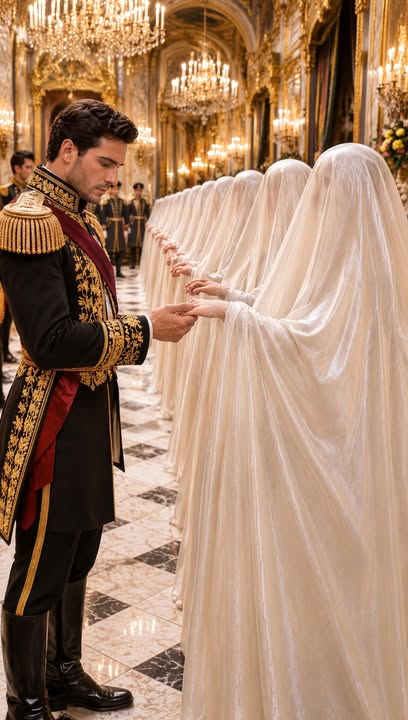
Part 4 – The Child Beyond the East Gate
“Those are mine,” Michael whispered.
The chief archivist kept the narrow strip of paper beneath the reading lamp, her expression intent but not accusing.
“Are you certain?” Alexander asked.
Michael leaned closer, studying the initials that had been written beside the transfer date.
“I am,” he said. “I used them on archive receipts when I was a junior clerk.”
Lena’s fingers curled around the edge of the table.
“You received the missing register?”
“I received a sealed box,” Michael replied. “I was told to log it and store it in the central archive.”
“Did you open it?”
“No.”
“Did you ask what it contained?”
“I should have.”
“That isn’t what I asked.”
Michael looked at her.
“No,” he said. “I did not ask.”
The answer left no room for excuses, and Lena’s expression did not soften.
Alexander watched his adviser’s gaze return to the strip.
“Could you identify the box now?” he asked.
“If its seal or inventory number was recorded, perhaps.”
“Then let’s find the entry.”
The archivist retrieved a large volume from a nearby shelf and set it beside the documents.
“This is the central archive’s receipt book,” she said. “It records every transfer, though not always the contents in detail.”
She turned carefully through the pages, stopping at the week following the fire.
The ink had faded unevenly, and some entries had been made in hurried hands.
Michael stood beside her, following the lines with his eyes.
“This one,” he said at last. “The number matches the strip.”
The archivist read the entry aloud.
“Household register, sealed, received from the country estate, placed in cabinet four.”
“Is cabinet four still used?” Alexander asked.
“It was replaced years ago, but the cabinets were inventoried when the archive was renovated.”
The archivist searched the index at the back of the book.
Her finger stopped on a later entry.
“Cabinet four’s contents were moved to the west vault.”
“Can we inspect it?” Lena asked.
“We can request access immediately.”
“Do so,” Alexander said.
The archivist rang for an attendant, then wrote a formal request for the sealed box.
While they waited, Lena sat down.
The room was bright with morning light, but the color had left her face.
Alexander pulled out the chair opposite her.
“Would you like some water?”
“I’m all right.”
He did not insist.
Michael remained standing, his shoulders held rigidly as if he were trying not to take up more space than the truth allowed.
“I can explain how the archive worked then,” he said. “A clerk was not permitted to open a sealed household transfer without authorization.”
“Whose authorization?” Lena asked.
“The head archivist, or the person who had ordered the transfer.”
“Who ordered this one?”
“I don’t know.”
“Did you look at the seal?”
“I remember wax. I don’t remember a name.”
“Could you have seen it without opening the box?”
“Yes.”
“Did you?”
“I can’t recall.”
Lena looked down at her hands.
“Every answer you give seems to lead back to something you chose not to remember.”
Michael lowered his eyes.
“I know.”
Alexander felt the old loyalty in him wrestling with a newer, less comfortable understanding.
Michael had not planned the fire, nor had he known what the sealed box held.
But he had helped preserve the silence surrounding it, and that silence had shaped Lena’s life as surely as any written record.
“Michael,” Alexander said, “you don’t have to defend yourself before we know what is inside.”
“I’m not trying to defend myself.”
“Then stay with what you know.”
“I received a sealed box, logged its arrival, and put it away. Months later, my uncle told me the fire records were restricted. I did not connect the two.”
“Why didn’t you tell me that yesterday?”
Michael took a long breath.
“Because I had forgotten the transfer.”
“Or because you did not want to remember it?”
The question was quiet, but Michael seemed to hear the distinction.
“I don’t know,” he said. “It may have been both.”
The archivist returned to the desk.
“The west vault is being opened now,” she said. “The box is listed as stored on the lower shelves.”
“Will its seal still be intact?” Lena asked.
“I can’t promise that.”
“I’m not asking you to.”
The archivist offered Lena a measured, respectful nod.
“I’ll bring it here myself.”
She left with the attendant.
In the silence that followed, Alexander looked toward the joined ledger fragments.
The words second child remained incomplete, but they had already changed the shape of the fire in his mind.
He remembered being small enough to fit beneath his mother’s writing desk.
He remembered a dark wooden door with a brass handle and a woman bending to his level.
He remembered the baby’s cry.
“I think I heard someone,” he said.
Lena turned toward him.
“During the fire?”
“Yes.”
“A child?”
“I don’t know. A baby, perhaps.”
The words came slowly, as though his memory were an old room he had to enter one piece at a time.
“I thought it was part of a dream.”
“Do you remember where the sound came from?”
“Not exactly. The west corridor, maybe.”
Lena’s eyes filled with something she refused to let become tears.
“Did you ever tell anyone?”
“No.”
“Why not?”
“I didn’t remember it until now.”
She accepted this with a small nod.
Alexander glanced at the fragment.
“Could the second child have been me?”
“The ledger says ‘the child’ and then ‘second child,’” the archivist had warned them, though she was no longer there to repeat it. “It could refer to more than one thing.”
“It could,” Lena said.
But she, too, seemed to feel that the note was circling something specific.
A knock sounded at the door.
The chief archivist returned carrying a rectangular box wrapped in a protective cloth.
An old red seal remained attached to the lid, cracked down the center but still bearing a recognizable impression.
“Nothing has been opened,” she said. “The box was stored in the west vault as recorded.”
Alexander leaned forward.
“Can we examine the seal?”
The archivist placed the box on the table.
A crown was pressed into the wax, along with the initials of the household office.
“It appears original,” she said. “I can’t tell whether it has been disturbed.”
Lena stood.
“Would opening it violate any archive procedure?”
“I can authorize it as chief archivist, but I’ll document each step.”
“Then please do.”
The archivist recorded the box number, the condition of the wrapping, and the date.
She photographed the seal before removing the cloth.
Then, with a small blade, she cut through the weakened wax.
The lid lifted with a dry scrape.
Inside lay a folded household register, a list of transfers, and several sheets of correspondence.
Dust rose softly into the light.
The archivist put on cotton gloves.
“The register is here,” she said.
Lena’s grip tightened around the back of her chair.
The archivist opened the pages, taking care not to flatten the old binding too sharply.
Names filled the first section, followed by room assignments and entries for family members and staff.
She found the date of the fire and turned to the following page.
The bottom corner was missing.
“That may be the piece we have,” she said.
She laid the register beside the joined fragments.
The torn edge matched.
The charred scrap fit into the missing corner, completing part of the page.
A line of writing emerged from the seam, faint but readable.
The archivist brought the lamp closer.
“‘Second child delivered to Nurse Evelyn Vale for removal beyond the east gate before dawn.’”
Lena’s face went still.
Alexander read the words once, then again.
“Second child,” he said. “Not a child of the household staff?”
“The surrounding column is labeled family records,” the archivist replied.
Lena lowered herself into the chair.
“Could it mean another child was born that night?”
“There are additional entries,” the archivist said.
She turned to the next page and examined the lower half, where several lines had been crossed through in a dark hand.
“This section was altered after the original ink had dried.”
“Can you read it?” Alexander asked.
“Some of it.”
The archivist angled the paper toward the light.
“‘Infant female, born before dawn.’”
Michael moved closer.
The archivist continued.
“‘Removed from the west wing during evacuation.’”
Lena’s eyes remained on the page.
“Is there a name?”
The archivist traced the next line with a gloved finger.
“‘Elise.’”
Alexander felt the room tilt around him.
He had never heard the name spoken as part of his family’s history.
Yet it did not feel entirely unfamiliar.
Elise.
He remembered his mother saying it once, in a voice thick with grief, while he stood at the nursery door.
He had thought she was reading from a book.
He remembered asking who Elise was.
And his mother had replied, “Someone we must remember.”
Then the memory had disappeared beneath years of other days.
“My mother had a daughter,” he said.
The archivist turned another page.
“I’m afraid the records do not establish that conclusively.”
“What do they establish?”
“That a female infant named Elise was recorded as born in the palace household on the night of the fire.”
“By whom?”
The archivist followed the notation to the margin.
“The entry is signed by the physician on duty and countersigned by Princess Margaret.”
Alexander sat very still.
“My mother signed it.”
“It appears so.”
“Then the baby was her child.”
“Possibly,” the archivist said. “The record identifies her as a royal infant, but there may be other explanations. We need corroboration.”
“The next line,” Lena said. “What does it say?”
The archivist bent over the page.
“‘Declared deceased following fire and complications.’”
Alexander swallowed.
His mother had never told him he had a sister.
His father had never spoken of a second child.
The palace had honored no infant princess with a memorial, and no record of Elise appeared in the family histories he had studied as a boy.
“Was she declared dead before or after she was removed?” Lena asked.
The archivist examined the writing.
“The entry appears to have been added afterward. The original ink beneath it is still visible.”
“Can you read that?”
“Not yet.”
The archivist carefully turned to the correspondence in the box.
There were several folded pages addressed to the household manager, all in the same formal hand.
One was dated three days after the fire.
The archivist unfolded it.
“‘The infant’s removal was necessary until the physician could assess her condition,’” she read.
Alexander’s gaze sharpened.
“What condition?”
“The sentence does not say.”
“Keep reading.”
The archivist did.
“‘The public record must remain consistent with the family’s announcement.’”
No one spoke.
The words did not prove what had happened to Elise, but they made it impossible to accept the official story as complete.
“Who wrote that?” Alexander asked.
The archivist examined the signature.
“Lord Adrian.”
Alexander’s uncle.
The man who had managed the household after the fire.
Michael shut his eyes briefly.
“He signed the transfer order,” he said.
Lena looked at him.
“You remember now?”
“I remember the seal. It was his office’s stamp.”
“Did you know about the infant?”
“No.”
“Did you know my mother carried her?”
“No.”
“Did you know the official report had been changed?”
“I knew it had been restricted. I did not know the contents had been altered.”
The distinction mattered, but it did not undo what the years had taken from Lena, from Alexander, or from the child named Elise.
The archivist read the letter again.
“The remaining lines refer to a medical review and a temporary placement,” she said. “There are no details about the child’s health.”
“Was the physician’s assessment kept?” Alexander asked.
“It may be elsewhere in the medical archive.”
“Can we search it?”
“Yes, but we should do that after these papers are catalogued and preserved.”
“Then we’ll search it.”
Lena had not taken her eyes from the name on the page.
“Elise,” she said.
The name seemed to stir the air between them.
Alexander lowered his voice.
“Did my mother ever tell you anything about her?”
“No,” Lena replied. “I wasn’t part of her inner circle.”
“Did your mother?”
“She never mentioned an infant.”
“Then why would she take Elise beyond the east gate?”
“I don’t know.”
The answer was a quiet admission of how much remained unknown.
The ledger showed that Lena’s adoptive mother had been entrusted with the infant, but it did not say what she had done afterward.
A second paper might still be missing.
A name might have been changed.
A story might have been rewritten until the truth had become impossible to recognize.
Alexander looked at Lena.
“If your mother carried her out, she may have saved my sister.”
“Or she may have followed an order without knowing why.”
“Either way, she protected someone.”
“She protected me,” Lena said. “That is what I know.”
He nodded.
“And whatever we discover about Elise, it doesn’t change who you are.”
Lena’s eyes rested on him, searching his expression.
“You don’t know that yet.”
“I know you are not a mystery to be solved.”
For a moment, her guardedness eased.
The archivist began separating the papers according to their condition.
“The register needs professional imaging before any further analysis,” she said. “I’ll have it transferred to the conservation room.”
“Can we keep a copy of the page?” Alexander asked.
“We can make a secure image, but I’ll need to record who receives it.”
“Then record us all.”
The archivist nodded.
Michael looked at the open box.
“I am sorry,” he said to Lena. “I have no excuse for the years I let this remain buried.”
She met his eyes.
“An apology cannot give back those years.”
“No.”
“But you can help us find out what happened.”
“I will.”
“Not by deciding what is best for the family.”
“No,” Michael said. “By finding what is true.”
Lena held his gaze for a moment, then looked back at the record.
Alexander could feel the whole shape of his childhood shifting.
He had thought he was an only child.
He had thought the fire had taken no one from him except a childhood friend who, by some mercy, had survived.
Now the palace records said a baby sister had been taken beyond the gates and officially declared dead.
His mother’s signature lay beneath the first entry.
His uncle’s letter ordered the family’s public account to remain unchanged.
And Evelyn Vale, the woman who had raised Lena, appeared to have been trusted with the child.
“Where would she have taken Elise?” he asked.
The archivist searched the transfer list.
“There is a notation beside the infant’s name.”
“Read it.”
“‘Delivered into private care pending medical review.’”
“Whose private care?”
“There is no name.”
“Was the medical review completed?”
“I can’t tell from this record.”
Lena looked at the correspondence again.
“Could the rest of the letters say more?”
The archivist turned over the remaining sheets.
Most concerned staffing, repairs, and insurance matters.
One envelope had been addressed to Evelyn Vale but never sent.
The archivist’s hands paused.
“Do you recognize the handwriting?” she asked Lena.
Lena leaned over the envelope.
“No.”
The address was brief, written in the same dark hand as the altered ledger entry.
Evelyn Vale, in her care.
Below it, an additional line had been written and then partly erased.
The archivist tilted the paper toward the light.
“‘The child is to remain—’”
The rest had been rubbed away.
Alexander felt the air leave his lungs.
“Remain where?”
“I can’t recover the words without further examination.”
“Who wrote the letter?” Michael asked.
The archivist turned it over.
There was no signature, only the mark of the household manager’s office.
Lord Adrian’s office.
Lena drew a breath that trembled despite her effort to keep it steady.
“My mother may have known where Elise went.”
“She may have,” Alexander said.
“And if she did, she never told me.”
“Perhaps she was protecting you.”
“Perhaps.”
She sounded neither convinced nor resentful, only newly aware of how much love could be shaped by fear.
The archivist placed the envelope in a protective sleeve.
“I’ll have it examined alongside the register.”
Alexander looked at the unfinished line on the page, at the name Elise, and at the place where the next words had been erased.
His mother’s signature was still visible beneath the entry declaring the infant alive.
It appeared again beside the later note that Elise had died.
The two signatures were written in different inks.
“Can you tell when the second entry was made?” he asked.
“Not without analysis,” the archivist replied. “But it was not written at the same time as the first.”
“So someone added the death later.”
“That is what the ink suggests.”
“Who?”
The archivist’s eyes moved to the household office mark on the envelope.
“I cannot say yet.”
Lena stood beside the table, looking down at the record that had remade her understanding of the night she had spent her life trying to understand.
“If Elise survived the fire,” she said, “she would be my age now?”
“Near it,” Alexander replied.
The thought unsettled him in a way the secret itself had not.
Somewhere beyond the palace, a woman might be living under a different name, unaware that an old ledger called her a princess.
Or perhaps she knew and wanted nothing to do with the family whose silence had shaped her life.
Alexander could not decide which possibility hurt more.
“We need the medical records,” he said. “And any record of where she was sent.”
“I’ll begin the search,” the archivist promised.
Michael gathered the inventory sheets.
“I’ll ask for the council’s permission to inspect the household correspondence from that period.”
“No,” Alexander said.
Michael paused.
“I’ll ask for it myself.”
“That may draw attention.”
“Then let it draw attention.”
Lena looked at him.
“Before you decide what to tell anyone, remember that the records are not the same as a person.”
“I know.”
“Do you?”
“I’m trying to.”
Her expression softened, but she did not offer him comfort.
That, too, felt honest.
The archivist carefully closed the box.
The discovery had answered one question and opened several more.
A second child had existed.
She had been removed from the palace during the fire.
The official record had called her dead, while a letter directed that she be kept in private care.
But no page yet said where she had gone, whether she had survived, or what she knew about the name Elise.
As the box was lifted from the table, a loose paper slid from the folded lining beneath it.
The archivist caught it before it reached the floor.
“This was not listed in the inventory,” she said.
She unfolded the small sheet.
It contained one line in hurried handwriting.
Alexander leaned closer.
The archivist read it aloud.
“‘If the child’s blood proves too fragile, do not return her to the palace.’”
Alexander stared at the words.
Lena’s hand went still beside his.
The archivist looked at the date written beneath the sentence.
“It was added three months after the fire.”
Michael’s face paled.
“Then someone knew Elise was alive.”
The note bore no signature.
Only a small symbol stamped at the bottom: a circle broken by a single line.
The archivist had seen it before.
Her eyes lifted slowly to Alexander’s.
“That mark belongs to the private medical office,” she said. “The records for that office were transferred out of the palace years ago.”
“Where were they sent?” Alexander asked.
The archivist glanced down at the inventory.
“To a clinic that closed decades ago.”
Lena looked at the note again.
“Does anyone know where its patient files went?”
The archivist hesitated.
“There is one person who might.”
“Who?”
The archivist’s voice lowered.
“Lord Adrian’s personal physician is still alive.”
**–END OF PART 4–CLICK “NEXT” AT THE BOTTOM OF THE PAGE TO CONTINUE READING**
* * *
[PREVIOUS: PART 3](https://storyly.idolsgift.com/blog/part-3-the-girl-he-thought-the-fire-had-taken-052) | [NEXT: PART 5](https://storyly.idolsgift.com/blog/part-5-the-girl-he-thought-the-fire-had-taken-052)
✓ Lynn R. Adams
Part 4 – The Child Beyond the East Gate “Those are mine,” Michael whispered. The chief archivist kept the narrow strip of paper beneath the reading lamp, her expression intent but not accusing. “Ar…