PART 4: The Girl He Thought He Had Lost 057
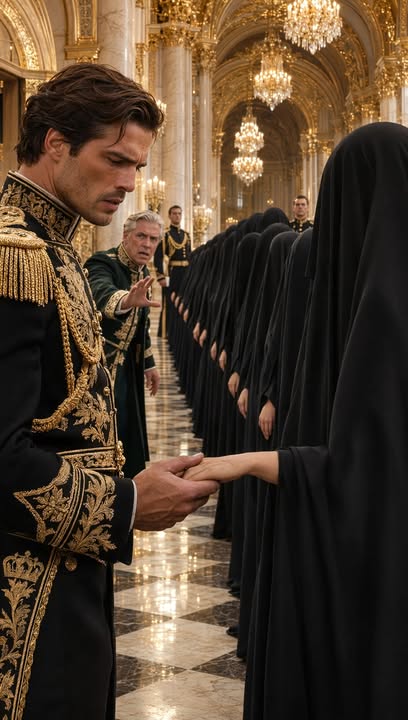
Part 4 – The Door Behind the Records
The key in Elena’s hand seemed to hold the room’s attention as completely as the old envelope did.
Alexander looked from its worn brass bow to the sealed packet on the table.
“Could it open the records room?” he asked.
“I don’t know,” Elena said. “I’ve carried it for years without knowing what it was for.”
The archivist lifted a hand gently.
“We should not try it until we know the lock is safe and the key is properly identified.”
Elena closed her fingers around the brass.
“I don’t want to damage anything.”
“Nor should you,” the archivist agreed. “The envelope may tell us more.”
The custodian carefully transferred it to a padded tray, then carried it to the conservation room.
Alexander, Elena, and Michael followed, leaving the archive’s shelves and dusty boxes behind.
In the smaller room, daylight fell through a high window onto a broad worktable.
The archivist set the envelope beneath a lamp and examined its brittle seal through a magnifier.
After several minutes, she loosened the tape and eased the flap open.
Inside lay a folded architectural plan, a handwritten key register, and a single sheet bearing a short inventory note.
The plan showed the estate’s west wing as it had been before the fire.
A narrow passage ran behind the corridor where Alexander remembered struggling with the door.
At its end was a small records room, accessible by two entrances.
One opened onto the main hall.
The other opened into the service passage.
Elena leaned closer to the drawing.
“That was the door I remember.”
Alexander followed the line with his finger, stopping at the doorway marked west corridor.
“I remember trying to open it.”
The archivist unfolded the key register.
Its pages were ruled in tidy columns for the lock, the key number, and the person to whom each key had been issued.
The final entry was faded, but still legible.
“West archive room,” the archivist read aloud.
“Key number fourteen, held by the duchess’s office.”
Elena glanced toward Alexander.
“Your mother’s office?”
“That would be my understanding.”
The archivist turned the page to reveal a small drawing of a crest stamped beside the entry.
It matched the engraving on Elena’s key.
The room grew quiet.
“So it belonged to the estate,” Alexander said.
“Yes,” the archivist replied. “It appears to be the key listed here.”
Elena looked down at the brass key in her palm.
“I thought it was just something I had been holding when Mrs. Flores found me.”
“Perhaps it was in your pocket before the fire,” Alexander said.
“Perhaps.”
The word did not ease the weight in her expression.
The key was not an answer by itself.
It was a connection, and connections could lead in more than one direction.
The archivist turned the key register to its last page.
A notation had been written below the entry in a different hand.
“Returned to household office following the fire.”
Michael leaned in.
“That may be my handwriting.”
Alexander looked at him.
“You remember writing it?”
“No,” Michael said. “But the lettering resembles mine.”
“Was the key returned?”
“I can’t say.”
Elena closed her hand around it again.
“If it was returned, how did I end up with it?”
No one answered.
The archivist gathered the plan and the register carefully.
“I can’t determine that from these papers,” she said. “But the old lock may still be in place.”
Alexander looked toward the west wing.
“Can we see it?”
“Not without checking that the passage is safe.”
“The custodian can arrange that,” Michael said.
“I’ll do so,” the archivist replied. “But we should wait until the conservator has examined the original documents.”
Elena nodded.
She had wanted answers for years, and yet she was careful not to hurry them into existence.
Alexander admired that restraint even as it made him impatient.
“Can we at least see the corridor?” he asked.
The custodian, who had joined them in the conservation room, considered the request.
“The main corridor is accessible,” she said. “The service passage is not. It has been closed during renovation.”
“Then we’ll stay in the corridor.”
They returned to the west wing together.
The familiar proportions of the old house pressed around Alexander as they walked, though the place had been renovated and repainted many times.
The corridor was broader than he remembered from childhood, but he knew the tall windows and the turn beside the stairwell.
He stopped before a plain wooden door at the end of the hall.
A modern brass handle gleamed against its dark finish.
“Was this the door?” Elena asked.
“I think so.”
“Do you remember the room?”
“Only the smoke and the handle.”
Elena rested her fingertips against the wood.
“I remember hearing you.”
Alexander turned toward her.
“What did I say?”
“I don’t know. I only remember your voice.”
He stood beside her, close enough to share the quiet, but not so close that she had to make room for him.
“I remember calling for you,” he said.
“I heard you.”
The answer brought the years between them into the corridor like another presence.
For a moment, neither spoke.
Then the custodian stepped forward and tried the handle.
The door opened.
It led into a small storage room now used for spare furniture and renovation supplies.
Alexander looked around, disoriented.
“This isn’t the records room.”
“No,” the custodian said. “The old plan shows a passage beyond this wall.”
She pointed to a stretch of paneling.
“The renovation records indicate that the passage was sealed during the last restoration.”
“Can it be opened?” Elena asked.
“Eventually,” the custodian replied. “But not today.”
Alexander looked at the panel.
His childhood memory had always placed the locked door at the end of this corridor.
Now he wondered whether he had remembered its position incorrectly, or whether the house had been altered in a way that concealed more than an old passage.
“What was the other entrance?” he asked.
“Through the main hall,” said the custodian. “It may have been kept open during the evacuation.”
Elena examined the old plan again.
“If people could reach the records room from the hall, why lock the passage door?”
“We don’t know that it was locked,” Michael said.
“No,” Elena replied. “We don’t.”
Her voice was calm, but Alexander saw the way she held the key, as if it were the one solid thing in a story made of uncertain memories.
They returned to the conservation room.
The archivist had finished examining the inventory note and laid it beside the plan.
“There is a second reference here,” she said. “It describes the room’s contents after the fire.”
Alexander read the line aloud.
“‘Records secured. No significant damage.’”
“Was there a firebreak door?” Elena asked.
“There may have been,” the archivist said. “The original plan marks a heavy door between the corridor and the passage.”
“Would that door have been locked?”
“It could have been secured to protect the archive or slow smoke from entering.”
Alexander pictured the smoke, the handle, and the stubborn resistance he remembered.
“Could a secured door only open from one side?”
“Depending on its lock, yes.”
Elena looked down.
“You were trapped behind it.”
“I don’t know,” Alexander said. “I remember being unable to open a door, but memory can shift.”
“Mine can too.”
They had both learned not to confuse the sharpness of a memory with its completeness.
The archivist turned to the key register.
“The entry says this key opened the archive room, not necessarily the corridor door.”
“Then it may not explain the lock,” Alexander said.
“No,” she replied. “But it gives us a place to begin.”
Michael had been silent for several minutes.
He stood at the edge of the table, his gaze moving between the register and the old inventory note.
“I want to tell you what I remember,” he said at last.
Alexander looked at him.
“Then tell us.”
Michael drew a slow breath.
“I was asked to help with household papers after the fire. There were many documents to sort, and people were tired and frightened. I was told to place the completed materials into the family archive.”
“By whom?” Alexander asked.
“I don’t remember.”
“You don’t remember the person, or you don’t remember the instruction?”
“Both, perhaps.”
“Michael,” Elena said gently, “what do you remember about the west wing?”
He looked toward the door.
“I remember being told not to enter it until the inspectors were finished.”
“And after they were finished?”
“I carried boxes from the hall to the archive room.”
“Did you see the records room door?”
“I think so.”
“Was it open?”
“I can’t be certain.”
Alexander’s frustration rose, but he kept his voice level.
“Did you see a child?”
“No.”
“Did you see anyone searching?”
“I remember people going in and out of the house. I remember names being checked against a list. I remember my own hands shaking when I signed documents because I was afraid I would make a mistake.”
“That doesn’t answer what happened.”
“No,” Michael said. “It doesn’t.”
He did not look away.
“I’m sorry. I was given a job and treated it as if following instructions were enough. I never understood how much could be lost in the details I ignored.”
Alexander felt anger and sympathy press against one another.
Michael’s remorse did not restore the years Elena had spent without answers.
But it was no longer a polished excuse offered to protect the family.
It was a man looking at the consequences of a choice he had not known how to question.
Elena’s voice softened.
“Did you know my name was missing from the list?”
“I don’t remember seeing your name on the list at all.”
“That may be why.”
Michael lowered his eyes.
“I’m sorry.”
“I believe you’re sorry,” she said. “I don’t yet know what you knew.”
“That’s fair.”
Alexander looked between them.
“Then we keep looking.”
The custodian arranged for the conservator to inspect the sealed passage the following day.
Before they left the estate, the archivist handed the brass key back to Elena.
She accepted it carefully and placed it in the pocket of her coat.
Alexander watched her do it.
“I can take you to the room once they confirm it’s safe,” he said.
“You don’t have to come.”
“I know.”
She studied his face.
“Then why do you want to?”
“Because I was there, and because you shouldn’t have to open that door alone.”
Elena’s gaze held his for a moment.
“Thank you.”
It was not the trust they had shared as children.
It was not even the trust they had begun to build the night before.
But it was a small, chosen kindness, and Alexander carried it with him all the way back to the palace.
Victoria was waiting in his study when they arrived.
She had chosen a chair near the window and held a cup of tea that had gone untouched.
“You went to the estate,” she said.
“Yes.”
“What did you find?”
“A plan of the west wing, the key register, and an inventory of the records room.”
Victoria’s fingers tightened around the cup.
“Nothing conclusive, I suppose.”
“Not yet.”
“Did you find the original report?”
“We found a copy.”
“And?”
“It says the fire began accidentally, likely from faulty wiring.”
Victoria lowered her eyes.
“That is what I remember.”
“Did you know the service passage door had been secured?”
Her teacup touched the saucer with a faint click.
“I don’t remember.”
“Do you remember giving instructions about the records room?”
“I remember being concerned about the family papers.”
“Before the evacuation?”
Victoria looked up.
“I was told the fire had not reached the archive.”
“Who told you?”
“I don’t know.”
“Michael says he moved documents after the fire.”
“Michael was a young aide.”
“He remembers the inventory.”
“He remembers a great many things imperfectly.”
“So do you.”
The words came out more sharply than Alexander intended.
Victoria’s expression remained composed, but her eyes grew tired.
“Yes,” she said. “I do.”
He sat across from her.
“Mother, I’m not asking because I want to accuse you.”
“Then why are you asking?”
“Because Elena was in that house. Because I was in that house. Because I remember a door that would not open, and now I’m learning it may have been secured.”
Victoria stared into her tea.
“People were trying to protect what mattered to them.”
“Was Elena protected?”
She looked at him then.
“I believed she was already outside.”
The words seemed to surprise even her.
Alexander did not move.
“What do you mean?”
“I remember being told that the children had been taken out of the west wing.”
“Which children?”
“I don’t know.”
“You don’t know?”
The duchess rubbed her thumb slowly along the rim of the cup.
“I remember the report of smoke. I remember being asked about the records. I remember saying the archive room should be secured.”
“Why?”
“Because it held important family papers.”
“More important than the people trying to get out?”
“No,” she said at once. “No, Alexander.”
Her voice had lost its formal steadiness.
“I believed everyone was already clear of that corridor.”
“Did you give the order to lock the door?”
Victoria closed her eyes.
“I don’t remember using the word lock.”
“But you remember telling someone to secure the archive.”
“Yes.”
Alexander sat very still.
“Why didn’t you tell me this before?”
“Because I did not remember it until you asked.”
“Or because you didn’t want to remember it?”
Victoria opened her eyes.
“I don’t know.”
The answer unsettled him more than denial would have.
“You thought the children were outside,” Elena said from the doorway.
She had followed Alexander into the study but had remained near the entrance.
Victoria turned toward her.
“I believed you were.”
“And Alexander?”
“I was told he was safe.”
“But he wasn’t.”
Victoria’s face tightened.
“I know that now.”
Elena stepped into the room.
“Did you see me after the fire?”
“No.”
“Did you know I had been taken to the Flores family?”
“No.”
“Did you ask anyone to find me?”
“I believed I had been told you were dead.”
“Who told you?”
“I cannot remember.”
The uncertainty in Victoria’s voice was not an easy refuge.
It sounded like someone reaching for a memory that had become tangled with years of repetition and fear.
Elena did not soften her questions, but neither did she sharpen them into blame.
“I used to think someone had started the fire on purpose,” she said. “I thought the door was locked because someone wanted us trapped.”
Victoria’s eyes moved to the scar on Elena’s hand.
“The fire was not deliberate.”
“The report says faulty wiring.”
“Yes.”
“Then the door is the part we still don’t understand.”
Victoria nodded faintly.
“Yes.”
Alexander heard the word as a confession of uncertainty, not guilt.
His mother had believed the children were outside.
She had ordered the archive secured to protect family papers.
The door had closed, and Alexander had been trapped behind it.
Elena had broken a window to reach him.
The sequence was becoming clearer, but what followed remained hidden: who had taken Elena away, who had declared her dead, and why the household had never found her.
Victoria set down the cup.
“I should have asked more questions that night.”
“You were trying to protect the family records,” Alexander said.
“I was trying to keep the household from losing everything at once.”
“And you thought we were safe.”
“Yes.”
“You were wrong.”
Victoria’s face crumpled just slightly before she steadied it.
“I was.”
Elena watched her closely.
“I don’t know what to do with that,” she said.
“You don’t owe me anything,” Victoria replied.
“I’m not sure I can forgive you for what happened.”
“I wouldn’t ask you to.”
“I also don’t know whether I blame you.”
“You don’t have to decide today.”
Elena looked at Alexander.
Neither of them had expected the truth to arrive as a clean division between guilty and innocent.
The fire had started by accident.
Victoria had made a decision from fear and mistaken information.
Michael had obeyed and failed to question what he handled.
Elena had survived, been carried away, and grown up with a hole where her earliest memories should have been.
Alexander had spent years grieving a death that had not happened.
Every answer created another question.
The following afternoon, the conservator confirmed that the sealed passage could be opened safely.
The work crew removed a section of newer paneling, revealing the outline of an old wooden door behind it.
Its iron latch had been preserved, though the lock was stiff with age.
Alexander stood beside Elena while the custodian tested the handle.
It did not move.
“Do you have the key?” the custodian asked.
Elena drew it from her pocket.
The archivist had confirmed that the crest matched the archive-room key register, but no one knew whether the lock had been changed over the years.
Elena looked at Alexander.
“Should I try it?”
“Yes,” he said, “if you’re ready.”
She turned the key once in her hand, then placed it in the lock.
For a moment it refused to turn.
She eased it back, adjusted its angle, and tried again.
The mechanism gave a dry click.
The latch slipped.
Alexander felt the sound travel through him.
The door opened inward by a few inches.
A breath of stale air drifted out.
The custodian switched on a work light.
Beyond the door lay the narrow service passage from the old plan, dark and close, but intact.
The far end opened into a small stone room lined with shelves.
“The records room,” the archivist said.
Elena stepped over the threshold.
Alexander went with her, careful not to crowd her.
The room was smaller than he had imagined.
Dust covered the shelves, though several boxes had been moved or removed.
A writing table stood against the far wall.
On it lay a ledger, a bundle of folded papers, and a small tin box.
The archivist put on gloves before examining the papers.
“This room should have been inventoried after the fire,” she said. “Some of these items may not be listed in the records we reviewed.”
“Could they have been missed?” Michael asked.
“It is possible.”
Elena approached the table.
A thin sheet of paper lay partly beneath the ledger, its edges browned but still intact.
The archivist carefully slid it free.
“Is that another report?” Alexander asked.
“It appears to be a letter.”
The writing was faded, but the name at the top was clear.
Victoria.
Alexander looked at his mother.
She had followed them into the passage and now stood just inside the doorway, her hands clasped before her.
The archivist read the first lines silently.
Then she stopped.
“What is it?” Elena asked.
The archivist glanced at Alexander before answering.
“It refers to the door.”
Victoria stepped closer.
“Let me see.”
The archivist placed the letter on the table, keeping one hand beside it.
Victoria read the first paragraph, and the color drained from her face.
Alexander looked at her.
“What does it say?”
His mother’s eyes remained on the page.
“It says I ordered the archive door secured before the evacuation was finished.”
The words filled the small room.
Elena lowered her gaze.
“Why?”
Victoria’s voice faltered.
“I was told everyone had been brought out.”
“By whom?” Alexander asked.
“I don’t know.”
The answer was barely audible.
Alexander looked at the letter.
“Who wrote this?”
Victoria studied the lower edge.
“It is addressed to me, but the signature is missing.”
The archivist turned the paper slightly.
A second sheet was folded beneath it, its surface hidden against the first.
She eased it open.
On the inside was a single line, written in a different hand.
The key was returned.
Then, beneath that, the words that made Michael step back from the table:
Elena was alive when she was taken from the estate.
Victoria stared at the sentence.
Alexander felt his mother’s hand find the edge of the table.
Michael read it again, his face gone pale.
Elena did not move.
For years, she had carried the uncertainty of what happened after the window, believing that the people who found her had taken her far from the only home she knew.
Now the old records room offered a fact, but not a name.
Someone at the estate had known she was alive.
Someone had written it down.
The archivist lowered her voice.
“There is more.”
The second sheet ended with a note that had been cut off at the fold.
She turned it over, searching for the missing line.
There, in faint ink near the bottom, was a name.
Alexander’s gaze fixed on it.
“Mrs. Flores.”
Elena’s breath caught.
The woman who had rescued her was not merely mentioned in the records.
Someone at the estate had known she was the one who carried Elena away.
Victoria looked at Elena, then at the page.
“Why would she never tell you this?”
Elena’s eyes remained on the name.
“I don’t know.”
The archivist carefully lifted the folded papers from beneath the letter.
The last sheet was not a report.
It was a note addressed to Elena, written in a hand that none of them recognized.
Its final line read:
If she asks what happened after the fire, tell her why you kept the key from her—and why you never brought her back.
**–END OF PART 4–CLICK “NEXT” AT THE BOTTOM OF THE PAGE TO CONTINUE READING**
* * *
[PREVIOUS: PART 3](https://storyly.idolsgift.com/blog/part-3-the-girl-he-thought-he-had-lost-057) | [NEXT: PART 5](https://storyly.idolsgift.com/blog/part-5-the-girl-he-thought-he-had-lost-057)
✓ Lynn R. Adams
Part 4 – The Door Behind the Records The key in Elena’s hand seemed to hold the room’s attention as completely as the old envelope did. Alexander looked from its worn brass bow to the sealed packet …