PART 4: The Fourth Heartbeat5 025
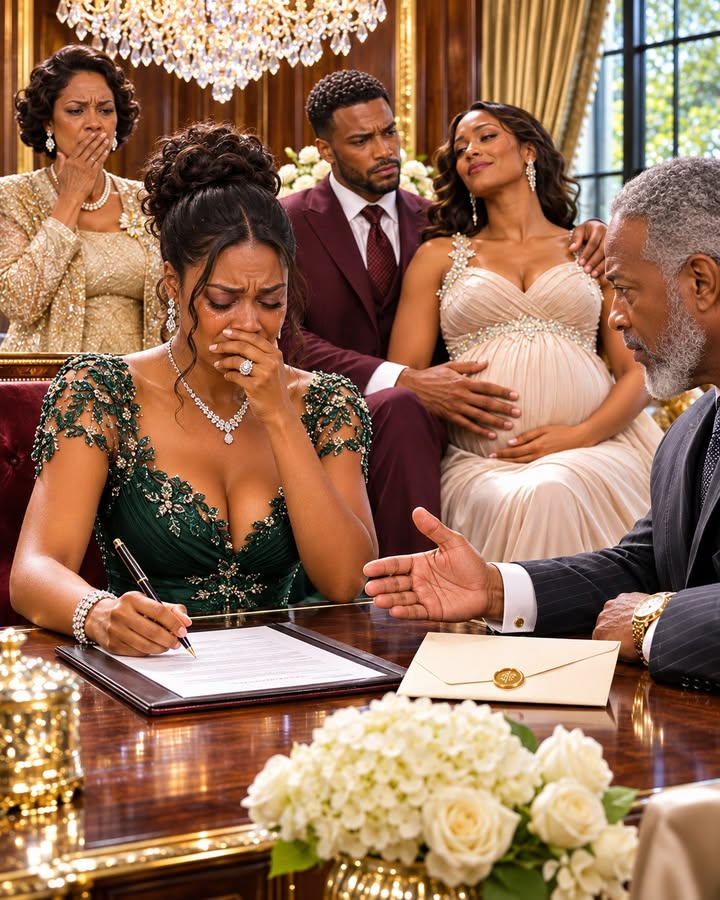
Part 4 – The Truth in the Audit
The file linked to a withdrawn sample, and the record indicated that the withdrawal had been made under Julian’s authorization.
I read the sentence until the words stopped looking like words.
The kitchen was quiet around me, but a faint ringing filled my ears.
Rachel had been putting groceries away.
When she saw my face, she set down the carton of milk and came to stand beside me.
“What happened?”
I turned the phone toward her.
She read the message, then looked at me carefully.
“Do you know what they mean by sample?”
“No.”
My voice sounded far away.
“Could it be something routine?”
“I don’t know.”
I called the coordinator before fear could make up answers of its own.
She spoke gently, but her caution was unmistakable.
“The audit team has confirmed that a sample associated with your treatment was withdrawn from the clinic’s storage,” she said.
“Was it an embryo?”
“We’re still verifying the exact description in the original records.”
“Did Julian request it?”
“The record shows his authorization was used. That doesn’t yet tell us who initiated the request or whether the authorization was valid for that action.”
I gripped the edge of the table.
“Was the sample destroyed?”
“I can’t confirm that. The archived documents are incomplete, and we’re trying to establish the chain of custody.”
“So you don’t know what happened to it.”
“Not yet, Ms. Whitmore. I’m sorry.”
The apology did little to quiet the questions crowding my mind.
I thanked her for calling and ended the conversation.
Rachel pulled out the chair beside me.
“Sit down.”
I lowered myself into it, still holding the phone.
“Julian’s authorization,” I said. “The clinic says it was used.”
“Used isn’t the same as knowing what he agreed to.”
“But he told me he signed an administrative form.”
“That may still be true.”
“He canceled an appointment and signed Richard into my file. Now a sample is missing from the treatment records.”
Rachel sat across from me, her expression steady.
“We don’t know yet whether those things are connected.”
“I know.”
I did know.
But the silence after her words seemed to make room for a possibility I could not bear to name.
I called Julian.
He answered after the first ring.
“Evelyn?”
“The clinic found a record saying a sample connected to my treatment was withdrawn under your authorization.”
For a moment, there was no sound except his breathing.
“What kind of sample?” he asked.
“They don’t know yet.”
“I didn’t authorize anything like that.”
“Your name is on the record.”
“I know what I signed at my father’s office, but I didn’t sign away a sample. I never would have agreed to that.”
“You told me you canceled an appointment.”
“I did.”
“You told me you signed Richard into my file.”
“I did that too.”
“So I’m supposed to believe the part you remember and disregard the part you say you don’t?”
“No,” he said quietly. “You’re supposed to ask the clinic to show you everything they have. I’ll do the same.”
His answer held no easy defense, but it offered no certainty either.
“Did your father ever talk to you about a sample?”
“Not that I remember.”
“You’re sure?”
“I’m sure I didn’t knowingly authorize anything being withdrawn.”
The distinction was careful.
It was also frightening.
“I need space,” I said.
“I understand.”
“I’m not asking you to call the clinic or fix this for me.”
“I won’t.”
“Then let the audit happen.”
“I will.”
I ended the call before the conversation could become a plea for trust neither of us had earned.
Rachel placed a hand over mine.
“What do you need right now?”
“To know what happened.”
“That may take time.”
“I don’t have the patience for time.”
“You don’t have to like the wait,” she said. “You only have to get through it.”
The next morning, I went to the clinic with Rachel beside me.
The coordinator had arranged a meeting with the records manager and a representative from the clinic’s compliance office.
They greeted us in a small conference room, where a folder had been placed at each seat.
The records manager, a woman named Denise, explained that the clinic was treating my case as a formal audit.
They had retrieved archived appointment logs, authorization forms, and communications that were not visible in the patient portal.
“We want to be transparent about what we’ve confirmed and what remains uncertain,” she said.
I opened the folder.
The first pages were familiar: appointment dates, treatment notes, and the cancellation Julian had already admitted making.
The next page was a request to withdraw a stored sample connected to my fertility treatment.
My eyes moved to the authorization line.
Julian’s name appeared there, beside a date and a record number.
The signature was not his.
It was a typed approval attached to an account entry, and beneath it was a notation that said, “Authorization confirmed by family contact.”
“Who was the family contact?” I asked.
“We’re still confirming that,” Denise replied. “The archived log records a call from Richard Whitmore’s office.”
My fingers tightened around the edge of the paper.
“Did Richard call?”
“We can confirm that his office contacted the clinic. We cannot yet establish which person from the office spoke with staff.”
“Was Julian on the call?”
“The log doesn’t indicate that.”
The compliance representative leaned forward.
“The clinic should not have treated a family contact as authority to alter a treatment sample. We’re examining why that happened and who accepted the request.”
I looked at the request again.
“What reason was given?”
“An administrative withdrawal,” Denise said. “That phrase was entered into the system without supporting detail.”
“Was the sample destroyed?”
“We haven’t found a destruction record.”
“Was it transferred?”
“We haven’t found a transfer record either.”
The uncertainty was almost worse than a definite answer.
I looked at the line marked “Reason for withdrawal.”
“Who wrote this?”
“The audit is reviewing that,” Denise said. “The entry appears to have been made by clinic staff after the request came in.”
“Did the clinic call me?”
“No.”
“Did anyone ask me for permission?”
“Not according to the records we have.”
The room seemed to grow smaller.
I had spent years believing the most painful part of treatment was the hope that rose and fell with every appointment.
Now I understood that, while I was trying to make a family with Julian, someone had been able to move pieces of that future without speaking to me.
The compliance representative paused before continuing.
“We have also located a dated message from Richard Whitmore to the clinic,” she said. “It appears to have been sent the same day as the withdrawal request.”
My eyes lifted from the page.
“What did it say?”
“We need to verify the original metadata before providing a full copy. The message refers to a decision about stopping further treatment and requests that the sample be removed from the active file.”
“Was it signed by Julian?”
“No.”
The room fell still.
The representative placed a second document on the table.
It was a printed copy of a message, partly redacted while the review continued.
The visible lines were enough.
Richard had written that the family had decided the treatment should end.
He had asked the clinic to process the withdrawal under Julian’s authorization.
“Why did the clinic accept that?” Rachel asked.
“That is one of the questions the audit is meant to answer,” Denise replied. “The authorization on file allowed Richard to discuss scheduling. It did not permit him to direct treatment decisions.”
I stared at the message.
The words were composed and businesslike, as if a private medical decision could be entered into a ledger and closed.
“The clinic told me the form was only administrative,” I said.
“Yes,” the compliance representative answered. “It appears to have been used beyond its stated purpose.”
“And Julian’s name?”
“The message asks that the action be processed under his authorization. We have not found evidence that he personally approved the withdrawal.”
I tried to absorb the distinction.
Julian had canceled an appointment.
He had signed a form allowing his father to communicate about scheduling.
He had not, according to what the audit had found so far, agreed to remove a sample.
His choices still mattered.
So did the fact that he had left me uninformed and trusted his father to speak for us.
But Richard had taken those choices and turned them into something Julian had not knowingly authorized.
“Why would he do this?” I asked.
Neither clinic representative answered.
They could not know what had taken place in Richard’s mind.
I already had a guess.
It was waiting for me in the shape of Vanessa’s triplets, the settlement offer, and every conversation Richard had ever framed around the family name.
Still, a guess was not proof.
The records manager walked us through the audit timeline.
A clinic account had been contacted by Richard’s office.
A request had been entered under Julian’s authorization.
The sample had been removed from the active treatment file, but its final destination had not yet been confirmed.
A payment had also been made to the clinic’s administrative account, though the records manager emphasized that they had not established what it was for.
I wrote that down.
The word “payment” sent a pulse through my chest.
“Who made it?” I asked.
“We don’t yet know,” she said. “The transaction requires a separate financial review.”
“Was it from Richard?”
“The account name is associated with his family office, but we’re verifying the details.”
I looked at the papers until the printed lines blurred.
“Will the clinic correct my records?”
“Yes,” Denise said. “Once the review is complete, we’ll correct any entry that was inaccurate and provide you with a full account of what we can establish.”
“And if you can’t establish where the sample went?”
“Then we will tell you that clearly.”
The honesty in her answer was not comforting, but it was better than another vague assurance.
Before the meeting ended, I asked for copies of every document they were allowed to provide.
The coordinator promised to send them through the secure portal as soon as the compliance team approved the release.
Outside the conference room, Rachel walked with me to the lobby.
I stopped beside a window overlooking the parking lot.
“Richard arranged it,” I said.
“The clinic has evidence that he contacted them and asked for it.”
“He told them the family had decided.”
Rachel’s face tightened.
“He didn’t ask you.”
“He didn’t even ask Julian, according to the audit.”
She gave me a moment before answering.
“You don’t have to decide what it means for your marriage today.”
“I’m not thinking about my marriage.”
I was thinking about the life I had imagined, the appointments I had attended alone, and the small hope I had kept alive each time a doctor asked whether we wanted to try another cycle.
I had believed that the treatment had failed because my body had failed us.
The truth was not yet fully known, but the records suggested that someone had stepped between the clinic and me, then made the choice look like Julian’s.
Rachel took my arm.
“Come on,” she said. “Let’s get you home.”
That afternoon, Julian called.
“I spoke to the clinic,” he said. “They told me there’s an audit, but they wouldn’t discuss your records with me.”
“They shouldn’t.”
“I understand.”
“They found a message from your father.”
There was a silence on the line.
“What did it say?”
“He told them the family had decided to stop treatment and asked them to process the withdrawal under your authorization.”
“I never told him to do that.”
“I know what the clinic found.”
“I’m sorry, Evelyn.”
“You keep saying that.”
“Because I don’t know what else to say.”
“Then don’t say anything until you know more.”
“I will.”
I ended the call, but his voice remained with me.
I could not make myself feel sorry for him.
Not yet.
He had signed the form without asking me.
He had canceled an appointment and hidden the reason.
He had let his father speak for the two of us.
The fact that Richard had gone further than Julian knew did not erase the ways Julian had failed me.
That evening, Vanessa called.
She sounded as if she had been rehearsing the conversation and still could not find a comfortable way into it.
“Did the clinic tell you what they found?” she asked.
“They found a message from Richard.”
“I thought they might.”
“Why?”
“Because I found one in my own paperwork.”
She explained that her prenatal clinic had contacted her after receiving a records inquiry connected to the audit.
They had found a financial agreement attached to her care file, separate from the authorization she had shown me.
“Richard arranged payments to cover some of my expenses,” she said. “I thought it was support for the babies.”
“What does the document say?”
“It describes the payments as conditional family assistance.”
My grip tightened around the phone.
“Conditional on what?”
“On me following the care plan arranged through the family office and continuing to cooperate with their representatives.”
I closed my eyes.
“Did you know that when you signed?”
“No. I thought I was signing paperwork so they could pay the doctors directly.”
She sounded ashamed, but not surprised.
“What does the condition actually require?”
“I’m still trying to understand the agreement. The clinic said it wasn’t their role to interpret it.”
“Have you spoken to a lawyer?”
“I’m going to.”
The quiet between us stretched.
“You don’t have to tell me what you find,” I said.
“I know.”
“But if it relates to the clinic, I may need you to give the audit team a copy.”
“I will.”
“Are you going to keep accepting the money?”
“I don’t know yet.”
I understood that answer more than I wanted to.
Financial security was not an abstract promise when babies were on the way.
It was a roof, medical care, food, and the chance to take time off work after a difficult birth.
Richard had chosen his offer carefully.
He had given Vanessa enough to feel protected and enough to make leaving feel dangerous.
“I thought he was helping me,” she said. “I don’t know how much of that was true.”
“Some help comes with strings,” I replied. “That doesn’t mean you were wrong to need it.”
She breathed out slowly.
“I wanted to tell myself I was different from you.”
The words caught me off guard.
“What do you mean?”
“I thought you were the person Richard wanted out of the way, and I was the person he had chosen. I thought that meant I was safe.”
“Are you?”
“I don’t think so.”
I had no easy response.
Vanessa had helped break my marriage.
She had sat across from me while Richard offered money.
Her fear did not excuse those choices.
But the papers and promises were beginning to show that Richard had not simply placed one woman above another.
He had found different ways to make both of us fit his plans.
“Keep copies of everything,” I told her.
“I will.”
“I’m not promising we’re friends.”
“I’m not asking you to.”
We hung up without resolving the distance between us.
I sat at the table and opened the documents the clinic had sent.
The message from Richard was included in full.
Its tone was polite, efficient, and unmistakable.
He wrote that Evelyn’s treatment had become emotionally and financially exhausting.
He said Julian agreed that the couple should stop trying to conceive.
He described the withdrawal as a step toward allowing the family to move forward.
Then he asked that the sample be removed from the active file, citing Julian’s authorization.
There was no mention of my consent.
There was no mention of speaking to me.
I read it again.
The date was the same week Julian had told me he was too busy to attend my appointment.
I thought of the conference room at the divorce meeting, of Richard’s envelope and his calm insistence that I understand what Vanessa’s pregnancy meant for the family.
I had believed the twelve million dollars was meant to settle the cost of a marriage that had already collapsed.
Now I saw that it was part of a longer effort to decide who would belong in the family’s future.
My phone rang.
The clinic coordinator said the review had located another record: a payment made by a company connected to Richard’s family office.
It was issued shortly after the sample was withdrawn.
The clinic was still checking whether the money had been attached to a legitimate administrative invoice or whether it had influenced the handling of the request.
“Can you send me the payment record?” I asked.
“We can provide it once the compliance team verifies the account details.”
“Do you know what the payment was for?”
“Not yet.”
I thanked her, then set the phone down.
The pieces were coming together, but a part of the story remained out of reach.
That night, I could not sleep.
The next morning, I called the clinic again and asked whether there had been any update on the sample’s destination.
The coordinator told me the audit was still underway.
They had not yet determined whether it had been destroyed, transferred, or misclassified in the records.
I tried to accept that answer.
I made breakfast.
I took my medication.
I went with Rachel to my scheduled scan and watched the specialist confirm that the four heartbeats were still present.
The smallest baby remained smaller, but there was no immediate crisis.
I clung to that.
As the doctor reviewed the next steps, Rachel took notes and asked questions in her calm, precise voice.
For a little while, I could focus on the lives still growing inside me rather than the record of the one sample I might have lost without ever knowing it.
When we returned to the car, my phone showed a message from the clinic coordinator.
The payment record had been verified.
I opened the attachment.
The transaction came from Richard’s family office and had been made the day after the withdrawal request.
The description was brief: “Special administrative handling.”
Below it was a note from the clinic’s former finance manager, who had since left the practice.
The payment had not been for ordinary storage or processing fees.
It had been directed to the staff member who had closed the request.
My mouth went dry.
Before I could call the coordinator, another message came through.
The audit team had located a second archived communication from Richard, sent several weeks earlier.
The coordinator’s note said the message appeared to explain why he had arranged the withdrawal.
I opened the attached scan.
The message began with a sentence that made my hands go cold.
“Evelyn must not be allowed to carry the Whitmore heir before Vanessa’s pregnancy is confirmed.”
**–END OF PART 4–CLICK “NEXT” AT THE BOTTOM OF THE PAGE TO CONTINUE READING**
* * *
[PREVIOUS: PART 3](https://puretales.idolsgift.com/blog/part-3-the-fourth-heartbeat5-025) | [NEXT: PART 5](https://puretales.idolsgift.com/blog/part-5-the-fourth-heartbeat5-025)
✓ Lynn R. Adams
Part 4 – The Truth in the Audit The file linked to a withdrawn sample, and the record indicated that the withdrawal had been made under Julian’s authorization. I read the sentence until the words st…