PART 4: The Flame That Wouldn’t Bend 069
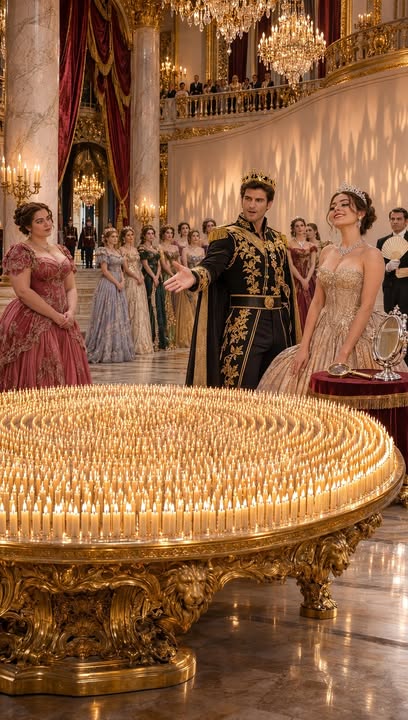
Part 4 – The Queen’s True Lesson
The lamp’s flame trembled as a draft slipped beneath the door.
Elara looked up at Adrian.
The king’s face had gone pale beneath its calm.
And for the first time, he seemed less troubled by the name of the holder than by the words that came after it.
“Correspondence concerning the queen’s candle lesson,” Adrian read aloud.
His voice was low, as though the words might vanish if spoken too forcefully.
King Rowan turned toward the door.
“Where is Master Fenwick?”
“He is in the records office,” Adrian replied.
“I asked him to copy the entry and check the index.”
“Then we should speak with him,” the king said.
Elara held the paper against the table.
“You knew there were papers about a candle lesson.”
The king looked at her.
“I knew your mother and the queen had discussed one.”
“Was it this challenge?”
“I don’t know.”
The answer came without evasion, but it did not ease the questions crowding Elara’s mind.
“Then why did you look afraid when Adrian read the note?”
“I did not look afraid.”
Adrian’s gaze shifted to his father.
“Father.”
King Rowan took a measured breath.
“I looked surprised.”
It was not quite an answer, and they all knew it.
Elara folded the copied page carefully, leaving the words visible.
“Master Fenwick said the papers were filed under my mother’s name.”
“Then he may be able to find them,” the king said.
He stepped back from the table, making room for the others to leave.
“I will come with you.”
The records office was still lit when they arrived.
Master Fenwick had set the old ledger aside and was sorting a stack of thin folders by date.
When the king entered, the records keeper rose quickly.
“Your Majesty.”
“Please, Master Fenwick, don’t let my presence hurry you.”
The old man’s eyes moved to the papers in Adrian’s hand.
“I found the index entry,” he said.
“It points to a bundle of correspondence from the late queen’s private household.”
“May I see it?” Elara asked.
Master Fenwick looked to the king.
Rowan’s silence lasted only a moment.
“Of course.”
The records keeper opened a shallow drawer and lifted out a slim, cloth-wrapped bundle.
Its blue ribbon had faded toward gray, and the fabric beneath it smelled faintly of dust and lavender.
He placed it on the table.
Elara did not reach for it at once.
“My mother wrote to the queen?”
“Some of these are written by the queen,” Master Fenwick said.
“Others are from your mother, or from the household steward.”
“Would you like me to read them aloud?”
Elara touched the frayed edge of the cloth.
“I would rather read them myself.”
The king stood across the table from her, his hands clasped behind his back.
Adrian remained beside Elara, close enough to offer support but not so close that she felt watched.
Celestine was not there.
Elara found herself wishing she were, then wondered what that wish meant.
Master Fenwick untied the ribbon.
The papers inside were arranged by date, each bearing the faint impression of a seal or the name of its writer.
Elara recognized Marian Vale’s hand from notes she had kept in an old sewing box: rounded letters, carefully spaced, with a habit of crossing the t in a long, level stroke.
The first letter concerned a cracked lamp in the queen’s sitting room.
The next asked whether the palace should replace several brass holders with newer ones.
Then Elara found a page marked with a small circle drawn in the margin.
“My mother’s hand,” she said.
The paper had yellowed at the edges, but the ink remained dark enough to read.
She began silently.
The letter was addressed to Queen Isolde and dated nearly thirty years earlier.
Elara’s eyes moved down the page.
After a few lines, she stopped.
“What does it say?” Adrian asked.
Elara swallowed.
“She says the glass guard on the old holder is sound, though it has been polished almost smooth.”
She read the next lines more slowly.
“‘When the lamps are lit, a flame tells the truth of the air around it, but not always the truth of the room.’”
The words seemed to make the small office quieter.
Elara continued.
“‘Those who watch only the flame may blame the wick for what a careless window has caused.’”
Adrian glanced toward his father.
King Rowan did not move.
“What else?” he asked.
Elara looked further down.
“‘I have kept the guard on the holder because it gives us a way to show the children how one small shelter can change what they think they see.’”
The king’s gaze fell to the letter.
“The children?” Adrian asked.
“Your mother’s children, perhaps,” Master Fenwick said.
“Or the young pages who helped in the household.”
Elara turned the page.
The next document was a note from the queen.
Its writing was more hurried, its edges softened by handling.
“Marian,” Elara read, “I like the idea of a lesson that begins with a flame and ends with a question.”
She looked up.
“The queen wrote that she wanted to make a small demonstration at supper.”
“What kind of demonstration?” Adrian asked.
Elara returned to the page.
“‘Let each child find the flame that seems untouched by the air,’” she read.
“‘Then ask them what else might explain it besides the candle itself.’”
Adrian’s face had grown still.
“That sounds like one of her puzzles.”
“It does,” Elara said.
She found another letter, tucked behind the first two.
This one was longer, written by Marian a few weeks later.
The paper had a shallow fold down the center, and a faint mark where a drop of wax had once cooled near the margin.
Elara read the opening lines, then stopped again.
“What is it?” Adrian asked.
“She says the queen wanted to use the lesson for the council’s young apprentices.”
“Not for a court gathering?”
“Not at first.”
Elara traced the line without touching the ink.
“‘Her Majesty believes that any child who has watched a flame in a quiet room can understand a question of judgment.’”
“She planned to set the candles on a table, then move the air gently and ask the children to notice what changed.”
Adrian turned toward the king.
“Did you know this?”
“I knew the queen had a lesson involving candles,” Rowan said.
“I did not know your mother designed the arrangement.”
Elara looked back at the letter.
“Did you know it was meant to teach patience?”
“I knew that was part of it.”
The king’s face held something beyond grief now, something like shame struggling to remain orderly.
“Then you knew it was not a contest to choose a bride.”
“I knew it was not originally a contest.”
The words struck harder because they were spoken plainly.
Adrian stepped closer to the table.
“You told the court the challenge came from Mother’s tradition.”
“I believed the tradition honored her.”
“But you changed what it meant.”
“I changed the setting,” Rowan replied.
“Not the lesson.”
Elara looked at the papers.
“A lesson can change when the person listening is told what answer they’re supposed to give.”
The king accepted the rebuke without looking away.
“You are right.”
For a moment, only the small lamp on the table made a sound, its wick giving a soft, steady hiss.
Adrian took up the queen’s note.
“Why did you turn it into a betrothal challenge?”
His father’s fingers tightened behind his back.
“The council expected me to show that the crown could choose a future queen with sound judgment.”
“And you agreed?”
“I thought the test would demonstrate that rank alone could not decide the matter.”
“But the court was told that the woman who found the candle would become your bride.”
“I thought the announcement would make them take the challenge seriously.”
Adrian looked at him with a sadness more difficult to bear than anger.
“You made Mother’s lesson serve a decision she never intended it to make.”
Rowan lowered his eyes.
“I see that now.”
Elara heard the sincerity in his voice, but sincerity could not restore the truth that had been bent.
“Why didn’t you tell us?” she asked.
The king looked up.
“Because I did not think the difference mattered.”
“Until you saw my mother’s name in the ledger?”
“Until I saw how easily the challenge had made a spectacle of you,” he said.
“And until you asked me what the queen would have wanted.”
Elara looked down at the letter again.
She had expected to feel pride that her mother had helped design the lesson.
Instead, the discovery had pulled something loose inside her.
For years, Marian’s work had seemed to vanish as soon as each lamp was cleaned or each wick replaced.
Now Elara could see that her mother had helped shape a way of teaching, one carried forward long after her name disappeared from the story.
The queen had understood its purpose.
The king had changed it.
And Adrian, though he had not known the origin, had stood before the court and repeated the changed version.
“My mother never told me about this,” Elara said.
“She may have thought the lesson belonged to the queen,” Master Fenwick replied.
“She was not the sort to claim credit.”
“No,” Elara said.
“She wasn’t.”
She turned the paper over.
There was writing on the back, smaller and less formal.
The ink was a shade lighter, as if it had been added later.
“What does that say?” Adrian asked.
Elara tilted the page toward the lamp.
“‘For Adrian, when he is old enough to understand that a quiet answer may be wiser than a loud one.’”
The prince looked at the words as if he had heard his mother speaking.
“She wrote that?”
“It appears so,” Master Fenwick said.
Adrian’s hand hovered above the paper, then fell to his side.
“I was sixteen when she died.”
The king watched him.
“She may have meant to give it to you later.”
“Did you ever see it?”
“No.”
Rowan’s reply held no hesitation, only sorrow.
Adrian looked again at the note.
“I remember her asking me once to watch the candles at supper.”
“I told her I could already see them.”
“Then she asked what I could see besides the candles.”
He gave a faint, incredulous breath.
“I thought she was teasing me.”
“Perhaps she was teaching you,” Elara said.
“Perhaps.”
Adrian’s eyes remained on the letter.
“What happened to the original lesson?”
Master Fenwick began sorting the other papers.
“There may be a written plan.”
“Can you find it?” Elara asked.
“I can look.”
The records keeper searched the bundle again, checking the backs of the pages and the small labels tied to the older documents.
At the bottom of the drawer, beneath the correspondence, lay a folded sheet of thick cream paper.
A narrow wax seal clung to one edge, cracked but still bearing the queen’s personal mark.
Master Fenwick held it up.
“This may be the plan.”
Elara felt the mystery deepen rather than close.
The sheet was addressed to Queen Isolde and Marian Vale, with a note in the queen’s hand: “For the lesson, if we are given the chance.”
Adrian read the words over Master Fenwick’s shoulder.
“If we are given the chance?”
The king’s gaze went to the folded paper.
“Open it,” Elara said.
Master Fenwick eased the brittle seal apart and unfolded the sheet.
It contained a rough drawing of a circular table, with marks indicating the positions of candles and a curved wall behind them.
The design was simpler than the grand arrangement in the ballroom.
Beside the drawing, the queen had written a series of questions.
What moved when the air moved?
What stayed still?
Could stillness mean that nothing had happened?
And, beneath them, in Marian’s hand:
Before deciding what you see, ask what you have not yet noticed.
Elara felt the words settle in her chest.
The lesson had never been about finding the one candle.
It had been about resisting the first answer.
The candle, the wall, and the moving air were only a means to teach that habit.
A small note at the bottom of the page read: “The glass guard is to remain on the old holder, so no child mistakes protection for proof of a different flame.”
Elara read it twice.
“The guard wasn’t meant to hide the answer,” she said.
“It was meant to teach that a flame can be sheltered,” Adrian replied.
“And that what looks different may have an ordinary cause.”
The king bowed his head.
The years between the queen’s lesson and the public challenge seemed to gather in the room.
Rowan had inherited the papers, the candle arrangement, and the memory of a woman he loved.
He had also inherited the choice to preserve the meaning or alter it.
He had chosen to alter it, perhaps believing the difference harmless.
Now the old words showed how much that choice had changed.
“I used her memory to support my own judgment,” he said.
“I thought I was protecting the succession and honoring her at once.”
Adrian’s voice was quiet.
“You never asked me whether I wanted the challenge.”
“I thought you would understand when you saw the result.”
“What result?”
“That judgment cannot be measured by a name.”
Adrian looked toward Elara.
“She showed that already.”
“No,” Elara said.
“I showed that I could notice a draft.”
“That is not the same as proving anything about who should stand beside the throne.”
The king met her eyes.
“You are right.”
Elara wondered whether she had expected him to argue.
Perhaps she had, because disagreement would have been easier to withstand than an apology she did not yet know how to accept.
“What did the queen want the lesson to teach?” Adrian asked.
“Not the answer to a single question,” Elara said.
“She wanted the person asking the question to look more carefully.”
“And listen before deciding.”
Adrian’s gaze lingered on the note.
“Then we have already failed part of it.”
King Rowan looked at his son.
“Perhaps we have.”
“Mother’s words were kept,” Adrian said.
“But nobody listened to them.”
The king did not defend himself.
Master Fenwick returned the drawing to the table, setting it beside Marian’s letter and the queen’s note.
The three pages seemed to belong together, though they had been separated for years.
Elara felt a sudden ache at the thought of her mother working beside the queen, making a lesson from the small things she knew best.
A lamp, a draft, a piece of glass so clear it could disappear.
Her mother had made a quiet contribution and trusted that it would matter without her name attached.
Now her daughter stood in the room where that contribution had been reshaped into something else.
“What should happen to the challenge?” Elara asked.
The king looked at the papers.
“I should correct what I told the court.”
“Tonight?”
“It is too late to gather them now.”
“Tomorrow, then.”
He nodded.
“I will explain that the queen’s lesson was never meant to choose a bride.”
“And what will you say the challenge was meant to do?” Adrian asked.
“To teach patience and careful observation.”
“Then people should hear the whole truth,” Elara said.
“Not only the part that makes the crown look wise.”
Rowan’s expression tightened, though not in anger.
“You believe I would leave something out?”
“I believe you have already done so.”
The words were steady, but Elara’s hands had begun to shake again.
She pressed them together beneath the table.
The king noticed.
“I will tell them all of it,” he said.
“My own part as well.”
Adrian looked at his father, searching his face.
“Even if the council asks why you allowed the court to believe the challenge could choose your wife?”
“Especially then.”
The answer surprised Adrian.
It surprised Elara too.
For the first time that night, the king seemed less like a monarch protecting a story and more like a man finally willing to hear what the story had cost.
He turned toward the doorway.
“I will leave the documents with you.”
“Your Majesty,” Elara said.
He stopped.
“Did my mother know what the queen hoped to teach?”
“Yes,” Rowan replied.
“Marian understood the purpose better than anyone.”
“Did she ever speak to you about it?”
“Once.”
“When?”
“Shortly after the queen’s death.”
The words settled heavily.
“What did she say?” Adrian asked.
Rowan looked toward the old drawing.
“She asked me not to let the lesson become a measure of anyone’s worth.”
Elara’s breath caught.
“And what did you tell her?”
“I told her I understood.”
“But you didn’t.”
“No.”
The king’s voice was barely above a whisper.
“Not enough.”
He left the office without another word.
Adrian watched the doorway until the king’s footsteps faded down the corridor.
Then he looked at Elara.
“I had no idea.”
“I believe you.”
“I should have asked more questions.”
“Yes.”
He accepted the answer as it was, without trying to soften it.
Elara looked at the letters.
“Your father made a choice,” she said.
“He did.”
“And now he has to decide what to do with the truth.”
“So do I.”
The question in his voice was not what should he say tomorrow.
It was what kind of son he could be while telling the court that his father had been wrong.
Elara felt the weight of that choice.
“You don’t have to turn your father into an enemy to tell the truth about what happened,” she said.
“I know.”
“Do you?”
Adrian looked at the queen’s note again.
“I’m trying to.”
They remained in the records office while Master Fenwick prepared protective sleeves for the documents.
Elara copied Marian’s words into a small notebook, taking care to preserve every line as it had been written.
The queen’s drawing showed candles arranged in a few simple rings, not ten thousand.
There was no gold table, no ballroom full of nobles, and no promise of marriage waiting at the end.
It had been a lesson meant to be shared with children.
A lesson about judgment, made by people who believed that careful attention could be taught.
When the papers were safely stored, Adrian offered to walk Elara back to the servants’ passage.
She agreed.
The corridors had grown quiet, and the lamps along the walls burned with small steady flames.
As they walked, neither of them spoke about the court.
At the entrance to the lower stair, Adrian paused.
“Will you be there tomorrow when my father speaks?”
“If I’m asked to attend.”
“I will ask, but you should decide for yourself.”
“I’ll think about it.”
“That’s fair.”
He looked as though he wanted to say more, but he did not ask her to make the decision easier for him.
Elara descended alone.
The next morning, the palace awoke to the news that the royal household would hold a gathering in the east gallery.
No one called it a contest.
No one said it would determine the prince’s future.
When Elara arrived, she found a small crowd of court officials, household workers, and invited guests gathered around a plain wooden table.
The queen’s drawing lay beneath a sheet of glass, and beside it rested the old brass holder with its clear guard.
Lady Celestine stood near the back, dressed in a muted gold gown without gemstones.
When Elara approached, Celestine moved aside to make room for her.
“I’m glad you came,” she said.
“I wanted to hear what the king would say.”
“So did I.”
Adrian stood beside his father at the front of the room.
He had not worn his crown.
The king looked at the gathered people, then at the papers on the table.
“I owe you an explanation,” he began.
He described the queen’s original lesson and read Marian’s words aloud.
He explained that the challenge had not been created to select a bride, and that he had wrongly allowed the court to believe it could do so.
He did not blame tradition, the council, or the people who had repeated his announcement.
He said the mistake was his.
The silence that followed was different from the silence in the ballroom.
No one had been asked to guess.
No one was waiting to discover who would win.
They were listening.
Adrian stepped forward when his father finished.
“My mother believed a good answer should begin with a good question,” he said.
“She wanted us to look beyond the first thing we noticed.”
“I repeated her lesson without understanding its beginning.”
“I am sorry for that.”
He glanced at Elara, then turned back to the gathered guests.
“Lady Elara found the candle because she watched the air and the shadows, not because the answer gave her a claim on the crown.”
“She owes us nothing for seeing clearly.”
Several people lowered their eyes.
Others looked toward Elara, but she no longer felt the same pull of judgment.
She heard her mother’s words instead.
Before deciding what you see, ask what you have not yet noticed.
When the gathering ended, the courtiers drifted away more slowly than they had after the challenge.
Some paused to read the queen’s drawing.
A young page asked Master Fenwick whether the glass guard could be touched.
The records keeper explained that it was delicate and old.
Celestine approached Elara.
“You were right,” she said.
“About the lesson?”
“About how easy it is to decide before you understand what you’re looking at.”
Elara gave her a small, measured smile.
“I hope we both remember that.”
“I will try.”
“Trying is a beginning.”
Celestine nodded, taking the words without asking for more.
Adrian joined them a little later.
“My father wants the papers restored to the archive,” he said.
“But he asked whether you would choose which room should hold them.”
“Why me?”
“Because your mother helped make the lesson, and because the palace has not always kept her work where it could be found.”
Elara considered the drawing under its glass.
“Then put it somewhere people can learn from it.”
“Not in the royal family’s private archive?”
“Not if the lesson was meant for everyone.”
Adrian looked at the king, who had been speaking with Master Fenwick.
“That seems right.”
The next few days passed without another public ceremony.
The holder was returned to the royal workshop collection, but its record was amended to include Marian Vale’s name and the reason she had preserved the glass guard.
The queen’s drawing was placed in the east gallery, beside a short explanation of the lesson she had planned.
The palace staff came to see it first.
Then the court officials.
Then the children of the household, who gathered around the simple picture and asked whether a flame could really show where the air was moving.
Elara showed them how to watch a lamp without touching it.
She did not tell them which answer to give.
Instead, she asked what they noticed.
Adrian began spending more time in the archive and less time in the council chamber.
When he and Elara spoke, he did not ask her to help him decide what he ought to feel about his father.
He asked what she had learned from the records, and what questions she thought the palace should ask next.
Their conversations remained careful.
They were not yet a promise of anything.
That was part of what made them feel honest.
On the fourth evening, Master Fenwick asked Elara to return to the records office.
He had found one more document tucked into the lining of the bundle.
It was a narrow letter, folded twice and sealed with no royal mark.
The writing on the outside was Marian’s.
“For the queen, should the lesson ever be mistaken.”
Elara sat at the table, with Adrian beside her and King Rowan standing across from them.
Master Fenwick broke the brittle seal.
The letter inside was brief.
“My dear friend,” Elara read, “if the candles are ever made to stand for a person’s worth, let the lesson be restored before the child who watches them believes she must earn the right to be heard.”
Elara stopped.
Adrian’s face had changed.
The king’s had gone very still.
She read the final lines.
“The answer is not the candle that remains upright.”
“It is the person willing to ask why.”
For a moment, the four of them sat with the letter between them.
Then Elara turned it over.
A second note had been written on the back in the queen’s hand, dated several months after the lesson was planned.
It was addressed not to Marian, but to the king.
“Rowan,” Elara read, “if I cannot be here when Adrian is old enough to ask, tell him this was never meant to choose the woman beside him.”
“It was meant to show him the kind of king he must become.”
Adrian looked at his father.
“You knew she wrote to you?”
“I knew she wanted the lesson preserved,” Rowan said.
“But I never read this letter.”
“Then why was it hidden with my mother’s papers?” Adrian asked.
“I don’t know.”
Master Fenwick turned the page toward the lamp.
A final line, faint beneath the queen’s signature, appeared where the fold had protected the ink.
It was not addressed to the king.
It was addressed to Marian.
“Should I fail to tell him,” the queen had written, “you must decide whether the truth can wait until he is ready.”
**–END OF PART 4–CLICK “NEXT” AT THE BOTTOM OF THE PAGE TO CONTINUE READING**
* * *
[PREVIOUS: PART 3](https://storyly.idolsgift.com/blog/part-3-the-flame-that-wouldn-t-bend-069) | [NEXT: PART 5](https://storyly.idolsgift.com/blog/part-5-the-flame-that-wouldn-t-bend-069)
✓ Lynn R. Adams
Part 4 – The Queen’s True Lesson The lamp’s flame trembled as a draft slipped beneath the door. Elara looked up at Adrian. The king’s face had gone pale beneath its calm. And for the first time, h…