PART 4: The Envelope No One Was Allowed to Open 069
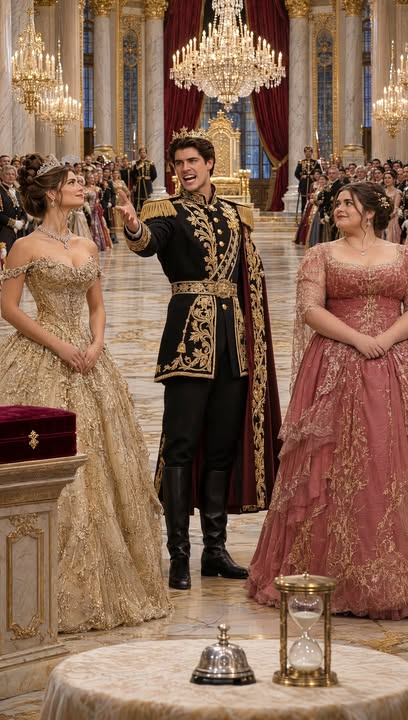
Part 4 – The Name Beneath the Seal
The words authorization and Prince Edward seemed to remain in the room after Justice Rowland’s call ended.
Edward stood motionless beside the table, staring at the evidence sleeve that held the Queen’s signature.
Hannah could see him measuring the distance between the man he believed himself to be and the document that claimed he had authorized a payment years before he could remember.
“How old were you when the agreement was signed?” she asked.
“Six,” Edward replied. “I was nowhere near the hospital’s finances.”
“Then we don’t treat the attachment as proof of your involvement.”
“I know.”
His answer came quickly, but his hands had tightened at his sides.
Hannah lowered her voice.
“We treat it as proof that someone used your name.”
“That might be worse.”
“Only if we let the document tell us what it means before we verify it.”
He looked at her, and some of the strain in his face eased.
“You’re good at holding the line between what we know and what we fear.”
“I’ve had practice.”
Justice Rowland called back a few minutes later.
She asked them to come to her office the following morning, when the archive file and the succession envelope could be examined under formal supervision.
The envelope had remained sealed since it was recovered from the treasurer’s folder, and the legal adviser had arranged for its custody to be transferred to Justice Rowland’s independent team.
Hannah and Edward would be present, but neither would handle the documents.
“Is the succession record likely to be relevant to the hospital inquiry?” Hannah asked.
“We don’t know,” Justice Rowland said. “The treasurer insisted it was unrelated, but that assertion is not a substitute for examining the evidence.”
The Queen had been informed of the meeting.
She would attend with her own counsel, as would the royal legal adviser.
When the call ended, Edward looked toward the tall windows.
Outside, evening had settled over the palace grounds, leaving the garden paths dim beneath the lamps.
“I spent most of my life believing the truth about my birth was simple,” he said.
Hannah waited.
“My mother gave birth to me. My father was already gone. There was a difficult delivery, a period when I was ill, and then years of ordinary family stories.”
He gave a small, humorless smile.
“Ordinary for a royal family, I suppose.”
“You haven’t seen the envelope yet.”
“No.”
“Then don’t make it carry a story before you know what it says.”
He turned back to her.
“I’m trying.”
Hannah understood the effort.
She knew how easily a person could start building a life around an answer that had not yet been established.
The next morning, Justice Rowland’s office had been arranged to look more like a small courtroom than a meeting room.
A wide table stood beneath recessed lights, and a document camera pointed toward a clear work surface.
Two members of Justice Rowland’s team sat beside her, one serving as recorder and the other as evidence custodian.
The palace legal adviser was present, along with the Queen and her counsel.
The royal treasurer had not been invited.
His lawyer had been notified that the review was underway, and Justice Rowland had requested that he preserve all records in his possession.
No one had yet accused him of a crime.
No one had yet explained why he had tried to burn the folder in the ballroom.
The archive box waited at one end of the table, sealed with a numbered strip.
Beside it sat the succession envelope, still inside its transparent sleeve.
The clerk read the identifying numbers aloud and recorded the names of everyone present.
Justice Rowland then instructed her team to photograph the outer surfaces before opening the archive box.
Hannah watched the careful sequence, the gloves, the measured movements, the quiet confirmation of each detail.
It was a slow beginning.
That was precisely why she trusted it.
The box held a thin file, a carbon copy of the emergency agreement, several delivery schedules, and a sealed attachment bearing a printed line that read: “Authorization—Prince Edward Montgomery.”
Edward looked down at the page, his expression hard to read.
The attachment’s paper was newer than the rest of the file.
Its edges were slightly cleaner, and its ink had a different sheen beneath the document camera.
Justice Rowland made a note of that before allowing the clerk to photograph it.
“Do you recognize this form?” she asked Edward.
“No.”
“Have you ever signed something of this kind?”
“Not that I recall.”
“Would you have been permitted to approve a hospital payment at six?”
“No.”
His mother’s counsel shifted in his chair, but the Queen remained still.
Justice Rowland turned to the older contract.
“The original agreement permits an advance for emergency equipment,” she said. “It also requires a delivery reconciliation within sixty days.”
The clerk compared the wording against the copy Hannah had seen.
The two versions matched.
The Queen watched the pages as though she had been waiting years to see them laid out together.
“I signed this agreement,” she said quietly. “I remember the emergency.”
Hannah looked at her.
“You said the contract was meant to keep the hospital open.”
“It was. The regional supplier had withdrawn, and essential equipment was delayed. We approved a temporary arrangement to bridge the shortage.”
“Did you know a later version might be altered?”
“No.”
“Did you approve this attachment?”
The Queen’s gaze rested on the authorization page.
“I have never seen it.”
Justice Rowland asked her counsel to confirm the Queen’s statement for the record.
He did so, adding that the original emergency agreement had been reviewed by palace counsel before it was signed.
“That tells us the agreement existed,” Hannah said. “It doesn’t explain the missing reconciliation report or the attachment.”
“Agreed,” Justice Rowland replied.
The archive file included an index sheet identifying the report, but the report itself was absent.
In its place was a short notation: “Reconciliation completed; supporting schedule transferred to Treasury.”
“Who entered that note?” Hannah asked.
The clerk enlarged the image.
The initials were difficult to read, but they did not match the initials on Hannah’s father’s payment review.
“Can the author be identified?” she asked.
“Possibly,” Justice Rowland said. “We’ll compare the handwriting with other records and establish who had access to this file.”
She nodded toward the succession envelope.
“Before we open this, I need to be clear about the limits of what we are doing. We are determining what the document is, who it concerns, and whether its contents have any legal effect. We are not making a succession ruling today.”
Edward nodded.
“I understand.”
The Queen’s eyes were fixed on the envelope.
For the first time since Hannah had met her, Margaret seemed unable to hide her fear.
Justice Rowland confirmed the seal had remained intact since its recovery.
The clerk photographed it from several angles and read the markings aloud.
The envelope bore Edward’s full name, the date of his birth, and the words confidential succession record.
No one spoke as Justice Rowland broke the seal.
Inside lay a birth record, a legal adoption order, and a letter from the hospital where Edward had been born.
A second sheet, marked as an official registry extract, had been folded inside the letter.
Justice Rowland examined each document before placing it beneath the camera.
Hannah watched Edward’s face as he read the first page.
He did not reach for it.
He did not ask to hold it.
He simply stared at the lines that recorded a birth date, two names, and a formal adoption several months later.
The Queen lowered her eyes.
“Edward,” she whispered.
He did not look at her.
“Who were they?” he asked.
Justice Rowland turned to the letter.
“The document states that your birth parents were Eleanor and James Vale,” she said. “It further states that both died when you were an infant, and that you were adopted through a lawful court order.”
The room seemed to lose its air.
Edward’s fingers rested against the table’s edge.
“I was adopted?”
“Yes,” Justice Rowland said. “According to this order, you were.”
He looked at his mother.
“You never told me.”
Margaret’s face had gone pale, but her voice remained controlled.
“I wanted to tell you when you were old enough to understand what had happened.”
“When was that supposed to be?”
“I thought there would be a time when the truth could be separated from the politics surrounding it.”
“There was never a time?”
Her mouth trembled before she answered.
“No.”
Edward turned away from her.
The clerk continued recording the details, careful not to intrude upon the silence.
Hannah watched the prince struggle to take in a truth that had arrived without warning and without any comforting explanation.
“Were they my parents?” Edward asked.
“The papers identify them as your birth parents,” Justice Rowland replied. “The adoption order identifies Queen Margaret and King Robert as your adoptive parents.”
“Your father and I loved you from the moment you came into our home,” the Queen said.
“I know you loved me,” Edward replied, his voice low. “That isn’t what I’m asking.”
Margaret closed her eyes briefly.
“The court approved the adoption after your birth parents died,” she said. “You were very young, and the succession law was not clear about how an adoption would be treated.”
“Was the adoption legal?”
“According to the order, yes.”
“Then why was it hidden?”
The Queen’s counsel leaned toward her, but Margaret raised one hand to stop him from answering on her behalf.
“I was afraid that anyone could use it to challenge your right to the throne,” she said. “I believed secrecy would protect you until the law could be clarified.”
“Did you know it could leave my status vulnerable instead?”
“I didn’t understand how the record had been filed.”
Justice Rowland carefully lifted the registry extract.
“This is important,” she said. “The adoption order appears complete, but the associated succession filing is not. There is no final entry confirming how the order was recorded under the royal succession statute.”
The palace legal adviser leaned forward.
“Could the absence of that filing invalidate the adoption?”
“No,” Justice Rowland said. “The adoption itself appears to have been granted by a competent court. Adoption alone does not disqualify him under the relevant law.”
Edward took a slow breath.
“But?”
“But the incomplete succession filing leaves room for someone to challenge whether your status was properly recorded at the time. That is a legal vulnerability, not a ruling that you are disqualified.”
The distinction mattered.
Hannah could see it in the way Edward held himself, as if the narrow space between possibility and judgment was the only ground beneath him.
“How long has this been known?” he asked his mother.
“I knew the adoption had been completed,” Margaret said. “I knew the succession paperwork had not been finalized as it should have been.”
“Who knew that?”
“The legal office at the time. A small number of officials.”
“Did you tell the council?”
“I did not.”
“Did you tell me?”
“No.”
Margaret’s eyes shone, though she did not let the tears fall.
“I thought I was protecting you from a dispute that had no clear answer. I was wrong to let silence become the answer.”
Hannah felt the weight of the confession in the room.
It did not sound like a scheme to seize power.
It sounded like a choice made out of fear, then repeated until it became impossible to undo without causing pain.
That did not make the choice harmless.
It only made it human.
The Queen’s counsel asked to review the documents privately.
Justice Rowland declined, explaining that every page had to remain under independent custody and that all parties could receive verified copies through the proper process.
Edward continued to look at the adoption order.
“Did you ever see my birth parents?” he asked.
The Queen shook her head.
“No. I was told they had died before the adoption was approved.”
“Were there photographs?”
“There may have been photographs in the hospital file.”
“Do you know where?”
“I don’t.”
Hannah saw the question beneath his question.
Edward was not asking only about a claim to the throne.
He was asking where the missing parts of his life had gone.
Justice Rowland returned to the documents.
“There is another issue,” she said. “The envelope contains a reference to an attached archive schedule, but no schedule is present.”
The clerk checked the contents again.
“The file index lists one attachment,” he confirmed. “It is not here.”
The Queen’s expression tightened.
“Was it missing when the envelope was sealed?”
“We cannot assume that,” Justice Rowland said. “We’ll need to locate the original registry file and determine how the contents were assembled.”
Hannah looked from the adoption order to the older hospital contract.
The records had been stored together in the treasurer’s folder, yet the documents came from separate files and separate years.
Someone had placed them side by side.
The fact itself did not establish who or why.
But it did make the missing attachment more troubling.
Justice Rowland asked her team to prepare a full inventory and begin tracing every recorded transfer of the archive box.
She also asked the palace legal adviser to supply the succession council’s original filing register.
The Queen agreed to provide her own correspondence about the adoption.
“I will not ask you to hide any of it,” Margaret said.
Edward still did not look at her.
“I need time to understand what you have already hidden.”
The Queen received the words without defense.
“I know.”
The review continued for another hour, with the legal implications discussed in careful, measured language.
Justice Rowland stressed that Edward’s adoption was lawful on the evidence before them, and that no one in the room had the authority to determine his future place in the succession.
The council would have to examine the complete record.
Until then, speculation could hurt people without answering a single question.
When the meeting ended, Hannah stayed behind while the others filed out.
Edward stood by the window, his reflection layered over the gray city beyond it.
She did not approach at once.
He had been given a new name for the beginning of his life and a reason to question every story attached to it.
There was no way to make that easy.
At last, he turned.
“I don’t know whether I’m angry with my mother or grateful she chose me.”
“You may be both.”
“She says she was trying to protect me.”
“She may have been.”
“That doesn’t mean she was right.”
“No.”
He looked down at the table, where the evidence custodian was carefully sealing the documents again.
“Do you think I’m still the same person?”
Hannah considered the question.
“Your birth record changes what you know about yourself,” she said. “It doesn’t erase the person you have been.”
“That sounds like something you say to people in difficult rooms.”
“Sometimes it’s true.”
He met her eyes.
“And the throne?”
“That is a legal question. We should let the council answer it with the full record.”
“What do you think?”
“I think the law deserves more than a frightened guess.”
A faint smile touched his face, though it vanished quickly.
“You won’t tell me what I want to hear.”
“I don’t know what you want to hear.”
“I don’t either.”
For a moment, neither spoke.
Then Edward said, “If this ends my claim, I want to know I did not spend my life protecting a lie.”
Hannah’s voice softened.
“Then we keep asking for the evidence.”
The Queen waited in the corridor outside Justice Rowland’s office.
She had dismissed her counsel ahead of her, leaving them alone beneath the quiet hallway lamps.
“May I speak with you?” she asked Hannah.
Edward turned toward his mother.
“Not now.”
Margaret bowed her head.
“All right.”
She did not reach for him or ask him to forgive her.
The restraint looked painful, but Hannah suspected it was the only thing Edward could accept just then.
A palace attendant approached with a message for Justice Rowland.
The succession council had received notice of the incomplete filing and requested an urgent briefing.
The hospital’s treasury archive, meanwhile, had located the missing reconciliation report referenced in the six-year-old index.
It was being transferred to Justice Rowland’s office under escort by an independent records officer.
Hannah felt a small surge of relief.
The report might explain her father’s note.
It might also reveal how the emergency contract had been changed after the Queen signed it.
Justice Rowland called them back into the room.
A scanned copy of the report had arrived ahead of the original.
The first pages described the emergency deliveries, the advance payments, and the equipment assigned to St. Anne’s.
Hannah read carefully, looking for her father’s handwriting.
There it was on the final page.
His notes were brief, written in the margin beside a list of unmatched invoices.
“Delivery schedule does not reconcile with signed contract. Do not authorize extension until supplier records verified.”
Below that, he had added a date and his initials.
Hannah’s breath caught.
“He flagged it,” she said.
The note was not a vague concern.
It was an explicit objection to extending the agreement without proof of delivery.
Edward leaned closer to the image.
“Then your father did not approve the later payments.”
“Not according to this report.”
Justice Rowland continued reading the next page.
It contained a transfer notation showing that the supporting schedule had been sent to the royal treasury for review.
The recipient’s initials matched the royal treasurer’s office.
The next entry, made several weeks later, stated that the discrepancies had been “resolved by amended authorization.”
Hannah looked again at the attachment attributed to Edward.
The date on it was months after her father’s warning.
Its authorization line carried the prince’s name.
“He was six,” she said.
“Yes,” Justice Rowland replied. “And we still need the original schedule, the amendment, and the author’s identity before we reach a conclusion.”
The Queen had rejoined them quietly.
She studied the report and then the disputed authorization.
“I never approved an amendment,” she said. “I never saw this version of the contract.”
The palace legal adviser examined the pages.
“This amendment is not in the Queen’s contract file.”
“Nor in the hospital’s copy,” Hannah said.
Justice Rowland looked toward the empty space in the archive box where the missing attachment should have been.
“The original authorization may be elsewhere,” she said. “We’ll need to establish whether it exists and how this copy entered the succession envelope’s file.”
Edward had gone still again.
The same name that had appeared on the hospital account now sat beneath an old authorization.
And the succession record that could decide whether he had a right to the throne had been kept beside it.
The room had barely absorbed that discovery when Justice Rowland’s clerk returned with the original reconciliation report.
He carried it in a sealed archival sleeve, along with a smaller envelope marked as an attachment to the report.
The sleeve was photographed and logged.
The clerk confirmed that it had remained in the treasury archive since its transfer six years earlier.
Justice Rowland examined the attachment through the clear sleeve.
“This is not the amendment,” she said. “It is a separate letter.”
The document bore a date from the year Edward had been born.
Its recipient was not the treasurer, the hospital, or the palace legal office.
It was addressed to the royal succession registrar.
Justice Rowland read the first line, then stopped.
Her expression changed.
“What does it say?” Hannah asked.
Justice Rowland looked from the letter to Edward, then to the Queen.
“The registrar’s note states that the adoption order was filed under a temporary identity while Edward’s birth record was being verified.”
Margaret’s face drained of color.
Edward leaned toward the table.
“Why?”
Justice Rowland turned the page so they could see the final paragraph.
“Because the child’s original birth certificate did not identify Queen Margaret as his birth mother.”
No one moved.
The letter continued in a neat official hand.
It stated that the succession registry had received a sealed birth record naming two other parents, and that the record had been withheld pending confirmation of the court’s adoption order.
At the bottom, a later notation had been added in different ink.
The adoption order had been received, but the temporary identity had never been formally linked to Edward Montgomery.
Hannah stared at the note.
The adoption had been legal.
The succession filing had been left incomplete.
And now the missing letter suggested that the original record had not merely been misplaced.
It had been deliberately separated from the name Edward had known all his life.
Justice Rowland looked toward the evidence custodian.
“Preserve this exactly as found,” she said.
Then she turned to Edward.
“We need to locate the original birth record.”
Edward’s gaze shifted to the Queen.
For the first time, Margaret looked not merely afraid of a succession challenge, but afraid of what the record might reveal about the years before the adoption.
“Your Majesty,” Hannah asked, “who were Eleanor and James Vale?”
Margaret’s lips parted.
Before she could answer, the palace legal adviser spoke from the doorway.
“Justice Rowland,” he said, holding a newly delivered archival notice, “the birth registry has found an additional sealed attachment.”
His eyes moved to Edward.
“It was filed under the name Eleanor Vale, and it concerns the day the prince was born.”
**–END OF PART 4–CLICK “NEXT” AT THE BOTTOM OF THE PAGE TO CONTINUE READING**
* * *
[PREVIOUS: PART 3](https://storyly.idolsgift.com/blog/part-3-the-envelope-no-one-was-allowed-to-open-069) | [NEXT: PART 5](https://storyly.idolsgift.com/blog/part-5-the-envelope-no-one-was-allowed-to-open-069)
✓ Lynn R. Adams
Part 4 – The Name Beneath the Seal The words authorization and Prince Edward seemed to remain in the room after Justice Rowland’s call ended. Edward stood motionless beside the table, staring at the…