PART 4: The Child on the Stairs 029
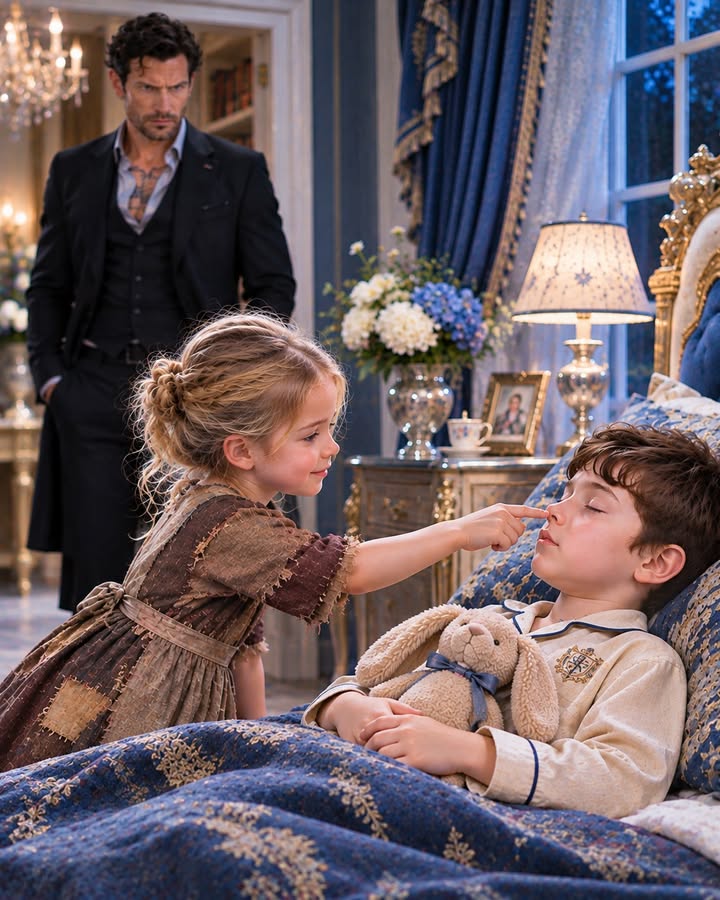
Part 4 – The Night Isabella Knew
The name at the bottom was unmistakable.
Dr. Voss.
I looked toward the corridor leading to Lucas’s room, where the monitor continued its steady rhythm.
Then I looked back at the paper in Rafi’s hand.
“What did Isabella know about that medicine—and why had she asked Voss about it before she died?”
No one answered.
Elena had gone pale.
Rafi’s expression had settled into the stillness he wore when a detail refused to fit.
“I’ll preserve the slip and have the date verified,” he said. “We shouldn’t assume what it means.”
“I’m not assuming,” I replied.
But the words sounded thin, even to me.
For years, I had treated Isabella’s death as a question with only one possible answer: someone had taken her from us.
The paper did not prove that.
It only made the question sharper.
“Where did you say you found this?” Rafi asked Elena.
“In the laundry cart. It was caught under the lining.”
“Did anyone else see it?”
“No.”
“Have you touched anything else in the cart?”
“Only the slip.”
Rafi put it in a clear document sleeve he had brought for the prescription records.
His care with the paper steadied me.
No hurried conclusions.
No raised voices.
Just a piece of evidence that needed to be understood.
“Elena,” I said, “thank you for bringing it to me.”
She looked at me as if she were still waiting for the cost of speaking.
“I should have told you years ago that I saw Dr. Voss changing that label.”
“Yes,” I said. “You should have.”
Her gaze dropped.
“But I understand why you were afraid,” I continued. “That doesn’t make it right, but it matters.”
A small breath left her.
“I don’t want Maya involved in anything dangerous.”
“Neither do I.”
“Lucas either.”
“Neither do I,” I repeated.
Rafi took the slip to arrange for the records specialist to examine it.
I went upstairs.
Lucas was awake, the notebook open across his lap.
Maya sat beside him with a blue pencil, drawing a lighthouse in the margin of a scrap page.
She looked up as I entered.
“Is everything all right?” she asked.
“I don’t know yet.”
Lucas watched my face.
“Is it about the medicine?”
“Partly.”
I sat by the bed and told him Elena had found an old delivery slip with Dr. Voss’s name on it.
I did not mention the date at first.
Lucas’s eyes moved to the amber bottle.
“Is he the one who changed the label?”
“We don’t know.”
“Did he do it?”
“We’re checking.”
Lucas folded one corner of the notebook page beneath his thumb.
“Will he still come here?”
“Not until we’ve spoken with the other doctors and made sure it’s safe.”
He looked relieved, then worried that he had shown it.
Maya set down the pencil.
“Does that mean the old medicine made him sick too?”
“I don’t know,” I told her. “The slip might be connected to something else.”
I had learned, in the space of a day, that reassurance was not the same as certainty.
Lucas seemed to understand the difference.
“Can I keep my notebook with me?” he asked.
“Always.”
He tucked it carefully under the blanket.
I stayed until Maya’s mother came to take her home.
Only after the children had said good night did I return to the study.
Rafi was waiting there with the sealed slip and a second folder.
“The records specialist has confirmed the delivery number,” he said. “The order was for a medication Lucas had never been prescribed.”
I felt the room narrow around me.
“Then why was it delivered here?”
“That’s what we need to establish. The destination was entered as the estate, but the account number belongs to Voss’s private clinic.”
“Could it have been a delivery mistake?”
“It could,” Rafi said. “The clinic says the order was canceled before it left the pharmacy.”
“Then why was there a slip?”
“The pharmacy’s record says the package was prepared for dispatch. It doesn’t prove it arrived.”
I looked again at the faded paper.
A delivery slip could have been printed before a cancellation.
It could have been left in a cart by mistake.
It could also have been part of something far more deliberate.
“Did Isabella know about it?”
“I can’t tell from this.”
“Can you find out?”
“I’m going through the records she left at the house. And I’ve asked the pharmacy for the original order history.”
I nodded.
Rafi hesitated.
“There’s a separate issue.”
“What is it?”
“The order was entered the afternoon before Isabella died.”
He turned a page in his folder.
“Later that evening, she called Dr. Voss’s clinic.”
The date matched the one on Elena’s slip.
“Do we have the call record?”
“The clinic has a note that she asked to speak with him about a prescription. It doesn’t say which one.”
I sat down.
For a moment, I saw Isabella not as a photograph in a silver frame, but as she had been in the kitchen the morning before the crash, wearing one of my old sweaters and tying her hair back with a ribbon.
She had told me she needed to go into town.
I had asked whether she wanted a driver.
She had said she would be gone only an hour.
I had been on a call and barely looked up.
“Why didn’t I know she called him?” I asked.
“I don’t know.”
“Did she leave a message?”
“There’s no transcript. The clinic’s records from that period are incomplete.”
“Convenient.”
“Maybe,” Rafi said. “But incomplete records aren’t proof of anything.”
I pressed my palms against the desk.
Isabella had spent years asking me to step away from the life I had built.
She had asked me to be home for dinner, to make time for Lucas, to stop bringing fear into every room.
I had often told myself that I was keeping danger away from them.
I had never asked whether the danger was already inside our walls.
“Find anything she wrote,” I said.
“I’m trying.”
The next morning, Dr. Voss arrived at the estate.
He had called first to say he wanted to review Lucas’s treatment with me and answer questions about the prescription records.
I had considered telling him not to come.
The independent specialist advised against changing Lucas’s care before a proper review, and Voss still held information no one else had.
So I let him in.
He found me in the conservatory, where gray winter light fell across the glass roof.
I had chosen the room because it was far from Lucas’s bedroom, and because it was one of the few places where I could still remember Isabella laughing.
Voss carried a slim case.
“I appreciate you making time,” he said.
“I have questions about an old prescription order.”
His expression became cautious.
“What order?”
“The one entered on the evening Isabella died.”
A pause followed.
Voss set his case on the table.
“I don’t recall the details of every prescription from that period.”
“The pharmacy says the order came through your clinic.”
“That may be correct. But orders were handled by more than one person.”
“Did Isabella call you about it?”
“I don’t remember speaking with her that evening.”
“She called your clinic.”
“I can only tell you what I remember.”
I watched him closely.
He did not look startled.
He did look tired.
Perhaps he had not slept well.
Perhaps he knew exactly what I was asking and had prepared himself for it.
“Did Isabella ever raise concerns about Lucas’s medication?”
“She was an attentive mother,” he said. “She asked questions about everything.”
“That isn’t what I asked.”
“She was worried that some of his symptoms were reactions to treatment. I told her that, in his case, the illness itself could cause similar problems.”
“And was she right?”
“Some side effects were possible.”
“Did you investigate?”
“We monitored him. We adjusted doses when necessary.”
“Did you ever prescribe something Lucas didn’t need?”
Voss looked at me for a long moment.
“No.”
His answer was clear.
I wanted it to be true.
The part of me that had trusted him for years tried to settle back into its familiar place.
But the bottle, the records, Elena’s account, and Lucas’s notebook were all still on the desk in my mind.
“Then you won’t object to the independent review.”
“No. I’ve already sent his records.”
“Every record?”
“Everything I have.”
“Isabella’s call, too?”
He looked down at the case.
“I’ll ask the clinic to check.”
“Please do.”
Voss lifted his eyes.
“Lorenzo, I understand that you’re frightened. I am too. Lucas has a complex condition, and it would be dangerous for anyone to make sudden changes based on incomplete information.”
“I agree.”
“If you think I’ve made an error, I’ll answer for it. But please don’t let suspicion interrupt his care.”
“I won’t.”
He seemed surprised by my answer.
So was I.
There had been a time when I would have demanded a confession before I had even established a crime.
Now I had a child upstairs whose life depended on careful decisions.
Voss had treated Lucas for years.
If we were going to challenge his care, we needed facts—not force.
“I want the truth,” I said. “Whatever it is.”
“So do I.”
He sounded sincere.
That, too, was difficult.
Before leaving, he asked to see Lucas.
I told him he could, but only with the nurse present.
Voss examined Lucas, listened to his heart, and asked about the stomach pain.
Lucas told him it usually came after the morning medicine.
“Has it changed lately?” Voss asked.
“No,” Lucas said. “But I wrote it down.”
He lifted the notebook.
Voss looked at the pages, then at me.
“May I see?”
Lucas held it close.
“Only if my father stays.”
“Of course.”
Lucas opened to the entries about his symptoms.
Voss read them without speaking.
When he reached the line about feeling better on the day he had missed a dose, his fingers stopped.
“That’s useful information,” he said.
“Why didn’t anyone ask me to keep track before?” Lucas asked.
Voss closed the notebook.
“That’s a fair question.”
I had not expected him to say it.
Lucas appeared equally surprised.
Voss gave the notebook back.
“We’ll look carefully at the timing. We won’t stop anything without a safe plan.”
Lucas nodded.
After the examination, Voss spoke privately with the nurse.
He asked for the exact time the morning medicine was given and when Lucas reported pain.
He wrote it down himself.
That afternoon, the independent specialist arrived with a physician from the children’s hospital.
They reviewed Lucas’s charts in the study while I sat nearby.
Rafi joined them with the pharmacy records.
The specialist, Dr. Shah, spoke plainly and answered every question.
“Some of Lucas’s symptoms could be caused by his underlying condition,” she said. “But the current combination of medicines could also be contributing to the stomach pain and fatigue.”
“Could the amber bottle be responsible?” I asked.
“It may be. I can’t say that from the label alone. We need the exact contents, dosage, and timing.”
“Is the medicine necessary?”
“Possibly. But I want to understand why it was prescribed and what it was intended to treat.”
“Dr. Voss says it was added to support his treatment.”
“Then we’ll confirm that against his records.”
She did not accuse him.
She did not dismiss the concern either.
“Would it be dangerous to stop it?” I asked.
“It could be. Some medications need to be reduced gradually, and some protect against complications. We’ll make no change until we understand the risks.”
I looked at Lucas’s notebook on the table.
“His pain was less on a day he missed a dose.”
“That’s important to document,” Dr. Shah said. “It still isn’t enough to tell us what would happen if the medicine were withdrawn.”
Her voice was careful, but not evasive.
For the first time, I felt the difference between caution and concealment.
Caution made room for questions.
Concealment tried to close them.
Dr. Shah ordered a full review of the pharmacy records and asked that the amber bottle remain sealed.
She also recommended tests to check whether the medicine had caused damage.
When she finished, she looked at me.
“Lucas needs a treatment plan based on complete information. Until we have it, the safest thing is to keep his care stable and supervised.”
“Can you take over his case?”
“I can work with his current team and review everything independently. But it will take time.”
“How much time?”
“I can’t promise you an exact answer.”
I nodded.
It was not what I wanted.
It was the kind of answer I was beginning to understand I needed.
The following day, the laboratory confirmed that the amber bottle contained the medication listed on its label.
It also contained a second drug in a smaller amount, one that was not listed anywhere in Lucas’s current chart.
Dr. Shah asked for the unopened replacement bottle to be tested against the pharmacy’s dispensing record.
Rafi found that the replacement order had been submitted by Dr. Voss’s clinic under Lucas’s name.
The original prescription had not included the second drug.
Dr. Voss asked to see the laboratory report.
He read it twice.
“That shouldn’t be there,” he said.
I waited.
He looked up at me.
“I didn’t authorize a second medication.”
“Who did?”
“I don’t know.”
“You signed the replacement request.”
“I signed a batch of renewal forms that evening. I don’t recall this specific one.”
“Why was it sent to the pharmacy under Lucas’s name?”
“I’ll find out.”
“Dr. Voss, my son has been taking it.”
“I understand.”
His composure had finally cracked—not into anger, but into alarm.
He turned to the specialist.
“If this was dispensed in error, we need to identify the source before changing anything.”
Dr. Shah agreed.
She arranged for the medication to be held for testing and made a supervised adjustment to Lucas’s schedule.
Nothing would be withdrawn suddenly.
Nothing would be continued without explanation.
The plan took the rest of the day to prepare.
While the adults talked, Lucas watched us from his bed.
He did not interrupt.
When the specialist left, I sat beside him.
“Are you still going to give me medicine?” he asked.
“Some of it, yes. The doctors are working out which medicine helps and which one may be hurting you.”
“Did they make a mistake?”
“I don’t know yet.”
He looked at the window.
“Did Mom know?”
The question left me speechless.
I had thought about Isabella’s phone call all day.
I had imagined her asking Voss about a prescription, but I had no idea what he had told her.
“I don’t know,” I said.
Lucas’s fingers closed around Captain’s paw.
“She would’ve written it down.”
“She might have.”
“Can we find it?”
“I’m going to try.”
He nodded.
Then he turned the notebook over to a fresh page and wrote slowly:
Dad listened today.
I watched him add a small green dot at the end.
I felt my eyes sting.
That evening, Rafi arrived with a box of papers from Isabella’s study.
We had kept her books, letters, and garden notes in the room she used before Lucas was born.
I had not been inside it in months.
The curtains were still the pale blue she had chosen.
A framed photograph sat on the desk, taken in the garden when Lucas was a baby.
Isabella held him against her shoulder, her smile turned toward the camera.
I had once believed that leaving the room untouched was a way of protecting the last place that belonged to her.
Instead, I had made it harder to remember her as a living person.
Rafi set the box on the desk.
“Her appointment books are here, along with old household receipts and some correspondence.”
“Anything about Voss?”
“Not yet.”
We worked through the papers carefully.
There were shopping lists and reminders.
A note to call the gardener.
A recipe written in Isabella’s rounded handwriting.
Then Rafi found a folded page tucked inside the back of one of her notebooks.
It was not a letter.
It was a list of dates and medicine names, with questions written beside them.
The handwriting grew more hurried toward the bottom.
Lucas’s stomach pain—after morning dose.
Ask Voss why both prescriptions still needed.
He says symptoms are part of the illness.
Check old order with pharmacy.
A date was written at the top.
It was three days before the crash.
I read the lines again.
She had seen the pattern.
She had asked the question.
She had been trying to find out whether Lucas’s treatment was making him worse.
There were no words of accusation.
Only the ordinary questions of a mother who had noticed her child hurting.
At the bottom of the page, in a line pressed hard enough to mark the paper beneath it, she had written:
If he won’t explain the order, take the bottles to someone independent.
I could no longer keep my eyes on the page.
“Isabella knew,” I said.
“She suspected something was wrong,” Rafi replied. “We don’t know what she believed.”
“She was going to have the medicine checked.”
“Yes.”
“And then she died.”
Rafi said nothing.
The words were simple.
The silence around them was not.
I turned over the page, hoping there might be more.
On the back was a brief note addressed to me.
Lorenzo, I need you to listen to Lucas before you decide what he needs.
I sat down slowly.
My wife had known I would come home late.
She had known I would trust the doctors over a child who could barely explain what hurt.
She had known how easily I turned fear into certainty and certainty into action.
She had written the sentence because she loved Lucas.
And perhaps because she had been trying to reach me.
I pressed the paper flat beneath my hand.
“I should have seen this,” I said.
“You didn’t know it was here.”
“I should have asked her what she was worried about.”
“You were both dealing with a great deal.”
“That isn’t an excuse.”
“No,” Rafi said gently. “It isn’t.”
I looked at the date again.
“How did she die?”
“The official report says the crash began with a mechanical failure. The car was inspected the week before.”
“By whom?”
Rafi opened the folder he had brought.
“The inspection was signed by a company contracted through the estate. The technician’s report is missing from the archive, but the final authorization bears Voss’s name.”
I turned toward him.
“Why would our doctor sign off on a car inspection?”
“He wasn’t the mechanic. He was listed as the medical consultant who approved the vehicle’s safety modification after Isabella had a minor fainting spell.”
“That’s not the same as signing the inspection.”
“No. But his approval is on the paperwork.”
“Was the modification related to her health?”
“According to the file, it was a device meant to monitor her blood pressure while she drove.”
I remembered Isabella saying the device made her uneasy.
She had told me it beeped at the wrong moments and that she wanted it removed.
I had told her to let Voss handle it.
The memory returned with unbearable clarity.
I had been standing in the doorway of her dressing room, checking messages while she spoke.
She had asked me to take her to the clinic.
I had said I was busy and promised we would go another day.
The next time I drove her anywhere, she was in a coffin.
Rafi continued.
“An old message between Isabella and Voss was recovered from the clinic’s backup records. It was sent the day before the crash.”
“What did it say?”
“He replied to a message she’d sent him, but the original is missing. His response reads: ‘You’re mixing up the orders. Let me handle the records. Don’t involve Lorenzo until I explain.’”
I stood so quickly the chair scraped the floor.
“She was asking him about Lucas’s medicine.”
“That’s likely.”
“And he told her not to involve me.”
“That’s what the message says.”
I paced once across the room and stopped.
The old instinct surged up, asking for a name, an address, a way to make the uncertainty end.
I felt it rise.
Then I thought of Lucas upstairs, waiting for the next dose, and of Dr. Shah’s warning that any sudden change could harm him.
I returned to the desk.
“Do we have enough to prove he killed Isabella?”
“No,” Rafi said. “We have a suspicious message, a prescription order, a possible connection to the vehicle inspection, and records that need independent verification.”
“Could all of it be innocent?”
“It could be. But it’s no longer something we can ignore.”
I looked at Isabella’s note.
She had been afraid enough to write down the names of the medicines.
She had been careful enough to plan a second opinion.
She had not had time to finish.
The next morning, Dr. Shah called me into the study.
She had reviewed the latest laboratory results and the old prescription records.
“The additional drug could have interacted with Lucas’s other treatment,” she said. “The combination may have worsened his nausea, weakness, and fatigue.”
“Could it have caused all of this?”
“We can’t say that yet. Lucas has an underlying condition, and some symptoms may come from that. But the drug was not listed in the treatment plan, and the interaction is concerning.”
“Is it safe to stop it?”
“Not abruptly. We’ll taper it under observation and monitor his heart and blood pressure.”
“How long will that take?”
“We’ll proceed carefully. His body needs time to adjust.”
I looked at the file in her hands.
“Could someone have added it deliberately?”
“I can’t determine intent from a laboratory result.”
“I’m asking what the records suggest.”
“The records show that the drug was dispensed under Lucas’s name, but the written order does not explain why it was added.”
“Dr. Voss says he didn’t authorize it.”
“Then he needs to help establish how it happened.”
She spoke without anger.
That made the concern more real, not less.
When I returned to Lucas’s room, he was awake and drawing a garden in his notebook.
The roses he drew had large green stems and round red tops.
“Those look alive,” I said.
“They’re supposed to be.”
“What kind of flowers are they?”
“Roses.”
I sat on the edge of the chair.
“Your mother’s roses.”
He nodded.
“Do you remember the garden?”
“A little.”
“What do you remember?”
“She smelled like flowers.”
The answer struck me more deeply than any accusation could have.
I looked down at the page.
“Your mother was trying to understand your medicines,” I said. “She had written down some questions.”
“Did she know they were making me hurt?”
“She suspected something might be wrong.”
“Was she going to fix it?”
“I think she was trying to.”
Lucas added another flower to the page.
“Then she was listening too.”
“Yes,” I said. “She was.”
His pencil slowed.
“Did someone make her car break?”
I had not wanted to place that possibility in his mind.
But I would not lie to him.
“We found reasons to ask questions about the crash. We don’t know the answer yet.”
“Are you going to find out?”
“Yes.”
“Even if it’s scary?”
“Especially then.”
Lucas looked at me.
“Will you go away?”
“No.”
He studied my face for a moment, then returned to his drawing.
I stayed with him until his hand tired.
That evening, Rafi came to the study with the results of his final records check.
The prescription order had been submitted through a user account assigned to Dr. Voss.
The same account had been used to request a change to the vehicle-monitoring device installed in Isabella’s car.
The change had disabled a warning system she had reported as unreliable.
The technician who signed the final inspection had since died, and the company’s records were incomplete.
It was not proof that the crash had been planned.
It was not proof that Voss had altered the medicine.
But the two records were connected by the same account, the same doctor, and the same period in which Isabella had begun asking questions.
I sat with the report until the words blurred.
Rafi stood across from me.
“What do we do now?” he asked.
I looked toward the staircase.
“Lucas stays under Dr. Shah’s care.”
“And Voss?”
“We don’t confront him until we have a plan.”
Rafi nodded.
“Do you think he knows we found the old note?”
“I don’t know.”
A moment later, the study phone rang.
The number on the screen belonged to the private clinic.
I answered.
Dr. Voss’s voice came through, low and controlled.
“I need to speak with you alone.”
“About what?”
“Lucas’s treatment.”
“Dr. Shah is managing it now.”
“This isn’t only about his treatment.”
I glanced at Rafi.
“What is it about?”
A pause.
Then Voss said, “Isabella came to me the night before she died. She had found the original order.”
My hand tightened around the phone.
“What original order?”
“The one that explains why Lucas was given the additional medication.”
“You told me you didn’t know who authorized it.”
“I said I didn’t remember signing it.”
“And now you do?”
“I remember what Isabella showed me.”
The room seemed to contract around the sound of his voice.
“What did she show you?”
“She had a copy of the prescription and a note from the pharmacy. She believed someone had been altering Lucas’s treatment.”
“Was she right?”
“I can’t tell you over the phone.”
“Then tell me now.”
“I can’t.”
“Why?”
Voss’s breath caught, barely audible.
“Because the person who altered the order is still close enough to Lucas to reach him.”
I looked toward the door.
Rafi had gone perfectly still.
“Who?” I asked.
Voss did not answer at once.
Then he said, “Lorenzo, the person who signed that prescription wasn’t me.”
**–END OF PART 4–CLICK “NEXT” AT THE BOTTOM OF THE PAGE TO CONTINUE READING**
* * *
[PREVIOUS: PART 3](https://puretales.idolsgift.com/blog/part-3-the-child-on-the-stairs-029) | [NEXT: PART 5](https://puretales.idolsgift.com/blog/part-5-the-child-on-the-stairs-029)
✓ Lynn R. Adams
Part 4 – The Night Isabella Knew The name at the bottom was unmistakable. Dr. Voss. I looked toward the corridor leading to Lucas’s room, where the monitor continued its steady rhythm. Then I look…