PART 4: The Bracelet He Remembered 008
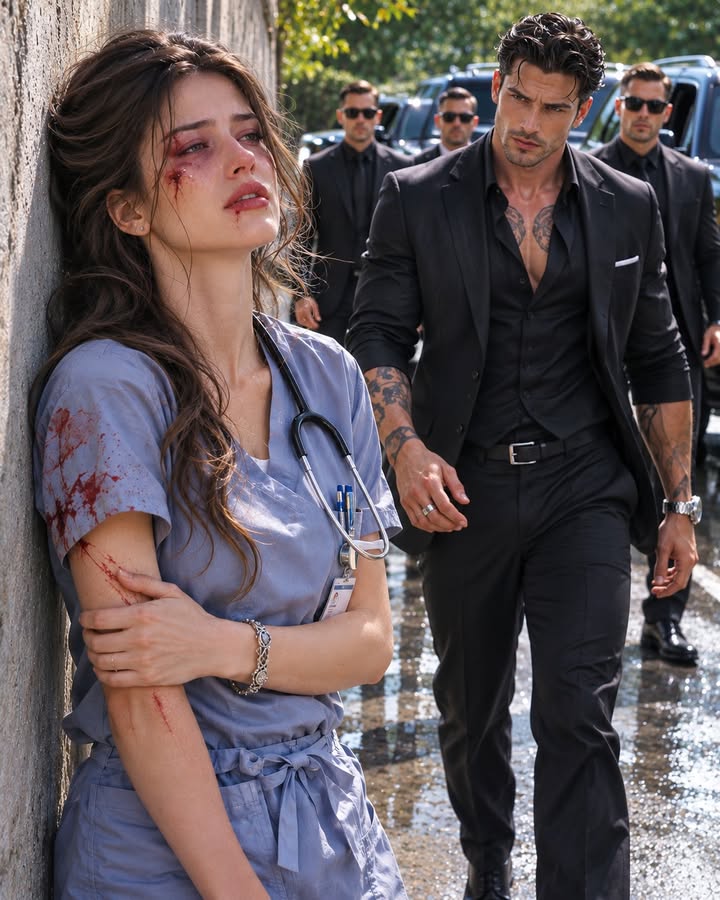
Part 4 – The Page Before the Fire
Clara’s words seemed to drain the warmth from the corridor.
“The one that shows who ordered my father to remove Sofia’s name.”
I stared at the parcel in her hands, suddenly aware of how many people were passing behind us, how ordinary the hospital looked beneath its bright lights.
“Your father?” I asked.
“Daniel Whitmore,” she said. “He was a decent man, Evelyn. He didn’t want Sofia’s name erased.”
My fingers tightened around the strap of my bag.
“You knew my father?”
“I worked with him for a few years. Not closely, but enough to know he took his job seriously. He believed a record was a promise that someone had been seen.”
The sentence unsettled me more than any accusation could have.
If my father believed that, why had he removed a patient’s name?
“Why didn’t you say this before?”
“I’ve been away from St. Agnes for years. I thought the records had been preserved, and that the people who knew the truth had already spoken.” Clara looked down at the parcel. “I was wrong about both.”
“Who ordered him to remove Sofia’s name?”
“I don’t know what the page will show you. I only know it contains the instruction.”
“Then why not give it to the police?”
“Because I don’t know who can be trusted with it yet.”
I thought of Vincent’s warning: Don’t let anyone become the only person who has the truth.
“Have you read it?”
“More than once.”
“And you still don’t know?”
“I know what it says. I don’t know what it means.”
The careful distinction sounded familiar.
It was the difference between a fact and the story someone wanted to build around it.
I glanced toward the hospital entrance.
“Tomorrow, you said?”
“Tomorrow morning. A public place, where we can talk without being overheard.”
“Bring someone you trust,” I repeated.
“Yes.”
“I’ll bring a friend. And I’ll tell the police where I’m going.”
Clara’s face relaxed a little.
“Good. Your father would have approved.”
I was not ready to hear what my father would have approved.
I took the parcel, but I did not open it.
The brown paper was folded neatly and sealed with a strip of plain tape.
It felt surprisingly light in my hands.
“Why did you wait until now?” I asked.
Clara looked past me, toward the glass doors and the rain-blurred street beyond them.
“Because for years I thought silence was protecting the people who needed protection.”
“And now?”
“Now I think silence may be protecting the people who caused the harm.”
She left without offering more.
I stood in the corridor holding the parcel, with my father’s name moving through my thoughts like a quiet bell.
Mara met me outside the staff entrance ten minutes later.
She had brought a spare umbrella and a thermos of soup, both of which she held out with the solemnity of someone offering medical supplies.
“You look like you’ve seen a ghost,” she said.
“Maybe I have.”
I told her about Clara and the page she claimed to have.
Mara listened without interrupting, then asked, “Do you think she’s telling the truth?”
“I think she believes she is.”
“That isn’t quite the same thing.”
“No.”
“Are you going to open it?”
“Not until I’m home, with you there.”
She glanced at the parcel.
“You’ve learned something from Vincent after all.”
The thought made me uneasy.
I had spent the day trying to keep his conclusions separate from my own, but his caution had become part of the way I measured risk.
At Mara’s apartment, I placed the parcel on the kitchen table and photographed every side before cutting the tape.
Inside lay a single sheet of paper, folded twice and enclosed in a clear sleeve.
It was a carbon copy of a typed memorandum, its letters faded but legible.
The heading named St. Agnes Hospital and the date of the fire.
Beneath it, an administrator had written a brief instruction to the records department: remove Sofia Romano’s name from the transfer copy and replace it with the unidentified-patient code until further notice.
At the bottom, a signature had been added in dark ink.
I recognized neither the name nor the handwriting.
The instruction itself did not identify who had given it.
It only showed that someone had ordered the change.
I read the page twice, then checked the back.
There, in my father’s unmistakable hand, was a short note.
“Transfer completed at request of R.W. Original identity retained in sealed file.”
I sat down.
Mara came around the table and read the lines over my shoulder.
“R.W.,” she said. “Rose Whitmore?”
“It could be.”
“Or someone else.”
I looked at the document’s faded date.
“Clara said the page showed who ordered my father to remove Sofia’s name.”
“But it doesn’t.”
“No. It shows the instruction came from an administrator, and my father wrote that Rose requested the transfer.”
Mara carefully lowered herself into the chair across from me.
“Maybe Rose asked him to protect Sofia.”
“Maybe.”
“Or maybe he was covering for her.”
“Maybe.”
The page offered a shape but no certainty, and uncertainty had begun to feel like its own kind of weight.
I photographed both sides and sent the images to the police officer, explaining how I had received them and asking that the original be added to the case file.
Then I called Vincent.
He answered after the first ring.
“I have a new document,” I said. “It says my father completed Sofia’s transfer at the request of someone identified as R.W.”
The silence on the line was immediate.
“Rose,” he said at last.
“That is one possibility.”
“Did the document say where she was transferred?”
“No.”
“Did it say whether she was alive?”
“No.”
His breath caught softly, almost too faint to notice.
“I’m sorry,” I said.
“I’ve spent years wondering whether she died in that wing or somewhere else. I thought I knew the answer.”
“You thought the official records were true.”
“I thought some of them were.”
“What did the hospital say happened?”
“That Sofia was among the patients who died in the fire.”
I traced the edge of the paper with one finger, careful not to touch the ink.
“But this says she was transferred.”
“Yes.”
“It doesn’t prove she survived.”
“No.”
“Or that Rose was the R.W.”
“No,” he said. “It doesn’t.”
His restraint helped me breathe again.
“Clara gave me the document,” I told him. “She says she’ll meet tomorrow.”
“I’d like to speak with her.”
“I’ll ask whether she’s willing.”
“Thank you.”
“Don’t turn this into a search for someone to blame.”
“I won’t.”
“I mean it, Vincent.”
“So do I.”
I listened for the anger I had once expected to hear from him whenever his grief surfaced.
Instead, there was only the tiredness of a man trying not to let an old wound dictate the meaning of a new fact.
“I’ll call you after we meet,” I said.
“All right.”
Mara and I spent the rest of the evening comparing the document to the fragments I had copied from the ledger.
The dates matched.
My father’s note appeared to refer to the same transfer, though it offered no explanation for why the hospital’s official report had listed Sofia among the dead.
The document did not prove he had falsified anything for personal gain.
It did not prove he had acted freely.
It did not prove Rose had been involved.
But it made one fact harder to ignore: someone at St. Agnes had deliberately removed Sofia’s name from a record.
The next morning, Mara drove me to a small café near the river.
We chose a table by the window, where we could see the entrance and the sidewalk.
I had sent the address to the police officer, and Vincent had agreed to remain elsewhere unless Clara asked to see him.
At ten past nine, Clara entered carrying a canvas tote.
She spotted us, then paused just inside the door.
Mara rose to greet her.
“I’m Mara,” she said. “Evelyn asked me to come.”
“I’m glad she did,” Clara replied.
She looked at me and seemed to search my face for some resemblance to Daniel.
“I’m sorry for the way you learned his name was in those records,” she said.
“I’m still trying to understand what he did.”
“So am I.”
Clara took the seat across from me and placed a second envelope on the table.
“This is the rest of what I kept.”
“You said the page showed who ordered the change.”
“I thought it did.”
She looked at the document I had brought.
“I see now it shows only the instruction.”
“Where did you get it?”
“From a box of copies I kept when I left the hospital. I was young, and I knew the records department had been told to dispose of several duplicate files. I didn’t understand why. I kept what I could without knowing whether it would ever matter.”
“Why did you think this page named the person responsible?”
“Because it was the page immediately before the transfer notation in the file I found.”
“But someone removed the signature sheet.”
“Yes.”
Clara touched the second envelope but did not open it.
“After I heard you were asking about the east-wing log, I searched the box again. I found a separate page folded inside the cover.”
“Have you read it?”
“Only enough to recognize the name.”
She slid the envelope toward me.
I did not open it.
“Why didn’t you call me first and tell me what it said?”
“Because I wanted to make sure the page was intact, and because I wasn’t sure how you would react.”
“You could have told me there was another document.”
“Yes,” Clara said. “I could have.”
Her honesty left my anger without a clean place to land.
“What name did you recognize?” Mara asked.
Clara looked at me.
“Your father’s.”
My stomach tightened.
“Daniel ordered the change?”
“No. His name is on a statement attached to the page.”
“What statement?”
“That he refused to remove Sofia’s name unless the hospital preserved the original identity in a sealed file.”
I looked down at the envelope.
It felt heavier than the first.
“Then the instruction came from someone else,” I said.
“Yes.”
“And my father wrote that Rose requested the transfer.”
“That’s what the note says.”
“Did he know where Rose was taking Sofia?”
“I don’t know.”
“Did he help her?”
“I believe he did.”
“Why?”
Clara rested both hands around her cup.
“Because after the fire, he came to my office and asked me to make sure the original record stayed sealed. He said there was a child who had been moved out of danger, and that naming her in the wrong place could put her back in it.”
A chill traveled through me.
“A child?”
“Sofia.”
“You saw her?”
“No. I was in the records office. I only knew what Daniel told me.”
“He said Rose had taken her?”
“He said Rose had helped get her out.”
Mara’s hand found mine beneath the table.
I looked at Clara.
“Why would anyone be looking for Sofia?”
“I don’t know.”
“Who was trying to control the report?”
“I don’t know that either.”
“You worked at the hospital.”
“I worked in records. I saw the paperwork. I didn’t see the decisions being made.”
The limitation in her answer sounded like the truth.
She opened the envelope and removed a brittle sheet covered in typed notes and handwritten comments.
At the top was a list of names from the night of the fire.
My father’s name appeared beside a note that he had objected to changing the patient’s identity without retaining the original record.
The signature at the bottom belonged to the hospital’s administrator, not my father.
Beneath the signature was a second line, faintly typed and nearly lost in the fold.
“Instruction received from the office of Mr. Calder.”
I read it again.
“Who was Mr. Calder?”
Clara’s gaze shifted to the window.
“Thomas Calder. He owned the hospital then.”
The name did not mean anything to me at first.
Then Mara leaned closer.
“The Calder Foundation,” she whispered. “They fund the children’s wing and the nursing scholarship program.”
I knew the name.
Everyone at St. Agnes did.
The Calder Foundation had paid for the renovated pediatric unit, new equipment, and a public memorial to the victims of the old fire.
Thomas Calder had died years ago, but his son, Henry Calder, had become a prominent philanthropist and remained one of the hospital’s largest donors.
I looked at the typed note.
“His office ordered Sofia’s name removed?”
“That’s what the page says,” Clara replied. “I can’t tell you why.”
“Did his son know?”
“I don’t know.”
“Did anyone investigate?”
“Not that I ever heard.”
The paper seemed to turn colder beneath my fingers.
The official history of the fire described poor wiring, a fast evacuation, and tragic losses.
There was no mention of missing patients, altered transfer records, or an owner’s office directing staff to change a child’s identity.
“Why would the hospital hide a transfer if Sofia survived?” Mara asked.
Clara’s eyes moved to the document.
“Maybe because someone wanted the fire to appear worse than it was. Maybe because someone wanted the child to disappear. Maybe because there was another reason none of us understood.”
“That isn’t enough,” I said.
“No,” she agreed. “It isn’t.”
I took photographs of the page and asked Clara whether she would give the original to the police.
“Not until I know the copy is safe,” she said.
“The police can protect it.”
“I’ll speak with them. But I want a lawyer present.”
“That’s reasonable.”
Clara looked relieved that I did not argue.
“I should also tell you something about your father,” she said.
I waited.
“After the fire, he tried to correct the official record.”
The café’s voices blurred around us.
“What happened?”
“He filed a written request to restore Sofia’s name and document the transfer. It was denied.”
“Who denied it?”
“The administrator signed the refusal.”
“And my father?”
“He kept a copy of the request. I never found it in the official files.”
“Do you know where it is?”
“No.”
The first document had brought my father into the story as a possible participant in an altered record.
The second showed he had resisted the alteration.
Neither version erased the other.
He had written the note about Rose’s request.
He had completed the transfer.
He had also insisted that Sofia’s identity be preserved, and later tried to correct the official account.
“What did my father do after the request was denied?” I asked.
Clara’s expression softened.
“He became quieter. More careful. He stayed at the hospital for another year, then left.”
“Did he ever tell you why?”
“No. He only said that some truths had to be carried until they could be told safely.”
The sentence stayed with me.
It sounded like Rose.
It sounded like the kind of thing a person said when a promise had become heavier than they could comfortably bear.
I called Vincent from the café.
He answered, and I told him what we had learned.
For a long moment, he did not speak.
“Rose helped Sofia leave the hospital,” I said. “My father protected the original record. The order to remove Sofia’s name came from Thomas Calder’s office.”
“What happened to her after that?”
“We don’t know yet.”
“Did Clara say whether she was alive?”
“She said my father told her Sofia had been moved out of danger.”
Vincent drew a breath that sounded almost painful.
“That could mean she survived the fire.”
“It could.”
“Did Rose take her somewhere?”
“Clara thinks Rose helped her escape, but she doesn’t know what happened afterward.”
For a moment, the line went quiet.
I imagined Vincent standing in his apartment, holding his phone with the same careful stillness he had shown at the roadside.
The past had given him a new possibility, but it had not given him comfort.
“Evelyn,” he said finally, “if Sofia survived long enough to leave the hospital, then I may have misunderstood every year that came after.”
“You believed she died in the fire.”
“I believed she died there.”
“Clara says she died later from her injuries.”
“Rose told me that once.”
“When?”
“After the fire, when she came to find me. She said Sofia had been taken somewhere safe, but she was hurt badly. She didn’t tell me where.”
My grip tightened around the phone.
“You said Rose helped you after the fire.”
“She did. I was a boy, and I didn’t know how to live with what I thought had happened. Rose stayed with me until my uncle came.”
“Did she tell you Sofia was alive?”
“She said she had survived the fire. Later, I was told she died from her injuries.”
“Who told you?”
“I don’t remember. My family was in chaos. There were reports, hospital statements, and rumors. I never saw a body.”
That admission entered the space between us and changed it.
“You never saw her body?”
“No.”
“Then why did you believe she died?”
“Because the people around me said she did, and because Rose eventually stopped speaking about it.”
I looked at the silver bracelet on my wrist.
“Maybe she wanted you to live without carrying the uncertainty.”
“Or maybe she was keeping a promise.”
I glanced at Clara, who was watching me.
“Rose may have given the bracelet to me because Sofia asked her to,” I said.
“I think so.”
“Clara doesn’t know why my grandmother kept it.”
“No,” Vincent said. “But perhaps she wanted you to find the truth when you were old enough to choose what to do with it.”
I did not answer.
I had spent the morning searching for evidence that my father had not betrayed Sofia.
I had found evidence that he had tried to protect her, but not enough to explain why he had remained silent for the rest of his life.
I had found a name connected to the order, but not proof of what the Calder family had known or done.
And I had found the first credible sign that Sofia might not have died when everyone said she had.
“Clara will speak with the police,” I said. “I’ll make sure the documents are copied and properly recorded.”
“I’ll leave it to you.”
“You’re not going to send your people to investigate the Calders?”
“No.”
“You have connections.”
“I know.”
“You could get information faster.”
“I could also frighten people, distort what they tell me, or put the documents at risk.”
The admission came without self-pity.
It sounded like a man recognizing the edges of his own power.
“Then what will you do?” I asked.
“I’ll wait for the truth you can verify.”
The answer was simple, but I heard how difficult it was for him.
After the call ended, Clara arranged to meet with the police officer and a lawyer the following week.
She gave me permission to retain the photographs of the pages but kept the originals until she received advice.
Mara and I drove back to the hospital.
At the entrance, I paused beneath the awning and looked toward the old east wing.
The building had been renovated so thoroughly that little of its original exterior remained.
The hospital had placed a plaque near the main doors honoring the people who died in the fire.
Sofia’s name was not among them.
For the first time, I wondered whether that absence had been a lie, a protection, or both.
My shift began in an hour.
I walked toward the nurses’ station, carrying the copies in a sealed folder.
A message appeared on my phone from Vincent.
“I found a date in Rose’s old letters. She wrote that Sofia died several weeks after the fire, not the night of it.”
I stopped in the corridor.
A second message arrived.
“She also wrote that Sofia asked her to keep the bracelet for the person who would one day know what happened.”
I read the words twice.
Then my phone rang.
Vincent’s voice was low and unsteady.
“I found the name of the place where Sofia died,” he said. “It wasn’t St. Agnes.”
“What was it?”
“A small clinic outside the city. Rose wrote that Daniel drove her there.”
My breath caught.
“You found that in a letter?”
“Yes. But there’s something else.”
I looked down the corridor, where the hospital lights shone evenly across the floor.
“What?”
“The letter says Sofia was conscious when she gave Rose the bracelet.”
I pressed my thumb against the silver links around my wrist.
“Then she could have told Rose what happened that night.”
“Yes.”
“And Rose kept the truth from you.”
“I think she did.”
“Why?”
“I don’t know.”
A silence opened between us, wider than the road where he had found me.
Then Vincent said, “The letter is signed by Sofia.”
My throat tightened.
“Can you read it to me?”
“I can.”
He paused, and when he continued, his voice had changed.
“Evelyn, she didn’t ask Rose to protect me from what happened at St. Agnes.”
I held the phone more tightly.
“What did she ask her to protect you from?”
Vincent drew a shaky breath.
“She asked Rose to protect me from what she was about to tell him.”
**–END OF PART 4–CLICK “NEXT” AT THE BOTTOM OF THE PAGE TO CONTINUE READING**
* * *
[PREVIOUS: PART 3](https://puretales.idolsgift.com/blog/part-3-the-bracelet-he-remembered-008) | [NEXT: PART 5](https://puretales.idolsgift.com/blog/part-5-the-bracelet-he-remembered-008)
✓ Lynn R. Adams
Part 4 – The Page Before the Fire Clara’s words seemed to drain the warmth from the corridor. “The one that shows who ordered my father to remove Sofia’s name.” I stared at the parcel in her hands,…