PART 4: She Beat the Prince’s Impossible Dance, Then Discovered Why He Chose Her-060.12
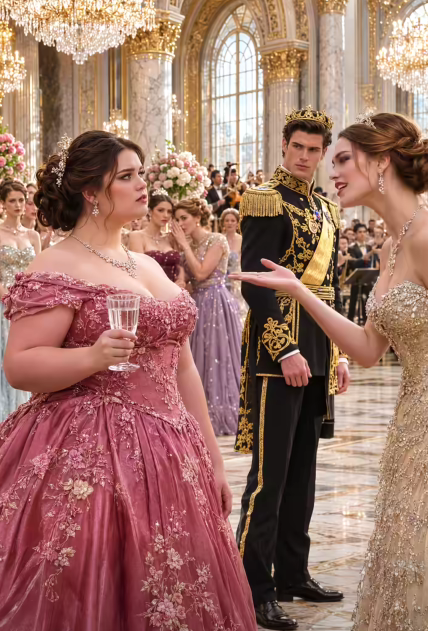
PART 4 – WHAT A QUEEN MUST CARRY
Emily read the council’s recommendation without speaking.
The document contained no insult.
That almost made it worse.
Every sentence was calm, polished, and carefully impersonal.
Her education was respectable.
Her family was respectable.
Her public conduct was respectable.
Yet she lacked what the council called established dynastic standing.
Emily placed the page on the table.
“So I’m respectable but insufficiently decorative.”
Alexander almost smiled.
Dr. Moore did not.
“The language is old-fashioned.”
“The idea seems fairly current.”
Alexander picked up the document.
“They cannot issue a ruling before I have even made a decision.”
“They haven’t issued one,” Dr. Moore said.
“This is a preliminary recommendation.”
“They are preparing the ground.”
“Yes.”
Emily walked toward the window.
Only twenty-four hours earlier, her greatest problem had been keeping water inside a crystal glass.
Now strangers were debating whether her family history qualified her for a marriage nobody had proposed.
The absurdity of it might have been funny if it had not felt so invasive.
Alexander approached her.
“I’m sorry.”
Emily turned.
“For what?”
“This.”
“You didn’t write the law.”
“No.”
“You didn’t write the recommendation.”
“No.”
“And you haven’t asked me to marry you.”
A brief silence followed.
Alexander’s ears became unexpectedly red.
Emily noticed.
So did Dr. Moore, who suddenly became fascinated by the folder in front of her.
Alexander cleared his throat.
“That is technically accurate.”
Emily folded her arms.
“Then we are discussing whether I’m eligible for something that has not happened.”
“Yes.”
“I would like to formally record that royal life is very strange.”
“I will have it carved over the palace entrance.”
Despite herself, Emily laughed.
The sound loosened something inside the room.
Alexander’s expression softened.
Then Emily became serious.
“What happens at the council meeting?”
“They ask questions.”
“About me?”
“About both of us.”
“And if they decide I’m unsuitable?”
Alexander hesitated.
“They can advise my father to withhold approval.”
“Can your father ignore them?”
“In theory.”
“And in practice?”
“In practice, creating a constitutional dispute over a relationship that began yesterday would be considered reckless.”
Emily stared at him.
“A relationship?”
Alexander looked momentarily trapped.
“I meant acquaintance.”
“That was less convincing.”
Dr. Moore closed the folder.
“I believe this is the moment when an archivist should become extremely interested in another building.”
She left before either could object.
Emily looked at Alexander.
He looked at the door.
“She enjoys this.”
“Very much.”
Then the humor faded.
Emily sat beside the fireplace.
“I don’t want you fighting your government because we had one interesting walk.”
“I know.”
“I don’t even know whether I want this life.”
“I know that too.”
“Do you?”
Alexander sat across from her.
“My entire life, people have assumed the difficulty is finding someone willing to become a princess.”
He looked toward the window.
“The real difficulty is finding someone willing to consider everything that title takes away.”
Emily listened.
“You lose anonymity.”
He continued.
“You lose spontaneity.”
“You lose the right to have an ordinary bad day without someone interpreting your expression.”
“You become public property in ways nobody fully explains beforehand.”
His voice had grown quiet.
“I would never ask someone to accept that without knowing what it costs.”
Emily watched him.
“What does it cost you?”
Alexander did not answer immediately.
Then he said, “Sometimes I don’t know whether people agree with me because I’m right or because of who I am.”
There was no self-pity in his voice.
That made the confession more affecting.
“Sometimes I meet someone new and spend weeks wondering whether I am speaking to them or to the version of me they imagined before we met.”
Emily thought of the ballroom.
Twenty women in magnificent gowns.
Nineteen trying desperately to follow his movements.
Perhaps the challenge had revealed more about Alexander than he had intended.
“You made yourself impossible to follow,” she said.
He looked at her.
“During the dance.”
She leaned forward.
“You kept changing direction.”
“Yes.”
“Maybe you weren’t only testing us.”
Alexander became still.
Emily chose her words carefully.
“Maybe part of you wanted proof that everyone would keep following no matter what you did.”
Silence stretched between them.
She wondered whether she had gone too far.
Then Alexander looked down.
“My mother used to say I could hide a question inside a challenge.”
Emily smiled faintly.
“She sounds difficult to argue with.”
“She was.”
He looked at Emily again.
“And usually correct.”
The council interview was scheduled for the following morning.
Emily spent the evening with Vivian, who had postponed her departure after hearing rumors about the recommendation.
“You should wear blue,” Vivian announced, standing in Emily’s dressing room.
Emily looked up from a stack of council biographies.
“Why?”
“It makes you look trustworthy.”
“I am trustworthy.”
“The council does not know that.”
“Then perhaps they should ask.”
Vivian sighed dramatically.
“You are approaching this like a reasonable person.”
“Is that a problem?”
“In a palace?”
Vivian held up a blue gown.
“Potentially catastrophic.”
Emily laughed.
Vivian sat on the edge of the bed.
“Are you frightened?”
The question was so direct that Emily did not bother pretending.
“Yes.”
“Of the council?”
Emily thought.
“No.”
She closed the biography.
“I’m frightened of getting swept into something before I’ve decided whether I actually want it.”
Vivian nodded slowly.
“That is probably the healthiest thing anyone has said during this entire competition.”
Emily looked at her.
“What did you want when you entered?”
Vivian smiled without humor.
“To win.”
“And now?”
“To know why winning mattered so much.”
She smoothed a fold in the blue gown.
“My family has spent years preparing me for impressive things.”
Her voice softened.
“They forgot to ask which impressive things would make me happy.”
Emily understood.
“Will you be all right?”
Vivian’s smile became genuine.
“I think failing at the dance may have been unexpectedly useful.”
The following morning, Emily entered the council chamber wearing the blue gown.
Not because Vivian had insisted.
At least that was what Emily told herself.
Alexander stood when she entered.
Seven council members sat around the long table.
King Frederick occupied the central chair.
Emily had seen him only at a distance the previous evening.
He was a dignified man in his early sixties, with Alexander’s eyes and a quieter presence.
He smiled at Emily.
“Miss Carter.”
“Your Majesty.”
“Please sit.”
The questioning began politely.
Her education.
Her work.
Her family.
Her experience with charitable organizations.
Her understanding of constitutional monarchy.
Emily answered without trying to sound grander than she was.
When she did not know something, she said so.
When asked whether she believed winning the dance proved she was qualified to become queen, she almost laughed.
“No.”
One councillor raised an eyebrow.
“Why not?”
“Because keeping water in a glass is not governing.”
Alexander lowered his head, hiding a smile.
Emily continued.
“It may show patience.”
“It may show adaptability.”
“It may show that I can recognize a problem.”
“But I would be worried about anyone who believed one successful dance qualified them for a lifetime of public responsibility.”
The king’s expression warmed.
Lord Pembroke, attending as an observer, wrote something in his notes.
An elderly councillor named Lady Ashford leaned forward.
“What do you believe a queen’s primary responsibility should be?”
Emily considered the question.
She could have given the expected answer.
Service.
Duty.
Tradition.
Instead, she thought about Queen Margaret’s letters.
“I think she should remember that symbols affect real people.”
Lady Ashford’s expression sharpened.
“Explain.”
“A royal decision may look ceremonial from inside a palace.”
Emily glanced toward Alexander.
“But outside the palace, people may experience it differently.”
“A contest may look harmless to the person who designed it.”
Alexander’s eyes met hers.
“To the person failing in front of hundreds of strangers, it may feel different.”
The room became silent.
Alexander did not look offended.
He looked thoughtful.
Emily continued.
“If public service means anything, it should include noticing that difference.”
King Frederick leaned back.
Lady Ashford nodded once.
The questions continued for nearly two hours.
At the end, the king asked everyone except the council members to leave.
Emily and Alexander walked into the corridor together.
“How badly did I destroy my chances?” Emily asked.
Alexander looked astonished.
“You told the Royal Council my dance challenge was poorly designed.”
“It was.”
“I know.”
She studied him.
“You’re not angry?”
“No.”
He smiled.
“I’m wondering whether my mother would have applauded.”
They waited in the library.
Twenty minutes became forty.
Forty became an hour.
Alexander tried reading.
Emily watched him turn the same page three times.
“You’re terrible at waiting.”
“I am excellent at waiting.”
“You have been reading the table of contents for twelve minutes.”
He closed the book.
“I dislike that book.”
Emily smiled.
A servant entered.
“His Majesty requests your presence.”
They returned to the chamber.
The council members had rearranged themselves.
King Frederick remained seated.
His face revealed nothing.
“Miss Carter,” he began, “the council has not reached a final determination.”
Emily felt her stomach tighten.
Alexander spoke.
“Why not?”
Lady Ashford answered.
“Because the legal standard itself is disputed.”
She opened a thick volume.
“The requirement of suitable standing was written more than a century ago.”
Another councillor continued.
“Traditionally, it has been interpreted to mean noble or dynastic background.”
Emily sat quietly.
Lady Ashford looked at her.
“However, that interpretation is customary rather than explicit.”
Alexander frowned.
“What does the actual clause say?”
The councillor read aloud.
The future consort must possess standing, judgment, and a demonstrated capacity for service consistent with the dignity of the Crown.
Alexander stared at the page.
“That says nothing about nobility.”
“No.”
King Frederick folded his hands.
“Which means the council must decide whether public service can satisfy the standing requirement.”
Emily felt a small spark of hope.
Then the king added, “The vote is divided.”
“How divided?” Alexander asked.
“Three in favor of the traditional interpretation.”
Lady Ashford looked toward Emily.
“Three in favor of a broader one.”
Alexander turned toward the seventh councillor.
The final seat was empty.
“Where is Sir William?”
King Frederick’s expression changed.
“He has recused himself.”
“Why?”
Nobody answered immediately.
Emily noticed Alexander glance toward his father.
“Why?”
The king removed his glasses.
“Because Dr. Moore discovered a conflict of interest.”
Emily’s pulse quickened.
“What kind of conflict?”
The doors opened.
Dr. Moore entered carrying another archival box.
She placed it before the council.
“Sir William served as Queen Margaret’s legal adviser.”
Alexander frowned.
“That was public knowledge.”
“This was not.”
Dr. Moore removed a yellowed memorandum.
“He drafted the original suitable-standing clause review for Her Majesty nine years ago.”
Emily recognized the date.
The same year Queen Margaret had written her name.
Alexander read the memorandum.
His expression changed.
“What is it?”
Dr. Moore looked at Emily.
“Queen Margaret challenged the traditional interpretation herself.”
The archivist opened a second document.
“She believed tying suitability to ancestry would eventually prevent the Crown from choosing capable people from outside a shrinking aristocratic circle.”
Alexander looked at his father.
“You knew?”
King Frederick shook his head.
“Margaret never submitted the proposal formally.”
“Why not?”
Dr. Moore answered.
“She died before completing it.”
The room became still.
Emily felt a sudden sadness for a woman she had never met.
Even years after her death, Queen Margaret’s unfinished questions were still moving through the lives of people she could never have imagined would one day sit together in this room.
Alexander studied the papers.
“Does this settle the vote?”
“No,” Lady Ashford said.
“It changes the context.”
“But not the law.”
Emily looked around the table.
“Then perhaps the council should not change its interpretation because of me.”
Every face turned toward her.
Alexander frowned.
“Emily.”
She met his gaze.
“If the rule is wrong, change it because it is wrong.”
Her voice remained calm.
“Not because the prince happens to like the first woman affected by it.”
Alexander said nothing.
King Frederick’s eyes narrowed with interest.
Emily continued.
“If you rewrite a constitutional tradition to help me personally, then everyone who opposes me will always be able to say I received special treatment.”
“That would follow me into every public decision.”
She looked toward the council.
“If you believe public service should count as standing, say so as a principle.”
“If you don’t, then don’t pretend otherwise because I happened to win a dance.”
Nobody spoke.
Finally Lady Ashford smiled.
It was a small, almost reluctant smile.
“Queen Margaret would have enjoyed you.”
Emily looked down.
“I wish I could have met her.”
Dr. Moore became very still.
Emily noticed.
“What?”
The archivist glanced at the king.
King Frederick gave a slight nod.
Dr. Moore opened the archival box again.
“There is one matter we have not discussed.”
Alexander looked wary.
“Another legal document?”
“No.”
She removed a sealed envelope.
It was old but carefully preserved.
On the front, Queen Margaret had written a date.
The date was six months after the letter mentioning Emily.
Beneath it appeared Alexander’s name.
Dr. Moore handed him the envelope.
“This was stored with instructions that it be opened only if the independence list ever affected a matter concerning your marriage.”
Alexander stared at her.
“You knew this existed?”
“Until this morning, no.”
“The box was miscatalogued after the queen’s death.”
He broke the seal.
Inside were four handwritten pages.
Alexander read the first.
Then the second.
Emily watched emotion move across his face too quickly to identify.
Surprise.
Sadness.
Recognition.
Then something that looked almost like disbelief.
“What does she say?” King Frederick asked.
Alexander did not answer.
His eyes moved to the final paragraph.
Then he looked at Emily.
For several seconds, he seemed unable to speak.
Emily’s heartbeat accelerated.
“Alexander?”
He handed her the letter.
The queen had not written about Emily specifically.
She had written about him.
About the kind of marriage she feared he might someday make.
A marriage chosen because it looked correct.
A marriage built from expectation rather than understanding.
Near the end, Queen Margaret had written one passage in darker ink.
Emily read it silently.
Then aloud.
“If one day you meet someone who refuses to follow simply because you are leading, do not mistake her independence for disloyalty.”
The room was completely silent.
Emily continued.
“If she asks why the glass matters while everyone else is trying not to spill it, listen carefully.”
Her voice faltered.
She looked at Alexander.
The similarity to the previous evening was astonishing.
But the final lines changed everything.
Queen Margaret had explained that the glass was not meant to identify the right woman.
It was meant to reveal something to Alexander.
The person carrying the glass would show him how she responded to pressure.
But Alexander’s behavior would show whether he had learned to stop creating unnecessary pressure merely because he possessed the power to do so.
Emily slowly lowered the letter.
Alexander looked as though someone had opened a window into a room he had kept locked for years.
“My mother wasn’t designing a test for my future wife,” he said.
Dr. Moore shook her head.
“No.”
“She was designing one for you.”
Alexander looked back at the letter.
Emily remembered the nineteen women.
The abrupt turns.
The increasing difficulty.
The satisfaction in his expression whenever he thought someone might finally succeed.
Then she remembered his apology.
His willingness to listen.
His controlled breath in the archive when anger first rose.
He had learned something.
But perhaps not everything.
Alexander folded the letter carefully.
“What do I do now?”
King Frederick answered.
“You decide what kind of man you intend to be before you decide what kind of woman should stand beside you.”
Alexander absorbed the words.
Then a palace messenger entered the chamber.
He bowed.
“Your Majesty, Your Highness.”
The king frowned.
“What is it?”
The messenger held out a sealed document.
“The Royal Council’s clerk has delivered notice of an emergency session.”
Lady Ashford rose.
“Why?”
“The constitutional question has become public.”
Emily felt the room change.
Alexander took the document.
“How?”
“The queen’s memorandum was referenced in a committee filing this morning.”
The messenger hesitated.
“Reporters are already gathering outside the palace.”
Alexander opened the notice.
Emily watched him read.
His face became grave.
“What does it say?”
He handed the page to her.
The council would meet the following morning.
Not merely to decide whether Emily qualified.
They intended to decide whether the Crown would permanently abandon the aristocratic interpretation of suitable standing.
The question was suddenly larger than Emily.
Larger than Alexander.
Larger even than their uncertain relationship.
And beneath the formal notice appeared one final requirement.
Before the council voted, Emily herself would be asked a single question in open session.
Would she willingly accept consideration as the prince’s future consort if the old restriction were removed?
Emily stared at the words.
Until that moment, everyone had been debating whether the kingdom would allow Alexander to choose her.
No one had stopped to ask the more important question.
Whether Emily would choose this life at all.
**–END OF PART 4–CLICK “”NEXT”” AT THE BOTTOM OF THE PAGE TO CONTINUE READING**
✓ Lynn R. Adams
PART 4 – WHAT A QUEEN MUST CARRY Emily read the council’s recommendation without speaking. The document contained no insult. That almost made it worse. Every sentence was calm, polished, and caref…