PART 3: What the Velvet Box Held 053
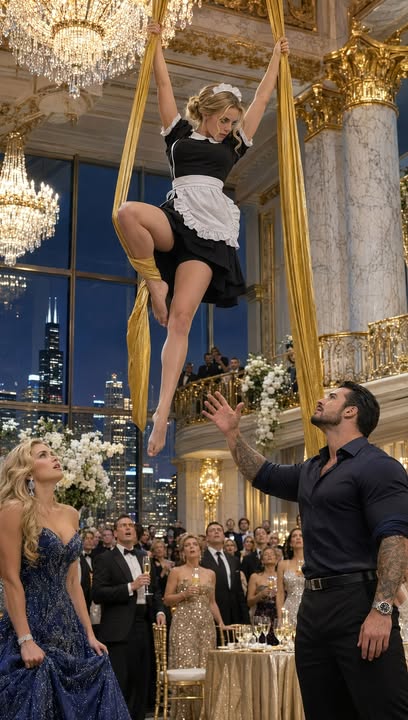
Part 3 – The Name Beneath the Silk
Emily stared at the sentence until the words blurred.
Someone had known about the accident.
Someone had placed ten million dollars beside her name and tied it to the promise Vanessa had made in the ballroom.
She had thought the money was a prize.
Now she wasn’t sure it had ever belonged to Vanessa at all.
The next morning, she folded the attorney’s letter and carried it to the community arts center.
Marisol was unlocking the front door when Emily arrived, a paper cup of coffee balanced in one hand.
“You look as if you’ve been awake all night,” she said.
“I haven’t slept much.”
“Do you want to talk about it?”
Emily glanced toward the children’s drawings in the hallway.
“Not here, if that’s all right.”
Marisol set her coffee down on the reception desk.
“Of course.”
They went into the small movement room, where sunlight lay in pale squares across the floor.
Emily handed her the letter.
Marisol read it slowly, her expression tightening as she reached the last line.
“This is about your accident?”
“It seems to be.”
“Did you know the Whitmore family?”
“No.”
“Did anyone from the circus mention them?”
“Not that I remember.”
Marisol returned the letter.
“Do you want me to call the attorney?”
“No.”
“Do you want Vincent to?”
“No.”
The answer came quickly enough to surprise them both.
Emily folded the paper and slipped it back into her bag.
“I need to know what this is before anyone starts making calls on my behalf.”
“That makes sense.”
“Clara found an old inspection log. She thinks the rigging had been flagged before I fell.”
Marisol’s face softened.
“Do you believe her?”
“I believe she saw something. I don’t know what it proves.”
“And you don’t have to decide today.”
Emily looked around the room.
The scuffed floor, the quiet windows, the children’s bright paintings beyond the doorway—everything here seemed patiently ordinary.
It helped to be reminded that not every question needed an immediate answer.
“I’d still like to teach today,” she said.
“Then we’ll teach.”
The children arrived in a rush of voices and untied shoelaces.
Emily led them through their stretches, helping them find balance without scolding them when they wobbled.
A girl named Ana asked if they could try “the floating arms” again.
Emily showed them how to lift their arms slowly, imagining that their hands were light enough to carry a ribbon of air.
As she moved through the exercise, her left shoulder tightened.
She paused, breathed, and lowered her arm.
No one noticed except Marisol, who stood near the doorway.
Emily’s body still carried its old history, sometimes quietly and sometimes all at once.
When the class ended, Ana lingered beside her.
“Are you coming back next week?”
“If Marisol will have me.”
“We will,” Marisol said from the doorway.
Ana nodded, satisfied, and ran after the others.
Emily watched the empty room settle again.
The movement in her shoulder had eased, but the memory of pain remained, like a note held beneath a song.
She had spent years trying to separate herself from the fall.
Now the past had found a way to enter through a letter.
Clara brought the inspection log to the arts center two days later.
She had placed it in a clear plastic sleeve, its paper faded and creased from being folded away for years.
Emily recognized the troupe’s emblem in the corner, a small black star above a line of red type.
Clara laid it on the table between them.
“I don’t know whether this copy is complete,” she said. “I took it after the accident, when the company was packing up.”
Emily read the handwritten entries.
The page listed dates, equipment, and the initials of crew members responsible for inspection.
Three weeks before her fall, someone had written: Main suspension cable, right side—replace before next engagement.
Below that, in a different hand, was a short note: Replacement deferred. Continue daily checks.
Emily’s fingers rested on the edge of the sleeve.
“Who wrote this?”
“I never found out.”
“And the person who deferred the replacement?”
“There’s an initial, but I can’t tell whether it says M or W.”
Clara leaned over the page.
“I always thought the company would have records somewhere. I didn’t know what to do with the copy after I left.”
“You could have told me.”
“I could have.”
Emily looked up.
“Why didn’t you?”
“I was afraid you’d think I was trying to bring you back to a life you’d fought to leave.”
“I might have.”
“I know.”
Clara sat down, her hands clasped in front of her.
“I also didn’t want to tell you something I couldn’t prove.”
Emily looked back at the faded handwriting.
The note did not prove that the cable had caused her fall.
It did not prove who had made the decision or what they knew.
But it changed the shape of the question.
“You said the equipment was inspected,” Emily murmured.
“That’s what the company told us.”
“And we trusted them.”
“Yes.”
For a moment, they sat without speaking.
Emily remembered the routine before rehearsals: checking the knots, pressing a thumb against the silk, calling out the sequence of moves.
She remembered her fellow performers joking beneath the rigging while the crew worked overhead.
She remembered believing that preparation meant protection.
“What would happen if we showed this to someone?” she asked.
“A lawyer could tell us whether it matters. Maybe there are still company records.”
“I don’t want to start a fight.”
“I’m not asking you to.”
“I don’t want my name in the papers again.”
“I understand.”
“I don’t even know if I want answers.”
Clara nodded.
“Then we don’t have to do anything today.”
That was what Emily had begun to value most about the arts center: the permission to begin without knowing where the beginning led.
She kept the inspection log for the afternoon, then returned it to Clara before they left.
“Can you hold on to it?” she asked.
“Of course.”
“I need time.”
“You have it.”
They stood at the door.
Clara touched Emily’s arm, then withdrew her hand before the gesture became an assumption.
“I’m glad you’re teaching,” she said.
“So am I.”
It was not forgiveness.
It was not a return to the closeness they had once shared.
But it was a small opening, and Emily found she wanted to leave it there.
That evening, Vincent called to ask whether she had received the note he had sent about the arts center’s equipment inspection.
She almost let the call go to voicemail.
Then she remembered that she had agreed to a practical introduction, not a promise to avoid him.
“Yes,” she said when she answered.
“I didn’t mean to intrude.”
“You didn’t.”
“Marisol mentioned the old aerial rig is still waiting for inspection.”
“She told you that?”
“She said it in passing when I called to thank her for meeting you.”
Emily looked at the folded inspection letter on her desk.
“There’s something else I should tell you.”
“Go ahead.”
“The attorney’s letter says the trust was established after an accident involving my old circus.”
Silence followed.
Not the silence of a man preparing an answer, but the kind that suggested Vincent had not expected to hear those words.
“Your accident?” he asked.
“It doesn’t say that specifically. It says the Marlowe American Circus.”
“Did you tell anyone about the letter?”
“Marisol and Clara.”
“Who’s Clara?”
“Someone I worked with.”
“Is she the one who found the inspection record?”
Emily’s fingers tightened around the receiver.
“I didn’t say that.”
“No, you didn’t.”
“Then how do you know?”
“I don’t. I was trying to understand what you meant.”
“You were asking questions like you’d already decided what to investigate.”
“I’m sorry. That wasn’t my intention.”
“Do you know anything about the trust?”
“No.”
“Does your family?”
“I don’t know.”
The admission sounded genuine, but Emily had learned that people could mean something and still cause harm by acting on it.
“Please don’t make calls,” she said.
“I won’t.”
“Not to Vanessa, not to the attorney, not to anyone connected to the circus.”
“All right.”
“I need to know what this means without you arranging the answer.”
“I understand.”
“Do you?”
“I’m trying to.”
“That isn’t a yes.”
“No,” he said. “It isn’t.”
Emily closed her eyes.
She had wanted him to say the perfect thing, then resented him for not knowing what that was.
“Thank you for stopping,” she said.
“I don’t want you to feel I’ve taken control of this.”
“You don’t have to take control to make me feel watched.”
“I’m sorry.”
This time, the apology did not sound like an attempt to close the conversation.
“I’ll leave it with you,” he said.
“Please do.”
They ended the call without deciding what came next.
The following afternoon, Emily was finishing a class when Marisol told her that a visitor had arrived.
“I can ask her to come back,” Marisol said. “She says her name is Vanessa Whitmore.”
Emily’s stomach tightened.
“She’s alone?”
“Yes.”
“Did she say why she’s here?”
“She said she wants to apologize.”
Emily glanced at the children, who were gathering their coats.
“Can she wait until they’ve gone?”
Marisol nodded and returned to the front desk.
Emily finished the class, thanked the children, and watched them scatter down the hallway.
Only when the room was empty did she go to meet Vanessa.
Vanessa stood near the reception desk in a tailored navy coat, her blond hair pinned neatly behind her head.
Without the ballroom lights and the ring she had once displayed for every passing guest, she looked less like a society-page photograph and more like someone who had slept poorly.
She held a leather handbag in both hands.
“Emily,” she said.
“Miss Whitmore.”
“I know I don’t deserve much of your time.”
“Then why come?”
“To say I’m sorry.”
“You said that in the ballroom.”
“I said the words after I’d been caught behaving badly. That isn’t the same thing.”
Emily waited.
Vanessa’s fingers pressed into the handbag.
“I was jealous,” she said. “Vincent was watching you, and I decided that was your fault.”
“I was doing my job.”
“I know.”
“Do you?”
“I do now.”
The words sounded less polished than Emily expected.
Vanessa looked toward the movement room.
“Is this where you teach?”
“Yes.”
“It’s lovely.”
“It’s a room.”
“It’s more than that to the children.”
Emily could not tell whether Vanessa understood the distinction or was simply reaching for something kind to say.
“Why are you here?” Emily asked again.
“Because my family has decided the wager should not be paid.”
“Your family?”
“My father and the trust’s attorney. They say the offer was made in a moment of foolishness and was never meant to be binding.”
“You offered the money publicly.”
“I know.”
“Then why are you telling me?”
“Because I’m the person who made the promise, and I don’t want you to hear a different story from someone else.”
Emily’s gaze held on Vanessa’s face.
“Is the trust real?”
“Yes.”
“Does it belong to your family?”
“I thought it did. I was told it was a family trust.”
“And now?”
Vanessa took a breath.
“Now I’m not sure.”
“What does that mean?”
“It means my father says the money was never mine to promise. The attorney says I shouldn’t have offered it. But when I asked him who the trust was actually for, he told me it was created after the Marlowe Circus accident.”
Emily went very still.
“You knew that?”
“Not before the party.”
“But you know now.”
“I asked after I saw the letter’s reference in the paperwork.”
“Which paperwork?”
“The attorney sent my father a summary after the engagement was called off. I saw the name and recognized it from the news years ago.”
Emily felt the old memory rise: newspaper clippings with the troupe’s name, a small article about an accident during rehearsal, a photograph of a tent she had never seen again.
“Why didn’t you tell me?”
“I’m telling you now.”
“Because you want me to accept the money?”
“No.”
Vanessa’s answer came quickly, then softened.
“I don’t know what I want you to do. I don’t think I have the right to ask anything from you.”
Emily looked toward the window, where the afternoon light was beginning to fade.
“Your family says the wager wasn’t meant to be paid.”
“Yes.”
“And you came here to tell me that.”
“And to apologize.”
“Those are two different things.”
“I know.”
The quiet between them was not comfortable, but it did not feel staged.
Emily had imagined that if Vanessa ever came near her again, she would arrive with excuses or a request.
Instead, she stood in a community center, holding her handbag like a shield, apparently uncertain what the truth required of her.
“Why did you offer the money in the ballroom?” Emily asked.
“I wanted everyone looking at me.”
“You had them looking at you all night.”
“I wanted Vincent to look at me.”
The admission had no sparkle in it.
“I thought if I could make you seem ridiculous, he’d stop noticing you.”
“I wasn’t trying to get his attention.”
“I know that now.”
“You could have said that before.”
“I could have.”
Vanessa lowered her eyes.
“I don’t expect you to forgive me.”
“Good.”
A small, rueful breath escaped Vanessa.
“That’s fair.”
“What will you do if your family refuses to release the money?”
“I don’t know.”
“Will you tell the truth about the wager?”
“I should.”
“That isn’t what I asked.”
Vanessa looked at her.
“Yes,” she said. “I’ll tell the truth.”
Emily watched her carefully.
“Even if it upsets your family?”
“Yes.”
“Even if people ask why you made the offer?”
“Yes.”
“Even if they ask what happened to the money?”
Vanessa hesitated.
Then she said, “Yes.”
Emily did not know whether to believe her, but she believed Vanessa had understood the cost of the answer.
“Why was there a trust in the first place?” Emily asked.
“I don’t know. My father told me it was established by my grandmother, but the attorney said it was funded by someone else.”
“Who?”
“I haven’t found out.”
“Did the attorney tell you?”
“He said the records were private and that he needed authorization to share them.”
“From your father?”
“From the people who created the trust.”
Vanessa’s expression shifted, faintly troubled.
“He said the person who established it is no longer alive.”
Emily’s pulse quickened.
“Who?”
“He wouldn’t tell me.”
“Did you ask?”
“Yes.”
“And?”
“He repeated that he couldn’t.”
For a few seconds, the reception area seemed to lose its sounds.
Emily thought of the velvet box, the attorney’s formal letter, the trust tied to the accident she had tried to forget.
She thought of Vincent’s careful question on the phone and the promise he had made not to investigate without her permission.
“Thank you for telling me,” she said.
Vanessa nodded.
“I wish I had done better.”
“So do I.”
Vanessa turned toward the door, then paused.
“One more thing,” she said. “The attorney mentioned that the trust could be claimed in two ways. If it’s treated as the wager, you’d have to publicly accept the award. If it’s treated according to the original purpose, the money might go somewhere else.”
“Where?”
“He wouldn’t say. He said the terms needed to be reviewed.”
“Why are you telling me now?”
“Because you should know the money may not be what either of us thought it was.”
Vanessa left without asking Emily to forgive her.
Emily remained beside the reception desk until Marisol came out from her office.
“What happened?”
“She told me the trust began after the accident.”
Marisol’s expression grew thoughtful.
“And that the family won’t pay the wager?”
“Yes.”
“What do you think?”
“I think there’s more to the story.”
“Do you want to call Vincent?”
“No.”
The answer came more slowly this time.
“I want to decide what to do first.”
Marisol rested a hand on the desk.
“Then do that.”
Emily went back to her room that evening and took the letter from the drawer.
The words at the bottom had not changed.
This trust was established following the accident involving members of the Marlowe American Circus.
Yet now the sentence felt less like a clue and more like a door whose other side she could not see.
She considered calling Clara, then set down the phone.
She considered calling Vincent, then set it down too.
It was not that she wanted to shut them out.
She wanted to be certain that when she stepped toward the truth, the step belonged to her.
The next morning, Vincent was waiting near the staff entrance.
He did not block her way.
He stood several feet back, hands visible at his sides, and did not approach until she stopped.
“Vanessa visited me,” Emily said.
“I heard she went to the arts center.”
“From whom?”
“Marisol called me to ask if you wanted privacy. She didn’t tell me what you discussed.”
“Did you call her?”
“No.”
“Did you ask anyone else about the trust?”
“No.”
“Did you contact the attorney?”
“No.”
Emily studied him, trying to determine whether his restraint was an effort or a performance.
“How did you know the trust was connected to the circus?”
“I didn’t.”
“Do you know who created it?”
“No.”
“Do you know your mother’s name appears anywhere in the records?”
He went completely still.
Emily felt the change in him before he spoke.
“What makes you ask that?” he said.
“Vanessa said the person who created the trust is dead.”
“That doesn’t mean it was my mother.”
“No. It doesn’t.”
He looked toward the quiet garden beyond the entrance.
“My mother supported several arts and medical charities,” he said. “She did some things privately, and I didn’t always know the details.”
“Could she have known about my accident?”
“I don’t know.”
“Could she have paid for my surgery?”
His gaze returned to hers.
“I don’t know.”
The words were measured, but something in his face had shifted, opening a space for a possibility he had not considered.
“If she did, would you want to know?” Emily asked.
“Yes.”
“Why?”
“Because it would be part of her life. And because you deserve to know where the help came from.”
Emily looked at him, remembering how he had left the choice of a training space with her, how he had accepted her no about the money, how he had promised not to make calls.
“Would you investigate?” she asked.
“Not unless you wanted me to.”
“What if I don’t know yet?”
“Then I’ll wait.”
“You might learn something by waiting.”
“I can live with that.”
The answer did not erase her caution.
It did make her think that he understood what she was asking.
“I don’t want you using your name to make people answer,” she said.
“I won’t.”
“Not even if you think it would help me.”
“Not even then.”
“Thank you.”
She started toward the staff corridor.
“Emily,” he said.
She turned.
“If you decide you want to speak to the attorney, I can put you in touch without calling him first.”
“That would be practical.”
“I can give you his number.”
“Not yet.”
He nodded.
There was no disappointment in his face, or if there was, he did not ask her to manage it.
Emily went inside.
She spent the day thinking about the possibility that Vincent’s mother had been connected to her past.
It seemed too improbable to be true and too important to ignore.
She pictured an unknown woman reading a report about an injured performer and choosing to help.
She pictured another possibility: that the money had been set aside for reasons she still did not understand, and that her name was merely one piece of a larger history.
By evening, she had decided to ask the attorney for a copy of the trust documents.
She would do it herself.
She had just picked up the phone in the staff room when Marisol called from the arts center.
“Emily, I’m sorry to call so late,” she said. “A woman named Vanessa is here with a letter from the attorney. She says she found something in the trust file that you should see before you contact him.”
“Why is she at the center?”
“She said she didn’t want to bring it to the estate.”
Emily looked down at the phone in her hand.
“Did she say what she found?”
“No. Only that the attorney had included a page he meant to remove from the copy she was given.”
Emily’s pulse began to quicken.
“Can you ask her to wait?”
“I already have.”
“Don’t let her leave.”
Marisol was quiet for a moment.
“Emily, she says the page has your name on it.”
Emily set the receiver down, then picked it up again as if the weight of it had changed.
“What exactly does it say?”
“I don’t know. Vanessa said there’s a handwritten note attached.”
The room around Emily seemed to grow still.
She thought of the inspection log, the deferred replacement, and Clara’s uncertain initials.
She thought of the bank draft and the sentence that tied the trust to the accident.
Most of all, she thought of Vincent saying he would wait.
“Can you read the first line?” Emily asked.
Marisol spoke to someone on the other end, then returned.
“Vanessa says it begins, ‘For the performer whose name I never learned.’”
**–END OF PART 3–CLICK “NEXT” AT THE BOTTOM OF THE PAGE TO CONTINUE READING**
* * *
[PREVIOUS: PART 2](https://storyly.idolsgift.com/blog/part-2-what-the-velvet-box-held-053) | [NEXT: PART 4](https://storyly.idolsgift.com/blog/part-4-what-the-velvet-box-held-053)
✓ Lynn R. Adams
Part 3 – The Name Beneath the Silk Emily stared at the sentence until the words blurred. Someone had known about the accident. Someone had placed ten million dollars beside her name and tied it to …