PART 3: The Woman Who Came Back 041
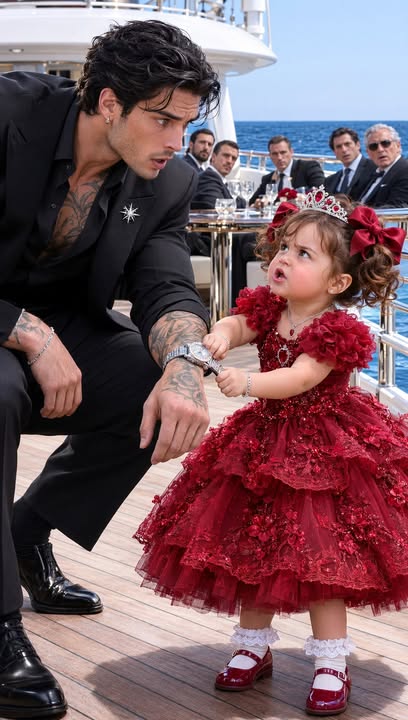
Part 3 – The Scratch in the Silver
The words settled between us, heavier than the phone in Elena’s hand.
“I never knew whether that warning was true,” she had said.
“Who gave it to you?” I asked.
She lowered her gaze to Rosie, asleep against her shoulder.
“Someone who had been inside your security circle.”
“That narrows it to half the people I trusted.”
“I know.”
“Did they give you a name?”
“They told me names wouldn’t help, because the person passing information might not be the one making decisions.”
I leaned back against the seat, trying to separate what I knew from what I feared.
The yacht’s lights had disappeared behind the cliffs, leaving only a faint haze against the night.
“Did you believe them?” I asked.
“I believed enough to leave.”
“You could have come to me.”
“I thought I was protecting you.”
“By letting me believe you were dead?”
Her face tightened.
“I thought that was the only way to make sure you didn’t come looking.”
“You knew me better than that.”
“I did.”
The answer was quiet, but it carried no defense.
I looked toward Rosie.
She slept with one hand curled into the fabric of Elena’s jacket, her mouth slightly open, the ruby bows in her curls crooked from the night’s escape.
I had spent years thinking grief was an empty room.
Now I understood it could also be a locked door, with someone you loved standing on the other side.
“I need to see what’s on that phone,” I said.
Elena turned the screen toward me.
The message remained unchanged.
You took the wrong child.
A second line still glowed beneath it.
Ask Elena why she left you behind.
“Did the message come from Michael’s number?” I asked.
“No number is displayed.”
“Could you open the sender details?”
“I don’t want to touch anything until we know whether the phone has been altered.”
“You picked it up.”
“I used the edge of my sleeve.”
“Convenient.”
Her eyes lifted to mine.
“Do you want to accuse me, or do you want to understand what’s happening?”
“I want to know what I can believe.”
“Then start with what you can see.”
She placed the phone on the seat between us.
The message had arrived on a device taken from the yacht, but neither of us knew who had sent it or whether it had been waiting for us there.
I forced myself to look at the problem as I would have looked at a contract: carefully, without mistaking suspicion for proof.
“Elias had Michael’s phone,” I said.
“So you said.”
“He claimed he needed the override code to unlock the emergency exits.”
“Did you see him try?”
“I saw a green light behind him.”
“That could mean the doors were open.”
“Or that he wanted me to think they were.”
Elena nodded, taking in the distinction.
“Did he have the phone before the explosions?”
“I don’t know.”
“Did you see Michael on the yacht?”
“No.”
“Did anyone?”
“Six families were aboard. Half the guests would have had an excuse to carry a phone that looked like his.”
“Did you recognize the device he was holding?”
“It was his case.”
“Could it have been another phone in the same case?”
I looked at her.
“You think he might have been framed.”
“I think you have too little evidence to decide either way.”
The measured answer irritated me precisely because it was sensible.
“You warned me not to trust the man holding the phone.”
“I warned you not to trust the person who had access to it.”
“You made it sound as though you knew who he was.”
“I knew you would recognize him.”
“That isn’t the same thing.”
“No,” she said. “It isn’t.”
Rosie stirred and reached toward the dashboard, her fingers opening and closing.
Elena guided her hand back to her own shoulder, and the child settled again.
The small gesture reminded me that Elena had been doing this alone for years.
She knew how to move without waking Rosie, how to reassure her without breaking the fragile edge of sleep.
I had been standing in the center of a world that assumed I would inherit everything.
Elena had been learning how to carry our daughter through it unseen.
“Where were you taking her?” I asked.
“To a safe place.”
“Where?”
“I can’t tell you yet.”
“Still?”
“I need to know whether your security people can trace you.”
“My security people are looking for me right now.”
“That’s exactly why I can’t tell you.”
“I own the team.”
“And if the warning I received was true, ownership doesn’t make them safe.”
I glanced at the phone again.
“You’re asking me to trust a warning from someone who wouldn’t name themselves.”
“I’m asking you not to dismiss the possibility.”
The speedboat floated quietly in the inlet while Elena listened to the engine.
She checked the navigation screen, then turned the wheel a few degrees, moving us deeper beneath the shadow of the cliffs.
“How long can we stay here?” I asked.
“Not long.”
“Why?”
“The boat’s signal may still be visible to anyone scanning the harbor.”
“Then we keep moving.”
“I need to check the fuel.”
She leaned forward, keeping one arm around Rosie as she reached for a small control panel.
The phone buzzed again.
Elena froze.
This time the screen showed an incoming call from a contact saved as **Elias**.
My first instinct was to answer.
Elena caught my wrist.
“Wait.”
“If he’s calling, he may have got off the yacht.”
“Or someone may be using his phone.”
“Would Michael have his number?”
“Your brother might have any number he wanted.”
“Elias has been with me for nine years.”
“And I have been dead for six.”
I pulled my hand away, then immediately regretted the sharpness of the motion.
Elena looked down at Rosie, not at me.
The phone stopped ringing.
A moment later, a voice message appeared.
I pressed play before I could talk myself out of it.
The connection hissed with wind and static.
Then Elias spoke.
“Alexander, if you can hear this, the exits are open. I made it to the tender with two of the deck crew.”
He paused.
A faint sound came through the recording, as though he had turned away from the phone.
“I found another message on Michael’s device. It’s addressed to someone named—”
The audio cut off.
I played it again.
The same abrupt silence followed the word named.
“Was that the whole message?” Elena asked.
“It ends there.”
“Could he have been interrupted?”
“Possibly.”
“Or could the recording have been edited?”
“Also possible.”
I checked the time stamp.
The message had been recorded four minutes earlier.
“Can you call him back?” Elena asked.
“I can try.”
I tapped the call button, but the signal showed no service.
The cliffs blocked the connection.
“Do you recognize the voice?” Elena asked.
“I know Elias’s voice.”
“That isn’t what I meant.”
I replayed the message, listening past the static and the broken ending.
There was something faint beneath Elias’s words, a repeating electronic tone that might have been an alert from the yacht’s damaged systems.
It might also have been a ticking sound.
Rosie shifted in her sleep.
Elena noticed and moved her closer.
“Don’t,” she whispered.
“What?”
“Not while she’s trying to sleep.”
I lowered the volume.
The phone’s screen dimmed.
For a few seconds, neither of us spoke.
“Is she always this alert to sounds?” I asked.
“Not always.”
“But she recognized the watch.”
“Yes.”
“How did you teach her?”
“Slowly.”
“That still doesn’t tell me how a toddler learns the difference between an ordinary watch and a bomb.”
“It wasn’t a lesson about bombs.”
“What was it about?”
“Listening.”
Elena brushed a curl away from Rosie’s forehead.
“When she was very small, she would wake at a particular sound outside our window.”
“A ticking sound?”
“A faint mechanical click, repeated at regular intervals.”
“From what?”
“I never found out.”
“Someone was watching the cottage?”
“I don’t know. Once I heard it again in the hallway of a hotel.”
“And you decided to train her to recognize it?”
“I decided to make a game out of noticing sounds, because she was frightened and I needed her to feel that fear could be useful.”
I looked at Rosie’s sleeping face.
“She wasn’t guessing, then.”
“No.”
“She knew the watch was dangerous.”
“She heard the sound she had learned to notice.”
The memory of the explosion returned, bright and brutal, followed by the sight of Rosie pointing at Frank’s jacket.
“Tick-tock! Dat one!”
“What about Frank?” I asked. “She pointed at his jacket before we found the transmitter.”
Elena’s expression changed.
“Did he have a ticking device?”
“There was a remote transmitter.”
“Did it make a sound?”
“I don’t remember.”
“Could Rosie have heard it?”
“She was close to him.”
“That’s different from knowing what it was.”
“You’re saying her warning wasn’t intuition.”
“I’m saying she had a reason to recognize a sound, and someone knew exactly where to place the watch.”
The thought chilled me more than the sea air.
“Someone knew she would hear it.”
“Or someone knew she had been taught to.”
“You think the person who placed the bomb knew about Rosie.”
“I think the timing is too strange to ignore.”
I looked at the black water.
Someone had brought Rosie onto my yacht, or let her come aboard, while a bomb was attached to the watch on my wrist.
Someone had known Elena would arrive.
Someone had placed a photograph of Rosie inside Frank’s jacket.
The pieces did not yet form a picture, but they all seemed to point toward the same unseen hand.
“Did anyone know she could recognize the sound?” I asked.
“Only me, as far as I know.”
“And whoever was following you.”
“Perhaps.”
“Then you believe they taught her to recognize it?”
“No. I taught her.”
“But someone could have observed.”
Elena’s silence was answer enough.
I looked back at her.
“You said you were trying to keep her alive.”
“I was.”
“You put her in a place filled with armed men and a bomb.”
“I didn’t bring her to the yacht.”
“Then who did?”
“I don’t know.”
“You keep saying that.”
“Because I won’t invent answers to make this easier.”
I felt anger move through me, but it had nowhere useful to go.
Elena wasn’t trying to soothe me with a story.
She was giving me a truth with missing pieces, and I had to decide whether to wait for the rest.
Rosie woke with a soft whimper.
Elena pressed a kiss to her temple.
“Are we going home?” Rosie asked.
“Soon,” Elena said.
“Dada come too?”
I crouched beside her.
“If your mother says it’s all right.”
Rosie looked at Elena with solemn patience.
“Dada come.”
Elena’s mouth softened.
“He can come with us for now.”
The words were careful, and I understood the boundary in them.
For now.
It was more than I had expected and less than I wanted.
Rosie reached for me, and I offered my hand.
She folded her fingers around one of mine.
“Dada stay,” she said.
“I’ll stay.”
Elena looked at me, and something passed across her face that might have been gratitude or fear.
Perhaps it was both.
She checked the navigation screen again.
“We need to move.”
“Where?”
“A place where we can talk without being seen from the harbor.”
“That sounds like a destination you still won’t name.”
“I’ll tell you once we’re there.”
I rose and moved to the rear bench.
The seat was narrow, and the boat rocked gently beneath us.
Elena handed me a folded life jacket for Rosie, showing me how to fasten the small buckles without disturbing her.
Her hands were efficient, but her fingers trembled once as she adjusted the strap.
I caught her wrist lightly.
She looked up.
“You’re shaking.”
“I’m cold.”
“You’re lying.”
“I’m also cold.”
For a moment, we stood close enough to remember the life we had once shared without having to say it aloud.
Then Rosie tugged at Elena’s sleeve, and the moment passed.
The little girl had spotted my bracelet.
She leaned forward, her eyes fixed on the silver links around my wrist.
“Mommy has.”
Elena’s face went still.
“Does she have one like it?” I asked.
“Not exactly,” she said.
I slid the bracelet from my wrist and held it out.
The silver was worn at the clasp, the engraving faded from years of handling.
Elena looked at it but didn’t take it.
“You gave me this,” I said.
“I remember.”
“You said there were only two.”
“There were.”
“Where is yours?”
She hesitated, then reached beneath the collar of her shirt and drew out a thin chain.
A matching silver bracelet hung from it.
The sight of it struck me with more force than the messages on the phone.
I remembered the day I had given it to her.
We had been standing in a small jewelry shop near the harbor, arguing about whether the engraving should be on the inside or the outside.
She had chosen the inside, saying promises mattered more when no one else could read them.
I had made the mistake of believing that the promise itself was enough.
“May I see it?” I asked.
Elena rested the bracelet in her palm.
I turned it over.
A tiny scratch ran across one of the links, just beneath the clasp.
My thumb stopped.
“I made that mark.”
She watched my face.
“You remember?”
“I caught it with the clasp when I repaired it.”
“You told me you’d polished it out.”
“I didn’t.”
The scratch was small, almost invisible beneath the moonlight.
But I remembered the afternoon in our apartment, the rain on the windows, Elena sitting at the kitchen table while I tried to repair the bracelet with the wrong tool.
I had apologized for the mark.
She had laughed and told me she preferred things that showed they had been held.
“You kept it,” I said.
“I did.”
“Even after you left.”
“Yes.”
“Why?”
Her fingers closed around the bracelet.
“Because some things were true even when everything else wasn’t.”
The words softened something in me, though they didn’t repair it.
I placed my own bracelet back on my wrist.
The silver looked dull against my skin.
For years, I had worn it as a relic of the woman I believed I had lost.
Now Elena wore its twin as proof that the woman I had lost had been alive all along.
“Why didn’t you send it to me?” I asked.
“I thought about it.”
“That would have changed everything.”
“I didn’t know that.”
“You didn’t think I’d recognize it?”
“I knew you would.”
The answer was honest enough to hurt.
“Then why keep it?”
She looked down at the tiny scratch.
“Because I couldn’t make myself throw away the last thing I had from the person I thought I’d lost.”
“I was alive.”
“I didn’t know that.”
“And I didn’t know you were.”
She raised her eyes to mine.
For a moment, the years between us seemed less like a wall and more like a wound neither of us knew how to touch.
The phone buzzed again.
Both bracelets caught the faint screen light as we turned toward it.
A new message had appeared beneath the others.
**Ask her what she saw in the hospital.**
Elena’s expression drained of color.
I glanced from the message to her face.
“What did you see in the hospital?”
She took a breath, but the words did not come.
Rosie leaned against her, sensing the change.
“Mommy?”
Elena cupped the back of her head.
“It’s all right, sweetheart.”
The phone buzzed once more.
A new file appeared, sent from an unknown contact.
Its title was a date from six years ago: the night Elena’s car had gone over the coastal road.
I looked at her.
“Did someone send you this?”
“No.”
“Have you seen it before?”
“No.”
“Do you know what’s in it?”
She didn’t answer.
I opened the file.
A photograph filled the screen, grainy and yellowed by the hospital lights.
Elena was lying in a narrow bed, her face bruised, her eyes open.
Beside her stood a doctor I recognized from the report that had confirmed her death.
Across the lower edge of the image, someone had typed a single line.
**She woke before the funeral.**
**–END OF PART 3–CLICK “NEXT” AT THE BOTTOM OF THE PAGE TO CONTINUE READING**
* * *
[PREVIOUS: PART 2](https://echoesofstories.idolsgift.com/blog/part-2-the-woman-who-came-back-041) | [NEXT: PART 4](https://echoesofstories.idolsgift.com/blog/part-4-the-woman-who-came-back-041)
✓ Lynn R. Adams
Part 3 – The Scratch in the Silver The words settled between us, heavier than the phone in Elena’s hand. “I never knew whether that warning was true,” she had said. “Who gave it to you?” I asked. …