PART 3: The Woman at the Door 046
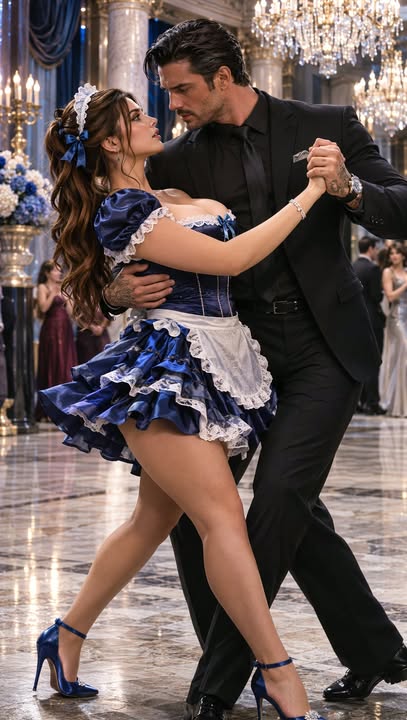
Part 3 – The Date on the Photograph
Elena drew a breath.
“The rest,” she said, “is why your father vanished—and why he made me promise never to tell you until it was safe.”
“Then tell me what you can,” I said.
Her eyes moved briefly to Vincent, who remained behind me, still as a figure carved from the gray morning light.
“I can tell you what I remember,” she replied. “But not everything I remember is proof, and some of it may be wrong.”
“That’s better than silence.”
Elena looked down at the photograph between us.
“Daniel worked for a firm that handled accounts for several businesses tied to the Hale family,” she said. “At first, he believed it was ordinary work. Then he started finding payments that didn’t belong—money moved through legitimate companies and into accounts he couldn’t trace.”
Vincent’s face tightened, but he said nothing.
“Did my father tell you about the photograph?” I asked.
“No. I found it after he left.”
“Why did he meet Vincent’s father?”
“I don’t know.”
“You said you knew why he vanished.”
“I said I knew the reason he gave me.” Elena’s voice softened. “He told me that he’d found something dangerous, and that he had to disappear for a while. He asked me to keep you safe and never tell you where he was going.”
“Did he say he’d come back?”
“He said he would do everything he could.”
The carefulness of her answer hurt more than a lie would have.
I looked down at the date again.
The photograph had been taken after the time I’d been told my father disappeared, but I couldn’t tell whether that meant he had stayed nearby, returned briefly, or never vanished in the way I had imagined.
“Why keep this?” I asked.
“I didn’t know what it meant. I kept it because it was his.”
“Did you ever try to find him?”
“Yes.” Elena’s hands tightened around her cup. “More than once. I was told to stop asking questions. After a while, I believed that looking for him could put you at risk.”
Vincent finally spoke.
“Who told you that?”
Elena looked at him.
“A man who worked for your father.”
“His name?”
“I don’t remember.”
“Or you don’t want to say?”
“Vincent,” I said, turning toward him.
He met my eyes, and something in his expression loosened.
“I’m sorry,” he said. “I’m trying to understand.”
“So am I.”
Elena folded her hands on the table.
“I didn’t come here to accuse anyone,” she said. “I came because I learned that Clara was close to you, and I feared she might be drawn into the same old danger without knowing why.”
“I’m not asking her to investigate anything,” Vincent replied.
“But your family is part of the story whether you ask her or not.”
The words settled between them, neither accusation nor reassurance.
I placed the photograph on the table.
“Can I keep it?”
“Of course.”
I slid it into my purse with careful fingers, as if the paper might tear under the weight of what it contained.
Elena watched me.
“There’s something else,” she said. “Your father left a few boxes with me before he disappeared. I brought them to my apartment. I haven’t opened them in years.”
“Why not?”
“I thought I was keeping a promise.” Her gaze lowered. “And I was afraid that if I found anything, I would have to decide whether to tell you.”
“What changed?”
“Seeing you beside Vincent.”
I glanced at him.
Elena continued, “It made me realize the past might have already found you.”
Vincent’s jaw set, but he did not interrupt.
“I want to see the boxes,” I said.
“I’ll take you to them.”
“Today?”
“If you’re ready.”
I looked at Vincent, expecting him to offer to come along, and saw him weighing his words.
“I can drive you,” he said. “Or I can arrange a car and wait wherever you prefer.”
“I’d like to go with Elena alone.”
His gaze held mine for a moment, then he nodded.
“All right.”
The ease with which he accepted the answer unsettled me almost as much as if he had argued.
“You’ll be at the house?” I asked.
“Yes.”
“I’ll call you when I’m done.”
“Please do.”
Elena stood and gathered her coat.
“I’m sorry,” she said to Vincent. “I know I’m asking Clara to step into a history that belongs partly to your family.”
“You’re not asking her to do anything,” he replied. “She’s choosing.”
For the first time, Elena’s expression softened toward him.
“That distinction matters.”
It mattered to me, too.
Outside the café, the morning had brightened, though the sky remained clouded over the river.
Elena’s car was an older blue sedan with a cracked leather seat and a small paper bag on the passenger floor.
We drove through streets I knew well but had never traveled with her.
For a while, she kept both hands on the wheel and let the silence stretch.
I watched the buildings pass and tried to imagine what it would have been like to know I had an aunt all along.
“Did you and my father fight?” I asked.
“Sometimes.”
“About what?”
“About how much to tell you.”
I turned toward her.
“You wanted him to tell me about the accounts?”
“I wanted him to let you know that the world wasn’t always as simple as he wished it were.” She glanced at me briefly. “He thought keeping your childhood peaceful was the greatest kindness he could give you.”
“Was it?”
“I don’t know.” Her voice caught slightly. “I thought it was, until I saw how much of your life had been built around an absence you weren’t allowed to question.”
I looked out the window again.
“What was he like when I was little?”
Elena smiled, but the expression carried sadness.
“He was patient. Terrible at fixing things, though he insisted he could repair anything with enough time and string.”
“That sounds like him.”
“He used to sing while cooking.”
“I remember.”
“Badly.”
A laugh escaped me before I could stop it.
For a few seconds, she was no longer a stranger with frightening news.
She was a woman who remembered my father’s off-key songs, and the memory joined mine without asking permission.
Elena’s apartment was in a modest brick building on a quiet residential street.
She led me up one flight of stairs and unlocked a narrow door.
The rooms were neat, filled with books and small framed photographs.
A photograph of a younger Elena and my father stood on the mantel, both of them laughing at something outside the frame.
I stopped in front of it.
“You were close.”
“We were, once.”
“Why did you lose touch?”
“Fear, pride, and too many years spent believing that the other person had chosen silence.” She took off her coat. “It’s a common way to lose someone, even when they’re still alive.”
I wondered whether she meant my father, herself, or all of them.
The boxes sat beneath a table in the spare room.
They were plain cardboard, secured with tape that had yellowed with age.
Elena knelt beside them.
“I didn’t open them,” she said.
I crouched opposite her.
“Not once?”
“Not once.”
“Why did you keep them?”
“Because he asked me to hold them until you were old enough to decide what to do with them.”
I stared at the taped seams.
“Was I ever too young to decide?”
“I think he meant when you were old enough to understand what they might contain.”
“That still leaves a lot of room for interpretation.”
“Yes,” Elena said. “It does.”
She brought scissors from the kitchen, then handed them to me.
I cut the tape on the smaller box.
Inside were books, a handful of letters, a tarnished fountain pen, and a folded wool scarf I recognized from childhood.
My fingers went still on the scarf.
It smelled only of dust, but for an instant I imagined the faint scent of my father’s soap.
Elena sat down beside me.
“He wore that every winter,” she said.
“I thought it was lost.”
“He gave it to me before he disappeared.”
I looked at her.
“Why didn’t you give it to me?”
“I couldn’t bear to part with it then. Later, I didn’t know how to explain why I’d had it.”
The answer was imperfect, but it sounded true.
I put the scarf carefully across my lap.
The letters were mostly ordinary: notes to friends, receipts, a list of books my father had meant to borrow from the library.
Nothing at first glance suggested a secret life.
The second box held account books, folders, and a small wooden music box.
I recognized it immediately.
My father had given it to me when I was seven.
It was painted with a bluebird and a field of tiny white flowers, and it played a slow, wavering melody whenever I turned the brass key on its side.
I had lost it years later and assumed it had been thrown away.
I lifted it from the box.
“Where did this come from?”
“It was with the things he left me,” Elena said. “I thought it was yours.”
I turned the key, and the familiar tune emerged, faint but intact.
My chest tightened.
The music had once soothed me when I was frightened of thunderstorms.
I remembered sitting beneath a blanket in my father’s lap, listening until the rain grew quiet.
When the melody stopped, I noticed a slight rattle inside.
I shook the box gently.
Something clicked against the wood.
Elena leaned closer.
“There’s something in it.”
The music box had a tiny seam along the base.
I ran my fingernail over the edge, searching for a latch.
A thin panel shifted beneath my thumb.
The piece of wood lifted free, revealing a small hollow compartment.
Inside lay a brass key, darkened with age.
For several seconds, neither of us spoke.
I picked it up.
The key was cold, with a number stamped near its bow: 417.
“Did you know about this?” I asked.
Elena stared at it.
“No.”
“Did you put it there?”
“No, Clara.”
I believed her, or at least I believed that she did not remember doing so.
The key rested in my palm, small enough to have been hidden from a child but deliberate enough to have survived years inside the music box.
I returned to the larger box.
“Maybe there’s something else.”
The folders contained old bank statements, tax papers, and business records with names I did not recognize.
Some pages had been marked in my father’s careful handwriting.
There were dates, account numbers, and columns of figures that seemed ordinary until I noticed repeated payments to the same three companies.
A note in the margin read: “Not a clerical error.”
I touched the words.
“What does that mean?”
Elena looked over my shoulder.
“I don’t know.”
“Did you ever see these before?”
“No.”
I studied the page, trying to see what my father had seen.
For someone who had believed her father’s life to be entirely ordinary, I was beginning to understand how quickly ordinary papers could become evidence.
A few minutes later, my phone rang.
Vincent’s name appeared on the screen.
I answered.
“Are you all right?”
“Yes. We found some of my father’s things.”
“Anything that concerns the photograph?”
“I don’t know yet. There’s a key and some records.”
A pause followed.
“Would it help if I came over?”
I looked at Elena.
She gave a small, uncertain nod, leaving the choice to me.
“Not yet,” I said. “I need to go through things first.”
“All right.”
“Are you upset?”
“I’m trying not to make this about me.”
“That isn’t an answer.”
“No,” he said. “I’m not upset with you. I’m worried about what you might find, and I don’t know where I fit into it.”
The honesty in his voice made my grip on the phone loosen.
“You don’t have to fit anywhere right now.”
“I know.” He exhaled softly. “I’m working on remembering that.”
“I’ll call you later.”
“I’ll be here.”
When the call ended, Elena watched me closely.
“He cares about you.”
“I know.”
“Do you trust him?”
“I did.”
“And now?”
“I don’t know what I trust.” I looked at the photograph in my purse, then at the papers spread across the floor. “I’m trying to find out.”
Elena nodded.
“Your father used to say that uncertainty wasn’t the same as danger.”
“Did he?”
“He said it when I was worrying about every choice he made.”
I smiled faintly.
“That sounds familiar.”
We searched the remaining papers until the afternoon light began to fade.
Nothing explained the key, the photograph, or the account books.
But I found a receipt for a storage locker, its date nearly a year after the date on the photograph.
The locker number was blurred, though the name of the facility remained legible.
Elena said she had never seen it before.
I took a picture of the receipt and tucked the original into my purse.
By the time I returned to Vincent’s house, the sky had turned the color of wet slate.
He was in the library, alone, with a cup of untouched coffee beside him.
He stood when I entered.
“Did you find anything?”
“A key, old business records, and a storage receipt.”
“Nothing that explains why your father met mine?”
“Not yet.”
He looked at my face as if trying to decide whether I wanted him to ask more.
I placed the brass key on the desk between us.
“Do you recognize this?”
He picked it up but did not turn it over.
“No.”
“The number is 417.”
“That could be anything.”
“That’s what I thought.”
He set the key down again.
“Did Elena tell you anything else?”
“She told me what she remembered. She doesn’t know why my father met your father, or why he vanished.”
“Do you believe her?”
“I believe she’s trying to tell the truth as she understands it.”
Vincent nodded.
It was the same answer he had given me earlier about his own knowledge, and hearing it from my mouth made me wonder how often trust depended on accepting that someone could be honest without being certain.
He gestured toward the leather chair.
“Would you like to sit?”
“I’d rather stand.”
“All right.”
The simple acceptance made the room feel less like a place where decisions were made for me.
“Vincent,” I said, “I need to ask you something, and I don’t want you to answer just because you think it will reassure me.”
“Ask.”
“Did your father ever tell you about Daniel Bennett?”
He took a moment before answering.
“No.”
“Did you search his office after he died?”
“Yes, years ago. I found business records, correspondence, and things that belonged to the company. Nothing about your father.”
“Could someone have removed something?”
“Someone could have. I can’t say whether they did.”
“That’s the first answer you’ve given me that sounds like the truth is bigger than what you know.”
“I don’t know the truth yet.”
“Do you want to?”
“Yes.”
“Even if it damages your family?”
His gaze held mine.
“I don’t know what it will damage.” He paused. “But I don’t want to preserve a story simply because it’s comfortable.”
I wanted to believe him.
More than that, I wanted to believe that the tenderness between us had not been made fragile by the secrets attached to our families.
A knock sounded at the library door.
Victoria Sterling entered without waiting for an answer.
She wore a pale gray coat, her blonde hair arranged with the same precision I remembered from the gala.
Her expression shifted when she saw me.
“Clara,” she said. “I didn’t expect to find you here.”
“I live here,” I said, then immediately wished I had chosen different words.
Victoria’s gaze moved to Vincent.
“May we speak privately?”
“No,” he replied.
The word was calm, but it ended the matter.
She looked between us.
“I came because your mother asked me to check on you.”
“She can ask me herself.”
“She has been arranging your engagements for months,” Victoria said. “You know that.”
“I know she has tried.”
“And you responded by bringing your maid to a gala and calling her your wife.”
“I responded by refusing the engagement.”
“You could have simply told me you weren’t interested.”
“I did.”
“Not clearly enough for the people making decisions around you.”
Vincent’s expression hardened.
I could feel the old arrangement taking shape around us: his mother’s plans, Victoria’s role in them, and my presence as the unexpected disruption.
I did not want to be turned into proof of anything.
“Why are you here?” I asked.
Victoria studied me, and some of her polish gave way to fatigue.
“I wanted to speak to you, actually.”
“About what?”
“About Vincent.”
He started to object, but I raised a hand slightly.
“I can decide whether I want to listen.”
Victoria gave a small nod.
“Vincent has spent most of his life being told that his obligations matter more than his wishes,” she said. “His mother has treated marriage as a business arrangement, and the family has always had a reason why one more compromise is necessary.”
“Why tell me this?”
“Because he may be resisting her for the first time in a meaningful way, and it would be easy to mistake that resistance for freedom.”
The words landed more deeply than I expected.
“I didn’t ask you to warn her,” Vincent said.
“I know. That’s why I’m doing it.”
“Do you think I’m manipulating her?”
“I think you care about her,” Victoria replied. “I also think you have power she doesn’t, and that caring doesn’t automatically make a choice fair.”
I felt my cheeks warm.
It was not a cruel thing to say.
It was worse than cruel.
It was reasonable.
Victoria turned back to me.
“Your life is already tangled in his family’s history. Don’t let anyone convince you that you owe them a role in it.”
“I don’t owe Vincent anything,” I said.
“Good.”
“Do you?”
Victoria’s composure faltered.
“I owe myself the truth,” she said. “I thought I could build a life around the family’s expectations. I was wrong.”
For a brief moment, I saw the person beneath the polished appearance.
Not a rival, not an obstacle, but someone who had been placed inside the same arrangement and had found a different way out.
“Why did you agree to marry him?” I asked.
“I didn’t.” She gave a small, tired smile. “I was expected to accept the engagement once it was announced. I never said yes.”
Vincent looked at her, surprised.
“You could have told me.”
“I did tell your mother.”
“That isn’t the same.”
“No,” she said. “It isn’t.”
The silence that followed was filled with all the things they had each failed to say.
Victoria reached for her gloves.
“I’m not asking you to leave him,” she told me. “I’m asking you not to mistake his rebellion for a promise he’s already ready to keep.”
Her warning should have felt like an attack.
Instead, it found the small fear I had been trying not to name.
After she left, Vincent remained beside the desk.
“She had no right to make you doubt me.”
“She didn’t make me doubt you.”
He looked at me carefully.
“Then what did she do?”
“She said what I was already afraid of.”
“What are you afraid of?”
“That you asked me to pretend because you needed to defy your family, and somewhere along the way we both began treating the performance as real.”
“I asked you because I trusted you.”
“And because you wanted me there.”
“Yes.”
“But what happens when your mother stops arranging your life? What happens when there’s no one left to rebel against?”
His face changed.
“I haven’t thought that far.”
“That’s exactly what I mean.”
“I’m not asking you to decide our future tonight.”
“But you asked me to marry you last night.”
“Because I meant it.”
“Before we knew my father’s name was connected to yours.”
“I meant it before the photograph, and I mean it now.”
“That doesn’t make it simple.”
“No,” he said. “It doesn’t.”
The quiet honesty of his answer hurt more than reassurance would have.
I picked up the brass key.
“I need time.”
“I’ll give you all the time you need.”
“And I need to look for the answers myself.”
“I understand.”
“I don’t want your family’s people handling the investigation.”
“I won’t put anyone on it without asking you.”
“Not even your own investigators?”
His mouth tightened.
“I was going to say I could help.”
“You already did.”
“That isn’t the same as telling you what to do.”
“It may not be. But I need to know I’m not being led.”
He nodded once.
“Then you should investigate without me for now.”
The words were generous, but his eyes betrayed the cost.
“I didn’t ask you to disappear.”
“I know.”
“I asked for room.”
“I know that too.”
I held his gaze, trying to say something that would bridge the distance without pretending it wasn’t there.
Nothing came.
I left the library with the key in my pocket and the photograph in my purse.
That night, I called Elena and told her about Victoria’s warning.
She listened without interrupting.
When I finished, she said, “You don’t need to choose between believing Vincent and protecting yourself.”
“I know.”
“Do you?”
“I’m trying to.”
Before bed, I set my father’s music box on the nightstand and turned the brass key.
Its fragile melody filled the room, carrying me back to a time when my father’s secrets seemed as harmless as the locked drawers he never let me open.
The next morning, I returned to my apartment.
I wanted to search through the few belongings I still had of his, without Vincent’s house surrounding every thought.
I found the old box of photographs in the back of my closet and placed it on the kitchen table.
There were pictures of birthdays, school plays, and trips to the lake.
Near the bottom lay an envelope I had not seen before, tucked beneath a stack of photographs.
My name was written across the front in my father’s familiar hand.
Inside was a single letter, its page torn unevenly along one edge.
I read the first lines twice before they settled into meaning.
Clara,
If you ever find the key, don’t use it until you know whose seal was on the letter.
The rest of the page was missing.
At the bottom, beneath my father’s signature, was a small stamped crest.
I recognized it from the photograph.
It was Vincent’s father’s office seal.
I stared at the torn edge, at the words that had survived, and at the empty space where the rest of my father’s message should have been.
Then my phone rang.
It was Vincent.
His voice sounded strained.
“I found something in my father’s old correspondence,” he said. “A letter with that same seal.”
My hand tightened around the page.
“What does it say?”
“I don’t know yet. It’s been torn in half.”
“Can you read any of it?”
A pause.
“Yes.”
“What does it say?”
“Your father’s name,” he replied. “And a date that doesn’t match anything we’ve been told.”
**–END OF PART 3–CLICK “NEXT” AT THE BOTTOM OF THE PAGE TO CONTINUE READING**
* * *
[PREVIOUS: PART 2](https://echoesofstories.idolsgift.com/blog/part-2-the-woman-at-the-door-046) | [NEXT: PART 4](https://echoesofstories.idolsgift.com/blog/part-4-the-woman-at-the-door-046)
✓ Lynn R. Adams
Part 3 – The Date on the Photograph Elena drew a breath. “The rest,” she said, “is why your father vanished—and why he made me promise never to tell you until it was safe.” “Then tell me what you c…