Part 3: The Winter Daughters-039
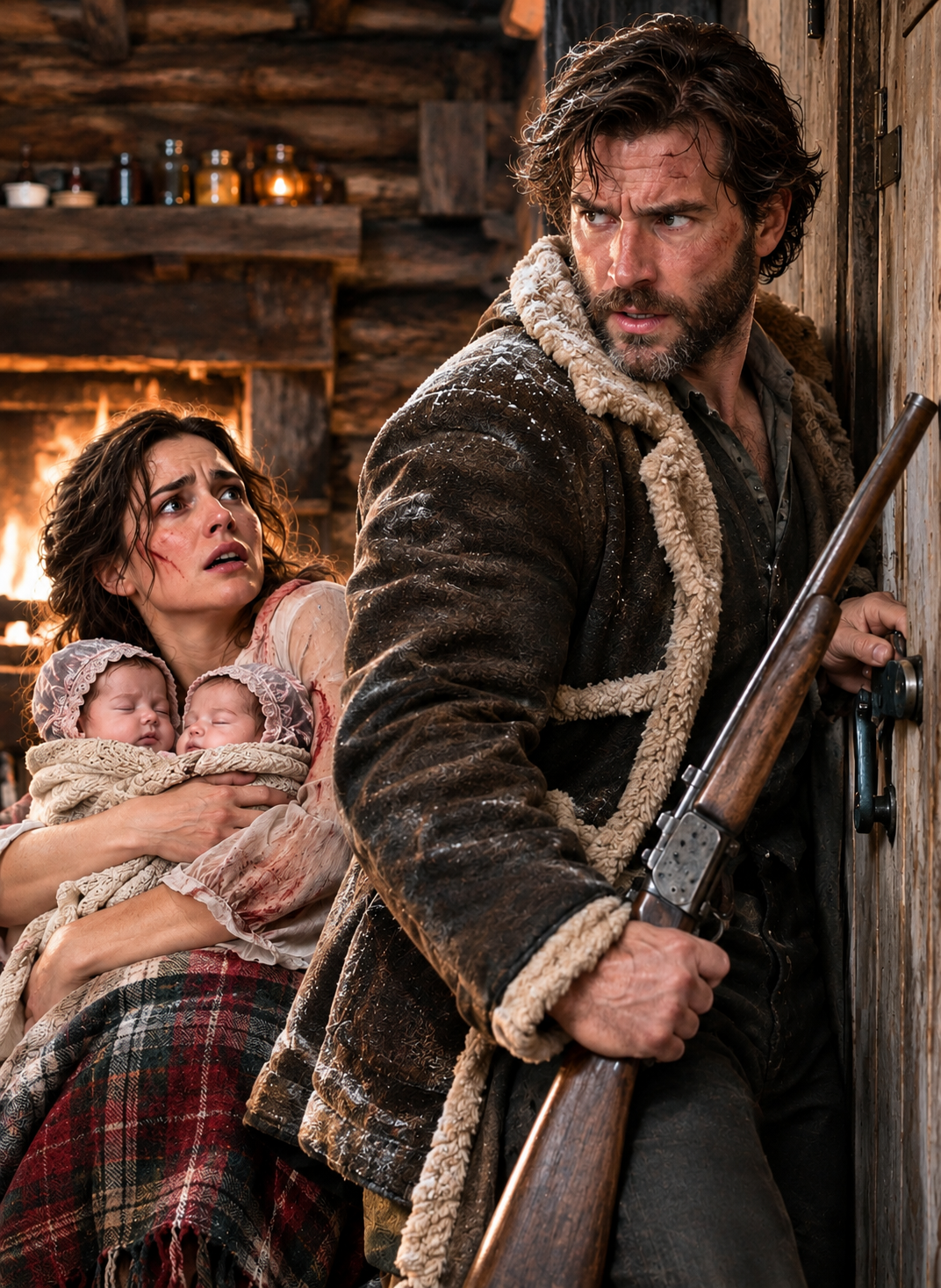
For the rest of the night, Mara kept Caleb’s watch beneath her pillow.
She did not sleep.
Neither did I.
By dawn, the storm had passed, leaving the mountain under a sky so clear and pale it seemed carved from ice.
St. Anselm’s stood six miles down the valley, an abandoned stone chapel built by miners decades before the railroad changed direction and left the settlement around it empty.
A good place for a secret meeting.
Also a good place for a trap.
I packed food, blankets, ammunition, and enough supplies to keep the twins warm. Mara watched me from beside the fire.
“You’re expecting trouble.”
“I’m expecting winter.”
“Your rifle isn’t for winter.”
“You’d be surprised.”
She almost smiled.
Then her expression became serious again.
“I want to go.”
“I assumed you would.”
“And the girls come with me.”
That, I had not assumed.
“It’s cold.”
“They don’t leave my sight.”
There was no argument to make.
By nine, I had harnessed my old mare, Clementine, to the narrow supply sled.
Mara was still too weak to ride, so I built a nest of blankets in the sled and positioned her there with Nora and June wrapped close against her.
Before we left, I extinguished most of the fire.
“You think someone might come while we’re gone?” she asked.
“Someone already came twice.”
That was answer enough.
The journey down the mountain took nearly two hours.
Mara spoke little.
At one point, I looked back and found her holding Caleb’s watch.
“What was he like?” I asked.
“Before the accident?”
“Before everything.”
Her gaze settled on the forest.
“Restless.”
“That sounds promising.”
She smiled faintly.
“He could never remain in one room if there was something wrong somewhere else.”
“Heroic.”
“Annoying.”
“More believable.”
That earned a quiet laugh.
Then she said, “He wanted to leave Hart Ridge.”
I glanced back.
“Leave the family business?”
“All of it.”
“Why didn’t you?”
“Gideon’s health worsened. Caleb thought if he left, Owen Rusk would have complete control of the company.”
“So he stayed for his father.”
“And I stayed for Caleb.”
Her hand moved gently over the blankets covering the babies.
“Sometimes I wonder how many lives are built from people waiting for the right time to leave.”
I understood that sentence better than she knew.
St. Anselm’s appeared shortly before noon.
Its roof sagged under snow. The bell tower leaned slightly east. Most of the windows were broken.
No smoke.
No horse.
No obvious sign of anyone.
I stopped Clementine behind a stand of fir trees.
“We wait here.”
Mara looked toward the chapel.
“What if he’s inside?”
“What if somebody else is?”
She hated the logic but accepted it.
I approached alone.
The chapel door stood partly open.
Inside, old wooden benches sat beneath drifting snow that had blown through broken windows.
At the far end, beneath a faded wooden cross, stood a man.
He faced away from me.
Tall.
Dark coat.
One arm held stiffly against his side.
“Caleb Hart?”
He turned.
He was perhaps thirty-two.
Thin from illness or injury, with a healing scar near his temple and the exhausted eyes of a man who had not slept properly in months.
His gaze went first to my rifle.
Then to my face.
“Vance?”
“Depends who’s asking.”
His jaw tightened.
“Is Mara alive?”
I said nothing.
He stepped forward.
Pain made him falter.
“Please.”
There was no command in his voice.
Only desperation.
“You left the watch?”
“Yes.”
“How did you find my cabin?”
“Graves.”
“Graves said he wouldn’t bring anyone.”
“He didn’t. He told me you bought lamp oil yesterday and asked for infant milk.”
That irritated me.
Caleb seemed to read my expression.
“I’ve been searching every road and cabin between here and Hart Ridge.”
He looked toward the doorway.
“If she doesn’t want to see me, tell me she’s alive. That’s enough.”
It was the first thing he had said that convinced me he might be worth listening to.
I stepped outside.
Mara was already standing beside the sled.
She had heard his voice.
Caleb appeared behind me.
For a long moment neither moved.
The mountain wind passed between them.
Mara whispered his name.
“Caleb?”
His face broke.
“Mara.”
She took one step.
He crossed the distance before she could take another.
Then stopped.
He did not touch her.
Perhaps he saw the way she flinched.
Perhaps he understood that returning from the dead did not automatically restore trust.
“I’m here,” he whispered.
Tears filled her eyes.
“They told me you died.”
“I know.”
“They told me there was nothing to bury.”
“I know.”
“Why didn’t you come home?”
“I tried.”
Her voice rose—not angrily, but with months of grief finally finding somewhere to go.
“Four months, Caleb.”
“I wrote every week.”
“I never received one letter.”
“I sent twelve.”
She stared at him.
He reached into his coat slowly.
From an inner pocket, he withdrew a bundle of folded papers.
Each bore her name.
Each had been returned.
Not because of an incorrect address.
Because someone had stamped them:
**Recipient deceased.**
Mara covered her mouth.
Caleb looked at the twins.
He did not move toward them until Mara nodded.
Only then did he kneel beside the sled.
“Which is which?”
Mara laughed through tears.
“Nora has darker hair by her ear.”
He studied them with grave concentration.
“That one’s Nora.”
“June.”
He closed his eyes.
Mara laughed again, and this time the sound carried something I had not heard from her before.
Joy.
Fragile.
Painful.
But real.
Caleb touched one finger to June’s tiny hand.
She wrapped her fingers around it.
He began to cry.
I turned away.
Some moments belonged to the people inside them.
Later, we moved into the chapel where stone walls gave shelter from the wind.
Caleb told us what he knew.
The accident at Silver Gorge had happened exactly as Mara had heard, except for one crucial detail.
He had survived.
A wagon driver had found him hours later and taken him south, where a doctor treated a broken shoulder, fractured ribs, and a head injury that left him confused for weeks.
“When I could finally write,” Caleb said, “I wrote to Mara.”
“Nothing came,” she said.
“I sent telegrams.”
“I saw none.”
“I asked Father to send someone.”
Mara’s eyes hardened.
“What did Gideon say?”
“That you were ill.”
She went still.
“Then in November, he wrote that you had lost the child and gone to stay with relatives.”
“I have no relatives nearby.”
“I know.”
Caleb’s shame showed plainly.
“But by then I was still weak, and every letter from Hart Ridge told me something different.”
“So why did you believe them?”
He looked at her.
“Because they came under my father’s signature.”
The room became silent.
I remembered the death notice.
Owen Rusk’s initials.
“Did Gideon actually write them?” I asked.
Caleb looked toward me.
“That’s why I came back.”
He placed another piece of paper on the chapel bench.
“My father’s real signature.”
Then another.
“The signature on the letters.”
Even to my untrained eye, the differences were visible.
Not dramatic.
But there.
One loop too narrow.
One stroke too straight.
Mara whispered, “Owen.”
“That’s what I think.”
Caleb nodded.
“When I reached Hart Ridge, Owen told me Mara died three days after giving birth.”
Mara looked pale.
“He said that?”
“He produced certificates.”
“Signed by whom?”
“Eliza Bell.”
The midwife.
Mara shook her head.
“Mrs. Bell would never.”
“I don’t know what she would do if someone frightened her badly enough.”
Caleb then told us something neither Mara nor I expected.
Gideon Hart had not been at Hart Ridge when the twins were born.
He had left nearly three weeks earlier to negotiate a timber contract in Carson.
“He didn’t return until yesterday,” Caleb said.
Mara stared at him.
“Owen told me your father was upstairs.”
“He wasn’t.”
“He said Gideon ordered—”
“I know.”
“No, you don’t.”
Her voice cracked.
Caleb fell silent.
Mara looked at the floor.
“What happened to me happened because I believed your father had ordered it. Every man in that house behaved as though Owen spoke with Gideon’s voice.”
Caleb’s face hardened.
“I should have removed him years ago.”
“You suspected him?”
“I suspected theft. Not this.”
He pulled several pages from his coat.
“Before Silver Gorge, I discovered timber loads were disappearing from our accounts. Rusk was selling through a second company.”
“How much?” I asked.
“Enough to ruin Hart Ridge if it continued.”
“And you went looking for proof.”
“Yes.”
Mara stared at him.
“Then you were injured.”
Caleb’s expression changed.
“You think Owen caused the accident.”
“I don’t know.”
Neither did I.
And without proof, suspicion was only another kind of darkness.
“What happens now?” Mara asked.
Caleb looked at the twins.
“First, you and the girls stay alive.”
“Already working on that,” I said.
He almost smiled.
“Second, I find Mrs. Bell.”
“Why?”
“Because if those death certificates carry her signature, she’s either part of this or she knows who forced her to sign.”
Mara shook her head.
“She helped deliver Nora and June. She held my hand.”
“Then we give her the chance to explain.”
Footsteps suddenly sounded outside the chapel.
I stood and reached for the rifle.
Caleb moved in front of Mara instinctively despite his injured shoulder.
A voice came through the doorway.
“Please don’t shoot me, Mr. Vance. I dislike paperwork.”
Sheriff Graves entered.
He removed his hat.
His eyes settled on Mara.
“Mrs. Hart.”
She tensed.
Graves kept his distance.
“I’m glad you’re alive.”
“Someone in your county says I’m not.”
“I noticed.”
He took papers from his coat.
“I spent the morning at the registrar’s office.”
Caleb stepped forward.
“What did you find?”
“Your wife’s death certificate was filed by Owen Rusk.”
“We know.”
“That’s not the interesting part.”
Graves unfolded another document.
“Two days earlier, Rusk filed a land transfer.”
Caleb frowned.
“What land?”
“The northern Hart acreage.”
Caleb’s expression sharpened.
“That’s nearly twelve thousand acres.”
“Apparently.”
“Transferred to whom?”
Graves looked at each of us.
“Blackpine Timber Company.”
Caleb went completely still.
“That’s the company I was investigating.”
Graves nodded.
“And according to the filing, the transfer becomes permanent if the direct Hart line ends without a surviving lawful child.”
Mara looked toward the twins.
“But Caleb has two.”
“Exactly.”
Understanding came slowly, then all at once.
This had never truly been about disappointment over daughters.
That prejudice had made the lie believable.
But the money required something simpler.
No surviving children at all.
Caleb’s voice became cold.
“Rusk needed them declared dead.”
“And Mara,” I said.
Graves nodded.
“Because she could challenge the papers.”
Mara seemed to shrink into herself.
All those months.
All those words about sons and family names.
All the fear.
Perhaps Owen Rusk had built his plan around Gideon Hart’s worst beliefs because everyone around him would accept them without question.
Caleb sat beside Mara.
“My father may still have much to answer for.”
She looked at him.
“But maybe not what Owen claimed.”
Mara did not forgive anyone that day.
That mattered.
Truth did not require immediate forgiveness.
It required only the courage to keep looking.
Graves folded the document.
“I need Mrs. Bell.”
“Where is she?” I asked.
“Missing.”
Caleb looked sharply at him.
“Since when?”
“Three days.”
The same night Mara had been abandoned.
Graves continued.
“Her house is empty. No struggle. No broken door. Most of her clothes are still there.”
“Could she have run?” Mara asked.
“Possibly.”
“But?”
Graves reached into his pocket.
“I found this beneath her bed.”
He handed Mara a small brass key.
A paper tag was tied around it.
On the tag, written in Eliza Bell’s careful handwriting, were six words:
**For Mara Hart, if I disappear.**
Below them was an address.
Caleb read it aloud.
“Number fourteen, Willow Street.”
I knew the place.
An old bank building in Miller’s Creek.
Graves met my eyes.
“Private storage boxes.”
Mara closed her fingers around the key.
“What did she hide?”
Graves looked toward the chapel door, then back at us.
“Whatever it is, Owen Rusk was willing to declare three living people dead to keep it hidden.”
**–END OF PART 3–CLICK “NEXT” AT THE BOTTOM OF THE PAGE TO CONTINUE READING**
✓ Lynn R. Adams
For the rest of the night, Mara kept Caleb’s watch beneath her pillow. She did not sleep. Neither did I. By dawn, the storm had passed, leaving the mountain under a sky so clear and pale it seemed …