PART 3 – The Truth Has a Name-059
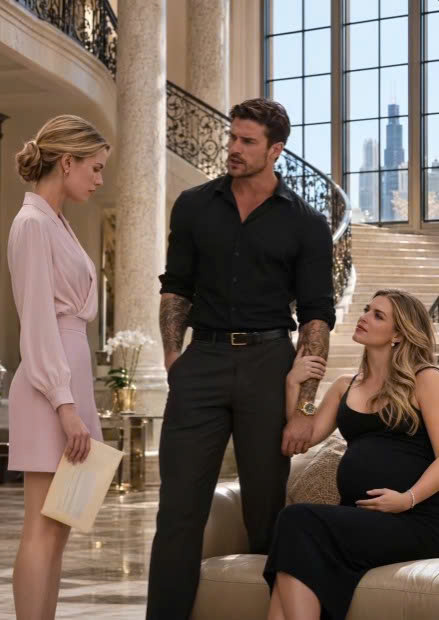
Ethan did not call me that night.
I would later learn that he stood alone in the library for nearly an hour after Vanessa went upstairs, staring at nothing while the life he had confidently arranged around himself began to look remarkably different from the truth.
Vanessa had not confessed because she suddenly became brave.
She confessed because certainty had disappeared.
The man she had been seeing before returning to Ethan was named Adrian Cole.
He was not another billionaire.
He was not one of Ethan’s rivals.
He was not a criminal mastermind waiting dramatically in the shadows.
He was a forty-year-old architect who designed schools, restored old buildings, collected vinyl records, and apparently had no idea Vanessa was pregnant.
That ordinary truth somehow made everything worse.
There was no grand conspiracy Ethan could defeat.
There was simply a woman who had been frightened, a man who had been convenient, and another man whose confidence had made him easy to deceive.
Vanessa told Ethan she had dated Adrian for nearly a year.
They had talked about marriage.
Then they fought about where their future was going.
Adrian wanted a quieter life outside Chicago.
Vanessa did not.
They separated.
Two weeks later, she attended a charity dinner where she encountered Ethan for the first time in years.
Ethan had been newly frustrated by another month without a pregnancy in our marriage.
Vanessa had been wounded by the end of hers.
Nostalgia did what nostalgia often does.
It edited the past.
They talked.
Then they talked again.
Within weeks, Vanessa learned she was pregnant.
“You knew there was a possibility,” Ethan said.
“Yes.”
“And you told me the baby was mine.”
“I believed it could be.”
“That isn’t what I said.”
She looked down.
“I wanted it to be.”
That distinction would haunt Ethan.
Wanting something to be true was not the same as believing it.
Believing was not knowing.
And knowing was certainly not what either of them had been doing.
The following morning, the prenatal blood samples were collected.
Vanessa cried afterward.
Ethan did not comfort her.
But he did not punish her either.
He arranged for his driver to take her back to the mansion and instructed the staff to give her privacy.
Then he left.
He did something nobody expected.
He drove to the building where I had grown up.
The apartment belonged to another family now.
The laundromat below it had become a coffee shop.
The corner grocery store where my father once bought bruised fruit because it was cheaper had become an expensive organic market.
Ethan remained across the street inside his car.
He did not know exactly why he had gone there.
Perhaps because for three years he had understood that I feared poverty without ever understanding what poverty had looked like.
He knew the facts.
My mother’s illness.
My father’s debts.
The unpaid bills.
He had never asked about the details.
Money had solved the problem, so Ethan assumed the problem had ceased to matter.
Sitting in that car, he finally understood something about me that forty million dollars could not explain.
I had not married wealth because I worshiped luxury.
I had married certainty because I had grown up watching uncertainty frighten everyone I loved.
Meanwhile, I spent my first full day as Claire Hayes again completing paperwork at a bank.
I had not used my maiden name publicly in three years.
Seeing it printed beneath my signature felt strangely intimate.
Claire Hayes.
No Blackwood.
No famous surname.
No hidden meaning.
Just me.
The banker explained investment structures, tax planning, charitable trusts, and enough wealth-management terminology to make my head ache.
I listened carefully.
Then I surprised myself.
“I want ten million separated from the rest.”
He looked up.
“For what purpose?”
“I don’t know yet.”
“We can keep it liquid until—”
“No.”
I glanced through the glass wall of the conference room.
A woman outside was quietly entertaining a little boy with crayons while speaking to someone on the phone.
“Something medical.”
The banker waited.
“A foundation, maybe.”
“For research?”
“For families.”
I remembered my mother sitting at our kitchen table with a calculator and hospital bills.
“People who are trying to keep their houses while somebody they love is sick.”
The banker nodded.
“That can certainly be structured.”
For the first time since leaving Ethan, I felt something that was not grief.
Purpose.
It frightened me almost as much as losing him had.
That afternoon, Thomas Reed appeared at my condo carrying a leather folder.
“You’ve developed an alarming habit of arriving with paperwork.”
He almost smiled.
“Occupational hazard.”
I gestured toward the living room.
“Sit.”
He chose a chair rather than the sofa.
I noticed.
“You hate the sofa.”
“I have no opinion regarding your sofa.”
“Everyone has an opinion regarding that sofa.”
“I’m an attorney.”
“That means you charge people for your opinions.”
“That is a deeply unfair summary of the profession.”
“It’s also accurate.”
For a moment we both smiled.
Then Thomas placed the folder between us.
My amusement vanished.
“What now?”
“Nothing bad.”
“That phrase should be prohibited when attorneys are carrying folders.”
“This relates to the settlement.”
“I thought we finished.”
“We did.”
He opened the folder.
“There is an attached schedule concerning certain assets.”
“I had my lawyer review everything.”
“Yes.”
“Then why are you here?”
Thomas slid a page toward me.
“Because your attorney assumed this was part of the negotiated property transfer.”
I read the page.
At first it meant nothing.
Then I saw the company name.
Blackwood Lakeshore Hospitality.
I looked at Thomas.
“What is this?”
“An equity interest.”
“How much?”
“Five percent.”
I almost laughed.
“Five percent of what?”
“Seven hotels.”
I stared at him.
“No.”
“It is properly executed.”
“I didn’t ask for hotels.”
“I know.”
“Did Ethan add this?”
“Yes.”
“When?”
“The night before signing.”
“Why?”
Thomas closed the folder.
“He said it should have been yours already.”
I pushed the document away.
“I don’t want a guilt gift.”
“It isn’t a gift.”
“It certainly isn’t a toaster.”
“He says you contributed substantially to the hotel division.”
“I attended openings.”
“You also redesigned guest privacy protocols after a public incident, persuaded him to convert unused conference space into family suites, and developed the charitable partnership that increased the Lakeshore brand’s corporate bookings by eighteen percent.”
I stared at him.
“He told you that?”
“The board did.”
I had forgotten about those things.
Not literally.
I remembered doing them.
I simply had not considered them work.
Ethan’s people had called.
I had answered.
Someone needed help.
I gave an opinion.
Sometimes they used it.
Apparently enough of those opinions had become profitable.
“I don’t want anything that connects me to him.”
Thomas nodded.
“You may sell your interest.”
“I will.”
“He expected that.”
“Good.”
“He asked that you receive fair market value.”
“Stop telling me what he asked.”
Thomas studied me.
“You’re angry.”
“Yes.”
“At him?”
“Yes.”
“At the hotels?”
“Yes.”
“At me?”
“I’m considering it.”
He smiled faintly.
Then the expression disappeared.
“Claire, I have known Ethan since before he became the man newspapers write about.”
“I’m sorry.”
“That was almost funny.”
“It was meant to be.”
“He is not easy.”
“That might be history’s greatest understatement.”
“But I have never seen him question himself before.”
I looked away.
“Maybe he should try it more often.”
“He is.”
I stood.
“That doesn’t change what happened.”
“No.”
“It doesn’t change the way he treated me.”
“No.”
“And it certainly doesn’t make us married again.”
Thomas rose as well.
“No one said it did.”
I hated how reasonable he sounded.
“Then why are you telling me?”
“Because you spent three years believing Ethan noticed nothing you did.”
That stopped me.
Thomas picked up his briefcase.
“He noticed.”
After he left, I stood beside the window for a long time.
Then I opened my laptop and searched old public filings for Blackwood Lakeshore Hospitality.
Five percent was worth far more than I had realized.
Far more.
I closed the computer.
The knowledge did not make me happy.
It made me furious in a new way.
Why had Ethan never told me?
Why had he watched me assume my only contribution to our marriage was being decorative and discreet while quietly valuing my work behind closed doors?
Why had neither of us known how to say the things that apparently mattered most?
Three days later, Ethan’s medical results returned.
Dr. Patel asked him to come in person.
Ethan arrived alone.
The doctor placed several imaging scans on the screen.
“You have a bilateral obstruction.”
Ethan leaned back.
“From what?”
“We believe scarring occurred following your abdominal surgery at seventeen.”
Ethan frowned.
“That surgery wasn’t reproductive.”
“No, but complications can affect surrounding structures.”
“Can it be repaired?”
“Possibly.”
“Can I have children?”
Dr. Patel turned toward him.
“Your body appears to be producing sperm normally.”
For several seconds, Ethan said nothing.
The doctor continued.
“Natural conception may remain unlikely without treatment, depending on whether repair is possible, but sperm retrieval for assisted reproduction could be an option.”
Ethan stared at the scans.
So he was not incapable of becoming a father.
But the child Vanessa carried still could not have been naturally conceived by him if the obstruction predated their relationship.
Ethan understood.
“So the paternity test…”
“Is still necessary.”
The results arrived the following afternoon.
Thomas received the call first.
He was with Ethan when the report was delivered.
Probability of paternity: effectively excluded.
Vanessa’s child was not Ethan’s.
Ethan read the result once.
Then again.
Thomas waited for anger.
It never came.
Instead, Ethan sat down.
And for the first time Thomas had ever witnessed, Ethan Blackwood looked tired.
Not physically.
Older than that.
Tired in the place where certainty lived.
“Cancel the nursery renovation,” Ethan said.
Thomas nodded.
“What about Vanessa?”
“Nothing.”
Thomas waited.
Ethan looked at him.
“What are you expecting me to say?”
“I don’t know.”
“That I’ll destroy her?”
Thomas said nothing.
Ethan stared at the report.
“She lied because she thought my name could solve her life.”
The irony was not lost on either man.
Thomas sat opposite him.
“What do you want to do?”
“I want her to tell Adrian.”
“And if she refuses?”
Ethan looked toward the window.
“Then the child grows up inside another lie.”
That evening, he found Vanessa sitting in the nursery.
The room was unfinished.
One wall had been painted pale blue.
A half-assembled crib remained near the window.
Vanessa looked at the envelope in Ethan’s hand.
She knew.
“It’s Adrian’s.”
“Yes.”
Her eyes filled.
“I’m sorry.”
Ethan did not answer.
“I never meant for any of this to happen.”
“Most lies aren’t planned from beginning to end.”
She wiped her face.
“Do you hate me?”
“No.”
That seemed to hurt more.
“I thought you would.”
“I’m too tired to hate anyone.”
Vanessa looked down at her stomach.
“What happens now?”
“You call Adrian.”
“What if he doesn’t want us?”
“Then at least he gets to decide based on the truth.”
She breathed shakily.
“And me?”
“You’ll have time to find somewhere to live.”
She looked toward him.
“You’re throwing me out?”
“No.”
His voice remained calm.
“I’m ending something that was built on information neither of us bothered to question.”
Vanessa cried quietly.
Then she whispered, “You loved her.”
Ethan’s eyes lifted.
“What?”
“Claire.”
“Don’t.”
“You did.”
“Vanessa.”
“That’s why I hated her.”
Ethan stared at her.
“You said she married you for money, and I kept telling myself that meant what you had wasn’t real.”
He looked away.
Vanessa continued.
“But every time you talked about her, you knew what coffee she drank, what books she ordered, which side of the bed she slept on, what charity she volunteered for, what flower she hated.”
Ethan said nothing.
“You never knew those things about me.”
He stood.
“Call Adrian.”
Then he left the room.
That night, while Ethan finally faced the possibility that he had destroyed something valuable because he had mistaken emotional distance for strength, I opened a box that had arrived from the mansion.
It contained personal items the movers had missed.
Two books.
A silk scarf.
An old photograph.
And a black leather notebook I did not recognize.
I nearly put it aside.
Then I saw my name inside the cover.
Claire.
Ethan’s handwriting.
My heart began pounding.
I sat on the floor.
The first page was dated three years earlier.
The week after our wedding.
I should not have read it.
I knew that.
I read it anyway.
Most entries were brief.
Business notes.
Names.
Numbers.
Reminders.
Then I reached a page dated six months into our marriage.
Claire thinks I married her because she was uncomplicated.
She is wrong.
I stopped breathing.
Below it was another line.
I married her because she looked me in the eye on our first date and told me the truth when everyone else had already learned how profitable lying to me could be.
I turned the page.
There were dozens more entries.
About me.
About us.
About things Ethan had never said aloud.
Then I reached the final entry.
It was written eight months before our divorce.
Only one sentence appeared on the page.
I think I am falling in love with my wife, and I have absolutely no idea what to do about it.
**–END OF PART 3–CLICK “”NEXT”” AT THE BOTTOM OF THE PAGE TO CONTINUE READING**
✓ Lynn R. Adams
Ethan did not call me that night. I would later learn that he stood alone in the library for nearly an hour after Vanessa went upstairs, staring at nothing while the life he had confidently arranged …