PART 3: The Ten-Minute Warning 034
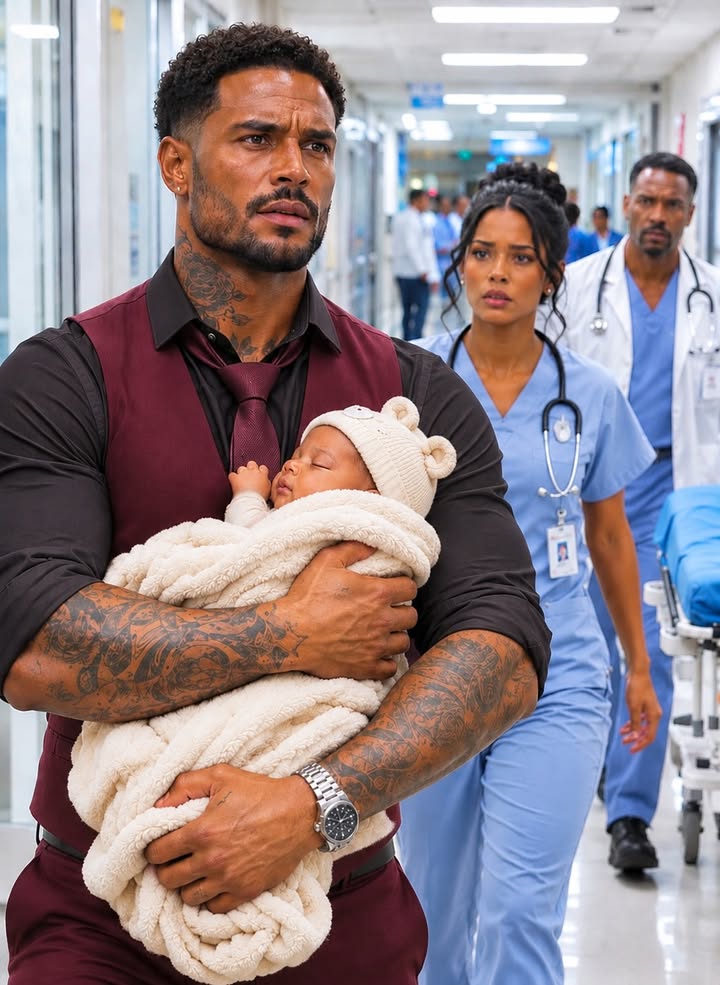
Part 3 – The Things We Didn’t See
“Please check the bottle in Margaret’s handbag.”
For a moment, the sentence seemed to belong to someone else’s story.
Claire stood beneath the corridor lights, her face pale from the drive and the worry she had carried through it.
She looked from the note to Margaret, then to me, waiting for one of us to make sense of what she had just read.
Margaret’s hand closed around the strap of her bag.
“Emily shouldn’t have gone through my things,” she said.
The doctor kept her voice measured.
“Did she?”
“I don’t know,” Margaret replied. “I’m saying she had no reason to write that.”
I glanced at the bag.
It was an ordinary dark leather handbag, worn at the corners, the sort Margaret had carried to our house for years.
The sight of it should not have changed anything.
Yet Emily’s penciled words had made it seem suddenly less ordinary.
“Margaret,” I said, “what bottle?”
“I have no idea.”
The answer came too quickly.
Claire turned toward me.
“Bennett, what is going on?”
I wanted to tell her that I was still trying to understand, that the whole day had become a series of details arriving too late.
Instead, I showed her Emily’s note.
Claire read it once, then again, her eyes resting on the dates and short observations Emily had recorded.
“She noticed these things?” she asked.
“Yes.”
“And you fired her before she could finish telling you?”
I could have explained the bath, the sink, the way I had walked in and seen a scene that frightened me.
I could have told her I had believed I was protecting Noah.
All of it was true, and none of it changed what I had done.
“Yes,” I said.
Claire folded the note carefully, as if she were trying not to damage the words.
“Then we need to find out what she meant.”
The doctor glanced toward Noah’s room.
“We should keep the focus on his care,” she said. “If there is anything in that bag that might affect him, I’d like to know about it. But no one should search through another person’s belongings without her permission.”
Margaret’s shoulders eased a fraction.
“That’s right,” she said. “I have nothing to hide, but I don’t appreciate being accused.”
“I haven’t accused you,” Claire replied.
Her voice was tired rather than sharp.
“I’m asking what the note means.”
Margaret looked down at the bag in her hand.
For a second, I thought she might open it herself.
Instead, she said, “I need to sit down.”
The doctor led us to a small family room, away from the steady movement of the ward.
The room had a low table, two chairs, and a window overlooking the hospital parking lot.
Outside, evening had begun to gather, turning the windows of nearby buildings a dim blue.
Margaret put her handbag on the chair beside her but kept one hand on the strap.
Claire sat across from her.
I remained standing until Claire looked up at me.
“Sit down, Bennett.”
I did.
The familiar firmness in her voice carried a tenderness I had not earned.
For months, we had spoken in scheduled calls and carefully worded messages.
I had taken her distance as a kind of permission to manage everything without her.
Now she was here, and I saw how little I knew about what she had been carrying.
“How are you?” I asked.
The question sounded small.
Claire looked at me for a long moment.
“I’m scared,” she said. “I’m exhausted, and I’m angry that Noah was in trouble while I was away. But I’m also glad he’s stable.”
“I’m sorry I didn’t call you sooner.”
“You called when you could.”
“I should have called the moment the paramedics arrived.”
“You were trying to help him.”
“I was trying to handle everything by myself.”
She glanced at the note in her hands.
“You don’t have to decide what I can handle for me.”
I nodded, unable to find a defense that would not sound like another excuse.
The doctor came in with a nurse and explained that Noah was stable, though he would remain under observation.
A specialist would assess his feeding before they made any recommendations.
They wanted us to describe his usual routine as accurately as possible, including any changes.
Claire asked about the coughing Emily had documented.
I explained what Margaret had told us: that Noah had coughed during bottles, and that his feeding position had sometimes been changed.
Claire’s eyes moved to Margaret.
“Why didn’t you tell me?”
“I thought it was minor,” Margaret said. “He was still eating.”
“I’m not asking because I think you meant harm,” Claire said. “I’m asking because I was his mother, and I would have wanted to know.”
Margaret lowered her eyes.
“I should have told you.”
The admission did not mend the room, but it changed its shape.
The doctor reminded us that the feeding position could have contributed to an aspiration episode, but it was only one possibility.
Noah’s symptoms had started before that change, and they still needed to understand why.
I found myself looking again at the handbag.
“Would you be willing to show us what Emily wrote about?” I asked.
Margaret’s mouth tightened.
“Why should I?”
“Because the note specifically mentions it, and because we don’t know what she saw.”
“I keep ordinary things in my bag.”
“Then there should be no problem.”
Claire touched my wrist beneath the table.
“Bennett.”
Her quiet warning stopped me from pressing harder.
I looked at Margaret and tried again.
“I’m not asking because I’ve decided you did something wrong. I’m asking because a doctor is trying to understand what happened to our son.”
Margaret’s hand remained on the strap.
“I’ll show you after I’ve spoken to someone.”
“Who?” Claire asked.
“My daughter. I don’t want this turned into gossip or an accusation based on a note from an employee who was angry at being dismissed.”
There was a tremor in her voice now.
It could have been fear, or indignation, or simply the strain of the day.
The doctor agreed that Margaret should have privacy and suggested they return to the matter once Noah was settled.
I wanted to insist.
Instead, I recognized the same impulse that had sent Emily out of our house: the belief that my fear gave me the right to force an answer.
I let it go.
When the doctor left, Claire turned to me.
“Where is Emily now?”
“I don’t know.”
“Have you called her?”
“No.”
“Then we should.”
“She may not want to hear from me.”
“She may not,” Claire said. “But you can still apologize.”
I took out my phone.
Emily’s number was in the household contacts, listed beneath her full name and the date she had started work.
I stared at it until the screen dimmed.
“I was wrong to shout at you,” I said when she answered.
There was silence on the line.
I could hear traffic in the background, then the faint sound of a door closing.
“What happened to Noah?” she asked.
“He stopped breathing. The paramedics brought him to the hospital. He’s stable now.”
“Oh,” she breathed. “Thank goodness.”
Her relief sounded immediate and unguarded.
I closed my eyes.
“The doctor is looking into the coughing and feeding difficulties you wrote down.”
“Did you give her the list?”
“Yes.”
“Good.”
“I’m sorry I didn’t listen when you tried to tell me.”
Another pause followed.
“I tried more than once,” Emily said.
“I know.”
“No, Mr. Bennett. I don’t think you do.”
Her words were gentle, but they landed heavily.
I had no right to argue.
“You’re right,” I said. “I don’t. I’m sorry.”
On the other end, she exhaled.
“Is Margaret there?”
“Yes.”
“Did you check her handbag?”
“Not yet.”
“Please don’t accuse her because I wrote that.”
“I won’t.”
“I didn’t write it because I wanted to get her in trouble. I was worried, and I didn’t know how else to make you look.”
I glanced at Claire.
She had moved closer, listening without interrupting.
“Can you tell me what you saw?” I asked.
“I can tell you what I noticed. But I’d rather not do it over the phone.”
“Would you come to the hospital?”
“I’m not sure.”
“I understand.”
“I need to know I won’t be spoken to that way again.”
“You won’t.”
The promise came easily.
Keeping it would require more than a promise.
“I can’t ask you to return to the house,” I added. “Not now. But if you’re willing to talk to the doctor, I’d be grateful.”
“I’ll think about it.”
“Thank you.”
“And Mr. Bennett?”
“Yes?”
“Noah was coughing before I ever saw Margaret feed him reclined.”
I sat straighter.
“Before?”
“I started work three weeks ago. I noticed it during bottles the first week. He would cough, stop drinking, then look worn out.”
“Did you tell anyone?”
“I tried to tell Margaret first. She said it happened when he drank too fast.”
“Why didn’t you tell me?”
“I did. I told you he seemed tired after feeds when you asked me to take a basket upstairs.”
I searched my memory.
There had been a morning, perhaps a week after she started, when I was heading to a meeting and carrying my laptop.
I remembered her standing near the stairs.
I remembered my phone vibrating.
I remembered answering an email before she had finished speaking.
“Was that when I said I’d ask Margaret?”
“Yes.”
I had forgotten the conversation entirely.
“I’m sorry,” I said again, though the words felt smaller now.
“I’m not telling you this so you’ll feel worse,” Emily said. “I’m telling you because the doctor needs to know the problem started before the feeding change.”
“I’ll tell her.”
“Please do.”
After we ended the call, Claire sat quietly for a moment.
“You didn’t remember,” she said.
“No.”
“Neither did I.”
The admission surprised me.
She looked down at her hands.
“When Emily told you, I was still at the clinic,” she continued. “You sent me a message saying you had everything under control. I assumed you would tell me if something important happened.”
I thought of all the reassuring messages I had sent her.
Noah had a normal day.
The staff are managing well.
You should focus on getting better.
I had believed I was being kind.
“I was trying to protect you,” I said.
“I know. But protecting me from information also kept me out of his life.”
She did not say it to punish me.
That made it harder to hear.
A nurse came to the door and told us Noah had woken and was unsettled.
Claire stood immediately.
“I want to go to him.”
The nurse nodded and led us down the corridor.
Noah’s eyes were open when we entered, his expression cloudy with sleep.
Claire approached the bed as if she were stepping into a room she had been away from for too long.
“Hi, sweetheart,” she whispered.
He turned his face toward her voice.
She touched his cheek, and his fingers closed around one of hers.
Her eyes filled, but she smiled through it.
“I’m here,” she told him. “I’m right here.”
I stood beside her, watching the two of them find each other in that small, quiet way.
“I should have told you he was struggling,” I said.
Claire kept her attention on Noah.
“Yes.”
“I thought handling everything meant I was doing my part.”
“You did a lot,” she said. “But you made every decision alone.”
“I know.”
She looked up at me then.
“Do you?”
I did not answer quickly.
The truth was that I was only beginning to know.
The specialist arrived and explained that he would observe Noah during a feed the following morning.
Until then, they wanted him fed according to the hospital team’s instructions, with a nurse present.
She asked us to provide any records we had about his feeding and symptoms.
I gave her Emily’s notes.
Claire asked whether Noah’s pediatrician had been told about the coughing.
Margaret, who had joined us in the doorway, shook her head.
“No. I thought it was part of the fussiness.”
The specialist asked how long the fussiness had been going on.
Margaret looked at me, then Claire.
“Since before Emily started,” she said.
“How long before?”
“I’m not sure. A few weeks, perhaps.”
The specialist made a note.
“Any changes in formula, medication, or feeding supplies during that time?”
Margaret’s hand moved to the edge of her handbag.
“No,” she said.
The response made me notice the movement.
I noticed Claire noticing it too.
The specialist continued with routine questions, then left us with instructions and a promise to return in the morning.
Margaret remained near the door.
“I’m going home,” she said. “There’s nothing more I can do here tonight.”
“You should stay until we know more,” I replied.
“Why? So everyone can keep looking at me as if I’m responsible?”
“No one has decided that.”
“You’ve been asking about my bag since you arrived.”
“Because Emily’s note mentioned it.”
“Emily has already made her opinion clear.”
“Her notes are about Noah’s symptoms,” Claire said. “Not your character.”
Margaret looked at Claire, then seemed to search for something in her face.
Perhaps she had expected anger.
Perhaps she had expected me to take her side.
“I’ve cared for Noah every day while you were away,” she said.
“I know,” Claire replied. “And I’m grateful for the care you gave him. I still need honest answers.”
Margaret’s expression softened and hardened at once.
“I should have told you about the cough,” she said. “I’ve said that.”
“And the feeding position?” I asked.
“I was trying to make things easier for him.”
“Did you leave bottles propped?”
She hesitated.
“Once. Maybe twice.”
“Emily said she saw it more than once.”
“Emily wasn’t watching every minute.”
“No one is,” Claire said. “That’s why we need to be honest about what happened.”
Margaret looked toward Noah’s room.
“I’m not going to discuss this here.”
She picked up her handbag.
For a heartbeat, the strap pulled taut between her hand and the chair.
Then she let it hang at her side.
“Bring the bag,” I said.
Her eyes met mine.
“Are you ordering me?”
The question cut through my certainty.
I could make her open it.
I could tell myself that the hospital, the doctor, and the urgency gave me the right.
But authority was not the same as trust, and force would not make the truth clearer.
“No,” I said. “I’m asking. If you don’t want to, I won’t make you.”
“Thank you,” she said, though the gratitude sounded guarded.
She left the family room without opening the bag.
Claire watched her go.
“I hope she has an explanation,” she said.
“So do I.”
“You believe she does?”
“I don’t know what I believe.”
That was the most honest answer I had given all day.
We spent the next hour at Noah’s bedside.
His breathing remained steady, and the nurse checked on him regularly.
Claire sat in the chair while I stood near the foot of the bed.
At some point, she leaned her head against my shoulder.
I did not move.
The small weight of her there felt like a fragile permission, not a return to the way things had been.
“I should have come home sooner,” she murmured.
“You came when you needed help.”
“I needed help after Noah was born, and I left you to do everything.”
“You were getting treatment.”
“I know that. I’m not saying I made the wrong choice. I’m saying we stopped talking honestly.”
I looked at her.
“I told you I was fine.”
“And I told you I was fine when I wasn’t.”
We sat with that truth between us.
Neither of us had been trying to abandon the other.
We had been trying to spare each other, and in doing so had left too much unsaid.
The next morning, the specialist watched Noah feed.
A nurse held him upright, pausing often and observing his breathing.
Noah drank a little, coughed once, then turned away from the bottle.
The specialist stopped the feed and checked him carefully.
She did not seem alarmed, but her expression became thoughtful.
“That’s useful information,” she said. “We’ll keep assessing him, and the pediatric team will decide what he needs next.”
“Was that what Emily noticed?” Claire asked.
“It could be similar, yes. But we still don’t know why it’s happening.”
I held Noah’s hand while the nurse settled him.
His fingers curled around mine, then released.
The specialist asked to speak with us in the consultation room.
She explained that his earlier coughing could not be dismissed as ordinary fussiness, and that his feeding position may have made the situation more dangerous.
But the symptoms appearing before the change meant they needed to consider other causes too.
“Could this have been happening for weeks?” I asked.
“It’s possible,” she said. “We’ll review his records and speak with his pediatrician. We don’t want to jump to conclusions.”
“What should we do now?” Claire asked.
“Follow the feeding plan, watch closely, and tell us about every symptom, even if it seems small.”
I thought of the notes Emily had kept.
The careful dates.
The simple descriptions.
The things I had failed to remember because I had never made room to notice them.
When we left the consultation room, Margaret was waiting in the hall.
Her handbag rested on a chair beside her.
“I called my daughter,” she said. “She told me not to answer questions without understanding what they mean.”
“I’m not asking you to answer without understanding,” I said. “I’m asking you to help us understand.”
She looked at Claire.
“Would you like me to open the bag here?”
Claire’s voice remained calm.
“Only if you’re willing.”
Margaret’s fingers hovered over the clasp.
For several seconds, the three of us stood in the quiet corridor, with the muted sounds of the hospital moving around us.
Then she opened the bag.
Inside were a wallet, a small notebook, tissues, a set of keys, and a zippered pouch.
Margaret took out the pouch and held it in her palm.
“What is that?” I asked.
“Personal items.”
The pouch was not transparent.
The shape of a small bottle showed through the fabric.
Claire noticed it.
“So there is a bottle,” she said.
“There are several things in here,” Margaret replied.
She unzipped the pouch.
A packet of mints fell onto the chair.
Then a small tube of hand cream.
At the bottom lay a brown glass bottle with a white label, turned inward.
Margaret reached for it, but stopped before picking it up.
I looked at the label.
Even from where I stood, the word on it seemed familiar.
“Is that something Noah was given?” Claire asked.
“No,” Margaret said.
The speed of her answer made the corridor feel suddenly smaller.
The nurse who had been passing nearby paused.
“Please don’t handle it here,” she said gently. “If it may be connected to Noah’s symptoms, the doctor should review it.”
Margaret looked down at the bottle.
“I bought it for myself.”
“Then the doctor can confirm that,” I said.
“I haven’t given it to him.”
She lifted her eyes to mine, and for the first time I saw not defensiveness but fear.
“I haven’t,” she repeated.
I wanted to believe her.
I wanted the bottle to mean nothing, and I wanted the day to have a simple explanation.
But the label was turned away, and the note Emily had left was still folded in my pocket.
The doctor arrived and asked Margaret to bring the bottle into the consultation room so they could identify it and understand whether it could possibly be relevant.
Margaret picked it up carefully.
As she turned it toward the light, my stomach tightened.
The label carried the same brand name I had seen printed on a small bottle of drops in Noah’s nursery cabinet.
“Where did you get that?” I asked.
Margaret stared at the label.
Claire’s hand found mine.
The doctor reached for a pair of gloves.
And then, from the doorway behind us, Emily’s voice said, “That’s the bottle I saw.”
**–END OF PART 3–CLICK “NEXT” AT THE BOTTOM OF THE PAGE TO CONTINUE READING**
* * *
[PREVIOUS: PART 2](https://puretales.idolsgift.com/blog/part-2-the-ten-minute-warning-034) | [NEXT: PART 4](https://puretales.idolsgift.com/blog/part-4-the-ten-minute-warning-034)
✓ Lynn R. Adams
Part 3 – The Things We Didn’t See “Please check the bottle in Margaret’s handbag.” For a moment, the sentence seemed to belong to someone else’s story. Claire stood beneath the corridor lights, her…