PART 3: The Step That Changed Nothing—and Everything 058
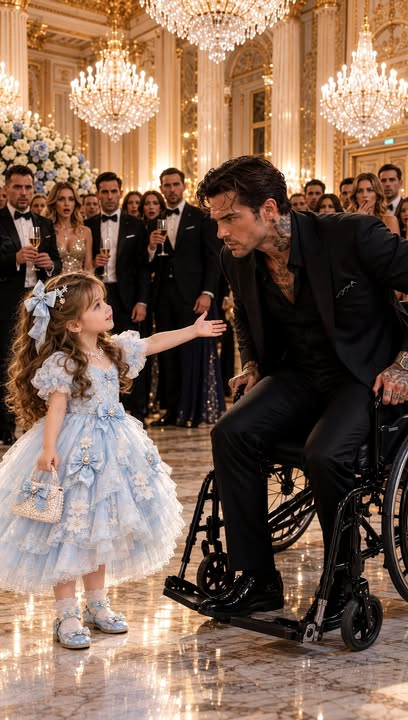
Part 3 – The People Behind the Photograph
“The equipment that kept them from closing their doors,” I repeated.
Maria nodded toward the envelope.
“Open it first, Mr. Harrison.”
The photograph inside was small and slightly faded, its edges softened by years in a frame.
I recognized myself at once, though the man in the picture seemed like someone I had once known and then misplaced.
He was younger, thinner in the face, with dark hair and a smile that looked almost unguarded.
I sat beside a boy in a clinic waiting room, one hand resting on the child’s shoulder while he stared solemnly at the camera.
Behind us stood a nurse, smiling, and a metal cart crowded with boxes.
I turned the photograph over.
On the back, in careful handwriting, were the words: *Thank you for coming to see us.*
There was no date, no clinic name, no explanation.
“Do you remember this?” Maria asked.
I studied the image longer, waiting for recognition to arrive.
It did not.
“I remember being younger,” I said.
Maria gave a small, sympathetic smile.
“That is something.”
“I don’t remember the boy.”
“You may not have met him for long.”
“Did I come alone?”
“I don’t know.”
“Did you?”
“No. I heard about the photograph from the clinic staff.”
I put it down carefully.
The young man in the picture looked open to the world in a way that made me uncomfortable.
“I’m not sure I like seeing this.”
“Why not?”
“Because he looks like he had time for people.”
Maria did not answer immediately.
“You had time for people then,” she said at last.
“Did I?”
“I think you did.”
The sentence was gentle, but it landed with the weight of an accusation I had no right to resent.
I looked again at the boy’s hand, small and tense beneath mine.
“I’d like to know what happened at that clinic.”
“So would I.”
“Can you find the staff?”
“Some of them may still be there. The clinic has changed over the years.”
“Then call them.”
Maria glanced toward the bed, where the doctor had left a list of instructions the night before.
“After you speak with Dr. Reeves.”
“That wasn’t what I meant.”
“I know.”
She placed the photograph back in its envelope.
“You have an assessment scheduled this afternoon.”
“I remember.”
“And you are not to try standing on your own.”
“I remember that too.”
“Good.”
Maria’s tone was matter-of-fact, but I heard the worry underneath it.
I had spent years being cared for by people who tried to hide their concern behind polite routines.
Maria had never been especially good at hiding it.
“I won’t try anything without the doctor,” I said.
She looked at me as if she wanted to believe me, then nodded.
A knock came at the bedroom door.
Claire entered before I had answered, a travel bag in one hand and her coat still over her arm.
My daughter’s eyes moved from me to Maria and then to the envelope.
“I came as soon as I heard,” she said.
“You heard about the party?”
“I heard the story that had already grown around it.”
She set down her bag and came to my bedside.
“I’m glad you’re all right.”
“I am.”
“Are you?”
The question was not about my body.
I looked at her carefully.
Claire had inherited her mother’s steady gaze, and over the years she had learned to use it whenever she suspected I was about to retreat into a convenient answer.
“I’m not hurt.”
“That’s not the same thing.”
“No,” I said. “It isn’t.”
Her attention turned to the photograph envelope.
“What’s that?”
“Something Maria brought me.”
Claire glanced toward Maria.
“Should I ask?”
“It’s an old photograph,” Maria said. “From a community clinic.”
“Of Dad?”
“Yes.”
Claire looked back at me.
“You went to a clinic?”
“Apparently.”
“When?”
“I don’t know.”
“Why don’t you remember?”
“I don’t remember everything from twenty years ago.”
“That’s true,” she said, though her voice suggested she was trying to fit the photograph into a larger fear.
Maria excused herself to speak with the nurse, leaving Claire and me alone.
She closed the bedroom door after her.
“Dad, I need to talk to you about last night.”
“I assumed you would.”
“I’m not trying to take anything away from you.”
“I didn’t say you were.”
“Everyone is already calling it a miracle.”
“I told them not to.”
“People may not listen.”
“Then they can be disappointed.”
Claire drew the chair closer to the bed.
“I know you want this to mean something.”
“I don’t know what I want it to mean.”
“Yes, you do.”
Her words were not sharp, but they found the place she meant to reach.
I looked toward the window, where the morning light softened the edges of the city.
“I felt my legs tremble,” I said. “I stood for a moment. Then I sat down again.”
“I know.”
“Dr. Reeves said it could be worth examining.”
“He also said it doesn’t explain or reverse your paralysis.”
“I heard him.”
“Did you?”
I turned back.
Her eyes were bright with worry, though she was trying to hold herself composed.
“Claire, I’m not planning to fire my doctors and move into a chapel.”
“I know you’re not. But I’ve seen what hope can do to people when they turn it into certainty.”
“Which people?”
She lowered her gaze briefly.
“People who start believing every sign is a promise.”
“I haven’t promised anything.”
“You stood in front of hundreds of people. A little girl prayed, and your legs moved. It doesn’t matter what you call it; people will build a story around it.”
“Then we’ll tell them the truth.”
“And what is the truth?”
“That I don’t know.”
She took a slow breath.
“I’m scared you’ll let one moment undo all the careful decisions you’ve made.”
“Careful decisions have kept me in this chair.”
“I know.”
“And they have kept me alive.”
Her expression changed, regret passing through it.
“That’s not what I meant.”
“I know that too.”
For a time we sat without speaking.
The room held the quiet sounds of the house beginning its day: a door closing somewhere down the hall, the muted roll of a cart, the faint clink of dishes from the kitchen.
“I’m sorry,” Claire said.
“I’m not asking you to be.”
“I don’t want you to think I’m trying to stop you from hoping.”
“I don’t know how to hope safely.”
She reached for my hand.
“Then don’t make it safe. Just make it honest.”
I looked at our joined hands.
It had been years since I had allowed Claire to sit beside me without filling the silence with work, advice, or one of our careful arguments.
“I’ll have the assessment,” I said.
“And you’ll listen to the doctors?”
“Yes.”
“Even if they don’t have the answer you want?”
“I’ll try.”
She nodded, though neither of us seemed entirely satisfied.
Maria returned with Dr. Reeves shortly afterward.
He had arranged a more detailed examination at his clinic and wanted to review my medical history, including any changes in sensation or strength.
Claire asked whether the episode at the party could indicate a meaningful change.
“It could be worth investigating,” he said. “But I don’t want to make more of one brief, assisted movement than the evidence allows.”
“That’s what I’m worried about,” Claire said.
“And it’s why we’ll assess him properly.”
I watched her relax a fraction.
Dr. Reeves examined me, checked my reflexes, and asked me to perform a series of simple movements.
The results were mixed, as they had been many times before.
There was no dramatic change he could identify.
There was also no way to explain with certainty why I had managed to rise.
When he finished, he said he wanted to compare the findings with my earlier records and schedule additional tests.
“We may learn something,” he said. “We may not.”
“I can live with that answer,” I said.
Claire glanced at me, searching for signs that I meant it.
This time, I believed I did.
After Dr. Reeves left, Maria asked if I wanted breakfast.
I said I would have coffee and toast.
Claire asked for tea.
We ate in the small sitting room rather than at the dining table, where the place settings from the birthday party had not yet been cleared.
The house seemed quieter than usual.
Perhaps everyone was waiting to learn what the night meant.
Perhaps they had simply learned not to discuss it in front of me.
Maria set the cups down and remained near the doorway.
“I called the clinic,” she said.
I looked up.
“You did?”
“They remembered the photograph.”
“What did they say?”
“That the staff member who took it has retired, but the clinic’s director might remember the day.”
“Can we speak to him?”
“He offered to meet us this afternoon.”
Claire set down her teacup.
“I think it would be better if Dad waited until after the medical appointments.”
“We can go after the assessment,” I said.
“Do you need to go in person?”
“No.”
“Then why not ask them to tell us over the phone?”
Maria looked uncertain.
“They said there are details they would rather explain face-to-face.”
Claire’s expression tightened.
“What details?”
“They didn’t say.”
“That’s not reassuring.”
“Neither is refusing to hear them,” I replied.
“I’m not refusing.”
“You’re asking me to wait.”
“I’m asking you to make decisions based on information rather than a feeling.”
I considered her words.
“I agree with that.”
Her eyebrows lifted, as if she had expected a fight.
“But I still want to hear what they have to say.”
Claire pressed her fingers against the side of her cup.
“I’ll come with you.”
“You don’t have to.”
“I know.”
There was affection in the answer, and fear, and a willingness to remain beside me even when she did not trust the road ahead.
We went to the clinic after my assessment, with Maria accompanying us and Claire following in her own car.
It stood on a modest street in Queens, tucked between a pharmacy and a bakery whose windows were fogged from the ovens.
The building had been renovated, but the entrance still bore the old sign, its lettering faded beneath a newer coat of paint.
I sat by the window in the car while Maria went inside to check that the director was ready.
Claire sat beside me.
“This place feels smaller than I expected,” she said.
“I’ve never been here.”
“You don’t remember.”
“I don’t.”
She watched people pass beneath the awning.
“My mother used to volunteer at a food pantry near here,” she said. “When I was little, she took me with her once.”
“You remember that?”
“I remember carrying a paper bag that was too big for me.”
I tried to imagine Eleanor beside her, guiding her through the city with one hand on her shoulder.
The image was clear in a way the photograph was not.
“She would have liked Lily,” Claire said.
“You haven’t met her.”
“I saw her last night.”
“From across the room?”
“I saw enough.”
Her voice softened.
“I’m glad she didn’t seem frightened by the crowd.”
“She was afraid.”
“Then she hid it well.”
“She told me God had asked her not to be afraid.”
Claire looked toward me.
“Do you believe her?”
“I believe she meant it.”
“That isn’t the same thing.”
“No.”
She nodded, accepting the distinction.
“I don’t want anyone to use her,” she said. “Not the guests, not the press, not people who want a story.”
“Neither do I.”
“Then we agree on one thing.”
“We agree on more than one.”
Before she could answer, Maria returned and said the director was ready.
His name was Peter Wallace, and he had worked at the clinic for more than thirty years.
He was a silver-haired man with a quiet voice and the attentive manner of someone who had spent his career making nervous people feel welcome.
He greeted me without mentioning the party.
“I was glad to hear the photograph found its way back to you,” he said.
“It found me through Lily.”
“Maria told me.”
“Do you remember the day it was taken?”
“I remember the boy,” he said. “His name was Daniel. He was frightened of the examination room, so one of the nurses asked you to sit with him.”
“I don’t remember that.”
“You were younger, and you came by more than once.”
I looked at Maria.
She had not known that.
“Why was I here?”
Mr. Wallace folded his hands on the desk.
“The clinic was having a difficult year. We had an equipment grant that fell through, and without new rehabilitation machines, we were close to losing one of our programs.”
“What kind of equipment?”
“Basic things, mostly. Therapy tables, mobility aids, a few pieces of equipment that allowed us to help people after injury or illness.”
“And I funded it?”
“We received a donation through a foundation. It was enough to keep the program running and purchase what we needed.”
“Why would I do that?”
“I couldn’t say.”
“Did I visit after the donation?”
“Yes. You came by to see the room once it was set up.”
That detail stirred nothing in me.
“Did I ask to meet the patients?”
“I believe you did.”
“Did I ask who would benefit?”
“No.”
The answer surprised me.
Mr. Wallace seemed to notice.
“You didn’t ask for names or photographs,” he continued. “You didn’t ask anyone to thank you.”
“Then why was the photograph taken?”
“One of the nurses took it after the boy’s mother asked to have a picture of him with you. She said he’d finally stopped crying.”
I looked again at the photograph Maria had brought.
The boy’s small face no longer seemed solemn.
He looked exhausted, but the tension had eased around his mouth.
“Did you know who made the donation?”
Mr. Wallace hesitated.
“I knew it came through a foundation.”
“But not whose?”
“Not at first. The foundation asked us to keep the donor’s identity private.”
“And later?”
“Later, I heard it was connected to your family.”
“Which family member?”
“I was never told.”
The answer left the room quiet.
Claire leaned forward.
“Was there paperwork?”
“There would have been records, but those were handled by the foundation. The clinic received only what we needed to accept the funds.”
“Could we contact the foundation?”
“If it still exists, yes.”
“What was its name?”
Mr. Wallace opened a folder and found an old letter.
He read the name aloud.
Claire wrote it down.
I watched the ink appear on the page.
A foundation connected to my family had given money to this clinic, and I had forgotten it completely.
“Why did Maria say the donation arrived just when you were close to closing?” I asked.
“Because it did,” Mr. Wallace replied. “We were days away from shutting down the program.”
“Did you know how close?”
“I did.”
He spoke without dramatics.
The plainness of his answer made the fact harder to set aside.
“We had patients waiting for appointments,” he continued. “Families who had already rearranged their lives around the program. The donation didn’t solve everything, but it gave us time, and the equipment let us keep seeing people.”
Claire looked down at her notes.
“Was one of those families Lily’s?”
Mr. Wallace nodded.
“Her mother came here for treatment several years ago.”
The room seemed to narrow around that sentence.
“Grace?” I asked, remembering the name from Maria’s earlier explanations.
“That’s right,” he said. “She was very ill and needed help recovering her strength. The clinic supported her as she rebuilt her health.”
“Is she well now?”
“As I understand it, she has recovered substantially. She works steadily and cares for Lily.”
Maria’s face softened at the mention of Grace.
“She’s been working hard,” she said.
“I’m glad to hear it,” I replied.
Claire glanced at me, then back to the director.
“Did the donation pay for Grace’s treatment?”
“No,” Mr. Wallace said carefully. “The clinic’s equipment and program were supported by the gift. Grace received services through our ordinary arrangements and assistance programs.”
“Then no one should think her family owes us anything,” I said.
Mr. Wallace met my eyes.
“I don’t think they do.”
“I want that made clear.”
“Of course.”
“Grace shouldn’t have to feel grateful to me. She didn’t even know I might have been connected to the donation.”
“I don’t believe she does,” Maria said. “She always understood the clinic received support through a foundation.”
I looked at her.
“You never told me the clinic helped Grace.”
“I didn’t know she had been a patient until after Lily started visiting my apartment.”
“Why didn’t you tell me then?”
“You had enough on your mind.”
“That is not your decision to make.”
Maria lowered her eyes, but not in shame.
“You’re right. It is not.”
Her answer quieted my irritation before it had fully formed.
I had gone years without asking what Maria knew about my life beyond the walls of the mansion.
I could not fairly resent her for deciding I did not want to know.
Claire closed her notebook.
“This helps explain the photograph, but it doesn’t explain why Dad was there.”
“Perhaps he simply wanted to see what the donation had made possible,” Mr. Wallace said.
“Or perhaps someone asked him,” I said.
“That could be,” he replied. “I don’t remember.”
The conversation continued another few minutes, but the same questions circled us.
A family foundation had paid for the equipment.
I had visited.
I had sat with a frightened boy.
I had not asked for recognition.
Then, somehow, I had forgotten.
When we left, Claire helped guide my chair back through the entrance.
She did not take hold of the handles until I nodded.
It was a small courtesy, but I noticed it.
On the drive home, she spoke first.
“I’m sorry I assumed the worst.”
“You didn’t assume the worst.”
“I thought you might be looking for a reason to believe last night was a miracle.”
“I was looking for a reason to understand it.”
“That’s fair.”
“I still don’t know what happened.”
“Neither do I.”
She looked out the window.
“But the clinic is real, and the donation helped people.”
“Yes.”
“Maybe that’s enough for today.”
I thought of the younger man in the photograph, sitting beside a child whose name I had learned only hours earlier.
“I don’t know if it’s enough,” I said. “But it matters.”
At home, Maria brought tea to the sitting room.
Claire stayed with me, though she had planned to leave before dinner.
She said she wanted to talk to Grace, partly to thank her for letting Lily visit the mansion and partly to make sure there had been no misunderstanding about the donation.
I told her not to mention money unless Grace brought it up.
“I won’t make her feel indebted,” Claire said.
“Good.”
“I just want to meet the person who raised the child who walked into your birthday party and told you to stand.”
“She didn’t raise herself,” I said.
“No. But she did walk in.”
That evening, Maria returned with a message from Grace.
She had agreed to come by the next afternoon with Lily, but she had asked that the visit remain quiet.
“She doesn’t want the attention,” Maria explained.
“Neither do I,” I said.
Claire looked at me.
“You wanted to meet her?”
“I want to know who Lily is when she isn’t standing in a ballroom full of strangers.”
Maria smiled faintly.
“That sounds fair.”
The following afternoon, Grace arrived with Lily at the hour she had agreed to.
She was a calm-looking woman in her early thirties, dressed simply and neatly, with a tiredness around her eyes that did not diminish the steadiness of her manner.
She greeted Claire first, then me.
“I hope you’re feeling better,” she said.
“I’m well enough.”
“I’m glad.”
Her gaze moved briefly toward the wheelchair, then back to my face.
There was no pity in it.
That made it easier to speak.
“I wanted to thank you for bringing Lily.”
“I didn’t bring her to ask you for anything,” Grace said.
“I know.”
“Maria told me about the photograph, and the clinic. I don’t want you to think we came because your family helped us.”
“I don’t.”
“Lily wanted to meet you. I let her come because Maria was here, and because I thought the visit might be good for her.”
Grace’s voice was warm but firm.
“I’m grateful for what the clinic did when I was sick. But my family doesn’t owe you a relationship, a story, or any kind of public thank-you.”
The honesty of it moved me.
“You don’t owe me anything at all.”
She studied my expression as if she wanted to be certain I meant it.
Then she nodded.
“Good.”
Lily stood beside her mother, her eyes fixed on the envelope in my lap.
“Did you look at the picture?” she asked.
“I did.”
“Did you remember the boy?”
“No.”
“Do you wish you did?”
“I think I do.”
She considered that.
“Maybe he remembers you.”
The thought had not occurred to me.
It was possible the boy in the photograph was now an adult with a life of his own, and perhaps he had forgotten the day as I had.
Perhaps he remembered the room, the nurse, or the hand resting on his shoulder.
I could not know.
“Maybe,” I said.
Claire invited them to sit.
Grace chose the armchair near the window, and Lily climbed onto the settee beside Maria.
The conversation moved to ordinary things: Lily’s preschool, Grace’s work, the bakery near the clinic, and Maria’s habit of bringing home more oranges than she could use.
For a little while, the visit felt almost effortless.
Then Claire asked how Grace had recovered.
Grace’s fingers tightened around her cup.
“I was very sick,” she said. “The clinic helped me build my strength afterward. I had doctors, family support, and a lot of time. I’m doing much better now.”
“Was it the rehabilitation equipment?” I asked.
“It was part of the care, yes.”
“I’m glad it was there when you needed it.”
“So am I.”
She lowered her cup.
“But I want to be clear: I had treatment because I needed it, not because anyone was being generous to my family.”
“No one here thinks otherwise,” Claire said.
Grace looked toward her.
“I’m not accusing anyone. I just know how quickly a story can change when people hear about a wealthy man and a family who once needed help.”
“I understand.”
“I hope so.”
Claire’s expression softened.
“I do.”
Lily leaned forward, looking from Grace to me.
“Are you going to stand again?”
“Not today.”
“Because the doctor said no?”
“Because the doctor said I should wait.”
She nodded gravely.
“Then you should wait.”
“That sounds like good advice.”
“It is.”
Grace rested a hand on Lily’s shoulder.
“She has a habit of being very sure.”
“I’m beginning to notice.”
Lily smiled, pleased.
The afternoon went on peacefully until Claire’s phone rang.
She glanced at the screen, then excused herself to take the call in the hall.
When she returned, her face had changed.
“What is it?” I asked.
“Someone from the foundation called me back.”
I sat a little straighter.
“What did they say?”
“They confirmed the old records still exist.”
“Can they tell us who made the donation?”
“They said the file is archived and may take a day or two to locate.”
“Then we’ll wait.”
Claire seemed relieved by the answer.
She sat down again and turned toward Grace.
“Would you mind if we looked into the records? Not to make a public story. We’re trying to understand the photograph.”
Grace glanced at Maria.
“I don’t mind, as long as nobody contacts me about it without asking.”
“I’ll make sure they don’t.”
“Thank you.”
Lily swung her feet above the floor.
“Maybe the person who helped the clinic wanted everyone to get better.”
“That may be,” I said.
Grace looked at her daughter with affection.
“Or maybe they just wanted the clinic to stay open.”
“That’s still kind,” Lily replied.
No one argued with her.
When Grace and Lily prepared to leave, I asked if they would come again.
Grace paused before answering.
“We can, if it stays simple.”
“It will.”
“And if Lily wants to.”
Lily nodded at once.
“I want to.”
Grace looked down at her daughter, then back at me.
“Then we’ll come again.”
After the door closed behind them, the house settled into evening.
Claire remained in the sitting room, turning the foundation’s name over in her mind.
“You’re thinking about the donor,” I said.
“I’m thinking about how a choice someone made years ago could reach this far.”
I looked at the photograph on the table.
“Do you think I made it?”
“I don’t know.”
“Would you want it to have been me?”
She took a moment to answer.
“I’d want it to have been someone who did it for the right reasons.”
“That doesn’t answer my question.”
“No,” she said. “It doesn’t.”
That night, I asked Maria if she remembered when the photograph had first appeared in her home.
She told me she had received it from a clinic nurse after the donation arrived.
The staff had said the photograph mattered because the equipment had come just as the clinic was close to closing its doors.
“Did they ever tell you who sent the money?” I asked.
“Only that it came through a foundation.”
“Did you think it was me?”
“I wondered.”
“Why didn’t you ask?”
Maria’s answer was quiet.
“Because you were not the same person you had been in the photograph.”
I looked at her.
She did not look away.
“I don’t mean you were worse,” she added. “I mean the accident changed what you could bear to talk about. I thought you might not want to remember the life you had before.”
For a moment, the room seemed to hold all the years she had stayed in my house while I shut doors between myself and the world.
“I’m sorry I made you guess,” I said.
Maria’s face softened.
“You don’t have to apologize for being hurt.”
“I know. But I can apologize for making you carry it alone.”
She lowered her gaze, and for the first time that
**–END OF PART 3–CLICK “NEXT” AT THE BOTTOM OF THE PAGE TO CONTINUE READING**
* * *
[PREVIOUS: PART 2](https://storyly.idolsgift.com/blog/part-2-the-step-that-changed-nothing-and-everything-058) | [NEXT: PART 4](https://storyly.idolsgift.com/blog/part-4-the-step-that-changed-nothing-and-everything-058)
✓ Lynn R. Adams
Part 3 – The People Behind the Photograph “The equipment that kept them from closing their doors,” I repeated. Maria nodded toward the envelope. “Open it first, Mr. Harrison.” The photograph insid…