PART 3: The Sketchbook He Never Saw 035
Part 3 – The Boundaries Between Us
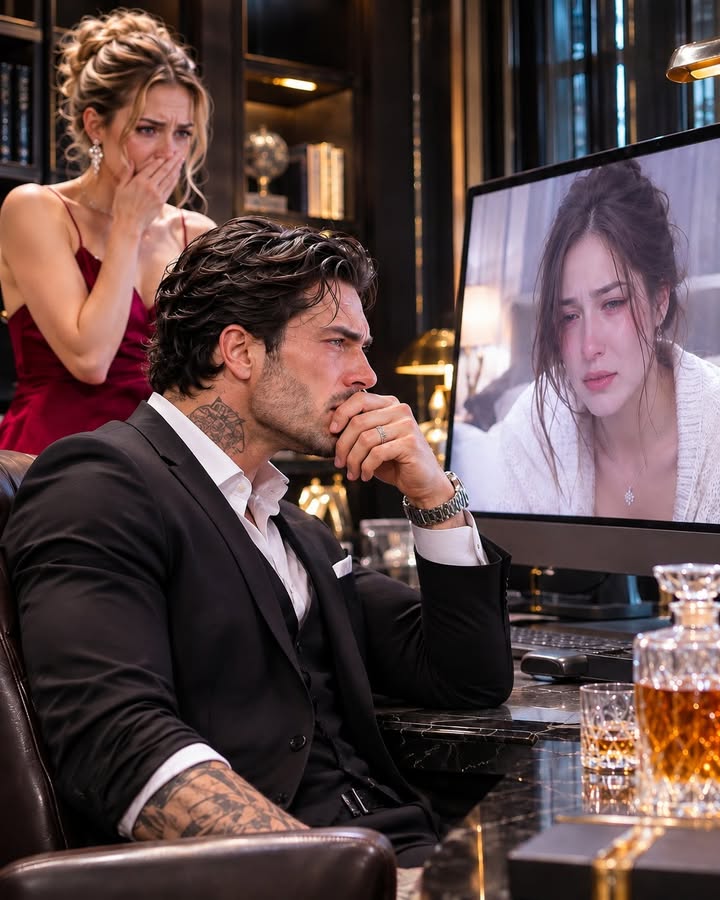
Alexander spent the rest of the night in the study, though he did not watch the recording again.
The images had settled too deeply in him to need repeating: the dark house, the open doorway in my drawing, the small figure holding a phone beneath a roof with no light in its windows.
By morning, he had made one decision.
He would not go looking for me.
It was not the decision he wanted to make, and he did not yet trust himself to understand why it was the right one.
He only knew I had asked him not to find me, and that ignoring the request would make his regret another burden for me to carry.
He called the number printed on the letterhead from my attorney’s email.
The woman who answered introduced herself as Ms. Patel and asked whether he was calling about the divorce filing.
“I am,” he said.
“Then I’ll remind you that Claire has asked that communication remain through this office for now.”
“I understand.”
“Do you?” Her voice was professional, not unkind. “She has been clear that she needs privacy. We can arrange for practical matters to be discussed without passing messages that put pressure on her.”
Alexander glanced toward the dark window.
“I want to know she’s safe.”
“She is safe,” Ms. Patel said. “She has appropriate support, and she is beginning treatment. I can’t provide her location, and I won’t ask her to reassure you.”
He closed his eyes.
“Was she alone when she left?”
“That isn’t something I can discuss. What I can tell you is that she made her own arrangements and understood what she was choosing.”
He had hoped for a detail that would settle him, some assurance that she had been frightened or uncertain, that a part of her still wanted him to reach out.
Instead, he heard the same careful boundary I had spoken in the recording.
“Is there anything you need from me?” he asked.
“Please don’t make a surprise visit to any place you think she might be,” Ms. Patel replied. “And don’t contact her directly while she has asked for communication through counsel.”
“I won’t.”
“Thank you.”
When the call ended, Alexander remained still with the phone against his palm.
His first instinct had been to ask whether I had mentioned him, whether I had asked after the house, whether I had said I might change my mind.
He had asked none of those questions.
It was the smallest restraint he could offer, and it felt nothing like an act of generosity.
At the office, his assistant had already moved the morning meetings, but Alexander canceled the rest of the day himself.
He told no one why.
The mansion staff had been gone since the previous evening, and the house had begun to reveal the difference between being maintained and being cared for.
A glass sat beside the kitchen sink.
The orchids needed water.
The dining room curtains had been left open, exposing the pale morning light and the long table where he and I had eaten together less often than he had ever admitted.
He went to the kitchen and tried to make coffee.
The machine blinked at him.
He pressed two buttons, waited, then found the instructions in a drawer beneath the counter.
As the coffee brewed, he noticed a small card tucked beneath the manual.
It was a reminder from the house manager about the staff’s scheduled final day.
He read the date once, then again.
The employees had not simply left in the night.
Their departure had been planned weeks in advance.
Alexander picked up his phone and called the house manager, Mrs. Alvarez, whose number he still had saved.
She answered after several rings.
“Mr. Moretti.”
“Why did the staff leave yesterday?”
“They didn’t leave yesterday,” she said. “Their contracts ended as planned.”
“Claire arranged it?”
“She spoke with me and the others before she left. She had a lawyer review the arrangements, and every person was paid through the end of their contract.”
Alexander looked down at the card in his hand.
“Why didn’t anyone tell me?”
“Mrs. Moretti asked us to keep her private matters private,” Mrs. Alvarez replied. “And she released us from our duties. She didn’t ask us to help her disappear.”
The last phrase landed harder than the rest.
“I didn’t say she did.”
“No, sir,” Mrs. Alvarez said gently. “But I thought you might wonder.”
He sat at the kitchen island.
“Did she seem upset?”
There was a pause.
“She seemed tired,” Mrs. Alvarez said. “But she was sure about what she needed to do.”
He stared at the card, at the neat handwriting that had recorded an ordinary arrangement he had failed to notice.
“Did she say anything about the house?”
“Only that she hoped the plants would be looked after.”
The orchids in the hall came to mind.
“Did she ask about those?”
“She asked that they be left where they were. She said they belonged to the house.”
Alexander looked at the coffee machine, still humming softly.
“I’m sorry I didn’t know what was happening.”
Mrs. Alvarez did not rush to comfort him.
“I’m sorry too, sir.”
The call ended without a farewell.
He drank the coffee standing by the sink, though he did not want it, and afterward he watered the orchids.
His attention lingered on their leaves, on the dark soil and the careful way they had been placed in their ceramic pots.
I had tended them quietly for years.
He had once mistaken that quietness for contentment.
At noon, Sophia arrived at his office.
She had sent a message first, asking whether he was willing to speak.
He had considered refusing, but she had been part of the mess, and silence would not make that disappear.
When his assistant let her into the office, Sophia carried a small paper bag in one hand.
She looked less polished than she had in the hospital, dressed in a plain blouse and dark trousers, her hair tied back.
“I thought you might not want to see me,” she said.
“I’m not sure I do.”
She nodded, accepting the answer without protest.
“I brought your jacket.”
She set it on the chair between them.
Alexander did not touch it.
“I know you saw the recording,” she said.
“How do you know?”
“Your assistant called me this morning. She said you wanted to ask about the jacket.”
“I didn’t ask her that.”
“She may have misunderstood.”
Sophia lowered her eyes to the paper bag.
“Or I may be expecting you to ask because I know I should have told you.”
The honesty unsettled him more than a defensive answer would have.
“Why were you wearing it?”
“Mine had been stained during the reception,” she said. “You offered yours because I was cold, and I accepted it.”
“It was a gift from Claire.”
“I know that now.”
“You knew it was hers at the hospital.”
“I did,” Sophia said. “I knew you’d taken it from the office wardrobe after she chose it for your birthday. I didn’t know how much it meant to her.”
“That seems like a convenient distinction.”
“It is,” she replied. “I’m not trying to make it sound better than it was.”
Alexander looked at her carefully.
“You accepted the jacket.”
“Yes.”
“And the strawberry keychain?”
Sophia looked up, surprised.
“Did she mention that in the recording?”
“She didn’t have to. I saw the photographs.”
For a moment, Sophia said nothing.
Then she let out a quiet breath.
“I made those charms at a workshop with the team,” she said. “There were several of them. I gave one to you because you’d helped us with the project, and I kept the matching one.”
“Why didn’t you tell me it was a matching set?”
“I did. I told you they were from the workshop.”
“That isn’t the same thing.”
“No,” she said. “It isn’t.”
He remembered the little crystal strawberry hanging from the keys he had given me at the hospital.
He had chosen them in a hurry, thinking the rooftop studio would be a grand enough gesture to bridge every gap he had ignored.
He had not looked closely at the keychain.
He had not asked where it came from.
He had not even noticed that the matching one was in one of Sophia’s photographs.
“You knew Claire was unhappy,” he said.
“I knew she was unhappy about us. I knew she was isolated. I knew you slept elsewhere more often than you admitted.”
Sophia’s voice stayed quiet, but her hands had tightened around the paper bag.
“I thought you and Claire had already stopped being a marriage in anything but name.”
“Why would you think that?”
“Because you spoke about the house like it was somewhere you visited, and about your wife like she was a person you had once tried to understand.”
He looked away.
“That doesn’t mean I was free to behave as though I were.”
“No,” Sophia said. “It doesn’t.”
The words sat between them.
She did not ask him to absolve her.
That made it harder to dismiss her as someone merely protecting herself.
“I thought she disliked me,” Sophia continued. “She barely spoke to me when we met. I told myself she was cold because she didn’t trust me, and I didn’t ask why she might have reason not to.”
“You were wearing my jacket in front of her.”
“I was.”
“And then you came to the hospital with me.”
“I thought I was there as your colleague.”
“Did you think about what it would look like to her?”
Sophia swallowed.
“Not enough.”
Alexander looked at the jacket on the chair.
“Did you know she had depression?”
“She told me once that she wasn’t sleeping,” Sophia said. “I asked if you knew, and she said you were busy.”
He remembered my pale face in the hospital bed, my quiet answer when he asked why I had not called.
“You knew that and still thought she was only jealous?”
“I thought there was jealousy,” Sophia replied. “I was wrong to decide that explained everything.”
Her eyes shone, though she did not cry.
“I should have asked if she was getting help. I should have stopped accepting little things that made the boundary between us unclear.”
“Were you in love with me?”
Sophia went very still.
“No,” she said at last. “I admired you. I liked being noticed by you. I was lonely in a new job and you were generous with your time when you wanted to be.”
“That’s not the same.”
“No,” she said. “But it still mattered.”
He could not argue with that.
She picked up the jacket and folded it over one arm.
“I’m going to ask to be moved to another team,” she said. “I should have created distance sooner. I don’t want to make your marriage harder than it already was.”
“It isn’t your responsibility to repair it.”
“No,” she replied. “But it was my responsibility not to treat another person’s marriage as if the details didn’t matter.”
Alexander looked at her.
“What do you want from me?”
“Nothing.” She hesitated. “I wanted to apologize without expecting you to tell me I’m a good person.”
He had no ready response.
“I’m not going to comfort you about it,” he said.
“I know.”
“And I’m not going to say it didn’t hurt Claire.”
“I know that too.”
She placed the jacket back on the chair.
“I’ll keep my distance from now on.”
After she left, Alexander did not return to work.
He carried the jacket home and set it on the study desk beside the USB drive.
The fabric smelled faintly of the cedar closet and, beneath it, some perfume he did not recognize.
He wondered whether I had noticed the fragrance the first time he brought it home.
He wondered how many times I had chosen not to ask because the answer no longer seemed worth hearing.
That evening, he opened the photograph Sophia had mentioned.
It showed her at a table with three other colleagues, holding up a small crystal strawberry on a silver chain.
Her caption joked about their handmade creations.
In the corner of the image, reflected in a dark window, Alexander could see his own shoulder.
He zoomed in.
The chain around the strawberry was almost identical to the one attached to the keys he had placed beside my hospital bed.
He remembered buying those keys from a display near the studio entrance.
He had been late for another meeting and had chosen a charm because it looked cheerful.
He had told himself it was thoughtful.
It had not been thoughtful.
It had been convenient, and worse, it had carried the trace of a private joke he shared with someone else.
He shut the photograph.
The following morning, a parcel arrived at the house.
It was addressed to Alexander, but the return label belonged to Mrs. Alvarez.
Inside was a small stack of household paperwork and a note from the house manager confirming that she had forwarded all outstanding invoices.
At the bottom of the box lay a narrow envelope.
Alexander recognized my handwriting before he read his name.
For a moment, he thought it might be another letter.
Instead, inside was a single photograph.
It showed me in the conservatory, years younger, with the orchid balanced in my hands.
I was smiling at the camera.
Beside me, on a low table, lay a closed sketchbook with a blue cover.
On the back of the photograph, I had written: “The first one that bloomed.”
He held the picture carefully.
He remembered the day vaguely.
He had returned home late and found me in the conservatory, but he had been on a call and had only glanced through the glass.
I had lifted the orchid toward him, and he had given her a distracted thumbs-up before walking away.
He had not known I was asking him to look.
Or perhaps he had known, and had decided the call mattered more.
He placed the photograph beside the computer.
Then he opened the recording again, but this time he stopped before the final clip.
The question from my first message returned to him.
Could I count on you when I was hurting?
He had no answer that would change what I had lived through.
At the bottom of the parcel box, he noticed another sheet of paper, folded in half.
It was a copy of the staff’s final payroll record, signed by me.
The figures were orderly, the dates clearly marked.
No one had helped me vanish.
No one had been bribed, persuaded, or frightened into keeping a secret.
I had made my own arrangements, and the people who had worked in the house had simply respected them.
Alexander sat down with the paper in his hands.
He had spent the night before imagining that I might have left in anger, that there had been some hidden plan he could uncover if he asked the right person.
But there was no mystery to solve.
There was only a life I had been quietly living beside him, with calls he had ignored, drawings he had never seen, and decisions I had been forced to make without trusting him to hear them.
His phone rang.
It was Ms. Patel.
“Mr. Moretti, I’m calling about a document Claire left with the rest of her personal records,” she said. “We need your signature on a routine acknowledgment that you make no claim to those belongings.”
“I’ll sign.”
“Thank you. I’ll send the form securely.”
“Ms. Patel,” he said before she could end the call.
“Yes?”
“Did Claire leave the sketchbook with you?”
There was a pause.
“No,” she said. “She took it with her.”
He looked at the empty side of the closet, at the photograph on the desk, and at the recording paused on the dark corridor.
Then Ms. Patel added, “There is one other matter she asked me to keep on file, in case you raised the hospital calls.”
Alexander’s fingers tightened around the phone.
“What hospital calls?”
“The records show that Claire tried to reach you during one of her worst episodes, before the accident,” Ms. Patel said. “According to the notes, the message was left with the household staff.”
The room seemed to grow very quiet.
Alexander stared at the phone in his hand.
“I never received it.”
“I understand,” Ms. Patel replied. “But the record indicates that Claire believed she had asked you to come home.”
For a long moment, he could not speak.
Then he heard the faint rustle of a page on her end of the line.
“Do you know who took the message?” he asked.
“I don’t,” she said. “But there’s a name written beside the call.”
Alexander felt the photograph slip slightly beneath his other hand.
“What name?” he asked.
**–END OF PART 3–CLICK “NEXT” AT THE BOTTOM OF THE PAGE TO CONTINUE READING**
* * *
[PREVIOUS: PART 2](https://puretales.idolsgift.com/blog/part-2-the-sketchbook-he-never-saw-035) | [NEXT: PART 4](https://puretales.idolsgift.com/blog/part-4-the-sketchbook-he-never-saw-035)
✓ Lynn R. Adams
Part 3 – The Boundaries Between Us Alexander spent the rest of the night in the study, though he did not watch the recording again. The images had settled too deeply in him to need repeating: the da…