PART 3: The Secret Carmela Left Behind 041
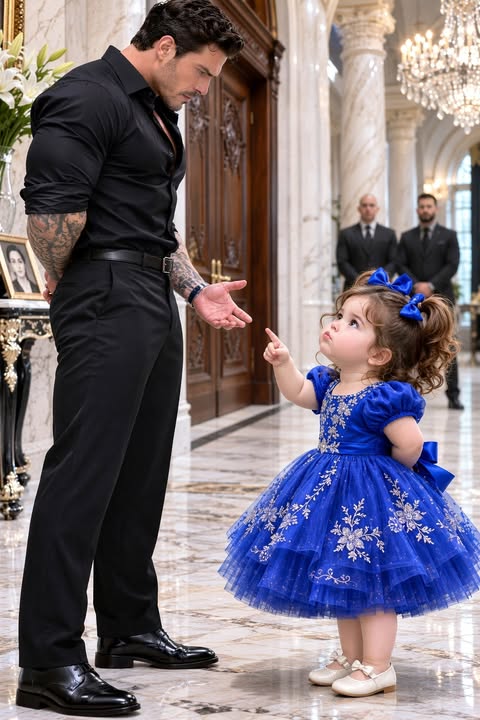
Part 3 – The East Gate
The note opened across Dante’s palm, its paper softened by time and folded so many times that the creases threatened to split.
Rosa stood beside him, one hand resting on Sophia’s shoulder, while the little girl leaned against his arm and watched the writing.
Dante recognized Carmela’s handwriting at once: elegant, narrow letters with a slight upward tilt, as if even her words were reaching toward something.
The note contained only a few words.
The east gate.
Ask why it was left open.
Beneath them was a date.
Dante read it once, then again, while the room seemed to draw in around him.
“That was the day of the ambush,” Rosa whispered.
“Yes.”
He lowered the paper to the table.
For an instant, the old memory returned whole: the abrupt call, the hurried drive, the sharp confusion of arriving too late to change anything.
He pressed his fingers against the edge of the table until the room steadied.
Sophia watched his face.
“Big man sad?”
“I’m thinking,” he said.
She considered that, then patted his wrist.
“Think soft.”
A breath left him, half a laugh and half something too close to grief.
Rosa looked from the note to the locket.
“She must have hidden it inside there.”
“She wanted me to find it.”
“Perhaps she wanted you to find it when you were ready.”
Dante met her eyes.
“Or when it was safe.”
Neither of them spoke for a moment.
He picked up the note with careful fingers and read it again, searching for another line, a name, anything that might make the message less like a door opening onto darkness.
There was nothing.
“Did Carmela ever mention the east gate to you?” he asked.
“No.”
“Did she talk about the estate’s security?”
“Not with me.”
“Did she seem worried about anyone?”
Rosa hesitated, and the hesitation itself was enough to make him look closely at her.
“I remember her asking whether the staff schedule changed often.”
“When?”
“Maybe a week before the ambush. She asked me who usually worked late and who had access to the service corridor.”
Dante folded the note along its old creases.
“Why didn’t you tell me that before?”
“Because I didn’t understand why she asked.”
“And now?”
“Now I wonder if she was trying to find out who could move around without drawing attention.”
His gaze sharpened, but he kept his voice measured.
“Did she mention a particular person?”
“No.”
“Did she ask about me?”
“Only whether you were sleeping.”
The answer brought an ache beneath his ribs.
“What did you tell her?”
“That you weren’t.”
Dante looked down at the small, careful handwriting.
It was like Carmela to notice his exhaustion and ask about it through someone else rather than start another argument he would turn into a promise.
“Did she say why she wanted the locket kept safe?”
“No.”
“Did she tell you not to show anyone the note?”
“She didn’t tell me there was a note.”
“Of course.”
The words came out more tired than angry.
Rosa’s chin lowered.
“I should have insisted she explain.”
“Maybe she believed there wasn’t time.”
“Maybe.”
Dante slipped the note into the inside pocket of his jacket.
Then he picked up the locket and closed its tiny compartment.
“Rosa, I’m going to review the security records from that day.”
“I thought you might.”
“If you remember anything else, no matter how small, tell me.”
“I will.”
He paused, then added, “You can tell me even if you think I won’t like it.”
Rosa’s gaze held his.
“That is what Carmela hoped you would say.”
He could not tell whether the remark was meant as reassurance or reminder.
Perhaps it was both.
Outside the sitting room, the household had returned to its careful stillness, though the staff tried not to make it obvious they were listening.
Dante left the door open.
He noticed Rosa notice.
Neither of them commented on it.
By the time they reached the front hallway, Sophia had begun to drag her feet, her royal-blue skirt swaying from side to side.
“Puppy tired,” she announced.
“You’re not a puppy,” Rosa said.
“Princess puppy.”
Dante glanced down at her.
“That sounds like a title you can keep.”
Sophia brightened.
Rosa gave him a surprised look, and for a second, the distance between them seemed less like suspicion and more like an unfamiliar bridge neither knew how to cross.
Then the moment passed.
Dante gave instructions to his driver and two guards, asking them to bring the records room files to his office.
He asked that no one else be involved until he understood what Carmela’s note meant.
He did not want rumor to become evidence, or fear to become certainty.
The more he thought about it, the more he understood that the note did not accuse anyone.
It asked a question.
That mattered.
His office had not changed much since the ambush, though he had removed most of the photographs from its shelves.
A single framed picture remained, face down beside a stack of unopened correspondence.
Dante turned it over.
Carmela stood in the garden with her head tipped back in laughter, sunlight caught in her hair.
He let himself look at her for a moment before placing the picture upright on the desk.
Then he opened the old security logs.
The records were stored in a mix of paper binders and digital backups, organized by date and entrance.
Dante had reviewed some of them after Carmela’s death, though never in a way that made him feel he had reached the bottom of anything.
At the time, every detail had seemed capable of becoming an accusation.
He had been angry, grieving, and unwilling to accept that the attack could have come from someone who knew the estate.
Now he read more slowly.
The east gate had been an older service entrance, used mainly for deliveries and maintenance crews.
It sat beyond the kitchen garden, screened by hedges and a line of cypress trees.
The gate’s alarm system recorded openings, closings, and any period when the sensor was disabled.
Dante found the entry for the afternoon of the ambush.
At p.m., the alarm had been disabled.
At , the gate had opened.
At , the gate had been closed again.
The alarm did not come back online until .
He read the times once, then ran his finger beneath them.
Carmela had been killed at four.
A knock came at the office door.
“Come in.”
One of the older guards stepped inside, his uniform neat and his expression grave.
“Mr. Falcone, I brought the incident binder you asked for.”
“Put it on the desk, please.”
The guard saw the screen and stopped.
“You’re looking at the east gate record.”
“I am.”
“Those logs were checked after the ambush.”
“By whom?”
“By the security team.”
“Was the alarm disabled deliberately?”
The guard’s face tightened.
“The system malfunctioned that afternoon.”
“That’s what the report says.”
“It was the conclusion we reached.”
“Who reached it?”
The guard glanced toward the closed office door.
“Mr. Mercer was still security chief then.”
Dante’s fingers rested on the binder.
“Was he the one who wrote the report?”
“Yes.”
The former chief’s name carried a faint echo through the room.
Graham Mercer had worked for Dante for nearly a decade, had overseen the guards and systems at the estate, and had always been a man who spoke about procedure as if it were a kind of faith.
He had left the estate months after the ambush, citing family reasons.
Dante had accepted the explanation because he had been too exhausted to ask better questions.
“Where is Mercer now?” Dante asked.
“I don’t know.”
“You haven’t been in contact?”
“No, sir.”
The guard’s hesitation returned, heavier this time.
Dante sat back.
“Tell me what you remember about that day.”
The man shifted his weight.
“We were all questioned. The gate alarm had been unreliable for months.”
“By whom?”
“By Mr. Mercer’s team, mostly.”
“Did you personally see it fail?”
“I saw it reset itself once during a storm.”
“That was the same system?”
“Yes.”
“Did it fail that afternoon?”
“I didn’t see it happen.”
“Did anyone?”
“Mr. Mercer said the control panel showed a fault.”
Dante looked at the report.
“Did you inspect the panel?”
“No.”
“Did anyone other than Mercer?”
“I don’t remember.”
“Do you remember Carmela asking about the east gate?”
The guard’s face changed, though only slightly.
“She asked whether the service entrance was locked.”
“When?”
“Some days before the ambush, maybe. I was stationed by the kitchen corridor.”
“What did you tell her?”
“That it was. She asked why the alarm light had been blinking.”
Dante’s shoulders went rigid.
“What did you say?”
“I told her it was a known sensor issue and Mr. Mercer was handling it.”
“Did she ask anything else?”
“She asked if the gate could be opened from outside.”
“And?”
“I said no, not without a key or access code.”
“Did she seem satisfied?”
The guard frowned, remembering.
“Not exactly. She said, ‘That’s good,’ but she didn’t sound relieved.”
Dante looked toward the photograph on his desk.
“Why didn’t you include that in your report?”
“I wasn’t asked about it.”
“Did you tell Mercer?”
The guard looked away.
“I told him she’d asked about the blinking light.”
“What did he say?”
“He told me not to worry her with technical details.”
The room went quiet.
Dante did not raise his voice.
“Did you understand that as an order?”
“I understood that he wanted the matter handled without upsetting her.”
“Did he say the system was malfunctioning?”
“Yes.”
“Did he tell you the alarm had been disabled before the gate opened?”
“No.”
The guard looked troubled now, less as if he had been caught in something and more as if he had finally heard the shape of it.
“Mr. Falcone, if I should have done something—”
“I’m not asking you to defend yourself.”
Dante opened the binder.
“I’m asking what you remember.”
The guard gave a small nod.
“I’m sorry I don’t remember more.”
“So am I.”
After he left, Dante sat for several minutes without turning a page.
The evidence did not prove anything beyond what the log recorded.
A disabled alarm could have meant a faulty sensor, a repair, or a deliberate interruption.
Carmela had asked about the gate.
Mercer had controlled the system.
The gate had been open less than half an hour before the ambush.
Each fact had an innocent explanation.
Together, they were harder to ignore.
Dante checked the personnel files and the old correspondence.
Mercer had left the estate six months after the attack.
A brief resignation letter cited a move to another state and a desire to step back from demanding work.
There was no forwarding address.
The phone number listed in the file had been disconnected.
Dante’s office manager found an old email thread, but the account Mercer used no longer existed.
He did not tell the guards what he suspected.
He did not call a rival crew or send anyone searching for Mercer.
For now, he had questions, not conclusions.
At dusk, he found Rosa in the kitchen, carefully portioning soup into bowls while Sophia sat at the table, her blue dress changed for a soft yellow sweater.
The child had a small book open in front of her, though she appeared to be using it mostly as a place to stack crackers.
“You’ve been busy,” Rosa said.
“I’ve read the records.”
“And?”
“The east gate alarm was disabled less than forty minutes before the gate opened.”
Rosa’s spoon paused above a bowl.
“Disabled?”
“That’s what the log says.”
“What did the report say?”
“That the system malfunctioned.”
“Do you believe that?”
“I don’t know.”
Rosa set down the spoon.
“Carmela asked me whether people could be trusted here.”
Dante looked at her.
“When?”
“Not that day. A little before it.”
“What exactly did she say?”
“She asked whether I trusted the people who worked in the house.”
“What did you tell her?”
“I said I trusted the women who worked with me.”
“And what did she say?”
“She asked if I trusted the men.”
Dante absorbed that quietly.
“Did you ask why?”
“I did.”
“What was her answer?”
“She said she wanted to know how carefully I watched the doors.”
“That sounds like her.”
“It sounded like a joke at the time.”
“Did she seem frightened?”
Rosa looked down at the bowls.
“She seemed distracted. Not frightened, exactly. She was always calm around other people.”
“Did she ask about Mercer?”
“No.”
“Did she speak to him privately?”
“I don’t know.”
Sophia looked up from her crackers.
“Who Mercer?”
“No one you need to worry about,” Rosa said.
“Big man worry.”
“I’m thinking,” Dante told her.
“Think soft,” Sophia reminded him.
This time his smile came more easily, though it vanished when he turned back to Rosa.
“Did you know Carmela before she hired you?”
“Yes.”
“Did you know her well?”
Rosa drew a breath.
“I knew the part of her she showed at the café.”
“That isn’t an answer.”
“It’s the most honest one I have.”
Dante leaned against the counter.
“Tell me about the café.”
Rosa looked at him with a hint of surprise.
“Why?”
“Because I’ve been trying to understand what she may have been afraid to tell me.”
“I don’t know if it will help.”
“Tell me anyway.”
Rosa dried her hands on a towel.
“For a while, I worked evenings at a small café near the market. Carmela came in on Thursdays, usually alone, and sat by the window. She would order tea and read. She was kind to me, but she didn’t talk about her marriage.”
“She never mentioned me?”
“Once or twice, but not the way you might expect.”
“What way would I expect?”
“As if she loved you, but also knew you could make a room feel smaller without meaning to.”
The words stung because they sounded familiar.
He turned his attention to Sophia, who was trying to balance a cracker on her nose.
“Did she tell you she was unhappy?”
“No.”
“Afraid?”
“No.”
“Did she ask you for advice?”
“About life. Work. Being a mother.”
“Not about me?”
“Not directly.”
Rosa’s hands twisted together.
“She once asked whether it was possible to care about someone and still need space from them.”
Dante stopped moving.
“What did you say?”
“I said yes.”
“And what did she say?”
“She said, ‘Good. I thought so.’”
The kitchen seemed to grow quieter.
Dante remembered a night months before the ambush when he had arrived home late and found Carmela waiting up.
She had asked him to sit with her.
He had stood by the window, answering messages while she spoke.
Later, she had told him she was tired of competing with every crisis in his life.
He had promised to make more room for her.
For a little while, he had done better.
Then the old habits had returned.
“She never told me she talked to you about those things.”
“She didn’t want me to repeat them.”
“Did she ever tell you she had found something at the estate?”
“No.”
“Did she say anything about a gate?”
Rosa shook her head.
“I’ve told you everything I remember.”
He believed she believed that.
It was not the same as knowing there was nothing else.
The distinction unsettled him, but he did not press.
Sophia slid off her chair and brought him the cracker.
“Eat.”
“I’m not hungry.”
“Eat, big man.”
She pushed it into his hand.
Dante looked at the small, solemn face before him and obeyed.
Sophia beamed.
Rosa’s expression softened, though concern remained in her eyes.
“Perhaps you should let the authorities review the records,” she said.
“I will, once I know what I’m giving them.”
“Why wait?”
“Because the old report may be incomplete, and I don’t want to accuse anyone based on a handful of entries.”
“That sounds reasonable.”
“It doesn’t feel reasonable.”
“What does it feel like?”
“Like opening a door I should have opened eighteen months ago.”
Rosa glanced toward the hallway.
“The same door as Carmela’s room?”
“Not quite.”
“Perhaps it’s the same one in a different form.”
He thought about that for a moment.
“I used to believe that if I kept every detail in place, I could keep her close.”
“And now?”
“Now I’m beginning to understand that keeping her close and keeping everything closed aren’t the same thing.”
Rosa looked at him with a gentleness he did not know how to receive.
Before she could answer, the office manager appeared in the doorway.
“Mr. Falcone, I found something in the archived maintenance file.”
Dante straightened.
“What is it?”
“A work order for the east gate alarm, dated three days before the ambush.”
He took the paper.
The form listed a sensor adjustment and a temporary bypass, signed by the security chief.
The bypass was supposed to last twenty minutes.
A handwritten note in the margin read: *Monitor panel at east gate. Retest after service run.*
Dante turned the page over.
The follow-up line was blank.
“Was the repair ever completed?” he asked.
“I can’t find a second work order.”
“Bring the entire folder to my office.”
“Yes, sir.”
The office manager left.
Rosa studied the copy in Dante’s hand.
“So the system may really have been faulty.”
“It may have been.”
“Or the repair was never finished.”
“Or the bypass stayed open.”
The answer seemed to make both explanations more difficult, not less.
Dante slipped the paper into his jacket beside Carmela’s note.
“You said the ambush happened on the date written there,” Rosa said.
“Yes.”
“Did she know the gate would be open?”
“I don’t know.”
“Could she have been trying to warn you?”
“I don’t know.”
He was tired of the words, but he would not replace them with certainty he had not earned.
That night, he read the maintenance records again.
He compared the alarm logs with the guard assignments, looking for anything that might explain why the gate had been left unattended.
At , the system showed the bypass.
At , the gate opened.
The event log named no user.
The panel itself had been replaced after the ambush, and the original equipment had been discarded during a later renovation.
The security chief’s report described the timing as a system fault.
The surviving guards described the same event as a malfunction they had been told not to question.
Dante found no proof that Mercer had deliberately opened the gate.
He found no proof that anyone else had.
Near midnight, he returned to Carmela’s sitting room.
He had left the door open.
The room looked different in the softer light, less like a preserved shrine and more like a room waiting to be used again.
He sat in her cream chair and held the locket in his palm.
For the first time since the ambush, he allowed himself to ask what she might have wanted to tell him if she had lived.
Not what she might have hidden.
Not what he might have done to keep her safe.
What she had been trying to say.
The answer did not come.
Only the note remained, its question folded inside the gold heart.
The east gate.
Ask why it was left open.
The following afternoon, Dante asked Rosa to join him in the library while Sophia played with a wooden puzzle on the rug.
“I reviewed the old staff records,” he said.
“Did you find anything?”
“Mercer left six months after the ambush.”
“I remember him.”
“You remember him?”
“Of course. He was often in the kitchen, checking the delivery schedules.”
“Did he speak to Carmela?”
“Sometimes.”
“Did they seem close?”
“No.”
“Did they seem uncomfortable around each other?”
Rosa’s eyes shifted to the puzzle.
“I never thought so.”
“You’ve never mentioned knowing him.”
“You never asked.”
It was the same answer she had given about Carmela, and again Dante could not dismiss it as evasive.
He had never asked what Rosa had seen.
He had treated her as part of the house, not as someone who lived and remembered inside it.
“Do you recall him coming to your apartment?” he asked.
“No.”
“Calling you?”
“No.”
“Giving you anything to hold?”
“Nothing.”
Dante nodded, accepting the answer.
Sophia lifted a wooden triangle and tried to fit it into the round opening.
“Wrong shape,” she said.
“Try turning it,” Rosa suggested.
Sophia turned it once, then twice, and frowned at the puzzle.
“Still wrong.”
“You may need another piece,” Dante said.
Sophia looked at him.
“You help.”
He crouched beside her and found the small circle under the edge of the table.
When she placed it into the opening, her face lit with triumph.
“Good team!”
Rosa smiled at them.
Something in that simple praise settled into the room, and Dante found himself wanting to hold on to it.
Then Rosa stood and went to the window.
“Mr. Falcone, there’s something else about the café.”
He rose.
“What?”
“I told you she came there alone. That wasn’t always true.”
Dante waited.
“Sometimes a man came in a few minutes after her.”
“Who?”
“I never knew his name. He was older, well dressed, and he always sat far enough away that no one would think they were together.”
“Did Carmela speak to him?”
“Yes.”
“How often?”
“Three or four times, perhaps. I only noticed because he never ordered anything.”
“Did you hear what they said?”
“No. The café was busy, and they were careful.”
“Did he work for the estate?”
“I don’t know.”
“Did you recognize him?”
Rosa turned from the window.
“Not then.”
“Why tell me now?”
“Because when I saw the old photograph of the security team in your office, I thought I recognized him.”
Dante felt the room tighten around him.
“Who?”
“I’m not certain. The photograph was small.”
“Was he Mercer?”
Rosa hesitated.
“I think so.”
“You think you saw Carmela meeting your security chief outside the estate?”
“I think the man may have been him.”
“Why didn’t you tell me before?”
“Because I didn’t remember it until today.”
He studied her face, searching for any sign that this was a story she had prepared.
All he saw was worry and the effort of a person trying to distinguish memory from fear.
“Did Carmela look upset when he came?”
“Not that I recall.”
“Did she look frightened?”
“No.”
“Did she give him anything?”
“I couldn’t see.”
“And you never asked her about him?”
“No.”
“Why not?”
“Because it didn’t seem like my place.”
The words fell quietly, but Dante heard something beneath them: the long habit of believing her place was always at the edge of other people’s lives.
He had helped create that distance by never wondering what she knew.
“What day was this?”
“I can’t tell you exactly. It was during the month before the ambush.”
“Would you recognize him if you saw him again?”
“I might.”
Dante walked to the desk and opened the drawer where he kept the old estate photographs.
He took out the image of the security team, a formal picture taken years earlier in the courtyard.
Mercer stood in the back row, his expression reserved, his dark hair already touched with gray.
Dante placed it on the table.
“Take your time.”
Rosa leaned closer.
She studied the faces without speaking.
Then her gaze stopped on Mercer.
“That could be him.”
“Could be?”
“I want to say yes, but I don’t want to make the memory fit because you showed me his picture.”
Dante held her gaze.
“Thank you for saying that.”
“Do you think I should have told you about the café sooner?”
“I think you should tell me what you remember when you remember it.”
“And if it changes?”
“Then tell me that too.”
Rosa nodded slowly.
Sophia came over carrying the circle from the puzzle.
“Mommy, we play?”
“In a minute, sweetheart.”
“Now.”
Dante reached for the piece.
“Shall we finish the puzzle?”
Sophia studied him with serious eyes.
“After big man listen.”
He glanced at Rosa.
“I’m listening.”
She looked back at the photograph of Mercer.
“Carmela didn’t trust him,” she said.
“Do you know that?”
“No.”
“Then what do you know?”
Rosa took a breath.
“I know she met a man who might have been him, more than once, and that she was asking me about the people who watched the doors.”
Dante turned the photograph face down.
He could feel the old instinct urging him to act—to find Mercer, demand an explanation, and end the uncertainty with a confrontation.
Instead, he put the photograph away.
“I won’t decide what it means until I know more.”
Rosa’s shoulders lowered a fraction.
“I’m glad.”
“Do you think she was keeping something from me because she didn’t trust me?”
Rosa did not answer quickly.
“I think she was trying to protect you from making a decision before she had enough to show you.”
“That isn’t the same as trust.”
“No,” Rosa said. “But it may have been what trust looked like to her then.”
Dante looked toward Carmela’s sitting room, visible through the open doorway at the end of the hall.
“I wish she had given me the chance to prove I could listen.”
“Perhaps she thought she was giving you one.”
Sophia pressed the wooden circle into Dante’s palm.
“Puzzle now.”
He closed his fingers around it.
“All right.”
For a while, they worked together on the rug, fitting the simple pieces into their places.
Sophia praised each success as though they had solved something far more difficult.
Rosa laughed when Dante tried to place the square into the star-shaped opening.
The sound was small, but it changed the room.
It reminded him that sorrow and ordinary life could
**–END OF PART 3–CLICK “NEXT” AT THE BOTTOM OF THE PAGE TO CONTINUE READING**
* * *
[PREVIOUS: PART 2](https://echoesofstories.idolsgift.com/blog/part-2-the-secret-carmela-left-behind-041) | [NEXT: PART 4](https://echoesofstories.idolsgift.com/blog/part-4-the-secret-carmela-left-behind-041)
✓ Lynn R. Adams
Part 3 – The East Gate The note opened across Dante’s palm, its paper softened by time and folded so many times that the creases threatened to split. Rosa stood beside him, one hand resting on Sophi…