PART 3: The Secret Beneath the Surface 058
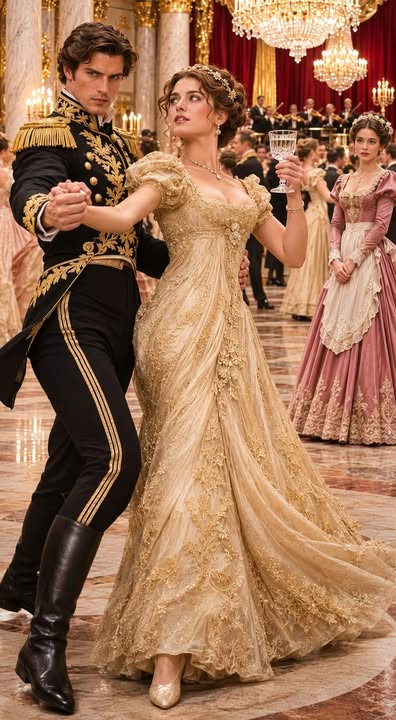
Part 3 – The Name in the Ledger
“I think it may have belonged to someone named Eleanor Vale.”
For a moment, I could only look at the folded sheet in Alexander’s hand.
The name was my mother’s, yet hearing it spoken in the corridor made it feel as though the palace itself had called her back.
I opened the door wider.
“Come in,” I said, then glanced past him toward the passage.
He understood without asking and stepped inside, leaving the door almost closed behind him.
The room was small, with two narrow beds, a washstand, and a little shelf where I kept my few belongings.
My mother’s music book rested there beneath a folded piece of linen.
Alexander noticed it, but did not reach for it.
“May I see the paper?” I asked.
He unfolded the sheet carefully.
It was a copy of a note, written in an old hand, with the edges browned by age.
“His Majesty’s private papers were being sorted,” he said. “I was looking for a document about the west gallery when I found it between two account books.”
I read the lines slowly.
“Waltz demonstration to be arranged with E. Vale,” I murmured.
Beneath that, a second line had been added in a different ink.
“Use the glass exercise to teach the young prince composure. Allow the music to turn before the hand.”
My throat tightened.
The words were close enough to my mother’s penciled note that I felt, for a heartbeat, as if she had written them herself.
“Do you think she was the one who taught your father this?” I asked.
“I don’t know.” Alexander’s gaze moved from the note to the music book. “But the handwriting on the first line may be hers.”
I reached for the sheet, then stopped.
“May I?”
He handed it to me.
The paper was thin, and the ink had faded, but there was no mistaking the careful slant of the name.
I had seen my mother write it on labels, on the inside covers of her books, and once on a letter she sent to a cousin who never answered.
My thumb rested beside the words.
“She was here,” I said.
“Before you?”
“Yes. She worked at the palace before I was old enough to remember much about it.”
“Did she ever tell you she helped my father?”
“She said she had copied music for someone at the palace.” I looked again at the note. “I thought she meant she had been asked to make a clean copy. She did not talk about the royal family.”
“Perhaps she wanted to keep that part of her life separate.”
“Perhaps.”
The answer should have comforted me, but instead it made the years feel full of doors I had never known to look for.
Alexander sat on the edge of the chair beside the washstand.
“Would you show me the book?”
I looked at the battered cover.
The faded name inside it was plain to anyone who opened it.
For years, I had guarded the book because it held what remained of my mother’s voice.
Now it might also hold a piece of the palace’s past.
“I can show you the page,” I said. “But I want to turn it myself.”
“Of course.”
I lifted the book from the shelf and set it on the table between us.
The cover opened with a faint creak.
The familiar music lay across the pages in my mother’s neat hand, each line carefully copied, though a few notes had blurred where water or age had touched the paper.
I found the waltz in the middle and turned the book toward him.
He leaned close without touching it.
“Four strokes, a pause, then three,” he said.
“You see them?”
“I do.”
“And the words?”
“Remember the water. Let it finish its turn.”
I studied his face.
“Does that mean anything to you?”
“Only what I read on the note.” He hesitated. “My father used to tell me that patience was not the same as stillness. I never understood what he meant.”
“Perhaps he was trying to teach you.”
“Perhaps he was trying to teach himself.”
His voice softened on the final words.
I saw then that this was not only a mystery to him.
His father had been gone for several years, and the private papers were one of the few places Alexander could still encounter him without the court’s polished stories standing between them.
“Did you know him well?” I asked.
“I knew him as a boy knows his father, which is to say I thought he would always be there.” He looked down at the note. “After he died, people told me what he had believed, what he had planned, and what he would have wanted. I grew tired of other people speaking for him.”
“I understand that.”
“Do you?”
“I have heard people explain my mother to me, even when they never met her.”
He looked up.
“Then we have that in common.”
“We may have that much in common,” I said.
A faint smile touched his mouth.
I turned the music book back toward myself.
“There is something else,” I said. “I found her name in the old staff ledger.”
His expression sharpened.
“What did it say?”
“Only that she left. The rest of the line had been cut away.”
“Cut?”
“Cleanly.”
“When did you find this?”
“Yesterday morning. I was delivering cloths to the records room.”
“Did you tell anyone?”
“The clerk who was there. He said the records were incomplete.”
“Did he know your mother?”
“He pretended not to.”
Alexander rose from the chair, then seemed to remember how quickly a prince’s concern could become a command.
He paused before speaking.
“I could ask the steward to find the ledger.”
“No.”
The word came too quickly again.
He did not take offense, but his expression grew careful.
“Why not?”
“Because if you ask, the whole palace will know you are looking into my mother’s record.”
“Perhaps that would bring the truth into the open.”
“Or it would make people think I had asked you to do it.”
“I would be asking on my own behalf.”
“People may still tell the story they prefer.”
He looked toward the half-closed door.
“You have had to consider every consequence before anyone else even knows there is a choice.”
“That is how I keep my place.”
The words fell more sharply than I intended.
Alexander lowered his gaze.
“I’m sorry.”
“Please don’t apologize for being who you are.”
“I am not apologizing for that. I am sorry I did not understand how much my position changes the meaning of what I do.”
I let the silence sit between us.
He had listened to me before, but listening was easier when the subject was water and balance.
This was different.
“My mother was not a courtier,” I said. “She was a woman who worked here. Whatever she did, she did without a title or a room of her own.”
“Then the record should tell the truth about her.”
“Yes,” I said. “But the truth belongs to her too. I do not want it pulled into the ballroom as a curiosity.”
He nodded.
“I won’t speak to the steward without your permission.”
“Thank you.”
He glanced once more at the note.
“Could we look for other references? Quietly, I mean. In my father’s papers, or the music.”
I closed the book.
“Not tonight.”
“No.”
“And not without thinking about what we might find.”
“That seems fair.”
His gaze rested on the cover.
“I can wait.”
“Princes are not known for waiting.”
“Perhaps I can learn.”
The answer was so gently offered that my suspicion eased, though it did not disappear.
At the door, he stopped.
“Emma, I want to be clear about one thing.”
I waited.
“You do not owe me the story of your mother because I found a paper bearing her name.”
“Thank you.”
“And if you decide you don’t want to continue looking, I will accept that.”
I believed he meant it.
That was what made my next words harder.
“I do want to know what happened,” I said. “I just don’t want to be treated as if the answer belongs to the palace.”
“It doesn’t.”
He left without asking for the book.
For several days, we kept to our ordinary routines.
Alexander did not come through the servants’ passage, though I saw him once from across the courtyard, walking beside the royal adviser with his hands clasped behind him.
The adviser was a neat, silver-haired man named Lord Harbury, whose expressions rarely changed.
When he noticed me looking, he spoke into Alexander’s ear.
The prince glanced toward me, then continued on.
I told myself there was nothing to read in that small exchange.
But rumors, once given room, do not wait for proof.
The first version reached the kitchens by the end of the week.
It was said that I had bewitched the prince with a dance.
The next version claimed I had made a private bargain with him.
By Sunday, someone had decided I had been trying to secure a position above my station for years.
Clara told me the worst of it while we folded tablecloths.
“I don’t believe a word,” she said.
“Thank you.”
“Mrs. Bell says it will fade if you give it nothing to feed on.”
“Mrs. Bell is sensible.”
“She also says you should avoid the prince.”
I smoothed a wrinkle from the linen.
“Did she say that?”
“She said it would be wise.”
“Then she may be right.”
Clara watched me.
“Do you want to avoid him?”
“I want people to stop making stories out of every conversation.”
“That is not the same thing.”
“No,” I said. “It isn’t.”
That afternoon, Lady Victoria arrived in the kitchens while I was helping arrange small cakes on a serving tray.
The room grew quiet at once.
She wore a dark green walking dress, less grand than the gold gown from the challenge but still finer than anything I had ever touched.
Her maid waited by the door.
“Miss Vale,” Victoria said.
I set down the cake tongs and curtsied.
“Lady Victoria.”
“I wanted to congratulate you properly.”
The room remained still around us.
“Thank you, my lady.”
“You were remarkable in the ballroom.”
“I was fortunate.”
“You were skilled,” she corrected. “There is no shame in saying so.”
I could not tell whether she was offering kindness or testing me.
“Thank you,” I said again.
Victoria’s gaze lowered to the tray.
“You are back at work, then.”
“I never left it.”
Something moved in her face, perhaps a flicker of respect.
“I suppose you would not have been allowed to.”
“No, my lady.”
The answer came plainly.
Her lips tightened, though not at me.
“I have heard talk that the prince has been visiting the servants’ passages.”
My hands went still.
“I have seen him there.”
“Has he?”
“He came to ask about the glass exercise.”
Victoria looked toward the other kitchen maids, then back at me.
“Do you think he understands what such visits cost you?”
“I think he is trying to.”
“That is not the same as understanding.”
“No.”
For the first time since entering the room, Victoria seemed uncertain.
She lowered her voice.
“People are already saying you wish to turn one dance into a marriage.”
“I have made no such request.”
“I know.”
The answer came so quickly that I looked at her.
“Why tell me, then?”
“Because I have heard the story repeated, and I know how it begins. Someone sees a woman near a prince and decides that every action she takes must be a scheme.”
She paused, then glanced at the stainless glove she wore today.
“I know what it is to be watched for motives.”
I had not expected to hear that from her.
“I am sorry you have been made to feel that way,” I said.
“Do not be. I have arranged much of my life around what the court expects.” Her mouth curved without humor. “That does not make it easier when they decide they know what I want.”
A servant called from the pantry, and Victoria stepped back.
“I should go.”
“Thank you for telling me.”
“I haven’t told you anything you did not already know.”
“Still, thank you.”
She hesitated before leaving.
“Be careful, Miss Vale.”
“I am.”
“I hope you are.”
She went out with her maid, and the kitchen slowly returned to its work.
Clara waited until the door had closed.
“That was not what I expected.”
“Neither did I.”
“Perhaps she is not as unkind as she seemed.”
“Perhaps.”
That evening, I found a folded note tucked beneath the edge of my work basket.
The handwriting was Alexander’s, though it was brief.
I will not visit the passages again unless you ask me to.
My apologies for the talk that followed.
I read it twice.
There was no signature, only his name at the bottom.
I folded it carefully and put it inside the music book.
Then I sat on the edge of my bed, thinking of the palace corridors, the ledger, and the way my mother had left behind a sentence about letting water finish its turn.
I did not want the prince to come looking for me.
I wanted him to come because I had chosen to ask.
The next morning, I carried the book to the linen room and hid it inside a clean stack of folded sheets while I went to fetch a basket.
When I returned, the stack had been moved.
At first, I thought one of the maids had needed the sheets.
Then I saw the book lying on the table.
A narrow paper marker had been placed between the waltz pages.
It was not one of my mother’s notes.
The paper was cream-colored and worn at the fold, with a few words written in a hand I did not recognize.
I looked toward the doorway.
No one stood there.
The words were brief.
E. Vale’s copy was returned to the family papers after the demonstration.
Beneath that line was another, written more faintly.
The original page was kept with the private correspondence.
I read the message again.
The waltz had not merely been copied for someone at the palace.
My mother’s music had been taken into the royal family’s papers—and somewhere among them was an original page that had never been found.
I was still staring at the marker when Mrs. Bell entered the linen room.
“Emma, the steward wants you in his office.”
My fingers closed around the note.
“Why?”
“I was not told.”
“Did he say whether it was about the records?”
Mrs. Bell’s expression turned cautious.
“He asked for you by name.”
The marker suddenly felt warm in my hand.
I slipped it inside my apron.
When I reached the steward’s office, Lord Harbury was waiting beside the desk.
The steward stood near the window with a ledger open before him.
Lord Harbury looked at me, then at the book.
“Miss Vale,” he said. “We have been reviewing the palace records.”
“I understand.”
“There is a matter concerning your mother’s employment that may be of interest to you.”
I kept my hands folded.
“What matter?”
He turned the ledger so I could see the page.
My mother’s name was there, followed by the same date I had found before.
But beside it, the old cut line had been replaced by a newer entry.
“Dismissed for theft.”
The word seemed to take the air from the room.
“She was not dismissed,” I said.
“Perhaps not,” Lord Harbury replied. “But that is what the record states.”
I looked at the steward.
“Who changed it?”
“We cannot say,” he answered. “The alteration is old.”
“Then why show it to me now?”
Lord Harbury’s expression remained courteous.
“Because the prince has asked questions about your mother.”
My fingers pressed hard against the folded marker in my apron.
“I did not ask him to.”
“No one has said you did,” he said. “Still, it is best that all concerned understand the facts.”
“I do not understand them. I understand only that the record is wrong.”
“Do you have proof?”
The music book flashed through my mind.
The note about the original page.
The words in my mother’s hand.
“I have a book that belonged to her.”
Lord Harbury leaned forward slightly.
“A music book?”
I had not told him that.
“I did not say what kind of book.”
The steward glanced from him to me.
For the first time, the adviser’s composure shifted.
It was small, but unmistakable.
Then he said, “The palace would be pleased to examine any papers your mother left behind.”
“Why?”
“To establish the truth.”
“Or to decide what the truth should be?”
No one answered at once.
Lord Harbury rested a hand on the open ledger.
“Miss Vale, if your mother was accused of taking something, a record of what she kept may matter.”
“My mother kept a music book.”
“Then it should be harmless to examine.”
“It is hers.”
The steward closed the ledger.
“Miss Vale is not required to surrender her private belongings.”
Lord Harbury turned toward him.
“I have not asked her to surrender anything.”
The correction was polite, but the room felt suddenly smaller.
I looked down at the altered line beside my mother’s name.
The accusation was written in firm ink, as though certainty could be made permanent by a steady hand.
“Who told you she had a music book?” I asked.
Lord Harbury’s gaze rested on my face.
No answer came.
And in the silence, I realized the palace had been searching for my mother’s music long before I knew it could be important.
**–END OF PART 3–CLICK “NEXT” AT THE BOTTOM OF THE PAGE TO CONTINUE READING**
* * *
[PREVIOUS: PART 2](https://storyly.idolsgift.com/blog/part-2-the-secret-beneath-the-surface-058) | [NEXT: PART 4](https://storyly.idolsgift.com/blog/part-4-the-secret-beneath-the-surface-058)
✓ Lynn R. Adams
Part 3 – The Name in the Ledger “I think it may have belonged to someone named Eleanor Vale.” For a moment, I could only look at the folded sheet in Alexander’s hand. The name was my mother’s, yet …