PART 3: The Secret Beneath Her Uniform13 026
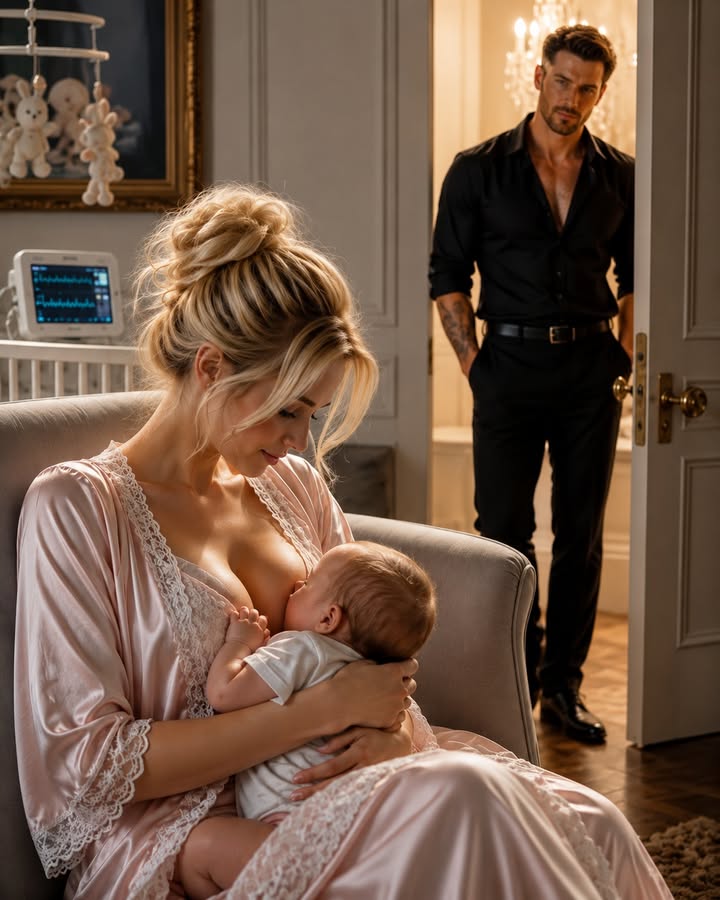
Part 3 – The Mark on the Fragment
The folded paper in Hannah’s hand trembled once before she tucked it beneath the blanket.
“I found it in my coat,” she said.
I stayed in the doorway rather than stepping inside.
“Would you like me to leave?”
She looked at me, then down at the paper.
“No,” she said. “I think I’d rather tell you what it is.”
She unfolded it carefully.
The page was creased into quarters and softened at the edges, as if she had carried it for a long time.
It was a small account statement from a bank, with a list of deposits written in Hannah’s neat, narrow hand.
“I was keeping track,” she said. “Of what I’d saved.”
The amount at the bottom was modest, but it had taken months of discipline to gather.
“I’m not asking you to pay me back for anything,” she added quickly. “I know you said I could keep working, but I don’t want anyone to think I came here because of Leo.”
“I don’t think that.”
“You might, later.”
“Why would I?”
“Because people sometimes decide what a thing means after they’re frightened.”
I thought of the gun I had pointed at her, and the truth of that landed harder than any accusation.
“You’re right,” I said. “Fear makes people careless.”
She folded the paper again.
“I don’t want to be careless with you.”
The words surprised me.
I had expected her to be wary, perhaps resentful.
Instead, she seemed to be trying to make a choice about how much trust she could afford.
“You don’t owe me trust,” I said.
“No,” she replied. “But Leo does deserve adults who can speak honestly.”
For a moment, I had no answer.
The doctor’s voice came from the nursery, calling for me to return.
Hannah slipped the paper into the drawer beside the bed.
“Get some rest,” I said.
“I’ll try.”
I paused at the door.
“Your savings are yours,” I told her. “No one in this house will touch them or ask you to stay because of them.”
She watched me carefully.
“Thank you.”
It was not forgiveness.
It was a beginning.
The next morning, the doctor told us Leo had made it through the night without a setback.
He was still fragile, and no one used the word recovered, but his breathing was more regular and he had begun to wake for longer stretches.
Hannah sat beside him while the nurse recorded his feeding.
She looked tired, yet something in her posture had eased.
When Leo stirred, she spoke to him in a low voice.
His eyes shifted toward her.
The nurse smiled.
“He knows that voice now,” she said.
Hannah looked down at the baby, and her expression softened before she could hide it.
“I hope it comforts him,” she murmured.
“It seems to,” the nurse replied.
I stood near the door, aware that the warmth in the room had little to do with the heating.
The doctor came in carrying a clipboard.
“We’ll continue supervised feeds today,” he said. “The specialist reviewed the initial results and agrees that we should proceed cautiously, but there’s nothing so far that requires us to stop.”
Hannah nodded.
“And the tests on the milk?”
“Still being processed. We’ll repeat the screening and keep checking Leo’s response.”
“I understand.”
The doctor glanced at me.
“You should both understand that improvement does not remove the need for medical care.”
“I do,” I said.
Hannah gave a quiet nod.
“I do too.”
The doctor’s eyes moved between us, as if he was weighing whether we meant it.
Then he returned to Leo’s chart.
“Good,” he said. “Then we have a workable plan.”
For the rest of the morning, the household tried to return to its usual rhythms.
The staff moved quietly through the halls, speaking in hushed voices whenever they passed the nursery.
I heard fragments of conversation at the far end of the corridor.
“She’s not even family.”
“The doctor has to approve everything.”
“What happens if the baby gets sick again?”
No one raised their voice, but the words carried.
Hannah heard them too.
She kept her attention on Leo, though her fingers tightened around the blanket.
I stepped into the hall.
The two housekeepers who had been speaking fell silent.
“This house does not need rumors,” I said.
They lowered their eyes.
“No one here knows enough to judge Hannah’s actions,” I continued. “The doctor is responsible for Leo’s care. Hannah is following his instructions. That is all anyone needs to know.”
“Yes, Mr. Rossi,” one of them said.
They went back to their work.
When I returned to the nursery, Hannah was watching me.
“You didn’t have to do that,” she said.
“Yes, I did.”
“They’re frightened too.”
“Perhaps. But they don’t get to make you carry their fear.”
She looked toward Leo.
“I don’t want them to think I’m trying to take anyone’s place.”
“Then they can learn to think better.”
A faint, weary smile appeared on her face.
“You make everything sound simple.”
“It rarely is.”
The smile faded, but not entirely.
That afternoon, the doctor approved a larger room near the nursery where Hannah could rest between feedings.
It had once been used by Sophia’s mother when she came to visit.
I had not gone into it since the funeral.
The room was small, with pale walls and a window overlooking the garden.
A narrow bed stood beneath the window, and a bookcase still held several novels Sophia’s mother had left behind.
Hannah stood at the threshold.
“I can sleep in the staff quarters,” she said.
“You can,” I replied. “But this room is closer to the nursery, and the doctor may need you.”
“I don’t want to use a room that belonged to your family.”
“It belonged to my mother-in-law,” I said. “She hasn’t stayed here in months.”
“I can’t take something that personal.”
“It isn’t a favor you have to repay. It’s a practical arrangement.”
She glanced at the bed, then at me.
“I’m only agreeing because of Leo.”
“I understand.”
She entered slowly, as if the room might hold a memory she had no right to disturb.
On the bedside table sat a framed photograph of Sophia and me at the gala.
The picture had been taken shortly before the explosion.
She was laughing at something outside the frame, one hand resting over the curve of her pregnancy.
I had not been able to look at it since the funeral.
Hannah stopped beside the table.
“I’m sorry,” she said.
“You didn’t know her.”
“No,” she said. “But I know what it is to look at a picture of someone who isn’t coming back.”
I looked at Sophia’s face.
The photograph had been taken on a night when I believed the hardest part of our lives was behind us.
We had spent years hoping for a child.
We had nearly given up after the third miscarriage.
Then Sophia had become pregnant again, and every day after that had felt like a promise we were afraid to trust.
The gala had been the first night in months when she had let herself talk about the future without hesitation.
“She was going to name him Leo,” I said.
Hannah turned toward me.
“She chose the name?”
“We chose it together. She liked that it sounded strong without being hard.”
Hannah lowered her gaze to the photograph.
“I think she would be glad someone heard him.”
The words settled in the room.
I did not answer at once.
I did not know whether they were true.
But I wanted to believe that Sophia would have understood what Hannah had done.
“Thank you,” I said.
Hannah placed the photograph back exactly where it had been.
That evening, the doctor told me that Leo had gained a little weight.
It was a tiny change, and he warned me not to build too much hope on one measurement.
I tried not to.
Hope had become something I held carefully, like a glass that might crack if I gripped it too tightly.
The next few days passed in a careful rhythm.
The nurses recorded every feed.
The doctor checked Leo regularly and spoke with a neonatal nutrition specialist by phone.
Hannah rested when she could, and I made sure no one treated her presence as an invitation to gossip.
The house did not become peaceful, but it became quieter.
Leo continued to improve, slowly enough that every good sign felt earned.
He began to wake more often.
He opened his eyes when Hannah spoke.
Once, when I leaned over the crib, he turned his face toward my voice too.
I stood very still, afraid that even breathing too deeply might make the moment disappear.
Hannah watched from the chair.
“He knows you,” she said.
“I’m his father.”
“Knowing that and knowing your voice are different things.”
She said it without judgment.
I placed my hand on the crib rail.
“I was in the room every day.”
“You were.”
“But I was so afraid of losing him that I forgot to speak to him.”
“Fear makes the world very small,” she said. “You can start now.”
I looked at her.
She knew something about starting again that I did not.
The doctor came in before I could answer.
He had just received a call from the police investigator assigned to Sophia’s case.
The case had remained open, though I had been told there was little chance of learning more.
At first, I assumed the investigator wanted another statement.
Then I noticed the doctor watching me with concern.
“What is it?” I asked.
“Detective Morales is downstairs,” he said. “He’d like to speak with you.”
“About Sophia?”
“He says there’s new information.”
Hannah looked up from Leo.
The doctor noticed the movement.
“Would you like me to take the baby?” he asked her.
“No,” she replied. “I’m fine.”
I studied her face.
She had gone pale, but she kept her hands steady on the blanket.
“Do you want to come with me?” I asked.
“I don’t know what I could add.”
“That wasn’t what I asked.”
She looked from me to Leo.
“I’ll stay here.”
I nodded.
The detective waited in the library with a folder on his lap.
He was a calm, middle-aged man with silver beginning at his temples.
We had met twice before, both times in the weeks after the explosion.
He had never offered comfort in place of facts.
I respected that.
“Mr. Rossi,” he said as I entered. “Thank you for making time.”
“Tell me what you found.”
He opened the folder and removed a photograph.
It showed a scorched fragment of metal on a white evidence card.
The edges were blackened, and one side had melted into an irregular curl.
“This was recovered from the vehicle,” he said. “The first analysis didn’t tell us much. A new examination found a partial mark on it.”
“Is it from the device?”
“That’s one possibility. It may be part of a casing or a component attached to the vehicle. We’re still working on that.”
He slid the photograph across the table.
A small emblem had been stamped into the metal.
It looked like a circle crossed by two narrow lines, with a block-shaped mark beneath it.
“What does it mean?” I asked.
“We don’t know yet. It could identify a supplier or a contractor. We’re checking companies that might use the mark.”
I studied the image.
The lines were small and indistinct, but something about them seemed familiar.
“Why bring it to me?”
“Because your wife may have recognized the vehicle or the people around it. We’re also reviewing the gala’s vendors and deliveries.”
He paused.
“Did Sophia mention anything unusual that night?”
“No.”
“Anyone she was expecting to speak with?”
“Not that I know of.”
The detective made a note.
“I understand it’s been difficult to revisit the case.”
“Difficult doesn’t matter.”
“It matters to your family.”
I closed the folder.
“Whoever caused that explosion killed my wife and nearly killed my son. I need to know if you’re closer to finding them.”
“We’re closer to understanding how it happened,” he said. “That’s not the same as identifying who ordered it.”
I leaned back.
He did not flinch at my impatience.
“I wanted to be clear about that before I asked you to look at the photograph.”
The door opened behind us.
Hannah stood in the library entrance, one hand resting on the frame.
The nurse was with her.
“Leo’s resting,” Hannah said. “The doctor said I could step away for a minute.”
The detective stood.
“Ms. Collins?”
She nodded.
He looked at me before continuing.
“You mentioned she wasn’t present at the gala.”
“She wasn’t.”
“I was passing the nursery,” Hannah said. “I heard the word fragment.”
The detective placed the photograph on the table again.
“I’m investigating the explosion that killed Mrs. Rossi,” he explained. “This piece was recovered from the vehicle. It may have a mark from a contractor or supplier.”
Hannah did not approach the table at first.
Then she glanced down.
Her face changed.
It was a small change, but unmistakable.
Her shoulders tightened.
“What is it?” I asked.
“I’ve seen that mark.”
The detective moved the photograph a little closer.
“Where?”
“I’m not sure.”
“You recognize the emblem?”
“I think so.”
She looked at the image again, this time leaning closer.
“That could be a delivery company badge,” she said. “Not exactly this, maybe. But the shape is familiar.”
The detective’s expression sharpened.
“Where did you see it?”
Hannah hesitated.
“I don’t know if I’m remembering it correctly.”
“Take your time,” he said.
She drew a slow breath.
“On the night Mark attacked me, he was wearing a jacket with a badge. He worked as a driver for a delivery contractor. I saw something like that mark on the chest.”
The name changed the air in the room.
“Mark is your ex?” the detective asked.
Hannah nodded.
“I don’t know the company name. I never met his coworkers. I only remember the badge because it had a circle and two lines.”
The detective turned the photograph toward her.
“Could you identify it if you saw the jacket?”
“I don’t have it.”
“Did he ever mention his employer?”
“Sometimes. I remember a name like Northline or Northway, but I can’t say which.”
The detective wrote it down.
“When was this?”
“Three weeks before I started working here.”
“Do you remember the date?”
She gave it to him.
He checked his notes.
“That would put it shortly before the explosion.”
Hannah’s gaze stayed on the picture.
“Does that mean he was involved?”
“It means we should check the connection,” the detective replied. “Nothing more until we verify it.”
I turned toward her.
“Why didn’t you mention this before?”
She looked at me, and the fear in her face was not the fear of being caught.
It was the fear of having said too much.
“I didn’t know it mattered,” she said. “I didn’t know that mark was connected to Sophia’s car.”
“You could have told me Mark worked as a driver.”
“You never asked about his job.”
The reply was quiet.
It was also true.
I felt the sharp instinct to demand every detail she remembered, every name, every place, every contact.
Instead, I looked at the detective.
“Could this be a coincidence?”
“It could,” he said. “A lot of contractors use similar marks. We need to compare the image with records and ask the company questions.”
“And if it isn’t?”
“Then we follow the evidence.”
Hannah stepped back from the table.
“I don’t want to be part of something I don’t understand.”
“You’re not in trouble,” the detective said.
“I didn’t say I was.”
Her voice had grown thin.
The nurse came to stand beside her.
“Leo’s awake,” she said. “The doctor asked for you.”
Hannah looked at the photograph one last time.
“I may be wrong,” she said.
“We’ll verify it,” the detective replied.
She left with the nurse.
I watched the doorway after she had gone.
The detective closed the folder.
“Do you know anything about Mark’s history?” he asked.
“Only what Hannah has told me.”
“Has she said he was violent?”
“She told the doctor he caused her fall.”
The detective’s expression remained steady.
“I’ll need to speak with her properly, but not today unless she’s comfortable. We can arrange it through her advocate or counsel.”
“You think she’s connected to this?”
“I think she may have information. Those are not the same thing.”
I wanted to believe that distinction would be enough to protect her.
When I returned to the nursery, Hannah was seated beside Leo’s crib.
The baby was awake, his face turned toward the window.
She looked at me without speaking.
“The detective is going to check the mark,” I said.
“I hope it means nothing.”
“So do I.”
She glanced at the door.
“Does he think I’m involved?”
“He said he thinks you may have information.”
“That isn’t the same thing.”
“No.”
“But people can start treating it as if it is.”
I moved closer, stopping by the crib.
“I won’t let anyone blame you for what Mark may have done.”
She looked up sharply.
“You don’t know what he did.”
“No,” I said. “I don’t.”
“Then don’t promise what you can’t control.”
Her words were not cruel.
They were a boundary, and she had every right to draw it.
“I can promise I won’t decide before I know the facts,” I said.
She looked back at Leo.
“That’s all I’m asking.”
The detective left that afternoon with copies of the photograph and a note of the company names Hannah could remember.
The doctor asked her to rest.
She refused at first, then gave in when Leo fell asleep and the nurse assured her she would call if he stirred.
I found her in the family room, staring at the bare branches in the garden.
“Do you remember anything else about the badge?” I asked.
She shook her head.
“Only that it looked like the mark in the photograph.”
“Did Mark say where he was going that night?”
“No.”
“Did he mention the gala?”
“No.”
“Did he ever know anything about me?”
She turned to face me.
“I don’t know.”
The answer had no drama in it.
It was worse than a denial because it left the question alive.
“Did he know you worked here?”
“Yes.”
“When?”
“After I started.”
“Did he ever come to the house?”
“No.”
“Did he ask about the family?”
“Not directly.”
I kept my voice controlled.
“What did he ask?”
She looked down at her hands.
“He asked whether the house had cameras. Whether the gates were always guarded. He asked how many people lived here.”
The room seemed to narrow around us.
“When did he ask you that?”
“Before he hurt me.”
“Why didn’t you tell me?”
“You’re asking me now.”
I stopped.
She was right again.
I had known her for only days.
I had never asked the questions before.
“I’m sorry,” I said.
She blinked, as if she had not expected the apology.
“Did you think he was trying to find out about the family?”
“I thought he was making conversation. He asked a lot of questions when he was angry. I didn’t answer much.”
“Did he ever mention Sophia?”
“No.”
“Leo?”
“No.”
“Me?”
“Only that you were rich and people were afraid of you.”
I looked toward the window.
The city had taught me to expect danger from men who wanted something.
I had not considered that someone could gather information casually, through the small openings of a relationship.
“I should have told the detective that,” Hannah said.
“Would you like to?”
“Not today.”
“All right.”
She searched my face, looking for the order hidden in my answer.
There was none.
“I don’t know what this means,” she said.
“Neither do I.”
“If Mark worked for the company on that car, it could be nothing.”
“Yes.”
“And if it wasn’t nothing, I might have seen something important without realizing.”
“Yes.”
“Then I could be wrong about the badge and still be right about him asking questions.”
I let that settle.
The mystery was no longer a fragment in a photograph.
It had entered the room with us.
Leo woke shortly after, and the doctor called Hannah back to the nursery.
She went without another word.
The next day, the detective contacted me with an update.
A company called Northline Courier had provided drivers to a contractor that serviced the gala.
They were still checking whether the emblem on the fragment belonged to that company or to one of its subcontractors.
The detective did not say Mark’s name.
He did not need to.
Hannah listened to the call from the chair beside Leo’s crib.
When I hung up, she was watching the baby’s blanket.
“Northline,” she said.
“You remember the name?”
“I think so.”
“Could you be certain?”
“No.”
The detective wanted to arrange an interview with her after the doctor confirmed she was well enough to travel.
I asked him to wait until she agreed.
Hannah thanked me, though her voice remained uncertain.
That evening, I sat beside Leo while Hannah ate a bowl of soup in the family room.
She had barely touched it.
“Does the idea of leaving still feel right?” I asked.
She looked up.
“Leaving the house?”
“Leaving New York.”
“I don’t know.”
“You don’t have to decide now.”
“You keep saying that.”
“Because it’s true.”
She studied me.
“People like you are used to making decisions for everyone around you.”
“I’m trying to stop.”
“Trying is not the same as stopping.”
“No,” I agreed. “It isn’t.”
Her mouth softened at the edges.
“Do you miss her every minute?” she asked.
“Sophia?”
“Yes.”
“Not every minute,” I said. “Sometimes I forget for a few seconds. Then I remember.”
Hannah’s eyes lowered.
“That sounds like forgetting her.”
“It isn’t. It’s just breathing.”
She sat quietly with that.
“Sometimes I feel guilty when I’m not thinking about Lily,” she said. “Like I’m leaving her behind.”
“You’re not.”
“How do you know?”
“I don’t. But I think love can exist even when it isn’t the only thing we feel.”
She looked at me for a long time.
Then she reached for the soup again.
The next morning, the detective called once more.
This time, his voice held a careful hesitation.
“We’ve confirmed the emblem is consistent with a contractor badge,” he said. “The contractor handled deliveries for the gala. We’re checking personnel records now.”
“Did Northline employ Mark?”
“I can’t confirm that yet. I can tell you the connection is worth investigating.”
I looked through the open nursery door.
Hannah was holding Leo while the nurse watched the monitor.
Her face was calm, but her hand moved over his back in a slow, protective rhythm.
“Does this put her in danger?” I asked.
“It could make her relevant to the inquiry,” the detective said. “That isn’t the same as making her a target.”
I did not like how little certainty the world offered.
The detective continued.
“We may need to ask her whether Mark ever discussed the gala or any of the people involved. We’ll handle it carefully.”
“I’ll tell her.”
When I went into the nursery, Hannah looked up.
“What did he say?”
“The emblem belongs to a contractor that handled deliveries for the gala.”
Her hand stilled on Leo’s back.
“Do they know if Mark worked for them?”
“Not yet.”
She glanced down at the baby.
“What if I remembered wrong?”
“Then we’ll know.”
“And what if I didn’t?”
I could not offer her a comforting answer that would not be a lie.
“Then we’ll find out what the connection means.”
The nurse reached for Leo to check his temperature.
Hannah returned him gently, and I watched her hands remain in the air for a moment after he was gone.
It was the same gesture I had seen before.
But now I understood that every time she let him go, she was choosing to trust the people around her.
A message arrived from the detective just before dusk.
He had located the contractor’s archived delivery records and found Mark’s name listed among its former drivers.
The record placed him on the payroll during the week of the gala.
I read the message twice.
Then I looked through the glass wall toward the nursery.
Hannah sat beside Leo, unaware that the past had just drawn a line between her and Sophia’s final night.
The phone rang.
It was the detective.
“We’ve found another record,” he said. “Before you speak with Ms. Collins, there’s something you should know.”
“What is it?”
“The contractor’s dispatch log shows Mark was assigned to a delivery route near the gala that evening.”
I glanced at Hannah through the glass.
“What was he delivering?”
“We’re still tracing the paperwork,” the detective replied. “But the route notes include a request for information about your movements.”
My hand tightened around the phone.
“Who requested it?”
“We don’t know yet.”
I looked at Hannah, who was leaning over Leo and whispering to him as he stirred.
Then the detective added, “Mr. Rossi, there’s one more thing. The request was entered under the name of the person who booked your car for the gala.”
**–END OF PART 3–CLICK “NEXT” AT THE BOTTOM OF THE PAGE TO CONTINUE READING**
* * *
[PREVIOUS: PART 2](https://puretales.idolsgift.com/blog/part-2-the-secret-beneath-her-uniform13-026) | [NEXT: PART 4](https://puretales.idolsgift.com/blog/part-4-the-secret-beneath-her-uniform13-026)
✓ Lynn R. Adams
Part 3 – The Mark on the Fragment The folded paper in Hannah’s hand trembled once before she tucked it beneath the blanket. “I found it in my coat,” she said. I stayed in the doorway rather than st…