PART 3: The Secret Behind the Chime 069
Part 3 – The Cost of Waiting
“It appears to say the spring was disengaged by request of the late queen.”
The archivist’s words seemed to remain in the air after she had spoken them.
Adrian did not move.
For a moment, Elara saw not the prince who had addressed a ballroom, but a grandson confronted with a part of his family’s history he had never been allowed to know.
“My grandmother asked for the clock to be silenced?” he said.
“I can only read those words with certainty, Your Highness,” Mistress Wren replied. “The rest may explain why.”
Lord Vale stepped closer, his hands neatly folded behind his back.
“Your grandmother was particular about the objects she kept,” he said. “It would not be unusual for her to have requested a repair.”
“Then why hide the note?” Elara asked.
She meant the question for the room, but her gaze had turned toward the steward.
Lord Vale’s expression remained polite.
“It may have been stored there for safekeeping. Old clocks often contain odd compartments.”
“This one was tucked behind a latch, beneath the striking mechanism,” Elara said. “Someone went to care not to leave it where an ordinary repairer would find it.”
“Or someone wanted it protected from dust and damp,” Vale replied. “We should be cautious about giving meaning to what we do not understand.”
Adrian looked down at the faint writing.
“Caution is sensible,” he said. “So is asking why a note concerning my grandmother was hidden inside a clock that has been silent for twenty years.”
Lord Vale inclined his head.
“Of course, Your Highness.”
There was no argument in his voice, yet the words seemed to close a door rather than open one.
Mistress Wren placed a clear sheet over the paper and made a careful note of the visible lines.
“I will need to consult the royal records before I can tell you more,” she said. “The date may help identify who had access to the clock at the time.”
“Please do,” Adrian told her. “And keep the original secure.”
When the archivist left, taking the paper with her, the ballroom seemed even larger.
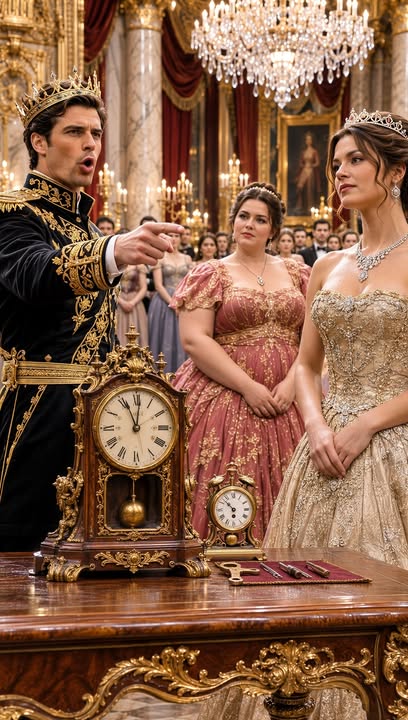
The clock stood open on the table, its innards exposed beneath the lamplight.
Elara could see the narrow place from which the note had been drawn.
The small brass screw rested beside the tools, its fresh shine suddenly less like a clue and more like an accusation.
Adrian turned to Lord Vale.
“You said the staff were instructed not to open the clock.”
“Yes, Your Highness.”
“Who gave that instruction?”
“I am still confirming it.”
“You said the palace office.”
“That is what the attendants reported.”
“Then find the person who sent the order, and bring me the original list of those assigned to the ballroom this afternoon.”
Lord Vale bowed.
“I will attend to it.”
As he turned away, Adrian added, “No one is to be blamed on speculation.”
The steward paused.
“I understand.”
He crossed the ballroom with measured steps, then spoke quietly to one of the guards.
Elara watched him for a moment, troubled by how smoothly he had explained away the hidden note.
A message from the late queen was not an ordinary repair record.
Still, she reminded herself, a man did not become guilty simply because he was careful with his words.
Adrian looked toward her.
“You have been quiet.”
“I’m trying to decide what I think.”
“And?”
“I think the note deserves patience.”
A faint weariness appeared around his eyes.
“That is fair.”
She glanced at the open clock.
“Do you know why your grandmother had it silenced?”
“No,” he said. “I know she loved it. It stood in her private sitting room for as long as I can remember, but I never heard it strike.”
“Did she ever tell you why?”
“She told me it was a clock that had learned to keep its own counsel.”
He gave a brief, rueful smile.
“I thought she was making a joke.”
“Perhaps she was.”
“Perhaps.”
Adrian’s gaze returned to the clock.
“I used to sit with her in that room while she read. When I was small, I would ask when the clock would work again, and she would tell me it would speak when the time was right.”
The softness in his voice made Elara look at him more carefully.
He had not merely inherited the clock.
He had grown up beside its silence.
“Did you ever ask what it would say?” she asked.
“I thought I knew.” He paused. “I thought it would tell me the hour.”
“Maybe it will.”
“Or perhaps the hour is not the only thing it can tell.”
Elara did not answer.
She had learned from her father that the first explanation was often only the easiest one.
A quiet voice sounded from the far side of the ballroom.
“Your Highness, may I speak with you?”
The champagne-gowned noblewoman had returned.
Without the bright composure she had worn during the contest, she looked younger.
Her shoulders were drawn tight, and she held her gloved hands together as if afraid they might betray her.
Adrian glanced toward the guards.
“She may speak,” he said. “But no one is to pressure her.”
The woman swallowed.
“My name is Celestine,” she said, looking at Elara rather than the prince. “I should have told you before.”
Elara felt a small, cold certainty settle over her.
“Tell us what?” Adrian asked.
Celestine lowered her eyes.
“I removed the screw.”
The words were quiet, but they changed the room.
Elara looked at the brass piece on the table.
Adrian’s face stilled.
“Why?” he asked.
Celestine’s breath shook.
“Lord Vale said it was a harmless adjustment. He told me the clock had been inspected, but that the panel was loose and might distract the contestants. He asked me to remove the screw and keep it until the challenge began.”
Lord Vale, who had been speaking with the guard near the doors, turned back toward them.
“That is not what I said.”
Celestine flinched at his tone.
Adrian lifted a hand.
“Let her finish.”
The steward’s jaw tightened, but he said no more.
Celestine pressed her fingertips together.
“I was foolish enough to agree. I thought if the panel were easier to open, I could make the clock strike before anyone else. I wanted to be sure I won.”
Her face reddened, and her eyes filled.
“I know how it sounds. I wanted the prize. I wanted everyone to see that I could do it without my father’s clockmakers standing beside me.”
Elara looked at her, trying to reconcile this trembling woman with the confident contestant who had mocked her village repairs.
“You said you had watched clockmakers since childhood,” Elara said.
“I have,” Celestine replied. “But watching someone else work is not the same as knowing how.”
A flicker of shame passed across her face.
“I should not have spoken to you the way I did.”
Elara’s first response was anger.
It came quickly, sharp as the click of a latch.
The screw had been moved for vanity, and the clock’s hidden panel had been disturbed. Celestine had smiled while Elara was mocked for her clothes and her background.
But Elara also heard the fear in her voice.
Celestine had not known about the paper.
And a person’s selfishness did not make every accusation against her true.
“Did you see anyone else touch the clock?” Elara asked.
“No. Lord Vale handed me the screw and told me where to place it.” Celestine looked at the steward. “He said it was only a small adjustment.”
“I said the panel was unstable,” Lord Vale replied. “I asked her to secure it.”
“By removing the screw?” Adrian asked.
Vale turned to him.
“The panel was already loose. I was trying to avoid a mishap during the contest.”
“But you told Celestine to remove it?”
“I did not consider that instruction significant.”
The answer was measured.
It was also not a denial.
Adrian looked to Celestine.
“Did you know there was a concealed compartment?”
“No.”
“Did you know there was a note?”
“No, Your Highness. I swear it.”
Her voice broke on the last word.
“I thought I was changing one small thing to make the challenge easier. I didn’t know it would stop the clock from striking.”
“You did not know that the spring had been disengaged,” Elara said. “The note suggests it was that way before the screw was moved.”
Celestine looked at her, startled.
“You believe me?”
“I believe you didn’t know about the paper,” Elara said. “I don’t believe what you did was harmless.”
Celestine nodded, accepting the distinction.
“I’m sorry.”
The apology did not erase the insult.
It did not make the contest fair again.
But it was the first honest thing Celestine had offered Elara, and Elara found she could not dismiss it.
Adrian turned to the steward.
“Why did you choose a contestant to handle the clock?”
“I believed the adjustment was simple,” Vale said. “I wanted to spare the staff from opening the mechanism in front of the guests.”
“You could have asked me.”
“The clock belonged to your grandmother. I did not wish to trouble you over a loose panel.”
Adrian’s expression tightened.
“You did not wish to trouble me, or you did not wish me to ask why the panel was loose?”
Lord Vale’s eyes flickered.
Only for an instant, but Elara noticed.
“Your Highness,” he said, “I have served your family for many years. I would not knowingly put the clock at risk.”
“I did not say you had.”
“No,” Vale replied. “But the implication is clear.”
Adrian took a slow breath.
Elara saw the struggle in him.
He wanted to protect the court from rumor, yet he also wanted to understand what had happened.
Those two duties were pulling him in opposite directions.
“Celestine’s confession explains why the screw was moved,” he said at last. “It does not explain the note, the hidden latch, or why the clock’s spring was disengaged.”
Lord Vale’s shoulders eased by a fraction.
“Then we should wait for the archivist’s findings.”
“Yes,” Adrian said. “We should.”
He turned to Celestine.
“You will remain available to answer questions, but you are not under arrest, and no one will treat you as though you have confessed to more than you did.”
Celestine looked down.
“Thank you, Your Highness.”
“Thank Elara,” he said. “She is the one who found the screw.”
Celestine looked at her again.
“I’m sorry I laughed at you.”
Elara let the words settle between them.
“Thank you for telling the truth,” she said. “That matters.”
Celestine gave a small, unsteady nod.
The guards accompanied her to the salon, where the other contestants were waiting.
No one spoke as she passed.
The ballroom doors closed behind her, and the silence returned.
Adrian stood beside the clock, looking at the place where the paper had been hidden.
“I should have asked Celestine to explain before I let the contest go on,” he said.
“You didn’t know she had moved the screw.”
“I knew someone had. I should have been more careful.”
“You were careful,” Elara replied. “You stopped everyone from touching the clock.”
“After you warned me.”
“That doesn’t make it nothing.”
“No,” he said. “It doesn’t.”
His honesty eased something in Elara, though it did not make her forget the steward’s quick defense.
Adrian studied her face.
“Do you think Lord Vale knew about the compartment?”
“I don’t know.”
“Do you think he knew about the paper?”
“I don’t know that either.”
He looked relieved that she had not offered a certainty she did not possess.
“You could have said you suspected him.”
“I do suspect he knew more than he has told us,” Elara said. “But suspicion is not proof.”
Adrian lowered his gaze.
“My family has relied on Vale for years. He managed the household when my grandmother was alive. He knows where nearly every old record is kept.”
“That makes his knowledge useful,” Elara said. “It doesn’t make him guilty.”
“And it doesn’t make him innocent.”
“No.”
For a few seconds, the two of them listened to the candles crackle.
The contest’s marriage prize seemed distant now, almost absurd beside the clock and the fragile note.
Elara had come prepared to solve a problem with her hands.
She had not expected her presence to become part of a question about trust.
Adrian’s voice softened.
“When the archivist returns, I may need to hear things I do not want to hear.”
“Everyone does, sometimes.”
“I used to think listening meant waiting for someone to finish so I could answer.”
“And now?”
“Now I think it means allowing their words to change what I believe.”
Elara looked at him.
There was no grand performance in his expression, no attempt to make himself sound wise.
He seemed to be discovering the thought as he spoke it.
“That’s a good beginning,” she said.
A quiet smile touched his face.
“You sound like your father.”
“I hope so.”
The door opened, and Lord Vale returned carrying a small ledger.
“I found the staff list,” he said. “The clock was delivered to the ballroom by two attendants, both of whom say they did not open the rear panel.”
“Who gave the instruction not to touch it?” Adrian asked.
“The order came from my office.”
“From you?”
“I approved it.”
Adrian waited.
Vale glanced at the ledger.
“I had been told the clock was fragile. I thought it best to leave it untouched until the contest.”
“You then asked Celestine to remove a screw.”
“I asked her to secure the panel.”
Elara saw Adrian’s fingers curl around the edge of the table.
“Lord Vale, I need a complete account, not the most convenient version.”
The steward met his gaze.
“You will have one.”
“Now.”
Vale’s composure held, but something in his face had changed.
Not guilt, necessarily.
Fear, perhaps, or the strain of knowing that an old confidence could not survive a direct question.
Before he could answer, the ballroom doors opened again.
Mistress Wren entered with a second sheet of paper and a grave expression.
“I have found the original inventory from the queen’s sitting room,” she said. “The clock was not recorded as broken.”
Adrian looked toward her.
“What was it recorded as?”
“Silent by order of Her Majesty.”
She placed the inventory on the table.
The words had been written in a careful hand beside the clock’s description, with a date from nearly two decades earlier.
Elara leaned closer.
Below the entry was a small annotation in a different ink.
Mistress Wren read it aloud.
“‘Do not restore the chime until the prince is old enough to understand what it was made to say.’”
Adrian’s face drained of color.
Elara looked from the note to the clock, her thoughts racing toward the mark in her father’s journal.
“Made to say?” she whispered.
Mistress Wren nodded.
“There is more. The queen’s order was countersigned by the palace secretary.”
Lord Vale went very still.
Adrian looked at the archivist.
“Who was the secretary?”
Mistress Wren turned the inventory toward him.
The name written beneath the queen’s was clear, even after all these years.
Lord Vale.
**–END OF PART 3–CLICK “NEXT” AT THE BOTTOM OF THE PAGE TO CONTINUE READING**
* * *
[PREVIOUS: PART 2](https://storyly.idolsgift.com/blog/part-2-the-secret-behind-the-chime-069) | [NEXT: PART 4](https://storyly.idolsgift.com/blog/part-4-the-secret-behind-the-chime-069)
✓ Lynn R. Adams
Part 3 – The Cost of Waiting “It appears to say the spring was disengaged by request of the late queen.” The archivist’s words seemed to remain in the air after she had spoken them. Adrian did not …