PART 3: The Promise in the Photograph 041
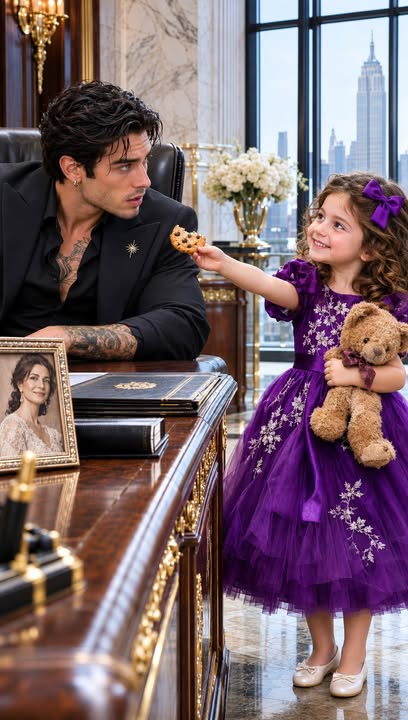
Part 3 – The Date on the Frame
“But that’s not possible,” Emma whispered.
Alexander kept the envelope turned beneath the desk lamp, its faint date showing through the paper like a mark from another time.
“What do you mean?” he asked.
Emma’s eyes stayed on the writing.
“My grandmother said she made the promise after your mother died.”
She looked toward the photograph, where Rose stood beside Alexander’s mother, both women smiling at something beyond the frame.
“But that date is three months before your mother passed away.”
For a moment, Alexander heard nothing but the quiet hum of the office heater.
Victor’s face revealed no surprise, though something in his stillness suggested he had known the date would matter.
“Perhaps your grandmother remembered it wrong,” he said.
“She didn’t,” Emma replied. “She told me the date because it was my mother’s birthday.”
“Your mother was born on the same day as the promise?” Alexander asked.
“No. She was born on that date, years later. Grandma said the promise was made on her birthday because it was the one day she could never forget.”
Emma’s voice had steadied, but her fingers remained curled around Lily’s hand.
Alexander glanced at Victor.
“You knew the date.”
“I knew it was there.”
“You knew what it meant?”
“I know it appears in the old records.”
“What records?”
Victor’s gaze dropped to the envelope.
“The ones I came to discuss.”
Lily climbed down from the sofa and moved closer to Emma, as if she sensed the conversation had become too large for the room.
“Is Grandma Rose in trouble?” she asked.
Emma crouched beside her.
“No, sweetheart.”
“Is Grandma Rose’s promise in trouble?”
Emma drew Lily into a gentle embrace.
“I don’t know yet.”
Alexander watched Lily press her cheek to her mother’s shoulder.
The child’s earlier certainty had vanished, replaced by the wary quiet she wore whenever the adults around her grew tense.
He had seen that look on himself in old photographs.
He did not want her learning to recognize it.
“Let’s look at the picture,” he said. “Not the envelope.”
Victor’s eyebrows rose.
“You’re delaying.”
“I’m choosing what we examine first.”
Alexander lifted the photograph carefully by its edges.
Its frame was old, dark wood worn smooth at the corners, with a narrow brass clasp on the back.
The photograph had slipped partly free from its backing when Victor pulled it from the envelope, revealing a rim of yellowed paper beneath the glass.
“Was it framed this way when your grandmother had it?” Alexander asked Emma.
“I think so. The wooden box had a frame in it, but I can’t remember if it was this one.”
“Could it be the same photograph?”
“I don’t know. I was little.”
Alexander turned the frame over.
The backing was secured with small metal tabs, some of them bent, but none broken.
“Do you mind if I open it?” he asked.
Emma hesitated, then nodded.
“Please be careful.”
“I will.”
Victor moved closer.
“If there’s writing, it may be important.”
Alexander glanced at him.
“You said you found the photograph among old accounts. How did you know it belonged with the envelope?”
“I didn’t. I found them in the same folder.”
“Where was the folder?”
“In the archive room.”
“Why were you searching the archive?”
Victor’s jaw shifted.
“I was reviewing the old accounts.”
“For what reason?”
“Because the company has been restructuring its records.”
The answer was plausible, but Alexander noticed that Victor had not said who requested the review, or why he had searched the oldest files himself.
He set the question aside.
Lily leaned around Emma’s shoulder to watch him.
“Are you fixing the picture?”
“Trying to see what’s behind it.”
“Maybe a treasure map.”
“Maybe.”
Lily seemed encouraged by the possibility.
“Like pirates?”
“More like old family secrets.”
She wrinkled her nose.
“Those don’t sound as fun.”
“No,” Alexander said. “They usually aren’t.”
He slid a thin letter opener beneath the first metal tab, lifting it just enough to loosen the backing.
Emma shifted closer, eyes fixed on his hands.
The frame opened with a dry crackle.
Behind the photograph was a sheet of brittle paper, faded almost to the color of tea.
Alexander eased it out and laid it on the desk.
A date had been written near the upper corner in dark ink, followed by a short line in a hand he recognized from the notes his mother had once left around the house.
He did not need to read it aloud to know.
If anything happens, keep the children safe.
Emma covered her mouth.
Lily looked between the adults.
“Is that the promise?”
“It may be,” Alexander said.
He bent over the paper.
The ink had blurred, but a few words remained visible beneath the sentence, pressed into the page by whatever had once been written on top.
He could make out fragments.
“Rose.”
“House.”
“Two.”
“Is there more?” Emma asked.
“Something underneath.”
Alexander angled the page toward the lamp.
Victor reached for it.
Alexander placed his hand across the paper before Victor’s fingers touched it.
“I’ll handle it.”
“I’m not trying to take it.”
“Then let me read it first.”
Victor withdrew his hand.
The moment was small, almost polite, yet it left Emma watching them with a new unease.
Alexander understood.
He had asked her to trust him, but all around them, his family’s past was behaving like a thing with its own rules, drawing every person in the room toward a different conclusion.
He studied the faint impression.
“‘If anything happens, keep the children safe.’ That much is clear.”
“And the date?” Emma asked.
“The same one as the envelope.”
Victor folded his arms.
“Which confirms that the note and the photograph were kept together for a reason.”
“What reason?” Alexander asked.
“You tell me.”
“I’m asking you.”
“And I’m saying the records are incomplete.”
“Then tell us what you did find.”
Victor looked at Emma.
“Does she need to hear it?”
“Yes.”
Emma straightened.
“I’m already hearing it, whether you tell me or not.”
Victor regarded her for a moment, then looked back to his brother.
“Twenty years ago, there was a serious conflict between branches of our family.”
Alexander’s mouth tightened.
He knew the broad outline.
Their father had spoken of it in careful, sterile phrases, calling it a dispute over territory and influence.
After their mother died, Alexander had been told the matter was finished.
“I remember some of it,” he said. “I was a child.”
“Then you remember more than I do,” Victor said. “I was barely old enough to understand why the adults kept changing the locks.”
Emma’s expression softened, but she did not interrupt.
“People were trying to keep the family from falling apart,” Victor continued. “Our mother and Rose were involved in keeping a child safe.”
Alexander looked at the handwriting.
“Which child?”
“That’s what the records don’t say.”
“Or what you haven’t told me.”
“Alexander.”
“I’m not going to let you turn this into a riddle just because you prefer having the answer to yourself.”
Victor’s face tightened.
“I don’t have the answer.”
“What do you think the note means?”
“I think Rose was given something to protect.”
“Or someone,” Emma said.
Victor’s gaze flickered toward her.
“That is possible.”
“Was my grandmother part of the family feud you mentioned?” Emma asked.
“I don’t know.”
“Did she help your mother?”
“I don’t know.”
“You’ve been looking through the records and still don’t know?”
“I said I found the folder. I didn’t say I had time to review every page.”
Alexander watched Emma absorb this.
She looked disappointed, though she might have expected little from Victor.
“What did you mean when you said my family profited from the Reeds’ grief?” she asked.
Victor’s face closed.
“I didn’t say that.”
“You said something about us being connected to what happened.”
“I said the photograph suggests a connection.”
“Then what is it you believe?”
“That Rose may have helped cover something up.”
Emma flinched at the word.
“Cover up what?”
“An event that endangered the family.”
“You don’t know that.”
“No,” Victor said. “I don’t.”
Emma’s eyes narrowed.
“Then why say it as if you do?”
For the first time, Victor looked uncomfortable.
“Because I’m trying to understand why the photograph was hidden.”
“Perhaps it wasn’t hidden,” Alexander said. “Perhaps it was kept safe.”
“Those are not always different things.”
Lily tugged gently at Emma’s sleeve.
“Mommy, can we go home?”
Emma looked down at her daughter, and the question seemed to pull her away from the photograph more sharply than any argument could.
“In a little while.”
“Is Grandma’s picture bad?”
“No, sweetheart. It’s only old.”
“Old things can be good.”
“They can,” Alexander said.
Lily looked at him.
“Like your teddy?”
“Exactly.”
She glanced at the bear, which remained in Alexander’s hand.
“Don’t let Victor take it.”
“I won’t.”
Victor let out a breath.
“I’m not taking anyone’s teddy bear.”
“You did take the picture,” Lily said.
“I brought it here.”
“That’s not the same as taking.”
“No,” Victor agreed. “It isn’t.”
Lily seemed satisfied, though she remained close to her mother.
Emma gathered herself and looked at Alexander.
“I need to ask you something plainly.”
“Go ahead.”
“Do you think Lily is connected to this?”
Alexander felt the question settle between them.
Victor’s gaze turned toward his brother, but he said nothing.
“I think the note mentions children, and one of the women named is your grandmother,” Alexander answered. “That gives us a reason to ask questions.”
“That’s not what I asked.”
“I don’t know whether Lily is connected to it.”
“Do you think she might be?”
The honest answer was yes.
He had not thought of it before tonight, but the photograph, the promise, and the date had opened a path his mind could not avoid.
He hated that the path began with a child.
“I think anyone could be connected,” he said. “You, me, Victor, someone we’ve never met. I’m not going to decide what Lily means before we know what happened.”
Emma’s jaw tightened.
“You understand what it feels like to hear someone say they need to find out whether your child belongs in a mystery?”
“I do.”
“No, Alexander. You understand what it feels like to be uncertain about your own family. That’s not the same thing.”
The words were not cruel, but they reached him cleanly.
He set the letter opener down.
“You’re right.”
Emma seemed unprepared for him to agree.
“I shouldn’t have put Lily in the middle of this conversation,” he said. “I’m sorry.”
“Thank you.”
Victor watched them with a frown.
“Emma, no one is accusing Lily of anything.”
“She’s a child. She doesn’t need to be accused for adults to make her feel like evidence.”
Alexander looked at Lily.
She was studying the old paper, trying to decipher it from a distance.
He remembered how easily the word Papa had slipped from her lips in the office.
It had not meant what Victor thought it meant.
He had no reason to accept Victor’s interpretation of any other thing Lily did.
“Lily is not evidence,” he said. “No matter what this says.”
Emma nodded, though the tension had not left her shoulders.
Victor’s gaze returned to the date.
“Rose left our household after our mother died,” he said. “The timing matters.”
“Emma said she left to care for her daughter,” Alexander replied.
“Both things can be true.”
“Did you know her?”
“Only vaguely. I remember her being in the house.”
“Then why speak as if you know what she did?”
“I’m telling you what I remember and what I found.”
“You’re mixing the two.”
“I’m trying to make sense of a folder you haven’t even opened.”
Alexander glanced toward the sealed envelope.
He had not broken the seal, but the outside had begun to feel less like a boundary and more like another piece of evidence.
Emma stepped closer to the desk.
“May I see the note?”
Alexander passed it to her, careful not to crease the brittle paper.
Emma held it by the sides and stared at her grandmother’s name in the faint impressions beneath the ink.
“I remember the box,” she murmured. “It was cedar, with a brass latch. Grandma said the photograph had to stay in it when no one was looking.”
“Did she say why?” Alexander asked.
“She said some things were precious because they were ordinary to everyone else.”
Emma’s eyes moved over the handwriting.
“I thought she meant the picture.”
“Maybe she did,” Victor said.
Emma looked at him.
“Do you know something you aren’t saying?”
“I’m trying to avoid guessing.”
“Then stop suggesting my family did something wrong.”
“I haven’t said that.”
“You said we might have covered something up.”
“I said Rose may have.”
“And you said my family might have profited from your family’s grief.”
Victor looked at Alexander.
“That was before we knew about the note.”
“That doesn’t make it kinder,” Emma said.
“No,” Victor replied. “It doesn’t.”
His apology, when it came, sounded awkward but real.
Emma seemed to hear that as well.
She lowered her eyes to the note.
“Grandma Rose never spoke about the Reeds with anger,” she said. “She spoke about your mother like she was someone she loved.”
Alexander’s throat tightened.
“Do you remember anything else she told you about her?”
“She said your mother had a habit of leaving the kitchen window open in the morning, even when it was cold. Rose would close it, and your mother would open it again because she liked hearing birds.”
Alexander could picture it.
A narrow kitchen window.
His mother’s hair pinned back.
The smell of bread.
A small, stubborn detail no family history could turn into a weapon.
“Was my mother happy?” he asked.
Emma’s face gentled.
“Grandma said she was kind.”
“That isn’t the same.”
“No. But she also said your mother could make a room feel safe.”
Alexander looked down at the note.
For twenty years, he had remembered his mother as a light that had gone out.
Emma had given her back a small, living habit.
A window left open for birds.
Victor rested one hand on the desk.
“We need to see the rest of the folder.”
“Where is it now?” Alexander asked.
“Back in the archive.”
“Why didn’t you bring it?”
“Because it contains records that don’t belong in a meeting.”
“You brought the envelope.”
“I thought you should see that first.”
“Why?”
Victor paused.
“Because I’m not sure you would have opened the folder if I’d brought it.”
“That’s not an answer.”
“It’s the one I have.”
Emma placed the note on the desk.
“Can we look at the rest of the photograph?”
Alexander picked up the frame again.
A strip of paper remained under the lower edge of the backing, stuck to the wood.
It had been hidden by the frame itself, its corner no wider than his little finger.
He eased it free.
The paper was even more fragile than the note.
On one side, in the same familiar handwriting, were two names written in a neat line.
Rose Parker.
Eleanor Reed.
Beneath them, in smaller letters, was another phrase.
“Keep them safe until the truth can be told.”
Alexander read it aloud.
Emma closed her eyes for a moment.
Victor’s expression shifted.
“Until the truth can be told,” he repeated.
“Who was the truth supposed to be told to?” Alexander asked.
No one answered.
Lily looked up at the grown-ups.
“Maybe to the children.”
The words were innocent, offered without drama.
Yet all three adults fell silent.
Emma reached for her daughter’s hand.
“Maybe,” she said.
Alexander set the paper beside the note.
The two scraps seemed to belong together, their edges carrying the same yellowed stain.
“Do you recognize this handwriting?” Emma asked.
“Yes.”
“Are you sure it’s your mother’s?”
“Completely.”
“Then she wrote it knowing Rose would keep it.”
“I think so.”
“And she wanted the children protected until something could be explained.”
“That’s what it says.”
Victor glanced at the envelope.
“Which makes the letters inside relevant.”
Alexander’s gaze followed his.
“Then we open it.”
Emma’s fingers tightened around Lily’s.
“Not yet.”
Alexander turned to her.
“Why?”
“Because we’ve already discovered something that might involve my family, and I don’t know what’s in that envelope. I want to know whether opening it will expose my daughter’s name to people who have no right to it.”
“Only us and Victor know it’s here.”
“Right now.”
The concern was reasonable, and Alexander disliked that part of him had already begun to treat the question as a puzzle to solve rather than a risk Emma had to carry.
“You’re right,” he said. “We should know what’s inside before anyone else does.”
Victor’s expression darkened.
“It’s sealed.”
“There may be a way to read the outside without opening it.”
“You can’t control every possibility.”
“No,” Emma said. “But I can decide whether my daughter stays in a room where the adults keep discussing her as if she isn’t listening.”
“I’m not discussing Lily,” Victor replied.
“You’ve been discussing her since you came in.”
Victor looked toward the child.
Lily had lowered her face into Emma’s skirt, one hand still holding the bear’s loose paw.
His expression softened by a fraction.
“I’m sorry,” he said.
Emma’s answer was quiet.
“Then let’s be careful.”
Alexander looked at the photograph again.
He had spent years believing that the past was a closed room, its contents fixed and its doors locked.
Now he could see how little he knew.
His mother had made a promise.
Rose had guarded it.
Victor had found a folder.
And Emma, who had come into the house to make beds and keep her daughter safe, was suddenly carrying questions that belonged to a family she had never asked to join.
“Take Lily home,” Alexander said. “I’ll have a car ready.”
Emma studied him.
“Are you sure?”
“Yes. You shouldn’t have to stay here while we decide what this means.”
“But you won’t open the envelope without telling me?”
“I won’t.”
Victor looked as though he wanted to object, then thought better of it.
Emma’s eyes searched Alexander’s face once more.
“Thank you.”
He wanted to tell her she could trust him.
Instead, he knew he had to earn the words before asking her to believe them.
Lily lifted her head.
“Can Teddy come?”
Alexander looked down at the toy in his hands.
“Of course.”
“He comes back tomorrow?”
“If you want him to.”
She considered this.
“He should stay with you tonight. You look like you might need him.”
Emma started to smile, but worry edged it.
“Lily, honey, Teddy belongs with you.”
“I know. He can visit.”
Alexander held the bear out to her.
Lily shook her head and pushed his hand gently back toward himself.
“Keep him safe.”
The phrase landed quietly, yet Emma looked toward the papers on the desk.
Alexander accepted the bear.
“I will.”
A few minutes later, Emma and Lily left the office with a guard escorting them downstairs.
Emma glanced back once from the doorway.
Alexander met her gaze and nodded, a promise without words.
When the door closed, Victor moved to the window.
“You have no idea how complicated this is,” he said.
“Then explain it.”
“I can’t. Not until I see the rest of the records.”
“You keep saying that.”
“Because it’s true.”
“Or because it lets you keep control of the conversation.”
Victor turned from the glass.
“You think I enjoy this?”
“I think you came here intending to make me choose between my family and Emma.”
“I thought you needed to understand the risk.”
“You put a child in the middle of it.”
“I didn’t make Lily call you Papa.”
“No,” Alexander said. “But you decided the word meant more than it did.”
Victor said nothing.
Alexander placed the photograph carefully back in its frame, leaving the backing loose so the papers could be examined later.
Then he looked at the envelope.
The date on its back was now clear.
It matched the date on the note.
He turned it over and inspected the seal.
A faint line of ink showed along the inner fold, visible only where the paper had aged and thinned.
Alexander held it close to the lamp.
The writing was not his mother’s.
It was firm, unfamiliar, and partially obscured by the flap.
He could make out three words.
“Boy survived.”
Victor had come up beside him.
The color left his face.
“What does it say?” Alexander asked.
Victor did not answer at once.
He looked at the envelope as if he had never seen it before.
Then he read the words himself, slowly.
“Boy survived.”
Alexander’s hand tightened around the paper.
“Who was the boy?”
Victor’s eyes lifted to his.
“I don’t know.”
The office door opened before Alexander could reply.
Emma stood there alone, breathless, with her coat still over one arm.
“Lily’s downstairs with Mrs. Collins,” she said. “I had to come back.”
“What happened?” Alexander asked.
“I remembered something.”
Her gaze fell to the envelope in his hand.
“Grandma Rose used to say the child in the promise had been given a new name.”
Victor went still.
Emma’s face had gone pale again.
“She said it was the only way to keep him safe.”
Alexander looked down at the three words showing through the envelope.
Boy survived.
And for the first time, he wondered whether the secret his mother had hidden was not about a child who might one day be born, but one who had already lived.
**–END OF PART 3–CLICK “NEXT” AT THE BOTTOM OF THE PAGE TO CONTINUE READING**
* * *
[PREVIOUS: PART 2](https://echoesofstories.idolsgift.com/blog/part-2-the-promise-in-the-photograph-041) | [NEXT: PART 4](https://echoesofstories.idolsgift.com/blog/part-4-the-promise-in-the-photograph-041)
✓ Lynn R. Adams
Part 3 – The Date on the Frame “But that’s not possible,” Emma whispered. Alexander kept the envelope turned beneath the desk lamp, its faint date showing through the paper like a mark from another …