PART 3: The Promise Beneath the Scar 055
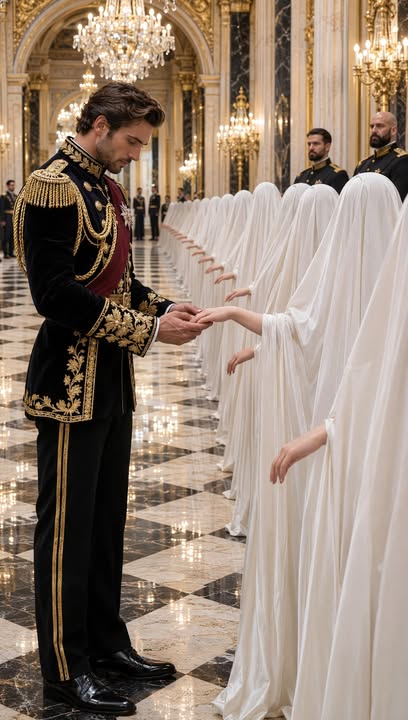
Part 3 – The Village Without Ceremony
The first thing Clara did after leaving the library was ask Alexander not to send a carriage for her.
“I can walk back,” she said, closing the wooden box around her mother’s drawing.
“It is a long way.”
“I have walked it before.”
“Then may I walk with you?”
She glanced at the prince, then at Michael, who had remained beside the open ledgers.
“Without guards?”
Alexander hesitated.
The request was reasonable, yet the thought of leaving the palace grounds without an escort seemed to unsettle him more than he wanted to show.
“If we go quietly,” he said, “and you don’t mind a slower pace.”
“I don’t mind the pace.”
Michael looked up from the ledger.
“Your Highness, the household will need to know where you are.”
“Tell them I am taking air.”
“That will not satisfy the council.”
“I am not asking the council.”
Clara’s expression shifted, a trace of concern passing through it.
“I don’t want trouble because of me.”
“You haven’t caused any,” Alexander replied. “But I understand. I’ll send word that I’m safe, and we’ll keep the visit private.”
Michael closed the ledger.
“I will arrange a discreet carriage to the village edge.”
Clara looked from him to Alexander.
“You said you would come as a man who wanted to hear about my mother.”
“I did.”
“Then a carriage with royal horses would make that difficult.”
Michael considered her point, then nodded.
“I can have an ordinary cart brought around.”
It was not quite the same as walking, but Clara accepted.
The cart had no crest, and its driver wore plain clothes, though Alexander’s posture and careful diction made anonymity an uncertain hope.
They left by a side entrance as the morning clouds began to thin.
For several miles, the road ran between fields silvered with dew, and the conversation remained tentative.
Alexander asked Clara about the village, and she told him about the narrow lanes, the bakery that opened before sunrise, and the old mill whose wheel had stopped turning years ago.
She spoke more easily when describing the people than when speaking of herself.
At the edge of the village, she asked the driver to stop.
“My cottage is close,” she said. “From here, I would rather walk.”
Alexander climbed down after her.
The village stood on a shallow hillside, its stone houses gathered around a small square.
Smoke rose from several chimneys, and a bell rang from the modest church as a boy hurried past with a basket of apples.
A woman carrying a pail paused when she saw Clara.
“Clara, thank goodness,” she called. “Mrs. Bell’s fever has come back.”
Clara turned toward her at once.
“Is she breathing comfortably?”
“Not as well as yesterday.”
“I’ll come now.”
She looked at Alexander, a question in her eyes.
“Go,” he said. “I can wait.”
“You don’t have to.”
“I know.”
Clara studied his face for a moment, then nodded and led the woman down a narrow lane.
Alexander followed only when Clara looked back and invited him with a slight movement of her hand.
The cottage they entered was small, with a low ceiling and a single window overlooking a vegetable patch.
An older woman lay beneath a wool blanket, her cheeks flushed.
Clara set down her basket and moved with quiet assurance, asking how long the fever had lasted and whether the patient had been able to drink.
Alexander stood near the doorway, acutely aware that he had no useful place to be.
Clara noticed his uncertainty.
“Would you bring the basin closer?” she asked.
He did so carefully, trying not to slosh the water.
“Thank you.”
She checked the woman’s pulse, listened to her breathing, and asked the neighbor to open the window a little.
Her manner was neither grand nor severe.
She spoke as if the patient were a person she knew, not a problem to be solved.
“Has the fever worsened since last night?” Clara asked.
“Only before dawn,” the neighbor replied. “It eased after the willow tea.”
“Then keep offering her water, a little at a time, and don’t let the room grow too warm.”
The neighbor nodded.
Clara took a small packet of dried herbs from her basket and measured a little into a cup.
Alexander watched her hands.
They were the same hands he had chosen beneath the veil, but here their roughness made sense.
They had washed linen, gathered plants, kneaded dough, and steadied frightened people.
The small scar was no longer a mystery to him.
It was simply part of Clara, like the calm attention with which she listened.
When they left the cottage, she gave the neighbor clear instructions and promised to return before evening.
“You do this often,” Alexander said as they stepped into the lane.
“People get ill often.”
“That isn’t what I meant.”
“I know.” Clara adjusted the strap of her basket. “I learned from my mother, then from the village midwife, and later from books whenever I could borrow them.”
“Were you trained at the palace?”
“No. My mother taught me what she knew before she died.”
The answer changed the air between them.
Alexander had known that Eliza was gone, but he had not asked how or when.
“I’m sorry,” he said.
“She was ill for a long time.”
Clara kept walking, her eyes on the uneven stones.
“She never made a ceremony of it,” she continued. “She simply showed me how to steep leaves, how to listen without rushing someone, and how to tell when a person needed help rather than advice.”
“Those sound like important lessons.”
“They were.”
They reached a small cottage at the end of the lane.
Its garden was carefully tended, though not in the rigid patterns of the palace rosebeds.
Medicinal herbs grew among bright marigolds, and a pear tree leaned over the low fence.
Clara opened the door and invited him inside.
The room was plain but welcoming, with a fire set low in the hearth and a wooden table near the window.
A small shelf held jars of dried leaves and folded cloth.
The wooden box she carried from the palace looked at home on the table.
“My aunt lives nearby,” Clara said. “She raised me after my mother died.”
“Does she know why you went to the palace?”
“She knows I was invited to take part in the prince’s challenge.”
“And what does she think?”
“She thinks I should decide for myself.”
Clara poured water into a kettle.
“My aunt has always had a useful habit of saying the thing I already know, but would rather avoid.”
Alexander took the offered chair.
“Then I hope she continues.”
A smile flickered across Clara’s face, brief but unguarded.
While the kettle warmed, she showed him a second drawing from the box, one her mother had made years later.
It was a simple sketch of the palace garden, though the old rose arbor had been drawn with more care than the rest.
“Did she make this?”
“Yes. She drew it after she left.”
“Why?”
“I asked her once, and she said she wanted to remember the place as it had been before she returned to the village.”
“Was she unhappy at the palace?”
Clara considered the question.
“She liked the gardens and the work. She spoke kindly of the people who treated her kindly.”
“And of those who did not?”
“She rarely spoke about them.”
Alexander lowered his eyes.
“That must have been difficult for you.”
“It was difficult not knowing what she had been unwilling to tell me.”
“Do you think she was protecting you?”
“I think she was trying to give me a life that did not revolve around the palace.”
Clara set two cups on the table.
“I have never wanted to be a princess,” she said. “I wanted to understand why my mother left, and why she was remembered only as a name in a ledger.”
Alexander felt the weight of his title in the quiet room.
“I may be part of the reason she was remembered that way.”
“You were a child.”
“I still belong to the family that kept the records.”
“That is true.”
She did not comfort him by denying it.
He found himself grateful for that.
They drank tea while a breeze stirred the curtains.
Clara told him about her mother’s fondness for late summer, and how she used to claim that the best roses were the ones that had survived a storm.
Alexander listened, asking questions but careful not to turn her memories into a royal inquiry.
For a while, he forgot that the council would be waiting, that Michael would be studying old books, and that the court had already begun measuring Clara against its expectations.
Then the village midwife arrived at the cottage door, breathless.
“Clara, it’s Mr. Fenwick. His cough is worse.”
Clara rose at once.
“I’ll come.”
Alexander stood as well.
The midwife looked him over, uncertain.
“Can you carry the basket?” Clara asked.
He picked it up.
They went together through the village, visiting a man in a narrow house near the mill and a child with a stubborn rash in the upstairs room of the baker’s home.
Clara gave careful advice, but she never promised what she could not guarantee.
When a mother asked whether her child would recover by morning, Clara took her hand and said, “I don’t know, but I’ll come back to check.”
Alexander watched the woman’s shoulders ease, not because Clara had offered certainty, but because she had offered to return.
By the time they reached the square again, the clouds had broken.
Sunlight fell across the paving stones, and several villagers had gathered to mend a cart wheel.
An elderly man sitting outside the bakery watched Alexander pass.
“Are you the prince?” he asked.
The question was not hostile, only curious.
Alexander stopped.
“I am.”
The man nodded toward Clara.
“She’s good with people.”
“I’ve noticed.”
“She doesn’t make you feel foolish for being ill,” the man added. “That matters more than folks in fine clothes understand.”
Clara gave the old man a look.
“You should be resting, Mr. Fenwick.”
“I am resting.”
“You are sitting in the sun while arguing with a wheelwright.”
“That’s a kind of rest.”
The wheelwright laughed, and Clara shook her head.
Alexander found himself smiling.
A few villagers recognized him after that, though none made a show of it.
They greeted him politely, then returned to their work.
He had expected curiosity, perhaps even discomfort, but not the ordinary ease of people who had no reason to flatter him.
When they returned to Clara’s cottage, Michael’s messenger was waiting by the gate.
The messenger bowed and handed Alexander a note.
Michael’s handwriting was neat and restrained.
The archive review had uncovered a partial employment record and a reference to the royal signet, but no explanation for Eliza’s departure.
Michael wanted Alexander’s permission to consult the household accounts from the same year.
Alexander read the note twice.
“What is it?” Clara asked.
“Michael has found another reference to the signet.”
“Does it say my mother took it?”
“No. It only says there was an inquiry.”
“Then we know no more than before.”
“Not yet.”
Clara’s expression tightened.
“I don’t want the palace turning my mother into a mystery to be solved for its own amusement.”
“It won’t.”
“You can’t promise that.”
She was right, and he did not try to disguise it.
“No,” he said. “But I can promise that I won’t let the investigation become a spectacle.”
“Will that matter if the record says what people want it to say?”
“It will matter to me.”
Clara looked at him, weighing the answer.
“Your opinion is not the same as the truth.”
“No,” he agreed. “It isn’t.”
The front gate creaked, and a woman stepped into the garden.
She was older than Clara by several decades, with silver hair pinned beneath a dark scarf.
Her eyes moved from Alexander to Clara, then to the note in his hand.
“So this is the prince,” she said.
“Aunt Ruth,” Clara replied, “this is Prince Alexander.”
“I know who he is. I was making sure he knew who I was.”
Alexander bowed.
“Thank you for raising Clara.”
“I didn’t raise her alone. Her mother did most of the hard work.”
Ruth’s gaze softened when she turned to her niece.
“Mrs. Bell sent word that you helped her.”
“She was improving.”
“And the others?”
“Stable for now.”
Ruth nodded, satisfied, then looked again at Alexander.
“Clara tells me you came to ask about Eliza.”
“I did.”
“Did you learn anything?”
“Only that the household records mention an inquiry after a royal signet went missing.”
Ruth’s face grew still.
Clara looked at her.
“You knew about that?”
“No,” Ruth said. “I knew your mother left the palace after something unsettled her. I did not know it had to do with a signet.”
“Why didn’t you tell me?”
“Because I did not know enough to tell you anything useful.”
“Did she ever say she had been accused?”
“No.”
“Did she say why she left?”
Ruth sat down on the low garden wall before answering.
“She said she had made a choice that would keep a child safe.”
Clara’s fingers tightened around the basket handle.
“What child?”
“Your mother never told me.”
Alexander felt the words settle over the garden.
Ruth looked at him, then away.
“She was not angry when she came home,” she said. “That was the part I never understood. She was tired, but not bitter. She said there had been a mistake, and that she could live with the consequences.”
“A mistake about what?” Clara asked.
“I don’t know.”
“Did she ever say who had made it?”
“No.”
The wind stirred the herbs beside the path.
Clara sat opposite her aunt, her face composed, though Alexander could see how carefully she was holding herself still.
“Did she keep the drawing because she believed the prince would remember her?” she asked.
Ruth looked toward the cottage window, where the wooden box sat on the table.
“She kept it because she loved that boy,” she said. “Not because she expected anything from him.”
Alexander lowered his gaze.
“And she made me promise not to speak badly of the palace,” Ruth continued. “She said it held good people and foolish people, as any place did.”
“I wish I knew what she meant by a mistake,” Clara said.
“So do I.”
The three of them sat in silence for a while.
The sun moved lower over the garden, drawing long shadows from the pear tree.
Alexander had arrived hoping to hear more of Eliza’s life, and he had.
He had learned that she had left without bitterness, that she had trusted his childhood kindness, and that she had kept the drawing not as a claim but as a memory.
Yet every new detail made the old question larger.
When Alexander returned to the palace that evening, Michael was waiting in the library.
“I asked the archivist for the household accounts,” Michael said. “The original books are in storage, and it may take several days to locate them.”
“Then we’ll wait.”
“There is another matter.”
Michael placed a narrow sheet of paper on the table.
It was a copy of an old employment note, its ink faded and its edges brittle.
Alexander leaned over it.
The entry beside Eliza’s name read: Dismissed following loss of royal signet.
Clara stood very still.
“Dismissed?” she said.
Michael’s expression tightened.
“That is what the note appears to say.”
“You told us her employment ended,” Alexander said. “You said the record was unclear.”
“It was incomplete. This sheet was filed separately.”
“Was she accused of theft?”
“It does not use that word.”
“But it says she was dismissed after the signet went missing.”
Michael looked uncomfortable.
“I know how it reads.”
Clara stepped closer to the table.
“Did my mother take it?”
“No evidence says she did.”
“Did anyone ask her?”
Michael hesitated.
“The note refers to a review, but I have not found a statement from Eliza.”
“Then there is no account from her at all?”
“Not yet.”
Clara looked at the paper without touching it.
“My mother was careful with everything she owned,” she said. “She mended a cracked cup rather than throw it away. She would not have taken something that belonged to someone else.”
“I believe you,” Alexander said.
She looked at him.
“You believe me because you want to.”
“I believe your knowledge of her deserves to be heard.”
“That is not the same as knowing what happened.”
“No.”
Michael folded his hands on the table.
“The original accounts may provide context. I have asked the archivist to search for a fuller record.”
Clara’s gaze remained on the copied note.
“Will you find out who wrote this?”
“I will try.”
“And if the palace records say my mother was guilty?”
Alexander answered before Michael could.
“Then we will look for more than one record.”
Clara’s expression softened only slightly.
“I don’t want you to defend her because you feel you owe her.”
“I won’t pretend that has nothing to do with it,” he said. “But I also won’t decide what happened before we know.”
She drew a slow breath.
“That is all I can ask.”
After Clara left the library, Alexander stayed with Michael beside the copied entry.
For a long time, neither man spoke.
Finally, Alexander asked, “What are you not telling me?”
Michael looked at the faded note.
“I don’t know yet.”
“That is not the same as saying there is nothing.”
“No,” Michael replied. “It isn’t.”
He had served the palace for more than twenty years, first as an assistant to the previous royal adviser, then as Alexander’s own trusted counselor.
Alexander had never known him to be careless with words.
“You recognize this handwriting,” Alexander said.
Michael’s jaw tightened.
“I think I do.”
“Whose?”
“It may belong to my predecessor.”
“May?”
“The archivist has not confirmed it.”
Alexander waited.
Michael lifted his eyes.
“If I am right, the man who wrote this had more authority over the household than Eliza did.”
“And more responsibility for what followed.”
“Yes.”
The answer was so quiet that Alexander almost missed it.
“Then we need the original accounts.”
“We do.”
Michael placed the copied note back inside its folder.
“Your Highness, there is another reason I have been cautious.”
“What is it?”
“I remember my predecessor speaking of Eliza Vale once.”
“What did he say?”
“That she had left before the court could make a larger matter of a small one.”
Alexander felt a cold line of unease travel through him.
“Did he say what the small matter was?”
“No.”
Michael paused.
“He also said the prince had been frightened after an accident in the garden and had repeated something he was told.”
Alexander’s hand moved instinctively to the faint scar on his palm.
“What did I repeat?”
“Michael, what did I say?”
“I don’t know.”
“But you suspect it had something to do with the signet.”
“I suspect only that the stories may be connected.”
Alexander looked down at the scar.
The rose garden returned to him, bright and fractured.
A thorn.
A woman’s hand around his.
A face he could not fully remember.
And somewhere behind that memory, the sound of his own small voice repeating words he did not understand.
“What if I accused her?” he asked.
Michael did not answer at once.
“Then you were a child,” he said carefully.
“That would not make the consequences disappear.”
“No,” Michael replied. “It would not.”
The palace clock struck the hour.
In the silence that followed, Alexander saw the old note once more in his mind.
Dismissed following loss of royal signet.
And for the first time, the past was not merely a forgotten promise or a faded drawing.
It was a question with his own childhood voice waiting somewhere inside it.
**–END OF PART 3–CLICK “NEXT” AT THE BOTTOM OF THE PAGE TO CONTINUE READING**
* * *
[PREVIOUS: PART 2](https://storyly.idolsgift.com/blog/part-2-the-promise-beneath-the-scar-055) | [NEXT: PART 4](https://storyly.idolsgift.com/blog/part-4-the-promise-beneath-the-scar-055)
✓ Lynn R. Adams
Part 3 – The Village Without Ceremony The first thing Clara did after leaving the library was ask Alexander not to send a carriage for her. “I can walk back,” she said, closing the wooden box around…