PART 3: The Piece That Shouldn’t Have Been There 058
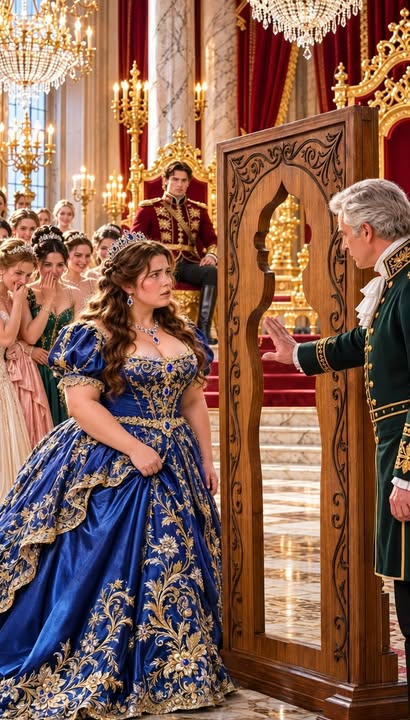
Part 3 – The Meaning Beneath the Wood
The archivist’s footsteps faded beyond the throne room doors, leaving behind the hush of the old ledger and the uneasy sense that the past had not finished speaking.
King William closed the book with care.
“Until we know more, no one will be asked to stand within that frame,” he said.
The royal attendant bowed, and the carpenter wrapped the removed strip in cloth before setting it on a nearby table.
Emily watched the bundle as though it might shift again on its own.
“Will the candidates be told what the ledger says?” she asked.
“They will,” Alexander replied.
“Not only that the trial is paused?”
“Not only that.”
King William’s gaze moved from his son to Emily.
“The archivist must verify the record before we make an announcement.”
Emily understood the caution, but it did little to ease her.
The women in the antechamber had been left with questions, and the longer they waited, the more room suspicion would have to grow.
“Could I tell them what we know so far?” she asked.
“I’ll speak to them,” Alexander said.
Emily turned toward him.
“If you speak for me, it may look like you’re protecting me.”
“I wasn’t offering to speak for you.”
“Then what were you offering?”
“To make sure no one is left to invent an explanation.”
She held his gaze, trying to decide whether he understood the distinction.
“Let me go with you,” she said. “I can tell them what I saw, and you can tell them what the palace has confirmed.”
The prince nodded.
“That seems fair.”
The king’s expression was difficult to read.
“Go together, then,” he said. “But do not promise what we cannot yet establish.”
They crossed the hall side by side without touching.
Emily was conscious of the distance between them, and of how easily anyone watching might assign it a meaning.
In the antechamber, the candidates had gathered in small clusters, their quiet conversation stopping when the doors opened.
The woman who had challenged Emily’s motives stood near the window.
Her pale gown was nearly the same shade as the overcast sky beyond the glass, and her posture remained composed.
“I am Alexander,” the prince began, then paused as if the formality of the introduction had suddenly become absurd.
“Emily has told you what she observed,” he continued. “The carpenter has confirmed that the frame contains a removable strip added to its original edge.”
A murmur passed through the room.
“We also found an old record suggesting the frame was once used as a symbolic measure of character,” he said.
“Used beside the frame, not inside it,” Emily added.
The candidates looked at her.
“That is what the record appears to say,” she clarified. “The archivist is searching for the repair ledger before we know more.”
A young woman in a lavender gown frowned.
“Then the trial we took part in wasn’t the trial the frame was made for?”
“We don’t know when the practice changed,” Alexander said. “But we know enough to pause it.”
“And what happens now?” asked another candidate.
“I don’t know yet,” he replied. “I will tell you when I do.”
The woman by the window folded her arms.
“It is difficult to believe this has nothing to do with Emily when she is the one the prince chose to let through.”
Alexander’s face tightened, but Emily answered before he could.
“He didn’t choose me,” she said. “He stopped the attendant from sending me away. Then the wood shifted.”
“Those things can both be true.”
“They can,” Emily said. “But the strip was there before I arrived, and it changed the opening for every candidate.”
The woman’s eyes stayed on her.
“That does not mean the prince won’t favor you now.”
“No,” Emily replied. “It doesn’t.”
The honesty seemed to catch the woman off guard.
Emily went on before either of them could soften the answer into something it was not.
“I can’t control what the prince thinks of me. I can ask that the trial be fair to everyone, and that is what I’ve done.”
The woman looked toward Alexander.
“And if the prince decides you are the one he wants?”
“Then he should have to make that decision without pretending a broken trial proves it.”
Alexander’s gaze met Emily’s for one brief, startled moment.
There was no gratitude in it, exactly.
There was recognition.
The candidates’ shoulders eased by degrees, though uncertainty remained.
The young woman in lavender stepped closer to the frame room’s doors.
“Will we be permitted to see the altered piece?”
“Yes,” Alexander said. “Once the carpenter has documented it.”
“Good,” she replied. “I don’t want to be told later that we misunderstood.”
Neither did Emily.
She stayed until the candidates had asked what they needed to ask, then followed Alexander back into the hall.
The exchange had left her with a hollow ache beneath her ribs.
“Thank you,” he said as they walked.
“For what?”
“For not letting me answer for you.”
“I don’t want to be the reason you seem generous.”
“You’re not.”
“You say that now.”
He slowed near the tall windows, where winter light fell across the polished floor.
“What would make you believe me?”
Emily studied him.
She did not want to give him a simple test he could pass with the right words.
“I don’t know,” she said. “Time, perhaps.”
“Then I’ll try not to rush you.”
It was a better answer than a promise that she had no reason to trust.
Before she could reply, a servant came through the side passage and bowed to the king.
“Your Majesty, the archivist requests the prince and the carpenter in the west records room.”
William looked toward his son.
“Go and see what she has found.”
Alexander glanced at Emily.
“You may come, if you wish.”
“I’d like to.”
The records room occupied a narrow chamber behind the palace library, where tall shelves held boxes of ledgers and rolls of architectural plans.
Dust gathered along the upper beams, and the air carried the dry scent of paper, leather, and old stone.
The archivist stood at a table with several books open before her.
The elderly carpenter waited beside a long sheet of parchment weighted at the corners.
“I found the earliest trial record,” she said. “It was filed under ceremonial objects rather than competition materials.”
She pointed to a line written in a careful, slanting hand.
“The frame was meant to stand as a measure of judgment,” she explained. “Candidates were asked to consider what it represented and whether its use was just.”
“Not to enter it,” Emily said.
“Not according to this record.”
Alexander leaned over the page.
“Was that the original trial?”
“It seems to have been,” said the archivist. “But the record ends before the frame was damaged.”
The carpenter moved to the parchment.
“This is a drawing of the frame after the fire,” he said. “The original carving was cracked along one side. The drawing shows a repair to the lower rail, but no inner strip.”
He traced the drawing without touching it.
“The repair itself may have happened later. The ledger could tell us who ordered the work.”
“Have you found it?” Alexander asked.
“Not yet,” the archivist said. “The relevant workshop books are in a different catalog.”
She opened a small folder and laid a scrap of paper on the table.
“There is another entry, though. It records the frame’s presence at the first royal marriage exhibition, when the competition was introduced in its current form.”
William’s name appeared at the bottom in a clerk’s hand.
The king’s face grew still.
“I do not remember seeing that object listed.”
“You signed the inventory,” the archivist said gently. “It does not say you approved the trial.”
William’s mouth tightened.
“Yet I allowed it to remain.”
Alexander looked at his father, but said nothing.
The king’s quiet admission seemed to make the room smaller.
Emily watched him turn the scrap of paper between his fingers, as if the faded ink might answer for him.
“Could the frame have been repurposed without your knowledge?” she asked.
“It could have,” William said. “But that does not excuse my failing to ask what it was being used for.”
The answer was not defensive, and that made it harder to dismiss.
The archivist gathered the loose papers into a neat stack.
“There is enough here to confirm that the frame’s meaning changed,” she said. “There is not enough to determine when, or who was responsible.”
“What about the royal carpenter’s mark?” Alexander asked.
The old carpenter cleared his throat.
“I recognize it,” he said. “It was used by the workshop that served the palace during the renovation after the fire.”
“Can you identify the hand that made it?” Emily asked.
“Not from that mark alone.”
He turned toward her, his eyes kind but thoughtful.
“I was an apprentice then. I remember helping carry pieces of the damaged carving, but I was too young to be trusted with the work itself.”
“Do you remember the repair?”
“I remember the fire,” he said. “The smoke reached the west corridor, though the frame was in another wing. Much of the old work was moved for safety. Some was stored. Some was restored.”
“Could the strip have been added then?” Alexander asked.
“Perhaps,” the carpenter replied. “But the fit is newer than the rest of the carving. Not new enough for us to call it recent, and not old enough to say it belongs to the original repair.”
The archivist returned to the ledger.
“I will keep searching.”
“Please,” William said.
The carpenter lifted the wrapped strip from the table.
“I’ll inspect the fastening in the workshop. I won’t remove anything else until the archivist has a record of it.”
As he left, the room’s silence returned.
Emily found herself looking at the drawing of the frame.
It showed a broad, open curve, nothing like the cramped outline that had stood in the throne room.
The space around it had been left blank.
There were no instructions written beside it.
“What did the candidates used to say?” she asked.
The archivist shook her head.
“The record does not preserve their answers. Only that the trial was meant to test whether they could distinguish a fair measure from an arbitrary one.”
“That sounds like something the queen might have designed,” King William said.
Alexander turned toward him.
“You remember her using the phrase?”
The king looked down at the drawing.
“I remember her saying that a measure could be useful only if people were free to question it.”
The words came slowly, each one seeming to travel from a place he had not visited in years.
“Did she create the trial?” Emily asked.
“I cannot be sure,” William replied. “She cared about the candidates having a voice. She thought court customs should reveal character, not merely reward good performance.”
Alexander’s gaze softened.
“You never told me that.”
“I had not thought of it in years.”
The king’s words were not an excuse, but grief moved beneath them.
Emily felt an unexpected tenderness toward him, and was wary of it.
A person could be sorry and still have done harm.
Both things could be true.
The archivist broke the quiet.
“I found a note from the old ceremony committee. It says the frame was to remain beside the hall entrance unless a candidate asked to examine it.”
“Asked to examine it?” Alexander said.
“Yes. That appears to have been part of the point.”
Emily looked again at the drawing.
The opening had not been a doorway at all.
It had been an object for people to question.
“Then everyone who stood inside it was being tested by a rule they were never told to question,” she said.
“Or the meaning was lost over time,” the archivist replied.
“Either way,” Alexander said, “we need the repair record.”
The records room door opened before the archivist could answer.
A courtier stood in the doorway, dressed in dark green with a narrow silver chain at his collar.
Lord Voss was a familiar presence at court, an adviser to the king whose influence seemed to come from being present wherever decisions were made.
His expression was courteous, though his eyes moved quickly from the open ledger to Emily.
“Your Majesty,” he said, bowing. “I heard the final trial had been suspended.”
“It has,” William replied.
“I hope nothing is amiss.”
“An alteration to the frame has been found,” Alexander said. “We are establishing how and when it was made.”
Lord Voss regarded the papers.
“A practical alteration, perhaps. The old opening may have been too wide to serve as a meaningful trial.”
Emily felt her shoulders draw back.
“What would it have been measuring?” she asked.
“Composure,” he said smoothly. “A candidate’s ability to follow a simple instruction.”
“Even when the instruction had no clear purpose?”
“Court life is full of rituals whose purpose is not immediately evident.”
“Then perhaps they should be explained before people are judged by them.”
Lord Voss smiled as if she had offered a clever child’s observation.
“That is a reasonable sentiment, Miss Emily. But a competition cannot stop every time a participant questions its traditions.”
“I don’t expect it to stop every time,” Emily said. “I expect it to stop when someone discovers the rules have been changed.”
Alexander stepped slightly forward.
“The frame was not part of the original competition in the way it was used today.”
“Was it not?” Lord Voss asked. “The records are incomplete, and the court has conducted this trial for several years without incident.”
“That does not make it fair,” Emily said.
A faint line appeared between the courtier’s brows.
“Fairness is not always the same as comfort.”
“No,” she replied. “But it should be the same for every candidate.”
Lord Voss’s gaze shifted toward Alexander.
“Your Highness, I only urge caution. A public pause could give the impression that the competition has been compromised.”
“It may have been,” Alexander said.
“That is a serious claim.”
“It is a reason to investigate.”
The courtier’s polite expression held, but something in his eyes had cooled.
“I would hate to see an honest inquiry turned into an opportunity for one candidate to gain an advantage.”
The remark found the place it was meant to.
Emily felt the old weight of the hall return, though she stood in a room full of papers instead of laughter.
“I haven’t asked to be selected,” she said.
“No one said you had.”
“You said I might gain an advantage.”
“I said the appearance of one must be considered.”
“Then consider this: I want the other candidates to know the truth, even if it means I lose my place in the competition.”
For the first time, Lord Voss’s smile faltered.
Alexander looked at her, then looked away, as if refusing to turn her words into another reason to praise her.
King William’s voice was quiet and firm.
“The inquiry will continue, Lord Voss. The trial will remain paused until we understand the alteration.”
“Of course, Your Majesty.”
The courtier bowed.
As he turned to leave, Emily noticed a streak of pale dust on the edge of his dark cuff.
It might have come from any number of places in the palace.
Still, her eyes followed it until the door closed behind him.
Alexander had noticed her looking.
“What is it?”
“Nothing certain.”
“Did you see something?”
“A little dust.”
He glanced toward the empty doorway.
“From the records room?”
“Perhaps.”
She wondered whether the dust meant anything, and whether she was beginning to see clues where there were only ordinary details.
The archivist closed the ledger.
“Lord Voss has been involved with the competition’s arrangements since its beginning,” she said. “He may know more about the frame than he has told us.”
“Then we will ask him,” William said.
Emily thought of his careful smile.
“Maybe not all at once,” she said.
The king considered her.
“Why?”
“Because if he knows something, he may tell us more if he doesn’t feel accused before we have proof.”
Alexander looked toward the door.
“You’re right.”
It was the first time he had agreed with her without adding anything.
The acknowledgment warmed her more than she expected, and she turned her attention back to the papers before the feeling could become a question.
The archivist gathered the records she needed and promised to keep searching.
By late afternoon, Emily had been given a quiet room near the library, though she had not asked for one.
She found it difficult to sit still.
The palace felt different now that she knew its walls had kept a story hidden in plain sight.
A frame could be changed, its purpose forgotten, and its new meaning accepted because no one thought to ask.
A soft knock came at the door.
Alexander stood outside, no longer wearing his formal coat.
He held a cup of tea in each hand.
“I thought you might want something warm,” he said.
“Did you ask the kitchen what I like?”
“I asked the kitchen what they had.”
“That’s less alarming.”
He offered her one of the cups.
She took it, leaving enough space between their fingers that they did not touch.
For a while, they drank in silence.
“I’m sorry about Lord Voss,” he said.
“You don’t need to apologize for him.”
“I’m not. I’m sorry that his suspicion landed on you.”
Emily looked into the amber tea.
“People will believe what suits them.”
“Some will.”
“And if you defend me too quickly, they’ll say I’m favored.”
“I know.”
“Do you?”
He lowered his cup.
“I know that I have the power to change how this looks, even when I’m trying to help.”
Emily had not expected him to say that.
He continued carefully.
“I don’t want your honesty to become evidence that you owe me trust.”
“You don’t get to decide what I owe you.”
“No,” he said. “I don’t.”
The simplicity of his answer settled between them.
Beyond the window, dusk gathered over the palace gardens.
Emily thought of the candidates in their rooms, wondering whether the trial would return and whether they would be asked to take part in it again.
“I may leave,” she said.
Alexander did not ask her not to.
Instead, he set his cup on the table beside him.
“You’re free to.”
“I know.”
“I would be sorry to see you go, but that isn’t a reason to stay.”
She studied him.
“Is that what you tell yourself about the competition?”
A troubled expression crossed his face.
“That I can choose freely?”
“That you can build a fair process inside a system you haven’t questioned.”
He absorbed the words without protest.
“No,” he said after a moment. “I think I’ve told myself the competition was better than the alternatives because it gave me more room than my father intended.”
“Maybe it did.”
“But it still put people on display.”
Emily could not disagree.
He looked down at his hands.
“I thought I was making a choice of my own. I didn’t ask whether the process made everyone else pay for it.”
His voice held no plea for her to reassure him.
That, too, mattered.
She set her cup down.
“You can still ask that question now.”
“I will.”
The door opened before either could say more.
A servant entered carrying a sealed note for the prince.
Alexander read it, and the warmth in his expression disappeared.
“What is it?” Emily asked.
“The archivist found the old repair ledger.”
“Where?”
“In the royal workshop records. She has asked us to join her there.”
They followed the servant through a narrow corridor toward the west side of the palace.
The archive room was dimmer than the records chamber, its shelves stacked with boxes bearing faded dates and handwritten labels.
The archivist stood beside a broad table, her face pale with concentration.
The elderly carpenter was there too, leaning over an open book.
King William had already arrived.
“Did you find the entry?” Alexander asked.
The archivist turned the ledger so they could see.
“This is the repair record after the fire,” she said. “The frame is listed here, along with the work done to restore it.”
The ink had faded, but the names remained legible.
Emily leaned closer.
The ledger noted that a portion of the frame’s carving had been damaged by heat.
A repair had been ordered, then completed by the royal workshop.
There was no mention of the removable strip.
“Could it have been added later?” Alexander asked.
“It could,” the archivist said. “The account lists the restored sections, but not every detail of the work.”
The carpenter turned a page.
“There’s a second entry.”
The ink on that page was darker, the handwriting more hurried.
It recorded a replacement fastening made several years after the fire.
No reason was given.
No name appeared beside the work.
Only a mark from the palace workshop.
William’s mouth tightened.
“That is not enough to tell us who ordered it.”
“No,” said the archivist. “But it tells us the frame was altered after its repair.”
Emily’s gaze moved to the date.
“How many years after?”
“Six,” the archivist replied.
The carpenter studied the fastening note.
“That would make the strip older than it looked at first. But the wood itself may have been stored before it was fitted.”
Alexander glanced toward the king.
“Do you remember the work?”
William shook his head.
“I remember the fire. I remember the restoration. I do not remember authorizing another change to the frame.”
The words left him looking older than he had that morning.
The archivist turned another page.
A loose slip of paper lay between the leaves, so thin it had nearly blended with the ledger.
She eased it free.
“This was not listed in the index.”
The paper had been folded twice.
The ink was faint, but its first line was still clear.
The archivist read it silently, then looked up at the king.
“What does it say?” Alexander asked.
She hesitated.
“It appears to be a note about the frame’s purpose.”
“Read it,” William said.
The archivist unfolded the slip.
“‘The measure is not the opening, but the willingness to question who has narrowed it.’”
No one spoke.
Emily felt the words settle inside her with the force of recognition.
They were not instructions about posture or composure.
They were a warning.
Below the sentence sat a single initial.
E.
**–END OF PART 3–CLICK “NEXT” AT THE BOTTOM OF THE PAGE TO CONTINUE READING**
* * *
[PREVIOUS: PART 2](https://storyly.idolsgift.com/blog/part-2-the-piece-that-shouldn-t-have-been-there-058) | [NEXT: PART 4](https://storyly.idolsgift.com/blog/part-4-the-piece-that-shouldn-t-have-been-there-058)
✓ Lynn R. Adams
Part 3 – The Meaning Beneath the Wood The archivist’s footsteps faded beyond the throne room doors, leaving behind the hush of the old ledger and the uneasy sense that the past had not finished speak…