PART 3: The Photograph Anna Tried to Hide 041
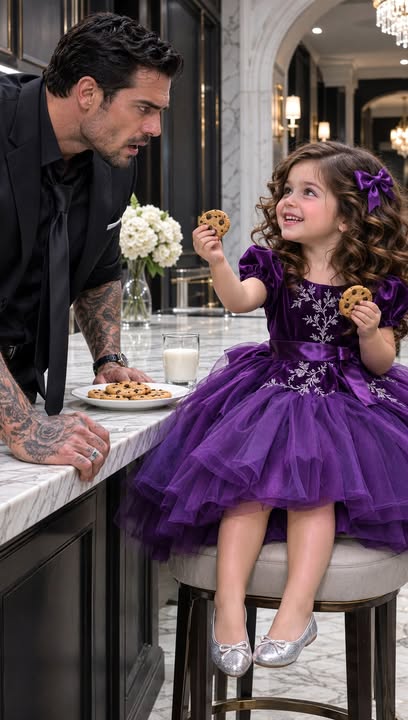
Part 3 – The Letter in the Box
Vincent stared at the sentence until the faded ink seemed to deepen.
The child must be protected from what Vincent believes happened.
“What did I believe happened?” he asked.
Anna’s fingers tightened around the edge of the box.
“I don’t know.”
“You’ve never seen this letter?”
“No.”
“Then we read it.”
He reached for the envelope, but Anna placed her hand over it.
“Wait.”
He stopped.
The room was quiet except for Ruby’s soft breathing from the bed.
Anna looked at the closed door, then back at Vincent.
“If we open it, there may be something in there that changes what we know.”
“It already has.”
“I know.”
Her voice held no accusation, only a tremor of uncertainty.
Vincent eased his hand away from the envelope.
“Do you want to wait until morning?”
“I don’t know what I want.”
“Then we don’t have to decide this second.”
She looked at him as if she had expected him to insist.
The space between them had always been crowded with things neither knew how to say, and his restraint seemed to leave room for something unfamiliar.
“Thank you,” she murmured.
They carried the box back to the sitting room, leaving Ruby asleep beneath her quilt.
Anna sat near the window, the envelope resting unopened in her lap.
Vincent took the chair opposite her, then leaned forward with his forearms on his knees.
“I keep thinking about the words,” he said. “What I believed happened.”
“Maybe your father thought you’d been told something that wasn’t true.”
“Or he thought I knew something I didn’t.”
“Those are both possible.”
“Do you think he meant the baby?”
“I think the baby is part of it.”
The certainty in her answer made him look up.
“Why?”
“Because the letter was hidden with the bracelet and the photograph.”
“Hidden by your mother, or my father?”
“I don’t know.”
“Would your mother have kept it without reading it?”
“She kept many things she couldn’t bring herself to throw away.”
Anna turned the envelope over, studying the date.
It had been written several months after the date on the hospital bracelet.
Vincent recognized the year, though the month brought no clear memory.
The months after his accident had been a long, hazy corridor of doctors and rehabilitation, his father making decisions on his behalf and explaining only what he thought Vincent needed to know.
He remembered being told that a family friend had become ill.
He remembered his father saying there had been a loss.
But he could not tell whether that memory belonged to the baby, to someone else, or to a conversation he had overheard while half-asleep.
“Maybe the bracelet was never meant to prove anything,” Anna said. “Maybe my mother was only keeping what she was given.”
“By whom?”
“I don’t know.”
“You keep saying that.”
“Because it’s the truth.”
He heard the strain in her voice and regretted the edge in his own.
“I’m sorry.”
“I’m not angry.”
“You’re allowed to be.”
“I’m tired, Vincent.”
He leaned back.
The unspoken years between them seemed to rise in the quiet room, not as a wall but as a long list of missed chances.
Anna’s mother had died three years earlier.
His father had died before that.
Every person who might have explained the letter was gone.
“What brought you to Chicago?” he asked again, more gently. “You said you wanted to be near family, but there was more.”
Anna looked down at the envelope.
“My mother left a folder of papers in the bottom of the box.”
“What kind of papers?”
“Bills, old insurance forms, letters she’d kept from when she lived with your family.”
“Were there more letters from my father?”
“One.”
“Did you read it?”
“Yes.”
“What did it say?”
She was silent long enough that Vincent wondered if she would answer.
Then she reached into the box and drew out a folded sheet of paper.
“I didn’t bring it because I wanted to keep it from you,” she said. “I brought it because I thought you should see it once I understood what it meant.”
“And now?”
“Now I’m not sure I understand anything.”
She unfolded the paper and passed it across the table.
The handwriting was his father’s, precise and slanted, the same as on the envelope.
The letter was addressed to Anna’s mother and dated several weeks after the bracelet.
Vincent read it once, then again, more slowly.
*You did what we asked, and I will not forget the care you have given the child.*
*The arrangements were never meant to become permanent, but circumstances have changed.*
*Vincent must not be burdened with details while he is still recovering.*
*We have to protect the child from what he believes happened, and protect him from the truth until he is well enough to understand it.*
*I know this is a great deal to ask of you.*
*The money I sent is for the hospital expenses and for anything the child needs.*
The letter ended with his father’s name.
Vincent lowered the page.
“He paid your mother’s medical bills.”
Anna’s expression changed.
There it was: the other reason she had come.
“Yes.”
“Were they hospital bills?”
“Some were. There were also payments to a clinic and a pharmacy.”
“When?”
“Over a period of about two years.”
“Your mother told you about those?”
“No. I found the records among her papers.”
“Did you think my father was paying because she was ill?”
“I thought he might have been helping her because she had once lived with your family.”
“Why didn’t you tell me?”
“I was trying to find out what the payments were for.”
“From whom?”
“The clinic no longer had records from that far back. The hospital said I needed to be a patient or have legal authority to request anything.”
“You could have asked me.”
Anna’s jaw tightened.
“I could have.”
“Why didn’t you?”
She looked at him steadily.
“Because I didn’t know whether you would listen.”
He opened his mouth, then closed it.
There was no useful defense to make.
“I’m sorry,” he said.
“You said that last night.”
“And I mean it now.”
“I know.”
He glanced down at the letter.
“Did you think my father was paying your mother out of guilt?”
“Yes.”
“Guilt for what?”
“I didn’t know.”
“Did you think he owed her money?”
“I thought there might have been some family arrangement I didn’t understand.”
“And now you think the payments were for the child.”
“I think they could have been.”
The word *could* seemed to settle heavily over the room.
Vincent stood and moved to the window, though there was nothing outside except the reflection of his own face.
His father had paid for a child’s care while keeping the existence of that child from his son.
His father had written that the arrangements were not meant to become permanent.
“Your mother cared for the baby,” he said.
“That’s what the letter suggests.”
“Was she a nurse?”
“No. She was seventeen when I was born. At the time of the letter, she was barely twenty.”
The detail caught him by surprise.
“You said she lived with my family when you were young.”
“She did, for a while. She had nowhere stable to go after her own father died, and your parents let her stay. She was still very young when she had me.”
Vincent remembered the extra bedroom more clearly now: a narrow bed beneath a window, a laundry basket in the hall, his aunt carrying a baby against her shoulder.
It might have been Anna.
He had been a child himself, too young to understand the shape of the lives around him.
“Did your mother ever tell you she raised a baby for someone else?”
“No.”
“Did she talk about the payments?”
“No.”
“Did she say why she left our house?”
“She said she wanted a place of her own.”
“That’s all?”
“That’s all she told me.”
The more they learned, the more the past seemed to rearrange itself without revealing its full shape.
Vincent returned to his chair.
“Could the baby have been yours?”
Anna’s face held no certainty, only the same question he had been trying to answer since the first photograph.
“My mother said she was told the child was your daughter.”
“But if she was caring for the baby, she might have known more.”
“Maybe she was told not to ask.”
“By my father?”
“I don’t know.”
He picked up the letter again.
The phrase *the arrangements were never meant to become permanent* had begun to trouble him.
“Why would an arrangement involving my child become permanent?”
“I don’t know.”
“Was your mother supposed to return the baby to someone?”
“Possibly.”
“To me?”
“Possibly.”
“And then something changed.”
Anna’s eyes dropped to the bracelet.
“Or someone changed the story.”
He looked at her.
“Do you think your mother knew the baby had survived?”
“She must have known the child was alive when she cared for her.”
“And afterward?”
“I don’t know.”
The repeated uncertainty was beginning to feel less like an answer than a locked room.
Vincent’s frustration rose, then softened when he saw how carefully Anna held the old paper, as if afraid that a careless movement might tear the last connection she had to her mother.
“Were the bills addressed to your mother?” he asked.
“Some were. The clinic receipts were in her name.”
“Do you know what kind of clinic?”
“Not exactly. The name had changed. I searched for it, but the building is gone.”
“Did you find anything in the paperwork that mentioned the child?”
“Only a few initials.”
“Which ones?”
Anna hesitated.
“L.M.”
He frowned.
“Do those mean anything to you?”
“No.”
“Could they be a name?”
“Maybe. Or a case number. I don’t know.”
He sat back and looked again at the photograph.
The infant’s face remained hidden by the blanket.
He had been holding the baby carefully, but the image offered no more than that.
“Did you think I was the father when you found it?”
“I didn’t know what to think.”
“You could have asked me.”
“I did ask you.”
He remembered her message now, not the words but the small blue notification he had dismissed while he was at a meeting.
A few days earlier, when she had been in town arranging their stay, she had sent a short note.
*I found something of my mother’s that may involve you. Could we talk?*
He had read the first half of it in the elevator, then been interrupted.
He had forgotten to return to it.
“You did,” he said.
“Yes.”
“I’m sorry.”
“I know.”
“I’m not making excuses, but I didn’t see the second message.”
“You didn’t see the first one either.”
He nodded.
She had reason to doubt that his attention would remain long enough for the hard parts.
The memory of Ruby correcting his tie returned, small and bright amid the heaviness.
“She thinks I don’t answer my phone,” he said.
“She’s not wrong.”
“No.”
“Children notice what adults explain away.”
He let that sit between them.
Anna refolded the letter, but did not put it back into the box.
“I don’t want to argue with you,” she said.
“Neither do I.”
“But I can’t pretend it doesn’t matter that you were absent from my life.”
“I know.”
“Do you?”
“I’m beginning to.”
She looked tired again, but this time there was something else beneath it, an old hurt no longer hidden by anger.
“When my mother was sick, I called you once,” she said.
Vincent’s chest tightened.
“When?”
“Near the end.”
He searched his memory.
He remembered a missed call from an unfamiliar number and a message he had listened to in the car, then told himself he would call back when he could be more present.
He had not called back.
“I didn’t know she was that ill,” he said.
“I know.”
“I should have called you.”
“Yes.”
“I’m sorry.”
She looked away.
The apology could not restore the moment, and they both knew it.
But it was no longer a wall between them.
It was a truth they could set down and look at together.
“I came here because I found the papers,” Anna said. “And because I couldn’t keep trying to solve it alone.”
“Why didn’t you say so when you arrived?”
“I hadn’t decided whether I trusted you with it.”
“I understand.”
“Do you?”
“I’m trying to.”
She gave a small, tired nod.
“I wasn’t sure you’d want to know.”
“I do.”
“You may wish you didn’t.”
“Maybe. But I’d rather know what happened than let the story stay broken.”
Anna’s fingers tightened around the letter.
“I thought you might say that.”
“Did you?”
“I hoped you would.”
The words carried a warmth that did not erase the hurt, but reached across it.
Vincent looked toward the bedroom door.
Ruby had not stirred.
“She deserves a childhood that isn’t made of half-truths,” he said.
“She does.”
“But she doesn’t need to hear this until we understand it.”
“Agreed.”
“And if we find something difficult, we decide together what to tell her.”
Anna watched him closely.
“You would really let me decide what she should know?”
“She’s your daughter.”
“She’s also your family.”
“Both can be true.”
The guardedness in Anna’s face eased, though it did not disappear.
“I need to tell you something else,” she said.
“Go ahead.”
“When I first found the photograph, I thought I should destroy it.”
He blinked.
“Why?”
“Because I was angry that my mother had kept a secret from me, and because I was afraid the picture would hurt you.”
“You almost destroyed it?”
“I almost threw it out. I stopped because I didn’t know what it meant.”
“I’m glad you kept it.”
“So am I.”
He reached for the letter, then stopped before touching it.
“Can I keep this?”
Anna considered the question.
“Not yet.”
“All right.”
“I want to make a copy first.”
“That makes sense.”
“You’ll have to promise not to confront the family with it before we know more.”
“Which family?”
“Any of them.”
“I wasn’t planning to.”
“I need you to promise.”
The request was firm, but not controlling.
She was asking him to show that he could be trusted with something fragile.
Vincent thought of the unanswered message, the years of distance, the way he had once assumed that the people he loved would always be there when he finally made time for them.
“I promise,” he said.
Anna searched his face.
“Thank you.”
He did not ask for the original letter again.
She returned it to the box, placing it beneath the faded postcards.
The photograph and bracelet went beside it.
They sat quietly until a small sound came from the bedroom.
A rustle of blankets.
Anna rose first.
Ruby was awake, sitting cross-legged in the middle of her bed with a stuffed rabbit tucked under one arm.
“Mommy?”
“I’m here, sweetheart.”
“Is it morning?”
“Not yet.”
“Is Uncle Vincent still here?”
“He is.”
Ruby’s eyes found him in the doorway.
“Did you find the baby picture?”
Vincent glanced at Anna.
She gave a small nod.
“We did,” he said.
“Is the baby you?”
“I don’t know.”
Ruby seemed to think this over.
“Maybe the baby was your sister.”
“Maybe.”
“Does she have a name?”
“We don’t know yet.”
Ruby looked at Anna.
“Can we find out?”
“We’re going to try,” Anna said.
“Okay.”
Ruby yawned, then hugged the rabbit closer.
“Can Uncle Vincent come to breakfast?”
“Would you like that?” Anna asked.
“Yes. He needs pajamas.”
“I’ll see what I can do,” Vincent said.
Ruby settled back against her pillow.
“Good night again.”
“Good night, Ruby.”
When Anna finished tucking her in, she and Vincent returned to the sitting room.
The tea had gone cold.
The house beyond the guest wing remained quiet, but sleep no longer seemed possible.
“I’ll call the hospital in the morning,” Vincent said. “I can ask whether they still have records from that year.”
“They may not speak to you without authorization.”
“I know someone who handles the family records.”
Anna’s expression changed.
“Please don’t use anyone to pressure the hospital.”
“I won’t.”
“I mean it.”
“So do I. I’ll ask what records can be requested and what permission they need.”
“And if there’s nothing?”
“Then we find another way.”
She studied him.
“What if the truth is worse than we expect?”
“I don’t know.”
“That’s the first honest answer you’ve given tonight.”
He let out a quiet breath.
“I’ve spent most of my life thinking that knowing everything was the same as being in control.”
“And now?”
“Now I think I’m realizing that the people I love can’t be managed like a problem to solve.”
The words seemed to surprise him as much as they did Anna.
She sat down again.
“I don’t want Ruby to become part of a search for something that may have nothing to do with her.”
“She won’t.”
“She’s already heard things.”
“She heard enough to be curious, not enough to carry a burden. We can keep it that way.”
Anna held his gaze.
“And if this is about your daughter?”
“Then I need to know what happened.”
“And if it’s about my mother?”
“Then you deserve to know what she was asked to do.”
“And if it’s about something neither of us has guessed?”
“Then we face it when we find it.”
The promise was not certainty.
It was only a willingness to stay.
Anna looked at the box between them.
“I wish my mother had told me.”
“So do I.”
“She may have thought she was protecting me.”
“Or protecting the child.”
“Or protecting you.”
“From what I believed happened.”
The sentence seemed to press against the room again.
Vincent’s thoughts returned to the months after his accident, the gaps in his memory, the vague explanations that had once seemed adequate.
He had believed his father when he said the family had suffered a loss.
He had believed there was nothing else he needed to know.
Perhaps his father had built the story carefully around what Vincent was able to remember.
“What if I was told the baby died?” he asked.
“Then your father may have believed that was the only way to keep you from asking questions.”
“Or he may have wanted to keep me from finding out the baby didn’t.”
Anna looked down.
“Maybe.”
The idea was not yet an answer, but it changed the shape of every clue they had.
The envelope.
The bracelet.
The clinic payments.
His father’s letter.
The baby in Vincent’s arms.
None of it proved what had happened, yet together they formed a story that could no longer be dismissed as a misunderstanding.
Near dawn, Anna finally returned to her room.
Vincent walked her to the doorway.
“I’m glad Ruby is here,” he said.
“I’m glad she is too.”
“I know we have a lot to sort through.”
“We do.”
“But I don’t want the past to make her feel unwelcome.”
“She won’t.”
“Or make you feel you have to leave before we understand it.”
Anna gave him a faint smile.
“I can’t promise I’ll stay forever.”
“I’m not asking you to.”
“Good.”
“But you have a room here as long as you need it.”
Her expression softened.
“Thank you.”
He stepped back to give her space.
“Good night, Anna.”
“Good night, Vincent.”
She paused with one hand on the door.
“Please don’t read the letter alone.”
“I won’t.”
She closed the door gently.
Vincent returned to the sitting room and stood beside the table.
The box remained where they had left it.
He did not open it.
By morning, Anna had gone through the papers once more, and Ruby had emerged from her room wearing a pink sweater over her princess dress because she had refused to change before breakfast.
The three of them sat at the kitchen island with pancakes and a bowl of strawberries.
Ruby asked Vincent whether all grown-ups had to wear suits.
“No,” he said.
“Then why do you?”
“I suppose I got used to it.”
“You should try a dinosaur shirt.”
“I’ll consider it.”
Anna hid a smile behind her coffee cup.
For a little while, the house felt less like a place full of locked doors and more like a home that had simply forgotten how to be lived in.
After breakfast, Vincent made a copy of the photograph and the letter.
Anna kept the originals in the box.
They agreed to contact the hospital together, but the first calls brought little more than a list of forms and the warning that old records might have been transferred or destroyed.
A clerk suggested that they try the records office associated with the hospital’s former maternity wing.
When Vincent called, he was told that the office had moved twice and that its oldest files were stored off-site.
“They can search,” he told Anna after hanging up. “But it may take a few days.”
“Did you give them the date from the bracelet?”
“Yes.”
“Did they ask for proof that we’re related?”
“They’ll need forms from both of us.”
“Then we fill them out.”
There was no triumph in her voice, only determination.
They spent part of the afternoon sorting the rest of the box.
Most of it held ordinary things: postcards, a few photographs of Anna’s mother as a young woman, and a pressed flower in a book of poems.
One folded receipt bore the name of a small clinic that had closed years ago.
Another recorded a payment from Vincent’s father.
The amount was modest but repeated every month for almost two years.
Anna placed each page in a careful stack.
“He wasn’t paying for one emergency,” she said.
“It looks that way.”
“He kept paying even after the letter said the arrangements weren’t meant to be permanent.”
Vincent rubbed a thumb along the edge of the receipt.
“That could mean he was helping your mother.”
“Or the child.”
“Or both.”
She did not answer.
The hours passed without any new explanation.
When the light outside turned gold, Anna took Ruby to the garden so she could burn off the last of her energy before supper.
Vincent stayed behind to make another call to the records office.
The clerk had promised to check whether any admission index from that year had survived.
The call went to voicemail.
He left a message and set the phone down.
For a few minutes, he stood in the silent kitchen, listening to Ruby’s laughter rise through the open glass doors.
Then he saw a narrow sheet of paper beneath the wooden box.
It had slipped from the stack when Anna sorted the receipts.
He picked it up.
The paper was a carbon copy, nearly transparent in places, and the writing was faint.
At the top, in his father’s hand, was the same date as the bracelet.
Below it appeared the name of the hospital and a line that looked like a transfer note.
Vincent read the first few words, then stopped.
The last line was clearer than the rest.
*Mother: Anna Moretti, age seventeen.*
He stared at it.
The paper trembled between his fingers.
Anna was outside, her back to the house as she helped Ruby tie a ribbon around the garden’s smallest tree.
Vincent looked from the page to the photograph in the box.
The infant in his arms had been placed in the care of Anna’s mother.
And the paperwork named Anna—not her mother—as the child’s mother.
“Anna,” he called.
She turned at the sound of his voice.
The smile faded from her face when she saw what he was holding.
“What is it?”
He could not answer at once.
Ruby waved from beside the tree, unaware of the paper between them.
Vincent looked down at the faint line again.
Then he lifted his eyes to Anna.
“I think this record says you were the baby’s mother.”
**–END OF PART 3–CLICK “NEXT” AT THE BOTTOM OF THE PAGE TO CONTINUE READING**
* * *
[PREVIOUS: PART 2](https://echoesofstories.idolsgift.com/blog/part-2-the-photograph-anna-tried-to-hide-041) | [NEXT: PART 4](https://echoesofstories.idolsgift.com/blog/part-4-the-photograph-anna-tried-to-hide-041)
✓ Lynn R. Adams
Part 3 – The Letter in the Box Vincent stared at the sentence until the faded ink seemed to deepen. The child must be protected from what Vincent believes happened. “What did I believe happened?” h…