PART 3: The Note Beneath the Stars 041
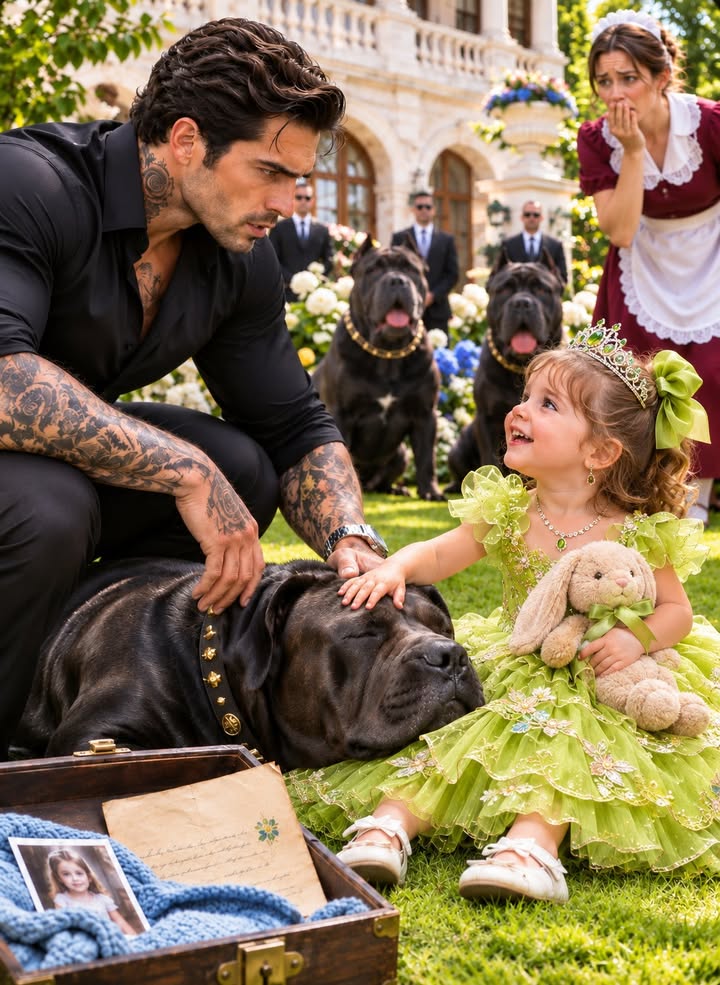
Part 3 – The Mark Beneath the Oak
“On one of Lily’s old scavenger-hunt cards,” Emily repeated.
The small crescent beneath the latch looked almost ordinary, a shallow engraving worn smooth at its edges.
Yet the sight of it had changed her.
I watched the memory take shape behind her eyes.
“What did the cards look like?” I asked.
“Little squares of paper, usually folded in half,” she said. “Lily drew clues on them. She’d leave them around the garden and make me follow them.”
“Why you?”
“She said I was the only person who didn’t pretend to know where the treasure was.”
Despite everything, a faint smile touched Emily’s mouth.
“She thought that made me a better searcher.”
Marco had been quiet since Daisy pointed toward the oak.
Now he stepped into the study.
“Lily made games out of everything,” he said. “That doesn’t mean this box is a clue.”
“I didn’t say it was,” Emily replied.
Her tone held no accusation, but Marco’s gaze moved to her, wary.
“You said you recognized the mark.”
“I did.”
“Then tell us what it means.”
“I don’t know what it means now,” she said. “I only remember seeing it on her cards.”
The difference between those statements was small, but important.
Emily wasn’t claiming to understand the box.
She was remembering Lily.
I picked up the box and turned it carefully beneath the lamp.
The crescent was etched under the latch, in a place someone might miss unless they were already looking closely.
Three short lines trailed below it, uneven and shallow.
“Could it be a maker’s mark?” I asked.
“Maybe,” Emily said. “But Lily drew it in the same way. The crescent and three lines.”
Marco came nearer to the desk.
“Children draw moons.”
“Not with those lines,” Emily said. “She used them to mean something.”
“Something like what?”
“I don’t remember.”
She looked frustrated with herself.
“I’m sorry. It was years ago.”
“You don’t have to apologize,” I said.
Her eyes met mine briefly, as if she were still learning what kind of answer I expected from her.
Daisy had grown quiet in Emily’s arms.
She rested her cheek against her mother’s shoulder, one hand curled around the ribbon.
“Can I see the card?” I asked.
Emily shook her head.
“I don’t have one.”
“Do you remember where Lily hid them?”
“Everywhere. Under flowerpots, inside books, taped beneath benches. She liked making the last clue harder than the others.”
“Did she ever use the oak?”
“She did.”
My attention sharpened.
“Do you remember where?”
“Not exactly. She used to say the tree had more pockets than the whole house.”
Marco exhaled through his nose.
“Salvatore, this is a memory from years ago. It could lead nowhere.”
“It could.”
“Then perhaps we should leave it there.”
I looked at him.
The old certainty in his voice had returned, but there was an uneasiness beneath it that no practiced calm could quite hide.
“You’re asking me to stop looking because the clue may lead nowhere,” I said.
“I’m asking you not to turn every childhood game into evidence.”
“I haven’t.”
“Not yet.”
The words were gentle enough, but they carried the weight of a warning.
Emily shifted Daisy higher on her hip.
“Perhaps I should take her upstairs.”
“I’ll have someone bring you tea,” I said.
She paused.
“I can manage.”
“I know you can. I’m offering because you’ve been here since early morning.”
Her shoulders lowered by a fraction.
“Thank you.”
She turned toward the door with Daisy in her arms.
At the threshold, Daisy lifted her head.
“Mommy, star?”
“We’ll get your star later,” Emily murmured.
Daisy nodded as though that settled the matter, then looked back at the box.
“Moon.”
Emily stopped.
“What did you say, sweetheart?”
Daisy pointed at the mark.
“Moon.”
The word came out soft and sleepy.
She pressed her face back into Emily’s shoulder before either of us could ask more.
Emily carried her away.
When they were gone, Marco came to stand beside my desk.
“You see what I mean,” he said. “She’s two. She hears a word and repeats it.”
“She didn’t hear us call it a moon.”
“She may have heard Emily say it.”
“Emily called it a mark.”
“You’ve been listening for connections. So have I.”
I studied him.
“You think I’m making them up?”
“I think grief makes a man notice what he wants to notice.”
It was an honest thing to say, and perhaps the reason it unsettled me.
“I’ve been grieving for two years,” I said. “If that were enough to make me careless, I would have been careless long ago.”
Marco lowered his gaze to the box.
“Or you’ve learned to hold on to anything that resembles hope.”
That was true, too.
I couldn’t tell whether he meant it kindly.
“Do you remember Lily’s scavenger hunts?” I asked.
“Of course.”
“Do you remember this symbol?”
“No.”
“You were here.”
“I wasn’t her playmate.”
“You were more than a guard to her.”
“I was your lieutenant.”
“And she trusted you.”
Marco’s face tightened, almost imperceptibly.
“She trusted you,” he said. “That doesn’t mean I knew every secret she had.”
I watched his eyes move to the note.
The sentence in Lily’s handwriting was still there, though the paper had been placed back in the box.
If anything happens to me, trust the girl who calls him Bubba.
“Did Lily ever say she wanted to leave?” I asked.
“Not to me.”
“Did she ever say she was frightened?”
“No.”
“Did she talk about anyone she trusted?”
“Salvatore, I don’t remember every conversation she had.”
I felt a familiar impatience stir, then let it pass.
The questions had come too quickly.
Marco was not a witness under examination.
He was a man who had spent fifteen years beside me, and he was entitled to ask why I suddenly looked at him as though he might be withholding something.
Still, I could not stop asking.
“Did you know Emily worked here?” I said.
“I knew the name Emily Carter.”
“Did you know she and Lily were close?”
“Not close.”
“That’s not what she described.”
“She was temporary staff. Lily liked people who listened to her. That doesn’t mean they were close.”
I picked up the silver-star bracelet.
“What about the accusation that Emily stole something from Lily’s room?”
Marco’s expression stayed still.
“I remember an envelope was missing.”
“Did you see Emily take it?”
“No.”
“Did Lily accuse her?”
“I don’t remember.”
“Then why accuse Emily?”
“I told you, I don’t remember the exact conversation.”
“Was it you who dismissed her?”
“Salvatore, I’m not certain. It was years ago.”
It was possible he genuinely didn’t remember.
It was also possible he had made a habit of letting me think that his memory was more reliable than mine.
“Bring me the old staff records,” I said.
Marco looked surprised.
“Why?”
“To see when Emily worked here and what happened when she left.”
“If you want the records, I’ll find them.”
“Thank you.”
He remained standing.
“And after that?”
“Then we decide whether the mark means anything.”
He glanced toward the windows, where the afternoon light had begun to fade.
“Should I tell the groundskeeper to check the oak?”
“Not yet.”
His attention returned to me.
“Why not?”
“Because if we search without knowing what we’re looking for, we’ll disturb everything around it.”
For the first time since the box appeared, Marco seemed to accept one of my decisions without argument.
“I’ll arrange for the records to be brought to you,” he said.
As he turned to leave, I stopped him.
“Marco.”
He looked back.
“If you know what that mark means, tell me now.”
“I don’t.”
His answer was steady.
I let him go.
The study felt larger once the door closed, and colder than it had a few minutes earlier.
I took the box with me to the library, where the shelves of Lily’s childhood books still stood untouched.
I had never planned to leave the room as it was.
I simply had never found a reason to change it.
A small wooden horse sat on the mantel, one leg cracked from a fall.
A drawing of a crooked house hung beside the window, its paper yellowed at the edges.
On the lower shelf, a row of old board games leaned against each other, their boxes faded from years of use.
I set the box on the table beneath the window.
There were few clues in the room, and most of them had been there for years.
That was what made me uneasy.
Something could be present for a long time without being noticed.
I found a drawer of Lily’s notebooks and school papers.
Most were full of sketches or half-finished stories, and I handled them slowly, mindful that they had been hers before they were evidence to me.
On one page, a crescent appeared in the corner beside a list of places.
The drawing was small and casual.
Under it were three lines, just as on the box.
I stared at the mark.
A number had been written beneath it.
Seven.
I turned the page.
Another crescent, another set of lines, and the number four.
I found a third symbol with a number beside it, then a fourth, drawn in the margin of a school assignment.
They were part of a series.
I remembered the games from when Lily was young.
She would run through the house with a folded paper in her hand, laughing whenever I claimed I had no time to follow her.
She had once hidden a brass key beneath my desk and made me search for it while I was on a business call.
I had found it several hours later.
By then, she had already given up waiting for me.
I shut my eyes briefly.
The library door opened.
Emily stood there, alone.
“Daisy’s asleep,” she said. “I hope I’m not interrupting.”
“No.”
She noticed the papers spread across the table.
“You found the mark.”
“I found several versions of it.”
I showed her the page.
She came closer.
“That’s one of her cards,” she said. “Or something like it.”
“Are these numbers part of the clue?”
“They might be.”
“Do you remember whether the crescent pointed to the next place?”
“I remember that the symbols had different meanings. Some were directions. Some meant count something. Sometimes the number told you which object to search.”
She looked at the page again.
“But I can’t tell you which one this is.”
“Could you remember if you saw the other cards?”
“Maybe.”
I took out the pages where I had found similar marks.
Emily studied them for a long moment.
“I don’t remember these exact ones,” she said. “But I think Lily used the crescent when she wanted someone to look beneath something.”
“Beneath?”
“Or inside something with a hollow space. She used a different symbol for behind.”
I looked at the mark on the metal box.
“What would the three lines mean?”
Emily shook her head.
“I’m not sure.”
There was no embarrassment in her answer now.
She knew the limits of her memory, and she wasn’t trying to make it sound more useful than it was.
“Thank you for coming back,” I said.
She gave a small shrug.
“I didn’t want to leave you alone with something that belonged to Lily.”
The sentence held more warmth than any promise could have.
I looked at the pages again.
“You knew her well enough to know when she was upset.”
“I knew some parts of her.”
“And I missed them.”
Emily didn’t rush to comfort me.
That was one of the things Lily had valued in her, I thought.
She let a silence be what it was.
“She told me once that you loved her so much you were always trying to stand between her and the world,” Emily said.
“That sounds like something I would have wanted to hear as praise.”
“She said she understood why. She just wished you would stand beside her sometimes instead.”
I looked down at the paper.
“I thought standing beside her meant making sure no one could reach her.”
“Perhaps she wanted you to trust her to decide who could.”
The truth of it settled quietly between us.
I had spent years believing that a father’s duty was to foresee every danger and close every door before his child reached it.
Lily had been trying to tell me that a locked door could feel like danger, too.
“I can’t change what I did,” I said.
“No.”
“Only what I do now.”
“Yes.”
She did not offer forgiveness on Lily’s behalf.
I appreciated that more than I could explain.
A sound came from the hallway, followed by the soft patter of small feet.
Daisy appeared at the doorway, holding Emily’s hand.
She had apparently woken from her nap, though her hair was still flattened on one side.
Her gaze settled on the papers.
“Moon,” she said.
Emily knelt beside her.
“Do you remember seeing this before, Daisy?”
The child leaned against her mother, considering the drawing.
Then she looked at the old wooden horse on the mantel.
“Hide.”
“Did Lily hide something near the horse?” I asked.
Daisy nodded.
Emily’s hand tightened around hers.
“How do you know?” she asked gently.
Daisy touched the edge of the paper.
“Lily showed Mommy.”
Emily went very still.
I looked at her.
“Did Lily show you?”
“No,” she said. “Not that I remember.”
Daisy frowned, as if we were being slow.
“Mommy picture. Lily.”
Emily’s face had gone pale again.
“What picture, darling?”
“The one in the box.”
The photograph lay on the table, Lily holding Brutus as a puppy.
Daisy pointed to the girl’s face.
“Lily showed Mommy.”
I had heard the child say it once already, but I had understood it as a toddler’s confusion.
Now the words carried a new weight.
“Emily,” I said carefully, “did you ever see this photograph before today?”
“No.”
“Are you sure?”
“I’m sure I’ve never seen this one.”
Daisy looked up at her mother.
“Lily said Bubba.”
Emily’s mouth parted, but no sound came.
I felt something shift inside me.
Daisy might have been repeating words she had heard from her mother in another context.
She might have seen Lily’s picture somewhere else, in a book or an old photograph.
But Emily had said she had never seen it.
“Where did you see Lily?” I asked Daisy.
The child turned away from us and wandered toward the mantel.
She reached for the wooden horse.
Emily moved quickly, catching her hand before she could pull it down.
“Careful, sweetheart.”
Daisy pointed beneath it.
“Under.”
I looked at the horse.
It had been on the mantel for years.
Its cracked leg rested on a shallow wooden base, darkened by dust.
I lifted it carefully and examined the space beneath.
At first, I saw nothing.
Then my thumb brushed a narrow seam in the wood.
The base was hollow.
Emily drew Daisy gently away from the table.
“Salvatore,” she said, “perhaps we shouldn’t—”
I turned the horse over.
The base came loose in my hand.
Inside was a small, folded square of paper, browned with age.
For a moment, the whole room seemed to narrow around it.
The paper was no larger than two fingers.
A crescent and three lines had been drawn in one corner.
Underneath them was the number seven.
Emily’s fingers closed around Daisy’s shoulder.
“That’s one of her marks,” she whispered.
I unfolded the paper.
Lily’s handwriting was there, small and slanted.
The words were clear enough to read:
“Where the oak keeps its deepest pocket, ask the roots for what the moon has lost.”
I read it aloud.
Emily looked toward the garden windows.
The oak stood beyond them, its dark branches spreading over the old lawn.
“That sounds like another clue,” she said.
“It does.”
“Then we should wait until morning,” Marco said from the doorway.
I hadn’t heard him return.
He had a thin folder in his hand, but his eyes were fixed on the note.
“Why?” I asked.
“The ground is damp, the light is fading, and there are people working around the garden who have no reason to know what we’re searching for.”
“That’s sensible,” Emily said.
It was, and I was grateful she had said it before I mistook caution for resistance.
I placed the paper beside the box.
“Then we wait until morning.”
Marco let out a breath I hadn’t realized he was holding.
He handed me the folder.
“These are the old staff records,” he said. “Emily’s entry and the report about the missing envelope.”
I opened the folder.
A thin sheet listed Emily Carter’s dates of employment and her departure.
The line beside the reason for leaving read: “Resigned after inventory discrepancy.”
There was no accusation in the record, only a dry phrase that could have concealed almost anything.
The report was attached behind it.
I read it once, then again.
The missing item was described as a sealed envelope from Lily’s desk.
No contents were listed.
No witness was named.
The final note said the matter had been handled internally.
“Did you write this?” I asked Marco.
He looked down at the page.
“I don’t remember writing it.”
“Did you ask Emily to leave?”
“I remember speaking with her. I don’t remember the details.”
Emily stood very still.
“You told me Lily’s envelope had disappeared,” she said. “You asked whether I had taken it.”
Marco turned to her.
“I’m sorry if I made you feel accused without proof.”
“You told me you had proof.”
His expression changed.
“Did I?”
“Yes.”
The library had gone quiet except for the clock.
Marco read the report again, his mouth pressed into a thin line.
“I don’t remember saying that.”
“You said you’d found something in my room,” Emily replied. “You wouldn’t show it to me.”
“I don’t remember.”
“I remember.”
She did not raise her voice.
That made the words more difficult to evade.
Marco set the paper down.
“I can only tell you what I recall.”
“You told me I could explain myself to Salvatore,” Emily said. “Then you told me he had already made up his mind.”
I glanced at her.
“You tried to speak to me?”
“Yes.”
“Why didn’t I hear you?”
She looked toward Marco.
“I was told you didn’t want to.”
I felt the answer like a door closing in my face.
I could not know what had happened to that message, or whether it had ever reached me.
I could only know that Emily had been young, alone in a house where the man with the most influence told her that speaking up would be pointless.
“Did you tell Lily you were leaving?” I asked.
“No,” Emily said. “I didn’t get the chance. She was away that night.”
Marco’s eyes shifted sharply to her.
“You said she was away?”
“I said I didn’t see her. I thought she was away.”
“On what night?” I asked.
“The day I left the estate. The same evening Marco called me into his office.”
The folder felt suddenly heavier in my hands.
“Do you remember the date?”
Emily shook her head.
“I remember it was raining. I had taken the late train into the city the next morning.”
Marco looked toward the window.
“It was a long time ago.”
“Do the records give a date?” I asked.
I turned back to the employment sheet.
The date of Emily’s departure was printed near the bottom.
I looked at the date, then at the note from Lily, then at the aged paper tucked inside the wooden horse.
I could not yet see how the pieces fitted together.
But Emily had left during the months before Lily vanished.
Marco had accused her over an envelope connected to Lily.
And now he seemed unable, or unwilling, to remember what he had done.
I closed the folder.
“Tomorrow morning,” I said, “we’ll examine the oak.”
Marco’s gaze stayed on me.
“I’ll make sure the garden is clear.”
“I didn’t ask you to clear it.”
“I meant I’ll keep people from disturbing the ground.”
“Thank you.”
Emily glanced at the note on the table.
“Lily’s clues were usually meant for the person she trusted to follow them,” she said.
“Do you think that person was you?” I asked.
“I don’t know.”
She looked down at Daisy, who had begun tracing the edge of the table with one finger.
“But I think Lily wanted someone to find this.”
I followed her gaze to the words.
Where the oak keeps its deepest pocket, ask the roots for what the moon has lost.
Outside, the last light slipped behind the trees.
The oak stood in the dim garden, its roots hidden beneath the soil.
And for the first time, I wondered whether Marco had been frightened of the box itself—or of what Lily had left waiting under the tree.
**–END OF PART 3–CLICK “NEXT” AT THE BOTTOM OF THE PAGE TO CONTINUE READING**
* * *
[PREVIOUS: PART 2](https://echoesofstories.idolsgift.com/blog/part-2-the-note-beneath-the-stars-041) | [NEXT: PART 4](https://echoesofstories.idolsgift.com/blog/part-4-the-note-beneath-the-stars-041)
✓ Lynn R. Adams
Part 3 – The Mark Beneath the Oak “On one of Lily’s old scavenger-hunt cards,” Emily repeated. The small crescent beneath the latch looked almost ordinary, a shallow engraving worn smooth at its edg…