PART 3: The Note Beneath the Moon 034
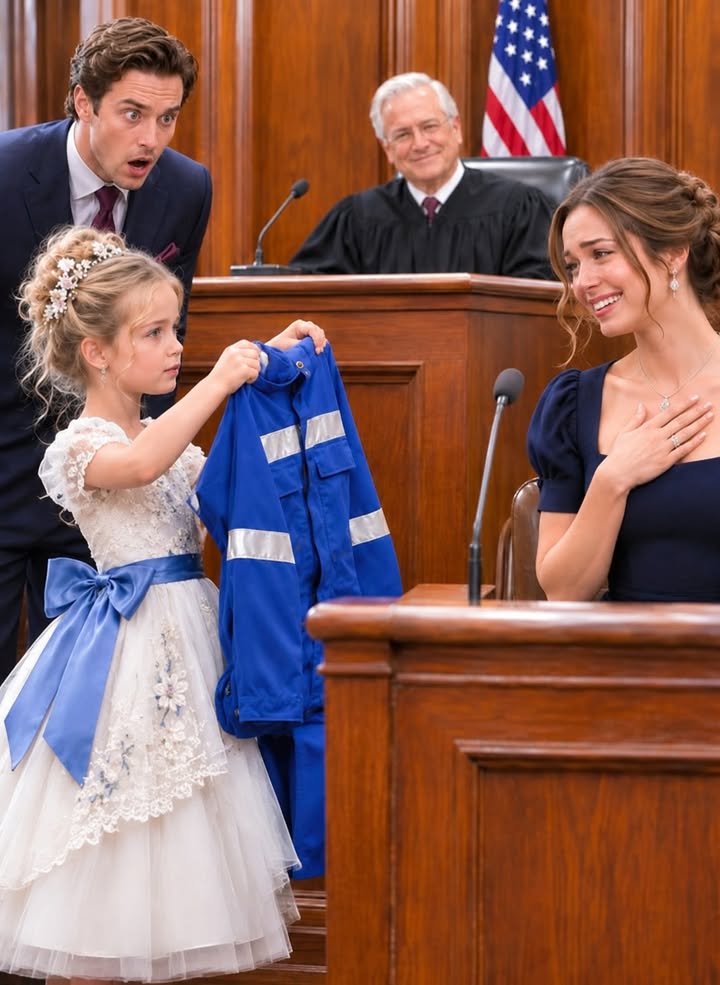
Part 3 – The Mark in the Locket
Gwen’s words followed us down the courthouse steps, seeming to linger in the cold air between us.
I stopped with one hand on the railing.
“The locket had a moon like that?”
“Not the same moon,” Gwen said, though her eyes remained fixed on the courthouse doors. “The same little line through the crescent.”
Willa tightened her fingers around mine.
“Did Grandma have a moon necklace?” she asked.
“She had an old gold locket,” I said. “I sold it before your birthday.”
“I know,” Willa replied. “You told me it helped pay for my cake.”
Gwen’s expression softened, but there was something unsettled beneath it.
“Your grandmother wore that locket for years,” she said. “I remember the design clearly. A tiny crescent, with a fine mark through the middle.”
I tried to picture it.
The locket had been small enough to rest in the palm of my hand, its gold worn smooth at the edges. I had inherited it after my grandmother died, but I’d never been much of a jewelry person. When the rent was due and my cleaning shifts disappeared, I had taken it to a secondhand shop and watched the clerk weigh it beneath a bright white lamp.
I remembered the etched crescent.
I did not remember a mark.
“Why didn’t you mention this before?” I asked.
Gwen drew her coat closer around herself.
“I didn’t think of it until I saw the shirt. And I never knew what was inside the locket.”
“Inside?”
She hesitated, glancing at Willa.
“Your grandmother once told me it held a tiny photograph. She said it was a picture of someone important to her, but she never showed it to me.”
I stared at her.
“You knew there was a photograph and never told me?”
“I thought she meant a picture of your grandfather,” Gwen said. “She talked about him often. I didn’t want to pry.”
“My grandmother’s locket was in my jewelry box for years.”
“I know.”
“And you never said anything?”
Gwen’s eyes lowered.
“I’m sorry. I didn’t understand that it mattered.”
Willa looked from one of us to the other, trying to follow the conversation.
“Could the picture be of Dad?” she asked.
The question was so small that it almost disappeared beneath the traffic passing along the street.
Gwen’s face changed.
“I don’t know, sweetheart.”
Neither did I.
But the thought had already settled into the space left by the note.
The same mark on the shirt and the locket.
A picture hidden inside the locket.
Reid’s unexplained reference to “old things.”
I felt the questions gather, each one touching the next without quite forming an answer.
“Let’s get you home,” I told Willa.
She nodded, but before we reached the sidewalk, I glanced back at the courthouse entrance.
Reid had come out behind us.
He stood near the top of the steps with Mercer, his polished watch bright against his dark sleeve. When he saw me looking, he did not smile or turn away.
For a moment, he seemed to be searching for words.
Then Mercer said something to him, and Reid followed him toward the parking lot.
Willa watched her father go.
“Will he come to my school play?” she asked.
“If he says he will, I hope he does.”
“But you don’t know?”
“No,” I said honestly. “I don’t know.”
She accepted that answer with the serious patience children sometimes use when adults give them too little to hold on to.
At home, Gwen made soup while I sat at the kitchen table with the folder from court spread in front of me.
The receipts and bank statements looked suddenly insignificant beside a locket that might have connected our family to something none of us understood.
I tried to remember the shop where I had sold it.
It had been a narrow storefront near the bus station, with a brass bell above the door and a display case full of watches that never seemed to show the same time.
The receipt was somewhere in the folder, I thought.
I searched between the cake receipt and my copies of the landlord’s messages, but found only the shop’s name and the amount I had been paid.
Willa came in wearing her pajamas, her hair still damp from the bath.
“Do you think the picture is still inside?” she asked.
“I hope so.”
“Could we ask the person who bought it?”
“We can try.”
She looked toward the window, where the early darkness had turned the glass into a faint reflection of our kitchen.
“Does Dad know about the picture?”
“I don’t know, honey.”
“Maybe the note wants him to tell us.”
I wanted to say that notes could not want anything, that they were only words left by someone with a reason.
Instead, I took her hand.
“Maybe we’ll find out.”
She leaned her shoulder against my arm.
“I still love Dad,” she said.
“I know.”
“Even if he did something wrong?”
“You can love someone and still wish they had made different choices.”
She studied my face.
“Do you still love him?”
I had not expected the question, though perhaps I should have.
I looked at the papers on the table, at the courthouse copy of the photograph Mercer had presented, and then at the girl who was trying to make sense of the space between her parents.
“I care about your dad because he’s your dad,” I said. “And because we shared a life once. But what matters most right now is that you feel safe telling the truth.”
Willa nodded, though her expression remained thoughtful.
That night, after she had gone to bed, Gwen sat across from me at the kitchen table.
“I should have told you about the photograph,” she said.
“You couldn’t have known it was connected.”
“I still should have said something.”
I turned the locket receipt over between my fingers.
“Do you remember anything else about the design?”
Gwen shut her eyes briefly, reaching back.
“The moon was on the front. The little line wasn’t engraved deeply. It looked almost like a thread or a scratch.” She opened her eyes. “Your grandmother used to say that a small mark could help you recognize what belonged to you.”
I looked up.
“Did she say that because of the locket?”
“I don’t know. She said it when I was young, when she showed me a box of old family things. I thought it was a saying.”
“A small mark could help you recognize what belonged to you,” I repeated.
It did not sound like much of a clue.
It sounded like something a grandmother might say to a child and expect them to understand years later.
The next morning, I called the secondhand shop.
A woman answered and confirmed that the business was still open, though it had changed owners since I sold the locket.
I gave her the date and the receipt number.
She asked me to hold while she checked the old ledger.
When she returned, she said the locket had been sold at auction to a local antique dealer named Elias Rowe.
“Do you have a number for him?” I asked.
“We can give you the shop’s contact information,” she said. “I can’t promise he still has the piece.”
I wrote it down.
The dealer’s store was in a renovated building downtown, between a tailor and a shop selling handmade candles. I could not go before my diner shift, so Gwen offered to take Willa to school and meet me there later.
The following afternoon, we stood in front of a glass cabinet filled with silver spoons and old pocket watches.
Elias Rowe was a slender man with white hair and a magnifying lens hanging from a cord around his neck.
When I described the locket, he listened without interruption.
Then he asked to see the receipt.
He examined it, nodded, and went through a small office behind the counter.
After several minutes, he came back carrying a padded box.
“I remember this piece,” he said. “It was unusual for its size.”
My mouth had gone dry.
“Do you still have it?”
“I do.”
He opened the box.
The locket lay inside on a square of faded green cloth, its gold surface catching the light.
For a moment, I could only stare.
It looked smaller than I remembered, though perhaps it was simply that so much time had passed since I had last held it.
The crescent was there, and the fine line through it.
Gwen reached toward the glass but stopped short of touching it.
“That’s the mark,” she said.
I felt an unexpected ache in my throat.
“I sold it,” I said. “I knew I might never see it again.”
Mr. Rowe looked at me carefully.
“If you’re asking whether you can buy it back, I’m afraid I paid more than the shop gave you.”
“I’m not sure I can afford to.”
“That’s understandable.”
“Could I see what’s inside?”
He nodded and lifted the locket from its cushion.
It opened with a small click.
The inside was empty.
I leaned closer.
“Was there ever a photograph in it?”
“I couldn’t say,” he replied. “When I purchased it, it was already empty.”
Gwen looked at me.
“So it may have been removed before the shop sold it.”
“Or before I sold it,” I said.
I tried to remember whether I had opened the locket in the years I owned it.
I could not remember doing so.
Mr. Rowe turned the locket gently in his palm.
“There’s a tiny inscription here,” he said.
He angled it toward the light, then used his lens to look at the back.
“May I?”
I leaned closer.
The engraving was almost too faint to read.
There was a date, followed by a few letters that might have been worn away.
Gwen bent over my shoulder.
“What does it say?”
“I can make out the date,” Mr. Rowe replied. “The rest is less clear.”
He read the numbers aloud.
They were from a time before I was born.
My grandmother would have been a young woman then.
“Could you take a photograph?” I asked.
“I can do that.”
He used his phone to capture the inscription from several angles, then sent the images to me.
I thanked him and gave the locket one last look before he returned it to its case.
“I didn’t realize it could mean so much to someone,” he said.
“It meant a lot to my grandmother,” I replied. “I wish I’d understood that sooner.”
On the walk back to the car, Gwen held the shopping receipt while I studied the photograph of the inscription on my phone.
The date remained clear.
The letters did not.
“I thought I knew all the important parts of our family,” I said.
Gwen tucked the receipt into her coat pocket.
“None of us knows all of them.”
That evening, I called the number Reid had given the court for his attorney and asked whether Reid could speak with me about the shirt and the locket.
Mercer returned my call within an hour.
“Mr. Hadley is not prepared to discuss the evidence outside the hearing,” he said.
“I’m not asking to discuss legal strategy.”
“Then perhaps you should put your questions in writing.”
“I’m trying to understand what Willa was told.”
There was a pause on the line.
“I’ll pass along your request.”
He did not call back.
At the next hearing, the shirt remained sealed in the evidence bag on a table beside the judge’s bench.
Willa had asked whether she could attend, but I had told her that the adults could handle that part while she spent the morning with Gwen.
The judge accepted the photograph from the school and the receipt for the shirt, but warned both sides that neither item alone proved how the stains had appeared.
The note’s origin had not yet been established.
Reid sat opposite me, his posture composed.
When I looked toward him, his attention stayed on the judge.
Mercer repeated that the note might have been placed in the shirt after the photograph was taken.
He also argued that Reid had never given Willa the garment.
The words made my stomach tighten.
“Mr. Hadley,” the judge said, “you were asked to clarify your role in the purchase or delivery of this shirt.”
Reid folded his hands.
“I don’t believe I gave her that shirt.”
A low murmur moved through the room.
Willa’s birthday bag came back to me, though she had described it in a child’s straightforward way, without anger or embellishment.
I wanted to ask him why he was denying it.
I wanted to ask whether he had told her the truth or simply offered her something he thought she would remember differently.
Instead, I kept my eyes on the judge.
“The child’s account differs from yours,” the judge said.
“She may be remembering another gift.”
“She was quite clear.”
“I don’t want to contradict her,” Reid replied. “I’m saying I don’t remember giving her this specific shirt.”
His words were careful enough to sound reasonable.
That was what made them so difficult to hold.
The judge said the disagreement would be considered alongside the rest of the evidence.
Then he turned to the landlord’s statement, which described our apartment as unsanitary and unsuitable for a child.
I had brought photographs of our home and the rent receipts Gwen had helped organize.
Before I could begin, the courtroom deputy approached the judge and handed him a small folder.
The judge read its contents quietly.
Then he looked toward both attorneys.
“An additional statement has been submitted by a neighbor of Ms. Hadley’s,” he said. “The neighbor also provided copies of text messages relevant to the landlord’s account.”
Mercer stood.
“We have not had an opportunity to review those materials.”
“You will have the opportunity,” the judge replied. “The court will take a brief recess.”
My hands had started to shake again.
I had not known that a neighbor planned to speak.
When the hearing resumed, a woman named Mrs. Alvarez was brought forward.
She lived two doors down from our apartment and had once lent me a folding chair when Gwen’s back was hurting.
I knew she had seen the landlord come by, but I had not known she kept messages from him.
She told the judge that the landlord had asked her whether she would confirm that our apartment was loud and poorly maintained.
“I told him I couldn’t say that,” she said. “I’ve been inside. It’s clean, and the child is cared for.”
Mercer asked whether she had personal knowledge of our home every day.
“No,” she replied. “But I know what I’ve seen.”
The judge nodded for her to continue.
Mrs. Alvarez said the landlord had then sent a series of messages asking her to say that Willa was often left alone.
She had refused.
The messages were printed and submitted.
One line, visible from where I sat, read: He says he can make it worth your time if you support his version.
Another included a name.
Reid Hadley.
The courtroom seemed to draw in around that sentence.
Mercer requested time to review the messages.
The judge granted it, then asked Mrs. Alvarez whether she had spoken directly with Reid.
“No,” she said. “The landlord told me Mr. Hadley was paying him to document complaints.”
Reid’s lawyer rose immediately.
“Your Honor, that is hearsay.”
The judge agreed that the statement would need to be evaluated carefully, but allowed the messages to be reviewed as evidence of possible pressure on the landlord.
Reid sat motionless, his face unreadable.
I looked at the back of his hand resting on the table.
The watch gleamed there, as polished as it had on the first day.
But the man wearing it seemed less certain than he had when he entered the courtroom.
When the judge called a short recess, I stepped into the corridor.
Mrs. Alvarez came out a few minutes later and stopped beside me.
“I’m sorry I didn’t tell you sooner,” she said. “I didn’t know if the messages mattered.”
“They matter,” I replied. “Thank you for keeping them.”
She gave my arm a light squeeze, then returned to the courtroom.
Gwen was waiting near the drinking fountain.
“What did she say?” she asked.
I told her about the messages.
Gwen’s expression hardened, then softened as she looked toward the closed courtroom door.
“He may have arranged for the landlord to exaggerate,” she said. “That doesn’t mean we know why.”
“I don’t want to guess at his reasons anymore.”
“Neither do I.”
For a moment, I thought of the note sewn into Willa’s shirt and the photograph missing from the locket.
The discoveries pulled in opposite directions.
One made Reid look as though he had tried to damage my case.
The other suggested there was a reason he had placed that shirt in Willa’s hands.
I could not decide which possibility frightened me more.
When we returned, the judge asked both sides whether they had anything further to add about the neighbor’s statement.
Mercer said he would investigate the messages.
I spoke briefly about the apartment, the routines I had built around my shifts, and the way Gwen helped make sure Willa was never left alone.
I told the judge that I had made mistakes, like any parent, but I had never treated Willa’s clothes or her home as proof of how much I loved her.
The judge listened without interrupting.
Then he reminded us that the court would not ask Willa to choose between her parents, nor would he treat her affection for either of us as evidence of who deserved her more.
The words steadied me, though they did not resolve anything.
After the hearing, Willa waited with Gwen in the courthouse lobby.
She hurried to me when she saw me.
“Did they decide?” she asked.
“Not yet.”
“Did Dad say anything?”
I paused.
“He said he doesn’t remember giving you the shirt.”
Her face fell.
“But he did.”
“I believe you.”
She looked toward the doors, where Reid was speaking with Mercer.
“I don’t want him to get in trouble.”
“Neither do I, sweetheart.”
“But I don’t want you to lose.”
I bent so we were eye to eye.
“This is not a game with a winner and a loser.”
“It feels like one.”
“I know. But you don’t have to make it fair for us. You can love Dad and still tell the truth about what happened.”
Willa leaned her forehead against mine.
“I don’t want him to think I’m picking you.”
“You’re not picking me by telling the truth.”
Her breathing slowed.
Across the lobby, Reid noticed us.
He took a step in our direction, then stopped.
Willa saw him and lifted one hand in a small wave.
Reid lifted his in return.
There was affection in the gesture, and uncertainty, and something that looked almost like apology.
Then Mercer called him, and he turned away.
On the drive home, Willa sat quietly in the back seat.
Gwen rode beside me, holding the copy of the locket photograph.
At a red light, she leaned forward.
“I’ve been thinking about the date,” she said.
“What about it?”
“Your grandmother once told me she helped a family when their father was out of work. She never gave me names, but I remember she said the boy had a silver moon pinned to his coat.”
I looked at her.
“Do you think she meant Reid?”
“I don’t know. He would have been a child then.”
The light changed.
I drove on, feeling the locket’s date settle into the puzzle beside the note and the shirt.
When we reached home, I opened the image Mr. Rowe had sent.
The faint engraving remained almost impossible to read, but the date stood out.
Beneath it, one letter looked unmistakable.
An R.
Gwen leaned over the phone.
“Could it be his name?”
“Maybe.”
The rest of the inscription blurred into the scratches and shadows.
Willa stood in the doorway, listening.
“Does that mean Dad knew Grandma?” she asked.
“I don’t know,” I said again.
But the question no longer sounded like a child’s guess.
It sounded like the beginning of an answer.
That night, while Willa slept, I searched through the few photographs I had kept from my grandmother’s house.
Most showed ordinary family gatherings: birthdays, holidays, summer afternoons in the yard.
At the bottom of a box, I found a photograph I had never noticed before.
It showed my grandmother standing on the front steps of her old house, one arm resting on the shoulder of a boy about Reid’s age.
The picture was faded, and the boy’s face was turned slightly away.
But pinned to his coat was a small silver crescent.
A thin line crossed its center.
**–END OF PART 3–CLICK “NEXT” AT THE BOTTOM OF THE PAGE TO CONTINUE READING**
* * *
[PREVIOUS: PART 2](https://puretales.idolsgift.com/blog/part-2-the-note-beneath-the-moon-034) | [NEXT: PART 4](https://puretales.idolsgift.com/blog/part-4-the-note-beneath-the-moon-034)
✓ Lynn R. Adams
Part 3 – The Mark in the Locket Gwen’s words followed us down the courthouse steps, seeming to linger in the cold air between us. I stopped with one hand on the railing. “The locket had a moon like…