PART 3: The Name on the Card 046
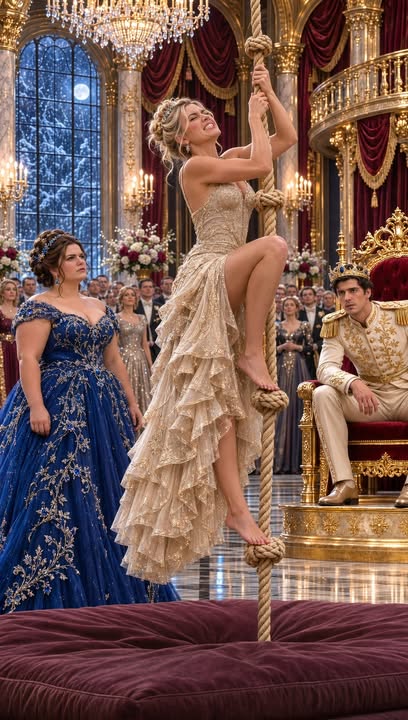
Part 3 – The Pattern in the Ledger
The next morning, I returned to the palace with my palms still tender and the gold vines on my gown folded in my mind like a question I could not put away.
The trials were not scheduled to resume until the afternoon, so I had a few hours to find the answer Elias Bell had promised.
My mother had called just after breakfast.
I had told her about passing the first trial, and she had sounded proud in the careful way she did when she was trying not to let worry crowd out joy.
When I mentioned the archivist, the silence on the other end of the line had lasted only a moment.
Still, I had noticed it.
“An archivist recognized our name?” she asked.
“Yes.”
“What did he say?”
“That Eleanor worked here as a seamstress.”
Another pause followed, longer this time.
“I knew she sewed,” my mother said at last.
“You told me stories about her sewing.”
“I mean that was how she earned money before I was born.”
“Did you know she worked at the palace?”
“No.”
Her answer came quickly, but her voice had changed.
I had wanted to ask about the old scrap of fabric, the gold vines, and why she had copied them for my dress.
Instead, I had heard her draw a slow breath, then ask if the palace had treated me well.
I told her I was all right.
She told me to be careful.
Neither of us had said what we were really thinking.
Now, crossing the palace courtyard, I wondered if she had been surprised by the news or frightened that it had finally found us.
The archivist was waiting in the reading room, with a large ledger placed open on the table.
A paperweight held down one curling corner.
“Good morning, Miss Williams,” he said.
“Thank you for coming back.”
“Good morning.”
I took the chair across from him, then looked at the book.
The leather cover was worn soft at the edges, and its gold lettering had faded until only a few letters remained visible.
“Is that the ledger?”
“It is one of the household registers from the year your grandmother worked here.”
He turned the book slightly so I could see the page.
The entries were written in a neat, slanting hand, arranged in columns that recorded names, positions, dates, and notes.
I leaned closer.
The room smelled of old paper and the faint polish used on the wooden shelves.
The quiet made the rustle of each page sound important.
Elias pointed to a line near the middle.
“Eleanor Williams,” he said.
The name had been written in dark ink, beside the words seamstress, royal household.
I touched the edge of the page, careful not to put a finger on the writing.
“She was really here.”
“Yes.”
The simple confirmation landed more heavily than I expected.
Aunties and neighbors had remembered Eleanor as a talented woman who could make a coat last another winter or turn a worn dress into something new.
I had never pictured her beneath the palace’s high ceilings, working among people who wore their clothes for ceremonies and portraits.
“Can you tell when she started?”
“According to this, she was invited to join the household in the spring of 1983.”
“And when was she dismissed?”
Elias turned several pages forward.
“The register notes her departure less than two years later.”
He followed a column of writing with the tip of his pencil.
“There is no formal explanation on this page, but the records reference a missing ceremonial pattern.”
I looked at him.
“Missing?”
“A design prepared for an important piece of court clothing.”
“Was Eleanor accused of taking it?”
“Not in this ledger.”
The care in his answer made my shoulders tighten.
“What does it say?”
Elias adjusted his spectacles and read the note silently before speaking.
“‘Position ended following loss of the ceremonial vine pattern; review of household work to be completed.’”
He looked at me.
“There are other references in the correspondence file, but I have not yet been able to access them.”
I stared at the words.
The ceremonial vine pattern.
For a moment, I thought of the scrap in my mother’s sewing box, carefully folded under the lining.
The pattern she had copied into the gold thread on my gown.
“Could it be the same one?” I asked.
“I don’t know.”
“Can you show me the record?”
“This is the only entry I have found so far that mentions the pattern.”
He turned the book a little more toward me.
The notation was cramped beside Eleanor’s name, as though someone had added it after the rest of the page was complete.
I read it twice.
The words did not change.
“Did she steal it?”
Elias did not answer at once.
“The record does not say that.”
“But she was dismissed after it went missing.”
“Yes.”
“Those sound like the same thing to people who already suspected her.”
“They may have.”
He did not try to soften the possibility.
That honesty was one reason I had wanted to return.
“What was the pattern for?”
“It is described elsewhere as ceremonial, but the complete design is not attached to this ledger.”
“Could it have been a dress pattern?”
“It might have been intended for a garment, but I cannot say.”
The gold vines on my gown seemed to grow brighter in my thoughts, every curl and leaf suddenly charged with meaning.
“My mother copied them from a scrap my grandmother kept.”
Elias’s gaze moved to the ledger, then back to me.
“Would your mother be willing to show it to me?”
“I can ask.”
I pulled out my phone and called her before I could lose my nerve.
She answered on the third ring.
“Mara, is everything all right?”
“Yes.”
“I’m with the archivist now.”
There was a brief quiet.
“He found my grandmother’s name in a ledger.”
My mother’s breathing shifted.
“What did it say?”
“That she was dismissed after a ceremonial pattern went missing.”
Silence settled over the call.
I watched Elias lower his eyes, giving us the privacy of not being studied.
“Mom?”
“I’m here.”
“Did you know about that?”
“No.”
Her voice sounded strained, but not angry.
“Did Grandma ever say anything about the palace?”
“Not to me.”
“Did she say anything about the pattern?”
“She kept a scrap of fabric in her sewing box.”
I looked at Elias.
“It had gold vines on it, right?”
“Yes,” my mother said.
“The old piece she used to bring out when I was a girl.”
“Do you still have it?”
“I think so.”
“Could you send me a picture?”
“I’ll look for it when I get home.”
She paused.
Then she added, “Mara, don’t let anyone turn a note in a book into the whole story.”
“I won’t.”
“I mean it.”
“I know.”
Her voice softened.
“I’m proud of you for asking questions.”
The words warmed me, though I could hear her effort not to say more.
“I’ll call you later.”
“All right, sweetheart.”
When I ended the call, Elias waited a moment before speaking.
“Your mother is right.”
“I know.”
“A ledger can preserve a fact and still leave out what made that fact mean something.”
He turned a page, revealing another set of entries.
“Your grandmother’s name appears in several places before the dismissal. She was asked to prepare fittings, repair ceremonial clothing, and teach basic sewing to a group of women who worked in the household.”
“Teach them?”
“Yes.”
“That sounds more like her than stealing a pattern.”
Elias gave a small, thoughtful nod.
“I had the same impression.”
“You knew her?”
“No.”
“Then how can you have an impression?”
“Because I have spent many years reading what other people chose to write about her.”
He closed the ledger gently.
“There are notes praising her skill and her patience.”
The words brought a picture to my mind: Eleanor at a table by a window, thread looped over her finger, explaining a stitch to someone who had never held a needle.
I had no memory of her face beyond a handful of faded photographs.
Still, the image felt possible.
“I want to know what really happened,” I said.
“So do I.”
“Can we find the correspondence file?”
“It is stored in the records room. The room is open to authorized staff this afternoon.”
“Can I come with you?”
“If you are still willing.”
“Yes.”
Elias smiled, and some of the lines around his eyes eased.
“Then I will ask the registrar to admit us after the trials.”
The official schedule left me little time to think before the afternoon session began.
The candidates gathered in a bright chamber with tall windows, where the next challenges had been arranged in a row.
A balance beam, a table of painted tiles, and a set of questions about public service waited under the eyes of the judges.
When I entered, Vanessa was standing near the window.
She had put her hair up again, though one loose curl had fallen near her cheek.
She watched me approach.
“Did you find what you were looking for?” she asked.
“Some of it.”
“What does that mean?”
“My grandmother worked at the palace.”
Vanessa’s expression changed.
“Your grandmother?”
“She was a seamstress here.”
“I didn’t know that.”
“I didn’t either.”
“Does that make you feel more welcome?”
The question sounded sharp, but her eyes were not.
“I’m not sure it changes how I feel.”
Vanessa crossed her arms.
“I suppose it would be convenient if it did.”
“What do you mean?”
“That the palace could make you feel like you belonged after it had already made you prove you could climb a rope.”
“I didn’t ask the palace to make me belong.”
“No.”
She looked toward the trial equipment.
“You asked for your turn.”
“I did.”
“I’m still trying to decide whether that was brave or foolish.”
“Maybe it was both.”
Vanessa looked at me again, and I caught a flicker of amusement.
“Most things worth doing are.”
Before I could answer, her father came into the chamber.
Lord Whitmore wore a dark suit and an expression so composed it could have been part of his uniform.
He spoke briefly with the official, then took a seat near the judges.
Vanessa’s posture altered at once.
Her shoulders squared, and the small softness in her face disappeared.
I had seen that change before, in myself, when I walked into a room where I was not sure I had been invited.
The candidates were called to the starting line.
The balance beam was lower than the rope, but it was narrow enough to make each step feel deliberate.
I crossed it without rushing, remembering how the rope had shifted when I tried to move before it settled.
On the tile challenge, I was slower than the first candidate and faster than the last.
When the judges asked what I would prioritize if a community program had limited funding, I spoke about listening to the people who would use it before deciding what they needed.
Adrian was seated at the far end of the judging table.
He listened without interrupting, then asked how I would balance urgent needs against long-term plans.
I told him I would make the immediate need visible without pretending it erased the future.
His expression held something more thoughtful than approval.
Afterward, while the candidates waited for results, he came to stand beside the window where I had found Vanessa.
“You’ve given the judges a great deal to think about,” he said.
“I hope that’s a good thing.”
“It usually is.”
I glanced toward Vanessa, who was speaking to a candidate from Maryland.
“Are you all right?” Adrian asked.
“I’m fine.”
“You’re watching the door.”
I had not realized I was.
“The archivist has promised to show me more records after the trials.”
“I know.”
“Did you know about my grandmother?”
“No.”
His answer was immediate.
“Then how did you know about the meeting?”
“Elias spoke to my secretary after you agreed to see him.”
“Was the chair his idea?”
“Yes.”
I studied Adrian’s face.
“You let him invite me without telling me why.”
“I thought it was his story to explain.”
The answer surprised me.
“Some people would call that keeping something from me.”
“I would understand if you did.”
He did not sound defensive.
“What made you trust him?”
“I didn’t trust him to have the answer,” he said.
“I trusted him to let you decide whether to hear the question.”
I considered that.
“I’m not sure I would have gone if you had told me first.”
“Then I’m glad I didn’t.”
A quiet moment stretched between us, while the judges spoke in low voices behind the table.
“Do you ever wonder whether all of this is designed to find a wife,” I asked, “or just to find someone who can stand being watched?”
Adrian turned toward the windows.
“Most people think those are the same thing.”
“Are they?”
“I used to think they were.”
His tone changed, and the answer felt less like one prepared for the competition.
“I have been taught that a marriage will strengthen the court, reassure the public, and give the country a story it can understand.”
“And what do you think?”
“I think a person should have more to offer than a useful appearance beside me.”
The words were quiet, but they seemed to shift something between us.
I had expected him to speak like a prince, in broad promises and polished phrases.
Instead, he sounded like someone who had spent too much time being treated as a decision rather than a person.
“I know what that feels like,” I said.
“Being turned into a story other people tell?”
“Being mistaken for what someone expects to see.”
His gaze held mine.
“Then perhaps we understand each other.”
The official called the candidates back to the center of the room before I could answer.
The results were posted on a board near the doors.
My name appeared among the candidates advancing to the next trial.
Vanessa’s did too.
She read the list, then let out a breath.
“I’m still here,” she said.
“So am I.”
“That means I’ll have to keep trying not to fall off things.”
“I imagine there will be fewer ropes.”
“You sound very sure of that.”
“I’m hoping.”
She studied my face.
“I heard you talking with Adrian.”
“I hope not loudly.”
“I wasn’t eavesdropping.”
“I didn’t say you were.”
“I wanted to hear how he answers when people don’t ask him what he expects a bride to be.”
The admission surprised me.
“What did you think?”
“That he might say something clever enough to avoid answering.”
“And?”
“He didn’t.”
Vanessa looked at her father across the room.
For the first time, I saw the shape of a question she might have been carrying for longer than I had known her.
“Do you think the trials are fair?” she asked.
“I think we’re all being judged.”
“That isn’t the same thing.”
“No.”
She took off one glove and began smoothing its satin seam.
“My father helped plan parts of the competition.”
“I thought the palace arranged it.”
“The palace does, officially.”
Her eyes went to the judges’ table.
“Some people have more influence over what counts as a good trial than others.”
“What are you saying?”
“I don’t know yet.”
She put the glove back on.
“I know I’ve been trained for these rooms since I was a child.”
“You made the rope look easy at first.”
“I thought it should.”
Her mouth tightened, not with anger, but with disappointment in herself.
“I’ve had lessons in poise and conversation and how to walk through a crowded hall without looking for anyone familiar.”
“Did anyone teach you how to climb a rope?”
“No.”
A faint, rueful smile passed over her face.
“The trials are supposed to show what we can do. Sometimes they show what we’ve already been taught.”
“That sounds unfair.”
“It sounds complicated.”
She glanced at her father again.
“Some people say he wants the trials to favor me.”
“Do you believe them?”
“I don’t know what I believe.”
Her honesty seemed to cost her something.
“I thought if I won, it would prove I deserved to be here.”
“And if you didn’t?”
“I thought it would prove everyone else was right.”
I understood that more than I wanted to.
The official announced the end of the session, and the candidates began to leave the chamber.
Vanessa stayed where she was.
“Your grandmother worked here,” she said.
“Yes.”
“Do you think that gives you an advantage?”
“No.”
“Good.”
“Why?”
“Because I would hate to think the palace had found a new reason to favor one of us.”
The words were plain, but they carried a weight that made me look at her more closely.
“You think the palace might favor me?”
“I think the palace favors what it can use.”
“Do you mean my grandmother’s story?”
“I mean anything that makes a better story than the truth.”
Before I could ask her what she meant, Lord Whitmore called her name.
Vanessa’s expression closed again.
She glanced toward me, and for a moment I thought she might say something else.
Then she walked to her father.
I headed to the records room with Elias, unsettled by her warning.
The records room was deeper in the palace than the reading room, behind a locked door and a short passage lined with cabinets.
A registrar admitted us, checked the return time in a book, and left us with a brass key.
Inside, shelves rose almost to the ceiling.
The air was cooler than in the rest of the palace, and the old paper scent was stronger.
Elias led me to a cabinet marked HOUSEHOLD CORRESPONDENCE.
He found a slim folder bearing the date of Eleanor’s dismissal.
“I have not examined every page,” he said.
“Some of the files were recently transferred from another wing.”
He set the folder on a table and opened it carefully.
There were several letters, notes, and inventories.
The handwriting varied, but most of it was neat and formal.
One page listed fabric, needles, thread, and pattern sheets issued to the sewing room.
Another recorded the completion of a set of ceremonial garments.
A third was only a short note requesting that Eleanor’s work be reviewed.
“Is that all?” I asked.
“For now.”
“Can we keep looking?”
“Yes.”
He turned through the remaining pages.
The paper had been folded in thirds, and the creases were so deep they had nearly split.
A line of writing near the bottom had been crossed through.
Elias angled it toward the light.
“Can you read that?”
He leaned closer.
“‘Pattern recovered from the west workroom.’”
I felt my breath stop.
“Recovered?”
“It does not say who found it.”
“Does it say when?”
“The date is written above the line.”
He read it again, then frowned.
“This is several weeks before Eleanor’s dismissal.”
“Then why was she dismissed afterward?”
“I don’t know.”
He checked the next page, but it contained no explanation.
The record made the ledger’s wording feel less like a conclusion and more like a shadow of one.
A missing pattern had been recovered, yet Eleanor had still left the household.
“Could she have been blamed even after it was found?” I asked.
“It is possible.”
“Or was the dismissal about something else?”
“That is also possible.”
Elias lifted a thin sheet from the bottom of the folder.
A section had been torn from its right edge, leaving the ending of each line incomplete.
The remaining text described a review of the household sewing program and a transfer of several materials to the palace’s charitable workshop.
“Was Eleanor part of that program?” I asked.
“The register says she taught a small group of women to sew.”
“Could the pattern have been for them?”
“I don’t know.”
We studied the page together, searching its incomplete lines for some clue that would make the story clear.
At the bottom, someone had written a name in the margin.
The ink was darker and newer than the rest.
Elias held the page steady as I leaned closer.
The name was not Eleanor’s.
It was Whitmore.
I looked at him.
“Does that mean Lord Whitmore?”
“I cannot tell from this page alone.”
“But the date—”
“The date is later than the entries beside it.”
He sounded cautious, though I could hear his concern.
“Someone added it afterward.”
“Could it be the name of an official reviewing the records?”
“It could.”
“Or the person who took the pattern?”
“That would be more than the page can establish.”
He was right, and I knew it.
A single name in a margin could point toward a person, a family, or an office.
It could also mean nothing.
Still, I could not stop thinking of Vanessa saying her father had helped plan parts of the competition, and that people believed he wanted the trials to favor her.
The door opened behind us.
Vanessa stood in the doorway, no longer wearing her gloves.
She looked from me to the papers on the table.
“I’m sorry,” she said.
“I was looking for the registrar.”
Elias lowered the page.
“Miss Whitmore.”
Her gaze fixed on the name in the margin.
“Why is my family’s name there?”
“Do you recognize it?” I asked.
She came closer but did not touch the paper.
“I recognize my father’s handwriting.”
The room seemed to grow smaller.
“Are you sure?” Elias asked.
“I’ve seen it on letters and notes my whole life.”
She leaned toward the page.
“He writes the W like that, with the last line crossing under.”
I looked again at the name.
The slant of the letters had seemed familiar after she said it.
“Do you know why he would have written it?” I asked.
“No.”
Her voice was controlled, but the glove she held in one hand had begun to twist between her fingers.
“Did your father work in the palace at the time?”
“He was young.”
“That doesn’t answer the question.”
“He was an assistant in the household office before he became an adviser.”
She kept her eyes on the page.
“I didn’t know he was involved with this.”
Elias glanced at the torn edge of the sheet.
“None of us yet knows what the notation means.”
Vanessa drew a careful breath.
“If it is my father’s writing, he may know.”
“Will you ask him?” I said.
She looked at me, and something changed in her expression.
Not anger.
Not accusation.
A kind of fear that she might be forced to choose between two versions of a person she loved.
“I don’t know how,” she said.
“Ask him what he knows about Eleanor.”
“And if he tells me there’s nothing to know?”
“Then you’ll have to decide whether you believe him.”
She looked down at her glove.
“I have been trying to decide what I believe for years.”
That admission was more intimate than anything she had said before.
I remembered her father sitting motionless after she fell from the rope, and Vanessa hiding her disappointment beneath a sharp remark.
She had not only been afraid of failing.
She had been afraid that failure would confirm what her father expected of her.
“I’m sorry,” I said.
“Don’t be.”
Her eyes returned to the paper.
“I’m not sorry that you found it.”
“Even if it implicates your father?”
“We don’t know what it means.”
She spoke slowly, as if each word had to be chosen against the easier instinct to defend him.
“But if the records point toward him, I would rather know than keep pretending they don’t.”
Elias placed the page back in the folder.
“I will make a careful copy of this entry and look for a corresponding record.”
“Could you tell us if you find one?” Vanessa asked.
“I will.”
“Please don’t tell my father yet.”
“I cannot promise to keep relevant information from someone responsible for the archive,” Elias said.
“I mean don’t accuse him based on a name in a margin.”
“I have no intention of doing that.”
Vanessa nodded.
She seemed to accept the distinction, though it did not ease her face.
After she left, I asked Elias whether he thought the name meant anything.
“I think it is a reason to keep looking,” he said.
“That’s all?”
“That is enough for now.”
He closed the folder.
“If we rush to decide what happened, we risk repeating the very mistake we are trying to correct.”
I nodded.
The answer was reasonable.
It did not make the mystery feel smaller.
As we returned to the reading room, my mind kept circling the same details: a pattern marked missing, then recovered; Eleanor dismissed weeks later; a torn record bearing the Whitmore name.
And somewhere at home, my mother was searching for the scrap of fabric that might connect them.
When the trials resumed, Vanessa sat with the other candidates.
She did not look toward her father.
Adrian came to the side of the room while the officials prepared the next event.
“Did you find more about Eleanor?” he asked.
“Some things.”
I glanced at Vanessa.
“Not enough to understand what happened.”
“Is that disappointing?”
“It’s confusing.”
“Sometimes that is the first honest answer.”
I looked at him.
“Do you know anything about Lord Whitmore’s role in the competition?”
Adrian’s expression became more careful.
“He is an adviser to the selection committee.”
“Does he decide what the trials are?”
“He offers recommendations.”
“That sounds like a way of saying yes without saying yes.”
“It is a way of saying the committee makes the final decision.”
“Do you agree with the trials?”
“I agree that the candidates deserve to know what they are being judged on.”
“That isn’t quite the same answer.”
“No,” he said.
“It isn’t.”
For a moment, I saw the same uncertainty I had noticed in Vanessa.
He was not only deciding what kind of partner he wanted.
He was trying to understand what kind of court he was expected to inherit.
“Are you going to change anything?” I asked.
“I cannot change what I have not yet examined.”
It was a careful answer.
I wondered whether care could sometimes be another form of delay.
The official called us to the next station, and the conversation ended.
That evening, my mother sent a photograph of the old fabric.
It showed a faded square of cloth held flat beneath the warm light of our kitchen.
The gold vines were worn, but the pattern remained clear.
Beside it lay a note in my mother’s handwriting.
I found it beneath the sewing-box lining.
Grandma never told me what it was for.
I enlarged the picture.
The leaves curled around a small central flower, and the shape was unmistakable.
It was the same design embroidered on my gown.
A second message arrived.
There’s something else in the box.
I read it twice, then called her.
“What else?”
“A paper tucked inside the fabric.”
**–END OF PART 3–CLICK “NEXT” AT THE BOTTOM OF THE PAGE TO CONTINUE READING**
* * *
[PREVIOUS: PART 2](https://echoesofstories.idolsgift.com/blog/part-2-the-name-on-the-card-046) | [NEXT: PART 4](https://echoesofstories.idolsgift.com/blog/part-4-the-name-on-the-card-046)
✓ Lynn R. Adams
Part 3 – The Pattern in the Ledger The next morning, I returned to the palace with my palms still tender and the gold vines on my gown folded in my mind like a question I could not put away. The tri…