PART 3: The Name Mr. Harrison Recognized 047
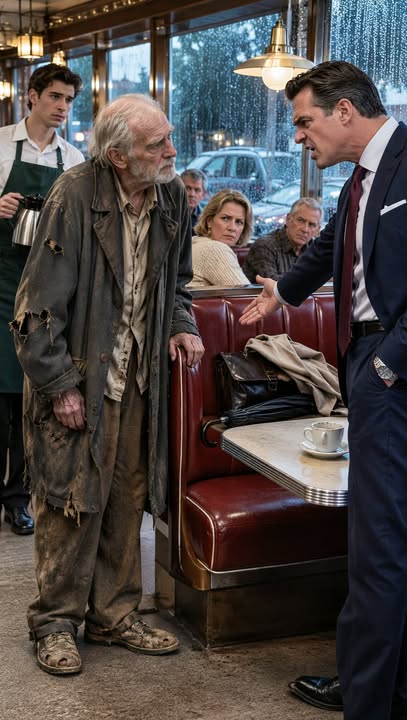
Part 3 – The Photograph in the Briefcase
“I don’t remember,” Maria said.
But as Daniel watched her, he knew she was remembering something.
For a long moment, no one at the kitchen table moved.
The folder lay between them, its papers squared neatly beneath Maria’s hands, while the rain made soft, restless sounds against the window.
Emily glanced from her mother to her brother, then slowly pulled her textbook closer.
“Do you want me to go finish my homework?” she asked.
“No,” Daniel said. “You can stay.”
Maria kept her eyes on the lawyer’s card.
“I may have seen the name in a newspaper,” she said. “A long time ago.”
“About Mr. Harrison?”
“I don’t know.”
The answer was not a denial, exactly, and Daniel felt the uncertainty spread through him.
“Was Dad involved with him somehow?”
Maria looked up, and for an instant her composure slipped.
“I don’t know that either.”
Daniel leaned back in his chair.
“If you recognize the name, we should ask him.”
“We will,” Maria said. “But not tonight. I want to think before I speak.”
He wanted to press her, but he knew the difference between a secret and a memory that had not yet found its way into words.
So he helped her stack the bills, and Emily returned to her homework, though she did not put her earbud back in.
The check stayed in the folder.
No one suggested depositing it.
That night, Daniel lay awake listening to the old house settle around him.
He kept thinking of Mr. Harrison’s sudden stillness when he heard Maria’s name, and of his mother’s face when she saw the address on the business card.
Whatever linked them, it had been waiting a long time.
In the morning, Daniel called the diner before his shift and asked Ruth whether Mr. Harrison had left a way to contact him.
“He said he’d be back,” Ruth told him. “He didn’t give me a number, but the lawyer left a card.”
Daniel looked at the card on the kitchen table.
“I have it.”
“Then you have a way to reach the lawyer, at least.”
“I don’t want to make this into something bigger than it is.”
“Sometimes asking a question is just asking a question,” Ruth said. “You’re allowed to do that.”
Daniel thanked her and ended the call.
Maria was standing at the sink, washing a mug that was already clean.
“Ruth says he’ll probably come back,” he said.
“Good.”
“Would you come with me when he does?”
She set the mug on the drying rack.
“If you want me to.”
“I do.”
Maria dried her hands, then rested them on the counter.
“I don’t want this gift to change how we treat each other,” she said. “Not him, not us.”
“It won’t.”
“I know you believe that.”
The doubt in her voice was gentle, not accusing, but it made Daniel feel suddenly young.
He had spent years trying to take on more of the family’s worries, and now a stranger’s generosity had made those worries visible in a way he could not control.
“I don’t want you to think I’m rushing to accept it,” he said.
“I don’t.”
“Or that I’m keeping something from you.”
Maria’s expression softened.
“You’ve never kept your life from me, Daniel.”
He wanted to believe she could say the same.
Instead, he nodded and went to work.
By the time he reached the diner, the morning rush had begun.
The coffee machine hissed, plates clattered from the kitchen, and customers leaned over their mugs to talk above the weather forecast playing on the small television.
Daniel tied his apron and tried to settle into the familiar rhythm.
He refilled coffee, carried eggs and toast, and smiled when a little boy at the counter waved at him with a sticky hand.
For a while, the ordinary work steadied him.
Then the man from the previous day came in.
His name was Curtis, and he visited the diner often enough that Ruth knew his usual order.
He was the customer who had joked about Mr. Harrison’s worn shoes, then gone quiet when the lawyers arrived.
Curtis took a stool at the counter and asked for black coffee.
Daniel poured it without comment.
Curtis watched him set down the cup.
“So,” he said, “you’ve had quite a day.”
Daniel picked up the pot again.
“It was unusual.”
“Must be nice to be noticed by the right person.”
Daniel paused.
“I didn’t do anything for that.”
Curtis gave a small, uncomfortable laugh.
“Come on, Daniel. You don’t have to pretend you didn’t know who he was.”
“I didn’t.”
“People saw you two talking plenty of times.”
“We spoke when I served him.”
“And then the fancy cars show up, and suddenly you get a check.”
Ruth, who was wiping down the counter nearby, glanced over.
Daniel kept his voice even.
“He offered it. I haven’t decided what I’m doing with it.”
Curtis raised his coffee.
“Of course.”
There was no open hostility in his tone, only the careless confidence of someone who had already chosen what to believe.
Daniel set the coffee pot down.
“I didn’t help him because I expected money.”
“I didn’t say you did.”
“You’re implying it.”
Curtis looked away toward the window.
“I’m just saying the story sounds convenient.”
Daniel felt heat rise beneath his collar, but he did not answer.
He could have told Curtis about the freezing rain, Mr. Harrison’s trembling hands, and the fresh cup of coffee Daniel had bought with his own tips.
He could have explained that he had not even known the old man’s name until the lawyers arrived.
But he did not want to turn kindness into a performance for an audience.
Ruth stepped closer.
“Curtis, he’s working.”
Curtis lifted both hands, as if he had intended no harm.
“I’m not trying to start anything.”
“Then don’t,” Ruth said.
Curtis finished his coffee and left money beneath the cup.
When the door closed behind him, Daniel went to the kitchen for a moment, needing the warmth and noise of it around him.
Ruth followed.
“You don’t owe him an explanation,” she said.
“I know.”
“Do you?”
Daniel leaned against the counter.
“I know I didn’t do anything wrong. I just don’t know how to accept something so large without feeling as if it changes what the kindness meant.”
“It doesn’t change what you did.”
“It changes what people think I did.”
Ruth folded a clean towel.
“People can think whatever they like. You still have to decide what you can live with.”
Daniel looked through the serving window at the customers in the booths.
“I keep telling myself that.”
“Then keep telling yourself until you believe it.”
He returned to the floor, but Curtis’s words followed him through the rest of the shift.
A few customers looked at him with new curiosity.
One woman asked whether the check was enough to buy the diner.
Another wanted to know if the old man had made him sign a contract.
Daniel answered only that he was still thinking about it.
By lunchtime, the rumor had already changed shape.
A delivery driver told Ruth that someone at the hardware store had heard Daniel knew Mr. Harrison was wealthy and had been trying to impress him for months.
The story was untrue, yet it traveled with the easy confidence of something repeated often enough to sound certain.
Daniel did not argue.
Still, when he took his break, he sat alone in the staff room and stared at the hand that had held the check.
Was kindness still kindness if it opened a door?
Did accepting help make him responsible for the story other people told about it?
He could not answer either question.
That evening, he brought the folder home and placed it on the kitchen table beside the bills.
Maria had made soup, and Emily was cutting bread into thick slices.
For a few minutes, they talked about ordinary things.
Emily complained about a class assignment.
Maria asked Daniel whether Ruth had heard from the school about a new timetable.
He answered, but his thoughts kept straying to Curtis’s words.
Finally, he told them what had happened.
Maria set down her spoon.
“Someone is saying you planned this?”
“Not exactly. He said the story sounded convenient.”
“He does not know what he is talking about,” Emily said.
“I know.”
“Then why do you look like you believe him?”
Daniel turned his hands palm-up on the table.
“I don’t believe him. I just hate that people think I might have done it for money.”
Maria watched him with care.
“You cannot control what someone imagines about you.”
“I know that too.”
“But you can control whether you let their suspicion decide what our family does.”
Daniel looked at the folder.
“What if accepting the check makes it harder to know who I am?”
Maria reached across the table and touched his wrist.
“You were yourself before the check arrived, and you’ll still be yourself after we decide what to do with it.”
“Even if we accept?”
“Even then.”
Emily nudged the breadbasket toward him.
“If the money helps us keep the house, that doesn’t make you less kind.”
Daniel looked at his sister.
“You shouldn’t have to worry about the house.”
“I’m not worried every second,” she said. “I’m worried enough, though.”
Maria’s face tightened, and Daniel regretted making the conversation heavier.
She turned toward him.
“Your father would have wanted us to be careful,” she said. “He also would have wanted us not to mistake pride for strength.”
The words stayed with Daniel after dinner.
For several days, Mr. Harrison did not return.
Daniel tried not to watch the window each time the diner door opened, but he found himself doing it anyway.
The rumor continued to drift through town, carried in small remarks and half-heard conversations.
Some people were kind to him, as they always had been.
Others seemed to study him as if they were waiting for proof of a motive.
Curtis came back twice.
He no longer mentioned the check, but the silence between him and Daniel had become more pointed than his earlier remarks.
Daniel kept serving him.
He refused to make a scene, though each time Curtis left, Daniel wondered whether silence was dignity or simply fear of being judged again.
On the fourth morning, a pale blue sedan pulled up outside the diner.
Mr. Harrison stepped out alone.
His faded coat was gone, replaced by a dark wool one that fit him properly.
He still looked tired, but there was more color in his face than Daniel remembered.
He entered without the lawyers or bodyguards, carrying a brown leather briefcase in one hand.
Several conversations faltered.
Curtis, seated at the counter, looked up from his newspaper.
Mr. Harrison paused just inside the door and gave Daniel a small nod.
“Good morning.”
“Good morning, sir.”
Ruth came out from the kitchen, wiping her hands on her apron.
“We have coffee ready,” she said. “And a booth by the window.”
“Thank you, Ruth.”
He took the same corner booth he had always chosen, then set the briefcase beside him.
Daniel poured him a fresh cup.
“Would you like anything to eat?”
“Toast, please. If it isn’t too much trouble.”
“It isn’t.”
Daniel brought the toast himself.
When he set it down, Mr. Harrison glanced at the folder tucked beneath Daniel’s arm.
“You brought the papers.”
“I did.”
“And you’ve had time to look them over?”
“My mother and I read everything.”
“Good.”
Daniel hesitated.
“She’d like to speak with you.”
Mr. Harrison’s hand tightened slightly around his cup.
“I would like to speak with her too.”
“She may come in this afternoon.”
“I’ll be here.”
Daniel studied him.
“Why did you ask for her name?”
Mr. Harrison looked down at the coffee.
“I was hoping I could answer that when I saw her.”
“Do you know her?”
“I know the name.”
“That isn’t the same thing.”
“No,” Mr. Harrison said. “It isn’t.”
Daniel waited, but the older man did not offer more.
Curtis folded his newspaper.
“Seems like there’s a lot of mystery around this gift,” he said.
Ruth turned toward him.
“Curtis.”
“I’m only asking what everyone’s thinking.”
Mr. Harrison looked over.
“Perhaps everyone is thinking something different.”
Curtis’s mouth closed.
Daniel sensed the old man was trying to keep the moment from becoming a confrontation.
He returned to the counter, but he could feel the room listening.
Mr. Harrison stayed until late morning.
He ate his toast slowly and spoke with Ruth about the rain, the change in road conditions, and the diner’s aging coffee machine.
He did not mention the check again.
When Daniel’s shift ended, he found the older man waiting outside beneath the narrow awning.
“I’m sorry,” Mr. Harrison said. “I should have told you more when I first asked for your mother’s name.”
“Why didn’t you?”
“I was afraid of being wrong.”
“That’s all?”
“No,” Mr. Harrison said. “I was afraid of what it might mean if I was right.”
Daniel held his gaze.
“What do you think it means?”
Mr. Harrison looked toward the road, where a truck passed through a shallow puddle.
“I think I may have known your father.”
Daniel felt the words land with quiet force.
“My dad died years ago.”
“I know.”
“How could you know that?”
“I’ve looked into the name since you told me.”
Daniel’s stomach tightened.
“You looked into my family?”
“I asked my lawyer to check public records,” Mr. Harrison said quickly. “I wanted to make certain I had not mistaken your mother for someone else.”
The explanation did little to ease the unease Daniel felt.
“You could have just asked.”
“You’re right.”
Mr. Harrison lowered his eyes.
“I’m sorry.”
Daniel looked at the briefcase in the car, its worn leather catching the flat afternoon light.
“Did you know my father well?”
“Not well enough,” Mr. Harrison said. “But I remember him.”
The answer brought more questions than it settled.
Daniel thought of his mother’s guarded expression, and of the way she had said she might have seen the name before.
“I’ll tell her you’re here,” he said.
“Thank you.”
Daniel reached home before Maria did.
He told Emily what Mr. Harrison had said, then stood by the front window while she tried to make sense of it.
“Dad and a wealthy businessman?” she asked. “I never heard that.”
“Neither have I.”
“Maybe Dad worked for his company.”
Daniel looked at her.
“Mom never mentioned that.”
“Maybe she didn’t know who owned it.”
The possibility seemed reasonable, but it did not explain Mr. Harrison’s expression.
Maria arrived a little after five, carrying a paper bag of groceries.
Daniel met her on the porch and took the bag from her.
“Mr. Harrison came to the diner,” he said.
Maria’s shoulders grew still.
“He said he thinks he knew Dad.”
She did not ask how Mr. Harrison had found out.
She looked past Daniel into the house, where Emily was setting the table.
“Did he say anything else?”
“He said he wants to explain when he speaks with you.”
Maria took a breath.
“Then I suppose we should hear him.”
They met Mr. Harrison the following morning at the diner, before the lunch crowd arrived.
Ruth seated them in the booth farthest from the counter and brought coffee, then gave them privacy without pretending not to notice their faces.
Mr. Harrison placed his briefcase on the seat beside him.
Maria sat opposite him, Daniel next to her.
For a few seconds, the three of them looked at one another without speaking.
Then Mr. Harrison said, “Maria Alvarez.”
She set her hands around her cup.
“You remember me?”
“I remember the name. I remember a list of people affected when one of my factories closed.”
Maria’s fingers tightened.
Daniel looked from one to the other.
“What factory?”
Mr. Harrison turned toward him.
“I owned a manufacturing company in this county. We closed the plant several years ago.”
“My father worked there,” Daniel said.
“I thought he might have.”
Maria’s face had gone pale, though she kept her voice steady.
“He was a union representative.”
Mr. Harrison lowered his head.
“That is what I learned.”
“You learned it from a list?”
“From old records.”
“What kind of records?” Daniel asked.
“Employee files, meeting notes, correspondence. I’ve been trying to understand what happened after the closure.”
Maria’s expression sharpened.
“Why now?”
Mr. Harrison was quiet long enough that Daniel could hear the coffee machine sputter behind the counter.
“Because I remembered your name when Daniel told me,” he said. “And because I realized there were parts of that closure I had never properly questioned.”
Maria sat straighter.
“What parts?”
“I don’t know yet.”
“That sounds convenient.”
“I understand why you would say that.”
“No,” Maria replied. “You don’t understand what it was like to get a letter saying the support we expected had been delayed, then another saying the matter was closed.”
Mr. Harrison’s face changed.
“Support?”
Maria glanced at Daniel, as if deciding how much of the past to bring into the small booth.
His father had never spoken much about the plant after it closed.
When Daniel was a boy, he remembered his parents discussing paperwork at the kitchen table, their voices lowered after he came into the room.
He had assumed it was a dispute over a final paycheck.
“My husband spent months trying to make sure people weren’t left with nothing,” Maria said. “He met with company representatives. He believed he had helped secure a fair transition for the workers.”
Mr. Harrison’s brow furrowed.
“I remember negotiations.”
“And what happened after?”
“I was told an agreement had been reached.”
Maria’s gaze did not soften.
“An agreement is not the same as people receiving what they were promised.”
“I know that now.”
“Did you know it then?”
The question was not loud, but it left no room to pretend.
Mr. Harrison looked at his hands.
“I believed the reports I was given.”
Daniel felt his anger rise, then falter.
Mr. Harrison was not denying responsibility, but his words did not yet offer an explanation.
“What did the reports say?” Daniel asked.
“That the workers had received the assistance outlined in the transition plan.”
Maria stared at him.
“We didn’t.”
The older man’s eyes lifted.
“Your family received nothing?”
“We received my husband’s final wages. No more.”
Mr. Harrison seemed to absorb the answer in stages.
“I’m sorry,” he said.
Maria shook her head.
“I don’t need an apology for something we haven’t even established.”
“I understand.”
“Do you?”
“I’m trying to.”
Daniel put a hand on the table, not to silence either of them but to steady himself.
“Why didn’t anyone check?”
Mr. Harrison had no quick answer.
“I should have,” he said at last. “I should have verified that the promises made in those meetings reached the people they were meant to help.”
The admission did not make the years disappear.
But it changed the air in the booth.
Maria looked down at her coffee.
“My husband kept copies of everything,” she said. “He believed the company would eventually make things right.”
“Do you still have them?” Mr. Harrison asked.
“I don’t know. I have boxes in the attic.”
“Would you let me see them?”
“Why?”
“Because if there was an agreement, I want to know what happened to it.”
Maria watched him closely.
“And if the papers show your company did what it promised?”
“Then I’ll accept that.”
“And if they show it didn’t?”
“Then I’ll find out who failed to carry it through, and I’ll make sure the families receive what they were owed.”
Daniel studied him, listening for a promise made too quickly.
Mr. Harrison’s voice held no grand confidence.
It carried uncertainty and a weight that seemed to belong to more than the check.
“Does this have anything to do with the money you offered Daniel?” Maria asked.
“No,” Mr. Harrison answered. “The gift was a personal decision.”
“Then I want to keep those matters separate.”
“So do I.”
Maria looked at Daniel.
He understood the question in her eyes.
They had come to learn why Mr. Harrison recognized her name, and now they had found a reason that reached back into the worst years of their family’s life.
“I think we should see the records before we decide anything,” Daniel said.
Maria nodded.
“That’s what I want.”
Mr. Harrison opened his briefcase.
“I brought what I have.”
He removed a thick folder, then a smaller envelope, careful with both as though the paper inside could be damaged by the wrong movement.
“I found this photograph among the old company records,” he said. “I don’t know whether it will help, but I recognized your husband.”
He slid the photograph across the table.
Daniel leaned toward it.
The image showed a group of workers outside a brick factory, their faces softened by age and fading ink.
A younger Mr. Harrison stood near the center, his hair dark and his shoulders squared beneath a neat overcoat.
Beside him was a woman with one hand resting on the sleeve of the man next to her.
The woman’s face was partly turned from the camera.
Maria went utterly still.
“What is it?” Daniel asked.
She did not answer.
Her eyes were fixed on the woman standing beside the younger Harrison.
Then she reached toward the photograph with a trembling hand.
“Daniel,” she whispered, “that woman isn’t one of the workers.”
Mr. Harrison’s expression tightened.
“Who is she?”
Maria looked at him, her face drained of color.
“She’s the person who brought your father to that meeting.”
She turned the photograph toward the light.
And Daniel saw that the man beside the woman was not his father.
**–END OF PART 3–CLICK “NEXT” AT THE BOTTOM OF THE PAGE TO CONTINUE READING**
* * *
[PREVIOUS: PART 2](https://echoesofstories.idolsgift.com/blog/part-2-the-name-mr-harrison-recognized-047) | [NEXT: PART 4](https://echoesofstories.idolsgift.com/blog/part-4-the-name-mr-harrison-recognized-047)
✓ Lynn R. Adams
Part 3 – The Photograph in the Briefcase “I don’t remember,” Maria said. But as Daniel watched her, he knew she was remembering something. For a long moment, no one at the kitchen table moved. The…