PART 3: The Name Behind the Salute 055
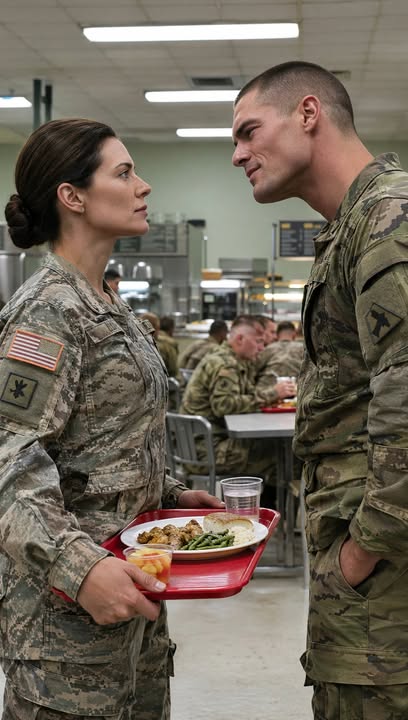
Part 3 – The Name in the Margin
The last letter was unusually narrow, the stroke almost hooked.
Mara leaned closer to the maintenance log, careful not to touch the page.
She had seen signatures like that before, though not often enough to trust the recognition without checking.
“Could you make a copy of this page?” she asked the clerk.
“I can, but the records custodian will need to approve it.”
“Then please ask him.”
The clerk gathered the binder against his chest.
“Should I tell him why?”
“Tell him I’m reviewing the inspection entries and need the page preserved as it is.”
He nodded and left the room.
Mara remained beside the table, studying the blue initials and the neat approval stamp.
The room’s fluorescent lights gave every sheet of paper the same flat, pale cast, but the little hooked stroke seemed to hold its own shadow.
She knew the shape of it.
She also knew that memory could be a careless witness, especially when it was looking for something it feared to find.
A moment later, the clerk returned with a lean older man in civilian clothes, his badge identifying him as Mr. Sato, the records custodian.
He greeted Mara politely and examined the entry without taking the binder from her.
“This page was inserted when the old volumes were consolidated,” he said. “We were told to replace a damaged sheet.”
“Do you know who gave that instruction?”
“I’d have to check the transfer notes.”
“Please do.”
Mr. Sato looked over the entries on either side.
“Most of the original pages were in poor condition,” he said. “Some were torn. Some had water damage from a pipe leak.”
“Was this one damaged?”
“I can’t say without the notes.”
“Then we’ll wait for the notes.”
He seemed relieved that she did not press him to guess.
“I’ll also make a certified copy,” he said. “The binder won’t leave this room.”
“That’s fine.”
As Mr. Sato went to retrieve the transfer records, Mara returned to her desk and opened her field notebook.
She wrote down the date, the equipment lane, the page number, and the names of the people she had contacted.
Beside the initials, she placed a small question mark.
She did not write the name in her head.
Not yet.
The first meeting of the morning was with the maintenance supervisor, a civilian technician named Hsu, who arrived carrying a tablet and a paper cup of coffee.
He had worked at the installation for nearly a decade, he told her, and had been responsible for the simulation rigs for the past three years.
“When did you first learn about the sensor fault?” Mara asked.
“From Sergeant Danner.”
Hsu set his tablet on the desk.
“He called me the night before the exercise and said one of the lane sensors had produced an inconsistent reading.”
“Did he tell you the system had been cleared?”
“No.”
“Did he ask you to clear it?”
“No. He asked me to inspect it before anyone used it again.”
“What did you find?”
“A damaged connection in the sensor housing.”
“Was it repaired before the exercise?”
“I thought it was.”
“Why?”
Hsu frowned at the screen.
“I was told another technician had replaced the connection the next morning.”
“Who told you?”
“I don’t remember. It might have been in an email.”
“Can you find it?”
“I can look.”
Mara watched him tap through a set of archived messages.
After a minute, his brows drew together.
“There’s a work order,” he said. “It says the repair was completed at 0640.”
“Who signed it?”
“Sergeant Danner.”
Mara glanced at the screen.
The digital signature showed Danner’s name, but the body of the work order said the repair had been performed by maintenance personnel.
“Did Danner have authority to certify the repair?”
“Not normally.”
“Did he have access to the system?”
“He could submit a work order, but he wasn’t supposed to close it.”
Hsu scrolled farther.
“Here’s the technician’s note.”
He read it once, then again.
“It says the replacement part was installed on the following day.”
“After the exercise?”
“Yes.”
Mara made a note.
“Why does the work order show an earlier time?”
“I don’t know.”
“Could the system have entered it automatically?”
“Not like this.”
Hsu looked troubled now, his coffee forgotten beside the tablet.
“Danner might have closed the work order from the unit terminal.”
“Would he have known the repair was incomplete?”
“He’d have known the replacement part hadn’t arrived.”
Mara studied him.
“Did you tell him that?”
“I told the training office. I thought the lane had been taken out of service.”
“Was it?”
“I don’t know.”
The answer was not evasive.
It was simply the answer of someone whose responsibilities had been split among offices and never joined back together.
Mara asked for the full work-order history and the messages tied to the sensor fault.
Hsu agreed, then hesitated before standing.
“Sergeant Danner can be difficult,” he said. “But he was the one who called me about the sensor.”
“That matters.”
“It doesn’t make the paperwork right.”
“No,” Mara said. “It doesn’t.”
Hsu gave a slow nod and left.
Before lunch, Mara reviewed the training schedule, the equipment requisitions, and the records of the soldier who had injured his ankle.
The injury report was brief and clinical.
It described an unexpected activation in the obstacle sequence and recommended a routine review of the sensor system.
The review had been marked complete.
There was no attachment explaining what had been found.
Mara called Colonel Rowan’s office and asked whether he could spare time to discuss the records.
He arrived twenty minutes later, carrying no folder and wearing the same composed expression he had worn in the cafeteria.
“Have you found something?” he asked.
“I’ve found several things that don’t match.”
She showed him the replaced log page, the work order, and the missing inspection notes.
Rowan read them without interrupting.
When he reached the line bearing the blue initials, he paused.
“Do you recognize them?” Mara asked.
“I can’t tell from this.”
“Someone authorized the replacement page.”
“Possibly.”
“Would that have come through the command office?”
“It depends on who requested the replacement.”
“Who had authority over the records transfer?”
“Major Bell was the command records officer at the time.”
“Where is Major Bell now?”
“Retired.”
Mara returned to the signature.
“Could you check the transfer notes?”
“Yes.”
“Please do.”
Rowan handed the copy back to her.
“I’ll ask the administrative staff to locate them.”
“Thank you.”
He remained in the chair.
“You’ve spoken with Danner’s maintenance contacts?”
“I have.”
“And?”
“He reported the sensor fault. He also closed a work order before the repair was completed.”
Rowan’s expression tightened.
“Was he told the repair had been completed?”
“We don’t know.”
“Then we need to find out.”
“We do.”
The agreement came easily, but Mara noticed the care with which Rowan had chosen his words.
“Did you know the lane was still being used?” she asked.
“I knew there had been an incident.”
“That wasn’t my question.”
“No,” he said after a moment. “I didn’t know the sensor was still unresolved.”
“Who told you the review was complete?”
“I don’t recall.”
“Can you check?”
“I’ll look through the briefing notes.”
Mara closed her notebook.
“Thank you.”
Rowan stood.
At the door, he turned back.
“Colonel, I want to be clear that I won’t shield anyone from an accurate inquiry.”
“I’m not asking you to.”
“I know.”
His voice carried a strain that had not been there before.
He seemed to want her to believe him, and perhaps to believe himself.
After he left, Mara looked again at the crooked blue initials.
Her mind returned to the old training ground, to a morning when she had sat opposite a senior officer at a folding table and signed a statement with a pen that kept skipping.
The officer had steadied the paper for her.
“Slow down,” he had said. “A record can protect people, but only if it tells the truth.”
She had trusted him then.
She had trusted him for years afterward.
Mara closed the notebook and pushed it aside.
A knock came at the open door.
Eli stood there, his gaze fixed on the carpet.
“Do you have a minute?” he asked.
“Come in.”
He entered, then noticed Colonel Rowan’s chair.
“Am I interrupting?”
“No,” Mara said. “We were finished.”
Eli sat on the edge of the chair, keeping his hands folded between his knees.
“I brought the original phone,” he said. “The picture is still there.”
“Good.”
“Danner saw me in the records corridor this morning.”
“What happened?”
“He asked if I’d spoken to you.”
“What did you say?”
“I said I had.”
Mara waited.
“He didn’t get angry,” Eli added. “He just asked what I’d told you.”
“What did you tell him?”
“That I showed you the photo.”
“And what did he say?”
“He said I should have told him first.”
Eli’s mouth tightened.
“I thought he’d be furious, but he looked tired.”
“Did he ask you to take the photograph back?”
“No.”
“Did he ask you to change what you said?”
“No.”
“Then you did what you needed to do.”
Eli turned his head toward the window.
“Some of the guys think I’m trying to make the section look bad.”
“Did anyone say that to you directly?”
“Not exactly. They’ve been quieter than usual.”
“What do you think?”
“I think they’re worried about what happens if the training system gets shut down.”
“That’s a reasonable concern.”
“They’ve been trying to qualify for the next rotation. If the lane closes, the schedule changes, and some of them may lose their chance.”
Mara considered this.
“They shouldn’t have to choose between a qualification and a safe system.”
“I know.”
“But knowing that doesn’t make the consequences easy.”
Eli gave a small nod.
He had come to her for reassurance, yet seemed unwilling to accept anything that sounded too simple.
“Sergeant Danner has been covering for people,” he said. “Not just the equipment.”
“What do you mean?”
“When someone has a family appointment or gets pulled into extra duty, he shifts the roster around. Sometimes he takes the worst slot himself.”
“Does he tell the squad why?”
“Usually not. He just says the schedule is the schedule.”
“Has that made people loyal to him?”
Eli took a moment.
“Some people are loyal. Some are afraid to be the one who causes trouble. Most of us are both, depending on the day.”
The honesty in that answer landed gently but firmly.
“Did he tell you why he changed the work order?”
“No.”
“Did he tell you not to report the malfunction?”
“No. He told us not to use that lane.”
“Do you believe he was trying to keep people safe?”
Eli looked down at his folded hands.
“I believe he was.”
“And do you think changing the record was acceptable?”
“No.”
“Those answers don’t cancel each other out.”
“I know.”
He looked up at her, searching her face as if he expected her to demand that he choose one version of Danner and discard the other.
Mara did not.
“You don’t owe me a simple story,” she said. “But if you know more, I need you to tell me what you saw, not what you think I want to hear.”
Eli nodded.
“I can do that.”
“Are you comfortable giving a formal statement?”
He hesitated.
“I will. I just want to talk to my squad first.”
“That’s your choice. I won’t ask you to collect their accounts or persuade anyone.”
“I wasn’t going to.”
“Good.”
Eli stood, then paused at the door.
“Are you going to punish him?”
“I’m not the one who decides that.”
“But you’re the one asking questions.”
“I’ll make sure the record includes what he did and what he was trying to do. Someone else will decide what the findings support.”
“And if he did it because he thought it would protect us?”
“Then that will be part of the record too.”
Eli seemed to absorb the answer.
“Thank you,” he said.
When he left, Mara remained at her desk for several minutes, listening to the quiet rustle of the records room.
She understood why Eli had wanted to speak with his squad before giving a statement.
A unit could feel like a family, especially when its members shared long shifts and uncertain schedules.
Families could protect one another.
They could also confuse loyalty with silence.
That afternoon, Mara asked the records custodian for the transfer notes.
Mr. Sato brought her a thin folder with a rubber band around it.
“The consolidation took place four years ago,” he said. “The notes identify each volume and explain which pages were replaced.”
“Is there a note for this one?”
He opened the folder and ran a finger down the inventory.
“Yes.”
Mara drew the sheet closer.
The entry said the page had been replaced after a command review, at the request of the senior command office.
No reason was provided.
Below it was a short authorization line.
The same blue initials appeared at the end.
This time, beneath the initials, the document gave a typed name.
Major Rowan.
Mara looked up.
“Colonel Rowan?”
“Those are the notes we have,” Mr. Sato said carefully. “I can’t tell you whether the authorization was signed by him or entered by someone else.”
“Of course.”
She thanked him and asked for a certified copy.
When he left, she placed the sheet beside the maintenance log.
The initials had the same hooked final stroke.
The signature was not a match after all.
It was only a resemblance.
Mara reminded herself of that, then wrote down the discovery and the limitations of what it established.
A record replaced at the request of the senior command office did not prove why it had been replaced.
Nor did it prove who had made the decision.
But it did mean that someone in Rowan’s office had known the original page existed.
By late afternoon, Mara had not yet called him back.
She wanted the rest of the transfer notes first.
She wanted to be certain there was no second authorization, no missing page that changed the meaning.
She was gathering her materials when the office phone rang.
It was Hsu.
“I found the email about the sensor,” he said. “I’m forwarding it to your secure account now.”
“Thank you.”
“There’s another message attached. It looks like it came from the command office.”
“What does it say?”
“It’s short. It tells the training staff to keep the scheduled exercise in place while maintenance completes the repair.”
“Who sent it?”
“The sender line is Colonel Rowan.”
Mara’s hand stilled above the desk.
“Was the message sent before the exercise?”
“Yes. The morning of.”
“Does it say the lane was safe to use?”
“No. It says the schedule should remain in place.”
“Forward both messages. Don’t alter them.”
“I’ll do that.”
When the call ended, Mara opened her secure account.
The email arrived within minutes.
The first message was from Hsu to the training office, noting that the replacement part had not arrived and recommending that the lane remain closed.
The second was brief and formal.
The exercise was to proceed as scheduled, with the affected lane to be monitored until the repair was complete.
At the bottom was Rowan’s name.
Mara read it twice.
The message did not say he knew the sensor could fail.
It did not say he wanted anyone put at risk.
It did say he had been warned that the repair was incomplete and had allowed the exercise to continue.
She printed the message and added it to the evidence folder.
Then she called Rowan’s office.
His aide said the colonel had left for a meeting with the training staff.
“Could you tell him I need to speak with him as soon as he’s free?”
“I will.”
Mara set the receiver down.
For several minutes, she worked through the remaining maintenance records, but her focus kept returning to the email.
The name at its foot seemed to shift each time she looked at it, becoming less like a signature and more like a question.
Just before the end of the workday, a knock sounded at the door.
Sergeant Danner stood in the hallway.
He was no longer wearing the anger he had brought into the cafeteria, but he had not become easy in its absence.
His expression was guarded, and he held his cap in both hands.
“Colonel,” he said. “Could I speak with you?”
“Come in.”
Danner remained standing.
“I heard you’ve been reviewing the maintenance records.”
“I have.”
“Eli told you about the photo.”
“He did.”
“I told him he should have spoken to me first.”
“He told me.”
Danner glanced down at the cap in his hands.
“I wasn’t asking him to hide it.”
“Why did you ask him what he’d told me?”
“Because I wanted to know how much of the story he’d given you.”
“What story is that?”
“The lane failed. I reported the sensor. I told the squad to stay clear. Then the schedule changed, and we were ordered to run the exercise.”
“Who ordered it?”
Danner’s jaw moved, but he took a moment before answering.
“Colonel Rowan’s office.”
“Did Rowan speak to you directly?”
“No. The message came through the training staff.”
“Why did you close the work order?”
“I didn’t.”
“The record shows your name.”
“I entered the request. I didn’t certify the repair.”
“Then why does the record show it as complete?”
Danner looked at the table.
“I don’t know.”
“You didn’t check?”
“I thought maintenance was handling it.”
“You knew the part hadn’t arrived.”
“I knew it was on the way.”
“That isn’t the same thing.”
“No,” he said quietly. “It isn’t.”
Mara left a space for him to continue.
“I shouldn’t have told my people to run the exercise,” Danner said. “I was told the lane would be monitored, and the unit had already been warned that another delay would affect the rotation schedule.”
“Did you believe the monitoring would make it safe?”
“I believed it would keep the system from activating if the sensor failed again.”
“Did you know that was possible?”
“I knew the system was supposed to stop when it detected a bad reading.”
“That wasn’t what I asked.”
Danner’s fingers tightened around his cap.
“I didn’t think it would fail the way it did.”
There was no excuse in his voice, but there was fear beneath it.
Not fear for his own position, Mara thought.
Fear of having made a choice that had cost one of his soldiers an injury, however minor.
“Why didn’t you report the incident accurately afterward?” she asked.
“I thought the review would cover it.”
“Who told you that?”
“No one. I assumed.”
“You wrote that the system passed inspection.”
“I didn’t write that.”
“But the maintenance record carries your authorization.”
“I know what it says.”
“Then help me understand.”
Danner looked up.
“I had been covering extra shifts for two weeks. The maintenance crew was short. Training kept asking for the lane to be available. I was trying to keep my people on schedule, and I thought the repair had been made.”
“That explains pressure. It doesn’t explain why you let a record say something you couldn’t verify.”
“I know.”
His answer was immediate and carried no attempt to turn blame back toward her.
Mara felt some of the anger she had expected to bring into the conversation give way to a more difficult feeling.
She still remembered his hand reaching for her sleeve.
She still remembered the way he had spoken to her in front of the cafeteria.
Understanding the strain on his unit did not make that acceptable.
“Your conduct in the cafeteria will be handled separately from the safety review,” she said. “Both matters deserve accurate records.”
“I understand.”
“Do you?”
“Yes.”
He set his cap on the table.
“I was wrong to put my hands on you. I was wrong to speak to you that way. I’ve done similar things to people in my section, and I can’t pretend the pressure made that right.”
Mara watched him carefully.
“Has anyone asked you to apologize?”
“No.”
“Then why are you saying it now?”
“Because if I’m going to explain what I did with the records, I should start with what I did to you.”
For a moment, the office seemed to hold still around them.
Mara did not offer him absolution.
“Thank you for saying it plainly,” she replied. “It doesn’t erase what happened.”
“I know.”
Danner looked toward the folder on her desk.
“Did you find the message from the command office?”
Mara kept her expression neutral.
“I’m reviewing several records.”
He gave a single, tired nod.
“I thought you might.”
“Did you see the message?”
“No. The training chief told me the schedule was staying in place.”
“Was that unusual?”
“It happened before.”
“Did you raise concerns?”
“Sometimes.”
“And what happened?”
“Sometimes the schedule changed. Sometimes we were told to do what we could and make a note of the rest.”
“Did you make a note?”
Danner’s gaze lowered.
“Not always.”
“Why not?”
“Because I thought the unit would be blamed for another delay. Because I thought I could manage it. Because it was easier to say I had it handled than to admit I didn’t.”
The words came slowly, without performance.
Mara could hear the months behind them: the extra shifts, the clipped instructions, the choices made in a cramped office with too little time and too many people waiting for an answer.
She could also hear the younger soldiers who had learned to brace themselves when he entered a room.
“What do you want me to do?” Danner asked.
“Tell the truth about what happened, including what you knew and what you didn’t.”
“And if that costs the unit?”
“I won’t promise there will be no consequences. I can promise the inquiry won’t treat silence as the only way to protect the people who served under you.”
He looked at her, perhaps recognizing his own earlier question in hers.
“Eli said something like that,” he said.
“He listened carefully.”
“I suppose he did.”
Danner picked up his cap but did not put it on.
“When can I give my statement?”
“Tomorrow morning. I’ll have someone from the inquiry office present.”
“Will Eli be there?”
“Not unless he chooses to be.”
“Good.”
He turned toward the door, then stopped.
“Colonel, I know you’re looking at Rowan’s office too.”
Mara did not answer.
Danner met her eyes.
“I don’t know what the records will show. I only know the order to continue the exercise came from above me.”
“That will be checked.”
“And the log?”
“That will be checked too.”
He accepted the distinction with a slow nod.
When he left, Mara did not move for several seconds.
Outside the window, the training field lay empty beneath the fading light.
A string of orange markers divided the grass where the obstacle lane began, each one perfectly still.
Mara returned to her desk and opened the email from Hsu once more.
Then she placed the maintenance page beside the transfer record.
The initials in the margin no longer seemed important.
The name typed beneath them did.
She had been ready to believe that Rowan’s caution was merely the guardedness of a commander facing an inspection.
Now she had to wonder whether he had been guarding something else.
Her secure inbox chimed.
A new message had arrived from the records custodian, who had found one more item in the consolidation folder.
It was an authorization slip, scanned from a sheet of yellowed paper.
The writing was brief, the signature placed at the bottom with the same narrow, hooked final stroke.
The order was to replace the original inspection page and retain the revised copy in the permanent file.
Beneath the signature, in unmistakable handwriting, were the words:
General Hale.
**–END OF PART 3–CLICK “NEXT” AT THE BOTTOM OF THE PAGE TO CONTINUE READING**
* * *
[PREVIOUS: PART 2](https://storyly.idolsgift.com/blog/part-2-the-name-behind-the-salute-055) | [NEXT: PART 4](https://storyly.idolsgift.com/blog/part-4-the-name-behind-the-salute-055)
✓ Lynn R. Adams
Part 3 – The Name in the Margin The last letter was unusually narrow, the stroke almost hooked. Mara leaned closer to the maintenance log, careful not to touch the page. She had seen signatures lik…