PART 3: The Name Behind the Rule 035
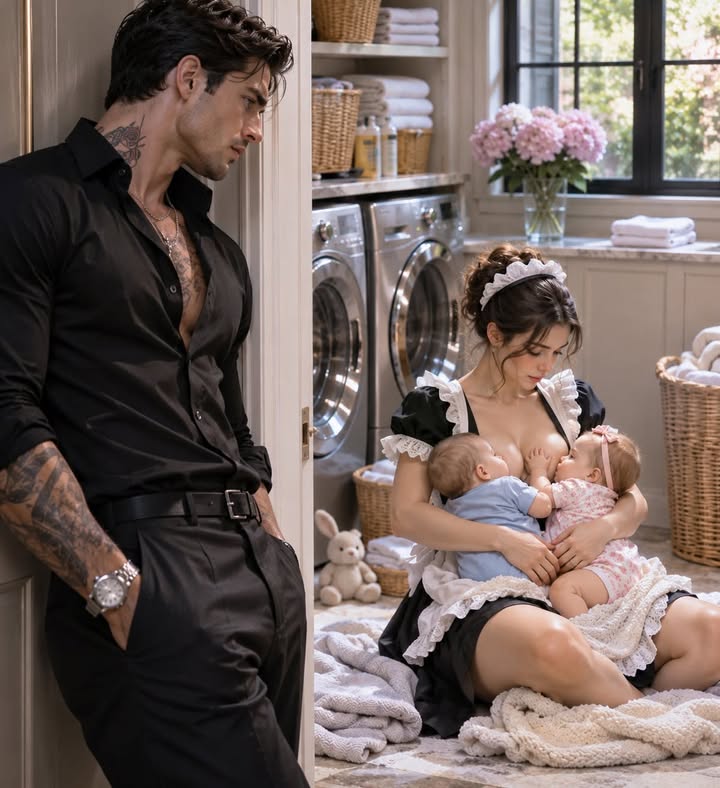
Part 3 – The Blue Box
The door behind me clicked shut, and Celeste paused when she saw the ledger open in my hands.
For a moment, neither of us spoke.
The office smelled faintly of paper and lemon polish, and the rain outside had softened to a whisper against the windows.
Celeste’s gaze settled on the penciled note.
“Where did you find that?” she asked.
“In the old household ledger.”
She came closer, but stopped before she reached the desk.
“Bennett—ask about the blue box,” I read aloud.
Her face changed so slightly that someone who didn’t know her might have missed it.
I knew her well enough to see the color leave her cheeks.
“What does it mean?”
“I don’t know.”
“You wrote it.”
“I didn’t.”
The answer came too quickly, and she seemed to hear it herself.
Celeste lowered her eyes to the page.
“I don’t remember writing that,” she said more carefully.
“Do you know what the blue box is?”
“No.”
I closed the ledger, though I kept my hand on its cracked leather cover.
“Nora recognized the phrase.”
Celeste looked up sharply.
“She did?”
“I haven’t asked her what it means.”
“Then don’t.”
The urgency in her voice unsettled me more than the note.
“Why?”
“I don’t want to put her in the middle of something she may not understand.”
“She already is in the middle of something.”
“Grant, please.”
The plea was quiet, almost lost beneath the old clock ticking in the hall.
I had heard Celeste give instructions and make decisions for most of my life, but rarely had I heard her ask me to stop.
I studied her face.
“Is this about the childcare payments?”
“It’s about more than the payments.”
“What is it about?”
She looked toward the window.
“I can’t explain it yet.”
“Can’t, or won’t?”
“I don’t know.”
The admission made the space between us feel suddenly larger.
I wanted to press her, but something in her expression reminded me of the way Nora held herself when she was afraid a kindness might come with a price.
Celeste seemed to be guarding something, though I could not tell whether it was a secret, a person, or the last fragile piece of a story she had never meant to reopen.
“Did you know Nora’s mother?” I asked.
“No.”
“Did our parents?”
“I don’t know.”
“Then why did you write her name in the ledger?”
“I said I don’t remember writing it.”
The answer was firm now, but her hands were not.
She had curled her fingers around the edge of the desk.
“Maybe you saw the name somewhere else,” I said.
“Maybe.”
“Or maybe someone asked you to look for the box.”
Celeste’s eyes returned to the note.
“I don’t know what the box is.”
I had expected her to deny everything.
Instead, she seemed as troubled by the words as I was.
I slipped the ledger under my arm.
“I’m going to ask Nora.”
“I thought you said you hadn’t.”
“I didn’t. Now I have.”
She held my gaze.
“Don’t ask her as if she owes you an answer.”
“I won’t.”
“Don’t use the house, or the job, or the children to persuade her.”
The words stung because I understood why she had said them.
“I know.”
Celeste exhaled slowly.
“I’m sorry.”
“For what?”
“For making it difficult to know when I’m helping and when I’m deciding for you.”
I was quiet for a moment.
“That’s an unusual apology.”
“It’s an unusual evening.”
She reached for the ledger, then stopped herself.
“Can I see it?”
I handed it to her.
She turned to the marked page and ran one finger beneath the note without touching the pencil.
“I haven’t seen this handwriting in years,” she murmured.
“Whose is it?”
“I can’t tell.”
“You don’t recognize it?”
“Not confidently.”
She closed the book and held it against her chest.
“I’ll look through the old records tomorrow.”
“Why not tonight?”
“Because I don’t want to guess.”
It was the sort of answer I might have given at work.
From Celeste, it sounded like an effort to keep fear out of her voice.
“Can I look with you?”
She hesitated.
“Yes.”
The next morning, I found Nora in the garden room, sitting on the rug beside Emma while Eli tested how many wooden rings he could fit over his arm.
The children had begun to recognize my footsteps.
Emma turned toward the doorway when I came in, and Eli gave a pleased little bounce.
Nora smiled at them, then looked at me.
“You’re becoming part of their morning routine,” she said.
“I hope that’s all right.”
“It seems to be.”
I crouched beside Eli and eased one of the rings gently off his wrist.
He immediately reached for it again.
“I have a question,” I said.
Nora’s expression changed.
“About the ledger?”
I had told her I would be direct, but I had not expected her to recognize the subject before I brought it up.
“I found a note beside your name.”
Her hand stilled on Emma’s blanket.
“What did it say?”
“‘Bennett—ask about the blue box.’”
For a moment, Nora did not speak.
Then she looked down at her daughter.
“My mother used to say that.”
“About the blue box?”
“Not exactly.”
She adjusted the blanket across Emma’s knees, though it was already smooth.
“She used to tell me, ‘If you ever lose the thread, look for the blue box.’”
“What did she mean?”
“I don’t know.”
“Did she have one?”
“I never saw it.”
“Did she explain what the thread was?”
Nora shook her head.
“I thought it was one of her sayings. She had a lot of them.”
“What else did she say?”
“That people keep the wrong things safe and let the important things disappear.”
Her voice was light, but her fingers had tightened around the edge of the blanket.
“Did she work in a household in this area?”
Nora looked at me more closely.
“She worked a few places when I was young. Why?”
“I’m trying to understand the note.”
“Did Celeste write it?”
“She doesn’t remember.”
Nora let out a small breath that could have been a laugh if it had carried any amusement.
“Your family has a lot of things it doesn’t remember.”
“That’s fair.”
“I’m not trying to be unkind.”
“You’re not.”
She studied me as if she were deciding how much of her mother’s memory could safely be placed between us.
“My mother, Ruth, was private,” she said at last.
“She didn’t talk much about the families she worked for.”
“Did she ever mention ours?”
“No.”
“Not even by name?”
“She said she once cared for a little boy who was often left alone when his parents traveled.”
The room seemed to grow still around us.
I could hear the faint hum of the heater and Eli’s wooden ring tapping against the floor.
“What did she say about him?”
“Only that he liked soup when he was sick, and that he hated being told to finish it while it was hot.”
I felt something pull tight inside my chest.
“How old was he?”
“About six, I think.”
I looked down at the rug.
“I had a fever when I was six.”
Nora’s eyes held mine.
“I wondered if there might be a connection.”
“Did she say his name?”
“No.”
“Do you still have any of her things?”
“A few.”
“What kind?”
“Photographs, some recipes, her sewing tin.”
“And the blue box?”
Nora shook her head.
“I’ve never seen it.”
She reached for Eli when he pushed himself off the rug and leaned toward her.
“You sound like you think my mother worked here,” she said.
“I don’t know what I think.”
“Could you ask Celeste?”
“I did.”
“And?”
“She said she doesn’t know.”
Nora’s mouth pressed into a thin line.
“I don’t want to be pulled into something because my mother once worked for your family.”
“I understand.”
“Do you?”
“I’m trying to.”
She held Eli against her shoulder and patted his back.
“I need this job to remain a job,” she said.
“It will.”
“I don’t want you looking at my children and seeing a way to make up for what you think you missed.”
I lowered my eyes.
“I’ve thought about that.”
“And what did you decide?”
“That I don’t get to decide for you what this is.”
Her expression softened just a fraction.
“But you do have to decide why you’re doing it,” she said.
“I know.”
Nora shifted Eli in her arms.
“I’m grateful you’ve been kind to them.”
The word kind sounded cautious.
“But gratitude shouldn’t become a contract,” she continued. “I can’t owe you a family because you gave us a room.”
“You don’t owe me anything.”
“Then let’s keep saying that until it’s true.”
I nodded.
It was not an easy thing to hear, but it was an honest one.
“I’ll keep the question about the blue box separate from your work,” I said.
“Thank you.”
She looked down at the twins.
“And Grant?”
“Yes?”
“If you find out my mother had a connection to your family, tell me before you decide what it means.”
“I will.”
She seemed to accept that answer for the moment.
When I left the garden room, I found Celeste waiting in the hall with the ledger tucked beneath one arm.
“You asked her,” she said.
“I did.”
“What did she say?”
“She remembers the phrase.”
Celeste closed her eyes briefly.
“What else?”
“She said her mother once cared for a six-year-old boy whose parents traveled often.”
The silence that followed was unlike the one in the office.
This one seemed to carry its own weight.
“Do you think that was me?” I asked.
“I don’t know.”
“I remember a nanny bringing me soup.”
Celeste looked at me.
“You never told me that.”
“I didn’t know it mattered.”
“I remember you were ill one winter,” she said.
“How much do you remember?”
“Not enough.”
The answer sounded less like evasion and more like regret.
“Were our parents away?”
“I can’t remember.”
“You were a teenager.”
“I was fifteen. I remember more than I wish I did, and less than I need to.”
We stood beneath the framed photograph of our parents in the front hall.
They looked young in it, polished and confident, as though the world had never asked anything of them they couldn’t arrange from a distance.
“I want to understand the note,” I said.
“So do I.”
“Then help me.”
Celeste’s gaze moved toward the garden room.
“I’m trying to decide what helping means.”
“You could start by telling me everything you know.”
“I’ve told you everything I know.”
“Is that the truth?”
She met my eyes.
“Yes.”
I searched her face but found only the same guarded sadness.
“All right,” I said.
She looked surprised by my willingness to stop there.
“I don’t want to force you into a conversation you aren’t ready to have,” I continued.
“I appreciate that.”
“But I also don’t want Nora to discover another secret by accident.”
“Neither do I.”
“Then we look through the records together.”
Celeste nodded.
We spent the next two hours in the archive room, an old storage space beneath the staircase where the family kept tax files, household accounts, and the histories of businesses we no longer owned.
The room smelled of cardboard and dust.
Celeste moved through the shelves with practiced ease, finding ledgers I did not know existed.
She knew the filing system, the dates, and even which cabinets stuck when opened too quickly.
She had been preserving our family’s past without ever asking me whether I wanted to know it.
“This is the household ledger from the year I was six,” she said, laying it on the central table.
I turned the pages carefully.
There were entries for heating oil, groceries, repairs to the east wing, and wages for the house staff.
A name near the top caught my attention.
Ruth Bennett.
The entry listed her as a temporary nurse and companion for one month during the winter.
I stared at it.
“That’s her.”
Celeste leaned over my shoulder.
“Ruth Bennett.”
“Your mother’s name?”
“Nora said it was.”
The rest of the line was difficult to read, but one phrase remained clear.
Fever care.
“I remember being sick,” I said.
“I remember the soup.”
“Do you remember Ruth?”
“No.”
Celeste’s hand hovered over the page.
“Maybe you don’t remember her face.”
“Maybe.”
I felt a strange ache, not quite grief, though it carried some of grief’s shape.
A woman had been there for me, and I had spent decades reducing her to a fragment of memory.
“Why did she only work here for a month?” I asked.
“I don’t know.”
“Why did she leave?”
“I don’t know.”
The answers kept opening into more questions.
Celeste turned to the following pages.
The recurring household expenses continued in neat columns, but the penciled phrase about the blue box did not appear again.
We searched through the next year and then the year after that.
The name Ruth Bennett surfaced once more beside a note about a delivery.
Beside it, someone had written: letters returned to staff file.
“What does that mean?” I asked.
Celeste leaned closer.
“I don’t know.”
“Were the letters from her?”
“Possibly.”
“Where’s the staff file?”
“Those records were moved.”
“Moved where?”
“I’m not sure.”
I watched her eyes pass over the entries.
She was not hiding something from me, I told myself.
Or she was, but not because she wanted to protect her position.
The distinction mattered, though I did not yet know why.
We found a box of employee records in a cabinet near the back wall.
It contained contracts, references, and several envelopes with the names of former staff written across them.
There was no envelope for Ruth Bennett.
Celeste sat back on her heels.
“Maybe the letters were returned to her,” she said.
“Or they were filed somewhere else.”
“I can ask the records office to check.”
“Do we still have those records?”
“Some of them.”
“Can you ask today?”
“Yes.”
She stood and brushed dust from her skirt.
“I’ll do it.”
“Thank you.”
On our way out of the archive, I noticed a small brass key on the table beside the open ledger.
It was attached to a paper tag with no writing on it.
“Where does that go?” I asked.
Celeste looked at it.
“I don’t know.”
“Is it from this room?”
“I’ve never seen it.”
I picked it up and examined the worn teeth.
It looked old enough to belong to one of the cabinets, though none of their locks matched.
“Should I keep it?”
“Put it with the ledger,” Celeste said.
“Someone may remember what it opens.”
I tucked the key into the inside pocket of my jacket.
Later that afternoon, I brought the ledger to the study and left it closed on my desk.
I told myself I was giving the questions room to settle.
In truth, I was afraid of what else I might find.
Nora did not come in that day.
She sent a message to say Emma had a mild fever and she was keeping the twins home.
I read it twice before answering that I understood and hoped Emma felt better.
There was a small, helplessness-shaped space after I sent the message.
I wanted to ask if they needed anything, but I did not want my concern to sound like an obligation.
So I waited.
Celeste called the records office and learned that the oldest staff files had been transferred to an off-site storage facility years earlier.
The index had no entry for Ruth’s letters.
“It may be nothing,” she said when she told me.
“Or it may mean someone never put them in the index.”
“That’s possible.”
“Can we request the files?”
“Yes, but it may take a few days.”
“Then request them.”
She nodded.
I wanted to ask again whether she recognized the handwriting in the ledger.
Instead, I asked her whether she remembered our parents discussing Ruth.
“I don’t,” she said.
“Do you remember how they were when I was sick?”
Celeste stood near the window, watching the gray water of the lake.
“I remember that you wanted them home.”
“Did they come?”
She took a long moment before answering.
“Not that night.”
The words did not surprise me.
Some part of me had always known.
“Did you stay with me?”
“I was a child too.”
“I didn’t mean it as an accusation.”
“I know.”
She turned from the window.
“I remember bringing you water once. I remember being told not to disturb you because the nurse was there.”
“Ruth.”
“Probably.”
“Why didn’t you tell me?”
“I don’t know.”
The truth was that neither of us had learned how to speak about the house when our parents were gone.
We had inherited its habits as easily as its furniture.
“I’m sorry,” Celeste said.
“For not telling me?”
“For not knowing how to.”
It was not the full explanation I wanted, but it was the first answer she had given me that felt open rather than guarded.
The following morning, Nora returned with the twins.
Emma’s fever had gone down, though she was quieter than usual.
Eli seemed relieved to be back in the garden room and made his feelings known by crawling directly toward the basket of toys.
I kept my distance while Nora settled them in.
“How is Emma?” I asked.
“Better,” Nora said.
“I’m glad.”
“Thank you for checking.”
“I didn’t do much.”
“Sometimes asking is enough.”
I was still learning how to tell the difference between concern and intrusion.
Nora placed Emma in her portable seat and brought out a small bag of medicine and a thermometer.
“I can adjust your hours today,” I said.
“I appreciate it, but I can manage.”
“You don’t have to prove that you can.”
“I’m not proving anything. I need the hours.”
There was no sharpness in her voice, only a practical firmness.
I respected it.
“All right,” I said. “Tell me what would make today easier.”
“Just keep the study door open if you’re home. I’ll check on them between rooms.”
“I can do that.”
She considered me.
“Did you find anything?”
“We found a record of your mother working here for a month when I was six.”
Nora’s face went still.
“What kind of work?”
“Fever care.”
She lowered her gaze to Emma, then lifted it back to me.
“Did you remember her?”
“Not by name.”
“Do you remember anything about that time?”
“I remember being ill. I remember soup.”
“My mother made soup for everyone she cared for.”
“I thought it was from a kitchen.”
A faint smile touched Nora’s face.
“She’d have been pleased to know you liked it.”
“Celeste and I are trying to locate the rest of the records.”
“Why?”
“Because the ledger mentioned letters.”
Nora’s expression tightened again.
“Letters from my mother?”
“We don’t know.”
“Did the note about the blue box appear in the same ledger?”
“Yes.”
She turned away to pick up Emma’s cup.
“I don’t want to tell myself there’s a connection because it would be comforting,” she said.
“I understand.”
“My mother is gone. I can’t ask her what she meant.”
“I know.”
“And I don’t want your family to decide that because she helped you once, it gives you some claim on us.”
The words were careful, but I heard the fear beneath them.
“You’re right,” I said.
Nora paused.
“I am?”
“Yes. It doesn’t give me a claim.”
“Good.”
“It gives me a question.”
“That’s different.”
“I hope it is.”
She adjusted Emma’s blanket and bent to kiss her forehead.
“Questions can still become heavy,” she said.
“I’ll try not to put mine on you.”
Nora looked at me for a moment, then nodded.
It was not trust, exactly.
It was room for trust to grow, which seemed more valuable.
By afternoon, Emma was smiling again, and Eli had taken to following me around the garden room whenever I stepped in.
Nora watched him pull himself upright against my trousers.
“He likes you,” she said.
“I’m honored.”
“Don’t get too comfortable. He likes the vacuum cleaner too.”
“I’ll try to keep my position in perspective.”
She laughed softly and passed me one of the wooden blocks.
I sat on the rug and began stacking them while Eli knocked each one down.
For a little while, the mystery of the ledger receded.
There was only the warmth of the afternoon, a baby’s cheerful determination, and Nora humming as she folded clean clothes nearby.
Then Celeste entered the room holding a cream-colored envelope.
“Grant,” she said. “This came from the post.”
She placed it on the low table beside me.
There was no return address.
The envelope was addressed to me in careful block letters, and the paper looked old enough to have spent years in a drawer.
I stood.
“Who delivered it?”
“It was in the morning post.”
“Did you open it?”
“No.”
Nora’s hands went still around a small pair of socks.
I glanced at her.
“I can read it later,” I said.
“Why?” Celeste asked.
The question sounded too quick, too anxious.
I looked down at the envelope.
“Because Nora has enough to deal with today.”
“Grant, it may be related to the ledger.”
“That’s why I want to read it carefully.”
Celeste seemed to hear her own urgency then.
She stepped back.
“You’re right.”
I took the envelope into the study and opened it alone.
Inside was a single sheet of paper, folded twice.
The writing was faded but clear enough to read.
Mr. Whitmore,
If you have found the note about the blue box, then someone has finally begun asking the right questions.
Ruth Bennett did not leave your house because she wished to.
I read the sentence again.
The room around me seemed to recede.
The letter had no signature and no date, only one more line beneath the first.
Ask Celeste what happened to the letters.
I went back to the garden room with the paper in my hand.
Celeste was standing by the window.
Nora had lifted Emma into her arms, and Eli was watching me from the rug.
I held the letter out to my sister.
“Did you write this?”
She read the words.
Her expression drained of color.
“No,” she whispered.
I looked at the final line, then at the woman who had managed our home for most of my adult life.
“Then who knows about the blue box?”
**–END OF PART 3–CLICK “NEXT” AT THE BOTTOM OF THE PAGE TO CONTINUE READING**
* * *
[PREVIOUS: PART 2](https://puretales.idolsgift.com/blog/part-2-the-name-behind-the-rule-035) | [NEXT: PART 4](https://puretales.idolsgift.com/blog/part-4-the-name-behind-the-rule-035)
✓ Lynn R. Adams
Part 3 – The Blue Box The door behind me clicked shut, and Celeste paused when she saw the ledger open in my hands. For a moment, neither of us spoke. The office smelled faintly of paper and lemon …