PART 3: The Message He Wasn’t Meant to See 035
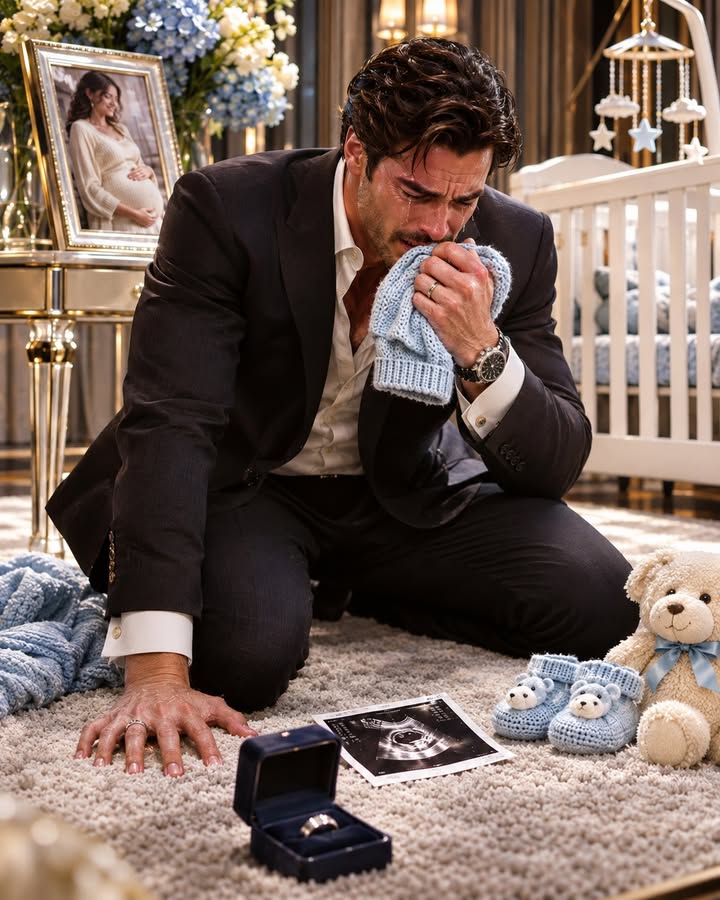
Part 3 – The Signature He Could Refuse
The envelope had been waiting in my study for two days before I opened it.
I had left it beside the blue hat, telling myself I was giving Isabella time, though she had not asked for time from me.
The attorney’s message was brief and formal, and the one detail she had authorized Adrian to share concerned our son.
I read the line again, then called Mara.
“Isabella has given permission for Dr. Vale to speak about one thing,” I said.
“I saw the note,” Mara replied.
“Did she say what?”
“No.”
“Can you arrange a meeting?”
“I can ask her attorney whether that would be acceptable.”
“Ask only that.”
Mara paused.
“You understand that she may say no.”
“I understand.”
I did, or at least I wanted to.
The distinction between understanding a boundary and hoping it would move remained painfully familiar.
Mara sent the request, and I waited through the rest of the day without checking in.
At six, she called back.
“Dr. Vale can meet with us tomorrow,” she said. “He will speak only about the record Isabella authorized him to share.”
“Where?”
“His office.”
“I’ll be there.”
“And, Dante?”
“Yes?”
“This is not an opening to ask about her pregnancy, her home, or her life.”
“I know.”
“Then keep the meeting to what she has allowed.”
I looked at the blue hat on my desk.
“I will.”
The next afternoon, Adrian received us in the same quiet office where he had clarified the photograph.
This time, a thin folder rested on the table between us.
He did not open it immediately.
“Before I show you anything,” he said, “I want to be clear about the limits of what Isabella authorized.”
Mara nodded.
“So do I,” I said.
“She asked me to share one detail from the night your son was born,” Adrian continued. “She did not authorize me to give you her medical records, discuss her current care, or answer questions about where she is.”
“I understand.”
“And the record is not being shared to suggest that anything could have changed the outcome.”
My hands tightened together.
“I understand that too.”
Adrian looked at me for a moment, then opened the folder.
The page inside was a photocopy of a hospital note, its edges blurred slightly from being scanned and printed.
At the top was the date of our son’s birth.
Below it, in the clinical shorthand of a nurse’s record, a sentence had been underlined in blue ink.
“Patient asks that staff continue trying to reach her husband,” Adrian read. “She says she wants him here when the baby is born.”
The room seemed to tilt.
I leaned closer, though the words were already clear.
The note continued.
“Patient states she wants the baby to have his father, even if she can no longer trust him.”
No one spoke.
The old hospital corridor returned to me with such force that I could almost smell the antiseptic and feel the stiff paper of the hat in my hands.
I had spent a year telling myself that Isabella had left because grief had hardened her against me.
I had assumed that by the time she was in surgery, whatever she had once felt for me was gone.
The record said otherwise.
It also said that love had not been enough to make her believe I would come.
I stared at the sentence until the words blurred.
“Was she awake when she said this?” I asked.
“She was frightened and in pain, but she was clear,” Adrian said. “The nurse recorded her words shortly before the emergency procedure.”
“Had she asked them to call me before that?”
“Yes.”
“Eleven times?”
Adrian’s gaze shifted to Mara, then returned to me.
“I don’t know the exact number of attempts. I know she asked the staff to keep trying.”
I pressed the heel of my hand against my mouth.
The old excuse rose automatically.
I had been at dinner.
My phone had been off.
I had not known the bleeding had started.
But the record was not asking what I knew at ten o’clock.
It was showing me what Isabella had believed about me while she was still fighting to become a mother.
“Did she think I would come?” I asked.
“She hoped you would,” Adrian said. “That’s what she told the nurse.”
“And she still wanted our son to have me.”
“Yes.”
I lowered my eyes to the page.
I had told myself that my failure began when I switched off my phone.
In truth, it had begun earlier, in the countless smaller moments when Isabella learned that my promises could be postponed until they no longer mattered.
“Why did she let me see this now?” I asked.
Adrian closed the folder carefully.
“She did not say.”
“Was it meant to forgive me?”
“No.”
“Was it meant to punish me?”
“No.”
“Then what was it meant to do?”
Adrian’s answer came quietly.
“That is something you would have to understand without asking her to explain it.”
I nodded, though the question remained in my chest.
Mara placed one hand on the folder, not touching the page.
“Thank you for sharing what she authorized,” she said.
Adrian inclined his head.
“She asked me to preserve the note because she wanted the record protected. She did not want the details turned into a public story or used to rewrite what happened.”
“I won’t do that,” I said.
“I’m glad.”
“I know nothing about it could have changed the medical outcome.”
Adrian held my gaze.
“Then hold onto that.”
I understood what he meant.
The note was not an invitation to imagine a different ending.
It did not say I could have saved our son by arriving in time, or that the doctors would have had a different chance if I had stood beside Isabella.
It only showed that, while I was absent, she had still wanted me there.
That truth hurt more than any imagined version of blame.
I thanked Adrian.
He did not offer comfort, and I did not ask for it.
On the drive back, Mara stayed silent for several blocks.
When she finally spoke, she said, “You don’t have to decide what the note means today.”
“It means she still loved me.”
“Perhaps.”
“She wanted our son to have his father.”
“Yes.”
“But she couldn’t trust me.”
Mara looked out the window.
“That part seems clear.”
I turned the words over in my mind, as if there might be some hidden meaning that made them easier to carry.
There wasn’t.
At home, I placed the photocopy in the drawer beside the tiny blue hat.
I did not frame it.
I did not put it on display in the nursery.
It belonged to Isabella’s medical history, not to my attempt to make myself feel closer to her.
The next morning, Mara called with a different matter.
“I’ve been reviewing some old documents,” she said. “There’s an issue involving the trust you established for your son.”
I stood at the window of my office, watching the city wake beneath a low gray sky.
“What issue?”
“The trust was created before his birth. The intended beneficiary was your child, with Isabella listed as the custodian until he reached adulthood.”
“That was the arrangement.”
“There’s a provision for the surviving parent to administer the funds if the other parent is unavailable.”
“I remember.”
“The problem is that Isabella’s signature is still required to complete the administration.”
I looked toward the nursery door at the far end of the hall.
“How much money is in it?”
“That isn’t the main issue.”
“It’s my money.”
“It is a trust for your son,” Mara replied. “The funds are held for his benefit, and the paperwork was drafted to keep either parent from exercising unchecked control.”
“Isabella’s signature is required because she is listed as his mother.”
“Yes.”
The word settled between us with the weight of something obvious I had somehow failed to consider.
“She’s not going to sign anything for me,” I said.
“I don’t know whether she would. I haven’t contacted her.”
“Could the trust be dissolved?”
“Not without court approval, and not without addressing the beneficiary’s interests.”
“Our son is gone.”
“I know.”
Mara’s voice softened, but only slightly.
“The trust was created for him. The governing documents don’t account for his death with the clarity they should.”
I had paid lawyers to protect an imagined future and had not thought carefully enough about the one that actually arrived.
“Can you handle it without involving Isabella?” I asked.
“I can explore that. But her signature is required for the cleanest route, and any alternative would take time.”
“So the legal structure I set up to protect our son now requires me to contact his mother.”
“Or you can waive your authority and let an independent trustee handle the administration.”
“Is that allowed?”
“It can be, with the right filings. It would also mean giving up your ability to direct how the trust is resolved.”
I looked at my reflection in the darkened window.
For years, control had seemed to me like the same thing as responsibility.
I had called it protection when I made decisions for others, and efficiency when I did not ask them what they wanted.
“What would happen to the funds?” I asked.
“They would remain separate while the court determines the proper disposition. The trust can be redirected according to its terms, but we would need to establish what best serves the original purpose.”
“Could it go to a children’s medical foundation?”
“Possibly. Not automatically.”
“And Isabella would still need to sign?”
“Not if you waive your authority and the court appoints an independent administrator. Her signature might not be required, depending on the filing.”
“Then do that.”
Mara did not answer at once.
“I want to make sure you’re deciding without using this as a reason to get her attention,” she said.
“I’m not.”
“You could ask her to sign and give her a way to respond.”
“No.”
“You could send the documents through her counsel and let her decide.”
“I said no.”
“Dante, I’m trying to be certain.”
“I understand.”
I looked down at my hands.
“Make the filing for an independent trustee,” I said. “I don’t want her signature, and I don’t want to speak to her about it.”
“That means you’ll have no control over the administration.”
“I understand.”
“It may take months.”
“Then it takes months.”
Mara’s breath eased over the phone.
“I’ll prepare everything. I’ll also send a short notice through her attorney so she isn’t surprised if her name appears in the court filing.”
“Keep it factual.”
“I will.”
We ended the call, but the trust stayed with me all day.
It had started as a loving gesture, or what I had thought of as one.
I had named Isabella to manage the money because I trusted her judgment.
Then, while our son was still alive, I had built a future around the assumption that she would always be close enough for me to rely on her.
I had not asked what she might need from me.
I had only arranged the parts of her life that made sense to me.
A week later, the papers were ready.
Mara brought them to my office in a dark leather folder.
The documents were precise and impersonal, pages of clauses and signatures describing an authority I had once believed I should retain.
She explained each section, then placed the final page in front of me.
“Once you sign this, an independent trustee will control the process,” she said. “You won’t be able to direct the choice of recipient or change the timeline.”
“I know.”
“You’ll also be formally waiving any right to administer the trust.”
“I know.”
She watched me pick up the pen.
“Are you certain?”
I thought of the hospital note, the words Isabella had spoken when she still hoped I might come.
She wanted the baby to have his father, even if she could no longer trust him.
That had not meant she wanted me to control his future.
It had meant she wanted me to be present.
I signed.
The pen moved steadily across the paper.
There was no dramatic release, no sense that grief had lifted from my shoulders.
There was only the quiet recognition that doing one responsible thing did not balance the years when I had failed to be responsible.
Mara collected the pages.
“I’ll file these tomorrow,” she said.
“Send the notice to Isabella’s attorney.”
“Of course.”
“No personal note.”
“I understand.”
She stood, then paused at the door.
“You could have asked for her signature.”
“I could have.”
“Would that have been wrong?”
“I don’t know.”
“But you chose not to.”
I looked at the signed page beneath her hand.
“I don’t want her to have to answer me just because the law still has my name beside hers.”
Mara studied my face, perhaps looking for the old certainty.
Then she nodded and left.
For several days, nothing changed.
The trust filing moved through the legal system.
I returned to work and made decisions that affected thousands of employees, yet the only signature I kept thinking about was the one I had not asked Isabella to give.
At night, I passed the nursery without going inside.
The room was no longer a place I used to wait for her.
It was simply a room that held the history of a child we had both loved.
On the ninth day after I signed, Mara called me again.
“Isabella’s attorney has confirmed receipt of the notice,” she said.
“Good.”
“She hasn’t asked for any changes.”
“That’s her choice.”
“Yes.”
I heard paper rustling at her end.
“There’s one more detail. The independent trustee reviewed the original trust file and found a separate item attached to the beneficiary designation.”
“What item?”
“A letter in Isabella’s handwriting, dated three days after your son’s death.”
My grip tightened around the phone.
“What does it say?”
“I haven’t read it. It was sealed with the original trust documents, and the trustee has sent it to Isabella’s attorney.”
“Can they tell us anything about it?”
“No.”
“Did Isabella know it was there?”
“I don’t know.”
The letter was still sealed.
It had been written in the first days after our son died, when Isabella and I were both living inside the same loss but had already begun to separate from each other.
“What happens now?” I asked.
“Her attorney will decide whether to give it to her.”
“And if she doesn’t want it?”
“Then it remains with the trust records.”
I sat very still.
I had spent a year imagining that the end of our marriage had come with the ring she removed thirty-seven days after the hospital.
Now I wondered whether something else had ended that day, or whether there had been a moment when Isabella still hoped the two of us might make a decision together.
“Do we have any right to read it?” I asked.
“No.”
“Would you tell me if you saw it?”
“No.”
The answer was immediate.
I let out a slow breath.
“Good.”
After we hung up, I stood in the hallway outside the nursery.
For the first time, the future of the trust did not feel like a problem to solve.
It felt like a door I had no right to open.
Three days later, Mara called before noon.
“Isabella’s attorney has replied,” she said. “She has decided not to request the letter.”
I closed my eyes.
“Did she say why?”
“No.”
“Was there a note?”
“There was one sentence.”
I waited.
Mara read it aloud.
“Please don’t send it to me. I remember what I wrote.”
**–END OF PART 3–CLICK “NEXT” AT THE BOTTOM OF THE PAGE TO CONTINUE READING**
* * *
[PREVIOUS: PART 2](https://puretales.idolsgift.com/blog/part-2-the-message-he-wasn-t-meant-to-see-035) | [NEXT: PART 4](https://puretales.idolsgift.com/blog/part-4-the-message-he-wasn-t-meant-to-see-035)
✓ Lynn R. Adams
Part 3 – The Signature He Could Refuse The envelope had been waiting in my study for two days before I opened it. I had left it beside the blue hat, telling myself I was giving Isabella time, though…