PART 3: The Mark Beneath the Silver 057
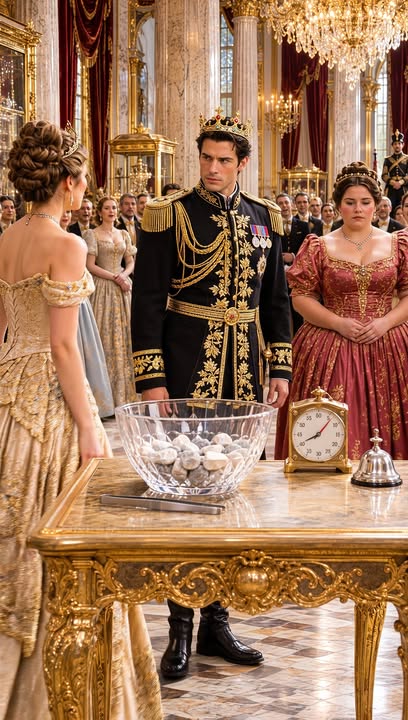
Part 3 – The Ledger in the Archive
“I am beginning to wonder whether the palace records are missing more than a journey.”
Alexander’s words seemed to remain in the sitting room after he had spoken them.
Emma stood beside the window, watching the late afternoon light settle over the garden paths.
The ring was safe inside its small case, but the mark beneath its band had begun to feel less like a maker’s stamp and more like a question.
“I will ask the archivist to search again,” Alexander said.
“Not just for my grandmother’s name,” Emma replied. “For the village, too.”
He nodded.
“If she was connected to my mother’s journey, there may be a record of where they met.”
“Or a record of where they wanted people to believe they met.”
The thought came quietly, but it changed the air between them.
Alexander closed the ring case and slipped it into his coat.
“You’re right.”
The honesty in his voice gave Emma no easy reassurance.
“I do not want to accuse anyone without proof,” he continued. “But I cannot keep accepting a few lines in a ledger as the whole of my mother’s life.”
“I understand.”
He looked at her, and for a moment his expression was open enough to make her wish she could offer certainty.
Instead, she had only a memory of a folded sketch and her mother’s careful silence.
“I will return to my family’s home as soon as I can,” she said.
“If you wish to.”
“I do.”
He did not ask her to stay, and she was grateful for that.
The contest had brought her into the palace, but her family’s history was not a favor she owed the prince.
They agreed to meet the following morning in the royal library, where the palace archivist would begin the search.
As Emma left the sitting room, she found Victoria waiting near the end of the corridor.
The other woman had put her tiara back on, though she held it rather than wearing it.
“Is he going to search the archives?” Victoria asked.
“He is.”
“Because of the ring?”
“Because he wants to understand what happened to his mother.”
Victoria looked toward the sitting room door.
For a moment, she seemed to be weighing whether to say something.
Then she gave a small shrug.
“I hope he finds an answer.”
“So do I.”
Victoria’s gaze settled on Emma’s face.
“Do you intend to stay in the competition?”
“I have not decided.”
“Most people would know what they wanted by now.”
“Most people are not carrying a ring that may have belonged to their family.”
Victoria’s lips pressed together.
“I suppose that is true.”
Emma could not tell whether there was envy in her voice or merely uncertainty.
“I am sorry about what I said earlier,” Victoria added.
“You already apologized.”
“I know.”
She looked down at the tiara in her hands.
“I wanted to make sure you knew I meant it.”
Emma held her gaze.
“Then I do.”
Victoria nodded once, as if the answer was more difficult to accept than she had expected.
The next morning, the palace library was quiet enough for Emma to hear the clockwork gears turning inside its tall wall clock.
Its shelves rose nearly to the painted ceiling, their dark wood polished by generations of careful hands.
Sunlight fell through high windows onto rows of books and document boxes.
Alexander was already there, standing with an older man beside a long table.
The man introduced himself as Master Hale, the senior palace archivist.
He was thin, silver-haired, and dressed in a plain charcoal coat, with spectacles that seemed perpetually on the verge of slipping down his nose.
“Your Highness,” he said to Alexander, “I have brought the household ledgers from the year of the princess’s journey.”
He turned to Emma.
“And the older register of noble and village makers, in case the mark can be matched.”
Emma was grateful that he addressed her directly.
“Thank you for looking,” she said.
Master Hale bowed his head.
“It is my work to look.”
A clerk set a stack of books and bound papers on the table.
The oldest ledger had a cracked leather cover, its edges worn pale from years of use.
Alexander opened it with care.
The pages were filled with neat columns, each line recording dates, rooms, expenses, visitors, and the movements of the household.
Emma watched his face as he scanned them.
The record of his mother’s departure appeared near the middle of the month.
Princess Elianor had left the palace on the twelfth day of spring, accompanied by one lady-in-waiting and a physician.
She had returned in late summer.
The note beside the entry described the absence as a private journey for her health.
Alexander read it twice.
“That is not what the copy in the family history says,” he murmured.
“What does the family history say?” Emma asked.
“That she traveled alone.”
Master Hale adjusted his spectacles.
“The account may have been simplified when the official history was prepared.”
“Or altered,” Alexander said.
The archivist did not contradict him, but neither did he agree.
He turned several pages, checking the names entered in the household columns.
“Here is the lady-in-waiting,” he said. “Lady Cresswell.”
“And the physician?” Alexander asked.
“Dr. Bellamy.”
Emma looked toward the open ledger.
“Was there anyone else recorded as joining them?”
“Not on this page.”
Master Hale searched the pages immediately before and after the entry.
The journey had been noted, but its route was absent.
No destination appeared.
No travel expenses were listed beyond a small payment for the carriage.
“Could there have been another ledger?” Alexander asked.
“There should have been a travel account,” Master Hale replied. “The detailed household accounts were not always bound with the main register.”
“Could we look for it?”
“Certainly.”
He placed a small paper marker beside the entry.
“First, I will check the index for the maker’s stamp.”
Emma took a folded paper from her pocket.
She had sketched the three-petaled flower from memory the previous evening, then added the curved line beneath it.
The drawing was imperfect, but the shape was clear.
Master Hale studied it.
“This looks like the mark of the Bellweather workshop.”
Emma felt her breath catch.
“Do you know where it was?”
“In the village of Bellmere,” he said. “It was active for several decades. The workshop closed before I came to the palace, but its pieces were occasionally purchased by the household.”
“Bellmere is Emma’s home,” Alexander said.
Master Hale looked between them.
“Then the stamp is not a coincidence.”
“Can you tell when the ring was made?” Emma asked.
“Not precisely, without examining it. But the workshop’s records may still exist in the village.”
“I know where they might be,” Emma said. “There is a small municipal room behind the old chapel where they keep the guild books.”
She had visited the room only once, as a girl, while helping her mother search for a birth record.
The memory returned with surprising clarity: the smell of dust and damp stone, a narrow table, and shelves crowded with boxes.
“Could the records show who bought it?” Alexander asked.
“Perhaps,” Master Hale said. “If the maker kept an account book.”
Alexander rested a hand on the ledger.
“Then we will search both places.”
The archivist opened the index and began turning pages.
His finger paused at the section for royal household movements.
The letters had been arranged by year and subject, but an old crease ran through the paper where someone had folded it long ago.
Master Hale smoothed it with his palm.
“Here,” he said.
The entry was brief: private journey, summer season, medical expenses.
There was no mention of Bellmere.
He moved to another index, this one listing correspondence received by the household.
A narrow strip of blank paper had been pasted over part of one page.
Alexander leaned closer.
“Was that added later?”
“It appears to be,” Master Hale said.
He touched the edge of the strip with the tip of a pencil, careful not to disturb it.
“Some pages were repaired after a leak in the archive several years ago.”
“Could the writing be beneath it?”
“Possibly, though we must not remove anything until the paper conservator has examined it.”
The thin strip seemed almost harmless, yet Emma could not stop looking at it.
The archive had been damaged and repaired.
That was a sensible explanation.
Still, the hidden line beneath the paper made the old record feel less like a forgotten account and more like a door someone had once tried to close.
Master Hale searched the index again.
“Here is a reference to an unbound household ledger from the same year,” he said. “It should be in the lower archive.”
Alexander glanced at the clock.
“Can it be brought up?”
“It can.”
The archivist rang a small bell for an assistant, then explained that the lower archive was kept in a temperature-controlled room beneath the west wing.
The volume might take some time to retrieve.
“While we wait,” Alexander said, “could you show Emma the workshop records that came to the palace?”
Master Hale led them to a cabinet of catalogued objects and their associated documents.
There were invoices for silver serving pieces, letters from craftsmen, and lists of household repairs.
The records were precise, but none mentioned a ring bearing the three-petaled flower.
The workshop had supplied the palace with candlesticks and small decorative boxes.
Its name appeared often enough to prove it had been known to the royal household.
Emma looked at the dates.
“They bought from Bellmere for many years,” she said.
“Yes,” Master Hale replied. “It was a respected workshop.”
“Could my mother’s family have known someone there?”
“Quite possibly.”
Alexander looked at her.
“You said your grandmother was a midwife.”
“She was.”
“Would she have delivered children in the village?”
“Of course.”
“She may have known half the families there.”
Emma smiled faintly.
“More than half, according to my mother.”
Master Hale returned to the table, where the clerk had laid out a second ledger.
The assistant had come back with a narrow book wrapped in cloth.
Its cover was plain and dark, with a worn label on the spine.
“Here is the unbound household account,” the archivist said.
Alexander waited as Master Hale opened it.
The pages were more detailed than those in the main register, listing carriage hire, food, medical supplies, and payments to household staff.
The princess’s journey appeared again, recorded under a shortened name.
“E. Vale,” Emma read.
“Was that one of your mother’s names?” she asked.
“Not that I know of,” Alexander replied.
Master Hale scanned the next entries.
“Here is a payment to Dr. Bellamy, followed by an expense for a private carriage.”
He turned a page.
Then another.
His finger stopped on a line near the bottom.
“Payment to Rose Bell, Bellmere, for lodging and attendance.”
Emma felt the room shift around her.
She had known her grandmother had helped women through childbirth, had sat at sickbeds, had made herself available whenever someone called.
She had never imagined the palace might have recorded her name.
Alexander stared at the ledger.
“Rose Bell,” he said.
Master Hale nodded.
“There is no further description.”
Emma placed a hand on the table to steady herself.
The entry was written in the same careful ink as everything else.
Not a rumor.
Not a name in a memory.
Her grandmother had been there.
“When?” Emma asked.
“The date is two weeks after the princess left the palace,” Master Hale replied.
“She reached Bellmere,” Alexander said.
The prince’s voice was quiet, but Emma could hear the feeling beneath it.
“Or someone from the household paid Rose Bell while the princess was elsewhere,” Master Hale cautioned. “We should not assume more than the record tells us.”
“No,” Alexander said. “We should not.”
He looked at Emma.
“But it gives us a reason to keep searching.”
A sound came from the library doorway.
Victoria stood there, one hand resting on the frame.
She had arrived quietly enough that none of them had heard her approach.
Her gaze moved from Alexander to Emma, then to the open ledger.
“What have you found?” she asked.
“An entry connected to Emma’s grandmother,” Alexander replied.
Victoria’s attention sharpened.
“Rose Bell?”
Emma looked at her.
“You know that name?”
Victoria stepped into the room, her expression carefully composed.
“I have seen it in one of the historical indexes.”
Master Hale closed the ledger halfway.
“Where?”
“In the records room near the east gallery,” Victoria said. “I was researching the competition’s family histories.”
Alexander’s face changed.
“You saw an entry about Rose Bell?”
“I did.”
“And you did not mention it yesterday.”
Victoria looked down at the floor.
“No.”
The silence that followed was not angry, but it held enough disappointment to make her shift her weight.
“Why?” Emma asked.
Victoria’s gaze returned to her.
“Because I did not know what it meant.”
“You could have told us that much.”
“I could have.”
Alexander’s voice remained level.
“What did you read?”
“Only a brief note in the index. It said a member of the royal household had made a payment to Rose Bell in Bellmere during your mother’s absence.”
Emma’s fingers curled against the edge of the table.
“You saw it before we did.”
“Yes.”
“And you chose not to say anything.”
Victoria inhaled slowly.
“I was afraid it would make you look as though you had been brought into the competition because of your family connection.”
“That is not for you to decide,” Alexander said.
“I know.”
Her voice was softer now.
“Then I told myself that the entry was probably irrelevant.”
“Was that why you came here now?” Emma asked.
Victoria looked at the ledger.
“I heard the archivist had been asked to search the old records.”
“So you came to see what we found.”
“Yes.”
She did not try to hide it.
The answer stung more than a denial would have.
Victoria turned to Alexander.
“When I saw the index, I thought Emma might be using your grief to gain an advantage.”
The words landed gently, but they struck hard.
Emma stared at her.
“You thought I had made up the connection?”
“I did not know what to think.”
“You could have asked me.”
“I should have.”
“Instead, you kept it to yourself.”
Victoria lowered her eyes.
“Yes.”
Alexander pushed back from the table and stood.
“I invited every contestant to take part in a competition,” he said. “I did not invite them to investigate one another’s families in secret.”
“I was not investigating Emma,” Victoria replied. “I was looking into the records because I wanted to understand the history of the royal household.”
“And when the history involved her, you decided she was suspicious.”
“I was trying to protect you.”
“From what?” Emma asked.
Victoria’s face tightened.
“From being hurt.”
“By whom?”
“By someone who might see your mother’s death as a way into the royal family.”
For a moment, Emma could not speak.
She felt the humiliation of the gallery return, not as laughter this time, but as the ache of being judged before she had been heard.
“I didn’t know the ring was connected to my family until I turned it over,” she said.
“I know that now.”
“You did not know it then.”
“No.”
“And you still let yourself believe the worst.”
Victoria pressed her lips together.
“I did.”
Alexander remained beside the table, his shoulders drawn stiffly beneath his uniform.
“This is not a court hearing,” he said. “No one here has been accused of wrongdoing.”
“I was not making an accusation,” Victoria said.
“You told yourself Emma might be exploiting my grief.”
“I thought she might be.”
“Those are nearly the same thing.”
Victoria looked at him, and this time she did not defend herself.
“I am sorry,” she said.
Emma searched her face for the clever qualification, the careful excuse, the attempt to make the apology serve her.
She found only discomfort and regret, though neither erased what had happened.
“I believe that you are sorry,” Emma said.
Victoria’s expression softened with relief, but Emma continued before it could become forgiveness.
“That does not mean I can trust you yet.”
“I understand.”
“Do you?”
Victoria’s eyes glistened, but she held herself steady.
“I think I do.”
Emma looked back at the ledger.
Her grandmother’s name sat plainly on the page, tied to a journey she had never known about.
The discovery should have brought her closer to Alexander.
Instead, it had placed a stranger’s suspicion between them.
“I do not want my family’s history used to decide whether I deserve to stand here,” Emma said.
Alexander’s gaze met hers.
“It will not be.”
“You cannot promise what everyone will say.”
“No. But I can promise that I will not judge you without proof.”
“You already know what I told you about the sketch.”
“I do.”
“And you know how much I wanted to find out why the ring bears the stamp.”
“I do.”
Emma believed him, but belief did not yet quiet the hurt.
She slipped the ring case from Alexander’s hand and set it gently on the table.
“I think I should leave the competition.”
Victoria’s eyes widened.
Alexander took one step toward her, then stopped.
“Emma, don’t decide while you are hurt.”
“I am not deciding because Victoria made a mistake,” she replied. “I am deciding because I do not want every answer about my family to be treated as a trick.”
“That is not how I see you.”
“It may not be how you see me now. But you asked me to stay in a contest where everyone is watching for reasons I might want you.”
“Then we can stop the contest.”
“Would that be because of me, or because of the ring?”
He did not answer quickly enough.
Emma felt the question settle between them.
“I don’t want you to choose me because I found something precious,” she said. “I don’t want to be a symbol of your mother, either.”
“You are neither.”
“I know you want that to be true. I need time to know it myself.”
Alexander’s expression was pained, but he did not try to reach for her.
“Then take the time you need,” he said.
“I will.”
She turned toward the door.
Victoria moved aside, making room without trying to stop her.
“I am sorry,” she said again.
Emma paused.
“I heard you.”
Then she left the library.
The corridors seemed longer on the way back to her room.
The palace was still full of voices, attendants, and the quiet machinery of a royal household, but Emma felt as though she were moving through it alone.
She set her gloves on the dressing table and stared at the window.
Beyond the palace walls was Bellmere, with its narrow lanes and familiar rooftops.
She could return home, find the sketch, and learn what the ring had to do with her grandmother without standing beneath the gaze of hundreds of people.
Yet the thought of leaving Alexander with the same unanswered questions he had carried for years felt like another kind of abandonment.
That evening, a knock sounded at her door.
Emma opened it to find no servant, but Victoria.
The tiara was gone.
Victoria’s hair had been pinned more simply, and her hands were clasped before her.
“May I speak with you?” she asked.
Emma considered refusing.
Then she opened the door wider.
Victoria entered but stayed near the threshold.
“I wanted to say this without Alexander present,” she began. “I was wrong to decide what your motives were.”
Emma waited.
“I have spent so much time trying to be the obvious choice that I have started looking for reasons everyone else should not be.”
“That sounds exhausting.”
“It is.”
Victoria gave a small, rueful smile.
“I thought if I could find a weakness in your story, I would feel less threatened by you.”
“I do not have a story,” Emma said. “I have a ring, a sketch, and a grandmother whose name appeared in a ledger.”
“I know.”
“And I still do not know whether I will stay.”
Victoria nodded.
“You should make that decision for yourself.”
“Not for the contest?”
“Not for me.”
Her answer seemed to surprise them both.
Victoria looked toward the window.
“When my family entered me in the competition, they spoke as though winning would settle every question about my future. I believed them.”
“And now?”
“Now I am not sure winning would settle anything.”
Emma studied her.
“Why did you come to the palace?”
“To marry the prince,” Victoria said, then shook her head. “That is what I told everyone.”
“And what do you want?”
“I want to be taken seriously without having to be perfect all the time.”
The admission was quiet and unadorned.
Emma understood more than she wanted to.
“Then perhaps you should stop pretending you are.”
Victoria’s gaze returned to her.
“I will try.”
It was not a dramatic reconciliation.
It was only a promise, fragile enough to break, but sincere enough to be offered.
Victoria moved toward the door.
Before she left, she turned back.
“The ledger entry I saw was in the old household index,” she said. “There was another reference beneath it, but the page had been repaired.”
Emma remembered the strip of paper in the archive.
“What did the reference say?”
“Only a shelf code and a word I could not make out.”
“Did you tell Master Hale?”
“No.”
“Why not?”
“I thought it was nothing.”
Victoria’s voice faltered.
“Or I wanted it to be nothing.”
When she left, Emma remained by the open door for a long while.
The next morning, she was still uncertain about her decision.
She went to the library intending to tell Alexander she would return to Bellmere for a few days.
The archivist’s assistant was waiting by the entrance.
“Miss Emma,” he said, “Master Hale asked me to let you know the lower ledger has been examined.”
“Did he find something?”
“He found an entry that was not included in the index.”
Emma felt her pulse quicken.
“Where is the ledger?”
“In the reading room.”
She entered to find Alexander and Victoria already there.
Alexander stood beside the long table, his hands braced against its edge.
Victoria was pale with concentration.
Master Hale sat with an open volume in front of him, a magnifying glass resting beside the page.
“I thought the ledger was complete,” Emma said.
“So did I,” Master Hale replied.
He turned the book toward her.
A narrow slip of paper had been tucked into a fold in the binding.
Its edges were browned with age, and a few lines of ink showed through the brittle surface.
The paper had not been pasted over a page.
It had been hidden behind one.
“Can it be read?” Emma asked.
“Some of it,” said Master Hale. “The ink has faded.”
He leaned closer to the page and read slowly.
“‘At the request of Her Highness, arrangements were made for her passage to Bellmere under the name Elin Vale.’”
Alexander’s hand tightened against the table.
Emma looked at the entry.
The name matched the shortened notation from the household account.
Master Hale continued.
“‘She was received by Mrs. Rose Bell, who provided lodging and attendance until the physician judged travel safe.’”
Emma’s throat tightened.
Her grandmother had not merely received a payment.
She had sheltered the prince’s mother.
The archivist turned the paper slightly, searching for the remaining lines.
“The final portion is damaged,” he said. “I can make out only a few words.”
“What words?” Alexander asked.
Master Hale bent over the page.
“‘The child must remain—’”
He stopped.
Emma felt the room grow still.
“Remain where?” she asked.
Master Hale looked closer.
“The last word is obscured.”
Alexander’s gaze moved from the paper to Emma.
Victoria stood very still beside the table.
Then Master Hale carefully shifted the slip of paper, revealing a line written on its reverse.
His face changed.
“I believe the final sentence continues here.”
He read the words aloud.
“‘If danger should reach the palace, the prince is to be taken first to Rose Bell.’”
**–END OF PART 3–CLICK “NEXT” AT THE BOTTOM OF THE PAGE TO CONTINUE READING**
* * *
[PREVIOUS: PART 2](https://storyly.idolsgift.com/blog/part-2-the-mark-beneath-the-silver-057) | [NEXT: PART 4](https://storyly.idolsgift.com/blog/part-4-the-mark-beneath-the-silver-057)
✓ Lynn R. Adams
Part 3 – The Ledger in the Archive “I am beginning to wonder whether the palace records are missing more than a journey.” Alexander’s words seemed to remain in the sitting room after he had spoken t…