PART 3: The Life She Had Been Quietly Saving 029
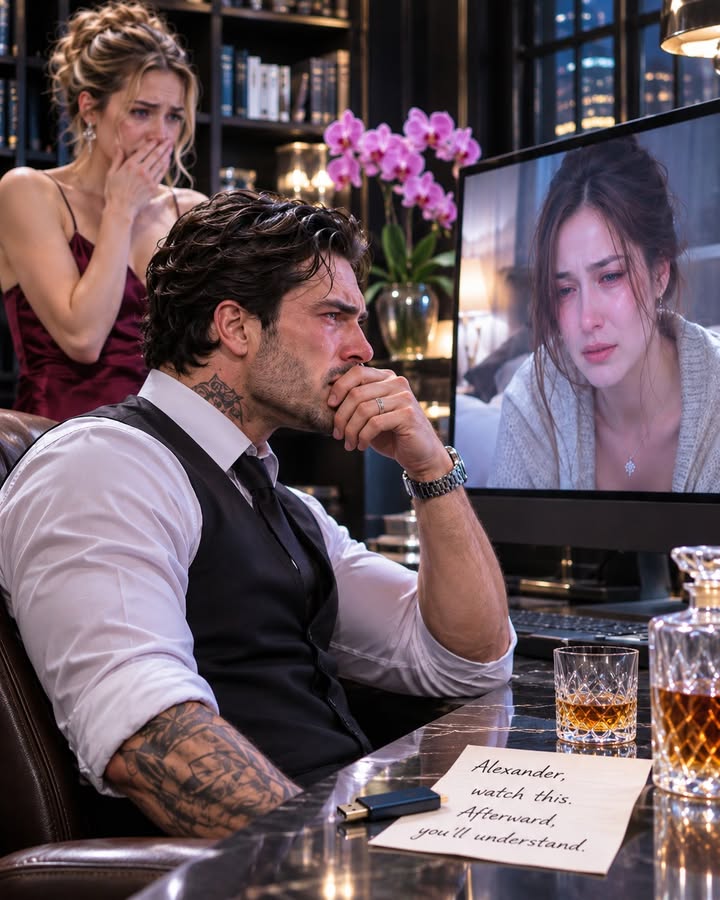
Part 3 – The Timeline Between Us
“If Alexander asks why I didn’t call him, tell him the truth.”
The sentence stayed with him after the screen went dark.
Alexander read it once, then again, as if the words might rearrange themselves into something less final.
The scanned document beside the recording had been created at the hospital, according to the date in its upper corner.
He could not bring himself to open it.
Instead, he called the hospital’s main line and asked to speak with the nurse who had cared for Claire.
After a brief hold, a familiar voice answered.
“Mr. Moretti?”
“You remember me.”
“I do.”
“Claire left something saying you could tell me why she didn’t call.”
The nurse paused.
“I can tell you what happened from my side.”
“That’s all I’m asking.”
“Then I need to be clear,” she said gently.
“Claire was conscious, frightened, and in pain, but her injuries were minor.”
“She wasn’t in immediate danger when I spoke with her.”
“I understand.”
“She asked me not to contact you.”
Alexander’s hand tightened around the phone.
“Did she say why?”
“She said she didn’t want you to come because she had asked for space and didn’t want to make an exception just because she was hurt.”
The words carried no blame, which made them harder to resist.
“I didn’t know about the accident until later,” he said.
“I know.”
“You know?”
“I told Claire that you had arrived.”
He frowned.
“When?”
“After she had been discharged.”
Alexander glanced toward the empty chair beside his desk.
“She was already gone when I came in.”
“I’m sorry,” the nurse said.
“I thought she knew you’d come to the hospital.”
The room seemed to fall quiet around him.
“Why did I come in, then?”
“I don’t know,” she replied.
“I only know that you asked whether Claire had been there, and I told you she had.”
He remembered the hospital corridors, the questions, the way he had been told that his wife had left.
He had assumed someone had called him.
He had assumed Claire had reached out in some indirect way.
But there had been no call.
“I’m not asking you to tell me where she is,” he said.
“I wouldn’t.”
“I just need to understand what happened.”
“Then understand this,” the nurse answered.
“She came in alone because she wanted to handle the accident without making it a reason to reopen a door she had worked hard to close.”
Alexander looked down at the phone.
“Thank you.”
When the call ended, he remained at his desk, unable to move on to the document.
He could not decide whether the truth relieved him or hurt him more.
Claire had not called because she had not wanted to.
His arrival at the hospital had not been an answer to her need.
It had been an accident of timing, a coincidence he had mistaken for a second chance.
His assistant, Martin, appeared in the doorway with a folder tucked under one arm.
“Your ten o’clock is waiting,” he said.
“Cancel it.”
Martin looked at him, then at the open laptop.
“Another day?”
“Tell them I’ll reschedule.”
“You’ve already moved half the morning.”
“I know.”
Martin set the folder down.
“Is there something I can help with?”
“No.”
Alexander had almost said, “Find Claire,” but caught himself before the words could reach the air.
He took a breath.
“I’m starting counseling.”
Martin’s expression changed, not with surprise exactly, but with the careful attention of someone who understood that the sentence mattered.
“I can make the appointment.”
“I made it.”
“Good.”
Alexander looked toward the computer.
“There’s a file here I don’t understand.”
Martin followed his gaze but did not move closer.
“Would you like me to check it?”
“No.”
The answer came more sharply than he intended.
He softened it.
“It’s private.”
Martin nodded.
“Then I’ll leave it with you.”
After he had gone, Alexander returned to the scanned document.
It was a single page from the hospital, a record of Claire’s visit and a note written by hand at the bottom.
The note was not part of her medical chart.
It had been folded into the papers she had left for her attorney.
The handwriting was hers.
“I came alone because I needed to know I could.”
He read the sentence twice.
Then he closed the file before the words could turn into another question she would have to answer.
That afternoon, he went to the counseling appointment he had arranged.
The office was on the third floor of a brick building near the river, far from the glass towers where he usually spent his days.
The waiting room held two low chairs, a bowl of polished stones, and a broad-leafed plant near the window.
Alexander sat down and placed his phone face down beside him.
A minute later, he picked it up.
There were no new messages.
He put it back.
When the counselor invited him in, he found himself explaining the story as if it were a report.
He described the accident, the video, the house, the missing sketchbooks.
He spoke about Sophia and the yacht, the jacket, the matching accessory.
He listed the events in order and waited for the counselor to identify which one he had misunderstood.
The counselor listened without interrupting.
When Alexander finished, the man folded his hands on the desk.
“What do you think you did wrong?”
“I wasn’t there enough.”
“That is part of it.”
Alexander’s jaw tightened.
“I dismissed her when she said she was unwell.”
“That sounds important.”
“I thought she was asking me to fix everything.”
“Was she?”
“No.”
The answer came quietly.
“She wanted me to come home.”
The counselor let the silence remain between them.
Alexander looked at the rug beneath his shoes.
“I thought providing for her meant I was taking care of her.”
“Did she tell you that was what she needed?”
“No.”
“Did you ask?”
“No.”
The admission made the room feel smaller.
“I assumed,” he said.
“And when your assumptions were wrong?”
“I told myself she was being unreasonable.”
“What would it mean to you if you could not make this right quickly?”
Alexander looked up.
“I don’t know.”
“Then perhaps that is where we begin.”
He left the appointment with no plan for bringing Claire back and no new phrase to send her.
For the first time, the absence of a solution did not feel like an invitation to force one.
It felt like something he would have to learn to endure.
The next morning, his assistant told him Sophia was waiting in the small conference room.
“She asked to speak with you before she leaves for the client site.”
“Send her in.”
Sophia entered with a notebook held against her chest.
Without the jacket, she looked younger than she had at the hospital, though she was not as young as Alexander had once imagined her to be.
She had been composed through the company’s award dinner and polished through the yacht outing.
Now she looked tired.
“Thank you for seeing me,” she said.
“Sit down.”
She chose the chair across from him.
For a few seconds, neither spoke.
Then Sophia placed the notebook on the table.
“I’m sorry about the orchid.”
Alexander glanced at the empty space where it had stood in the house.
“Why did you bring it?”
“I thought Claire would want it at the hospital.”
“You knew she was there?”
“No.”
“Then why?”
Sophia looked at her hands.
“I didn’t know what to do with it after you told me to leave.”
“I thought it was something you wanted kept safe.”
The answer sounded sincere, but he did not trust himself to judge sincerity anymore.
“Why were you wearing Claire’s jacket?”
Sophia’s face reddened.
“I didn’t know it was hers.”
“You wore it in front of her.”
“I know.”
“You didn’t think to ask?”
“I thought it was one of the spare pieces from the office wardrobe.”
Alexander’s expression sharpened.
“Her name was inside the collar.”
Sophia lowered her eyes.
“I saw it after she did.”
He looked at her, waiting for the rest.
“She had chosen it for your birthday,” Sophia said.
“I didn’t know that until afterward.”
“Who told you?”
“No one.”
She took a breath.
“I recognized the initials in the lining and looked them up. There was a note from the tailor in the garment bag.”
Alexander remembered bringing the jacket to the office after a trip because he had been too busy to return home before an evening meeting.
He had not remembered leaving it in the wardrobe.
“Why did you wear it?”
“It was cold that night, and I had a presentation outside the restaurant.”
“That doesn’t explain why you kept it on when you saw Claire.”
“I was embarrassed.”
“You were standing outside her hospital room.”
“Yes.”
“And you wore the jacket she’d chosen for me.”
Sophia’s mouth tightened.
“I know how it looked.”
“That wasn’t my question.”
She looked directly at him.
“I was afraid if I took it off, everyone would assume I had done something wrong.”
“You thought keeping it on would help?”
“No.”
“Then why?”
“Because I panicked.”
Her answer held no excuse, only shame.
Alexander sat back.
“You and I went on that yacht.”
“Yes.”
“You made the matching accessories.”
“I did.”
“Did you mean them as a message to Claire?”
“No.”
The certainty in her voice stopped him.
Sophia opened her notebook and took out a folded printout.
“I thought you and Claire were separated emotionally already.”
He did not respond.
“I’m not saying that makes what I did harmless,” she continued.
“I knew you were married, and I should have asked more questions.”
“Instead, I decided it wasn’t my place because you never talked about her as your wife.”
Alexander looked down at the printout.
It was a photograph Sophia had posted from the afternoon they made the accessories.
She and Alexander sat at a long table scattered with colored beads and thin silver wire.
He was smiling at something beyond the frame.
There was nothing intimate in the picture, but the two matching charms were visible in the corner.
“I remember telling you Claire didn’t like the house,” he said.
Sophia nodded.
“You said she spent most of her time in her studio and didn’t want you to disturb her.”
“That was one time.”
“It wasn’t.”
He looked at her.
Sophia’s voice had gone quieter.
“You told me you hadn’t had dinner together in months.”
“I said I was busy.”
“You said she had stopped asking where you went.”
Alexander felt the words move through him, meeting the version of himself he had seen in the video.
He had turned his marriage into a set of convenient conclusions.
“I never said we were separated,” he replied.
“No.”
“But you believed it.”
“I thought you were living like two people who had already let go.”
“And you thought that made the yacht, the jacket, the matching charms acceptable.”
“No,” Sophia said.
“I thought it meant I didn’t have to ask what I didn’t want to hear.”
He watched her struggle to hold his gaze.
“I’m sorry,” she added.
“I know that doesn’t repair anything.”
“No,” he said.
“It doesn’t.”
She nodded, accepting the answer without trying to improve it.
“I should also tell you that I’m transferring to another department.”
“That’s your decision?”
“Yes.”
“I don’t want you to feel forced out.”
“I don’t.”
She closed her notebook.
“I think I need to learn the difference between being trusted with someone’s confidence and being handed permission to ignore their responsibilities.”
Alexander looked at the photograph again.
“There was no secret message in those charms,” she said.
“They were just a craft project after the award.”
“Just a project,” he repeated.
“I understand that now.”
She stood.
At the door, she paused.
“I hope Claire gets well.”
“So do I.”
Sophia left without asking him to forgive her.
Alexander remained alone in the room, the printout still on the table.
He had wanted to believe she had deliberately joined him in humiliating Claire.
That would have made his anger easy to organize.
Instead, he found something more ordinary and more uncomfortable: a woman who had accepted the story he gave her because it made her choices easier, and a man who had described his marriage in ways that made it sound already finished.
Neither of them had meant the photograph as a message.
Claire had still been the one to receive it.
Later that day, a nurse from the hospital sent him a voicemail through the number he had provided.
She had listened to an audio file Claire had asked her to forward if he ever called.
Alexander played it at his desk.
His own voice came through first, faint and recorded from a prior message he had sent Claire.
“Claire, I have the yacht reserved for Saturday.”
A pause followed.
Then his voice continued.
“Sophia’s team deserves a day off after the award, and the weather should be clear.”
The message ended with a brief note about when he would be back at the office.
Alexander sat very still.
The voicemail was dated three days before the accident.
It was from the morning he had booked the yacht, before he knew Claire would be injured, before he had stood in the hospital and asked why she had not called.
He had told himself he had gone to the hospital because he cared.
That was true.
But it was not the whole truth.
The yacht had not been a rushed celebration arranged after the accident.
The outing had been planned in advance, and Claire had not been part of the plan.
He opened the nurse’s message again and listened to the voicemail a second time.
The date remained the same.
A familiar voice on the recording said the words he had once heard as harmless.
“Saturday should be perfect.”
He thought of Claire’s face at the hospital, calm enough to make him angry because he could not see what she felt.
He thought of the jacket, the keychain, and the way he had offered a rooftop studio as though money could answer a question she had not asked.
The voicemail did not prove that he had wanted to hurt her.
It did not soften what the day had meant to her.
It only removed the story he had been telling himself about why he had gone.
That evening, he returned to the counseling office for a short follow-up call.
When the counselor asked what had changed since their first session, Alexander answered honestly.
“I learned that I didn’t arrive at the hospital because she asked me to.”
“And what does that change?”
“It changes what I thought the moment meant.”
“Does it change what you need to take responsibility for?”
“No.”
“Why not?”
“Because I still dismissed her for years.”
He looked out over the river, its surface darkening beneath the early evening sky.
“I keep finding details that make everyone seem less simple.”
“That is often what happens when we stop protecting the version of the story that makes us comfortable.”
After the call ended, he sat with that thought.
Across the city, Claire was not waiting for him to reach the right conclusion.
She was beginning treatment because she had chosen to, and he could not use his understanding of her pain as a reason to interrupt it.
He turned his phone off and set it in a drawer.
For the next several days, he kept his promise to do nothing that would make her boundary harder to hold.
He went to work.
He attended counseling.
He answered his attorney’s practical questions and asked no one to locate Claire.
The house remained dark in the evenings.
The orchid stood near the library window, where the morning light reached it.
Alexander read the care card before watering it, then put the can away when he noticed the soil was still damp.
He began to understand that caring for something did not always mean touching it.
It sometimes meant noticing what it needed and leaving it alone.
A week after Claire had moved out, her attorney sent a brief update.
Claire had begun therapy.
She was safe, and she had requested no contact for the time being.
Alexander read the message twice.
Then he wrote a reply saying he understood and would respect her request.
He deleted the sentence, “Please tell her I’m sorry.”
He deleted, “I’m here if she needs anything.”
He left only the acknowledgment.
That night, he opened the folder on his computer again.
The scanned hospital document had not changed.
The sentence at the bottom remained in Claire’s handwriting.
“I came alone because I needed to know I could.”
He did not open her medical records.
He did not search the house for anything she might have left behind.
He played the audio once more, listening to the part where she explained that Dr. Patel had warned her the marriage, as it was, was worsening her depression.
Then he closed the folder.
The next morning, he found a message from Sophia.
It was a photograph of the orchid’s care card, which had been tucked into the pot when she carried it from the mansion.
“I found this under the liner,” she had written.
“I thought you should have it.”
The card was addressed in Claire’s handwriting.
At the bottom, beneath the watering instructions, was a line he had not seen before.
“Don’t mistake the fact that I stayed for proof that I was all right.”
Alexander read it once, his chest tightening.
Then he noticed there was writing on the reverse side, hidden beneath the fold.
He turned the card over.
The ink was faint, but the words were clear.
“Grandma said the same thing before she died.”
**–END OF PART 3–CLICK “NEXT” AT THE BOTTOM OF THE PAGE TO CONTINUE READING**
* * *
[PREVIOUS: PART 2](https://puretales.idolsgift.com/blog/part-2-the-life-she-had-been-quietly-saving-029) | [NEXT: PART 4](https://puretales.idolsgift.com/blog/part-4-the-life-she-had-been-quietly-saving-029)
✓ Lynn R. Adams
Part 3 – The Timeline Between Us “If Alexander asks why I didn’t call him, tell him the truth.” The sentence stayed with him after the screen went dark. Alexander read it once, then again, as if th…