PART 3: The Life She Had Already Chosen 028
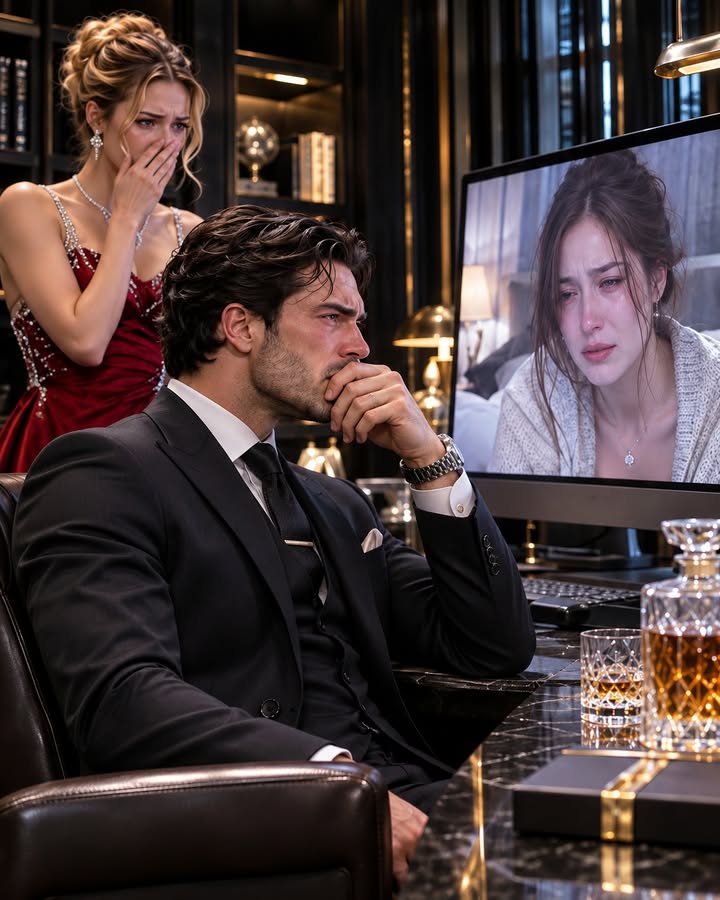
Part 3 – The Promise He Forgot
The date in Claire’s sketchbook followed Alexander through the day like a quiet accusation.
He carried it into the office, where meetings waited and his assistant recited figures from a quarterly report, but the numbers would not settle in his mind.
He kept seeing Claire’s handwriting beneath the unfinished orchid, and the small, precise date she had written beside the painting.
That evening, he asked his assistant to find the old invitation to Claire’s first gallery showing.
She located it in the archive of his personal email within minutes.
The subject line was simple: Claire Moretti — First Exhibition.
The invitation had arrived six weeks before the opening.
Alexander had replied, I wouldn’t miss it for anything.
He read his own words once, then again.
The night of the exhibition, a calendar entry showed a private dinner with a potential investor.
A note beneath it read: Host personally. Important relationship.
Alexander remembered the dinner.
He remembered the investor’s polished cuff links, the wine he had chosen, and the way he had stayed after dessert to discuss a possible acquisition.
He did not remember what he had told Claire when she called.
His assistant stood quietly in the doorway.
“Would you like me to look for the gallery’s records?” she asked.
“No,” Alexander said.
Then, after a moment, he added, “Not yet.”
He wanted to know what he had done, but he did not want someone else to build a story around him before he had faced the facts himself.
He called the gallery the following morning.
The owner, a woman named Marlene, recognized his name and remembered the exhibition.
“Claire’s work was beautiful,” she said, after he introduced himself.
“Was she there?”
A pause.
“She was.”
“Did she ask about me?”
“She did.”
Alexander closed his eyes.
Marlene’s voice softened, though she made no attempt to comfort him.
“She asked if you were still coming. I told her I didn’t know. She said you were probably busy.”
“I was.”
“I gathered that.”
The words were not sharp, but they landed cleanly.
“Did she sell anything?” he asked.
“A few pieces.”
“Do you remember which ones?”
“I do. She was proud of the charcoal studies, especially the one of the garden gate.”
Alexander looked toward the window.
He could almost picture Claire standing among her paintings, waiting for him to arrive, each passing minute teaching her something he had never intended to teach.
“Thank you,” he said.
After the call, he opened a blank email to Claire’s attorney.
He typed several versions of an apology.
In the first, he explained the dinner and the investor.
In the second, he wrote that he had not understood how much the evening mattered.
In the third, he began with, I am sorry I missed your exhibition.
He stopped there.
Anything after that risked sounding like another attempt to make his reasons more important than her experience.
He sent the short sentence to his attorney with a request that it be forwarded, if Claire was willing to receive it.
Then he closed the message and returned to work.
At the residency, Claire was learning that silence could be different when no one was waiting for her to fill it.
The studio she had been assigned was small and bright, with a high window that looked toward a row of bare trees.
It smelled of turpentine, wet paper, and the faint mineral scent of old stone.
For the first few days, she had struggled to make anything.
She arranged her charcoal pencils by length, washed brushes that were already clean, and kept opening the sketchbook without drawing in it.
The other artists moved through the halls with their own quiet uncertainties.
Some worked late into the night.
Some took long walks and returned with mud on their shoes.
No one asked Claire why she had been away from painting for so long.
That kindness made the question easier to face.
On the fourth morning, she stood before a blank canvas and began with a loose gray line.
It wavered.
She almost wiped it away, then left it there.
By afternoon, the line had become a branch, and the branch had become the outline of a potted orchid near the window.
She painted slowly, letting the leaves emerge one at a time.
When her hand began to ache, she rested.
When her thoughts grew crowded, she stepped outside and walked around the garden.
She did not force herself to finish.
For years, Claire had treated the inability to create as another failure she needed to hide.
At the residency, she began to understand that starting again did not have to be dramatic.
Sometimes it was simply choosing one color and staying with it long enough to see what it could become.
A week after arriving, she received a message from her attorney.
Alexander had sent an apology through the office.
It contained only one sentence.
I am sorry I missed your first exhibition after promising I would be there.
Claire read it twice.
There was no explanation, no request to meet, and no attempt to attach his remorse to a decision she was supposed to make.
She set the phone facedown on the worktable.
The apology did not erase the memory of standing in the gallery with her paintings around her and one empty place beside her.
But it did not make the memory heavier, either.
She returned to her canvas.
That evening, her attorney called to ask whether Claire wanted to respond.
“No,” she said.
“Would you like me to tell him that?”
“Yes, please.”
“Are you certain?”
Claire glanced at the orchid painting, still unfinished.
“I’m not trying to punish him. I just don’t want to begin a conversation because he finally understands one thing.”
“Understood.”
After she ended the call, Claire sat by the window for a long time.
The message had stirred an old tenderness she had thought she had put away, but tenderness was not the same as trust, and she was learning not to confuse the two.
A few days later, the residency director invited the artists to a small gathering in the common room.
Claire almost declined, then decided she could stay for half an hour.
She met a sculptor who spoke gently about starting over after a long illness, and a photographer who had left a demanding job to care for his father.
No one offered a lesson.
They spoke about work, weather, and the peculiar difficulty of choosing a frame for a piece that was not finished.
For the first time in months, Claire laughed without listening to herself afterward to decide whether she had laughed too loudly.
When she returned to her studio, her phone showed a missed call from an unfamiliar number.
She did not call it back.
The next morning, her attorney confirmed that the orchid had been delivered to the office.
Sophia had returned it in person, carefully wrapped in a protective sleeve, with a short note asking that it be given back to Claire whenever she was ready.
Claire read the note twice.
There was no plea for forgiveness, no effort to make herself part of Claire’s story.
Only a few honest lines saying Sophia had not known whose orchid it was, and that she was sorry she had accepted it without asking more questions.
Claire understood that Sophia had been given a version of Alexander’s marriage that made the situation seem simpler than it was.
That did not mean Claire had to absolve anyone.
It did mean she did not want to turn Sophia into a symbol of everything that had hurt her.
She asked her attorney to thank Sophia for returning the orchid.
Then she gave instructions for it to be sent to the residency.
When the plant arrived, the roots had been wrapped in damp moss and the leaves protected with soft paper.
Claire set it near the window and checked the soil.
Some of the roots were dry, but the plant was alive.
She trimmed away a damaged leaf and placed the orchid where it could receive morning light.
The gesture was ordinary.
Still, as she rinsed the shears, Claire felt her throat tighten.
She had thought she would never see it again.
At Alexander’s office, Sophia’s resignation took effect the following Friday.
He kept their final conversation brief and respectful.
She thanked him for making the transition smooth.
He thanked her for being honest.
Then she left, carrying a cardboard box containing a framed photograph, two books, and a small ceramic cup from her desk.
Alexander watched her cross the lobby, but he did not follow.
There was nothing more to say that would make their choices better.
The office felt larger after she was gone.
For several days, he caught himself looking toward the conference room where they had spoken, remembering her admission that she had believed his marriage was finished in everything but name.
He had not meant to make her believe that.
He had simply allowed her to believe it because the misunderstanding suited him.
That was its own kind of answer.
On the evening of the orchid’s delivery, Claire sent a short message through her attorney confirming that the plant had arrived safely.
Alexander read the note in his study.
He did not reply directly.
He wrote back through counsel: I’m glad it made it.
Then he put the phone away.
His attorney called the next morning to say the divorce papers were nearly ready.
“Claire’s terms are straightforward,” she said.
“She wants her personal property, her work, and the residency protected.”
“They should be.”
“She has also asked that there be no direct contact outside urgent legal matters.”
“Understood.”
The attorney paused.
“Are you certain you don’t want to request a meeting?”
“No.”
It was the first time he had answered without needing to persuade himself.
“She asked for space. I can respect that much.”
After the call, he returned to the old correspondence he had brought home from the office.
He had started searching through it for anything about Claire’s work, but the folders held more than he expected.
There were invitations, notes, calendar reminders, and brief messages between the two of them from years earlier.
The first ones were playful.
Claire had sent him photographs of paint samples for the house, asking which shade he preferred.
He had answered that any color she chose would be right.
Later, she had sent reminders about appointments and family dinners.
His replies grew shorter.
I’ll try.
Running late.
Can’t make it tonight.
The messages had seemed harmless when he sent them.
Together, they formed a record of a person repeatedly being asked to wait.
A few days later, his attorney called with a question about a box of papers found among Claire’s belongings.
“The box contains older family correspondence,” she said.
“Some of it is addressed to Claire, and some appears to be from your mother.”
Alexander went still.
“My mother?”
“Yes. The letters are personal. Claire’s attorney says she is not sure whether they should be included with the divorce documents or returned to you.”
He glanced toward the sunroom, where the orchid had once stood.
“Have you read them?”
“No. They were sealed in an envelope inside the box.”
“What does Claire want done with them?”
“She asked that we preserve them until she can decide.”
Alexander’s first instinct was to ask why Claire had kept letters from his mother.
His second was to wonder what she might know that he did not.
“Tell her attorney to keep them safe,” he said.
“I will.”
“Don’t send them to me unless Claire agrees.”
There was a brief silence.
“Understood.”
That afternoon, Alexander asked his older cousin, Elena, whether she remembered his mother’s greenhouse.
Elena had visited often when they were young, back when the Moretti house still smelled of lemon polish and damp earth.
“She kept orchids there,” Elena said.
“Do you remember one she cared about in particular?”
“Your mother cared about all of them.”
“I mean one she gave to Claire.”
Elena was quiet for a moment.
“I remember your mother asking Claire to look after a plant when she was ill.”
Alexander stood at his office window.
“When was this?”
“Before you and Claire were married, I think. Your mother had just come home from the hospital. She was tired, and she didn’t want the staff moving her things.”
“Why didn’t anyone tell me?”
“I assumed you knew.”
“I didn’t.”
Elena’s voice softened.
“Your mother trusted Claire. She always did.”
After the call, Alexander sat very still.
The orchid in the sunroom had not been a random gift, then.
But he did not yet know what it had meant to his mother, or why Claire had kept that history to herself.
His attorney sent one more message before the end of the day.
Claire had decided not to return the old letters to Alexander yet.
She wanted to read them first.
Alexander accepted that without argument, though the uncertainty followed him through the evening.
At the residency, Claire had also received a message from her attorney about the letters.
She read it in the studio with paint drying on her fingers.
The envelope was old, its edges softened from years of being handled.
She recognized Alexander’s mother’s handwriting on the front.
For a long time, Claire did not open it.
She had thought the past was something she could sort neatly into what belonged to her and what belonged to Alexander.
But some memories did not stay in the proper places.
She finally eased the envelope open.
Inside were several folded pages and a smaller note, written in the same careful hand.
Claire read the first lines in silence.
Then she lowered the paper and looked at the orchid by the window.
The note began with a date she remembered.
It was from the spring before Alexander and Claire married.
Her fingers tightened around the page as she reached the sentence his mother had written beneath the greeting.
“Claire, there is something about the orchid I never managed to tell Alexander.”
**–END OF PART 3–CLICK “NEXT” AT THE BOTTOM OF THE PAGE TO CONTINUE READING**
* * *
[PREVIOUS: PART 2](https://puretales.idolsgift.com/blog/part-2-the-life-she-had-already-chosen-028) | [NEXT: PART 4](https://puretales.idolsgift.com/blog/part-4-the-life-she-had-already-chosen-028)
✓ Lynn R. Adams
Part 3 – The Promise He Forgot The date in Claire’s sketchbook followed Alexander through the day like a quiet accusation. He carried it into the office, where meetings waited and his assistant reci…