PART 3: The Letter She Never Sent 041
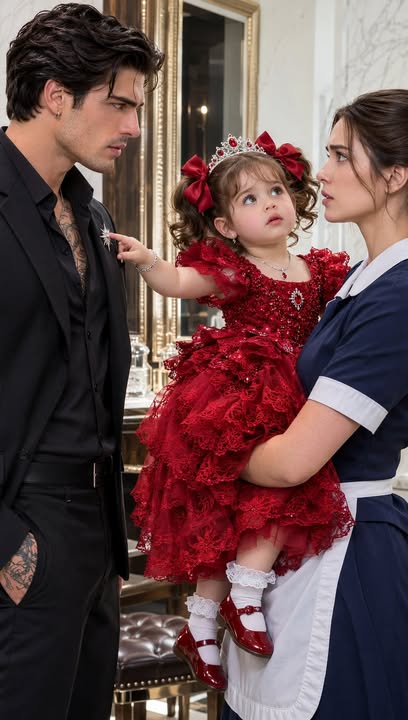
Part 3 – The Proof in the Ledger
“You should be careful, Nathan,” Victor said. “There are some questions that arrive long after the answers have stopped being simple.”
I held the phone away from my ear for a moment, listening to the quiet that followed.
“What does that mean?”
“It means you should consider what your daughter’s arrival could bring into your life.”
“My daughter’s arrival brought the truth into it.”
“I’m not questioning that.”
“You’re warning me.”
“I’m reminding you that your world has not become harmless just because you’ve found something worth protecting.”
The words might have sounded reasonable from anyone else.
From Victor, they felt like a door being gently shut.
“Come to the house,” I said.
“I’m already on my way.”
He arrived less than half an hour later, dressed in the same dark suit he wore to nearly every meeting, his silver hair combed neatly back.
He paused in the doorway of my office when he saw me standing beside the desk.
“You look as though you haven’t slept.”
“I haven’t.”
“Then this conversation can wait until you’ve had some rest.”
“No.”
Victor set his gloves on the desk.
“You found out Claire has a child,” he said, as if repeating it might make the facts easier to manage.
“I found out she has my child.”
“Yes.”
“You knew she came to the gate.”
“I remember a woman asking to speak with you.”
“You told me she left town without trying.”
“I said she left.”
“You also said she had made her choice.”
“She did leave.”
“After you spoke to her.”
Victor’s gaze did not waver, but his hand settled on the desk beside his gloves.
“I told her what I believed was best.”
“For whom?”
“For you.”
I stared at him.
“I never asked you to make that choice.”
“You didn’t have to. You were trying to hold together an organization that was already pulling at every seam.”
“And Claire?”
“She had made it clear she wanted you to change.”
“She wanted me to listen.”
“There was little difference at the time.”
I moved away from the desk, afraid that standing still would make my anger feel like permission to take over the room.
“You told her I wanted nothing to do with her.”
Victor’s expression changed, not quite into guilt and not quite into regret.
“I told her you had no intention of changing your life for her.”
“I never said that.”
“You didn’t have to say it.”
“You decided what I meant.”
“I was trying to keep you focused.”
“On what?”
“On surviving.”
The answer was so calm that I almost believed he had come to offer me a kindness.
Then I remembered Claire standing across from me, still holding the letter she had written when Ellie was born.
“I’m not asking you to explain my own choices to me,” I said. “I’m asking whether you told her I wanted no contact.”
Victor looked toward the windows.
For a moment, the room was filled with the small sounds of the house waking around us: a distant door closing, footsteps on the stairs, the low murmur of staff beginning their morning.
“I may have told her that contact would not be welcome,” he said.
“You may have?”
“I was trying to spare her a more painful answer.”
“You invented one.”
“I believed the answer was obvious.”
“It was not yours to give.”
His eyes met mine again.
“You were different then.”
“I was still the person who should have been asked.”
“I thought you would thank me for it.”
“I didn’t.”
“No,” he said quietly. “You didn’t.”
The admission surprised me, though it did not ease anything.
I sat behind the desk, suddenly tired enough to feel the weight of every year between that day and this one.
“Claire said you urged her to leave town.”
“I advised her that staying would make things harder.”
“For her?”
“For everyone.”
“Did you tell her I was leaving?”
“I don’t remember.”
“You don’t remember a woman coming to the gate to tell you she was pregnant?”
A tiny muscle moved in Victor’s cheek.
“She didn’t tell me that.”
“Claire said she did.”
“She might have implied something personal. She did not tell me she was pregnant.”
His denial was quick, almost practiced.
I watched him, but found no certainty in his expression, only the smooth patience of a man accustomed to being trusted.
“Why didn’t you tell me she came?”
“Because you had no way to help her without putting her in the middle of your life.”
“That was my decision.”
“I know.”
“You keep saying that as if it changes what you did.”
Victor picked up his gloves.
“You have a daughter now, Nathan. Your attention will be elsewhere. That is not a criticism. It is simply a fact.”
“You think I should be worried about Ellie?”
“I think you should understand that attention has consequences in our line of work.”
“My line of work.”
His eyes narrowed slightly.
“Your organization, your position, the people who rely on your decisions.”
“I’m not discussing the organization with you.”
“Then you should.”
“I’ll discuss it when I’m ready.”
He put the gloves back down.
“I hope you know what you’re doing.”
“So do I.”
Victor left without another word.
The door closed behind him, and the quiet he left felt different from the one before.
For years, I had trusted him to distinguish danger from inconvenience, loyalty from fear, the necessary from the merely easy.
Now, every memory I had of those years seemed to contain a question I had never thought to ask.
I found Claire in the breakfast room with Ellie sitting beside her, both of them bent over a plate of toast.
Ellie had a small smear of jam on one cheek.
When she saw me, she lifted her hand.
“Dada!”
Claire looked at her plate.
Then, after a beat, she looked at me.
“Good morning,” I said.
“Morning.”
I stopped beside the table.
“May I sit?”
Claire glanced toward the empty chair across from her.
“Ellie can decide.”
Ellie tapped the seat with her palm.
“Sit.”
I sat.
She pushed a piece of toast toward me with all the seriousness of a formal invitation.
“Breakfast.”
“Thank you.”
“Jam?”
“If your mother says it’s all right.”
Claire’s mouth softened a little.
“It’s fine.”
Ellie reached for the little dish and tried to scoop some jam with the blunt end of her spoon.
I picked up a clean knife.
“Would you like me to help?”
“Me do.”
“All right.”
She pressed the spoon into the jam, missed the toast, and deposited a bright red streak on the tablecloth.
Claire handed her a napkin without comment.
Ellie wiped at the mark, spread it wider, and sighed.
“Messy.”
“A little,” I agreed.
“Fix it.”
I passed her the napkin.
She wiped again, this time managing to collect most of the jam.
Then she held up the piece of toast.
“Dada help?”
I looked at Claire before I answered.
She gave a small nod.
I spread the jam carefully and handed the toast back.
Ellie took one bite, then offered the other half to me.
“Share.”
I accepted it.
The toast was cold, the jam far too sweet, and I could not remember the last time I had wanted to keep a meal from ending.
Claire watched us without speaking.
When Ellie turned her attention to a spoonful of yogurt, I lowered my voice.
“Victor came by.”
Her hand stopped above the table.
“What did he say?”
“He admitted he told you I wouldn’t welcome contact.”
Her eyes closed for a brief second.
“I wondered.”
“He said he thought it was best.”
“And you?”
“I told him it wasn’t his decision to make.”
“That’s true.”
“I believe you tried to reach me.”
The words sounded small.
Claire set her spoon down.
“Do you?”
“Yes.”
“Because you found a letter, or because you want to believe the story that makes this easier?”
“I don’t want an easy story.”
“Then you’ll understand why I’m cautious.”
“I do.”
She held my gaze for a long moment before looking down at Ellie.
“I never wanted you to distrust everyone around you,” she said. “I wanted you to trust me enough to hear me.”
“I should have.”
“I know.”
Her voice held no triumph.
That made the regret in it harder to bear.
I wanted to tell her what Victor had said about danger, but the words felt too much like another warning meant to push her away.
Instead, I asked, “How did you get the housekeeper job?”
“I applied through an agency.”
“Did you know it was my house?”
“I knew the agency had placed staff here before. I didn’t know you lived in it until I arrived for the interview.”
“You could have walked out.”
“I considered it.”
“Why didn’t you?”
“I needed work, and I wanted Ellie to have a stable place to live.” She glanced at her daughter, who had started stacking blueberries in a little row. “I also didn’t think I’d see you often.”
I remembered how rarely I had come into the staff corridors or asked what the people who kept my house running might be carrying home with them.
“I’m sorry you had to see me again under those circumstances.”
“I didn’t hate seeing you.”
The answer caught me off guard.
Claire’s eyes moved to mine.
“I hated what it brought back,” she added.
Ellie held up a blueberry.
“Look.”
“What is it?” I asked.
“Blue.”
“It is.”
She put it into her mouth, then held up another.
“Blue.”
“Still blue.”
Claire almost smiled.
For a moment, the past receded just far enough for us to sit together without it pressing against every word.
Then Ellie slid off her chair and tugged at Claire’s sleeve.
“Blocks.”
“After breakfast.”
“Now.”
“After breakfast,” Claire repeated, gentle but firm.
Ellie considered arguing, then leaned against her mother’s side.
I watched Claire brush a crumb from her daughter’s hair.
“Would it be all right if I spent some time with her after you’re done here?” I asked.
“Some time isn’t a plan.”
“An hour in the garden?”
“Not today.”
I kept my face still, though the answer stung.
“Why?”
“Because she woke up expecting me to have gone to work, and instead she has you at the breakfast table. That is already a great deal for one morning.”
“I can wait.”
“Then wait.”
She gathered Ellie’s plate, and the conversation ended with a quietness that made me understand how much patience she had spent simply letting me sit there.
I spent the rest of the morning in my office, but I did not manage to read a single report.
At noon, I found myself in the conservatory, watching Ellie kneel beside a row of potted herbs.
Claire was crouched beside her, showing her how to touch the leaves gently.
“Smell,” Ellie instructed when she saw me.
She reached for a sprig of mint, then held it out.
I leaned down and breathed in its sharp, clean scent.
“Good?”
“Very good.”
Claire glanced at me.
“Ellie likes to name everything she can smell.”
“What else has she named?”
“Bread is bread. Coffee is Mama’s. Soap is clean.”
Ellie pointed to a flowering plant.
“Flower.”
“That’s right,” Claire said.
“Does she like the garden?”
“She likes the birds and the little stones. She doesn’t like the fountain.”
“Too loud?”
“Too sudden.”
I stored the detail away, though I knew it was not mine to use like a list of instructions.
Ellie reached for a small pebble near the edge of the path.
Claire stopped her hand before she could put it in her mouth.
“Stones stay outside,” she reminded her.
Ellie looked at me.
“Stone.”
“Stone,” I agreed.
She placed it on the path and chose a different one, this time setting it carefully beside the herb pot.
It was a small, ordinary moment.
I found myself wanting more of them.
When Claire stood, I walked with her as Ellie wandered a few steps ahead, still naming everything she saw.
“She’s comfortable with you,” Claire said.
“She’s comfortable with people.”
“Not always.”
I looked at her.
“She seems to trust easily.”
“She trusts carefully,” Claire corrected. “She just hasn’t learned to hide it yet.”
I let the words settle.
“Did you tell her my name?”
“I told her your name was Nathan.”
“But she called me Dada.”
“She heard me say it when she was a baby. I was sorting some old things and found one of your photographs. She asked who you were. I told her you were her father.”
“And now she thinks that means I’m here to stay.”
“She’s two. She thinks most things are here to stay.”
I watched Ellie bend close to a pot of rosemary.
“Do you want her to call me Nathan?”
“For now.”
“I’ll tell her.”
“No need to make it a big conversation. Just let her be little.”
“I can do that.”
Claire’s expression softened, but only slightly.
“I want to believe you.”
“That’s enough for today.”
She looked at me, and something passed between us that neither of us named.
Before I could speak, a staff member appeared at the conservatory door and told me the office had received an old delivery ledger from storage.
The notice might have seemed unimportant to anyone else.
The ledger contained records from the year Claire had left.
I thanked him and told him to bring it to my office.
Claire watched me as the staff member disappeared.
“Is everything all right?”
“I don’t know yet.”
“Does it have to do with Victor?”
“Possibly.”
Her face grew guarded again.
“Don’t make this into another reason for keeping me away.”
“I won’t.”
“And don’t investigate me as though I’m the problem.”
“I’m not.”
“Then be careful where you point your questions.”
“I will.”
She nodded once, though she did not look reassured.
The ledger arrived in my office just after two.
It was a heavy, cloth-bound book with a faded label on its spine, the kind of record that had once been kept by the front desk before the house moved to electronic logs.
I opened it on the desk.
The pages were filled with dates, times, visitors, parcels, and the initials of whoever had accepted them.
I found the week Claire had first come to the gate.
At the bottom of a page, beside the date, was a line that made my hand go still.
One letter delivered to the residence.
Recipient: V. Hale.
A signature followed.
Claire’s.
I read it twice.
The ink had faded, but the name was clear.
The letter had reached the house.
I sat back, the old room suddenly feeling too close around me.
A moment later, Victor appeared at the open door.
“I was told you wanted the ledger.”
“I didn’t.”
He looked at the book.
“Ah.”
I turned it toward him.
“Do you remember this?”
He leaned over the desk, his eyes moving to the entry.
“Not particularly.”
“This receipt says Claire delivered a letter here.”
“She may have.”
“You told me no message ever arrived.”
“I told you I didn’t receive one.”
“You were the one who handled the records.”
“I handled a great many things.”
“Why was this entry written in your name?”
“Perhaps I accepted it.”
“Do you remember what you did with it?”
“No.”
I studied his face.
His answer was measured, his expression unchanged, but I noticed that he had not looked at me once since seeing the signature.
“You had it,” I said.
“Apparently.”
“Did you read it?”
“I don’t recall.”
“You told Claire that I wanted nothing to do with her.”
“I told you I don’t remember saying those exact words.”
“And now you don’t remember a letter delivered directly to you.”
“Would you prefer I invent a memory?”
“I’d prefer the truth.”
“I have given you what I remember.”
“You’ve given me what you’re willing to say.”
The accusation had come out more sharply than I intended.
Victor straightened.
“I understand that you’re upset.”
“This is not about my mood.”
“No. It’s about a woman you loved, and a child you didn’t know existed. That makes every uncertainty feel like proof.”
“Does it?”
“Yes.”
“Then tell me what happened to the letter.”
“I can’t.”
“Or won’t?”
His gaze held mine.
“I don’t know.”
That answer might have satisfied me yesterday.
It did not satisfy me now.
I slid the ledger closed.
“Find any other records from that week.”
“Nathan—”
“Every delivery log, every note, every message that came through the house.”
“You’re turning a missing memory into a case.”
“I’m looking for what I should have looked for three years ago.”
Victor’s face settled into an expression I knew well, the calm patience he used when he wanted me to reconsider a decision without openly challenging it.
“Be careful,” he said.
“You’ve already warned me.”
“Then I’ll say it plainly. You have a daughter. The safest thing for her may be to keep your attention away from the past.”
I stood.
“The safest thing for her is for me to understand how the past reached her mother.”
“Perhaps.”
“Do you think I’ll stop asking?”
“I think you’ll ask the wrong people.”
“Who should I ask?”
Victor did not answer.
The silence between us was no longer the silence of an old friend waiting for me to calm down.
It was the silence of a man deciding how much to reveal.
When he left, I returned to the ledger.
I called the retired house manager, who had worked in the mansion then, and asked whether any older records remained in storage.
After a moment, she told me there had been a small packet of correspondence kept with the visitor logs before the records were reorganized.
She could not say what was in it.
She only remembered that Victor had asked her to hold it aside.
The packet, she said, might still be in the locked file cabinet beneath the old reception desk.
It took me nearly an hour to find the correct key.
The cabinet smelled of dust and furniture polish, and the packet was tucked behind a stack of maintenance invoices.
There were three folded papers inside.
One was a routine note from a supplier.
Another was a list of appointments.
The third was a card bearing Claire’s name.
My pulse sounded loudly in my ears as I unfolded it.
The message was brief.
I am leaving town.
Please tell Nathan I tried to see him.
I cannot stay where I am not wanted.
There was no signature beneath the words.
Only a date, written in the lower corner, the same date Claire had come to the gate.
On the back was Victor’s neat notation: Delivered to residence. No response required.
I sat down with the card in my hand.
Claire had not left without trying.
She had tried once in person, and again in writing.
Someone had received her words, reduced them to a few lines, and kept the original from me.
I was still staring at the card when Claire appeared in the doorway.
She had come looking for Ellie, who had been with Mrs. Alvarez in the kitchen.
Her gaze moved from my face to the paper.
“What is it?”
I stood.
“I found a note.”
She took a step closer, but did not reach for it.
“From me?”
“It has your name on it.”
“May I see?”
I held it out.
She read the message silently.
The color drained from her face.
“I didn’t write this.”
I looked at the date again.
“You didn’t?”
“No.” She passed the card back, her fingers unsteady. “I wrote something like it. I remember writing, ‘Please tell Nathan I tried to see him.’ But I never said I was leaving town, and I never wrote that you didn’t want me.”
Her words seemed to tilt the room.
“You’re sure?”
“I’m sure.” She examined the handwriting. “That isn’t mine.”
I thought of Victor’s note in the ledger, written in his careful hand.
Delivered to residence. No response required.
“Someone changed it.”
“Or someone wrote it for me.”
The possibility remained between us, plain and terrible without being loud.
Claire rubbed her arms as though the room had suddenly gone cold.
“I thought I had sent the truth,” she said. “I thought you’d read that I tried.”
“I never saw it.”
“I know.”
“Claire, the note says you were leaving.”
“I wasn’t leaving then.”
“Did you leave the town soon after?”
“No. I stayed in a rented room outside the city for a few months, but I didn’t go far. I thought you might contact me.”
“I never knew where to find you.”
“I know.”
The old wound opened in her face, but this time there was something else inside it: the shock of discovering that her memory had not been wrong, only incomplete.
“I thought you read those words and let me go,” she whispered.
“I thought you left without ever trying.”
Neither of us spoke.
From the kitchen came the faint clatter of a spoon, followed by Ellie’s voice announcing that she had finished her yogurt.
Claire folded her hands around herself.
“I have to get her.”
“I’ll come with you.”
She looked at me.
“Not yet.”
I stopped.
“I’m sorry.”
“You keep saying that.”
“I don’t know what else to say.”
“Neither do I.”
She walked toward the kitchen, leaving me alone with the note.
I read it again, searching for a mark, a clue, anything that might tell me who had chosen those words.
The door opened behind me.
Victor stood there, his expression composed.
“Have you found the packet?” he asked.
“Yes.”
His gaze dropped to the card in my hand.
“I see.”
“Do you recognize it?”
“I recognize the handwriting.”
“It isn’t Claire’s.”
“No,” Victor said after a pause. “It isn’t.”
“Whose is it?”
He remained silent.
I looked at the date, then at the note on the ledger bearing his initials.
“Victor.”
He met my eyes at last.
“I wrote it,” he said.
The admission arrived quietly, without the drama I had expected.
It left the room colder all the same.
“Why?” I asked.
Victor’s gaze shifted to the door Claire had just gone through.
“Because I believed it was better for both of you.”
“You told me she left.”
“She did.”
“You told her I wanted her gone.”
“I told her you would not change.”
“That wasn’t the question.”
“No,” he said. “It wasn’t.”
“Did you intercept her letter too?”
He looked down at the folded card.
“I don’t know what letter you mean.”
I held his gaze, trying to see whether that answer was another careful lie or the first honest uncertainty he had offered me.
Then, from the hall, Ellie called, “Dada?”
Claire’s footsteps followed, quick and worried.
I turned toward the sound.
Behind me, Victor said my name, but I did not look back.
For the first time, I understood that finding the truth might not tell me how much of it was still missing.
**–END OF PART 3–CLICK “NEXT” AT THE BOTTOM OF THE PAGE TO CONTINUE READING**
* * *
[PREVIOUS: PART 2](https://echoesofstories.idolsgift.com/blog/part-2-the-letter-she-never-sent-041) | [NEXT: PART 4](https://echoesofstories.idolsgift.com/blog/part-4-the-letter-she-never-sent-041)
✓ Lynn R. Adams
Part 3 – The Proof in the Ledger “You should be careful, Nathan,” Victor said. “There are some questions that arrive long after the answers have stopped being simple.” I held the phone away from my …