PART 3: The Girl He Thought the Fire Had Taken 052
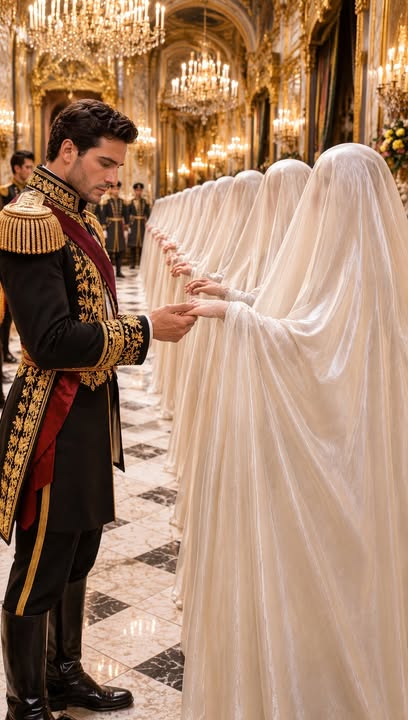
Part 3 – The Name Beneath the Ashes
For a moment, no one moved.
The small scrap lay open in Lena’s hands, its words dark against the browned paper.
Nurse Vale to convey the child beyond the east gate before dawn.
Alexander read the sentence again, hoping the missing lines might appear if he looked hard enough.
“Could it have been written before the fire?” Michael asked.
The chief archivist shook her head.
“The ink and paper are consistent with the other household entries from that year, but the fragment alone cannot tell us when the instruction was made.”
“Nor who wrote it,” Lena said.
“No,” the archivist replied. “There is no signature.”
Alexander could still hear the baby’s cry from the edge of his memory.
It was faint, almost swallowed by the fire, but it had returned with a clarity that made his chest feel tight.
“Was there a child in the household who might have been taken beyond the gate?” he asked.
The archivist looked toward the ledger.
“Not according to the surviving records.”
“Then the records may be incomplete.”
“That is possible,” she said. “But we should be careful not to treat a possibility as proof.”
Lena folded the fragment along its old crease.
“My mother kept something like this.”
“Something like this?” Alexander asked.
“A charred piece of a household ledger.”
“Why didn’t you bring it today?”
“I wasn’t ready to put it in the palace’s hands before I knew what I would find here.”
“That is fair.”
Her gaze softened, though only briefly.
The archivist returned the surviving ledger to its case.
“I can arrange for a secure examination of the documents tomorrow,” she said. “If you bring your mother’s fragment, I will compare the writing and paper.”
“I’ll bring it,” Lena replied.
“Could you also bring the letter she left you?”
Lena hesitated.
“If it helps establish when she first learned about the record, yes.”
The archivist nodded.
“I’ll make no copies without your permission.”
“Thank you.”
As the archivist carried the case toward the door, Alexander noticed Michael had not moved.
The adviser’s attention remained fixed on the fragment in Lena’s hand.
“Michael,” Alexander said, “you recognized the name in that note.”
“I recognized the wording.”
“What does it mean?”
“I don’t know.”
“You seem to know more than you are saying.”
“I know there were orders to preserve certain household records after the fire. I don’t know what this note refers to.”
“Was the east gate used that night?”
Michael’s expression shifted, not quite into surprise and not quite into alarm.
“It was one of the service gates.”
“Could it have been opened?”
“Yes.”
“Was it?”
“I don’t know.”
Alexander studied him.
“Again, that isn’t an answer.”
“It is the only honest one I have.”
The words were calm, but Michael’s hands were clasped so tightly that his knuckles had paled.
Lena noticed too.
“Did you see my mother after the fire?” she asked.
“I saw her in the weeks that followed.”
“Did she tell you she was leaving?”
“No.”
“Did she tell you she had taken someone with her?”
“No.”
“Did you ask?”
Michael’s gaze dropped.
“I should have.”
The admission unsettled Alexander more than another polished explanation would have.
Michael had always seemed certain of his duties, even when those duties required difficult choices.
Now he looked like a man discovering the limits of the explanations he had used to live with his silence.
The chief archivist paused at the doorway.
“There is one more thing,” she said. “The inventory for the country-house box records a second ledger that is not here.”
“Where was it sent?” Alexander asked.
“It was listed as transferred to the central household archive. The entry is dated six days after the fire.”
“Can you find it?”
“I’ll search the transfer records.”
“If it was sent to the archive, someone must have logged its arrival.”
“Unless the entry was altered,” Lena said.
The archivist met her eyes.
“Unless.”
She left with the case.
The door closed softly behind her.
Alexander looked at Lena.
“Tomorrow, then.”
“Tomorrow.”
“I’ll have the archive opened for you.”
“I would rather meet the archivist there than have the documents brought to my rooms.”
“Of course.”
“And I want to be present when the ledger is examined.”
“You will be.”
She gave a small nod, as if recording the promise rather than accepting it.
Michael moved toward the desk and began gathering the loose papers.
“Your Highness, the household council is expecting you.”
“Tell them I’ll be late.”
“They have been waiting since noon.”
“Then they have waited long enough to learn patience.”
A faint crease appeared between Michael’s brows.
“This matter could become more complicated than it appears.”
“It already has.”
“That is why I’m asking you to proceed carefully.”
Alexander glanced at Lena.
“Carefully does not mean quietly.”
“I understand,” Michael said.
“But do you agree?”
Michael did not answer at once.
“I agree that the truth matters,” he said finally. “I also know that a fragment can become a story in people’s minds before anyone has established what it means.”
“Then we will establish what it means.”
Lena slipped the fragment into a small envelope the archivist had left on the desk.
“I should go,” she said.
Alexander felt the words as a door closing, though he knew she had not promised to stay.
“I can arrange a carriage.”
“I came with my own.”
“Then I’ll walk you to it.”
“You don’t need to.”
“I know.”
She studied him, perhaps looking for the prince’s insistence beneath the offer.
Finding none, she inclined her head.
“Thank you.”
They crossed the quiet corridor together, with Michael several paces behind them.
The palace seemed different now, though the portraits and marble had not changed.
Alexander had walked these halls all his life without wondering how many things had been hidden in plain sight.
At the entrance, Lena paused beneath a portrait of his mother.
Princess Margaret looked young in the painted image, her expression composed and her hands folded over a closed book.
Lena’s eyes rested on the portrait for a long moment.
“Did you know her?” Alexander asked.
“Only from a distance.”
“She used to bring books to the country house herself.”
Lena looked at him.
“You remember that?”
“I remember a woman carrying a stack of stories through the garden while the household staff tried to persuade her that it wasn’t her responsibility.”
A small smile touched Lena’s face.
“She sounds kind.”
“She was.”
He wondered what his mother had known about the fire, the missing ledger, or the child in the note.
He wondered whether the locked study had held answers he had never been allowed to see.
Lena turned away from the portrait.
“I’ll bring the letter and ledger piece tomorrow.”
“I’ll be there.”
“You don’t have to attend every step.”
“I want to understand what happened.”
“That is different from wanting to be there because you think I need you.”
“I know.”
She watched him for a breath longer.
“I hope you do.”
Outside, the late afternoon air was cool, and the palace gardens smelled of damp earth and clipped hedges.
A plain dark carriage waited beyond the steps.
Lena walked to it without looking back until she reached the door.
“Alexander,” she said.
“Yes?”
“If we find something painful, I need you to let me decide what to do with it.”
He accepted the condition without hesitation.
“Of course.”
“I am not a piece of your family history to be recovered and placed where it belongs.”
“No,” he said. “You’re Lena.”
She seemed to search his face for some sign that he meant it.
Then she stepped into the carriage.
As it rolled away, Alexander remained on the steps until it passed through the outer gates.
Michael stood behind him.
“Do you remember what happened after the fire?” Alexander asked.
“Some of it.”
“Did you hear a child crying?”
Michael’s face grew still.
“I remember that there was a great deal of confusion.”
“That is not what I asked.”
“I remember hearing people call for blankets and water.”
“Michael.”
The adviser let out a slow breath.
“I may have heard a baby.”
Alexander turned to him.
“You may have?”
“It was a long time ago. I was young, and the house was full of noise.”
“Was there a baby in the family?”
“Not that I knew of.”
“My mother was alive. My father was alive. I was there. Who else could it have been?”
“I don’t know.”
The answer sat between them, heavier than the fragment.
Alexander looked again at the palace gates.
“Did my uncle ever speak of a child?”
“No.”
“Did he tell you to seal the records?”
“He instructed me to make sure the archive was restricted.”
“Why?”
“He said the fire had already caused enough distress and that old rumors should not be allowed to grow.”
“Did you ask what rumors?”
“I did not.”
“Why not?”
Michael’s gaze met his.
“Because I was afraid of losing my position.”
It was the first time Michael had given him an answer without dressing it in duty.
Alexander felt anger rise, but beneath it was disappointment, and beneath that an unexpected understanding of how ordinary fear could become a habit.
“You could have told me,” he said.
“Yes.”
“You could have told me when I turned eighteen, or twenty-five, or any time after that.”
“Yes.”
“Why didn’t you?”
“Because every year that passed made it harder to admit that I had chosen silence.”
Alexander looked away.
“That does not make it better.”
“No,” Michael said. “It does not.”
They returned to the palace without speaking.
That evening, Alexander left the council meeting early and went to the small library adjoining his private study.
He found himself searching for a photograph of the country house before the fire, though he could not have said what he expected to learn from it.
A landscape album showed the pale stone building in summer, its ivy-covered walls bright beneath a cloudless sky.
There were photographs of his parents on the terrace, of servants gathered near the garden steps, and of Alexander as a boy standing beside a young girl with a book clutched to her chest.
Lena.
He touched the edge of the photograph.
She looked a little younger than he remembered, but the mischievous confidence in her eyes was unmistakable.
He had forgotten how often she had been there.
He had also forgotten that the family photographs stopped several months before the fire.
The next morning, Lena arrived at the palace archive carrying a small wooden box.
The chief archivist had cleared a reading table beneath the tall north-facing windows.
Alexander was already there, along with Michael.
“You came,” Lena said.
“I promised.”
She set the box on the table and opened it.
Inside lay a folded letter, a scrap of paper blackened along one edge, and a small envelope tied with blue thread.
Lena lifted the letter first.
“My mother wrote this shortly before she died,” she said. “She wanted me to read it after I was old enough to ask questions without letting the answers decide who I was.”
“What did it say?” Alexander asked.
“I haven’t shown it to anyone.”
She unfolded the paper.
Her mother’s handwriting was careful, though the lines wavered in places.
Lena read silently for several moments before beginning.
“My dear Lena, if you have opened this, you have reached the age when you may choose what to know and what to leave alone.”
Her voice faltered, then steadied.
“I loved you from the moment you were placed in my arms, but love is not the same as certainty, and I will not pretend that I know every part of your beginning.”
Lena paused.
Alexander leaned forward, but did not interrupt.
“On the night of the fire, I found you in the west corridor. You were frightened, but unhurt. I carried you out and kept you with me while the household was in confusion.”
Lena lowered the letter.
“That part I knew.”
“Does she say who you were before she took you in?” Alexander asked.
“No.”
She continued.
“In the days afterward, I was told to leave my position and take you with me. I was given no explanation. I did not ask for one, because I feared that asking would cost me the only life I could offer you.”
Lena’s fingers tightened around the paper.
“I have never regretted choosing you,” she read. “But I regret that fear made me keep every question to myself.”
She stopped.
For a moment, she could not continue.
Alexander’s hand moved as if he meant to reach across the table, but he stopped before touching hers.
Lena looked up and saw the gesture.
“Thank you,” she said quietly.
He withdrew his hand.
She read the final lines.
“If the palace records ever come into your hands, remember that a record can preserve the truth, but it can also preserve the fear of the person who wrote it. You are not required to become what anyone else believes you are.”
The archive was silent.
Lena folded the letter again.
“She loved you,” Alexander said.
“Yes.”
“She wanted you to choose what to learn.”
“That is why I waited.”
The chief archivist moved closer.
“May I examine the ledger fragment?”
Lena passed over the charred scrap.
The archivist placed it beside the surviving ledger, then brought out a magnifying glass and a small ruler.
She studied the paper’s fibers, the ink, and the edges where the fragment had burned.
“This is from a household ledger,” she said. “The ruling and paper stock match the kind used for staff and movement records.”
“Can you tell when it was written?” Michael asked.
“Not precisely, but the ink appears consistent with the period.”
“What does it say?” Alexander asked.
The archivist adjusted the lamp.
“Only a few words remain. ‘Second child,’ perhaps. And here, ‘east gate.’”
Lena leaned closer.
“Can you read the line below?”
“Not without risking the paper.”
The archivist examined the edges.
“There is a fold through the writing. The missing section may have been torn away before the fire reached it.”
“Could it match the ledger we found yesterday?” Lena asked.
“Possibly.”
The archivist placed the two papers side by side.
The surviving ledger fragment had a small notch along one edge.
The charred piece had a corresponding torn shape.
She brought them together with careful fingers.
The edges met.
A thin, uneven line of paper joined the two pieces.
The room seemed to contract around the table.
“They were once part of the same page,” the archivist said.
Lena stared at the joined fragments.
“Can you read it now?”
“Some of it.”
The archivist bent over the paper.
“‘Nurse Vale to convey the child beyond the east gate before dawn.’ The next line may read, ‘second child—’”
Her voice faded.
“Second child what?” Alexander asked.
“I can’t tell.”
“Is there a name?”
“Not on these pieces.”
Lena’s face had lost its color, but her voice remained even.
“My mother never told me she carried another child.”
“Perhaps she didn’t,” Michael said.
The words sounded like an attempt to soothe her, but Lena turned toward him.
“Or perhaps she did and had to keep it secret.”
Michael lowered his eyes.
The archivist examined the joined paper once more.
“I will need to compare the handwriting with the other records.”
“Can you do that now?” Alexander asked.
“I can begin.”
She turned to the original ledger, locating the entries around the week of the fire.
The pages listed staff arrivals, supply deliveries, room assignments, and household expenses.
There were repeated references to the west wing and the servants’ quarters, but the writing grew faint near the end of the month.
The archivist traced a finger down the page.
“Here is Evelyn Vale’s name.”
Lena leaned closer.
The entry recorded her arrival at the country house three months before the fire.
Beneath it, another name had been crossed out so heavily that the ink had eaten into the paper.
“Can you make it out?” Alexander asked.
“Not without specialized imaging.”
“Why was it crossed out?”
“I can’t know.”
The archivist turned another page.
A second entry appeared, written in a different hand.
“Evelyn Vale and dependent,” Lena read.
Her breathing changed.
“What does ‘dependent’ mean?” Alexander asked.
“It could mean a child or another family member,” the archivist replied.
“Does it name the dependent?”
“No.”
“Was the entry made before or after the fire?”
“The ink appears to be from the same period, but I can’t tell whether it was added later.”
Michael stood very still.
Lena noticed.
“You knew about this entry?”
“No.”
“Then why do you look as if you did?”
“I recognize the hand.”
The archivist looked up.
“Whose?”
Michael hesitated.
“It may be your uncle’s.”
Alexander’s eyes narrowed.
“You said you did not know who altered the report.”
“I don’t know who altered it. I recognize the style of the notation.”
“Can you be certain?”
“No.”
“Michael, you told me you helped keep the records sealed.”
“I did.”
“Did you ever see this ledger?”
“I saw an inventory, not the ledger itself.”
“Why would my uncle’s handwriting be in a household book?”
“He supervised the household during your parents’ absences. He signed many records.”
The explanation was plausible.
It did not make the sight of the crossed-out name any easier to bear.
Lena looked back at the page.
“If the name can be recovered, I want to know.”
“We can request imaging,” the archivist said. “It may take a day or two.”
“Do it.”
The archivist wrote the request in her notebook.
Alexander watched Lena’s expression.
She had come to the palace seeking an answer about the fire, but each discovery seemed to open a larger question.
He wanted to offer reassurance, yet any certainty he could give would be false.
“I’m sorry,” he said.
“For what now?”
“For how much of this has been left to you to carry.”
“I wasn’t alone.”
“Your mother protected you.”
“She did.”
“And she gave you room to decide.”
Lena closed the wooden box around the letter.
“She did that better than anyone.”
The archivist began arranging the papers for secure storage.
As she lifted the original report, Michael reached to help.
The archivist paused.
“Wait,” Lena said.
At the bottom of the report, a small attachment had been folded inward and concealed beneath the binding.
It was not the missing page from the ledger.
It was a narrow strip of paper bearing a date and a string of initials.
The archivist unfolded it.
Her eyes moved over the marks.
“What is it?” Alexander asked.
“I believe this is a transfer notation.”
“Can you read it?”
“The first line says that a household register was moved to the central archive six days after the fire.”
“That is the missing ledger,” Alexander said.
“Possibly.”
The second line was faint, but the archivist tilted it toward the light.
“It also says the register was received and catalogued.”
“By whom?” Lena asked.
The archivist read the initials.
Then she went completely still.
Michael looked at the strip.
His face changed.
“Those are mine,” he whispered.
**–END OF PART 3–CLICK “NEXT” AT THE BOTTOM OF THE PAGE TO CONTINUE READING**
* * *
[PREVIOUS: PART 2](https://storyly.idolsgift.com/blog/part-2-the-girl-he-thought-the-fire-had-taken-052) | [NEXT: PART 4](https://storyly.idolsgift.com/blog/part-4-the-girl-he-thought-the-fire-had-taken-052)
✓ Lynn R. Adams
Part 3 – The Name Beneath the Ashes For a moment, no one moved. The small scrap lay open in Lena’s hands, its words dark against the browned paper. Nurse Vale to convey the child beyond the east ga…