PART 3: The Fourth Heartbeat5 025
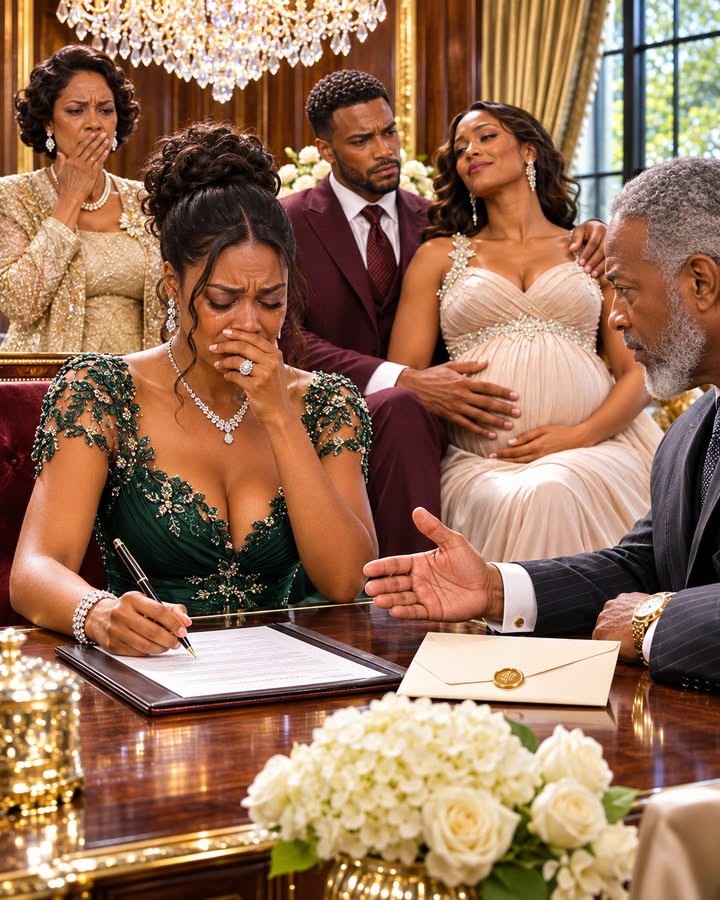
Part 3 – The Signature in the File
The file opened to a scanned authorization form, and beneath Richard’s name was a line I recognized immediately.
Julian’s signature.
For several seconds, I could only stare at it.
The familiar slant of his handwriting looked exactly as it did on birthday cards, grocery lists, and the stack of divorce papers we had signed together days earlier.
I enlarged the image until the letters blurred.
There was no mistaking the name.
Rachel found me at the kitchen table, pale and motionless, the phone held in both hands.
“What is it?” she asked.
I turned the screen toward her.
She read the form without speaking, then drew a chair beside mine.
“Is that his signature?”
“Yes.”
“Do you know when he signed it?”
The date sat just above the signature line.
It was from the same week the clinic had canceled my consultation.
I felt the room shift—not as it had when the technician found the fourth heartbeat, but in a quieter, more intimate way.
This time, the ground seemed to move beneath everything I thought I understood about my marriage.
“He told me he had to work,” I said.
Rachel kept her voice gentle.
“Maybe he signed a different form.”
“It says right here that he agreed Richard could receive information about my treatment.”
I scrolled down, searching for more.
The scan was grainy, but the wording was clear enough.
The authorization gave Richard permission to discuss scheduling and administrative matters with clinic staff.
It did not grant him access to every private medical detail, but it was enough to make his involvement official.
“He told me his father barely knew when we had appointments,” I said.
“Maybe Julian thought this was just about logistics.”
“Then why didn’t he tell me?”
Rachel did not answer.
I appreciated that she did not try to supply a comforting explanation just because the silence hurt.
I downloaded the form and saved a copy in two places.
Then I took screenshots of the email, the appointment cancellation, and the authorization update.
The clinic coordinator had asked me to preserve everything, and now I understood why.
A signature could raise questions.
It could not yet answer them.
I called the clinic again and asked whether I could speak with the coordinator assigned to my file.
She was unavailable, but a staff member confirmed that the review had begun.
When I told her I had found a signed authorization attached to an old cancellation, she asked me to email the document securely.
I did.
“Will someone be able to tell me what this allowed him to do?” I asked.
“The coordinator can explain more once she has reviewed the file,” the staff member replied. “For now, the form appears to relate to administrative communication.”
“Did Julian cancel the appointment?”
“I can see that the cancellation was submitted under his account.”
“But was it his request?”
“I’m sorry, Ms. Whitmore. We’ll need to verify the activity log before we can say more.”
The carefulness in her voice was understandable.
It also left me alone with the signature.
After the call, I set the phone down and pressed my palms against the cool surface of the table.
Rachel filled the kettle without asking if I wanted tea.
When she returned, she sat across from me.
“What do you want to do?” she asked.
“I want to ask Julian.”
“Do you want to do that today?”
“I don’t know.”
“Then we can wait until you do.”
I looked again at the form.
“I thought the hardest part was finding out he’d been with Vanessa.”
Rachel’s face softened.
“Sometimes the next truth doesn’t replace the first one.”
That afternoon, Julian texted to ask whether I had heard from the clinic about my records.
He had mentioned the clinic only once before, in a message wishing me luck at my appointment.
I read his question several times before replying.
I found an old authorization form with your signature on it.
His response did not come immediately.
When it did, he wrote, What form?
I sent him a screenshot.
The typing indicator appeared, vanished, and appeared again.
Finally, he wrote, I remember signing something at Dad’s office, but I didn’t know it was an authorization for your file.
I read the message twice.
Why were you at his office signing anything related to my treatment?
A pause stretched so long I put the phone down.
Then it buzzed.
Dad said the clinic needed a contact for scheduling because I was traveling so much.
I stared at the words, feeling heat rise into my face.
You could have asked me.
You’re right.
The admission came too easily to soothe me.
I typed, Did you cancel my appointment?
The reply took longer this time.
I canceled one appointment because I thought we should pause treatment.
I sat very still.
The kitchen seemed suddenly too quiet.
You told me you couldn’t make it because of work.
I know.
I want to explain, but not over text.
I looked at Rachel, who had gone still across from me.
“He says he canceled it,” I whispered.
Rachel set down her mug.
“Do you want to talk to him?”
I wanted to say no.
I wanted to tell myself that another conversation could only make things worse.
But the signature had put a question in my mind that I could not ignore.
“Not alone,” I said.
“Then you won’t be.”
I asked Julian to meet me at the clinic the next morning, before the coordinator’s scheduled call.
He agreed.
Rachel offered to come, but I told her I needed her nearby, not in the room.
She promised to wait in the lobby.
That night I slept in short, uneasy stretches.
I kept remembering the appointments Julian had missed and the promises he had made to attend the next one.
I remembered the way he used to rest his forehead against mine after another negative test and say we would keep trying, as long as I wanted to.
I had believed him.
In the morning, he was waiting outside the clinic when Rachel and I arrived.
He looked tired, his dark coat buttoned to the throat, his hands buried in his pockets.
For a moment, he and I simply looked at each other.
His eyes moved to my stomach, then back to my face.
He did not reach for me.
“Thank you for coming,” he said.
“I’m not here to make this easier for you.”
“I know.”
Rachel touched my elbow.
“I’ll be in the lobby.”
I nodded, then followed Julian into a small consultation room the clinic had made available while the coordinator reviewed my file.
The room was plain, with two chairs and a narrow window looking onto the parking lot.
Julian chose the chair farthest from me.
I noticed that.
It was the first thoughtful thing he had done in a long time, and it hurt because I could not tell whether it came from care or caution.
I placed a copy of the authorization on the table between us.
“Tell me why you signed this.”
He looked down at the page.
“My father said it was an administrative form,” he replied. “He told me the clinic wanted someone to coordinate appointments while I was traveling.”
“Why would he be coordinating my appointments?”
“I thought he was helping.”
“You didn’t ask me.”
“No.”
“You didn’t tell me you signed it.”
“No.”
His answers were quiet and direct.
They did not make the facts easier to bear.
“What did you believe you were signing?”
“A form allowing him to speak with the clinic about scheduling. I don’t remember the exact wording.”
“And the canceled appointment?”
He took a breath.
“I canceled it.”
The simple admission settled between us.
I folded my hands together, trying to keep them still.
“Why?”
“Because I thought we should stop treatment for a while.”
“You thought that, so you canceled my appointment without telling me?”
“I thought I was making a decision about us.”
“You made a decision about my body without asking me.”
His expression tightened.
“You’re right.”
I had expected him to defend himself.
Some part of me had prepared for him to insist that he had been stressed or that his father had been concerned or that I was misreading the form.
His willingness to agree did not lessen the betrayal.
It made it impossible to dismiss.
“Why did you want to stop?” I asked.
He looked toward the window.
“Dad had been putting pressure on me for months.”
“To have a child?”
“To stop trying so hard. He said the treatments were taking over our lives and that we needed to accept it might not happen.”
I felt a bitter laugh rise and swallowed it.
“Your father offered me twelve million dollars to leave you.”
“I know.”
“He told me Vanessa was carrying the sons you needed.”
Julian closed his eyes briefly.
“I know.”
“Did you know he had arranged for that authorization?”
“I knew he had a form for me to sign. I didn’t understand he was being added to your file without your permission.”
“Why did you sign it?”
“Because I was exhausted, and I trusted him.”
The answer was honest enough to wound.
I looked at him carefully.
“You trusted your father more than you trusted me.”
“I didn’t think of it that way then.”
“But you do now?”
“Yes.”
The air between us felt too thin.
He rubbed his hands together, then stopped, as though he had caught himself trying to steady his nerves instead of facing mine.
“I should have told you I wanted a pause,” he said. “I should have listened to what you wanted. And I should never have let my father make decisions around your treatment.”
“What about Vanessa?”
His face changed.
“I won’t make excuses for that.”
“Good.”
“I had an affair. I lied to you. None of this paperwork changes that.”
The words sounded rehearsed, but his face did not.
He looked tired in a way I had never seen before, as if the life he had built around avoiding difficult truths had finally become too heavy to carry.
“I’m sorry,” he said.
I lowered my eyes to the form.
“Sorry doesn’t tell me what happened.”
“I know.”
“Did your father tell you to cancel the appointment?”
“No. He told me we should stop trying. I made the decision to cancel it.”
“Did he tell you Vanessa was pregnant?”
“No.”
“Did he know?”
“I don’t know when he found out.”
I studied his face, searching for any sign that he was carefully separating what he knew from what he wished he had known.
There was grief there.
There was shame.
There was also a stubbornness I remembered from the first years of our marriage, when he would insist he could fix everything if only I gave him time.
“I’m not asking you to forgive me,” he said. “I know I don’t deserve that.”
“I’m not deciding anything about forgiveness today.”
“I understand.”
“You need to understand something else, too. The babies are not a reason to come back into my life as if nothing happened.”
“I know.”
“I don’t know yet what kind of father you’ll be.”
“I want to be present, if you’ll let me.”
“That’s not a decision I can make for you.”
“I know.”
He had become very good at saying the right thing.
I hated that I still wanted to believe him.
A knock came at the door.
The clinic coordinator had arrived.
She introduced herself, then explained that she had reviewed the appointment and authorization records.
The form appeared to have been submitted through the patient portal using Julian’s account, though the audit log showed an additional contact from Richard’s office afterward.
She could not yet say whether that contact had changed anything.
“We’re treating the record as a formal concern,” she said. “We’ll need to review the access logs, the original authorization, and any staff communications connected to the appointment.”
“Can you tell me what the cancellation meant?” I asked.
“At this stage, I can confirm the appointment was canceled by a user with authorization to access the scheduling portal,” she replied. “I can’t say whether any treatment was affected until the full review is complete.”
Julian leaned forward.
“Was anything taken from Evelyn’s file?”
The coordinator chose her words carefully.
“I can’t answer that yet. The review will determine what documents were accessed or changed.”
I looked at the form again.
“So the clinic doesn’t know whether my treatment was altered?”
“We don’t know yet,” she said. “That’s why the review matters.”
I felt Julian turn toward me.
I did not look back.
The coordinator gave me a case number and explained that I could restrict future access to my records immediately.
I asked her to remove Richard’s authorization and to require my personal confirmation for any future changes.
She made a note and said the request would take effect that day.
When the meeting ended, Julian stood, but he did not move toward me.
“I’m sorry,” he said again.
I gathered my papers.
“I need to hear from the clinic before I know what questions to ask next.”
“I’ll cooperate with whatever they need.”
“I’m not asking you to take responsibility away from yourself by helping.”
“I understand.”
Outside the room, Rachel was waiting.
She read my expression before she asked anything.
“He signed it,” I told her.
“And he canceled the appointment?”
“Yes.”
She did not speak for a moment.
“What did he say?”
“That he thought we should pause treatment. His father had pressured him, but Julian says the decision was his.”
Rachel’s mouth tightened.
“Do you believe him?”
“I believe he canceled it.”
“That isn’t the same question.”
“I don’t know what I believe.”
She placed a hand on my back as we walked through the lobby.
I leaned into the touch, exhausted by how much it steadied me.
Julian remained near the consultation room door.
He looked as though he wanted to follow.
I was grateful when he didn’t.
Two days later, Vanessa called.
Her name appearing on my screen was so unexpected that I let it ring until the call ended.
Then she sent a message.
I know you may not want to speak to me. There’s something I think you should hear directly from me.
I showed the message to Rachel.
“Do you want to meet her?” she asked.
“No.”
“Do you want to know what she has to say?”
I looked down at the phone.
“Yes.”
Vanessa suggested a quiet café near the hospital, away from the Whitmore offices.
I agreed, but asked Rachel to come with me.
When Vanessa arrived, she was alone.
She wore a dark sweater instead of the tailored clothes I remembered from the divorce meeting.
Without the sharp blue dress and her careful posture, she looked younger and more tired.
She stopped beside the table.
“Thank you for coming,” she said.
“I came because you said there was something I should hear.”
Vanessa glanced at Rachel, then back at me.
“I’ll say it plainly.”
She sat down but did not reach for the menu.
“I’m expecting triplets,” she said. “The doctors confirmed it yesterday.”
“I know what Richard told us.”
“I don’t think he told you the whole story.”
Rachel’s shoulders stiffened.
“What does that mean?” I asked.
Vanessa looked toward the window.
“I never expected this to become a family arrangement.”
The phrase landed oddly.
“What arrangement?”
“I thought Julian and I were having an affair. I knew it was wrong. I knew what I was doing to you, even if I kept telling myself I wasn’t responsible for the choices he made.”
She pressed her hands together on the table.
“When I found out I was pregnant, Richard told me that I would have his family’s support. He said the babies were important to them, and that he could make sure I was taken care of.”
“You accepted.”
“Yes.”
She met my eyes.
“I won’t pretend I didn’t. I was frightened, and I believed what he promised.”
“What did he promise you?”
“Financial security. A place to live. Help with the babies. He spoke as if everything had already been decided.”
“And Julian?”
“He didn’t know what Richard had promised me.”
“Did you tell him?”
“Not at first. Then I tried to. He was angry with me for the affair, and we barely spoke after he told his family.”
She hesitated.
“I didn’t think Richard would bring me to your divorce meeting.”
“Yet you came.”
“He said it would make the situation clear. He said it would be less painful if everyone understood the future.”
A coldness settled inside me.
“Less painful for whom?”
Vanessa looked down.
“I don’t know.”
The silence between us held more than an apology could repair.
“I am sorry,” she said at last. “Not because I want you to think well of me. I know I hurt you. I’m sorry because you deserved the truth, and I helped keep it from you.”
I wanted to reject the apology.
I wanted to tell her that regret had arrived too late to matter.
Instead, I saw the strain in her face, the way her hand rested near her stomach without quite touching it.
She looked afraid, not triumphant.
That did not make her innocent.
It made her human in a way I had not allowed myself to consider.
“Why are you telling me now?” I asked.
“Because I found something in my own records.”
She opened her bag and took out a folded sheet of paper.
“I asked my doctor for a copy of my prenatal paperwork. I wanted to understand which clinic was coordinating with Richard’s family office. There’s a release form attached to the file.”
She slid it across the table.
The form authorized Richard to receive appointment information and communicate with staff about scheduling.
The signature was Vanessa’s.
She looked at me.
“I signed it after he told me it was required to arrange the support he had promised.”
“Did you read it?”
“Not carefully enough.”
The form was dated weeks before the divorce meeting.
I examined the small print.
“Did you know he had the same kind of access to my file?”
“No.”
“Did Richard tell you he was involved in my treatment?”
“No.”
Vanessa took a breath.
“He said your marriage was over because you and Julian had agreed to stop trying for a baby.”
The words cut through me.
“You believed him?”
“I wanted to believe I wasn’t part of something worse than an affair.”
“You knew he had arranged for you to sit across from me while he offered money.”
Vanessa flinched.
“Yes.”
For a moment, the café’s ordinary sounds became painfully clear: cups being set down, a spoon tapping against ceramic, someone laughing near the counter.
“What are you asking from me?” I said.
“Nothing.”
“Then why bring this?”
“Because I don’t want him to be the only person who knows what he promised me.”
She turned her hands palm-up on the table.
“I thought I was being given a future. Now I’m not sure whether I was being managed.”
I looked at Rachel.
She remained quiet, leaving the decision to me.
“I can’t trust you,” I told Vanessa.
“I know.”
“I don’t know whether anything you say is complete.”
“I know that too.”
“But I’ll look at the paperwork.”
Vanessa nodded.
“That’s fair.”
She pushed the form closer to me.
I took a photograph of both sides and handed the paper back.
When we stood to leave, Vanessa paused beside the table.
“I never thought I’d be sitting here asking you to believe I was used too.”
“I’m not sure that’s what you’re asking.”
She looked at me, then gave a small, rueful nod.
“You’re right.”
We left without an embrace.
In the car, Rachel waited until we were away from the café before speaking.
“What do you make of her?”
“I think she’s ashamed.”
“That doesn’t answer whether you trust her.”
“I don’t.”
Rachel nodded.
“Those things can both be true.”
At home, I set Vanessa’s photograph beside the clinic’s authorization form.
The two documents had the same broad purpose, though the wording differed.
Richard’s name appeared on both.
The dates were close enough to make the coincidence feel less like coincidence, but not close enough to prove what it meant.
I called the clinic coordinator and told her that Vanessa had shown me a similar authorization connected to her prenatal care.
The coordinator asked me to send the photograph if Vanessa agreed.
I messaged Vanessa.
She replied that I could share it with the clinic, but asked me not to circulate it beyond the review.
I forwarded the document.
That evening, Julian called.
I watched his name glow on the screen before answering.
“I heard you spoke with Vanessa,” he said.
“How?”
“She told me afterward.”
“She told you about the authorization?”
“No. She said she wanted to speak to you and that I should give you space.”
I looked at the two forms on the table.
“Did your father ever tell you he had access to her appointments?”
“Not that I remember.”
“Did you know he had promised her financial support?”
“No.”
The answer came quickly, but I no longer knew whether speed meant certainty.
“Did you know he was promising your family an heir through her?”
“I knew he wanted children in the family. I didn’t know he had made a bargain with Vanessa.”
I closed my eyes.
“Everyone seems to have been told a different version.”
“I know.”
“Do you?”
“I’m trying to.”
I heard the faint sound of traffic on his end of the call.
He was probably in his car, though I did not ask.
“What happens now?” he said.
“I wait for the clinic to review my file.”
“And after that?”
“I don’t know.”
“I want to help.”
“Helping doesn’t mean standing next to me whenever you want.”
“I understand.”
“I need you to stop making this about whether I’ll let you come back.”
“I’m not asking you to come back to me.”
“Not today, maybe.”
He fell silent.
I could hear the effort in his breathing.
“I’ll give you space,” he said.
“Thank you.”
“Evelyn, I am sorry.”
“I heard you.”
We ended the call without resolving anything.
The clinic coordinator contacted me the following morning.
She had received Vanessa’s form and added it to the review.
The audit team had begun checking the account history, including who had accessed the scheduling portal and what instructions had been given.
She could not yet discuss the findings.
I asked how long the review would take.
“Several days, possibly longer,” she said. “There are records we need to retrieve from an archived system.”
“Was any medical sample involved?”
There was a brief pause.
“I’m not able to answer that at this stage.”
The pause frightened me more than a simple no would have.
I thanked her and ended the call.
Rachel was sitting nearby, sorting through appointment papers.
She looked up.
“They’re reviewing everything,” I said.
“Good.”
“They said they have to retrieve records from an archived system.”
“That may be routine.”
“Maybe.”
Rachel set the papers aside.
“Do you want me to call the clinic?”
“No. I want to know what they find.”
I had spent too many years accepting partial explanations because asking for more felt like accusing someone I loved.
I could no longer afford that habit.
Over the next few days, I returned to the clinic for another scan.
All four heartbeats were still present.
The smallest baby remained smaller, and the specialist repeated that close monitoring was important, but there was no immediate crisis.
I held on to those words as Rachel drove us home.
In the back of my mind, the clinic’s audit continued, a quiet process unfolding somewhere beyond my reach.
Vanessa sent one message to say she had given the clinic permission to speak with the review team.
I thanked her.
Neither of us mentioned Julian or the divorce.
That evening, an email arrived from the clinic coordinator.
The subject line read: Preliminary Review Update.
My heart began beating too quickly as I opened it.
The coordinator wrote that the clinic had confirmed an additional action was taken on my account during the same week as the canceled appointment.
The full details were still under review.
The message ended with an invitation to call the clinic the following morning.
I read the email again, then looked at the old authorization forms spread across the table.
Julian’s signature was on one.
Richard’s name was on another.
Vanessa’s signature sat beneath a promise she had been told was required.
I could not yet see how the pieces fit together.
Then a second message arrived from the coordinator.
It contained one more line.
The file linked to a withdrawn sample, and the record indicated that the withdrawal had been made under Julian’s authorization.
**–END OF PART 3–CLICK “NEXT” AT THE BOTTOM OF THE PAGE TO CONTINUE READING**
* * *
[PREVIOUS: PART 2](https://puretales.idolsgift.com/blog/part-2-the-fourth-heartbeat5-025) | [NEXT: PART 4](https://puretales.idolsgift.com/blog/part-4-the-fourth-heartbeat5-025)
✓ Lynn R. Adams
Part 3 – The Signature in the File The file opened to a scanned authorization form, and beneath Richard’s name was a line I recognized immediately. Julian’s signature. For several seconds, I could …